Mississippi Separate Answer of Co-Defendant
Overview of this form
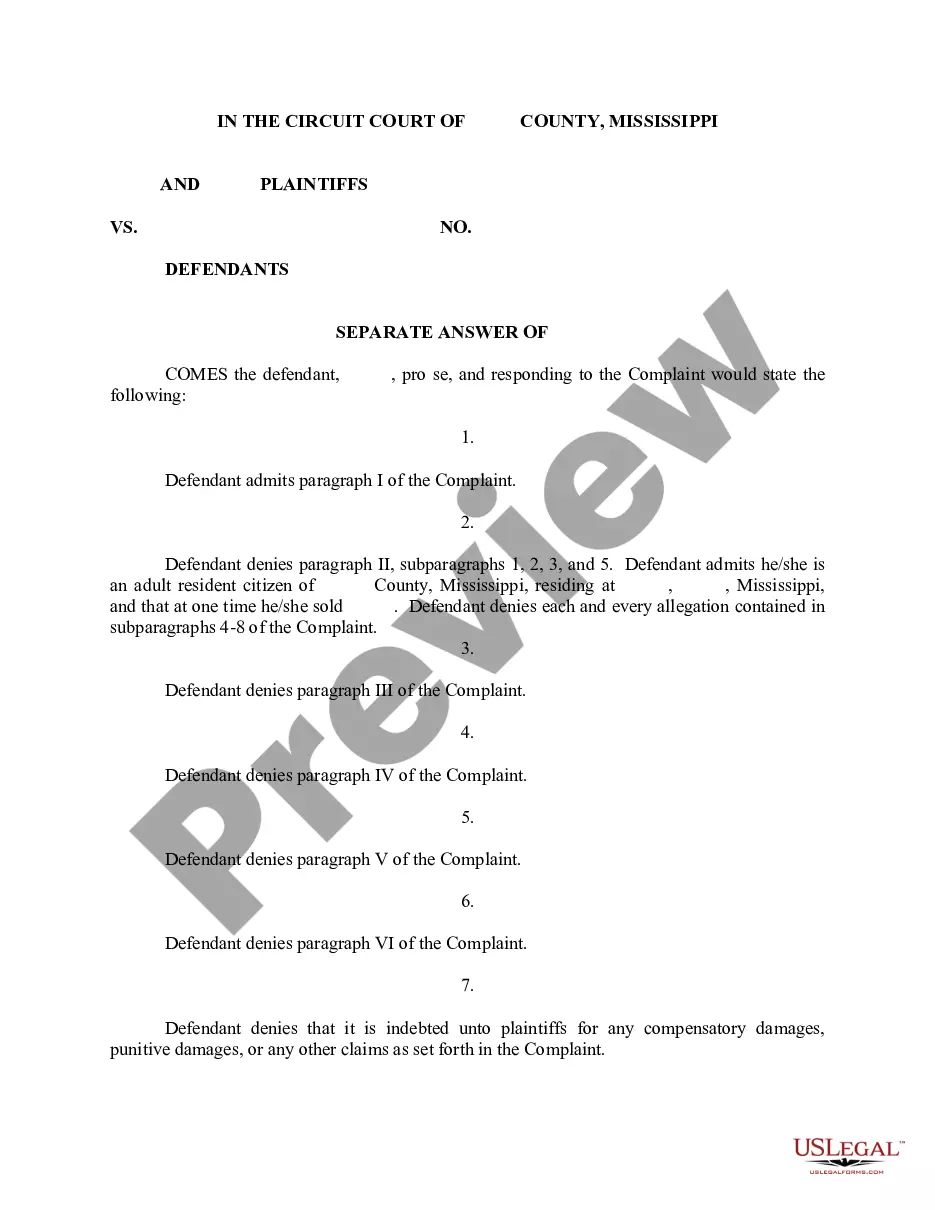
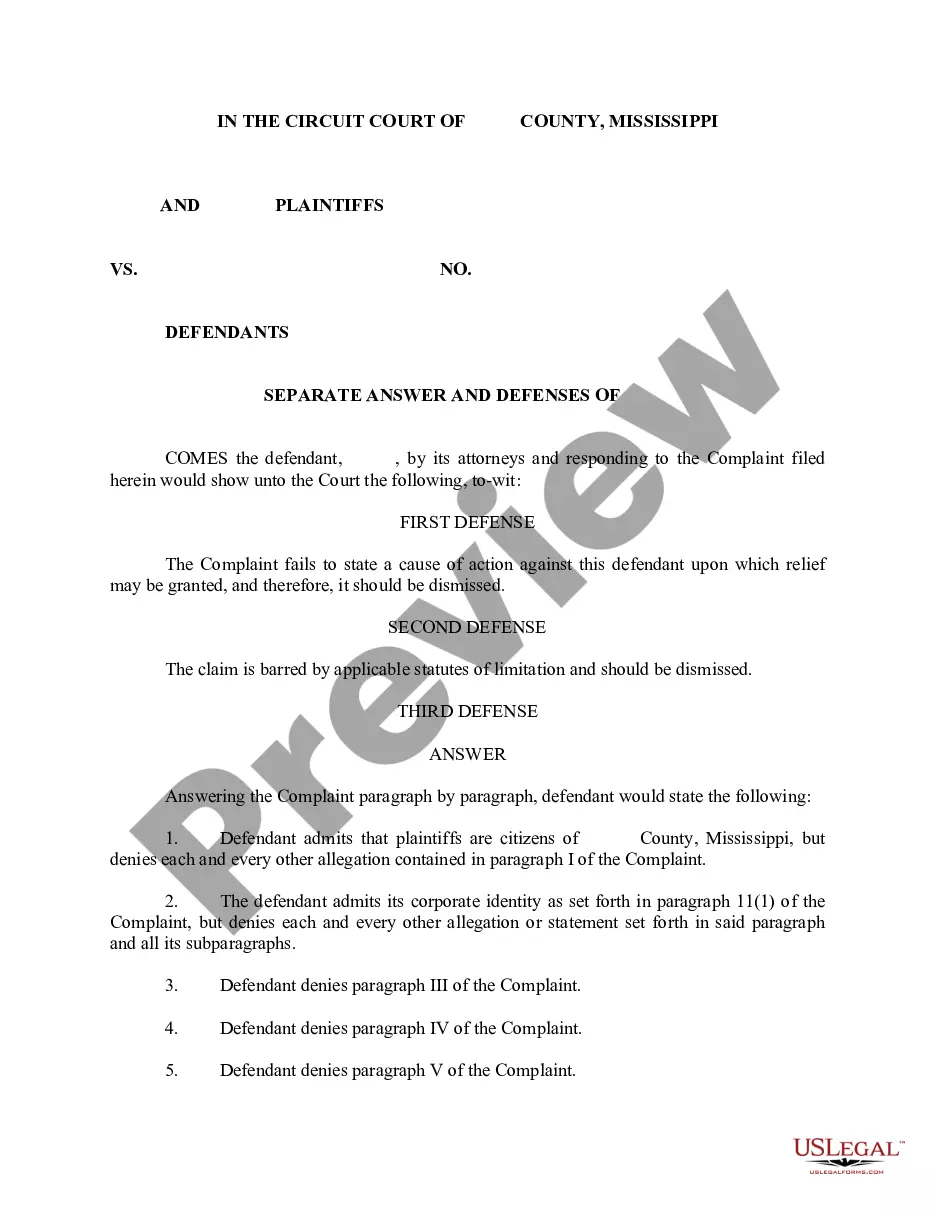
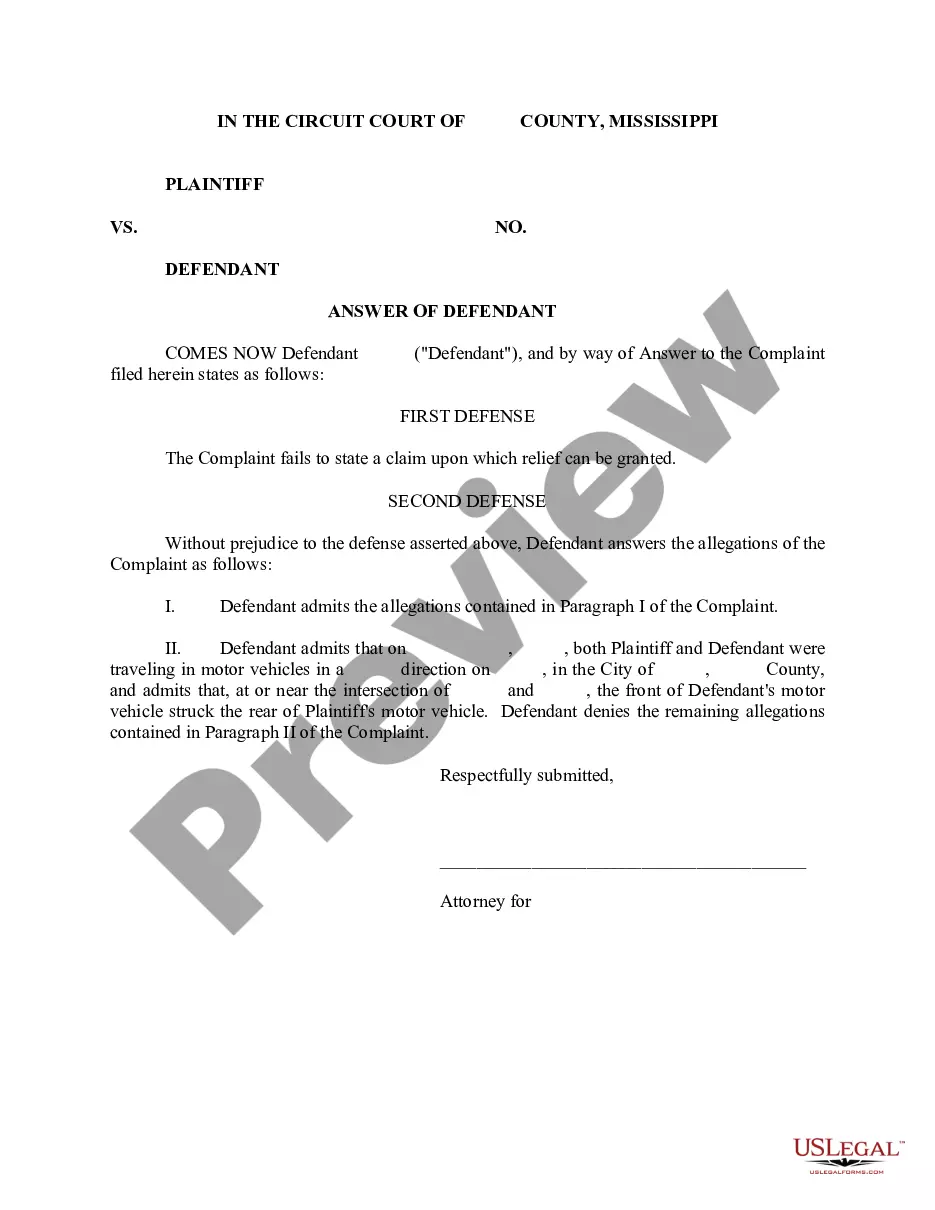
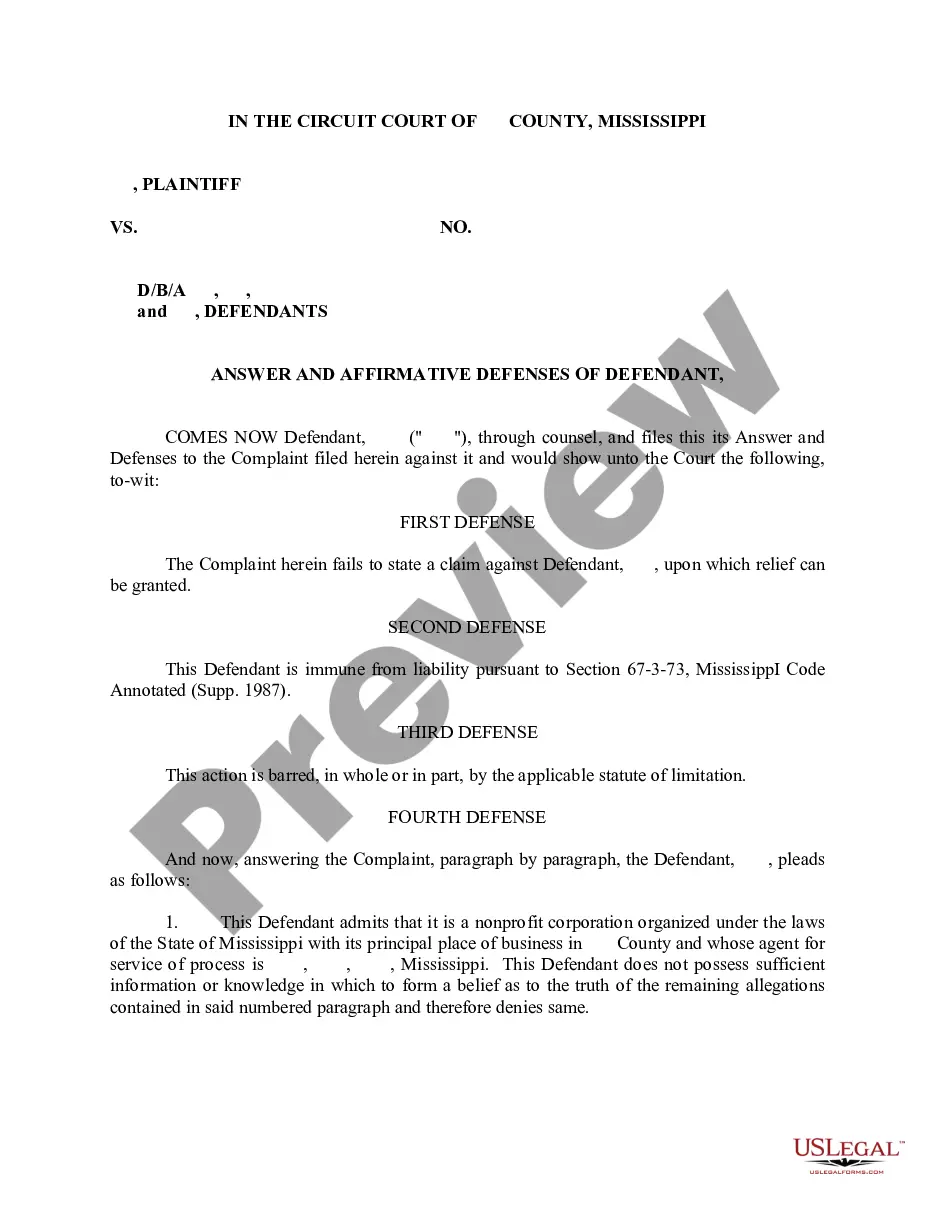
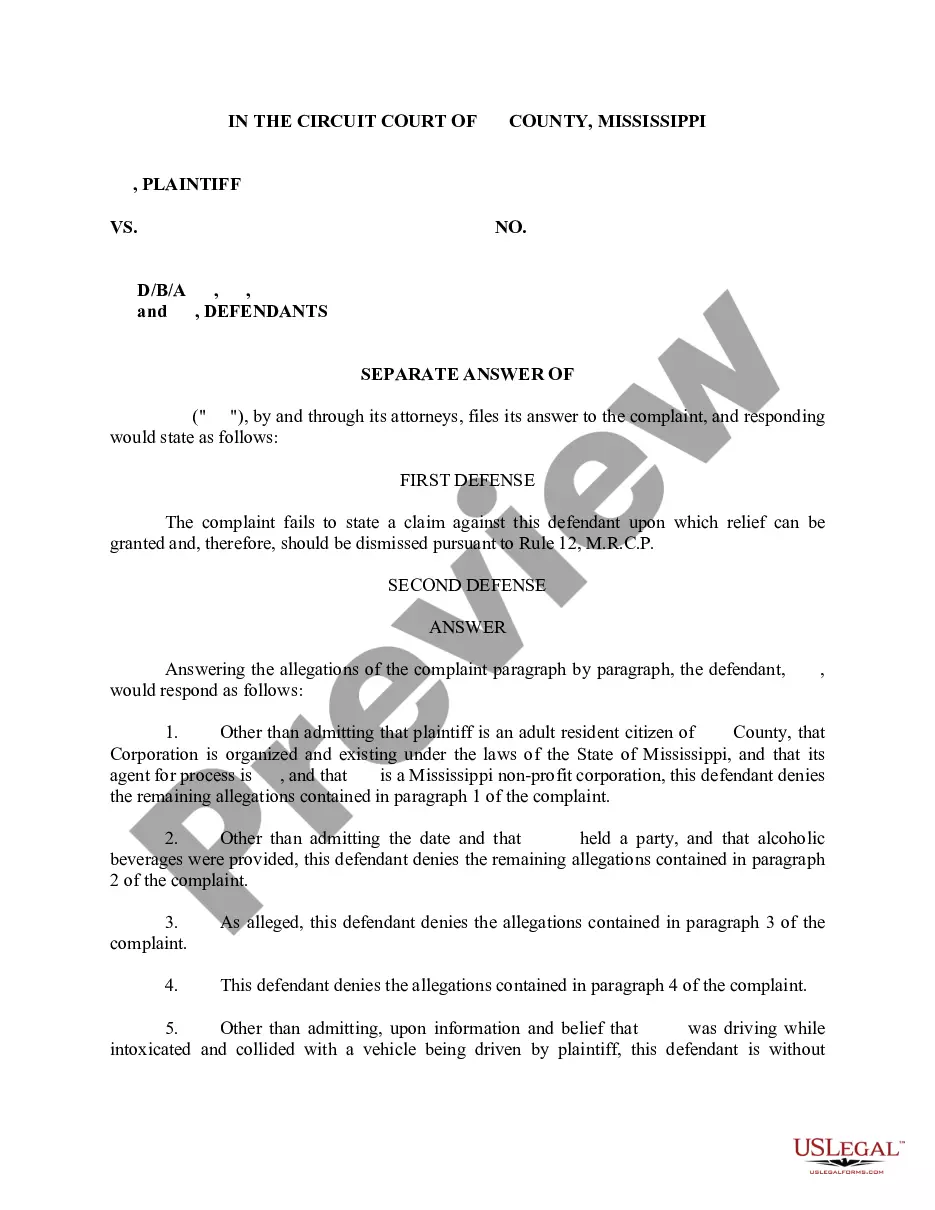
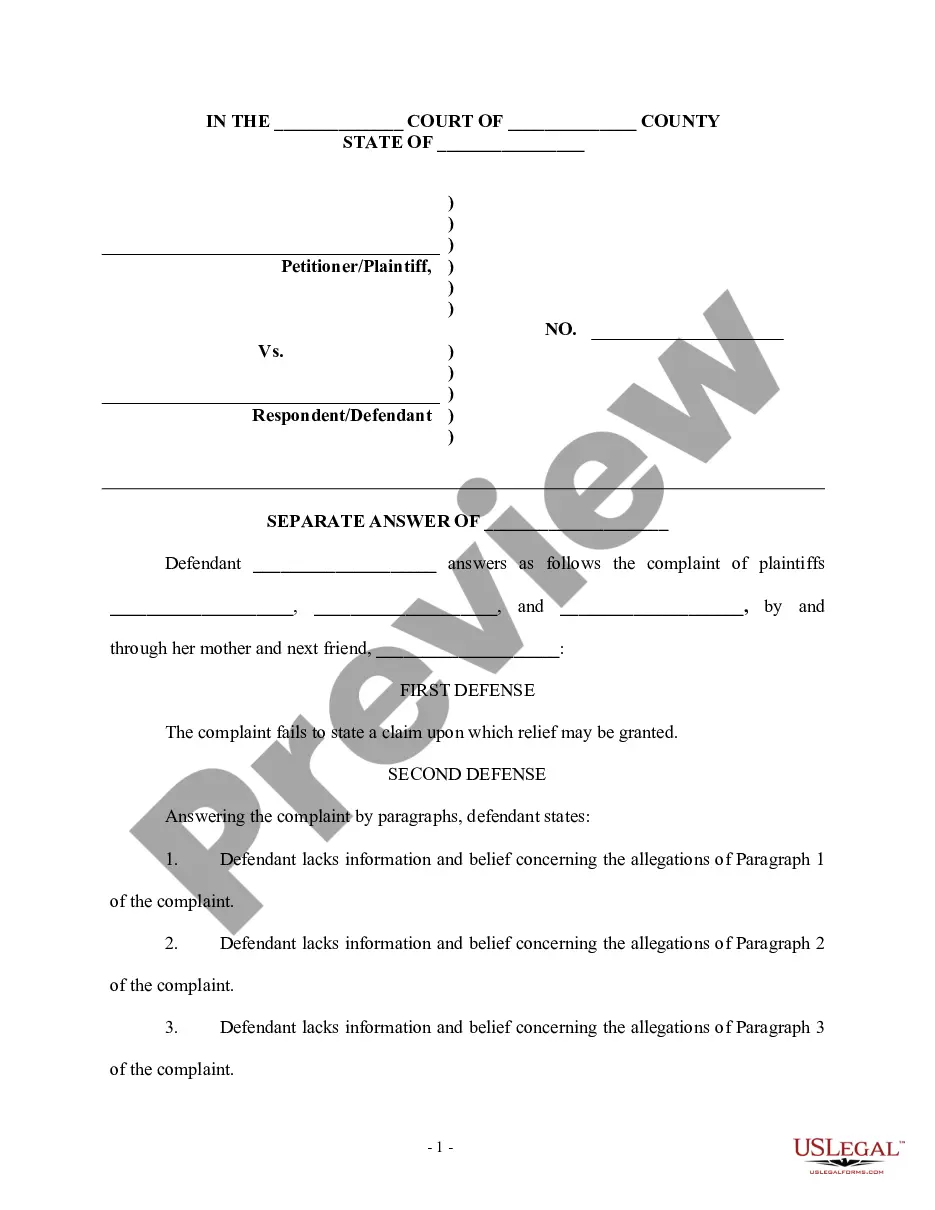
The Separate Answer of Co-Defendant is a legal document used by a co-defendant in a personal injury case, such as a wrongful death claim. Unlike a joint answer, this form allows the co-defendant to respond to the plaintiff's claims independently. It includes denials of the plaintiff's allegations and defenses such as contributory negligence, asserting that the plaintiff did not exercise reasonable care. This form is essential for ensuring that each defendant can present their case without being overshadowed by the actions of others involved in the lawsuit.
Main sections of this form
- Section for denying specific allegations made by the plaintiff.
- Statement of denial regarding any claims for damages.
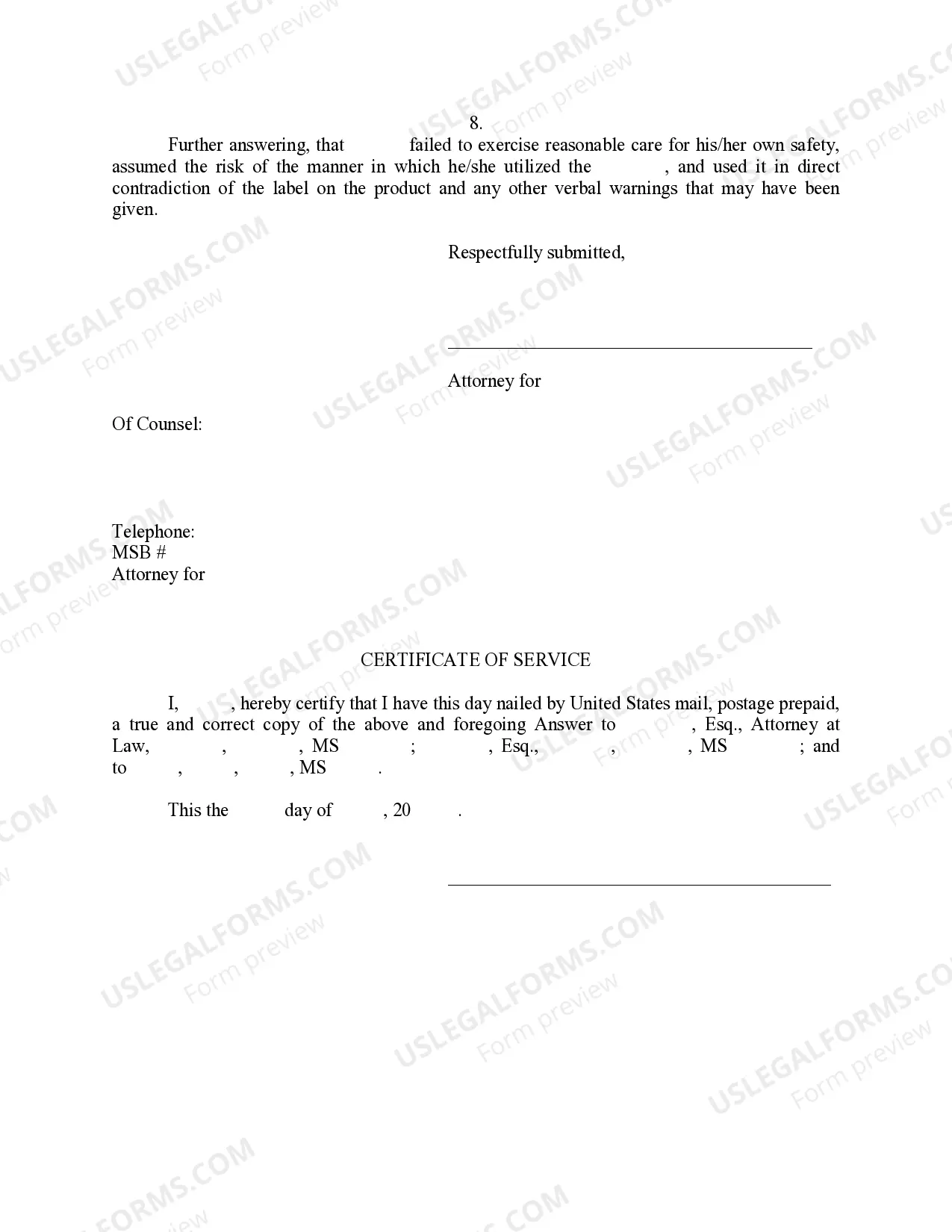
- Content addressing contributory negligence of the plaintiff.
- Field for individual defendantâs details.
- Signature line for the co-defendant.
When to use this document
This form is typically used in personal injury lawsuits where multiple defendants are involved. If you are a co-defendant being sued for damages and wish to provide a separate answer to the allegations without aligning your response with other defendants, this is the appropriate form to use. It is particularly useful if you need to assert unique defenses or point to the plaintiff's own negligence as a factor in the incident.
Who this form is for
This form is intended for:
- Co-defendants in personal injury lawsuits.
- Individuals facing wrongful death claims alongside other defendants.
- Legal representatives or attorneys managing multiple defendants in a case.
How to complete this form
- Begin by identifying all parties involved in the case, including the plaintiff and all co-defendants.
- Clearly state your denials of the plaintiffâs allegations as listed in the corresponding paragraphs of the complaint.
- Include a declaration regarding any claims for damages, asserting that you are not liable.
- Add defenses regarding the plaintiff's actions, such as contributory negligence if applicable.
- Sign and date the document in the designated area to formalize your answer.
Notarization requirements for this form
This form does not typically require notarization unless specified by local law. Be sure to check the notary requirements in your jurisdiction before submitting the form.
Get your form ready online
Our built-in tools help you complete, sign, share, and store your documents in one place.
Make edits, fill in missing information, and update formatting in US Legal Forms—just like you would in MS Word.
Download a copy, print it, send it by email, or mail it via USPS—whatever works best for your next step.
Sign and collect signatures with our SignNow integration. Send to multiple recipients, set reminders, and more. Go Premium to unlock E-Sign.
If this form requires notarization, complete it online through a secure video call—no need to meet a notary in person or wait for an appointment.
We protect your documents and personal data by following strict security and privacy standards.

Make edits, fill in missing information, and update formatting in US Legal Forms—just like you would in MS Word.

Download a copy, print it, send it by email, or mail it via USPS—whatever works best for your next step.

Sign and collect signatures with our SignNow integration. Send to multiple recipients, set reminders, and more. Go Premium to unlock E-Sign.

If this form requires notarization, complete it online through a secure video call—no need to meet a notary in person or wait for an appointment.

We protect your documents and personal data by following strict security and privacy standards.
Common mistakes
- Failing to address all allegations individually, leading to unnecessary assumptions.
- Not including your defenses clearly, making it hard to form a solid argument.
- Leaving out important signatures or dates, which can invalidate the document.
Benefits of using this form online
- Convenient access to legal documents that can be downloaded and completed at your own pace.
- Editability allows you to customize the form according to your specific circumstances.
- Reliable quality, as these forms are drafted by licensed attorneys to ensure legal compliance.
Summary of main points
- The Separate Answer of Co-Defendant allows for individual responses in personal injury cases.
- Completing the form accurately is crucial to protect your legal rights.
- Be aware of common mistakes to avoid challenges in your defense.
Looking for another form?
Form popularity
FAQ
In multiple defendant cases, a jury is usually asked to allocate fault between the defendants (assuming no fault on the part of the plaintiff) and the defendants are asked to pay damages according to their percentage of the fault.
The answer is a qualified, Yes, provided that there are no conflicts between the defendants that require the attorney to choose which client to more vigorously represent. As a practical matter, it is rarely advisable for an attorney to represent co-defendants charged in the same crime or criminal conspiracy.
Definition. One of multiple defendants jointly sued in the same litigation or charged with the same crime. Also termed joint defendant. courts.
A co-defendant is a third party other than the defendant in the case in which another co-defendant is charged and is by nature a witness.It is only when a court has implemented this procedure that the statement of a co-defendant can be relied on as a basis for concluding the criminal facts about the defendant.
Co-defendants can live together unless there is a court order saying otherwise. Your problem is that you are both on parole/probation. A common condition of parole is that you can't associate with known criminals or people on probation.
Lawsuits often involve multiple other defendants, which can complicate a case. Under joint and several liability, each and every defendant involved in a civil lawsuit no matter their actual fault is liable for the entire amount of damages.
A co-defendant is a third party other than the defendant in the case in which another co-defendant is charged and is by nature a witness.Therefore, a co-defendant is a third party other than the defendant in the case in which another co-defendant is charged and is by nature a witness.
Co-defendants normally appear together and are tried together since they are co-Defendants, but the DA has the authority to split the co-Defendants cases or as we call it, "splitting the package".
Yes, co-defendants in drug cases may receive different sentences. When two people are charged and convicted of the same crime, the maximum penalty they are facing may be the same, but the actual sentence each receives can vary greatly.