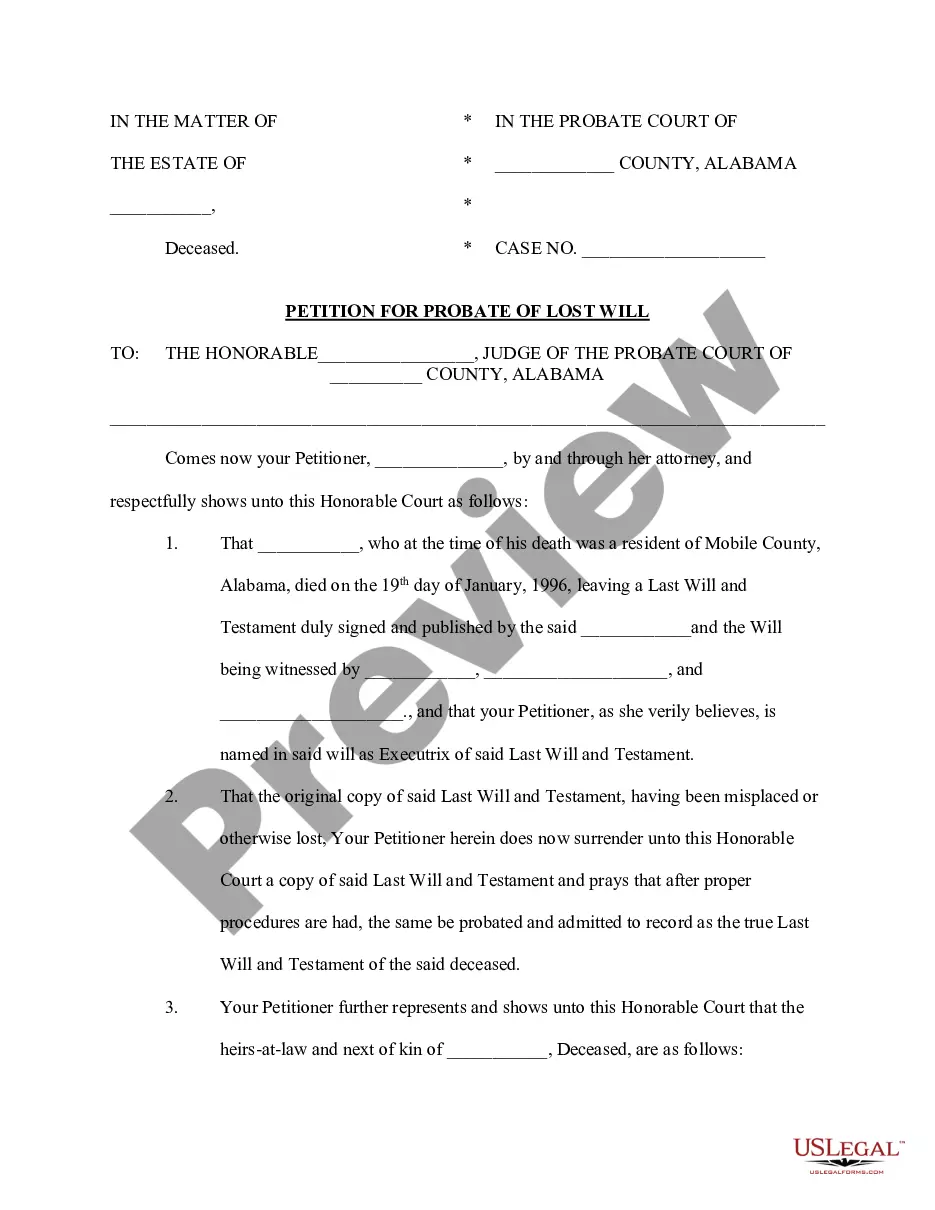
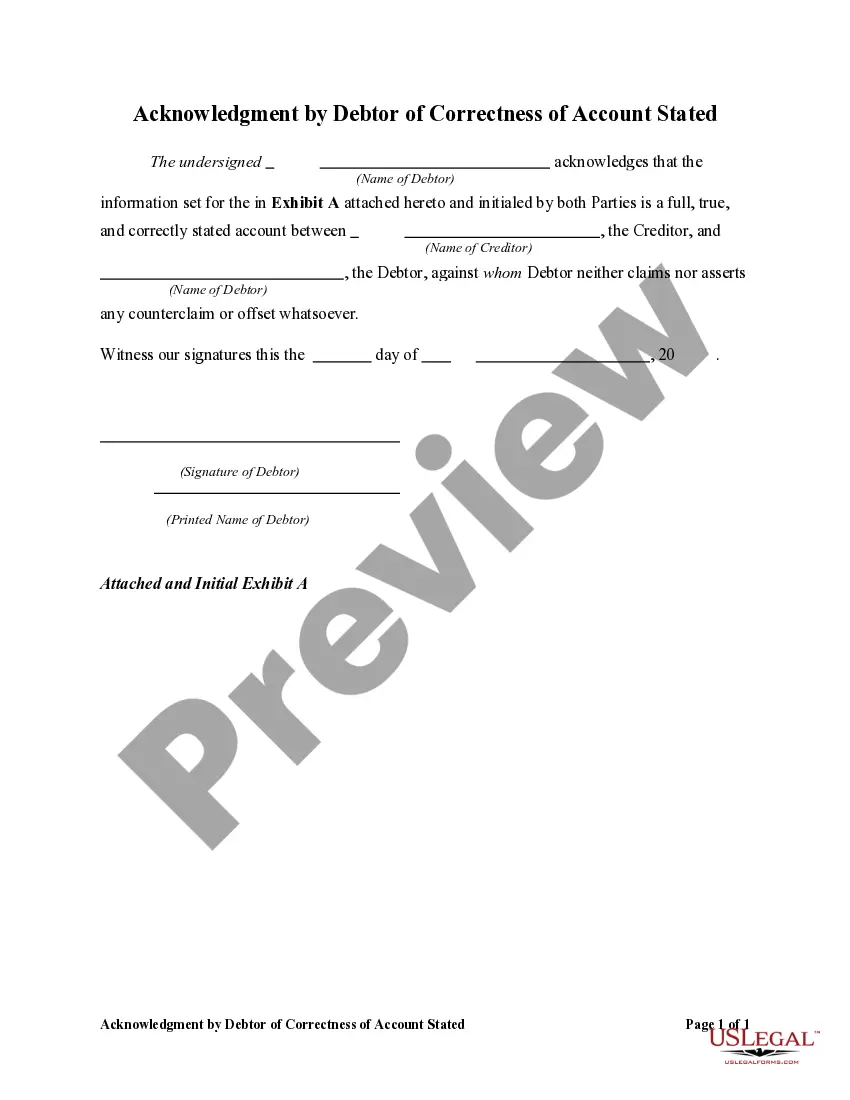
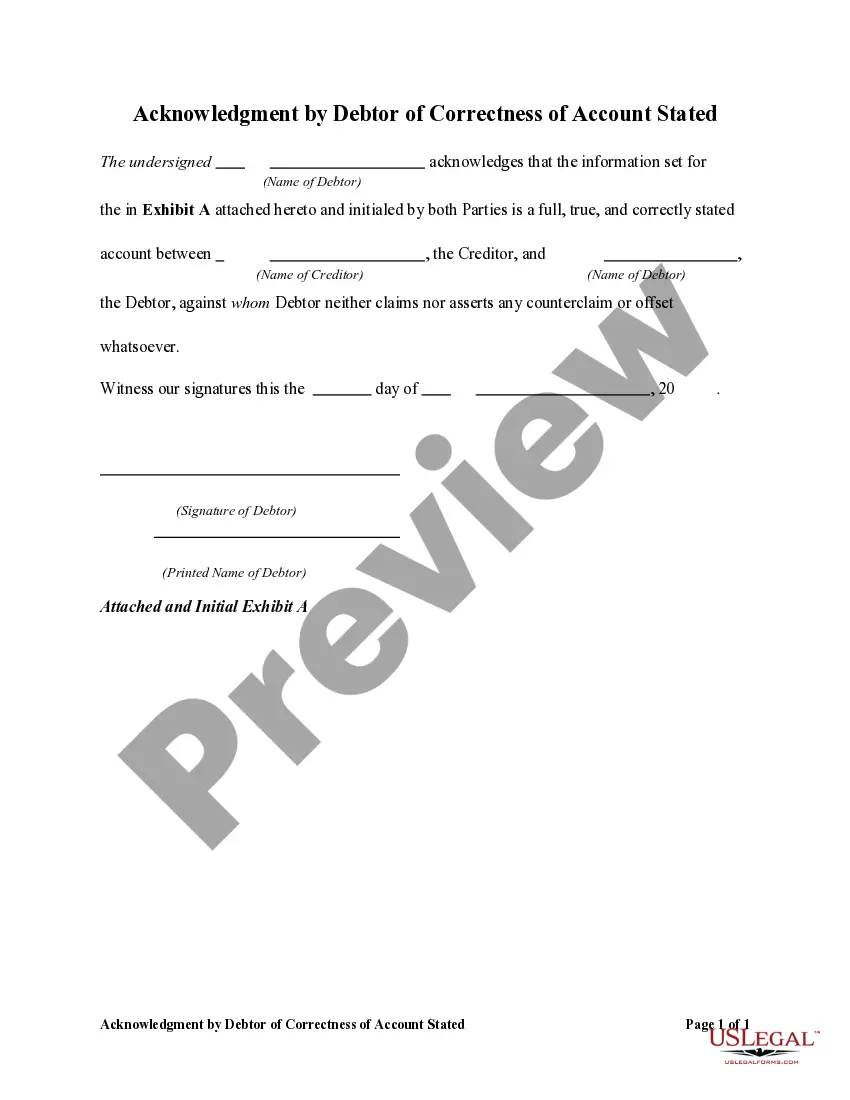
Acknowledgment by Debtor of Correctness of Account Stated
Overview of this form
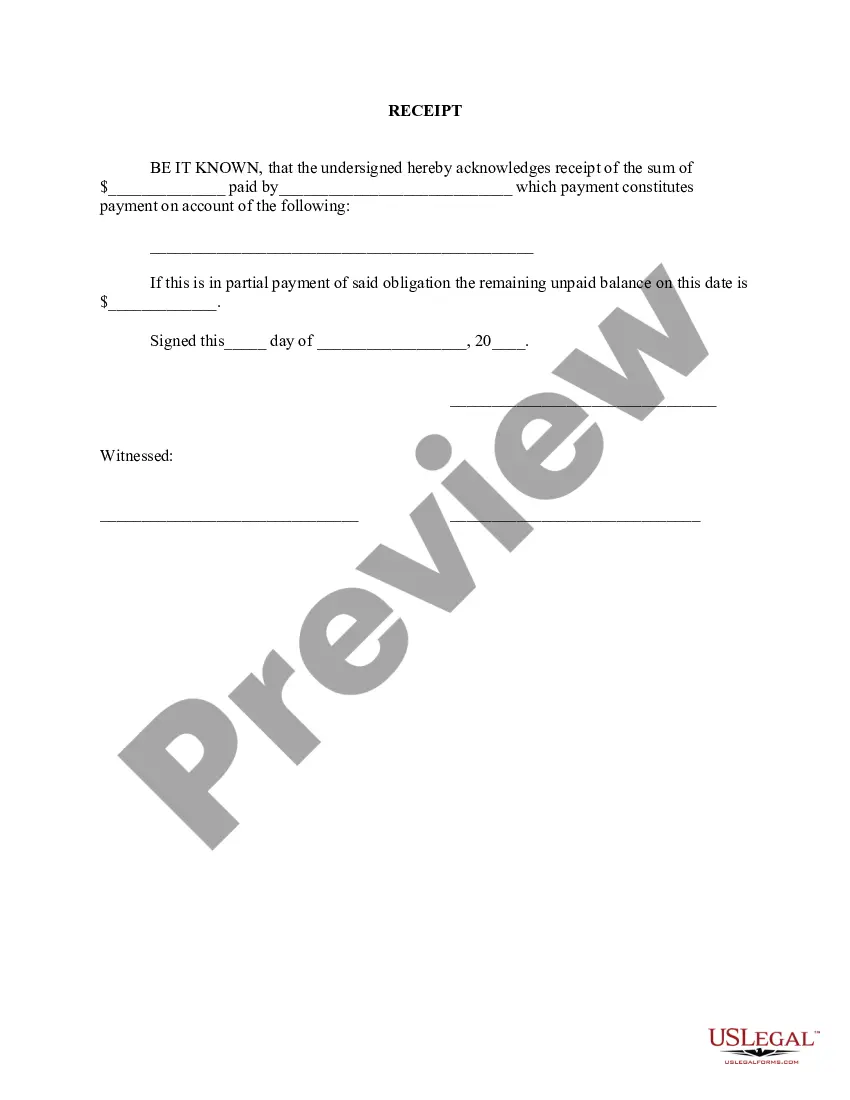
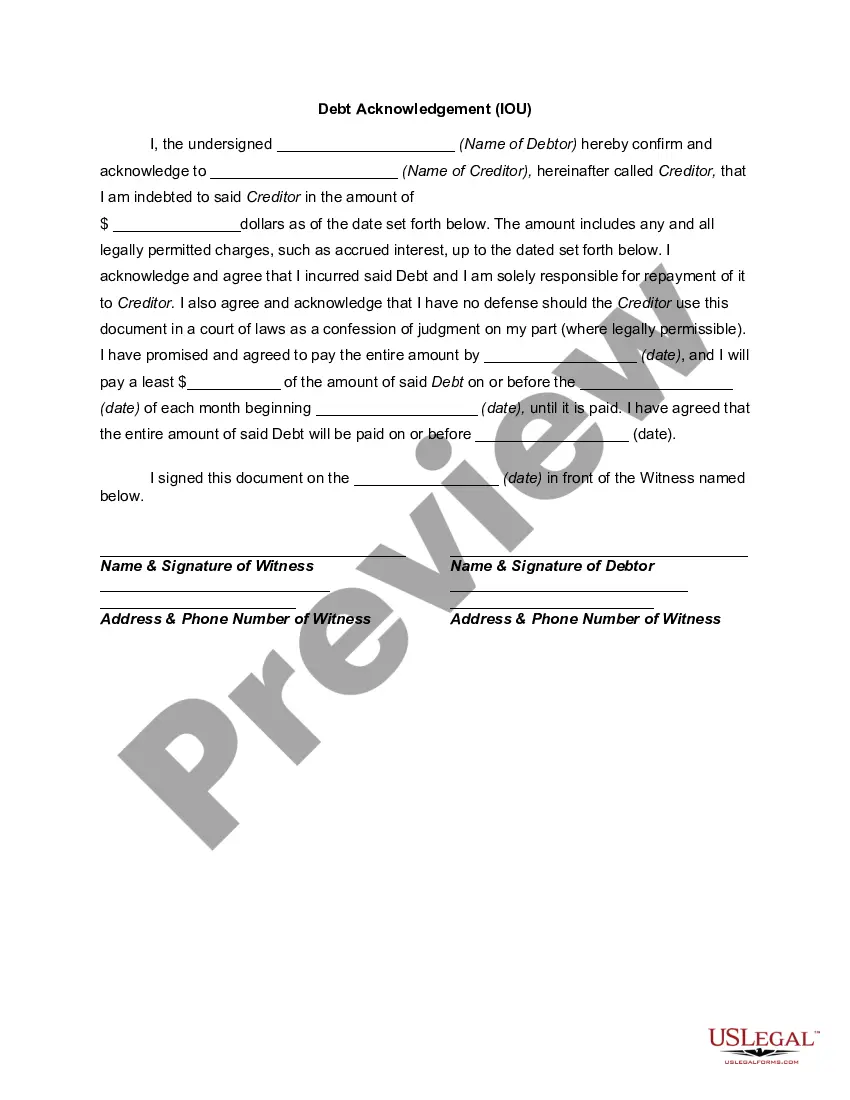
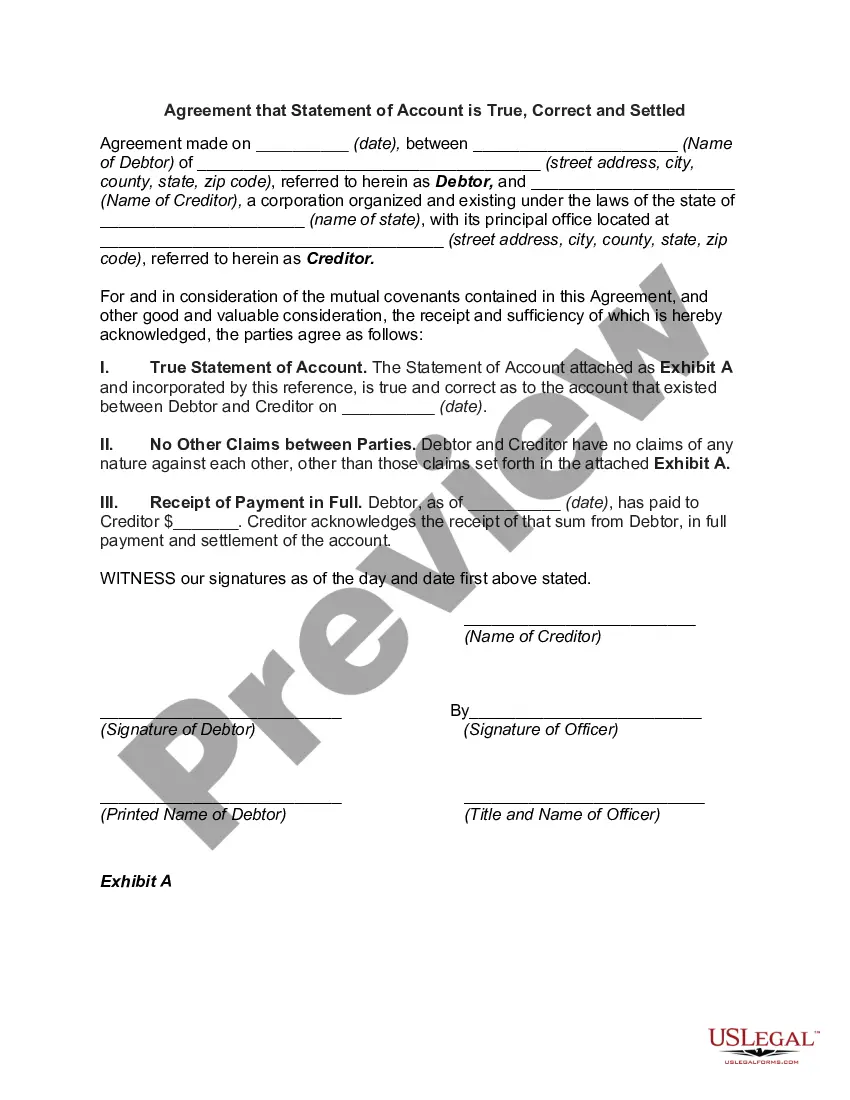
The Acknowledgment by Debtor of Correctness of Account Stated is a legal document affirming a debtor's agreement with a creditor regarding a specific amount owed, based on previous transactions. This form acknowledges the correctness of the account balance as of a specific date and serves to solidify the debtor's commitment to repay. It differs from other forms of debt acknowledgment by focusing specifically on past transactions and the mutual agreement of the amounts involved.
Key parts of this document
- Identification of the debtor and creditor.
- Specific amount owed as of the stated date.
- Signature of the debtor confirming the accuracy of the account.
- Statement indicating whether the balance is agreed upon expressively or impliedly.
Situations where this form applies
This form is useful when a debtor and creditor have previously conducted transactions, and the debtor wishes to confirm the total amount owed. Use it in situations where a creditor demands repayment, and the debtor needs to establish a formal acknowledgment of this debt to avoid disputes over the account balance. It can also be utilized at the conclusion of a service or sale to ensure clarity in financial obligations.
Who this form is for
- Debtors who have outstanding balances with creditors.
- Creditors who need formal acknowledgment of debts owed by their clients.
- Individuals or businesses involved in financial transactions that require validation of account statements.
How to prepare this document
- Enter the names and contact information of both the debtor and creditor.
- State the specific amount owed by the debtor as of the indicated date.
- Include any applicable terms or conditions regarding the debt repayment.
- Have the debtor sign and date the document to confirm agreement.
- Ensure that both parties retain a copy for their records.
Is notarization required?
This form does not typically require notarization unless specified by local law. It is advisable to check local regulations to ensure compliance, but in most cases, a signature by the debtor is sufficient for legal validity.
Get your form ready online
Our built-in tools help you complete, sign, share, and store your documents in one place.
Make edits, fill in missing information, and update formatting in US Legal Forms—just like you would in MS Word.
Download a copy, print it, send it by email, or mail it via USPS—whatever works best for your next step.
Sign and collect signatures with our SignNow integration. Send to multiple recipients, set reminders, and more. Go Premium to unlock E-Sign.
If this form requires notarization, complete it online through a secure video call—no need to meet a notary in person or wait for an appointment.
We protect your documents and personal data by following strict security and privacy standards.

Make edits, fill in missing information, and update formatting in US Legal Forms—just like you would in MS Word.

Download a copy, print it, send it by email, or mail it via USPS—whatever works best for your next step.

Sign and collect signatures with our SignNow integration. Send to multiple recipients, set reminders, and more. Go Premium to unlock E-Sign.

If this form requires notarization, complete it online through a secure video call—no need to meet a notary in person or wait for an appointment.

We protect your documents and personal data by following strict security and privacy standards.
Typical mistakes to avoid
- Failing to include all necessary partiesâ names and contact information.
- Not clearly stating the total amount owed and the date it pertains to.
- Omitting the debtor's signature and date or not having it signed in front of a witness.
- Neglecting to keep copies for both parties after completion.
Benefits of completing this form online
- Convenience of downloading and completing the form from anywhere.
- Easy to edit and customize to fit specific transaction details.
- Ensured reliability as the forms are drafted by licensed attorneys.
- Quick access to necessary legal documents without visiting a law office.
- Legally binding agreement to acknowledge debts, essential in dispute resolution.
- Can serve as evidence in legal proceedings regarding financial obligations.
Summary of main points
- The Acknowledgment by Debtor of Correctness of Account Stated is essential for formalizing debts.
- It provides a clear record of the debtor's acceptance of their obligation and prevents future disputes.
- Key components include debtor and creditor information, the amount owed, and signatures.
Looking for another form?
Form popularity
FAQ
Legal instrument is a legal term of art that is used for any formally executed written document that can be formally attributed to its author, records and formally expresses a legally enforceable act, process, or contractual duty, obligation, or right, and therefore evidences that act, process, or agreement.
A book account is described. as 'open' when the debtor has made some payment on the account, leaving a. balance due. (Interstate Group Administrators, Inc. v. Cravens, Dargan & Co.
A written list of transactions, noting money owed and money paid; a detailed statement of mutual demands arising out of a contract or a fiduciary relationship. Businesspersons keep accounts; attorneys may keep escrow accounts; and executors must keep accounts that record transactions in administering an estate.
(Entry 1 of 2) 1 : of or relating to law She has many legal problems. 2a : deriving authority from or founded on law : de jure a legal government. b : having a formal status derived from law often without a basis in actual fact : titular a corporation is a legal but not a real person.
Having legal force; effective, having legal authority. An act, deed, will, and the like, which has received all the formalities required by law, is said to be valid or good in law.A Law Dictionary, Adapted to the Constitution and Laws of the United States.
The most common way to defeat an action for account stated is to show that the debt claimed is new, i.e., that there was no prior course of dealing between the parties or, at best, only a very short period with very few transactions.
Legal Work means the provision of all necessary legal work in connection with prosecution activities and enforcement related work including enforcement notices, cautions, warrants, advice and any other contentious work referred to the Contractor from time to time by the Contract Supervisor.
Open-book accounting is a method of procuring work under which contractors are reimbursed on the basis of transparent records of the costs they have incurred.
An account-stated claim requires a plaintiff to show three things: (1) a prior relationship as debtor and creditor, (2) a showing of mutual assent between the parties as to the correct balance of the account, and. (3) a promise by the debtor to pay the balance of the account.