Easement and Right of Way with Option (for Pipelines)
Understanding this form
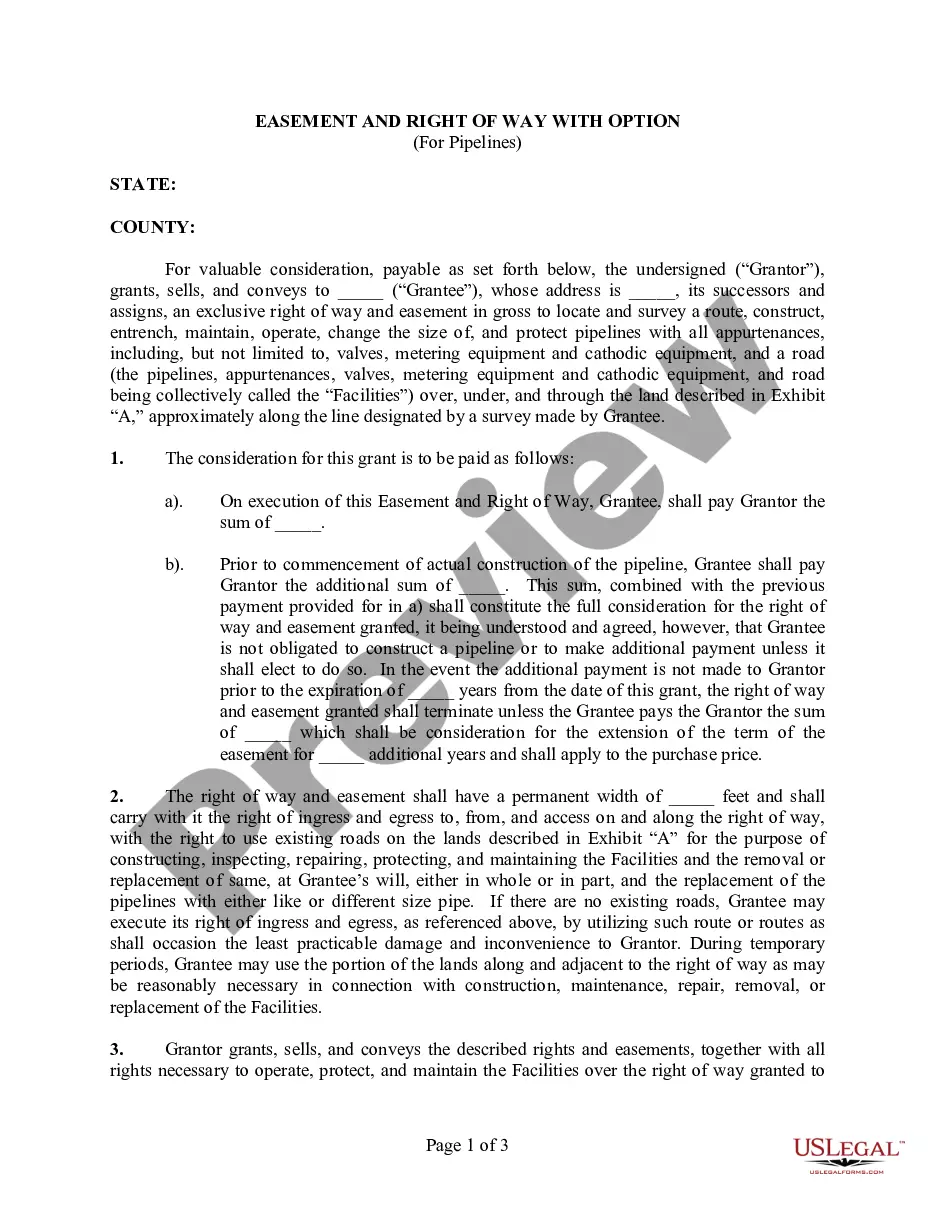
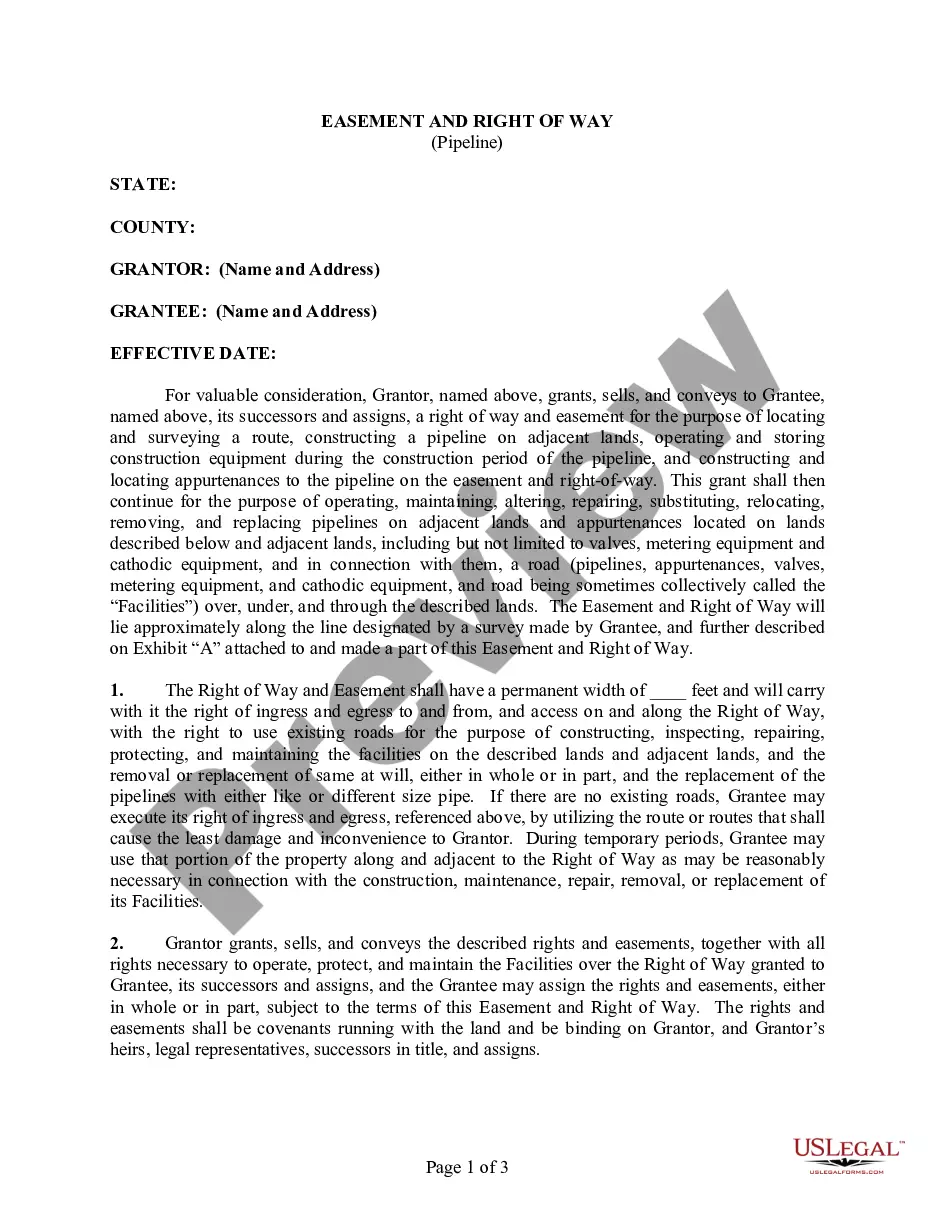
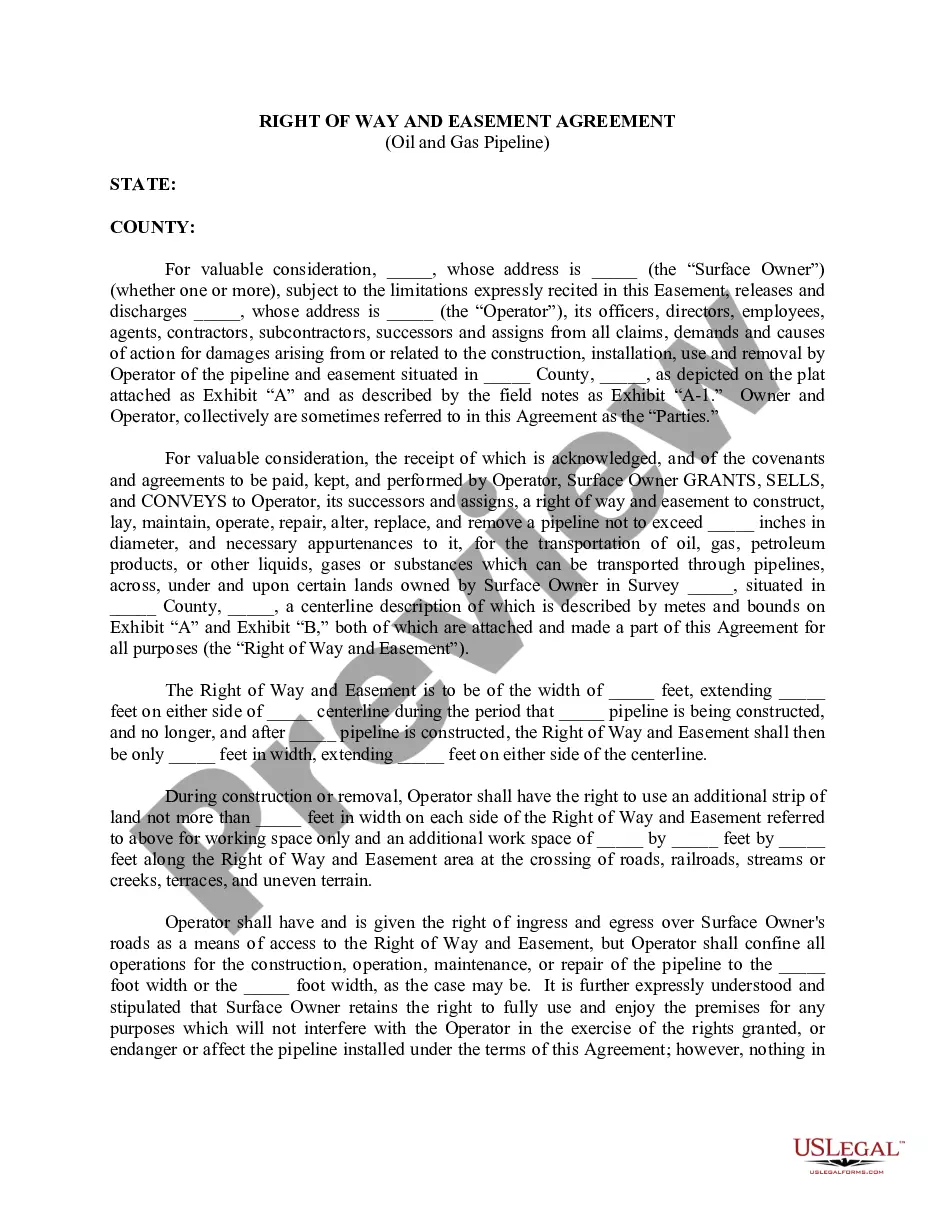
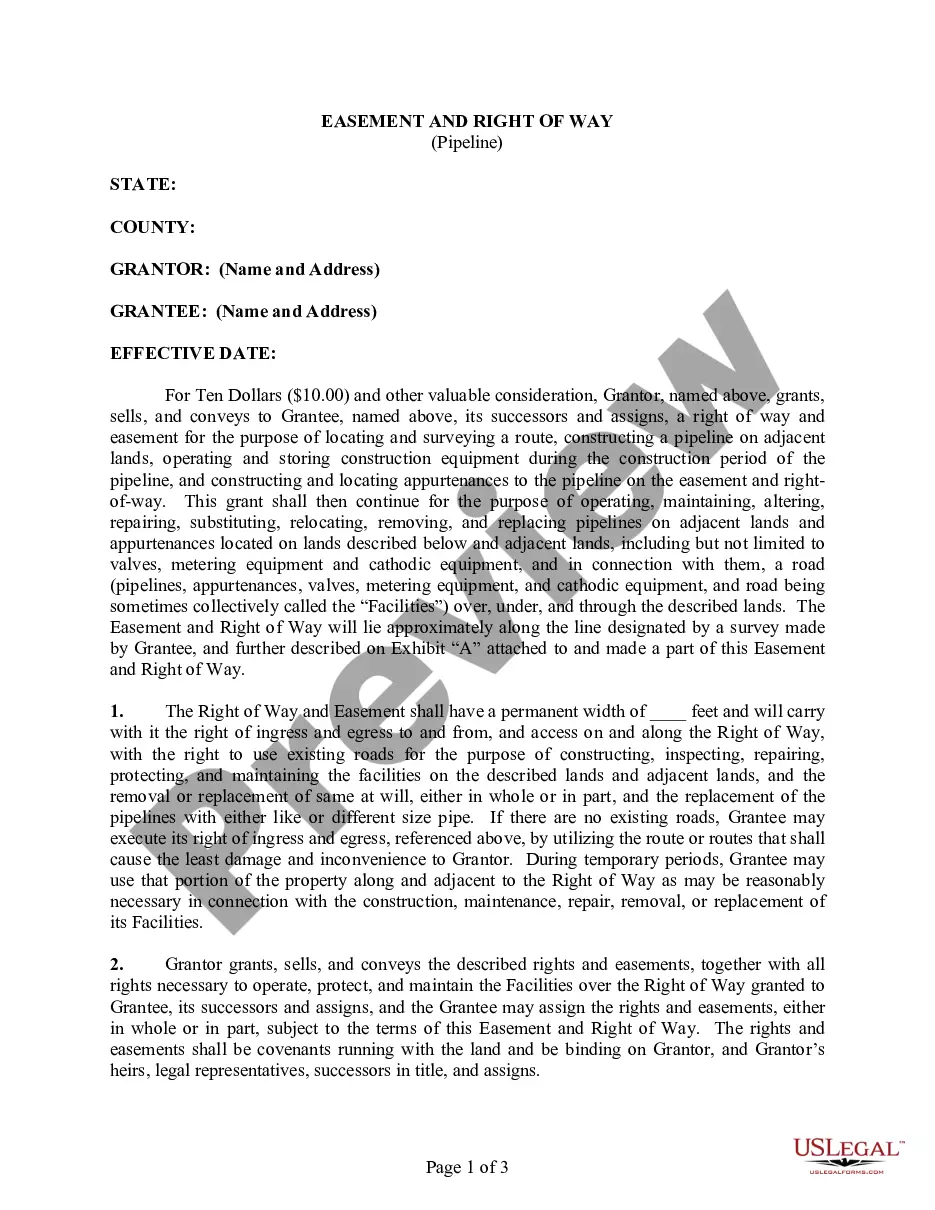
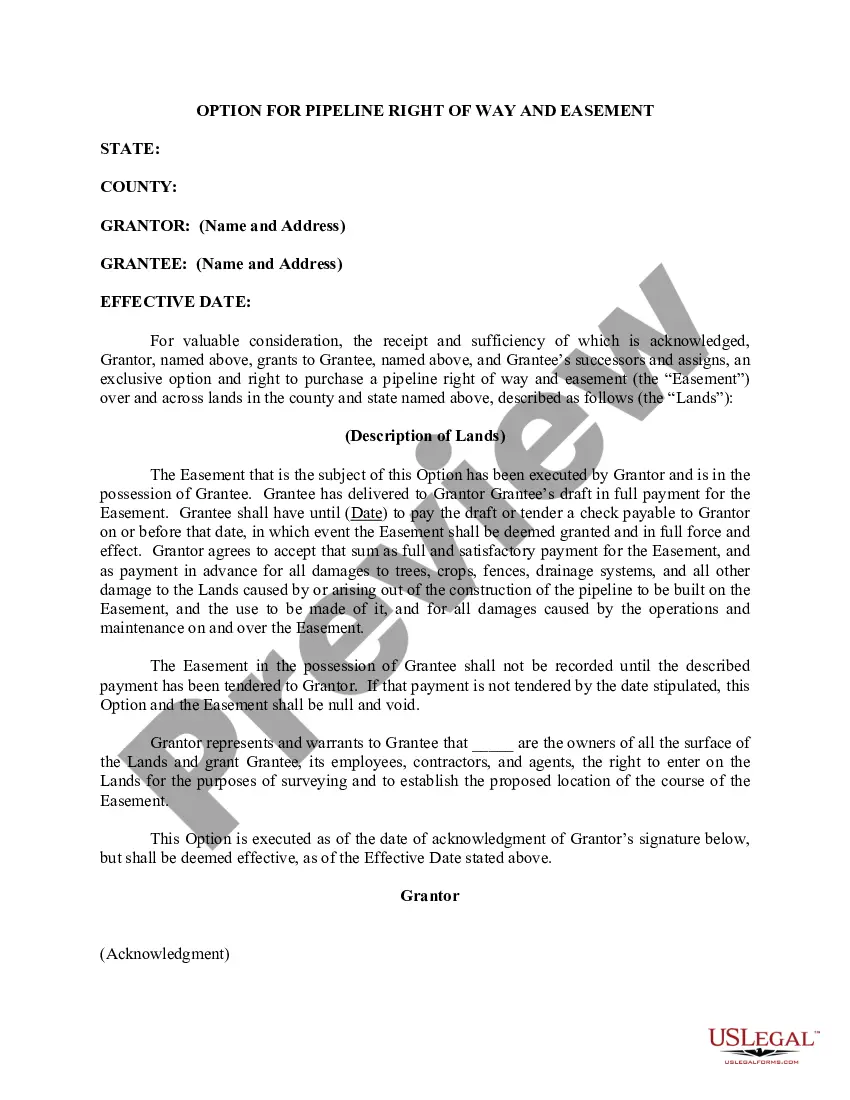
The Easement and Right of Way with Option (for Pipelines) is a legal document that allows one party (the Grantee) to use a portion of another party's property (the Grantor) for the construction and maintenance of pipelines. This form outlines the rights granted to the Grantee, including access and usage specifics, ensuring both parties understand their obligations and rights. Unlike general property use agreements, this form specifically addresses pipelines and the associated easements.
Main sections of this form
- Parties Involved: Identifies the Grantor (property owner) and Grantee (pipeline operator).
- Consideration Details: Specifies payments made by the Grantee to the Grantor for the easement rights.
- Rights Granted: Outlines the exclusive right of way and easement for pipeline work, including construction and maintenance.
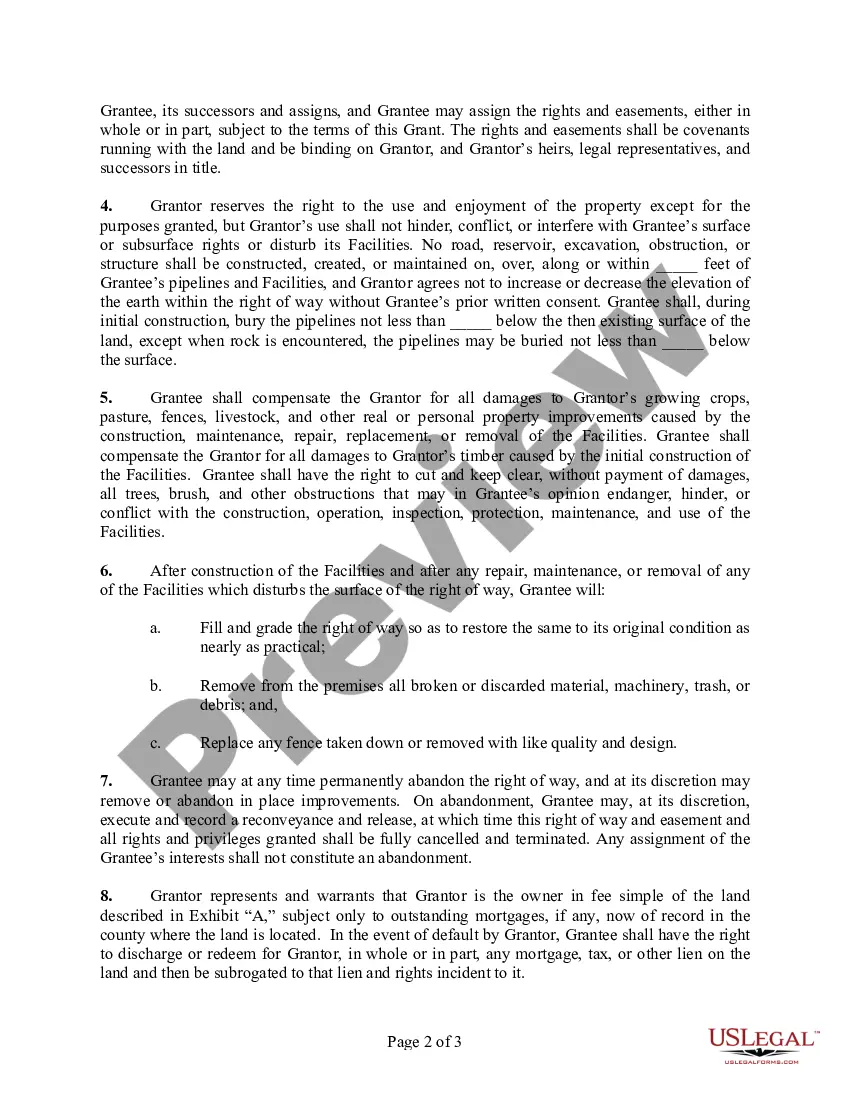
- Use of Property: Describes how the Grantor can use the property without interfering with the Grantee's rights.
- Damage Compensation: Mandates compensation for damages to crops and property due to construction activities.
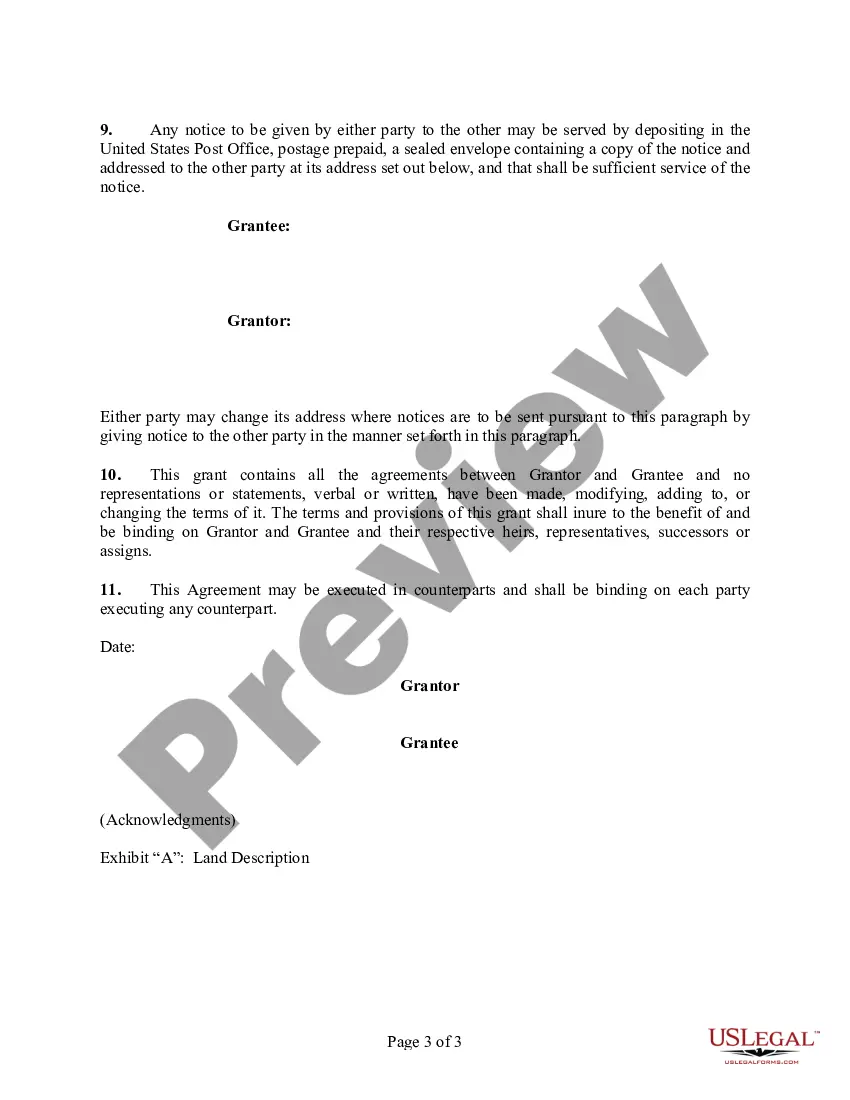
- Termination Clause: States conditions under which the easement can be terminated or renewed.
When this form is needed
This form is needed when a pipeline company wants to secure a right of way across private property to install and maintain pipelines. It is particularly applicable in scenarios where the landowner agrees to give access for construction, ensuring the pipeline company can operate without legal disputes over land use.
Who needs this form
This form is suitable for:
- Property owners (Grantors) allowing pipeline installations on their land.
- Pipeline companies or operators (Grantees) requiring legal permission to access and use land for their operations.
- Attorneys or legal representatives drafting agreements involving easements for pipelines.
Instructions for completing this form
- Identify the parties: Fill in the names and addresses of the Grantor and Grantee.
- Specify the property: Attach a description of the land affected, as indicated in Exhibit A.
- Enter payment details: Detail the amounts and timing of payments for the easement rights.
- Outline easement requirements: Include specifics on the width of the easement and rights granted.
- Sign and date the document: Ensure both parties appropriately sign where indicated.
Does this document require notarization?
This document requires notarization to meet legal standards. US Legal Forms provides secure online notarization powered by Notarize, allowing you to complete the process through a verified video call, available 24/7.
Get your form ready online
Our built-in tools help you complete, sign, share, and store your documents in one place.
Make edits, fill in missing information, and update formatting in US Legal Forms—just like you would in MS Word.
Download a copy, print it, send it by email, or mail it via USPS—whatever works best for your next step.
Sign and collect signatures with our SignNow integration. Send to multiple recipients, set reminders, and more. Go Premium to unlock E-Sign.
If this form requires notarization, complete it online through a secure video call—no need to meet a notary in person or wait for an appointment.
We protect your documents and personal data by following strict security and privacy standards.

Make edits, fill in missing information, and update formatting in US Legal Forms—just like you would in MS Word.

Download a copy, print it, send it by email, or mail it via USPS—whatever works best for your next step.

Sign and collect signatures with our SignNow integration. Send to multiple recipients, set reminders, and more. Go Premium to unlock E-Sign.

If this form requires notarization, complete it online through a secure video call—no need to meet a notary in person or wait for an appointment.

We protect your documents and personal data by following strict security and privacy standards.
Avoid these common issues
- Failing to specify the easement width and access rights clearly.
- Not including the legal description of the property in Exhibit A.
- Omitting the consideration payment details or the timing of those payments.
- Neglecting to have both parties sign and date the document.
- Assuming the easement automatically renews without specifying terms.
Why complete this form online
- Convenience: Downloadable format allows for quick access and easy customization.
- Editability: Fill in the form digitally or print for handwritten entries.
- Reliability: Forms are drafted by licensed attorneys, ensuring legal compliance.
Looking for another form?
Form popularity
FAQ
How much money should landowners get when an oil or gas pipeline crosses their land? As it stands, landowners receive a one-time payment roughly based on the length of the pipeline, with rates varying from $5 to $50 per foot or more for a Marcellus or Utica shale pipeline right-of-way agreement.
A pipeline easement specifically gives the easement holder the right to build and maintain a pipeline on a landowner's property. It doesn't grant the easement holder actual ownership of the land, just a right to use the land for pipeline purposes.
If an easement is 50 rods long, that is almost an acre. In a recent case, a pipeline company paid some owners $180 per rod and others $767 per rod for the same project.
A right-of-way is a strip of land typically about 50 feet wide (depending on location) containing a pipeline or other utility. Many rights-of-way contain more than one underground pipeline or utility and can be wider depending on the number of infrastructure assets within.
How much money should landowners get when an oil or gas pipeline crosses their land? As it stands, landowners receive a one-time payment roughly based on the length of the pipeline, with rates varying from $5 to $50 per foot or more for a Marcellus or Utica shale pipeline right-of-way agreement.
Easements are treated as a recovery of the basis of the property first, with any excess proceeds treated as capital gain, which is taxed at a lower rate than ordinary income. The basis of property that offsets an easement is limited to the basis of the affected acres or square footage.
Pipelines can reduce property values by 5 to 40 percent by making them less attractive to potential buyers, according to local Realtors.