Mississippi Jury Instruction - Disbursement of Proceeds - Ordinary Banking Procedures
What this document covers
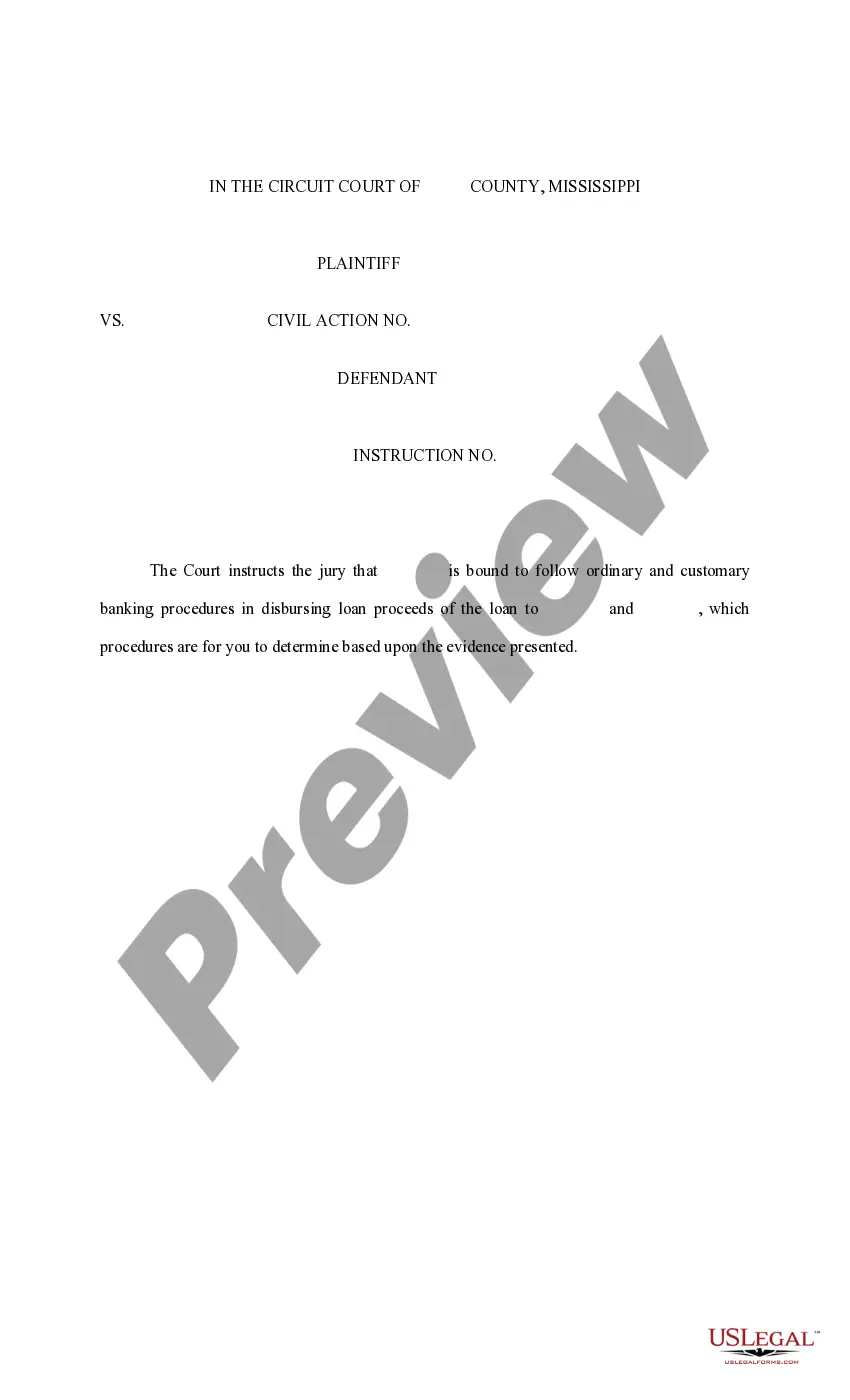
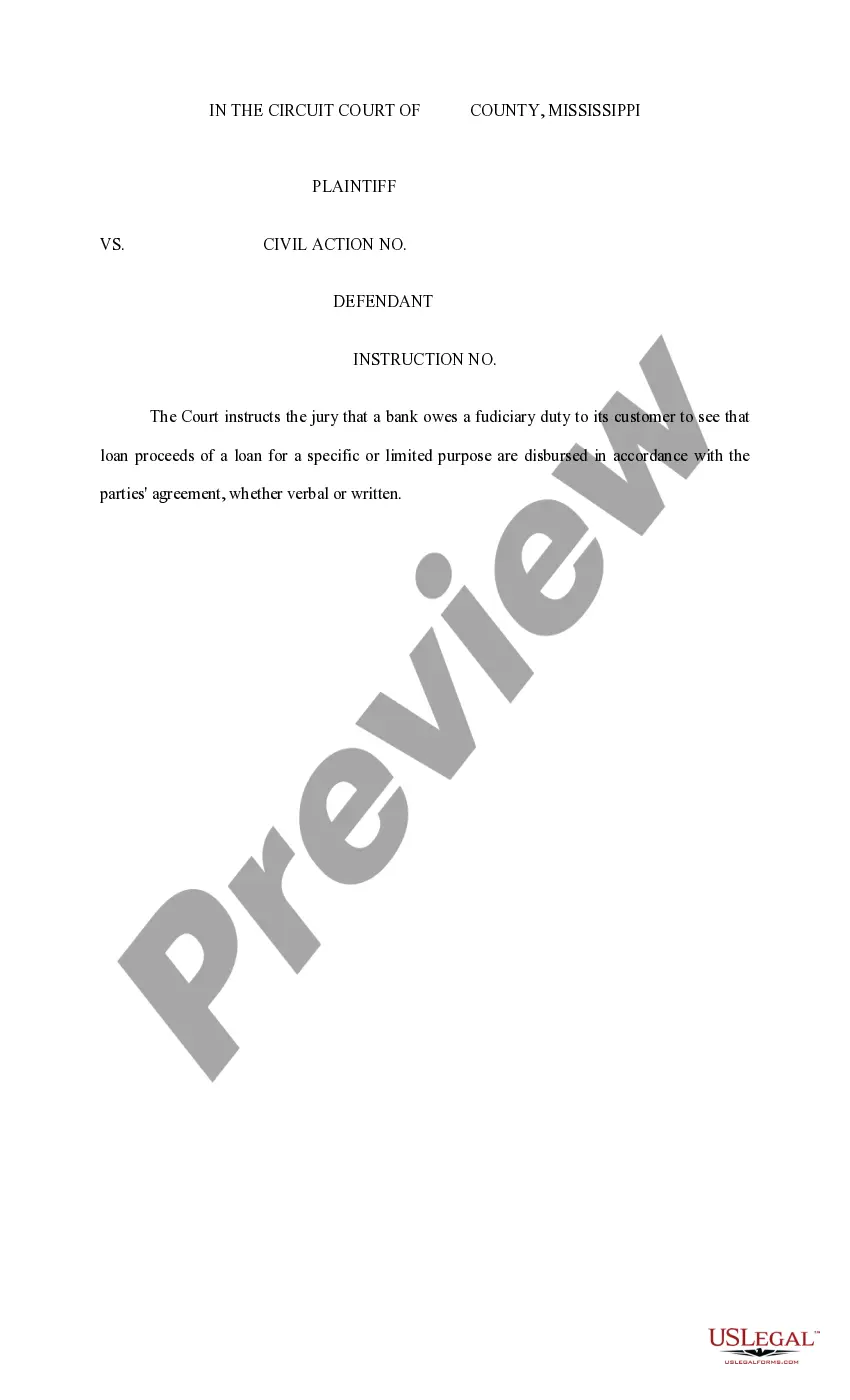
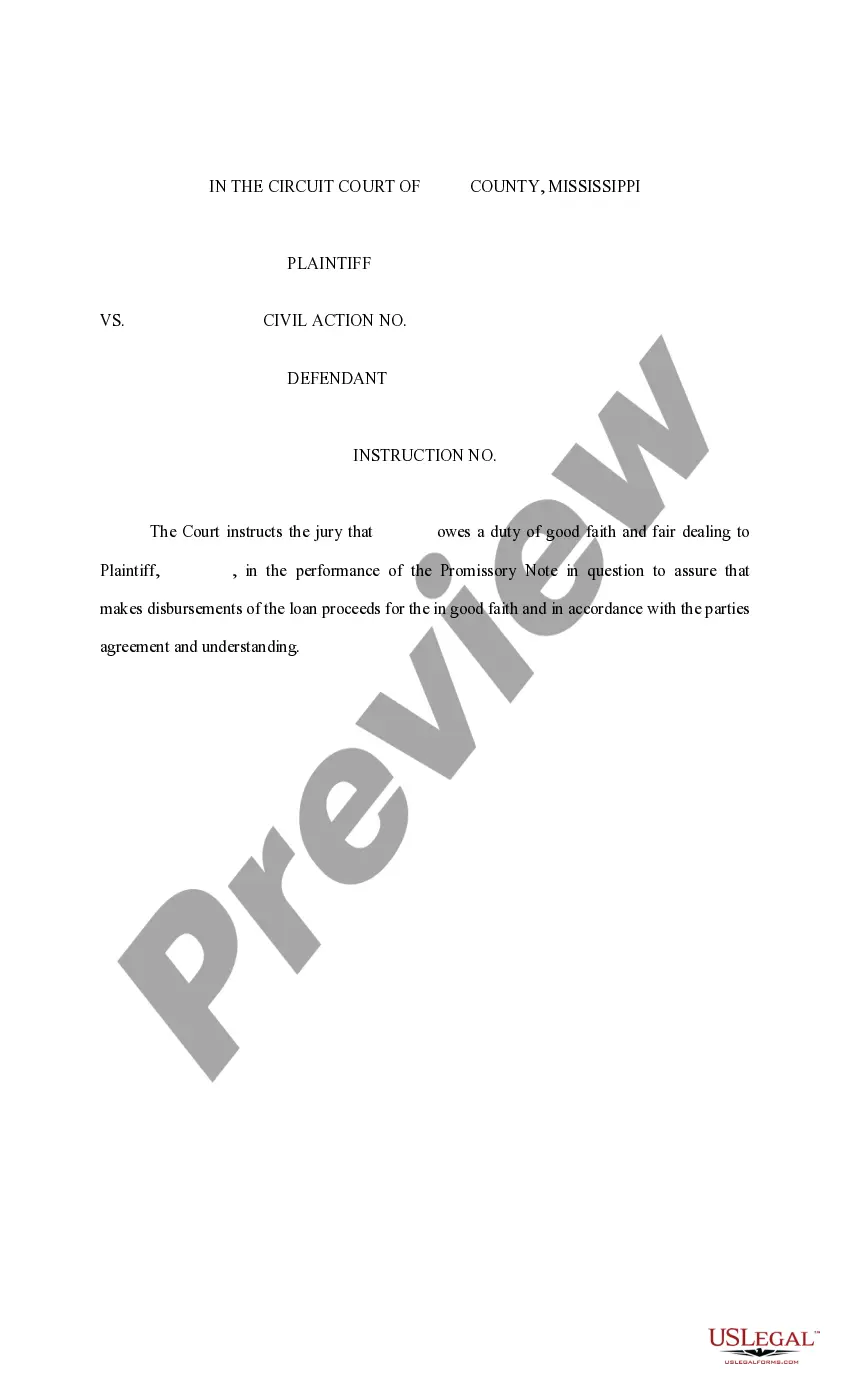
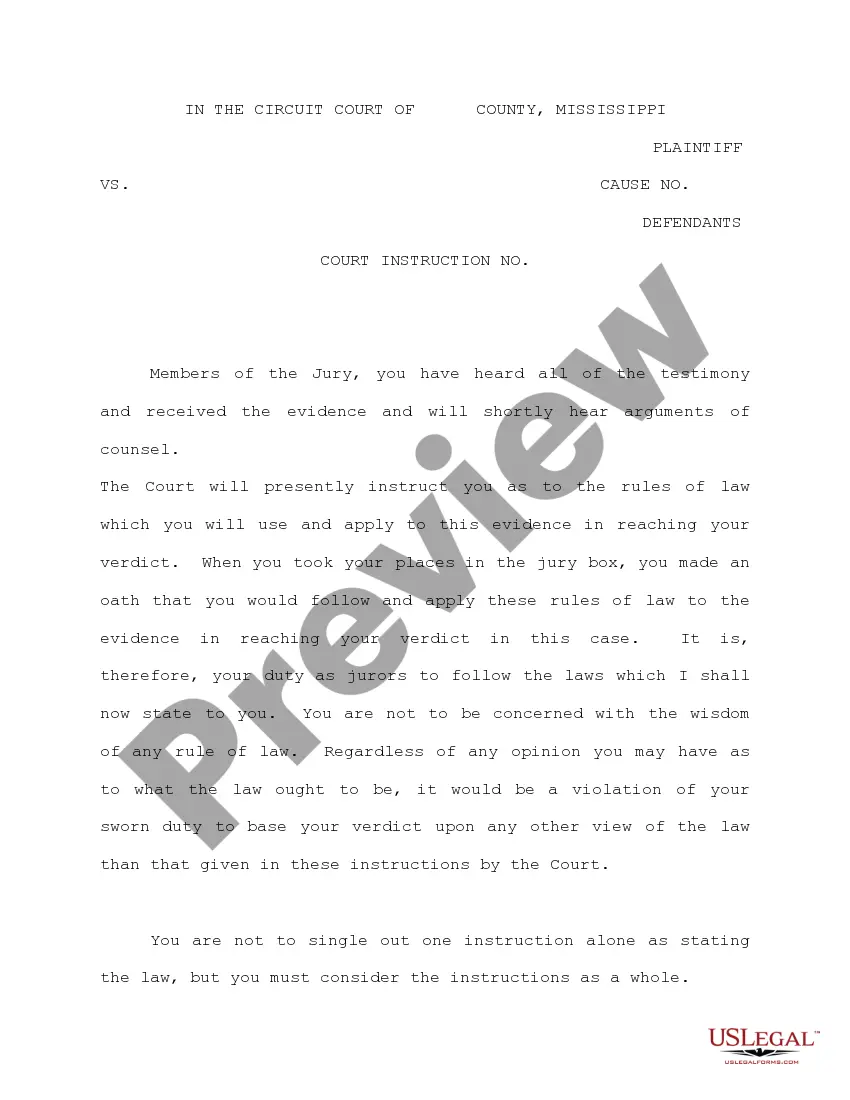
The Jury Instruction - Disbursement of Proceeds - Ordinary Banking Procedures form provides guidance to jurors in Mississippi regarding how to interpret and apply ordinary banking procedures when determining the disbursement of proceeds in a trial. This legal instruction is specifically tailored to the nuances of Mississippi law, ensuring jurors understand their responsibilities related to financial matters in litigation.
Main sections of this form
- Definition of ordinary banking procedures relevant to jury deliberations.
- Clarity on what constitutes a disbursement of proceeds.
- Instructions on how jurors should apply these procedures in context.
- Reference to relevant case law for compliance and understanding.
When to use this document
This jury instruction is used during court cases in Mississippi that involve financial transactions, disbursements, or any disputes related to banking processes. It assists jurors in making informed decisions based on established banking norms and practices, ensuring fairness in the judicial process.
Who this form is for
- Judges overseeing cases that require jury instructions on financial matters.
- Attorneys involved in civil or criminal litigation presenting financial evidence.
- Jurors needing clear guidance on handling financial aspects in trials.
Instructions for completing this form
- Review the relevant case details to contextualize the instructions.
- Ensure that the form language is compliant with current Mississippi case law.
- Provide the jurors with copies of the instruction during the trial for reference.
Notarization guidance
This form does not typically require notarization to be legally valid. However, some jurisdictions or document types may still require it. US Legal Forms provides secure online notarization powered by Notarize, available 24/7 for added convenience.
Get your form ready online
Our built-in tools help you complete, sign, share, and store your documents in one place.
Make edits, fill in missing information, and update formatting in US Legal Forms—just like you would in MS Word.
Download a copy, print it, send it by email, or mail it via USPS—whatever works best for your next step.
Sign and collect signatures with our SignNow integration. Send to multiple recipients, set reminders, and more. Go Premium to unlock E-Sign.
If this form requires notarization, complete it online through a secure video call—no need to meet a notary in person or wait for an appointment.
We protect your documents and personal data by following strict security and privacy standards.

Make edits, fill in missing information, and update formatting in US Legal Forms—just like you would in MS Word.

Download a copy, print it, send it by email, or mail it via USPS—whatever works best for your next step.

Sign and collect signatures with our SignNow integration. Send to multiple recipients, set reminders, and more. Go Premium to unlock E-Sign.

If this form requires notarization, complete it online through a secure video call—no need to meet a notary in person or wait for an appointment.

We protect your documents and personal data by following strict security and privacy standards.
Typical mistakes to avoid
- Failing to verify the compliance with the latest Mississippi legal standards.
- Providing outdated instructions that do not reflect current banking practices.
- Not customizing the form based on the specific case context.
Advantages of online completion
- Easy access to up-to-date legal language drafted by licensed attorneys.
- Convenience of downloading and printing the form immediately.
- Ability to customize the form to suit specific case needs.
Looking for another form?

Form popularity
FAQ
However, some basic modern services offered by the banks are discussed below:Bank Guarantee. Remittance of Funds. Credit cards.
The function of a Bank is to collect deposits from the public and lend those deposits for the development of Agriculture, Industry, Trade and Commerce. Bank pays interest at lower rates to the depositors and receives interests on loans and advances from them at higher rates.
Checking accounts. Savings accounts. Debit & credit cards. Insurance Wealth management.
Retail banking, also known as consumer banking or personal banking, is banking that provides financial services to individual consumers rather than businesses. Retail banking is a way for individual consumers to manage their money, have access to credit, and deposit their money in a secure manner.
Business loans. Checking accounts. Savings accounts. Debit and credit cards. Merchant services (credit card processing, reconciliation and reporting, check collection) Treasury services (payroll services, deposit services, etc.)
Phase 1 (1786 to 1969) The first bank in India, the General Bank of India, was set up in 1786. Phase 2 (1969 to 1991) Phase 3 (1991 onwards)
Gartner defines a core banking system as a back-end system that processes daily banking transactions and posts updates to accounts and other financial records. Core banking systems typically include deposit, loan and credit processing capabilities, with interfaces to general ledger systems and reporting tools.
Retail banking provides services to the general public, including mortgages, loans, deposits, and checking accounts.Internal banking operations at a retail bank involve opening new accounts, transferring money between accounts, and assisting customers with managing deposits.