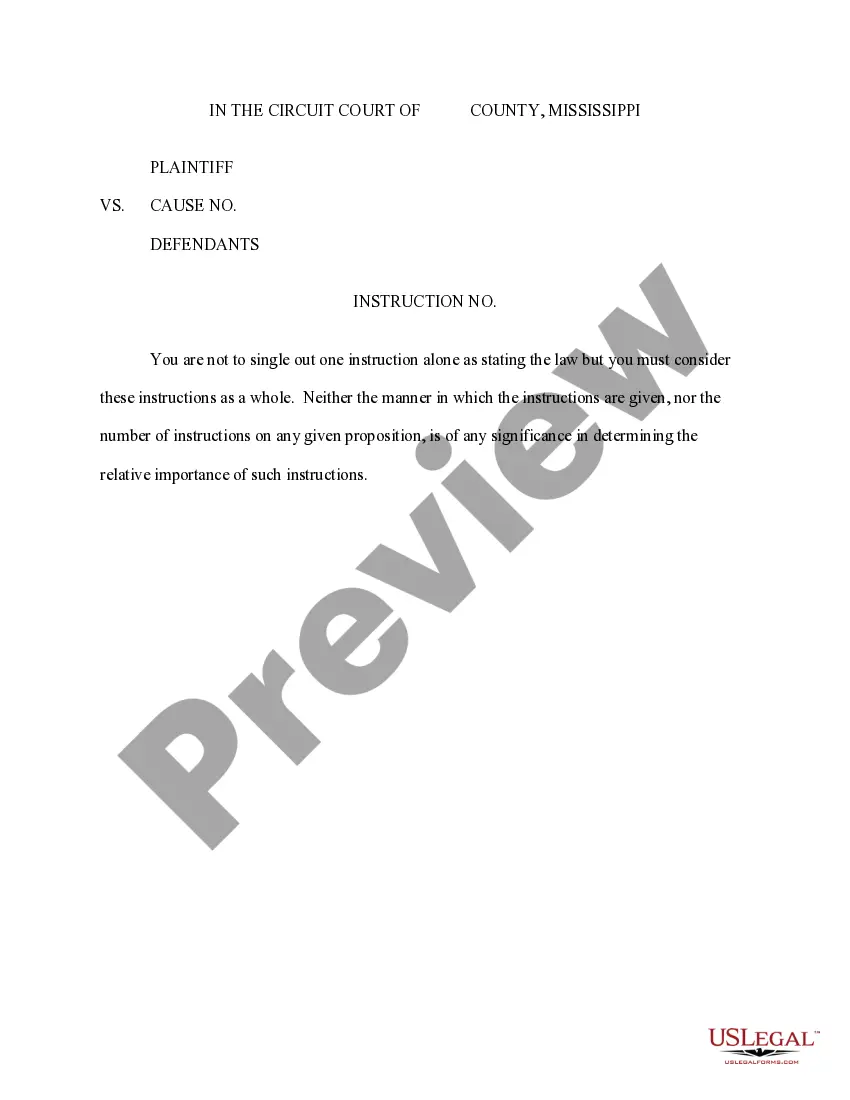
Mississippi Jury Instruction - Order of Instruction
What is this form?
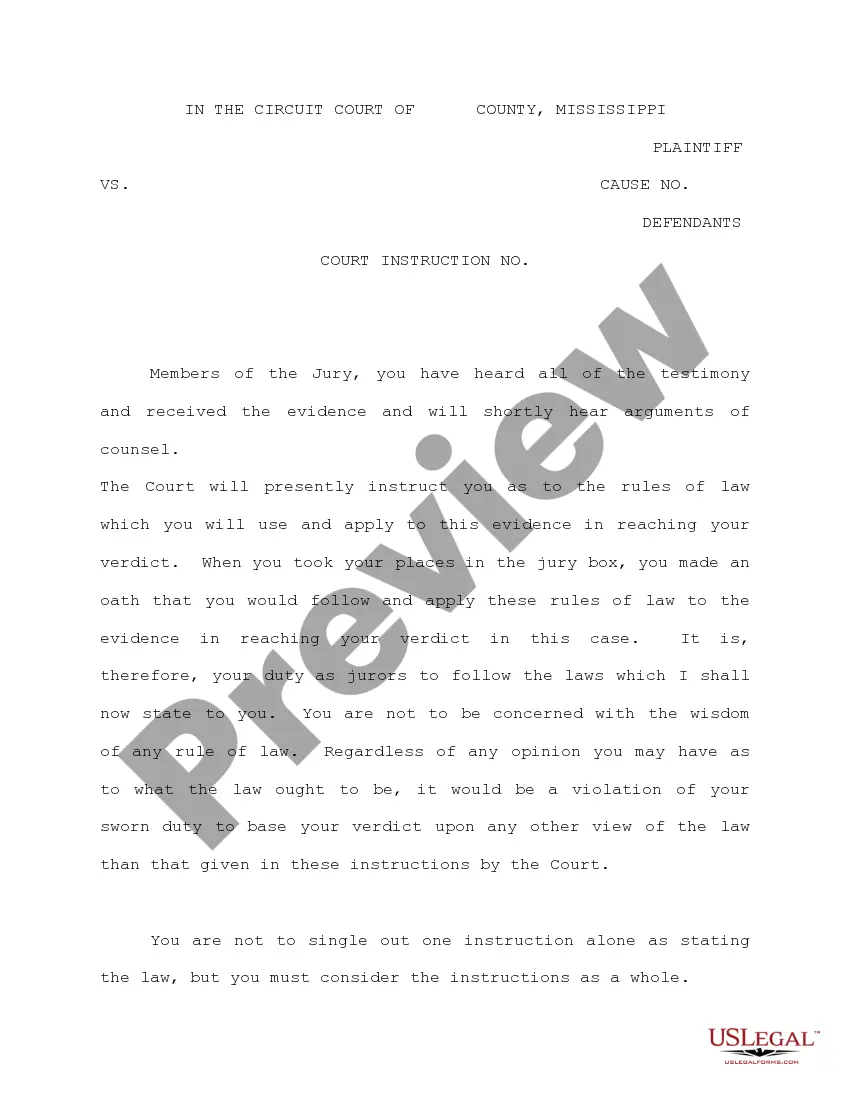
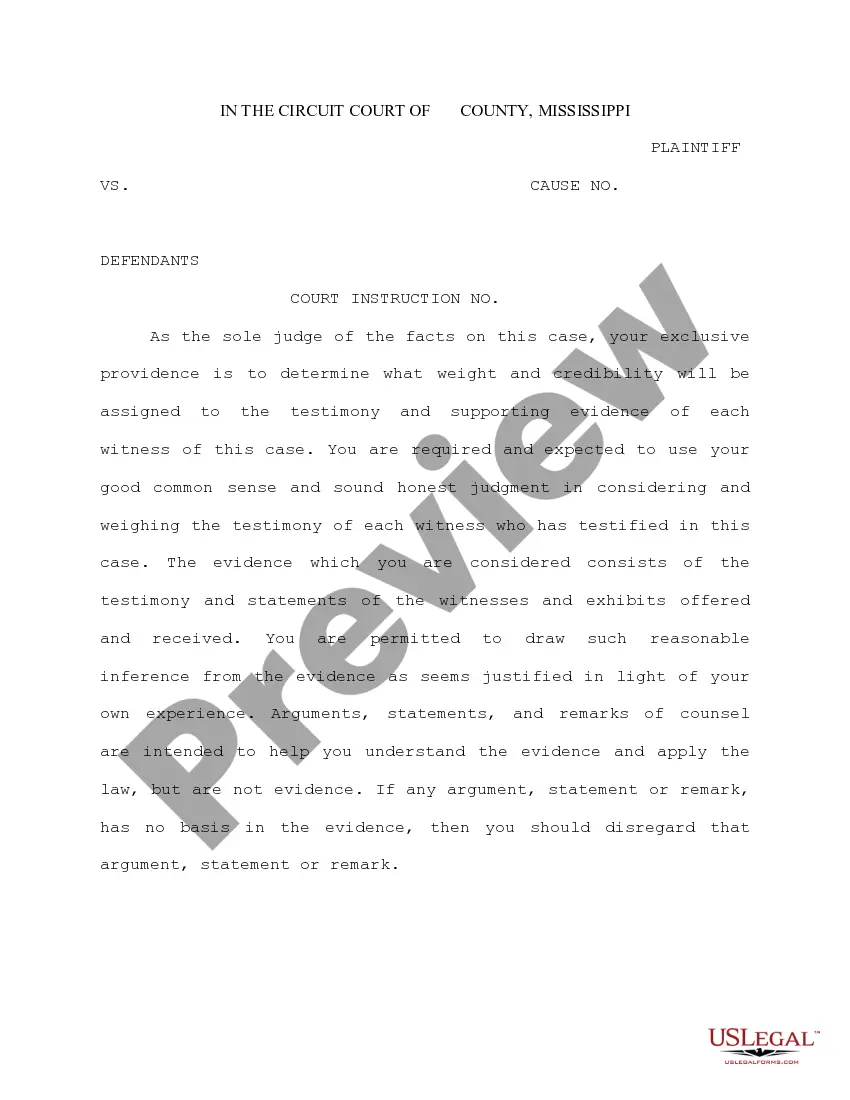
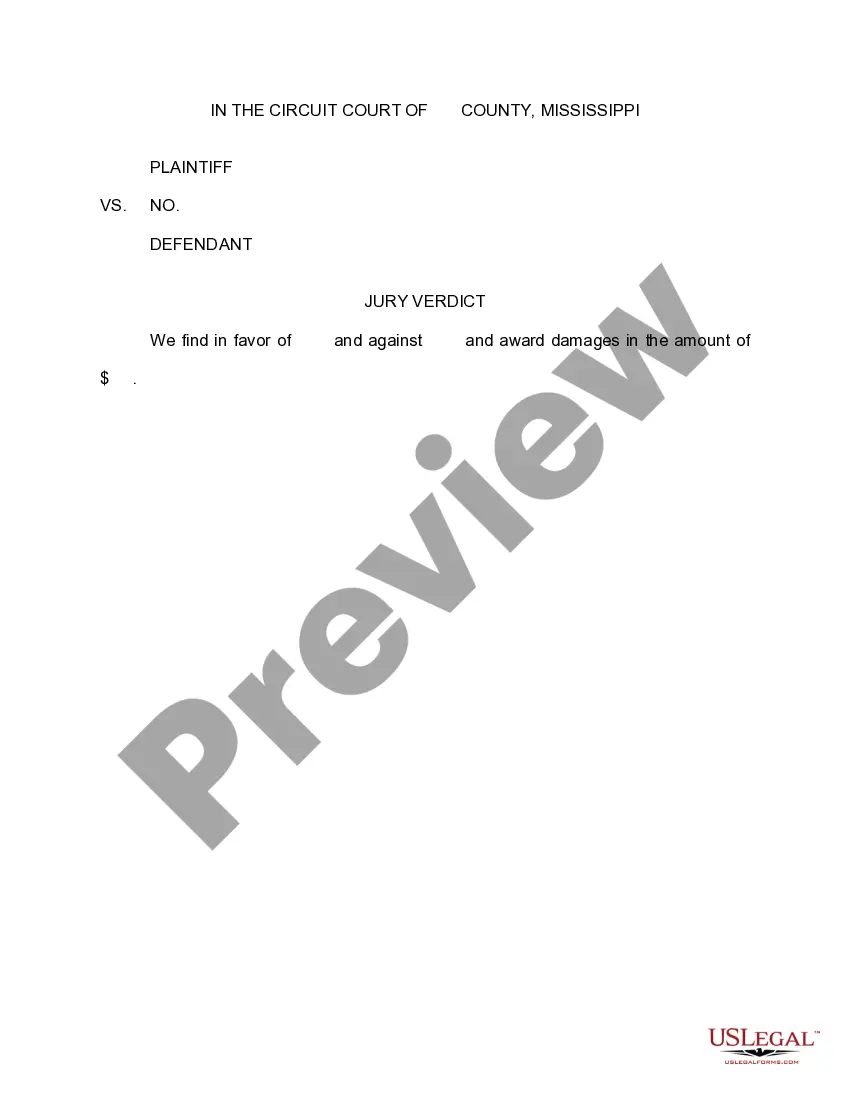
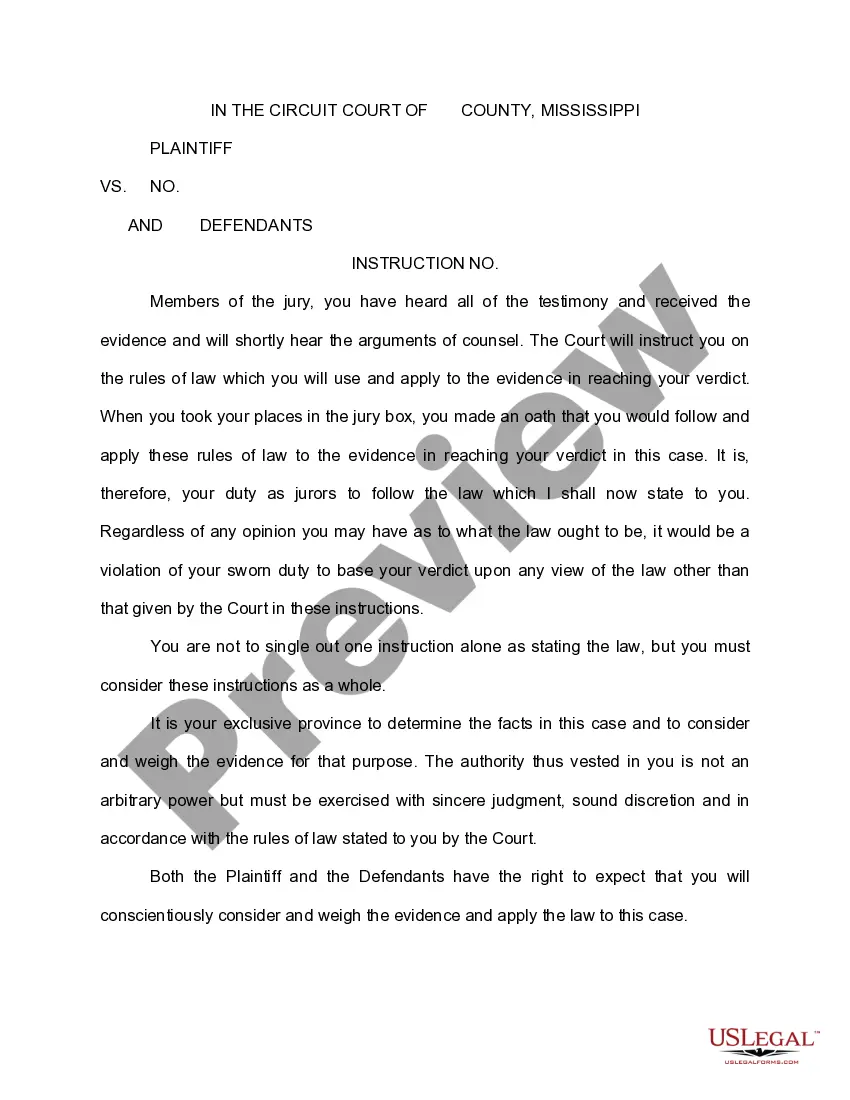
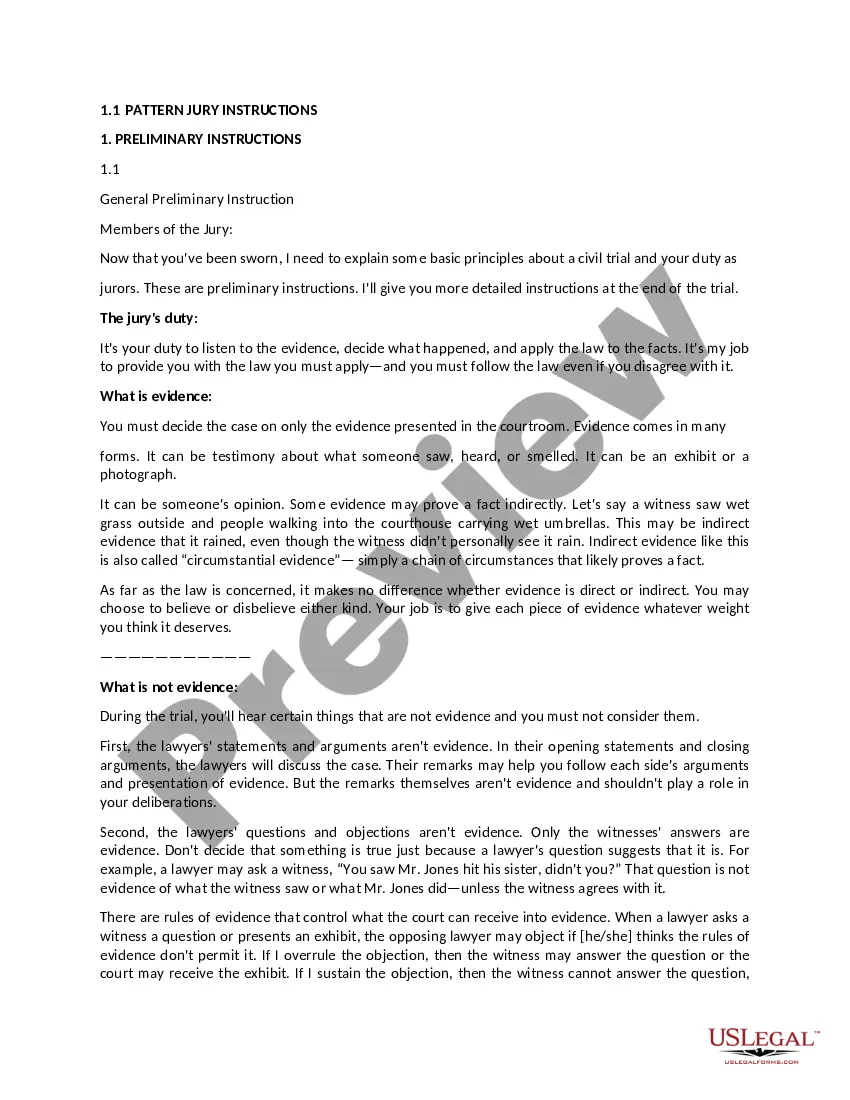
The Jury Instruction - Order of Instruction is an official document issued by the court that outlines specific directives for jurors during a trial. This form serves as a model for drafting a jury instruction order that a judge may require from a party in a legal proceeding. Unlike other legal forms, this one specifically addresses the instructions given to jurors, making it essential for ensuring that the jury understands their responsibilities and the applicable law.
Main sections of this form
- Title of the order, clearly specifying it is a jury instruction.
- Introduction outlining the context for the instruction.
- Specific legal guidelines and information to be communicated to the jury.
- Signature line for the judge, affirming the order's authenticity.
- Provision for adjustments based on individual case facts.
When this form is needed
This form is essential in court proceedings when the judge requires specific instructions to be given to the jury. It can be used in various scenarios, such as civil and criminal trials, where the judge needs to clarify legal standards, procedures, or the law that applies to the case at hand. Use this form whenever the court directs a party to prepare the order for jury instructions.
Who this form is for
- Attorneys preparing jury instructions for court cases.
- Parties involved in legal proceedings that require jury trials.
- Paralegals assisting lawyers in drafting court documents.
- Litigants representing themselves who need to submit clear jury instructions.
How to complete this form
- Identify the case title and court information at the top of the form.
- Clearly state the purpose of the instruction in the introduction section.
- Detail the specific instructions the jury needs to follow regarding the case.
- Include any relevant law or statutes that support the jury instructions.
- Sign and date the order line designated for the judge.
Does this document require notarization?
This form does not typically require notarization to be legally valid. However, some jurisdictions or document types may still require it. US Legal Forms provides secure online notarization powered by Notarize, available 24/7 for added convenience.
Get your form ready online
Our built-in tools help you complete, sign, share, and store your documents in one place.
Make edits, fill in missing information, and update formatting in US Legal Forms—just like you would in MS Word.
Download a copy, print it, send it by email, or mail it via USPS—whatever works best for your next step.
Sign and collect signatures with our SignNow integration. Send to multiple recipients, set reminders, and more. Go Premium to unlock E-Sign.
If this form requires notarization, complete it online through a secure video call—no need to meet a notary in person or wait for an appointment.
We protect your documents and personal data by following strict security and privacy standards.

Make edits, fill in missing information, and update formatting in US Legal Forms—just like you would in MS Word.

Download a copy, print it, send it by email, or mail it via USPS—whatever works best for your next step.

Sign and collect signatures with our SignNow integration. Send to multiple recipients, set reminders, and more. Go Premium to unlock E-Sign.

If this form requires notarization, complete it online through a secure video call—no need to meet a notary in person or wait for an appointment.

We protect your documents and personal data by following strict security and privacy standards.
Typical mistakes to avoid
- Failing to include all required legal references for clarity.
- Using overly complex language that may confuse jurors.
- Not tailoring the instruction to the specific facts of the case.
- Omitting the signature line or not signing it appropriately.
Benefits of using this form online
- Convenient access to downloadable legal templates for quick use.
- Editability allows customization to meet the specifics of your case.
- Reliability of forms drafted by licensed attorneys, ensuring legal soundness.
Looking for another form?
Form popularity
FAQ
A jury instruction is given by the judge to the jury to explain what is happening in the court, to explain the points of law relevant to the case, to explain certain aspects of the evidence presented and to assist the jurors in understanding their duties in reaching a verdict.
These are civil or criminal jury instructions approved by a state court, bench committee, or bar association. They are commonly used by courts in the relevant jurisdiction, as they ease the process of drafting fair jury instructions and theoretically do not have errors.
A judgment notwithstanding the verdict (or JNOV) is an order by a judge after a jury has returned its verdict. The judge can overturn the jury's verdict if he or she feels it cannot reasonably be supported by the evidence or if it contradicts itself.
There is no statutory entitlement for employees to be paid their normal wages in respect of absence due to jury service. An employee who is not paid in full by their employer during jury service can claim an allowance for loss of earnings from the court, but this may not cover their normal wages.
The criminal statute of limitations requires prosecutors to file criminal charges against a suspect within two years for misdemeanors and within five years for certain felonies, but there is no time limit in Mississippi for charges of murder, kidnapping, rape, burglary, robbery, larceny, and several other serious
On the average, jurors serve approximately 1-3 days during a one month term of service. The Judge will adjourn the jury each evening and will instruct you on what time you must return the following morning. You must check in with the Jury Department each morning.
The judge instructs the jury about the relevant laws that should guide its deliberations. (In some jurisdictions, the court may instruct the jury at any time after the close of evidence.The judge reads the instructions to the jury. This is commonly referred to as the judge's charge to the jury.
Jury instructions, directions to the jury, or judge's charge are legal rules that jurors should follow when deciding a case.