Mississippi Jury Instruction - Jury Verdict
About this form
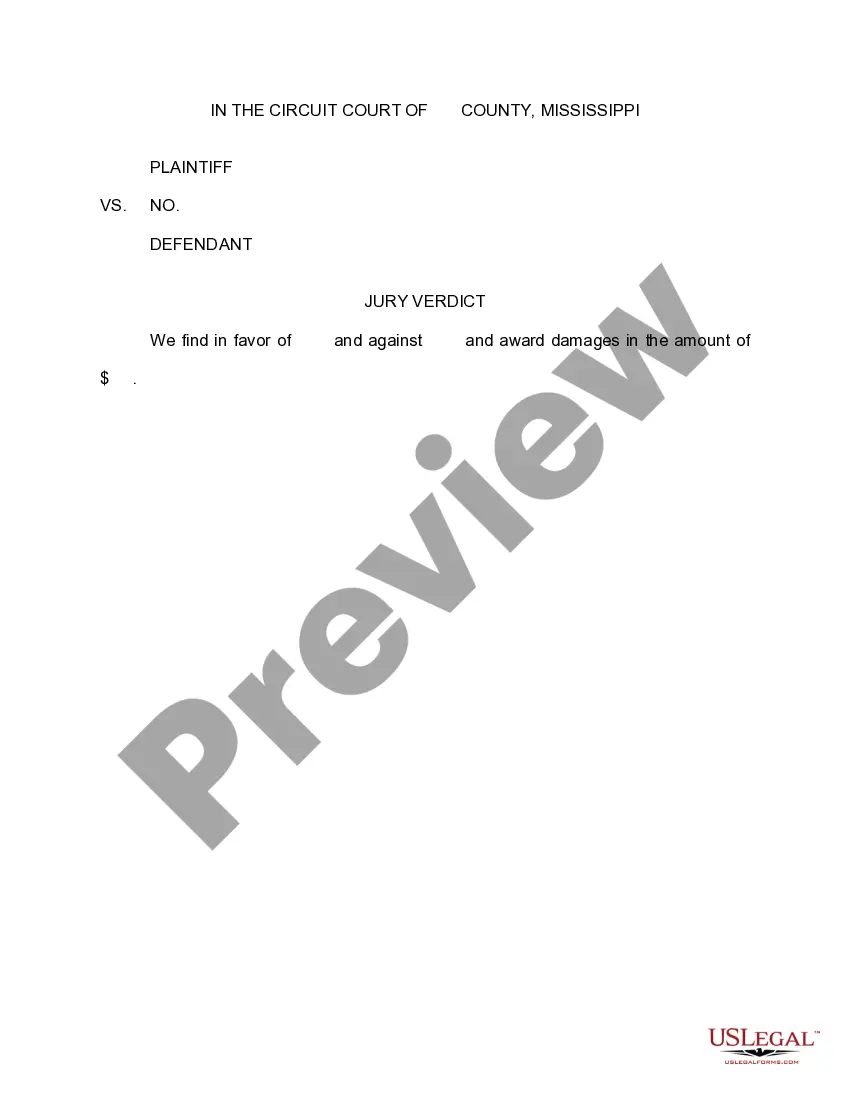
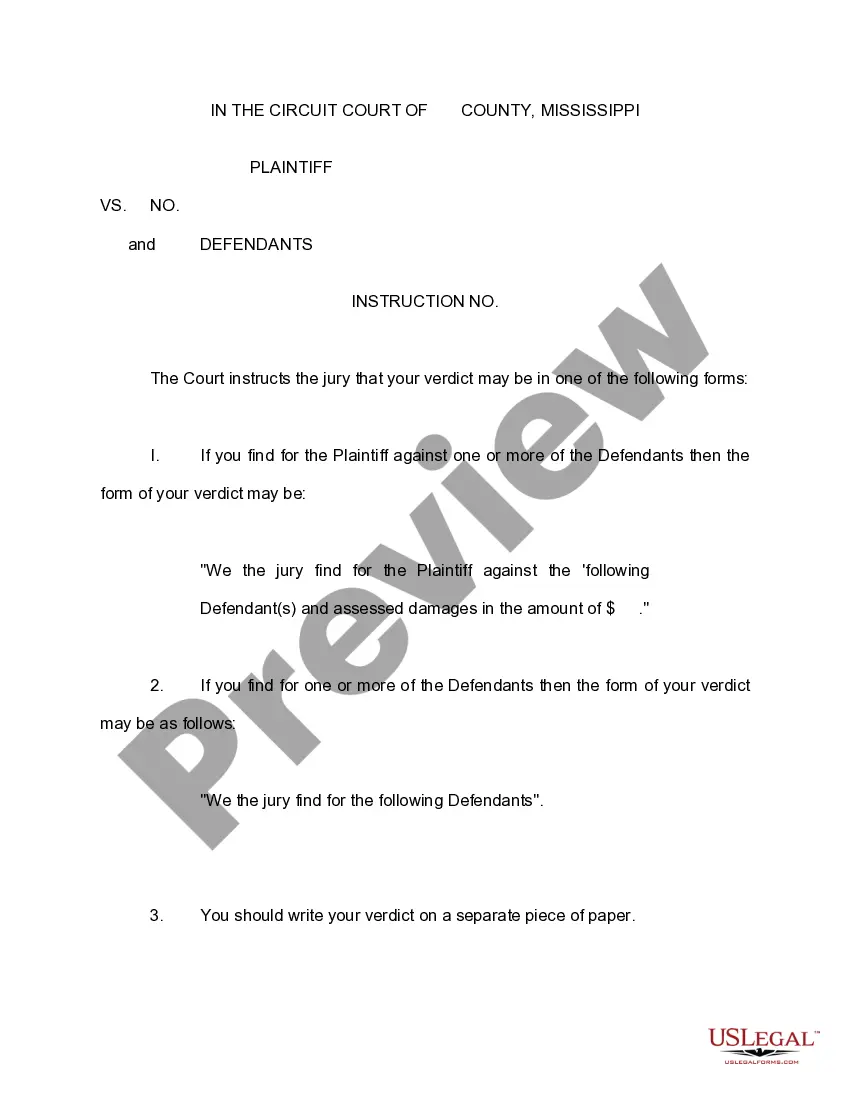
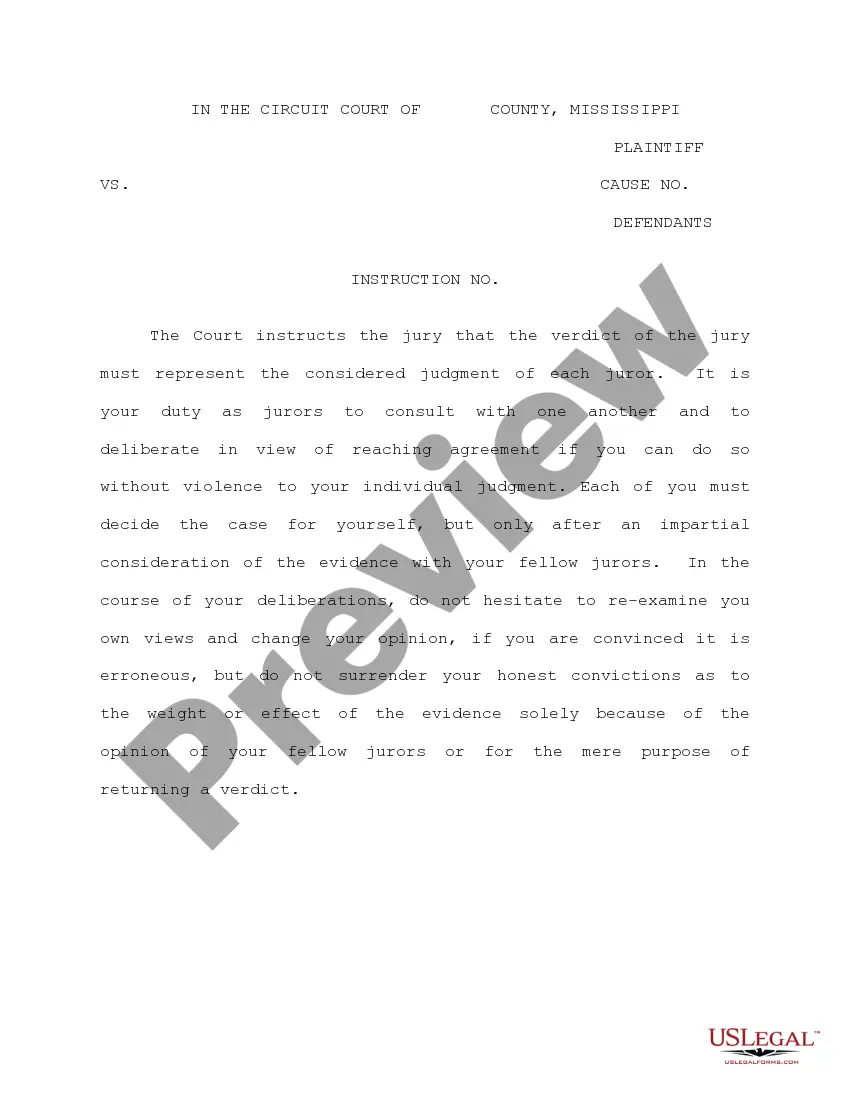
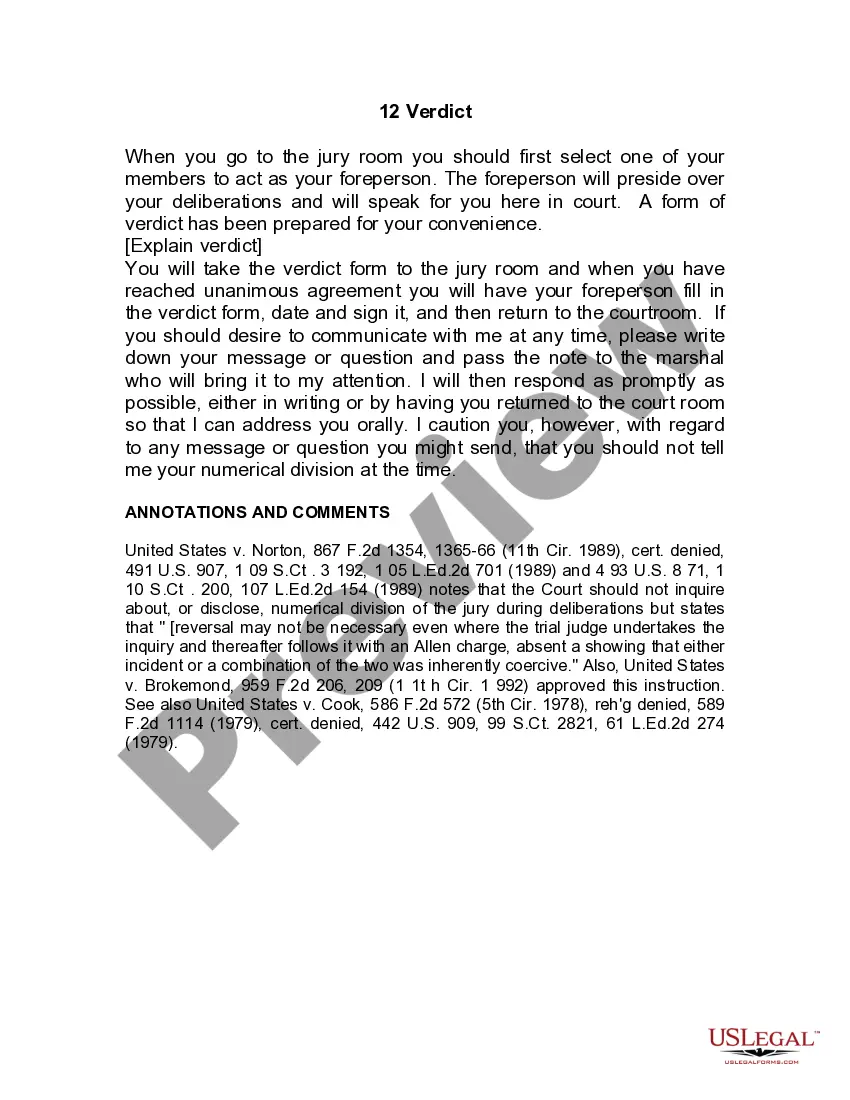
The Jury Instruction - Jury Verdict form is a standardized document used in Mississippi to communicate the jury's decision in a civil or criminal case. This form helps establish the final ruling, including whether the plaintiff or defendant is favored and the amount of damages awarded. It differs from other forms of jury instructions in that it specifically addresses the verdict itself, rather than the procedural aspects of a trial.
Key components of this form
- Case title, including the plaintiff and defendant names.
- Reference number associated with the case.
- Verdict declaration stating the jury's findings in favor of one party over the other.
- Award amount for damages, if applicable.
When this form is needed
This form should be used at the conclusion of a trial when the jury has reached a decision regarding the case. It is essential after deliberation, specifically when a ruling on liability and damages needs to be formally presented. This is a critical step in finalizing the courtroom proceedings and transitioning to the enforcement of the jury's decision.
Intended users of this form
This form is intended for:
- Jurors who are instructed to document their verdict.
- Legal counsel representing either party in a case.
- Court clerks responsible for filing court documents.
How to prepare this document
- Identify the names of the plaintiff and defendant in the appropriate sections.
- Enter the official case number to maintain accurate court records.
- Indicate the finding of the jury in favor of the designated party.
- Specify the amount of damages awarded, if any, in the provided space.
- Sign and date the form as required after completion.
Does this form need to be notarized?
Notarization is generally not required for this form. However, certain states or situations might demand it. You can complete notarization online through US Legal Forms, powered by Notarize, using a verified video call available anytime.
Get your form ready online
Our built-in tools help you complete, sign, share, and store your documents in one place.
Make edits, fill in missing information, and update formatting in US Legal Forms—just like you would in MS Word.
Download a copy, print it, send it by email, or mail it via USPS—whatever works best for your next step.
Sign and collect signatures with our SignNow integration. Send to multiple recipients, set reminders, and more. Go Premium to unlock E-Sign.
If this form requires notarization, complete it online through a secure video call—no need to meet a notary in person or wait for an appointment.
We protect your documents and personal data by following strict security and privacy standards.

Make edits, fill in missing information, and update formatting in US Legal Forms—just like you would in MS Word.

Download a copy, print it, send it by email, or mail it via USPS—whatever works best for your next step.

Sign and collect signatures with our SignNow integration. Send to multiple recipients, set reminders, and more. Go Premium to unlock E-Sign.

If this form requires notarization, complete it online through a secure video call—no need to meet a notary in person or wait for an appointment.

We protect your documents and personal data by following strict security and privacy standards.
Typical mistakes to avoid
- Failing to include the case number, which is crucial for court identification.
- Not specifying the names correctly, leading to confusion about the ruling.
- Omitting the damages amount or leaving it blank, which can affect enforcement.
Benefits of completing this form online
- Easy access to a legally crafted form that saves time.
- Ability to edit the form as needed before printing.
- Instant download provides a quick solution for legal needs.
Looking for another form?



Form popularity
FAQ
Jury Instructions. instructions that are given by the trial judge that specifically state what the defendant can be found guilty of and what the prosecution or plaintiff has to prove in order for a guilty verdict.
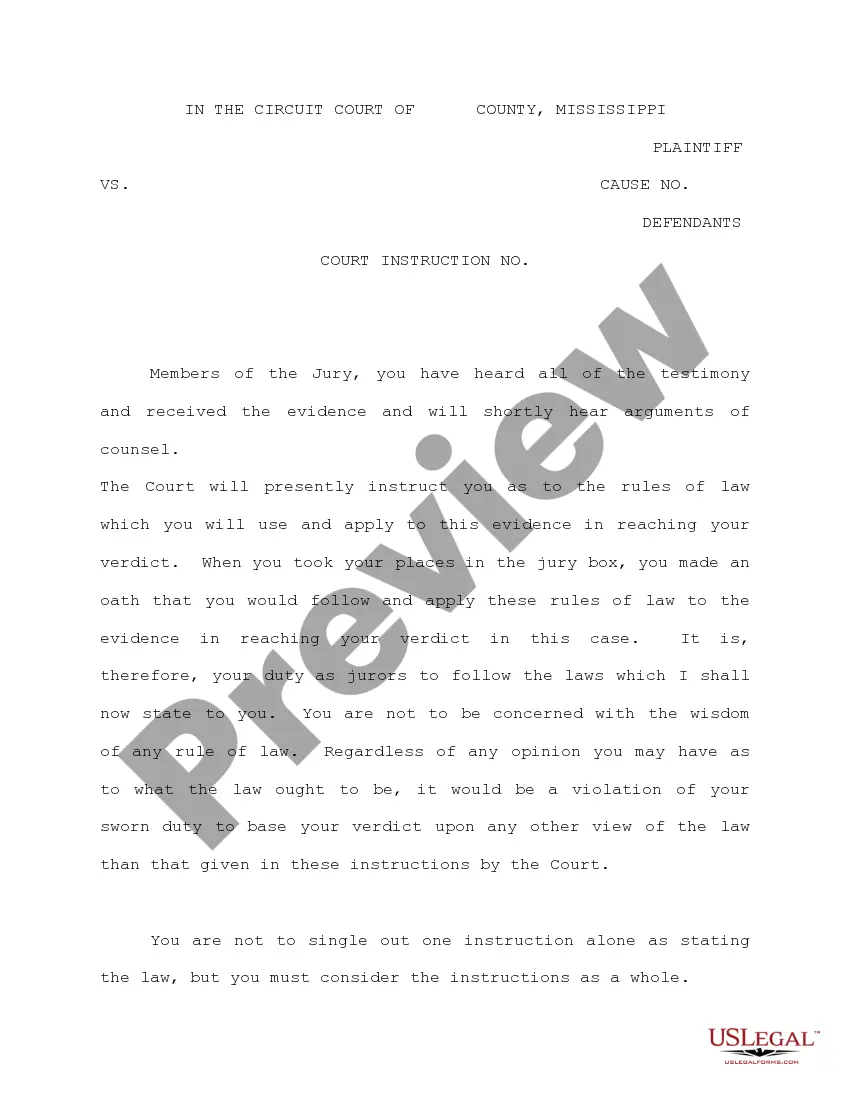
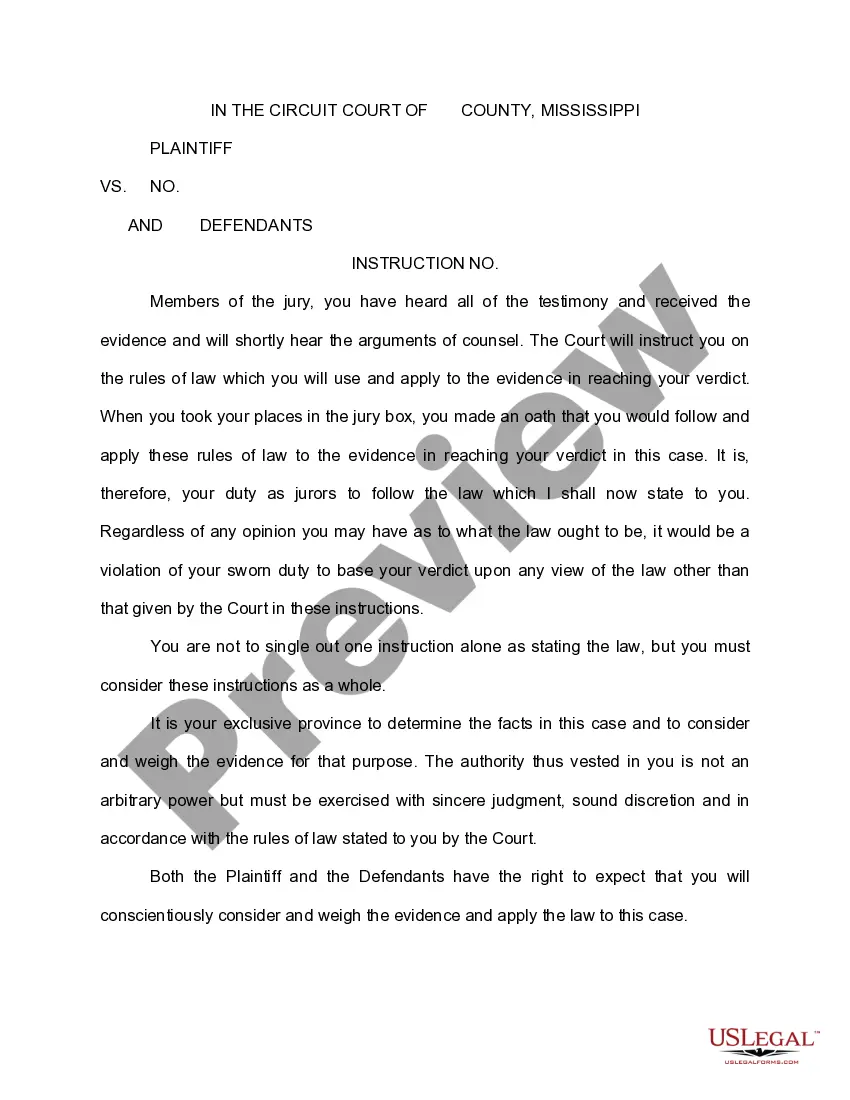
Jury instructions, directions to the jury, or judge's charge are legal rules that jurors should follow when deciding a case.
A jury instruction is given by the judge to the jury to explain what is happening in the court, to explain the points of law relevant to the case, to explain certain aspects of the evidence presented and to assist the jurors in understanding their duties in reaching a verdict.
Yes, a jury can make reasonable inferences in arriving at a verdict .
A judgment notwithstanding the verdict (or JNOV) is an order by a judge after a jury has returned its verdict. The judge can overturn the jury's verdict if he or she feels it cannot reasonably be supported by the evidence or if it contradicts itself.
These are civil or criminal jury instructions approved by a state court, bench committee, or bar association. They are commonly used by courts in the relevant jurisdiction, as they ease the process of drafting fair jury instructions and theoretically do not have errors.
A curative instruction is given to a jury by the judge in a case to negate the prejudicial effect of an erroneous instruction or tainted evidence.
The judge instructs the jury about the relevant laws that should guide its deliberations. (In some jurisdictions, the court may instruct the jury at any time after the close of evidence.The judge reads the instructions to the jury. This is commonly referred to as the judge's charge to the jury.