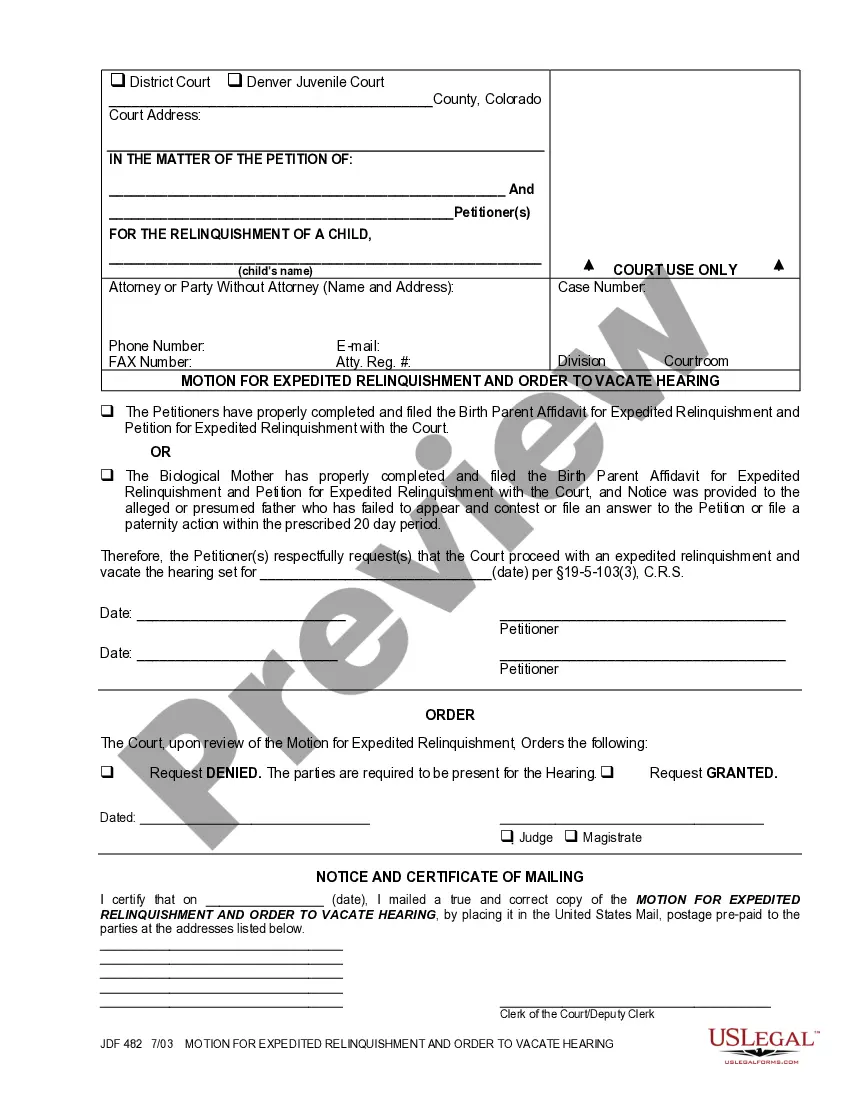
Mississippi Jury Instruction - Rules of Law
Understanding this form
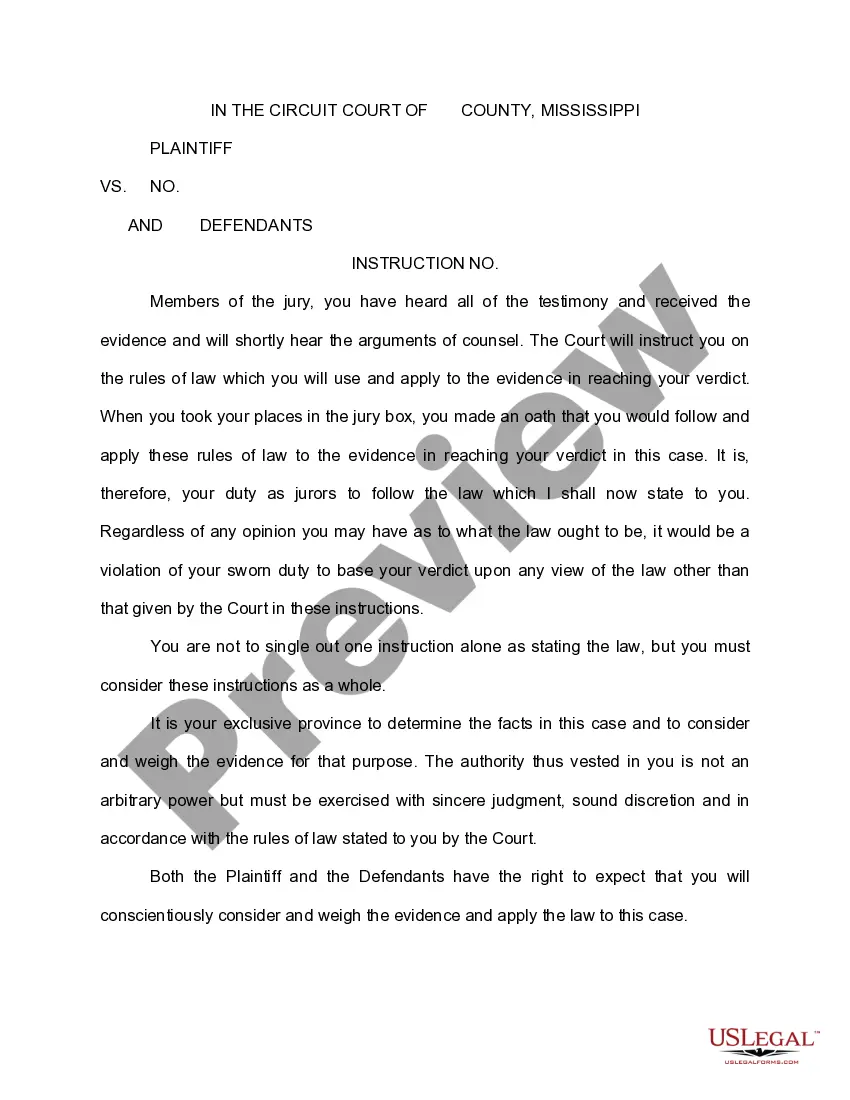
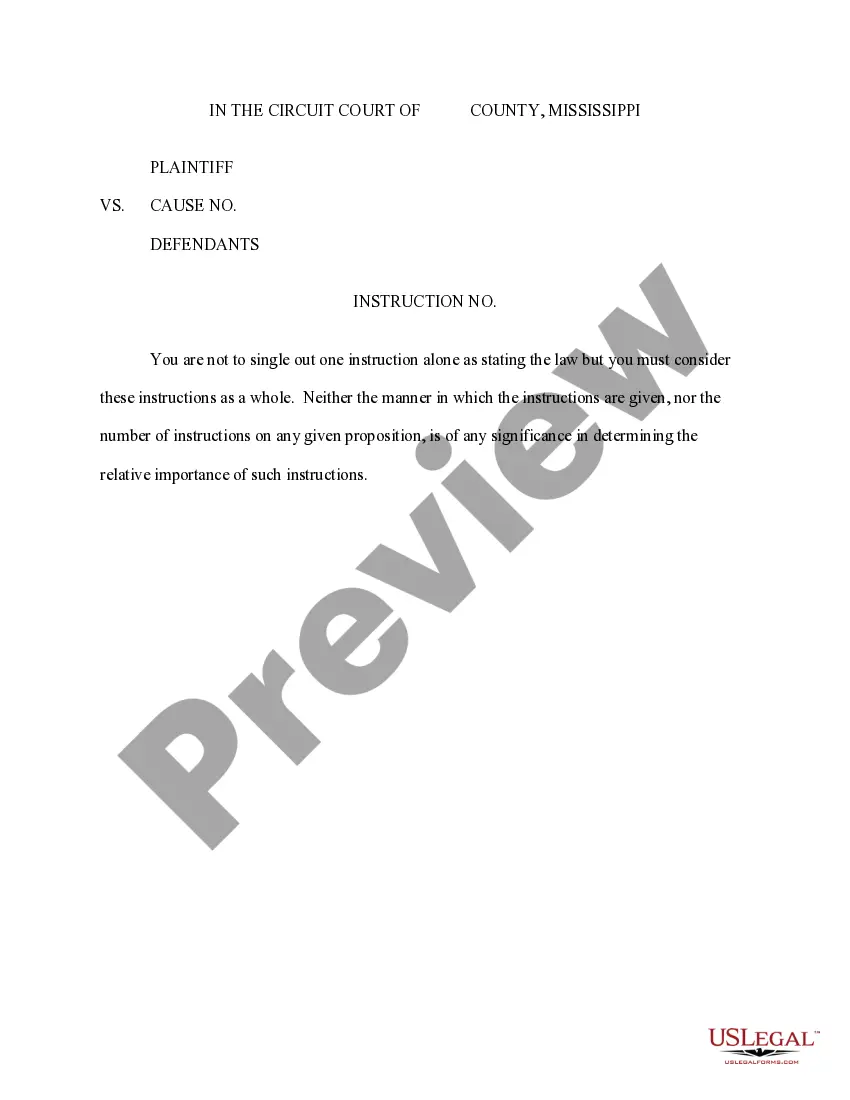
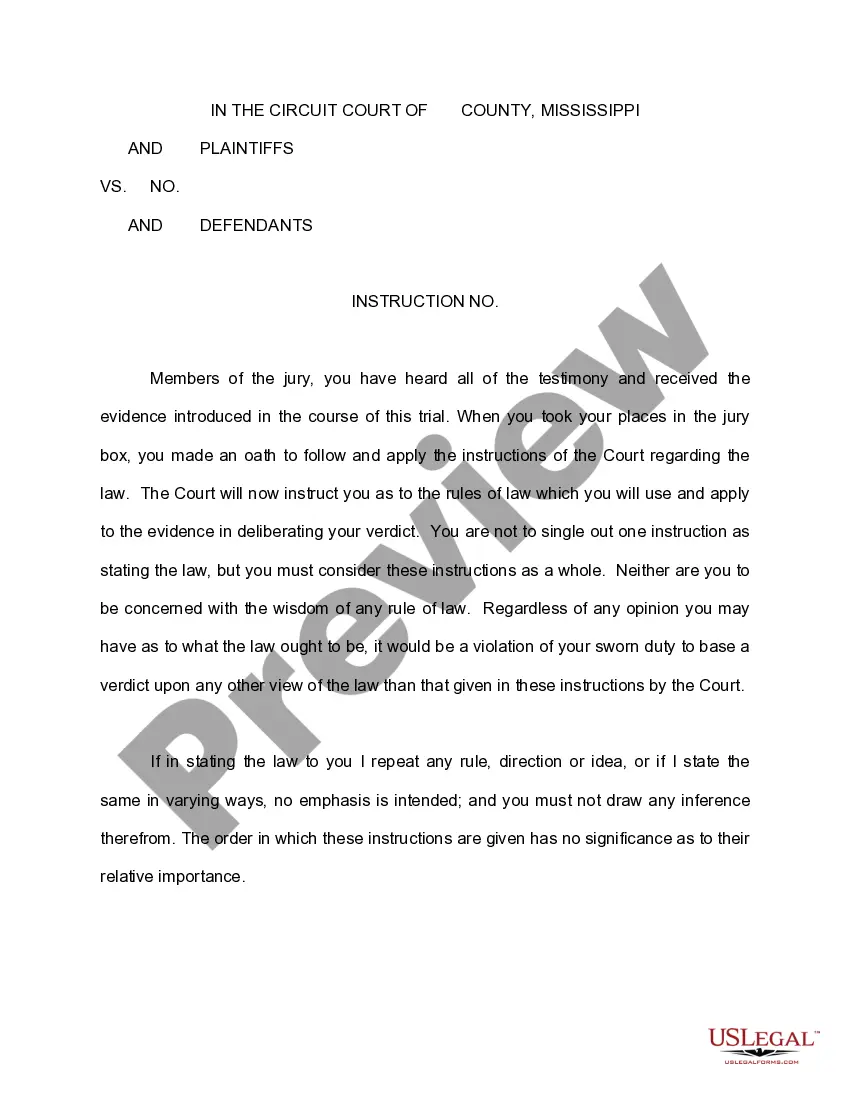
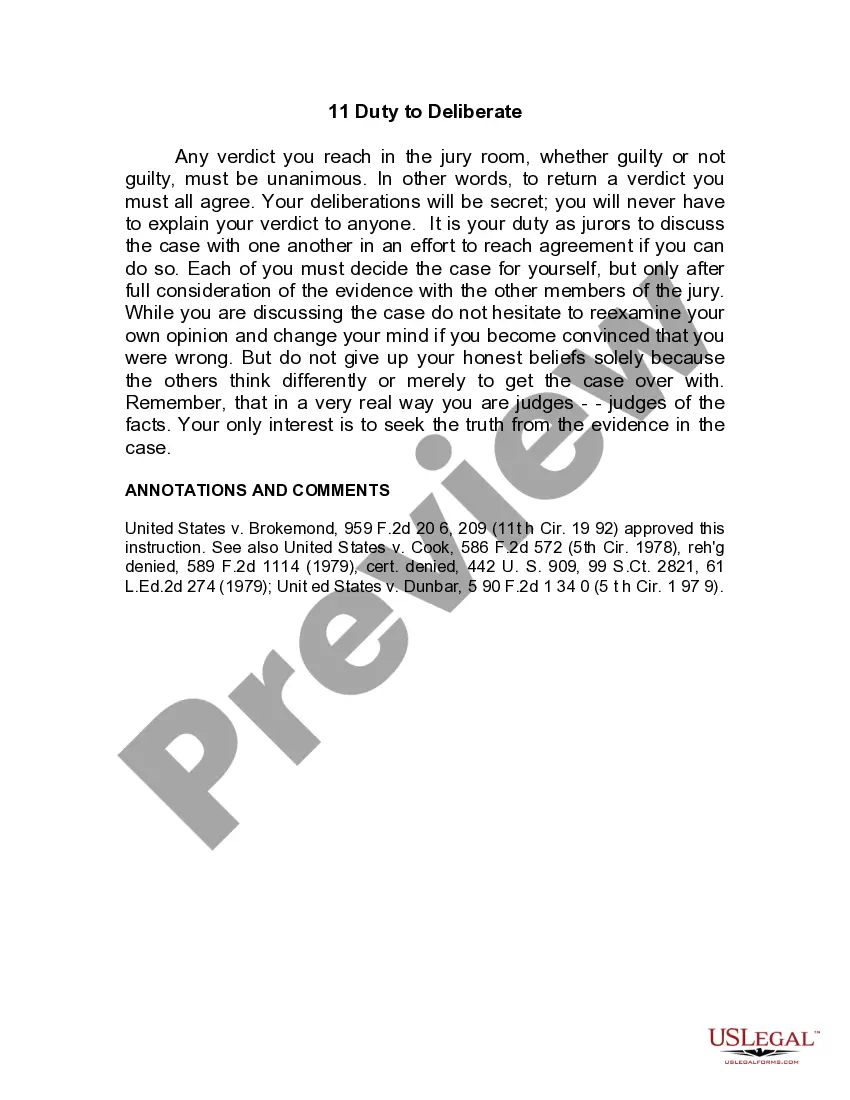
The Jury Instruction - Rules of Law form serves as a guiding document for jurors in Mississippi, outlining the legal principles they must follow when deliberating a case. This form ensures that jurors understand their responsibilities to apply the law as instructed by the judge, thus helping to maintain the integrity of the judicial process. It differs from other legal forms as it is specifically designed to instruct jurors rather than record or verify legal agreements or actions.
Main sections of this form
- Introduction to jurors regarding their duties and responsibilities.
- Emphasis on the adherence to the law as instructed by the court.
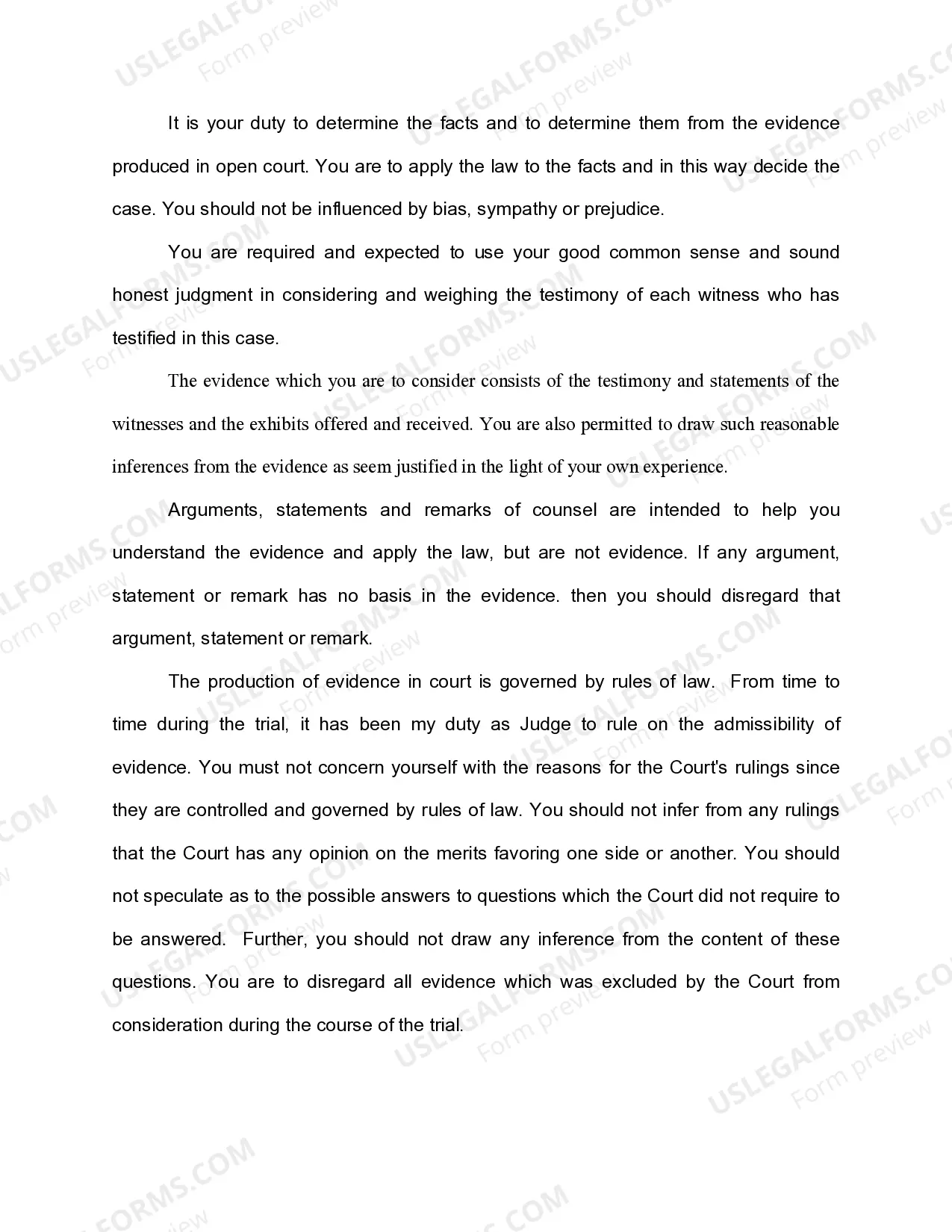
- Instructions on evaluating evidence and testimony impartially.
- Clarification on the distinction between arguments of counsel and evidentiary facts.
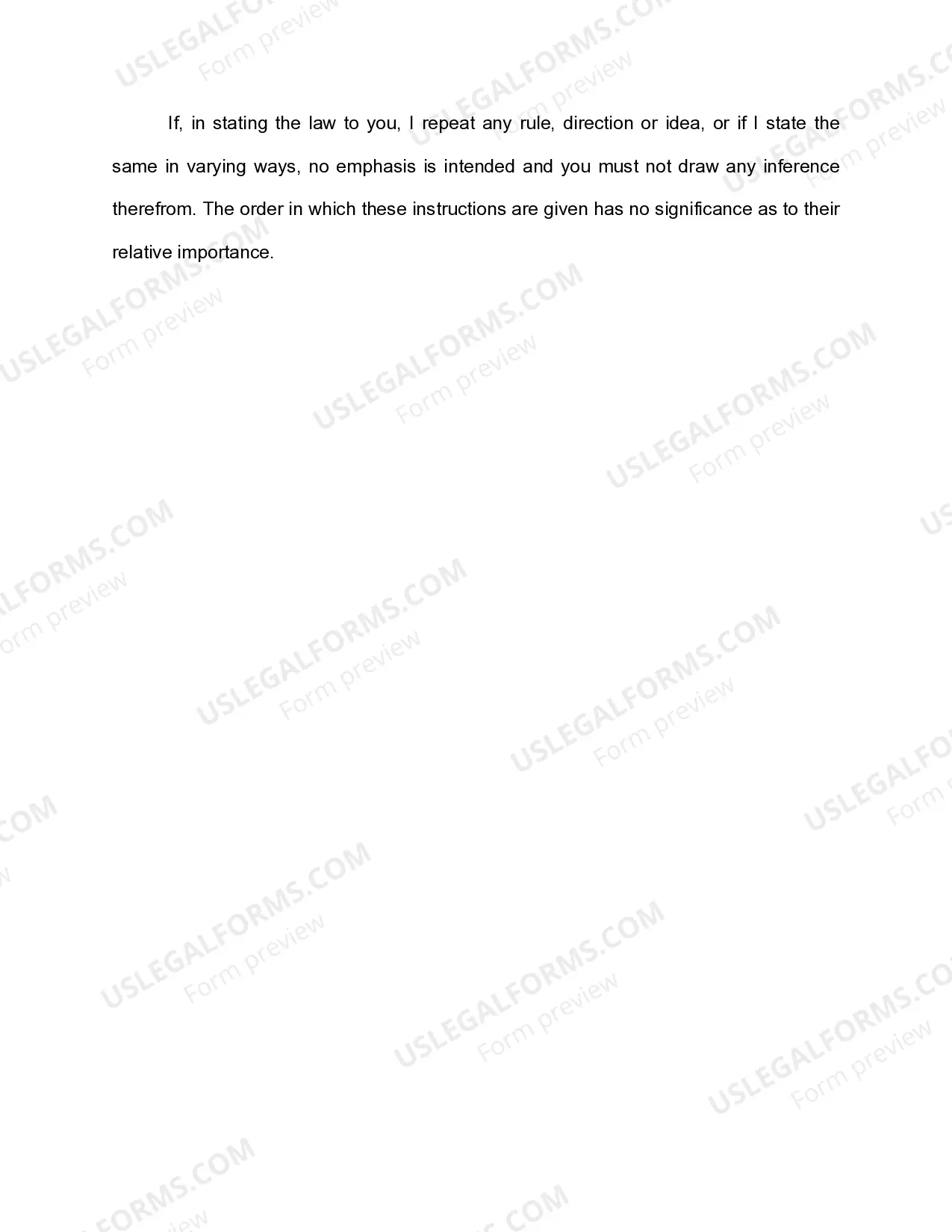
- Guidelines on the legal process surrounding the admissibility of evidence.
Situations where this form applies
This form is essential during jury trials in which jurors are tasked with understanding the application of the law to the facts of the case. It is used when a judge needs to provide comprehensive instructions to ensure jurors are well-informed about their roles and the legal standards they must adhere to for a fair verdict.
Who should use this form
- Judges presiding over jury trials in Mississippi.
- Legal professionals seeking to prepare jurors adequately for their roles.
- Attorneys looking to understand and convey jury instructions to their clients.
Instructions for completing this form
- Identify and state the case title along with the case number.
- Present the instruction number before detailing the jury instructions.
- Outline the law as directed by the court with clarity and accuracy.
- Ensure the instructions convey the need for impartiality and adherence to the legal principles provided.
- Review the completed instructions for compliance with existing laws and regulations.
Is notarization required?
This form does not typically require notarization to be legally valid. However, some jurisdictions or document types may still require it. US Legal Forms provides secure online notarization powered by Notarize, available 24/7 for added convenience.
Get your form ready online
Our built-in tools help you complete, sign, share, and store your documents in one place.
Make edits, fill in missing information, and update formatting in US Legal Forms—just like you would in MS Word.
Download a copy, print it, send it by email, or mail it via USPS—whatever works best for your next step.
Sign and collect signatures with our SignNow integration. Send to multiple recipients, set reminders, and more. Go Premium to unlock E-Sign.
If this form requires notarization, complete it online through a secure video call—no need to meet a notary in person or wait for an appointment.
We protect your documents and personal data by following strict security and privacy standards.

Make edits, fill in missing information, and update formatting in US Legal Forms—just like you would in MS Word.

Download a copy, print it, send it by email, or mail it via USPS—whatever works best for your next step.

Sign and collect signatures with our SignNow integration. Send to multiple recipients, set reminders, and more. Go Premium to unlock E-Sign.

If this form requires notarization, complete it online through a secure video call—no need to meet a notary in person or wait for an appointment.

We protect your documents and personal data by following strict security and privacy standards.
Common mistakes to avoid
- Failing to update the language to reflect current case law.
- Omitting essential instructions that jurors need to understand their role.
- Using unclear language that may confuse jurors.
- Neglecting to specify the importance of impartiality in the jury's deliberation.
Benefits of using this form online
- Convenient access to a pre-drafted jury instruction template.
- Editability allows customization to fit specific case needs.
- Reliability, backed by templates drafted by licensed attorneys.
What to keep in mind
- The form provides essential jury instructions for fair legal proceedings.
- It must be adapted to comply with Mississippi's legal standards.
- Clear and precise language is crucial for effective juror comprehension.
Looking for another form?
Form popularity
FAQ
A curative instruction is given to a jury by the judge in a case to negate the prejudicial effect of an erroneous instruction or tainted evidence.
Jury instructions, directions to the jury, or judge's charge are legal rules that jurors should follow when deciding a case.
These are civil or criminal jury instructions approved by a state court, bench committee, or bar association. They are commonly used by courts in the relevant jurisdiction, as they ease the process of drafting fair jury instructions and theoretically do not have errors.
A jury instruction is given by the judge to the jury to explain what is happening in the court, to explain the points of law relevant to the case, to explain certain aspects of the evidence presented and to assist the jurors in understanding their duties in reaching a verdict.
Yes, a jury can make reasonable inferences in arriving at a verdict .
Jury Instructions. instructions that are given by the trial judge that specifically state what the defendant can be found guilty of and what the prosecution or plaintiff has to prove in order for a guilty verdict.
A judgment notwithstanding the verdict (or JNOV) is an order by a judge after a jury has returned its verdict. The judge can overturn the jury's verdict if he or she feels it cannot reasonably be supported by the evidence or if it contradicts itself.
The judge instructs the jury about the relevant laws that should guide its deliberations. (In some jurisdictions, the court may instruct the jury at any time after the close of evidence.The judge reads the instructions to the jury. This is commonly referred to as the judge's charge to the jury.