Alabama Motion to Suppress
About this form
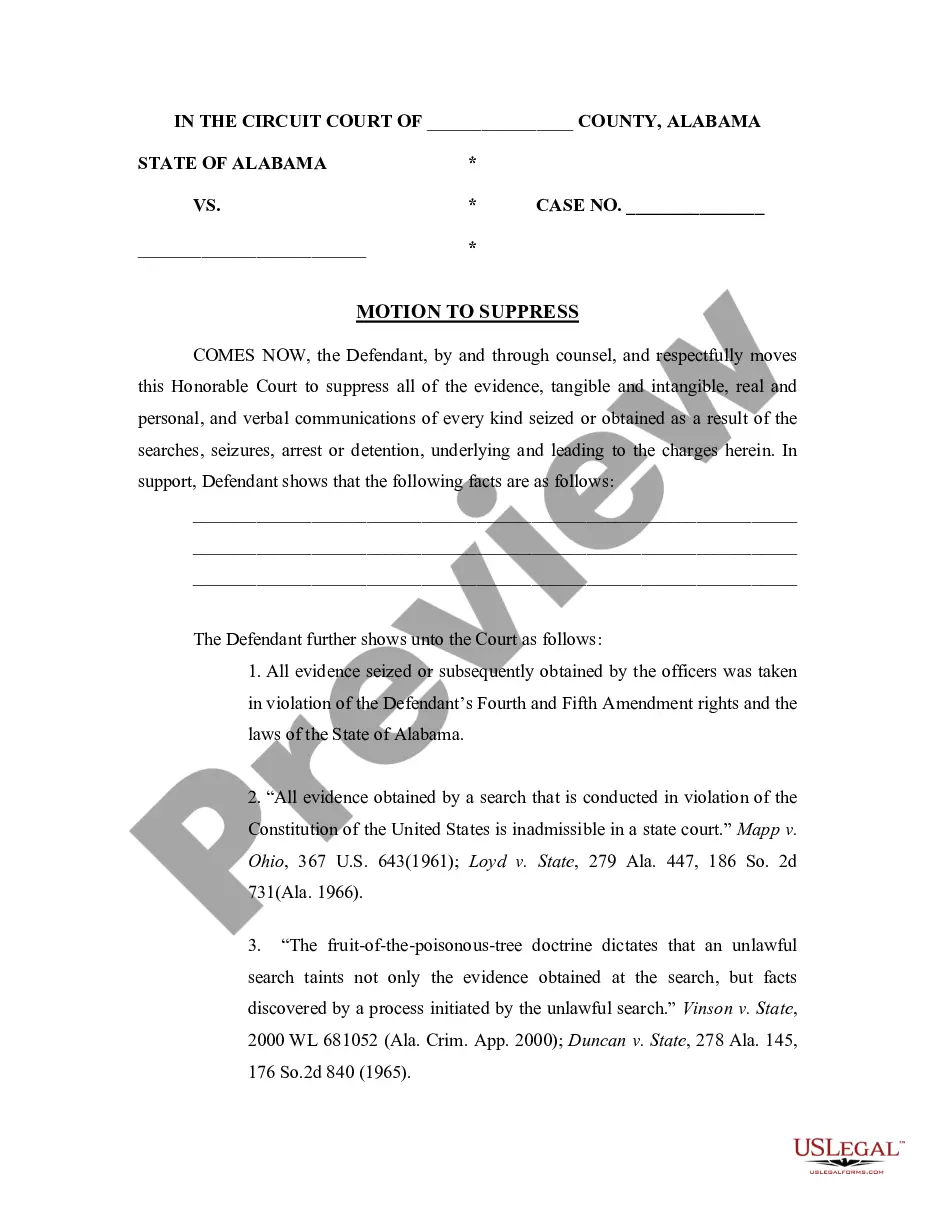
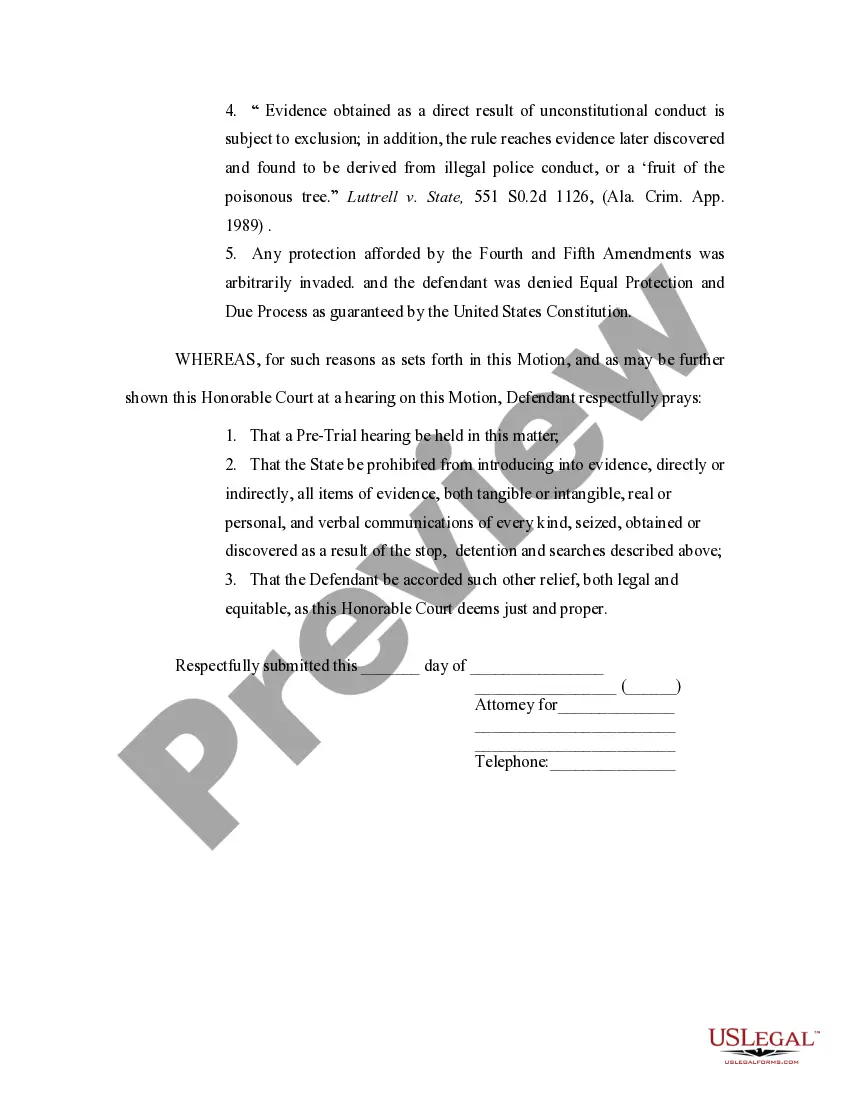
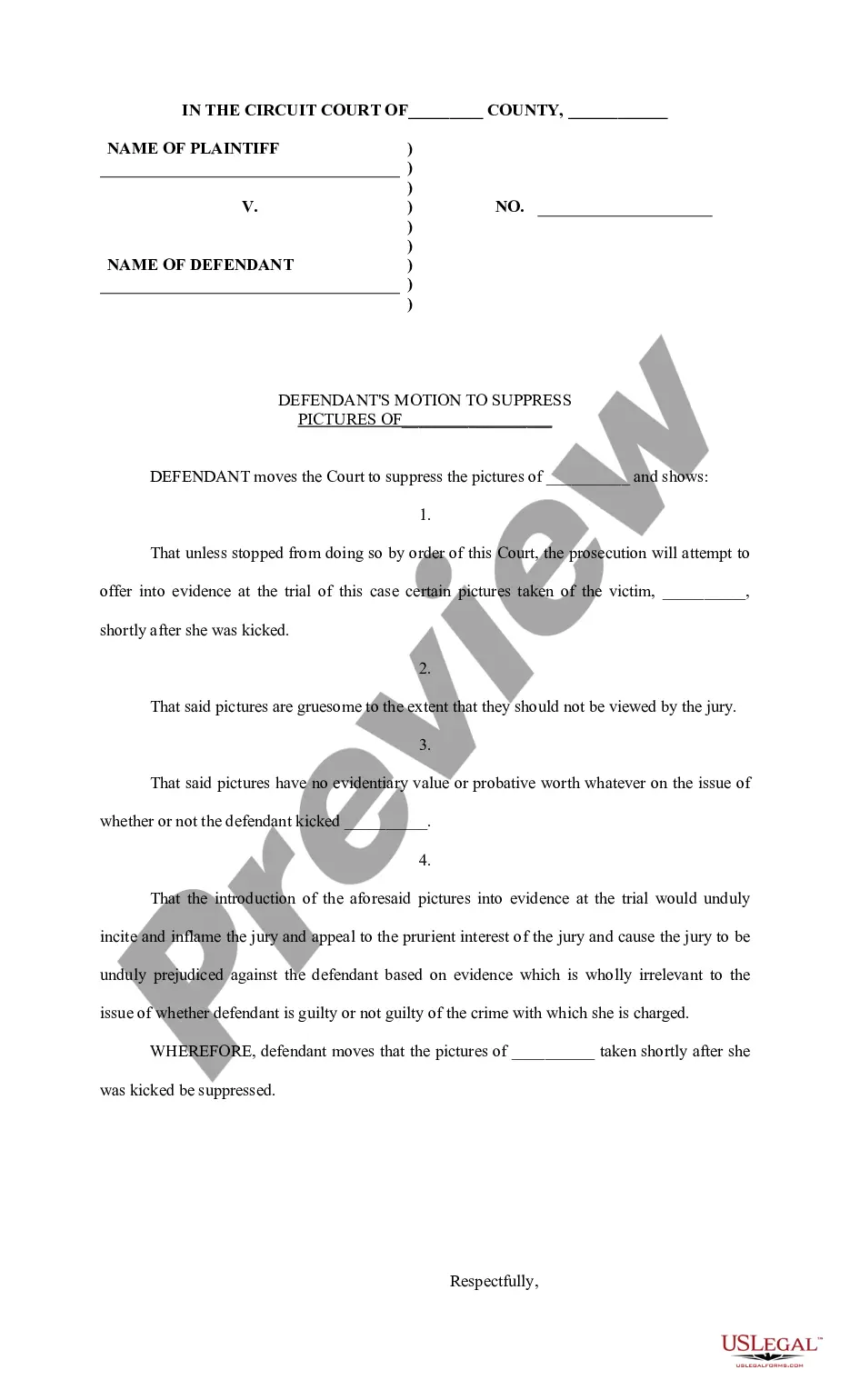
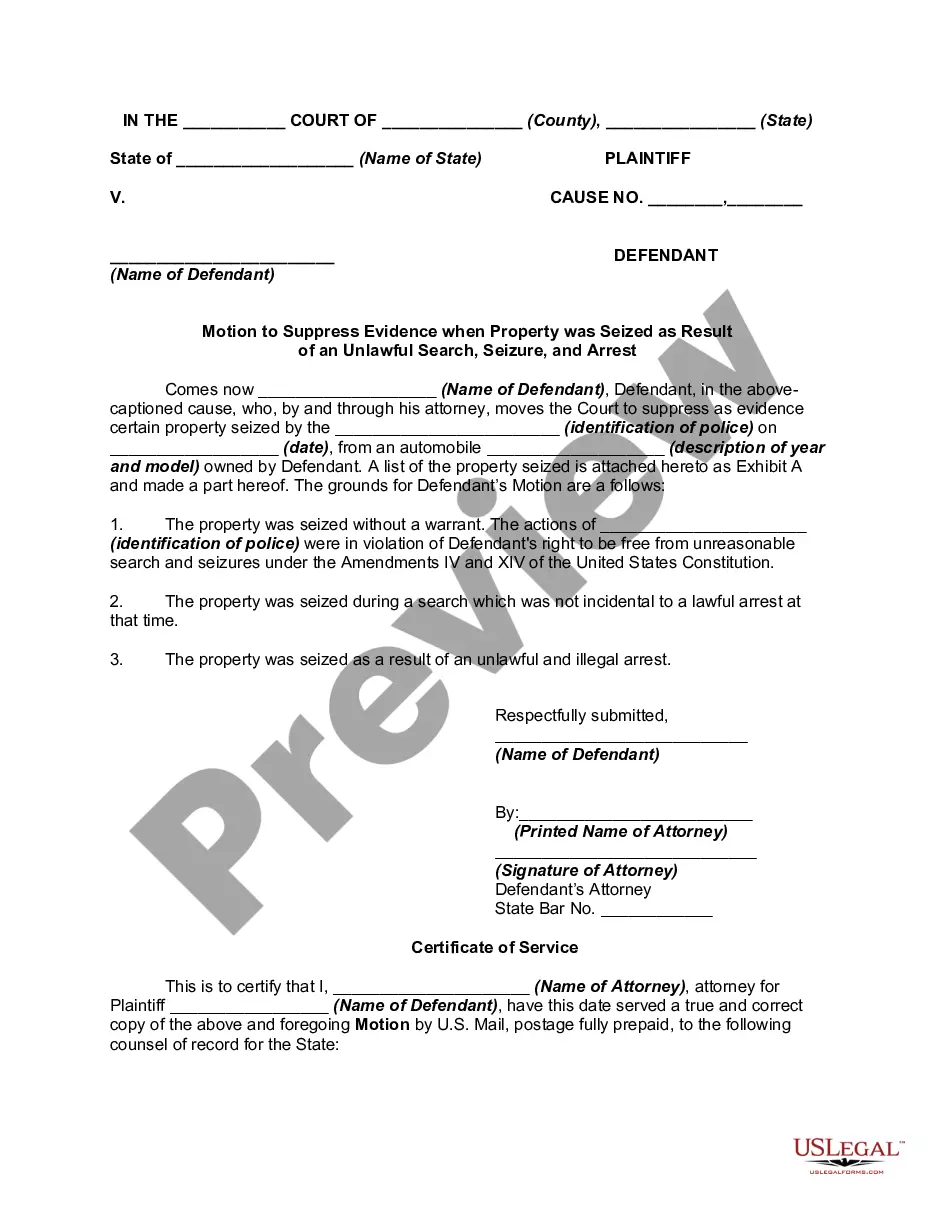
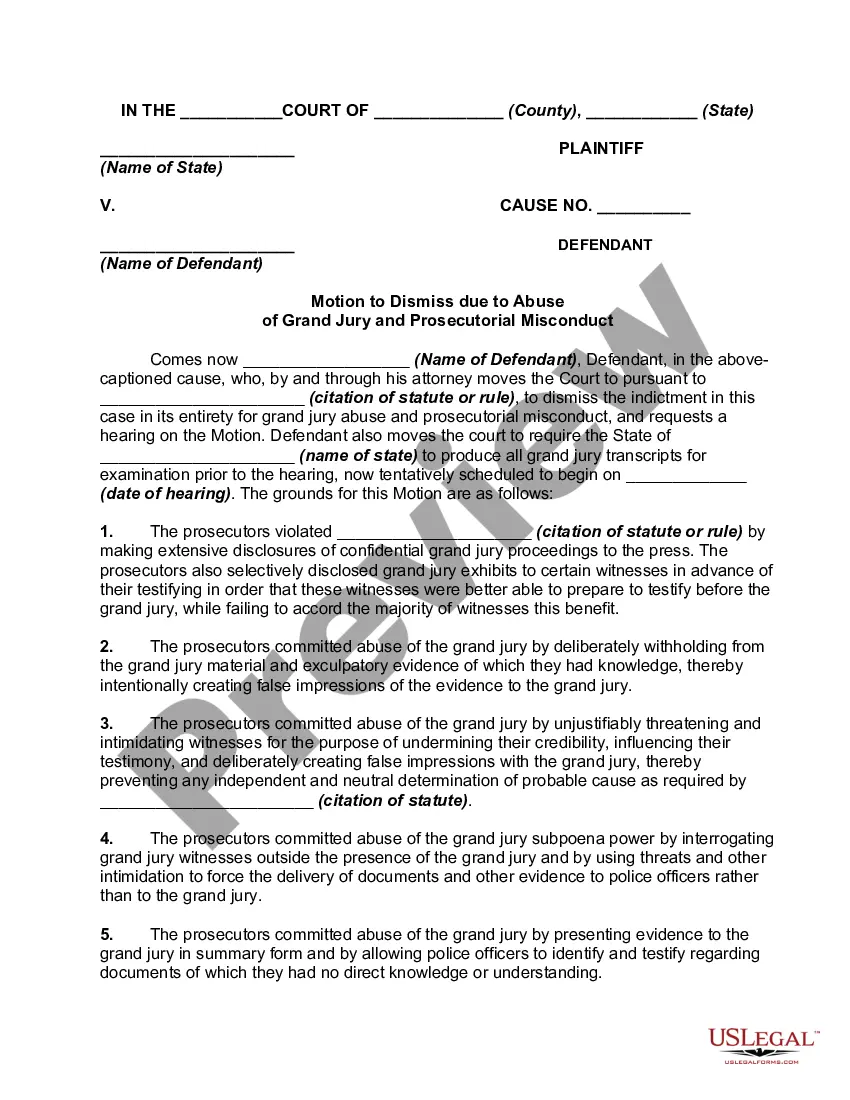
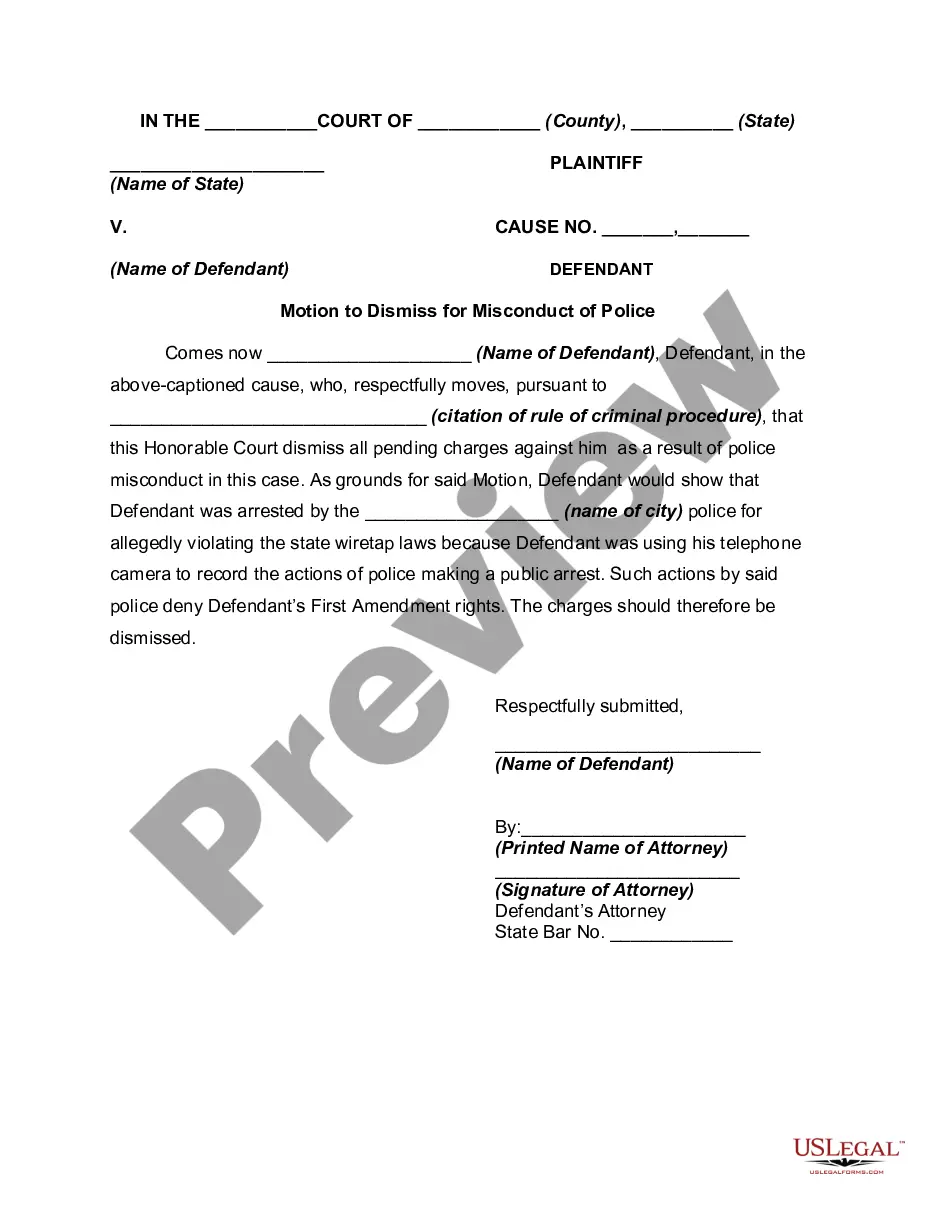
The Motion to Suppress is a legal document used by defendants in criminal cases to request that certain evidence be excluded from trial. This form is particularly important as it aims to protect the defendant's rights under the Fourth and Fifth Amendments of the U.S. Constitution. Unlike other motions, the Motion to Suppress specifically focuses on contesting the admissibility of evidence obtained through unlawful searches, seizures, or interrogations. By filing this motion, defendants seek to ensure that the prosecution cannot unfairly use evidence that was improperly acquired.
Form components explained
- Caption: Identifies the court, parties involved, and case number.
- Introduction: States the purpose of the motion and identifies the defendant.
- Grounds for Suppression: Lists the legal reasons supporting the motion, including violations of constitutional rights.
- Prayer for Relief: Details the specific requests made to the court, such as granting a pre-trial hearing and barring certain evidence.
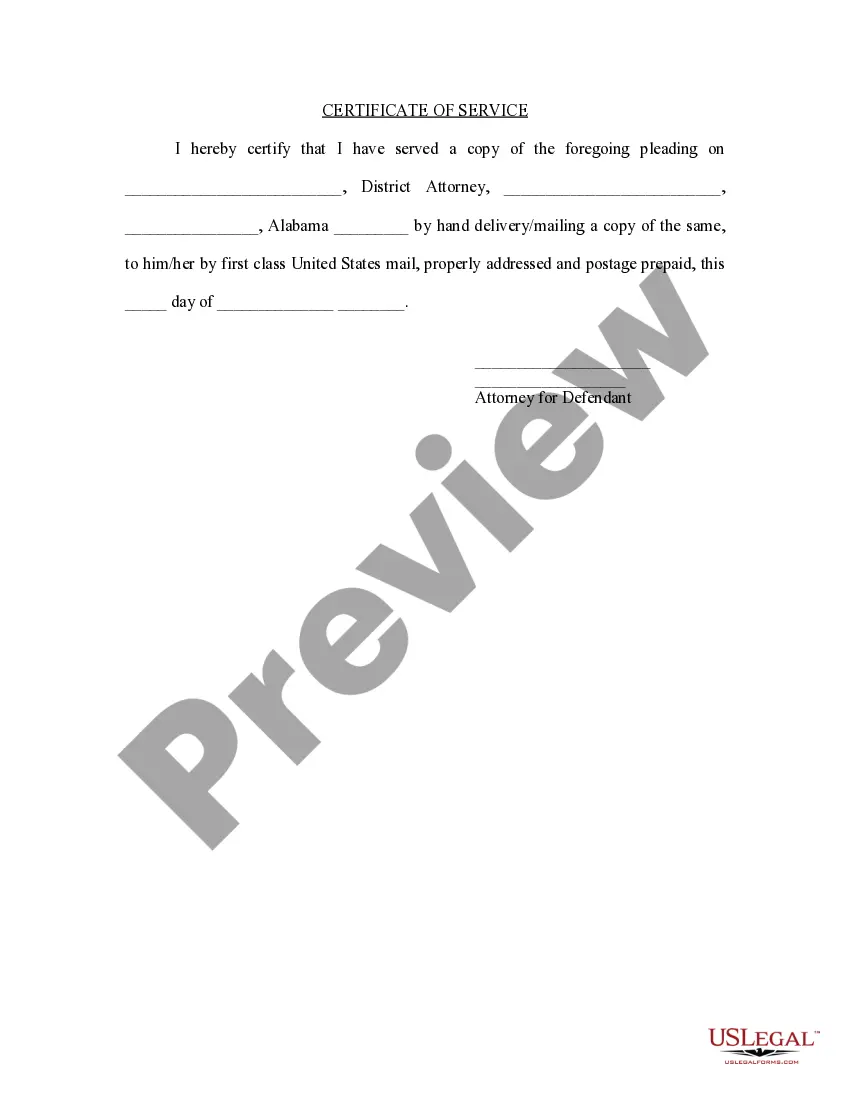
- Signature Block: Provides the signature and contact information of the defendant's attorney.
Common use cases
This form is typically used in criminal defense scenarios where a defendant believes that evidence was obtained in violation of their constitutional rights. Situations may include cases where police conducted unlawful searches without a warrant, where evidence was obtained through coercive interrogation methods, or where the defendantâs rights were otherwise infringed during arrest or detention. Filing this motion is essential for protecting the integrity of the judicial process and ensuring that only legally obtained evidence is presented during trial.
Who this form is for
Individuals who should consider using this form include:
- Defendants in criminal cases seeking to challenge the admissibility of evidence.
- Criminal defense attorneys representing clients facing unlawful evidence claims.
- Individuals who are aware of violations of their constitutional rights during arrests or investigations.
Instructions for completing this form
To complete the Motion to Suppress, follow these steps:
- Fill in the court caption with the appropriate court name, county, and case number.
- Clearly state the purpose of the motion in the introduction section.
- List the grounds for suppression, detailing the specific constitutional violations claimed.
- Specify your requests to the court in the prayer for relief section.
- Sign the motion and provide your attorney's contact information in the signature block.
Does this form need to be notarized?
This form does not typically require notarization unless specified by local law. It is recommended to check with your attorney or local court requirements to confirm notarization needs.
Get your form ready online
Our built-in tools help you complete, sign, share, and store your documents in one place.
Make edits, fill in missing information, and update formatting in US Legal Forms—just like you would in MS Word.
Download a copy, print it, send it by email, or mail it via USPS—whatever works best for your next step.
Sign and collect signatures with our SignNow integration. Send to multiple recipients, set reminders, and more. Go Premium to unlock E-Sign.
If this form requires notarization, complete it online through a secure video call—no need to meet a notary in person or wait for an appointment.
We protect your documents and personal data by following strict security and privacy standards.

Make edits, fill in missing information, and update formatting in US Legal Forms—just like you would in MS Word.

Download a copy, print it, send it by email, or mail it via USPS—whatever works best for your next step.

Sign and collect signatures with our SignNow integration. Send to multiple recipients, set reminders, and more. Go Premium to unlock E-Sign.

If this form requires notarization, complete it online through a secure video call—no need to meet a notary in person or wait for an appointment.

We protect your documents and personal data by following strict security and privacy standards.
Mistakes to watch out for
- Failing to clearly articulate the grounds for suppression.
- Not providing sufficient details about how the evidence was obtained.
- Missing the deadline for filing the motion before trial.
- Neglecting to sign the document before submission to the court.
- Inadequately referencing applicable legal precedents and statutes.
Benefits of using this form online
Using this form online has several advantages:
- Convenience: Access the form anytime, saving time in emergency legal situations.
- Editability: Easily fill out and customize the form as needed.
- Reliability: Ensure that the form meets legal standards as it is drafted by licensed attorneys.
The Motion to Suppress plays a critical role in safeguarding defendants' rights. Evidence obtained through unconstitutional means is typically inadmissible in court, reinforcing the significance of this motion in criminal defense. Filing this motion can impact the outcome of a case by preventing the prosecution from using tainted evidence to support their arguments.
Summary of main points
- The Motion to Suppress is crucial for maintaining a defendant's rights against illegally obtained evidence.
- Ensuring you provide all necessary citations and facts is critical to the motion's success.
- Utilizing this form online simplifies the process of creating and submitting a legally sound motion.
Looking for another form?
Form popularity
FAQ
While in general, on a motion to suppress, the defendant has the burden of proving, by a preponderance of the evidence, that the material in question was seized in violation of his constitutional rights, there are several situations where the burden shifts to the government. United States v. De La Fuente, 548 F.
When a judge denies a defendant's motion to dismiss, the case will continue because defendant did not convince the judge to terminate the case.When students read a U.S. court decision where a judge denies a motion to dismiss, it may appear that the judge is ruling that the plaintiff won her case.
Use general discovery motions to your advantage. Always cite Tex. File a motion in limine along with your motion to suppress. Request a jury charge. Don't reveal specific grounds for the motion until the hearing. Consider Tex. Attack the probable cause affidavit.
A motion to suppress evidence is a request by a defendant that the judge exclude certain evidence from trial. The defense often makes this motion well in advance of trialif the defendant wins it, the prosecution or judge may have to dismiss the case.
At the motion to suppress hearing, both parties have the opportunity to present evidence and arguments in support of or in opposition to the motion. Testimony is taken from: The arresting officer about how the evidence was obtained by the officeri.e., plain view, consent by the defendant. The defendant.
Sometimes, the judge responds to this request with an order denying a motion to suppress. What does an order denying a motion to suppress mean? Generally, it means that the court will not approve the motion. This means that the evidence can be used in a criminal case.
A motion to suppress is a motion that revolves around the exclusion of evidence from trial. In the United States, a motion to suppress is a request made by a criminal defendant in advance of a criminal trial asking the court to exclude certain evidence from the trial.
Penal Code 1538.5 PC Motion to suppress evidence. ((o) Within 30 days after a defendant's motion is granted at a special hearing in a felony case, the people may file a petition for writ of mandate or prohibition in the court of appeal, seeking appellate review of the ruling regarding the search or seizure motion.