Warranty Deed for Surface and Mineral Interests, With Reservation of All Coal
Understanding this form
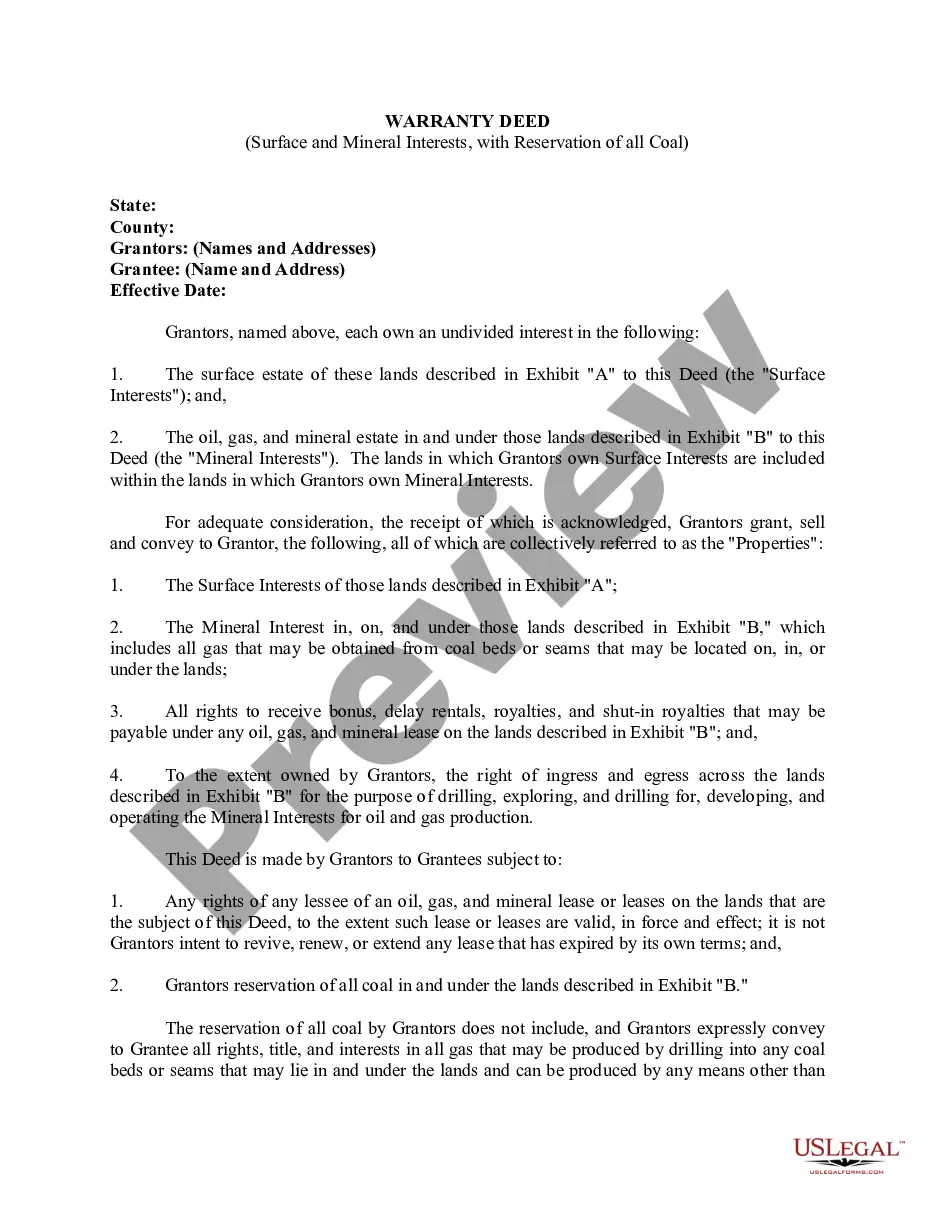
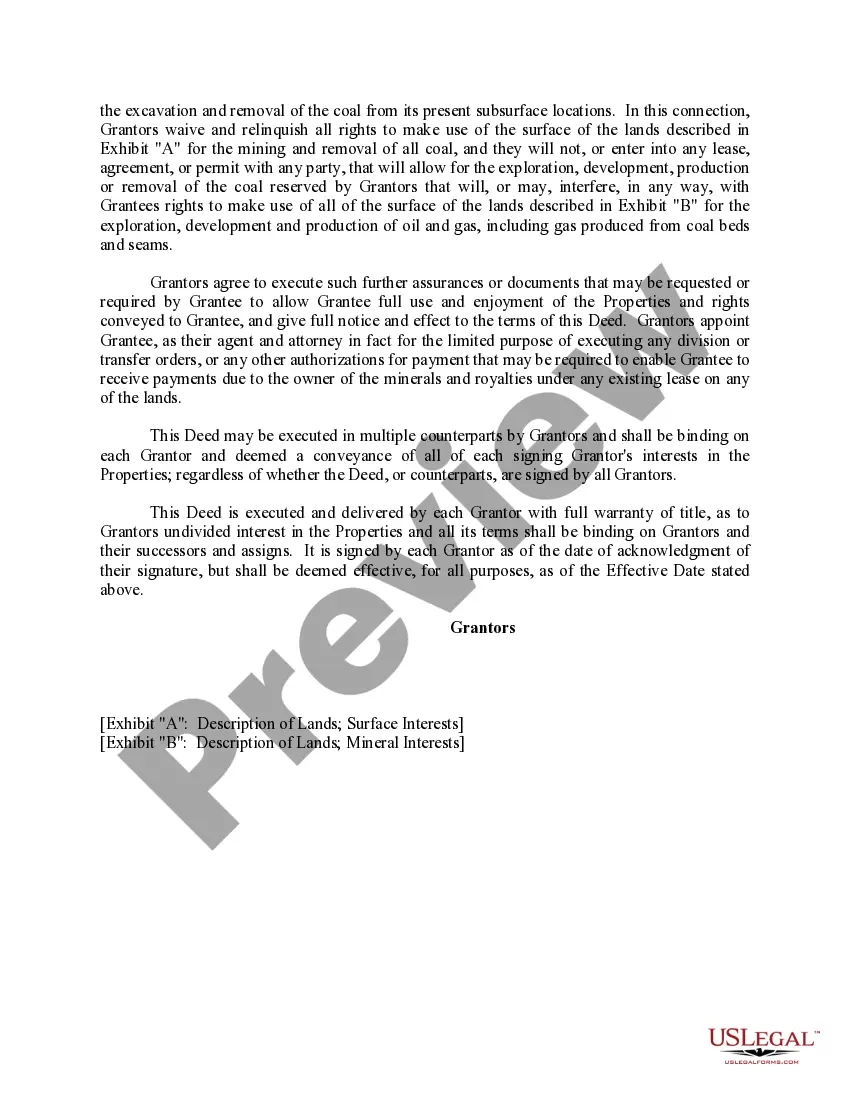
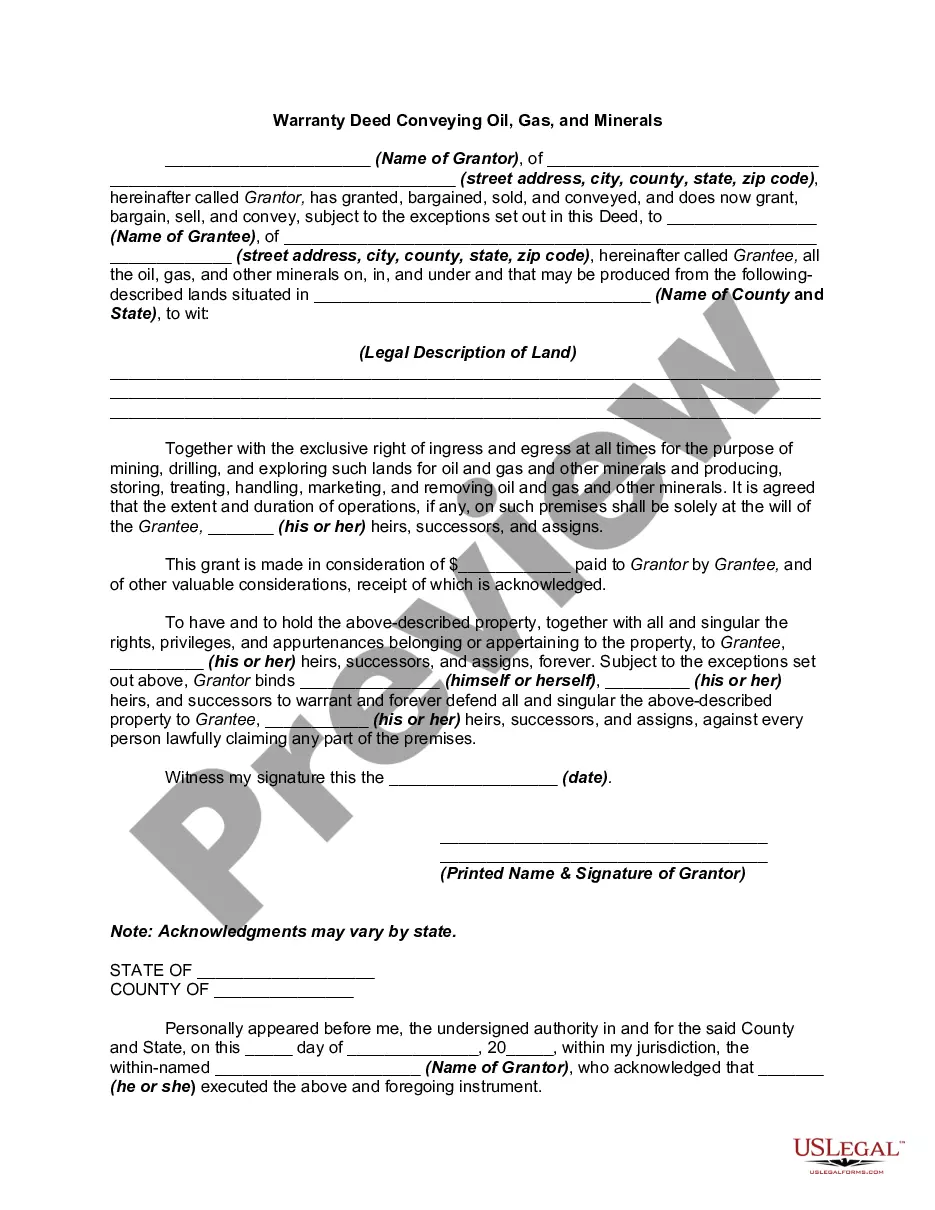
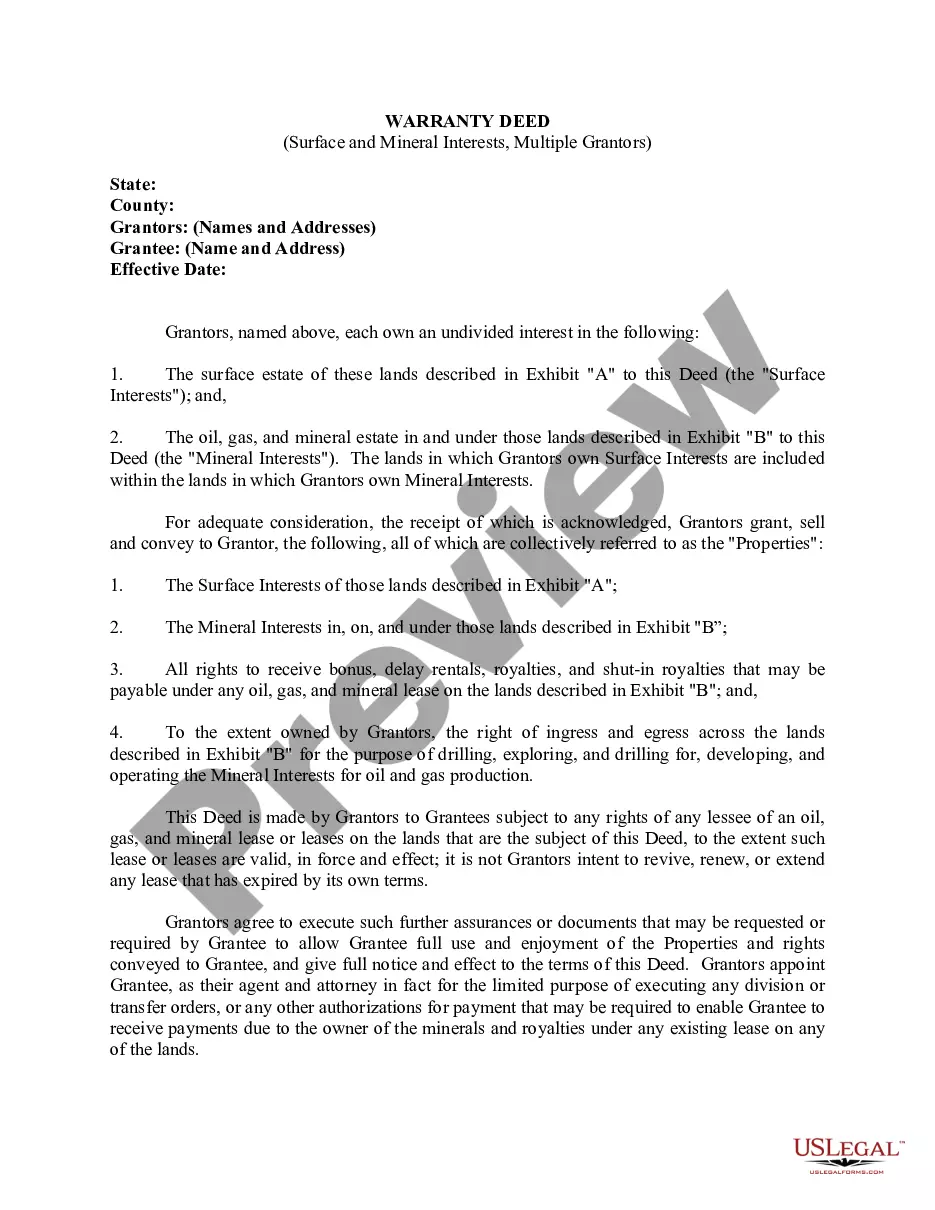
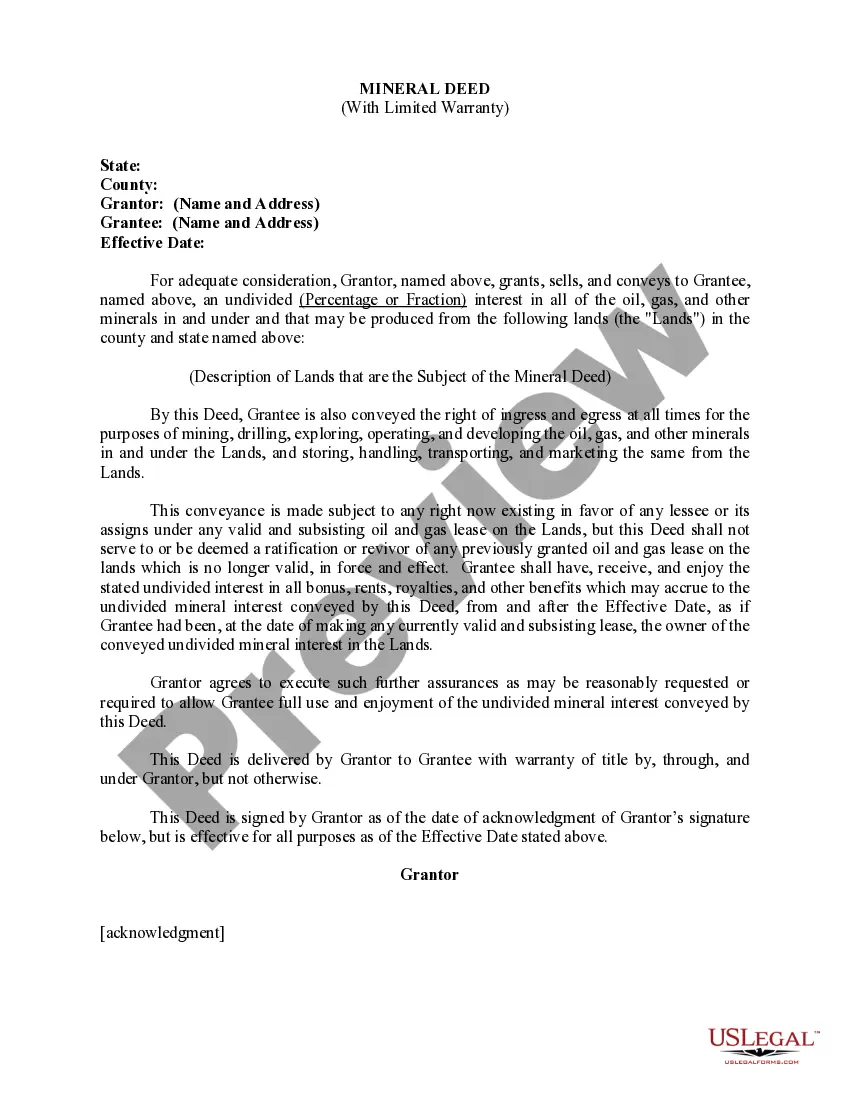
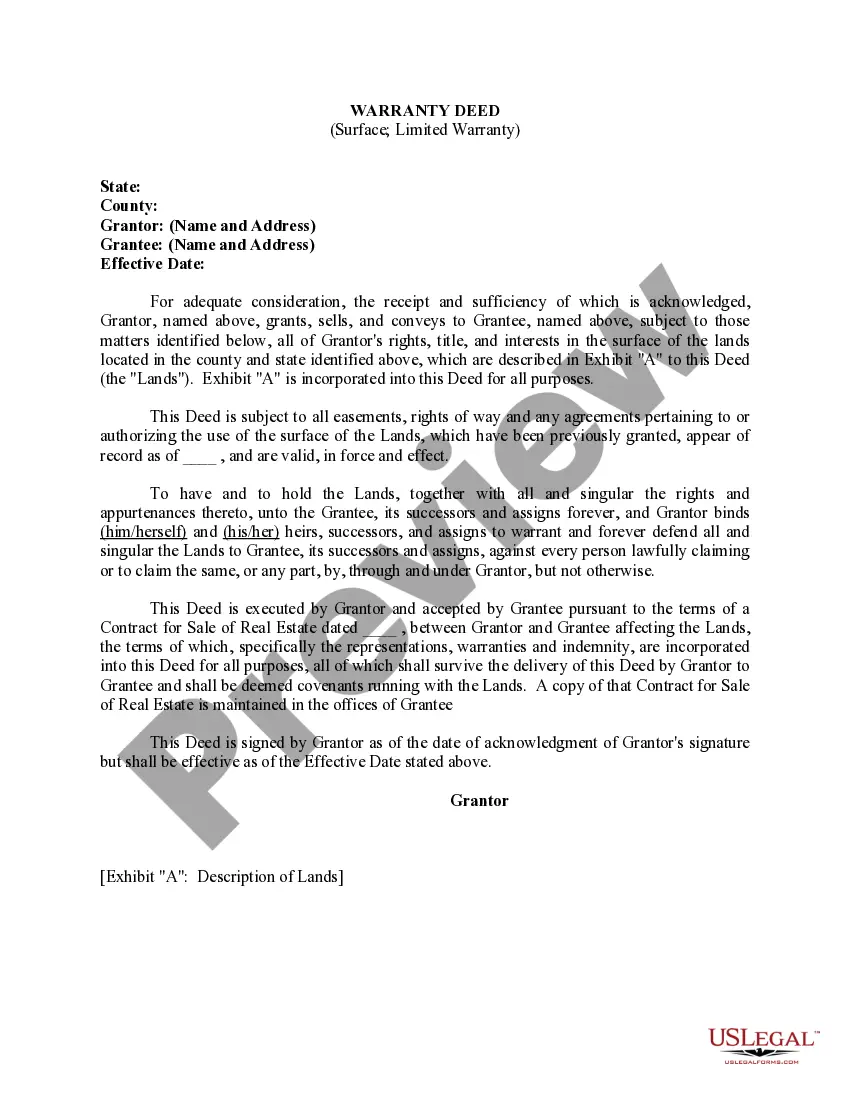
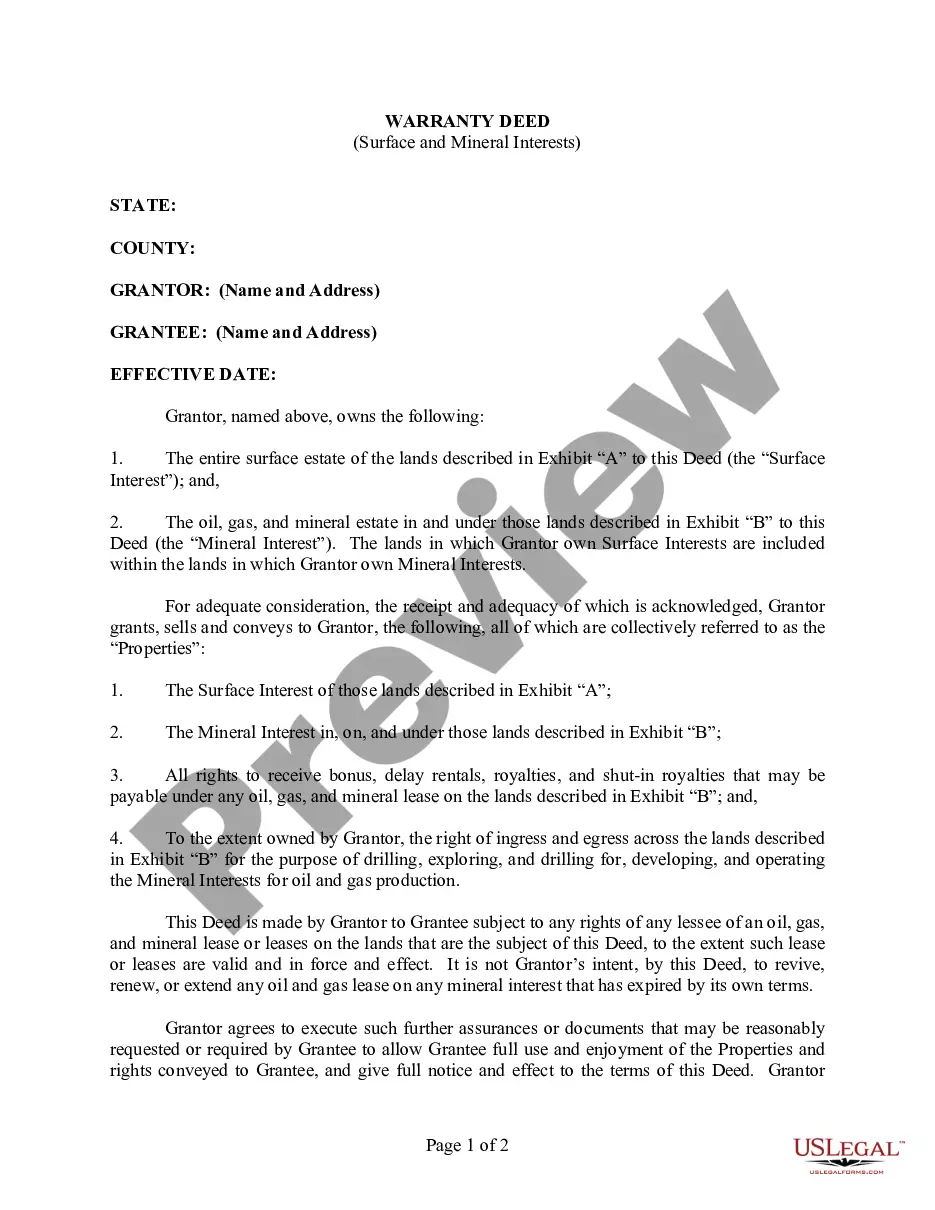
The Warranty Deed for Surface and Mineral Interests, With Reservation of All Coal is a legal document used by a grantor to transfer ownership of surface estates and mineral interests, including oil, gas, and minerals, to a grantee. This deed specifically reserves coal rights while conveying other mineral rights, unlike a standard warranty deed that might convey all interests without reservations. By using this form, parties can clearly define the rights being transferred and the specific interests that are retained.
Key parts of this document
- Identification of grantors and grantee including names and addresses.
- Effective date of the deed.
- Descriptions of the surface and mineral interests involved.
- Details about any reservations of rights, particularly concerning coal.
- Clauses regarding existing leases and other rights associated with the property.
- Provisions for further assurances to ensure the transfer's legitimacy.
Common use cases
This deed is typically used in real estate transactions where a property owner wishes to sell or assign both surface and mineral rights to another party while reserving specific rights, such as coal. It is often employed when oil and gas exploration or extraction is planned, and the owner wants to clarify the distribution of rights and duties between the involved parties.
Who should use this form
This warranty deed is appropriate for:
- Property owners (grantors) who intend to transfer surface and mineral interests to another party.
- Individuals or entities (grantees) seeking to acquire property rights for oil, gas, and mineral exploration.
- Attorneys assisting clients with real estate transactions involving complex mineral rights.
How to prepare this document
- Identify all parties involved by filling out the names and addresses of the grantors and the grantee.
- Specify the effective date of the deed at the top of the form.
- Describe the properties involved, including both the surface and mineral interests as outlined in Exhibit A and Exhibit B.
- Include any specific reservations, such as the coal rights, clearly stating what is retained and what is transferred.
- Ensure all grantors sign the deed, acknowledging their consent and understanding.
- Consider notary services if required by state law or for further validation of the deed.
Is notarization required?
Notarization is required for this form to take effect. Our online notarization service, powered by Notarize, lets you verify and sign documents remotely through an encrypted video session, available 24/7.
Get your form ready online
Our built-in tools help you complete, sign, share, and store your documents in one place.
Make edits, fill in missing information, and update formatting in US Legal Forms—just like you would in MS Word.
Download a copy, print it, send it by email, or mail it via USPS—whatever works best for your next step.
Sign and collect signatures with our SignNow integration. Send to multiple recipients, set reminders, and more. Go Premium to unlock E-Sign.
If this form requires notarization, complete it online through a secure video call—no need to meet a notary in person or wait for an appointment.
We protect your documents and personal data by following strict security and privacy standards.

Make edits, fill in missing information, and update formatting in US Legal Forms—just like you would in MS Word.

Download a copy, print it, send it by email, or mail it via USPS—whatever works best for your next step.

Sign and collect signatures with our SignNow integration. Send to multiple recipients, set reminders, and more. Go Premium to unlock E-Sign.

If this form requires notarization, complete it online through a secure video call—no need to meet a notary in person or wait for an appointment.

We protect your documents and personal data by following strict security and privacy standards.
Common mistakes
- Failing to accurately describe the properties in the deed.
- Not including required signatures from all grantors.
- Omitting to mention any existing leases or rights that might impact the conveyed interests.
- Not specifying rights reserved, leading to potential disputes later.
Why complete this form online
- Convenience of immediate access and download from anywhere.
- Editability allows customization to fit specific transaction needs.
- Reliability of forms drafted by licensed attorneys ensures legal integrity.
Legal use & context
- This form is legally binding and must be executed according to state laws governing deeds.
- It clearly delineates surface and mineral rights, minimizing potential disputes over property use.
- Legal enforceability depends on proper completion, signing, and adherence to state-specific requirements.
Main things to remember
- The warranty deed allows for the transfer of surface and mineral interests while reserving specific rights.
- Accurate descriptions and signatures are critical for the deed's validity.
- Understanding local laws enhances the efficacy and legality of the deed.
Looking for another form?
Form popularity
FAQ
A property deed is a legal document that transfers the ownership of real estate from a seller to a buyer. For a deed to be legal it must state the name of the buyer and the seller, describe the property that is being transferred, and include the signature of the party that is transferring the property.
An owner can separate the mineral rights from his or her land by: Conveying (selling or otherwise transferring) the land but retaining the mineral rights. (This is accomplished by including a statement in the deed conveying the land that reserves all rights to the minerals to the seller.)
As a mineral rights value rule of thumb, the 3X cash flow method is often used. To calculate mineral rights value, multiply the 12-month trailing cash flow by 3. For a property with royalty rights, a 5X multiple provides a more accurate valuation (stout.com).
Mineral rights don't come into effect until you begin to dig below the surface of the property. But the bottom line is: if you do not have the mineral rights to a parcel of land, then you do not have the legal ability to explore, extract, or sell the naturally occurring deposits below.
Unless reserved by the seller or grantor, minerals are automatically transferred with the sale of the land.If there is no mention of a reservation in the Warranty Deed, then any mineral rights owned by the Grantor at the time will normally be conveyed.
As a mineral rights value rule of thumb, the 3X cash flow method is often used. To calculate mineral rights value, multiply the 12-month trailing cash flow by 3. For a property with royalty rights, a 5X multiple provides a more accurate valuation (stout.com).
An owner can separate the mineral rights from his or her land by: Conveying (selling or otherwise transferring) the land but retaining the mineral rights. (This is accomplished by including a statement in the deed conveying the land that reserves all rights to the minerals to the seller.)
A mineral reservation is a severed subsurface parcel in separate ownership from the rest of the land. Prior owners could have sold minerals to a third party or leased it for the purpose of extracting something and collecting rent and royalties.
Hence, mineral rights. Also known as a mineral estate, mineral rights are just what their name implies: The right of the owner to utilize minerals found below the surface of property. Besides minerals, these rights can apply to oil and gas.