California Last Will and Testament for Domestic Partner with Adult and Minor Children
Understanding this form
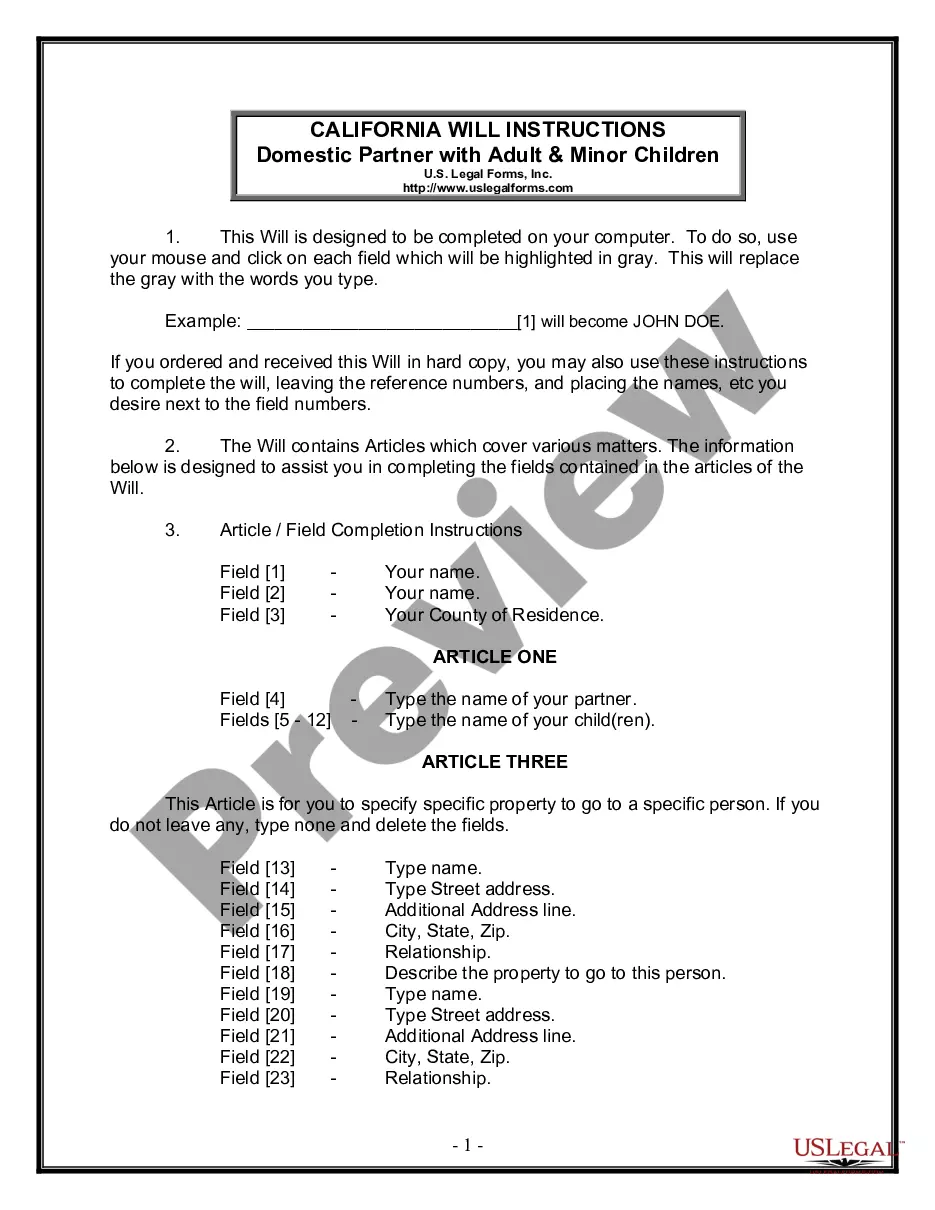
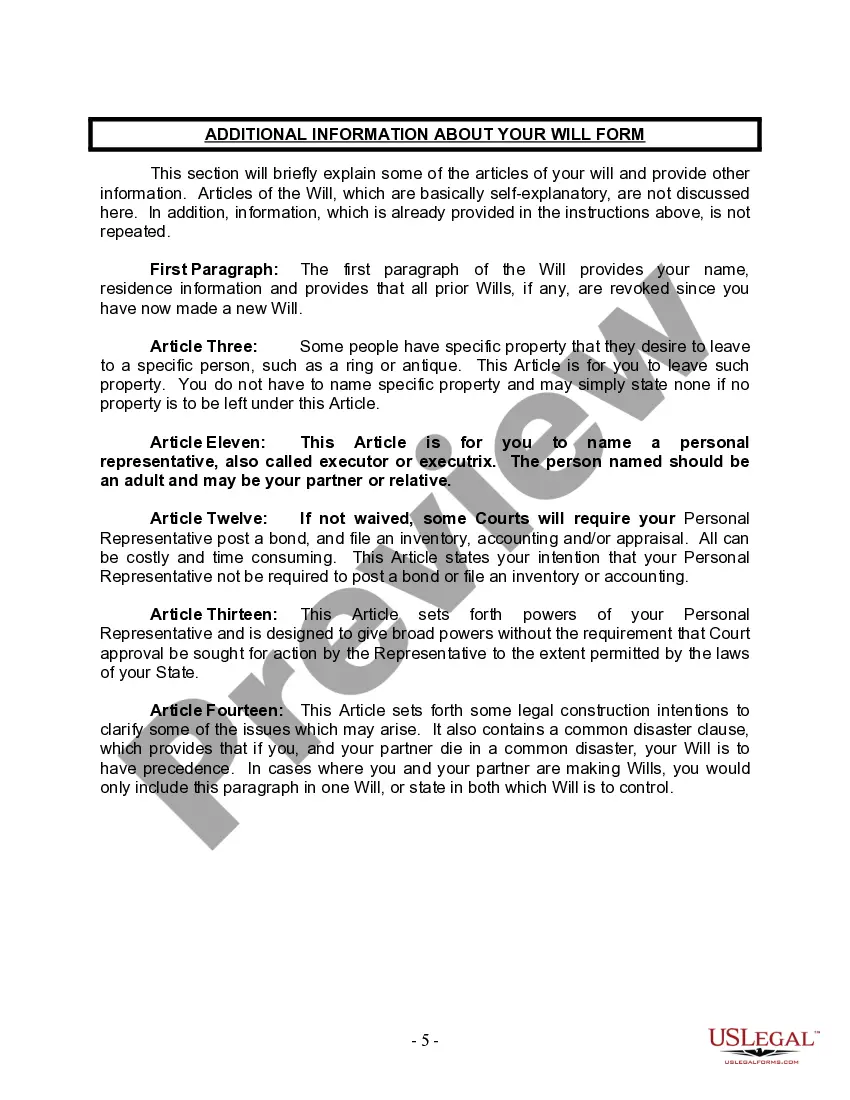
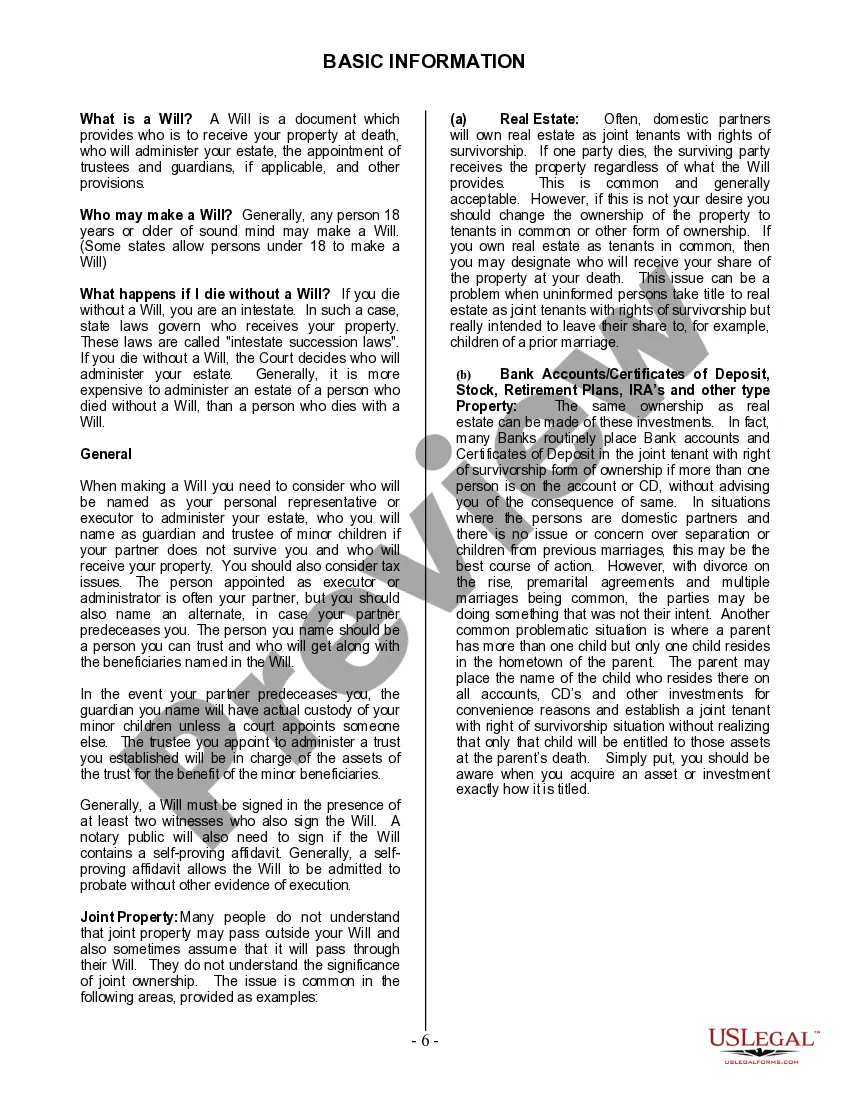
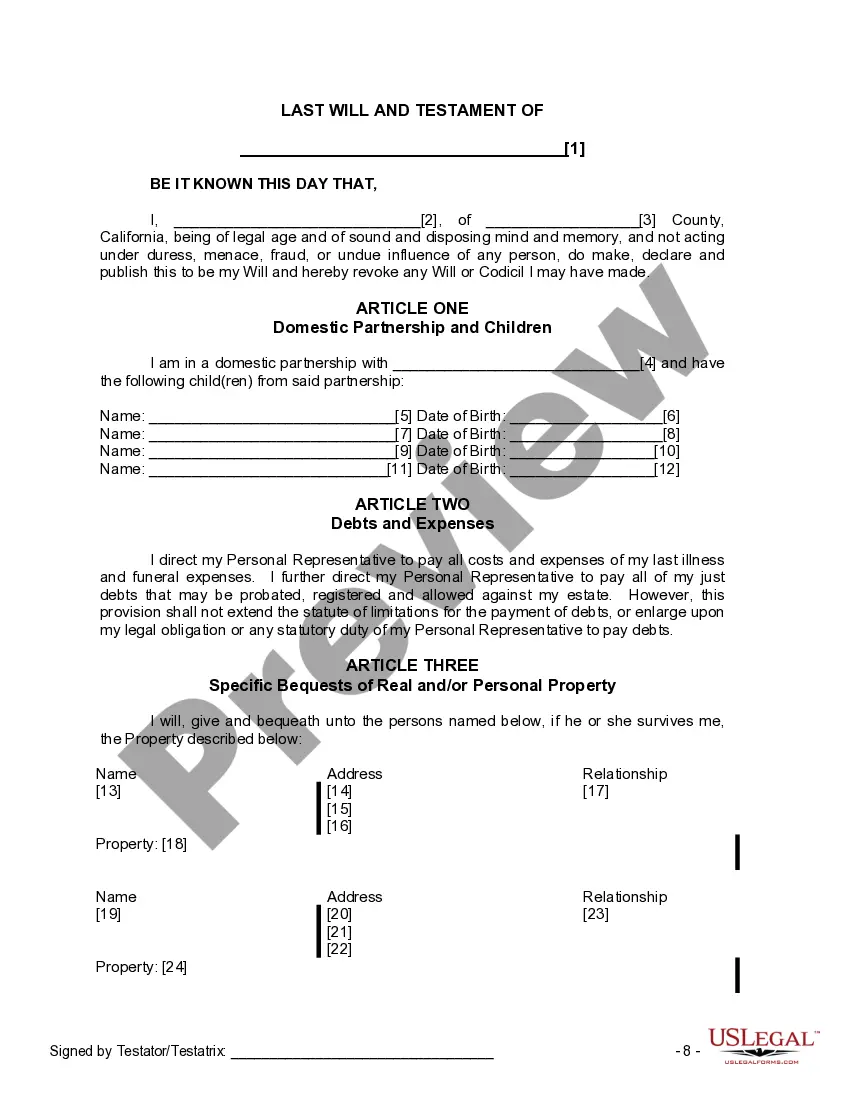
This Last Will and Testament for Domestic Partner with Adult and Minor Children is a legal document that allows you to specify how your property and assets will be distributed after your death. It is specifically designed for individuals in a domestic partnership who have both adult and minor children. Unlike standard wills, this form includes provisions for appointing guardians for your children and establishing trusts to manage their inheritance until they reach adulthood.
Main sections of this form
- Article outlining the appointment of a personal representative or executor.
- Designations for beneficiaries, including your partner and children.
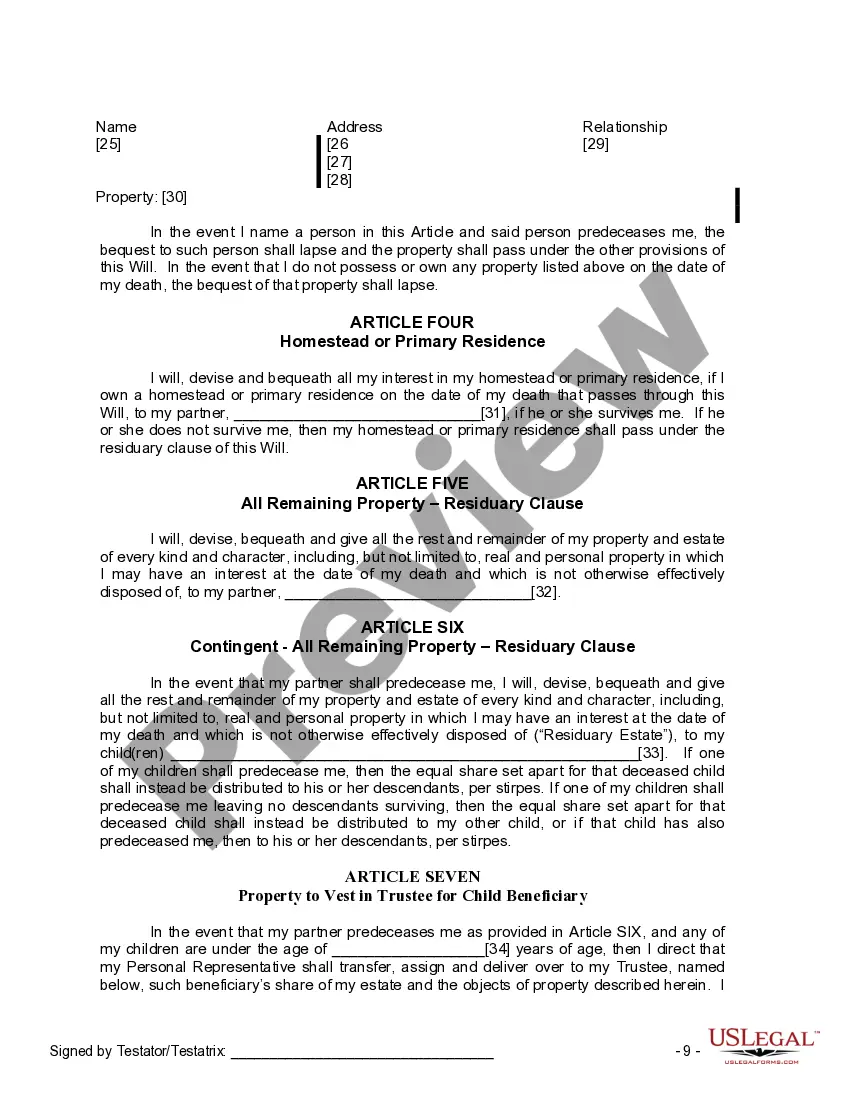
- Provisions for specific property bequests and a residuary clause for remaining assets.
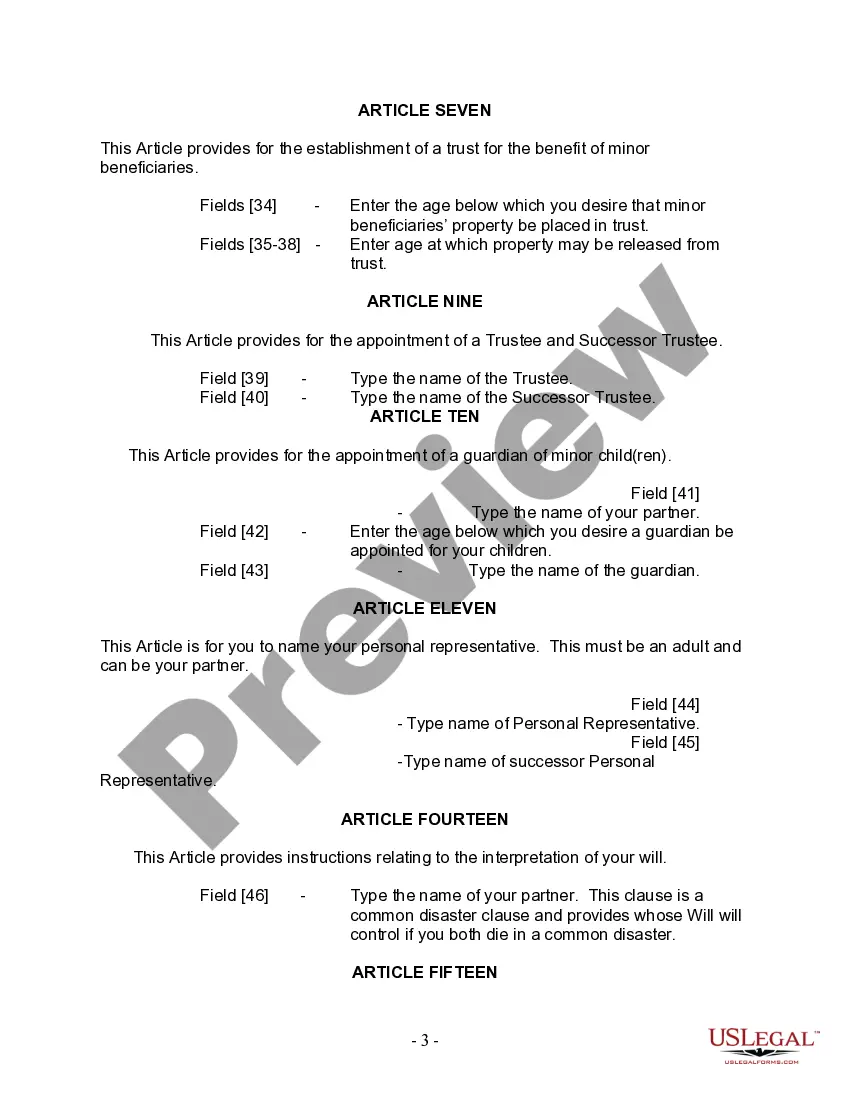
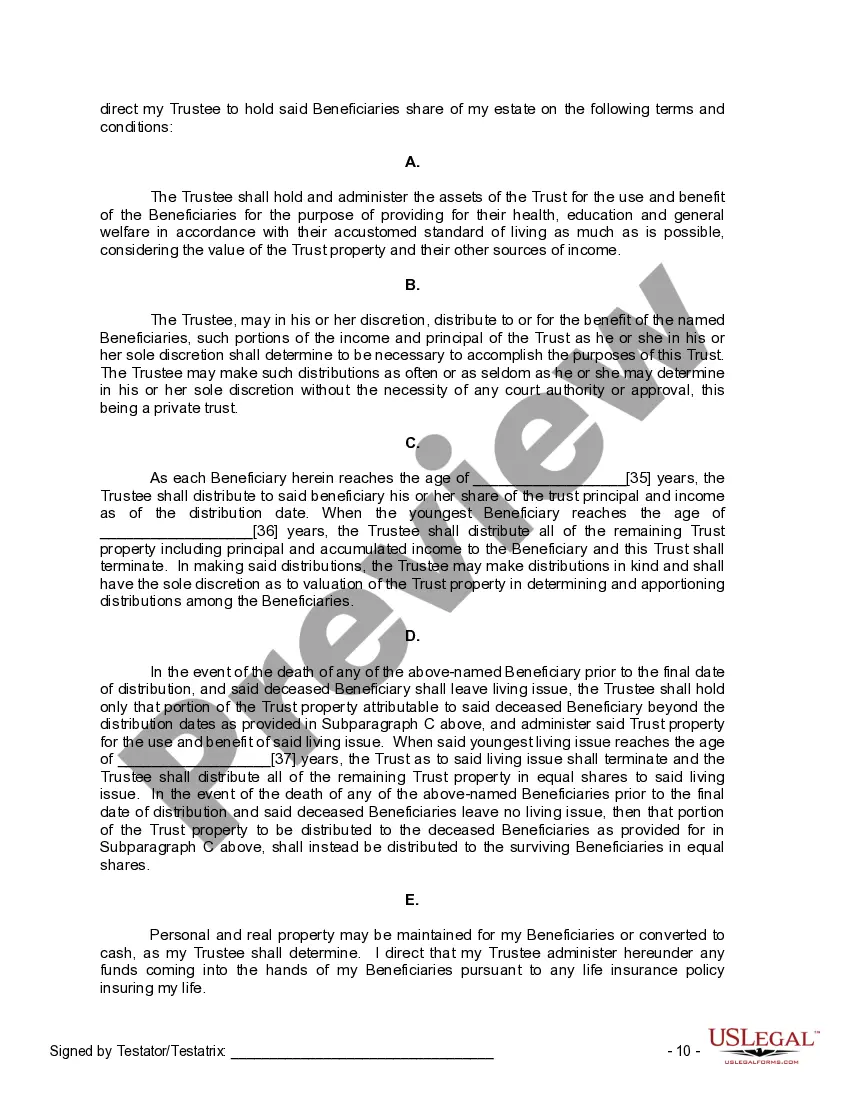
- Trust establishment for minor children under specified ages.
- Appointment of guardians for minor children in case both parents pass.
- Requirements for signatures by witnesses to validate the will.



When to use this form
You should use this Last Will and Testament if you are in a domestic partnership and wish to ensure that your partner and children are provided for after your passing. This form is essential if you want to clarify your wishes regarding the distribution of your assets, designate a personal representative to handle your estate, or appoint guardians for your minor children. It is particularly relevant in situations where you want to ensure that your assets are managed in trust until your children reach adulthood.
Intended users of this form
- Individuals in a domestic partnership with both adult and minor children.
- Anyone looking to establish a clear distribution of assets upon their death.
- Parents who want to designate guardians for their minor children.
- Those wanting to create a trust for minor children to manage their inheritance.
Steps to complete this form
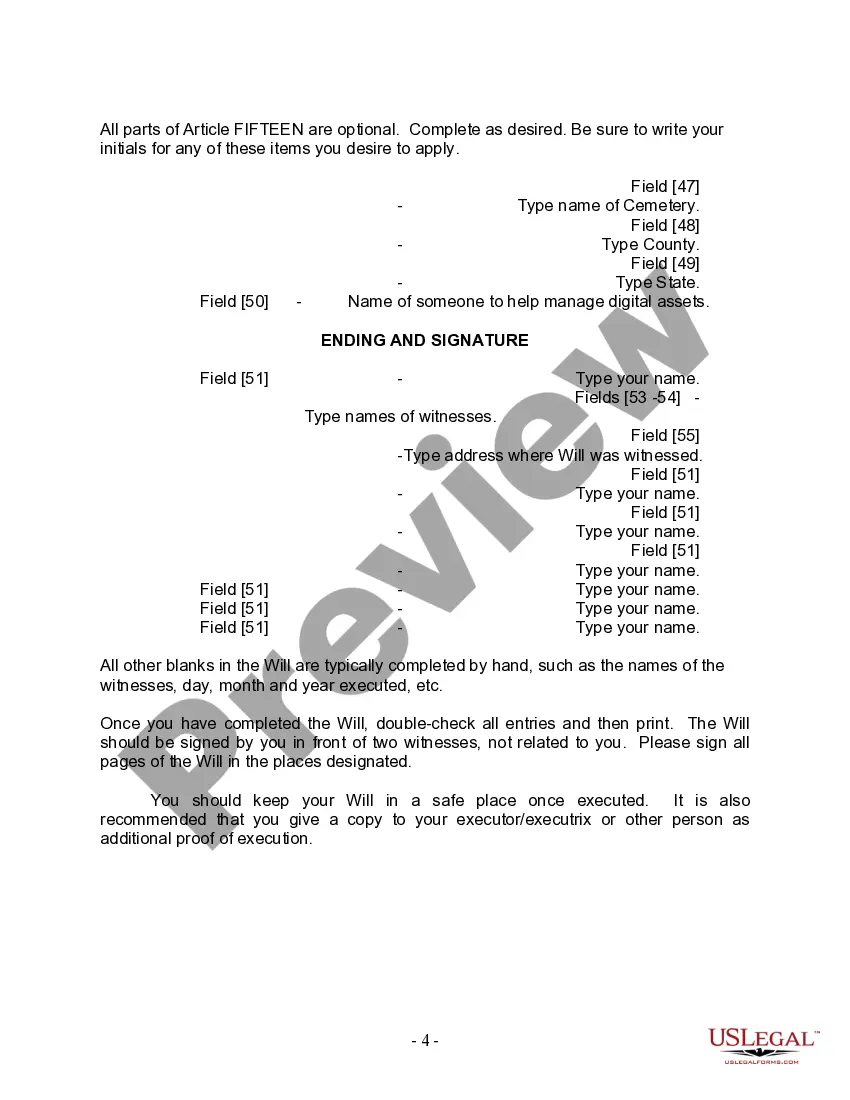
- Fill in your full name and county of residence at the beginning of the document.
- Clearly list the names of your domestic partner and your children in the designated fields.
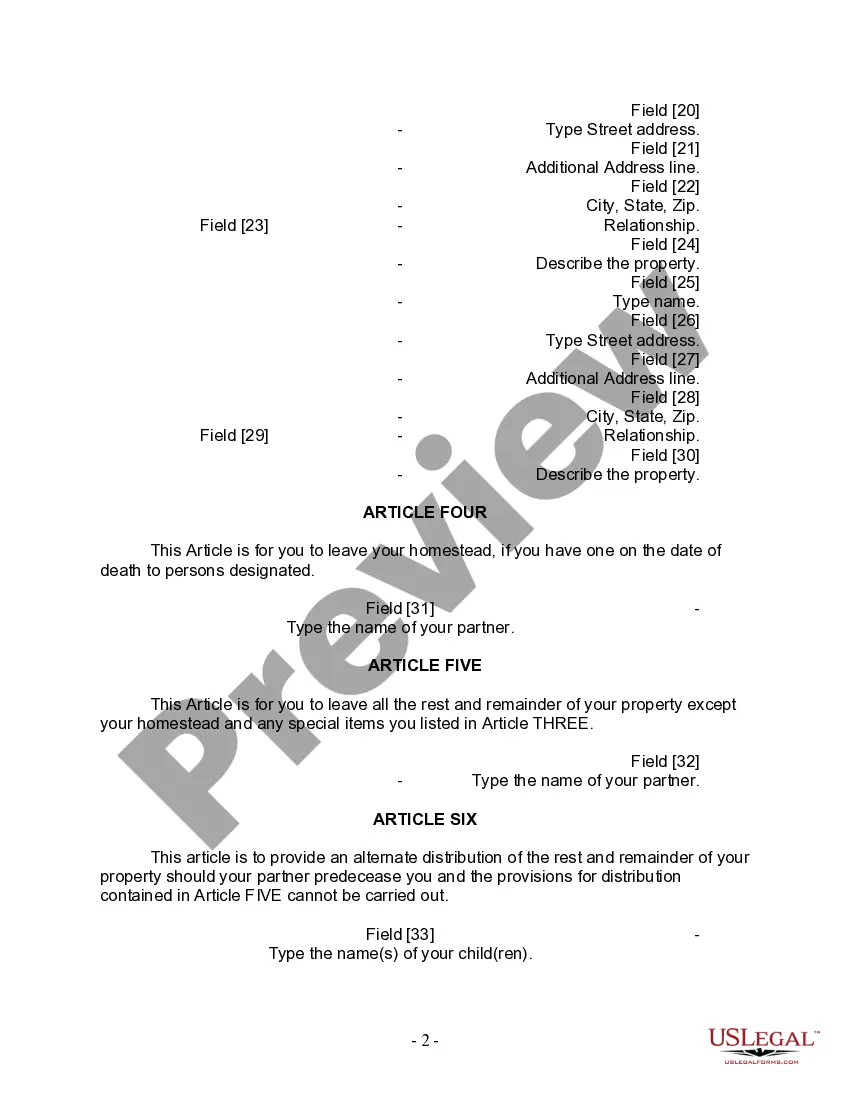
- Specify any specific property to be bequeathed and to whom by completing the relevant sections of the will.
- Designate a personal representative, a guardian for minor children, and any trustees for trusts you wish to establish.
- Sign the will in front of two witnesses, who should also sign the document, verifying your identity and the authenticity of your signature.
Notarization requirements for this form
This form does not typically require notarization unless specified by local law. However, if your state has adopted a self-proving affidavit statute, having the will notarized can simplify the probate process.
Get your form ready online
Our built-in tools help you complete, sign, share, and store your documents in one place.
Make edits, fill in missing information, and update formatting in US Legal Forms—just like you would in MS Word.
Download a copy, print it, send it by email, or mail it via USPS—whatever works best for your next step.
Sign and collect signatures with our SignNow integration. Send to multiple recipients, set reminders, and more. Go Premium to unlock E-Sign.
If this form requires notarization, complete it online through a secure video call—no need to meet a notary in person or wait for an appointment.
We protect your documents and personal data by following strict security and privacy standards.

Make edits, fill in missing information, and update formatting in US Legal Forms—just like you would in MS Word.

Download a copy, print it, send it by email, or mail it via USPS—whatever works best for your next step.

Sign and collect signatures with our SignNow integration. Send to multiple recipients, set reminders, and more. Go Premium to unlock E-Sign.

If this form requires notarization, complete it online through a secure video call—no need to meet a notary in person or wait for an appointment.

We protect your documents and personal data by following strict security and privacy standards.
Mistakes to watch out for
- Failing to have the will signed by two witnesses, which may render it invalid.
- Not naming an alternate personal representative in case your first choice cannot serve.
- Neglecting to update the will after major life events, such as a divorce or the birth of a child.
- Inadequately specifying personal property, leading to potential disputes among beneficiaries.
Benefits of using this form online
- Convenience of completing the form from home at your own pace.
- Editability allows you to make adjustments as your circumstances change.
- Access to reliable, attorney-drafted content tailored to your needs.
- Downloadable format for easy printing and filing.
Legal use & context
- This will must be executed according to state laws to be valid.
- It's essential to keep the will in a safe place and inform your executor of its location.
- Consulting with an attorney may be beneficial if your estate is complex.
Main things to remember
- A Last Will and Testament for Domestic Partners ensures your partner and children are cared for after your death.
- It includes important provisions such as guardianship, property distribution, and trust establishment.
- Legal requirements such as signatures from witnesses must be adhered to for the document to be valid.
Looking for another form?

Form popularity
FAQ
In California, not everything automatically goes to a spouse after death. If there is no will, the distribution hinges on intestacy laws, which may include children and other relatives. To ensure that your assets are distributed according to your wishes, consider a California Last Will and Testament for Domestic Partner with Adult and Minor Children. This can provide peace of mind and clarity for your family.
Yes, your husband's adult children can contest his will if they believe it is invalid or if they think they were unfairly left out. This can lead to disputes that complicate the distribution of assets. Having a clear California Last Will and Testament for Domestic Partner with Adult and Minor Children can help mitigate the risk of contests and protect your rights.
If your husband passes away without a will in California, the state will distribute his assets according to intestacy laws. As his domestic partner, you may have rights to a significant portion of his estate, along with any adult and minor children he has. This situation highlights the importance of a California Last Will and Testament for Domestic Partner with Adult and Minor Children to ensure your wishes are honored.
When there is no will, California's intestacy laws determine the order of inheritance. Generally, a domestic partner will inherit alongside the children of the deceased. If the deceased has both adult and minor children, the assets will be divided among them and the partner. Understanding the California Last Will and Testament for Domestic Partner with Adult and Minor Children can clarify these rules.
You do not have to include your adult children in your will; it's your decision. However, if you prefer to provide for them or ensure they receive certain assets, clearly outlining these wishes in a California Last Will and Testament for Domestic Partner with Adult and Minor Children is crucial. Omitting children may lead to disputes or claims later. It's wise to communicate your intentions and consider their needs while crafting your estate plan.
When a domestic partner dies in California, assets may be subject to different rules compared to a legal spouse. If your domestic partner had a California Last Will and Testament for Domestic Partner with Adult and Minor Children, the will's terms will dictate how assets are distributed. If no will exists, intestacy laws apply, which can make the process complicated. Consulting a professional can help navigate this situation effectively.
Yes, in California, marriage generally revokes a will created before the marriage unless specific provisions are made. This revocation can affect how your assets are distributed, especially if you have dependents, such as adult and minor children. It's vital to establish a California Last Will and Testament for Domestic Partner with Adult and Minor Children to clarify your intentions and provide for your loved ones.
Marriage can significantly impact a will in California. If you marry after creating a will, California law will typically treat that will as revoked unless it's explicitly stated otherwise. This means that your new spouse may have rights to certain assets, especially if you have a California Last Will and Testament for Domestic Partner with Adult and Minor Children. To ensure your wishes are honored, updating your will after marriage is essential.
In California, a spouse does not automatically inherit everything. The distribution of assets depends on whether the deceased left a valid estate plan or California Last Will and Testament for Domestic Partner with Adult and Minor Children. If there is a will, the terms of that document dictate asset distribution. If there is no will, California's intestate succession laws determine how assets are divided.
To be considered legal in California, a last will and testament must be in writing and signed by the testator. It should also be witnessed by at least two individuals who sign it in your presence. For domestic partners with children, creating a California Last Will and Testament for Domestic Partner with Adult and Minor Children ensures that your wishes are honored and provides clear guidance on asset distribution.