Separate Answer - Personal Injury Accident
Understanding this form
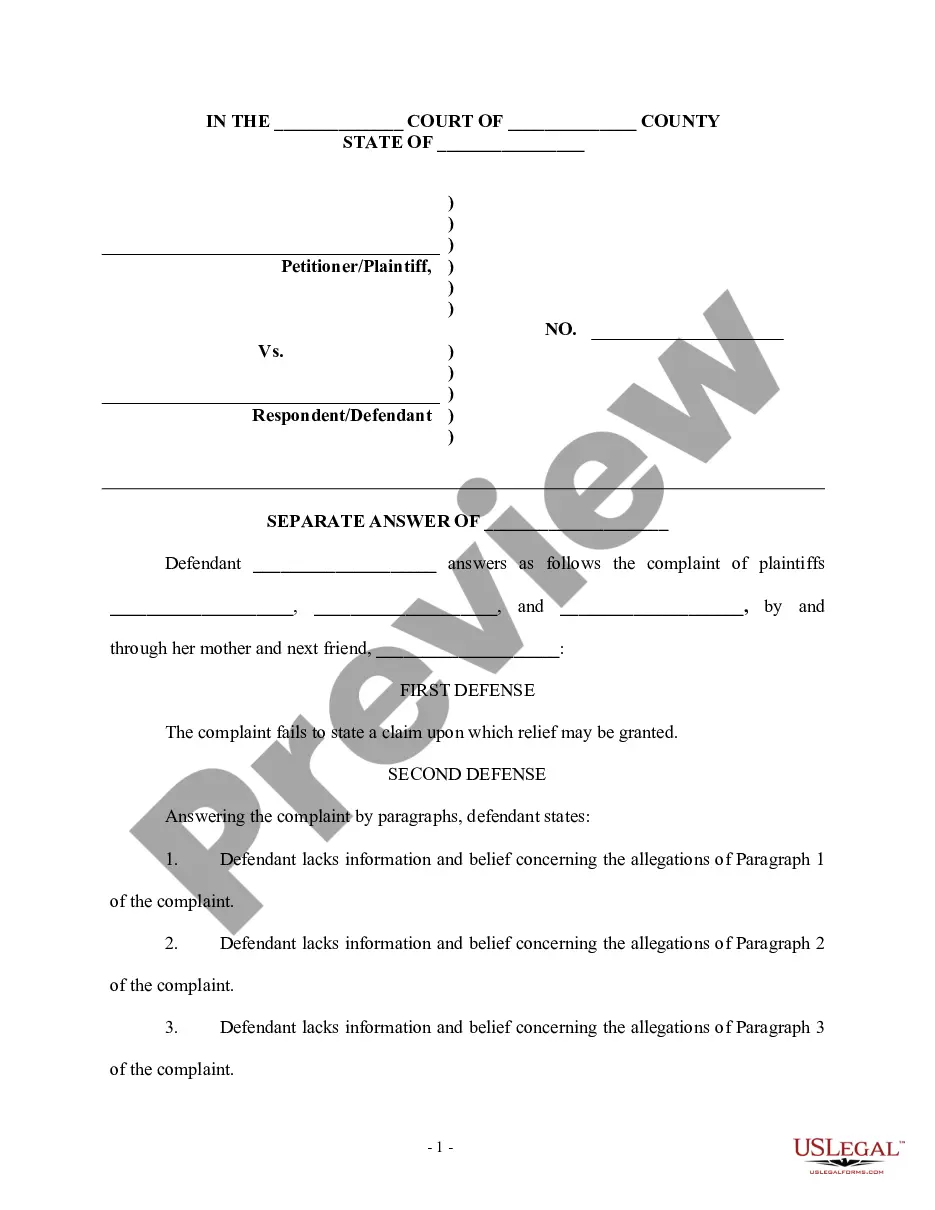
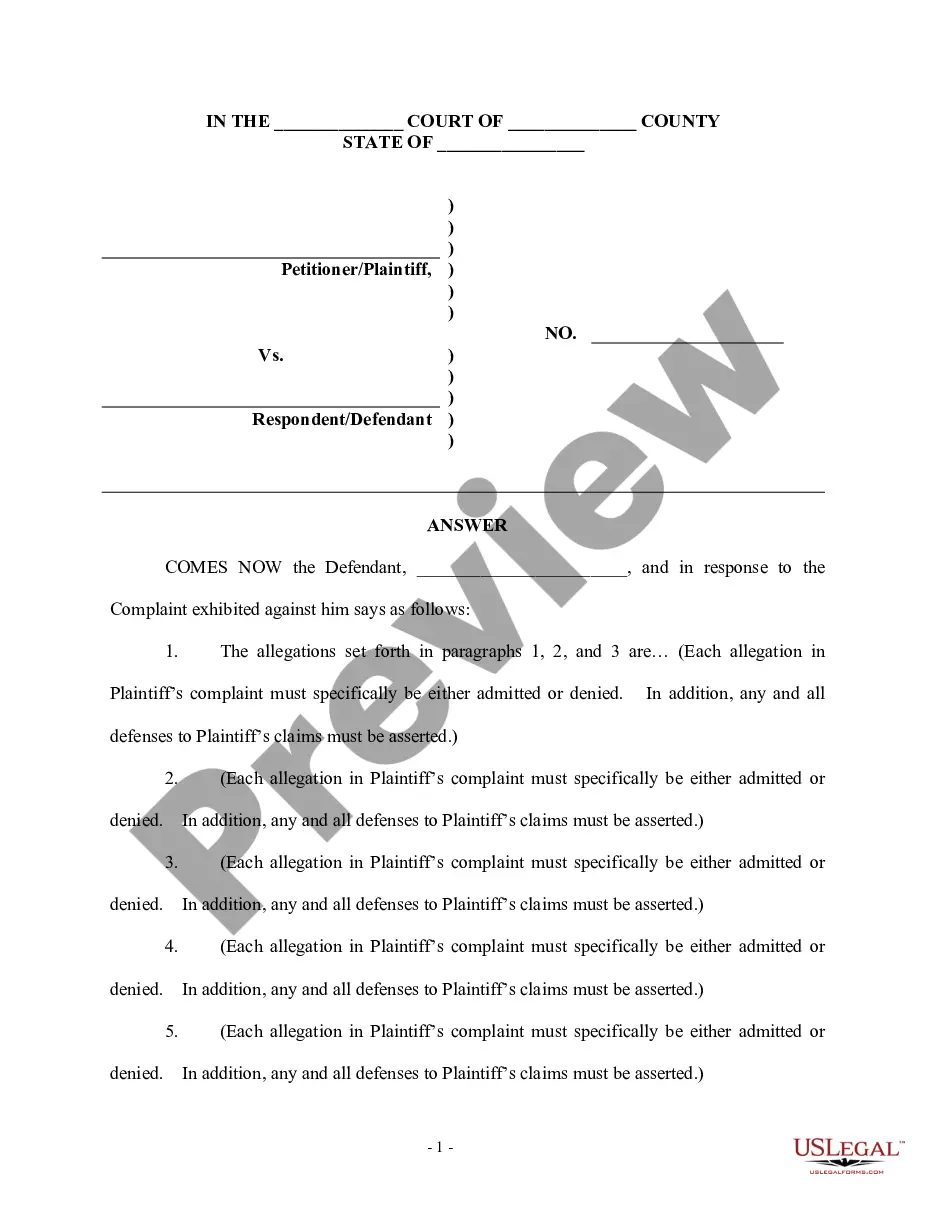
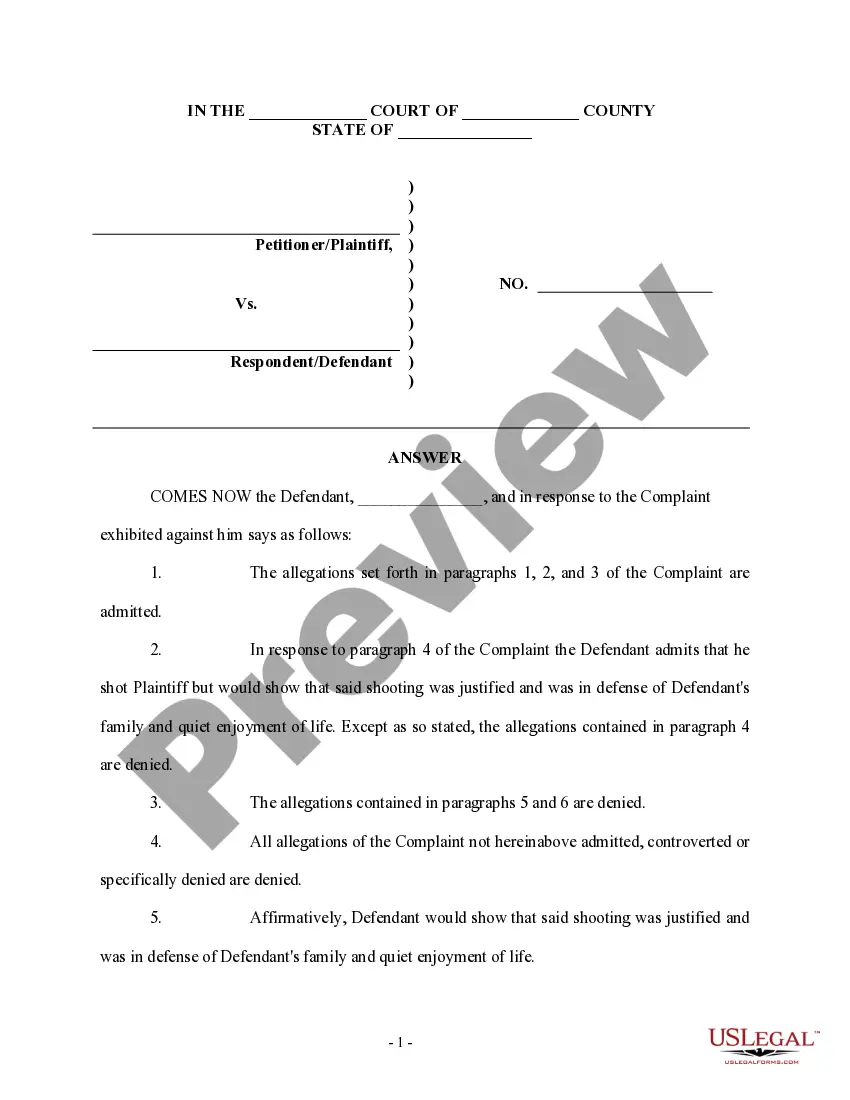
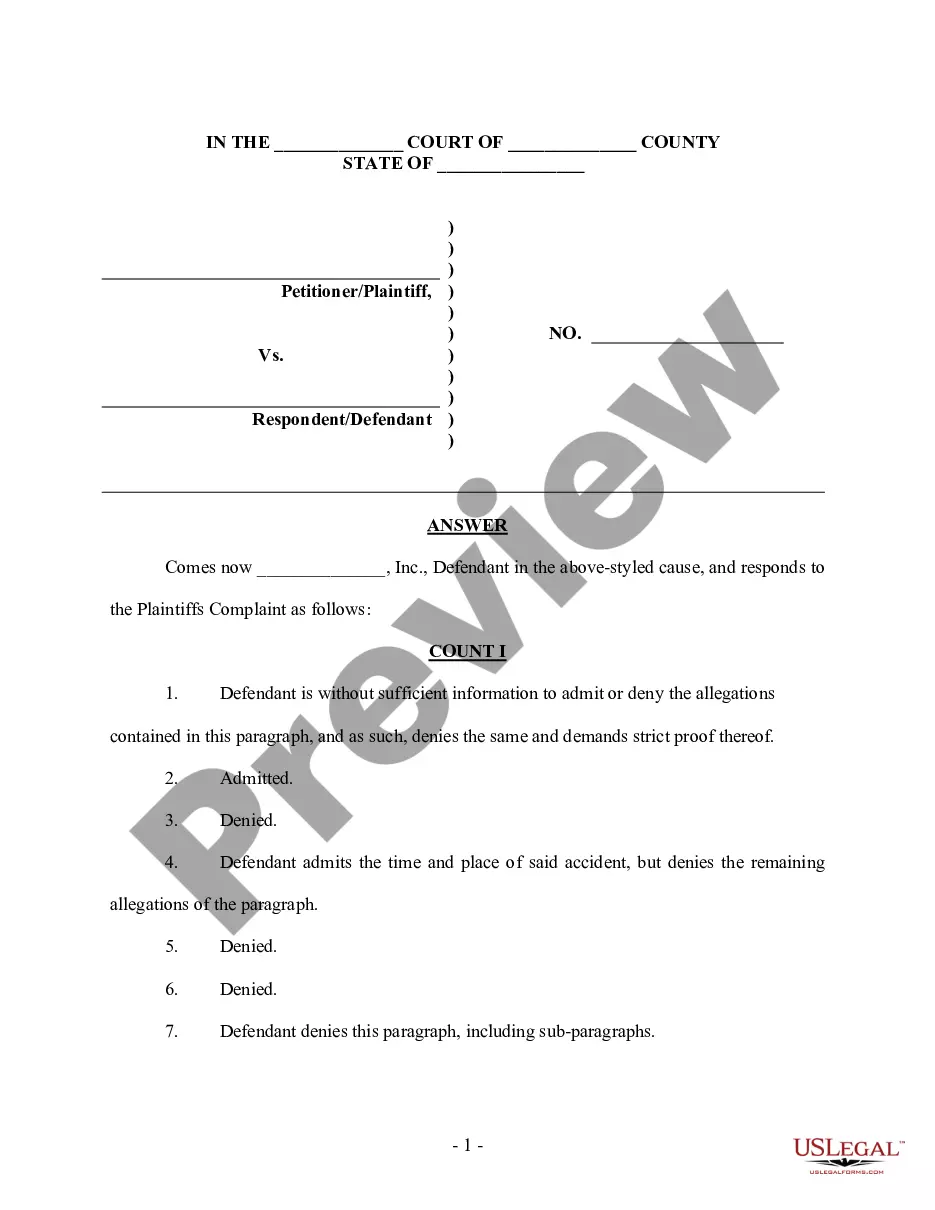
The Separate Answer - Personal Injury Accident form is a legal document used by defendants in response to a personal injury claim. This form is specifically designed to articulate defenses and responses to the allegations made in the plaintiff's complaint. It provides a structured way for the defendant to admit, deny, or claim a lack of knowledge regarding the details of the complaint, helping to ensure that the case is properly addressed in court.
Main sections of this form
- First Defense: States whether the complaint adequately presents a claim for relief.
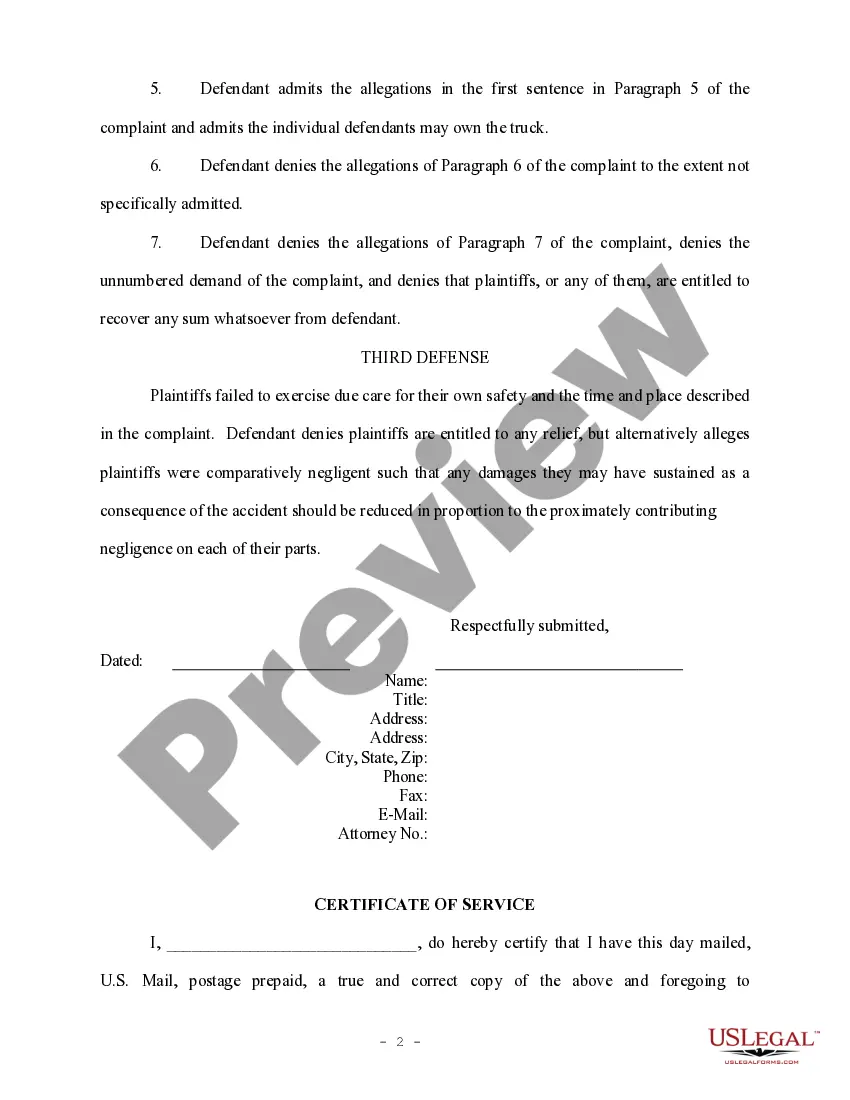
- Specific Responses: Breaks down the allegations in the complaint and provides tailored responses by paragraph.
- Third Defense: Addresses potential comparative negligence on the part of the plaintiffs.
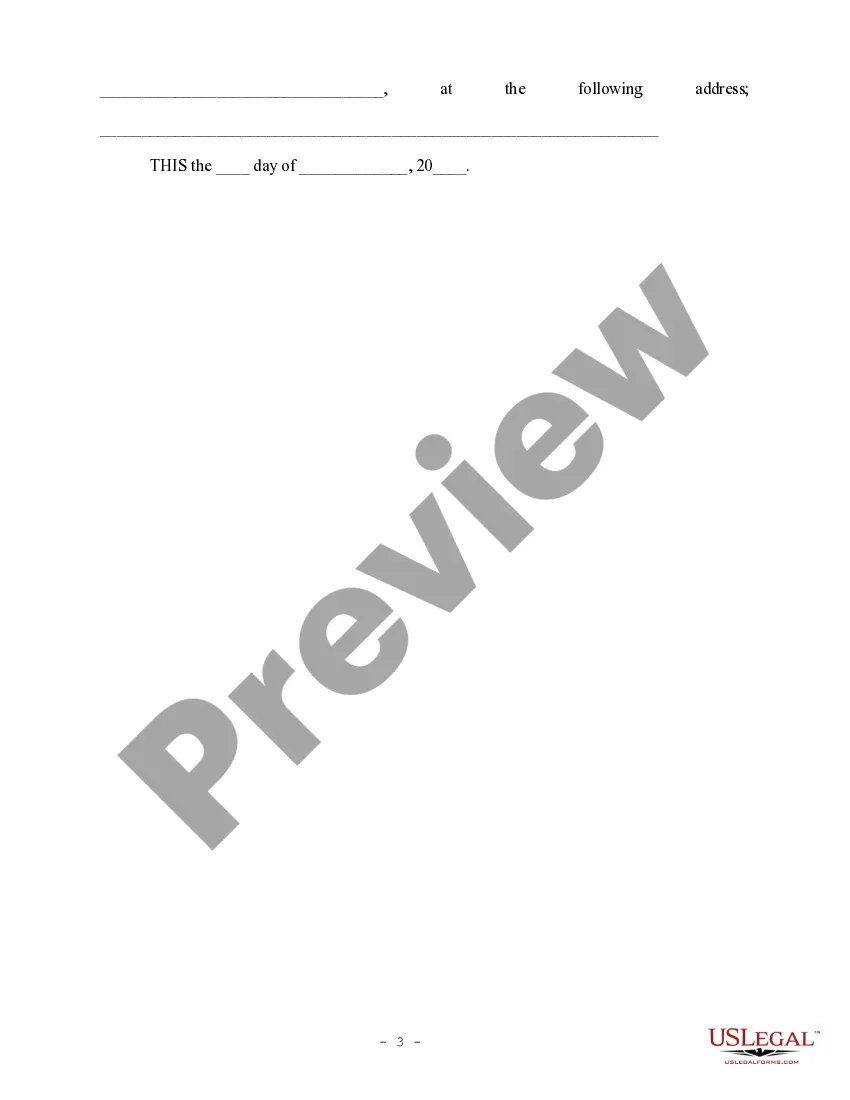
- Certificate of Service: Confirms that a copy of the answer was mailed to the plaintiffs or their representatives.

Common use cases
This form should be used when a defendant is responding to a personal injury lawsuit. It is essential for defendants who wish to formally contest the claims made by the plaintiffs in court. This response is typically filed after receiving the complaint and is a crucial step in ensuring that the defendant's perspective and defenses are presented on the record.
Who can use this document
This form is intended for:
- Defendants involved in personal injury lawsuits.
- Individuals or entities who have been accused of causing harm or injury through alleged negligent actions.
- Legal representatives seeking to provide an official response on behalf of a defendant.
How to complete this form
- Identify the parties involved, including the defendant's name and the case number.
- Review each paragraph of the plaintiff's complaint and determine the appropriate response (admit, deny, or lack of knowledge).
- Clearly state any defenses in the appropriate sections of the form.
- Complete the Certificate of Service section, noting where the copies were sent.
- Sign and date the form, ensuring that it is filed with the court by the deadline.
Notarization guidance
This form does not typically require notarization to be legally valid. However, some jurisdictions or document types may still require it. US Legal Forms provides secure online notarization powered by Notarize, available 24/7 for added convenience.
Get your form ready online
Our built-in tools help you complete, sign, share, and store your documents in one place.
Make edits, fill in missing information, and update formatting in US Legal Forms—just like you would in MS Word.
Download a copy, print it, send it by email, or mail it via USPS—whatever works best for your next step.
Sign and collect signatures with our SignNow integration. Send to multiple recipients, set reminders, and more. Go Premium to unlock E-Sign.
If this form requires notarization, complete it online through a secure video call—no need to meet a notary in person or wait for an appointment.
We protect your documents and personal data by following strict security and privacy standards.

Make edits, fill in missing information, and update formatting in US Legal Forms—just like you would in MS Word.

Download a copy, print it, send it by email, or mail it via USPS—whatever works best for your next step.

Sign and collect signatures with our SignNow integration. Send to multiple recipients, set reminders, and more. Go Premium to unlock E-Sign.

If this form requires notarization, complete it online through a secure video call—no need to meet a notary in person or wait for an appointment.

We protect your documents and personal data by following strict security and privacy standards.
Common mistakes
- Failing to respond to all allegations in the complaint.
- Missing deadlines for filing the answer with the court.
- Not properly signing the document or completing the Certificate of Service.
- Providing vague responses instead of specific admissions or denials.
Why use this form online
- Convenient access from anywhere, allowing you to complete the form at your own pace.
- Easily editable, ensuring you can make necessary changes without hassle.
- Reliability of the content, with forms drafted by licensed attorneys to ensure legal compliance.
Legal use & context
This form is enforceable in a legal setting as it provides a structured answer to a personal injury claim. It adheres to the procedural rules necessary for contesting a lawsuit and can significantly impact the outcome of the case.
Summary of main points
- The Separate Answer - Personal Injury Accident form is crucial for defending against personal injury claims.
- Each allegation must be addressed clearly in the response.
- Affirmative defenses can help mitigate liability if applicable.
- Completing the form accurately ensures legal compliance and protects the defendant's rights.
Looking for another form?



Form popularity
FAQ
Take control at the scene and try to restore order. Assure first aid and call for emergency services. Provide immediate care if you're qualified to do so; have someone else call for help. Control potential secondary accidents. Identify people and conditions at the scene. Preserve physical evidence.
Step 1: Consultation With An Attorney. Step 2: Investigation Of Your Case. Step 3: Demand Package. Step 4: Filing A Personal Injury Lawsuit. Step 5: Discovery Phase. Step 6: Mediation. Step 7: Trial. Step 8: Appeal.
Contributory Negligence. The most common defense used against a personal injury claim is contributory negligence. The Assumption of Risk. Pre-Existing Injuries. Release of Liability Waiver. The Statute of Limitations.
The general principle is that compensation for multiple injuries is calculated on a case-by-case basis. The actual award may be more or less than the sum total of what would be awarded for the individual injuries, depending on the overall impact on a claimant's life.
Prevention is always better than cure. If an accident happens, stay calm. Follow practiced procedures/protocols. Report, investigate and review. Manage any long-term effects.
Preparation. Preparation is the key to effective incident response. Detection and Reporting. The focus of this phase is to monitor security events in order to detect, alert, and report on potential security incidents. Triage and Analysis. Containment and Neutralization. Post-Incident Activity.
Contributory Negligence. The most common defense used against a personal injury claim is contributory negligence. The Assumption of Risk. Pre-Existing Injuries. Release of Liability Waiver. The Statute of Limitations.
Many plaintiffs' attorneys were trained to use one of two methods for calculating pain and suffering. The first method is to multiply the plaintiff's actual damages (medical bills and lost wages) by a certain number, generally between 1 and 5 (depending on the severity of the injury).