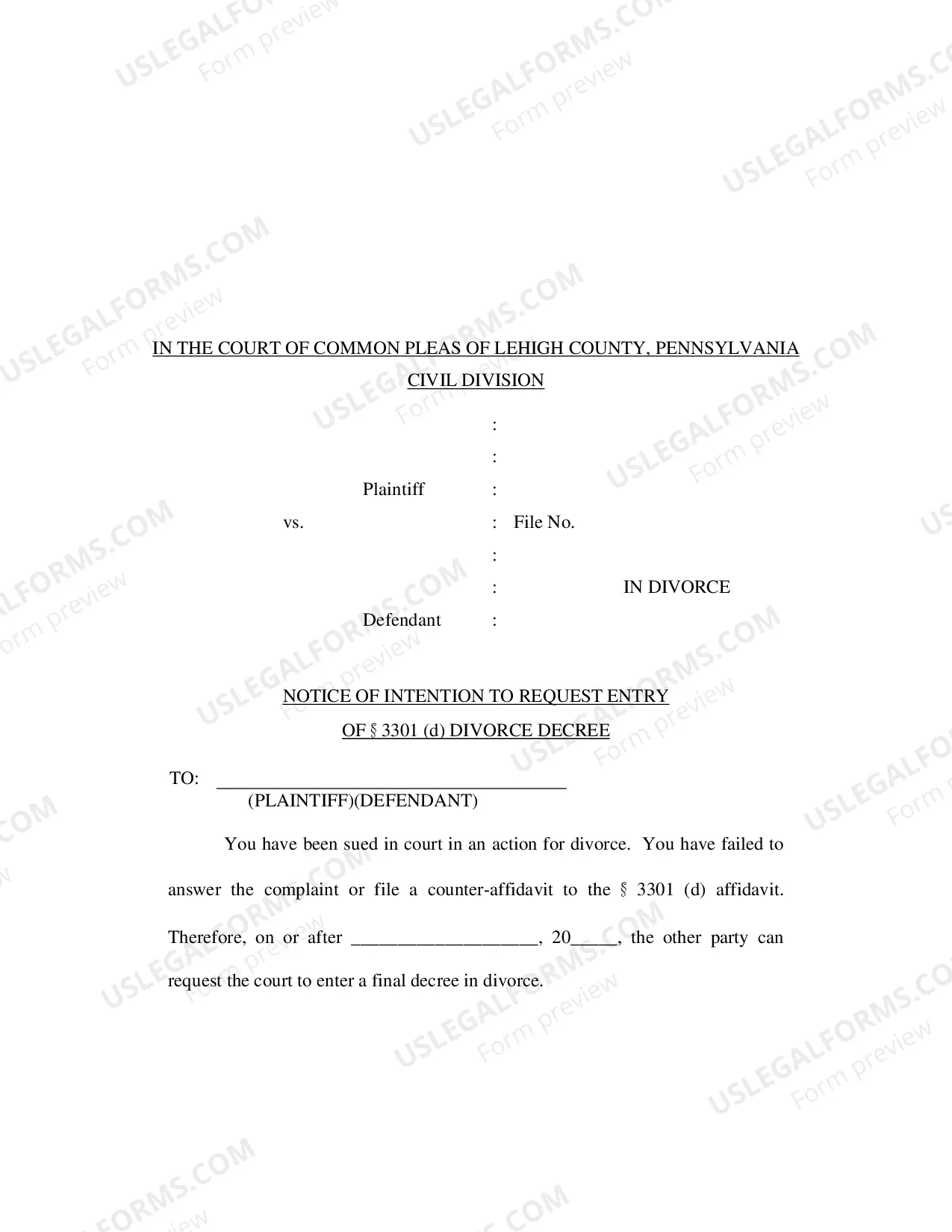
General Personal Injury Answer
What is this form?
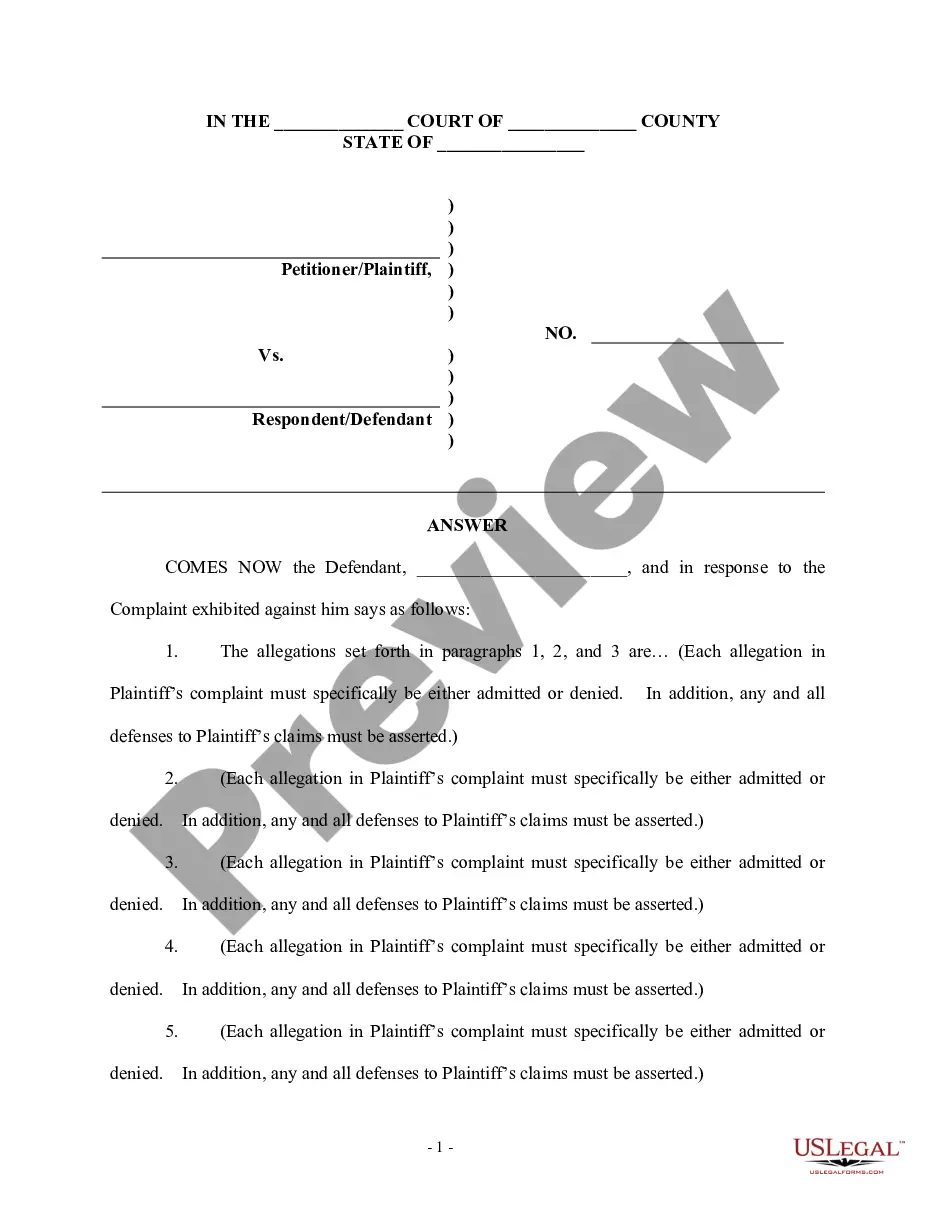
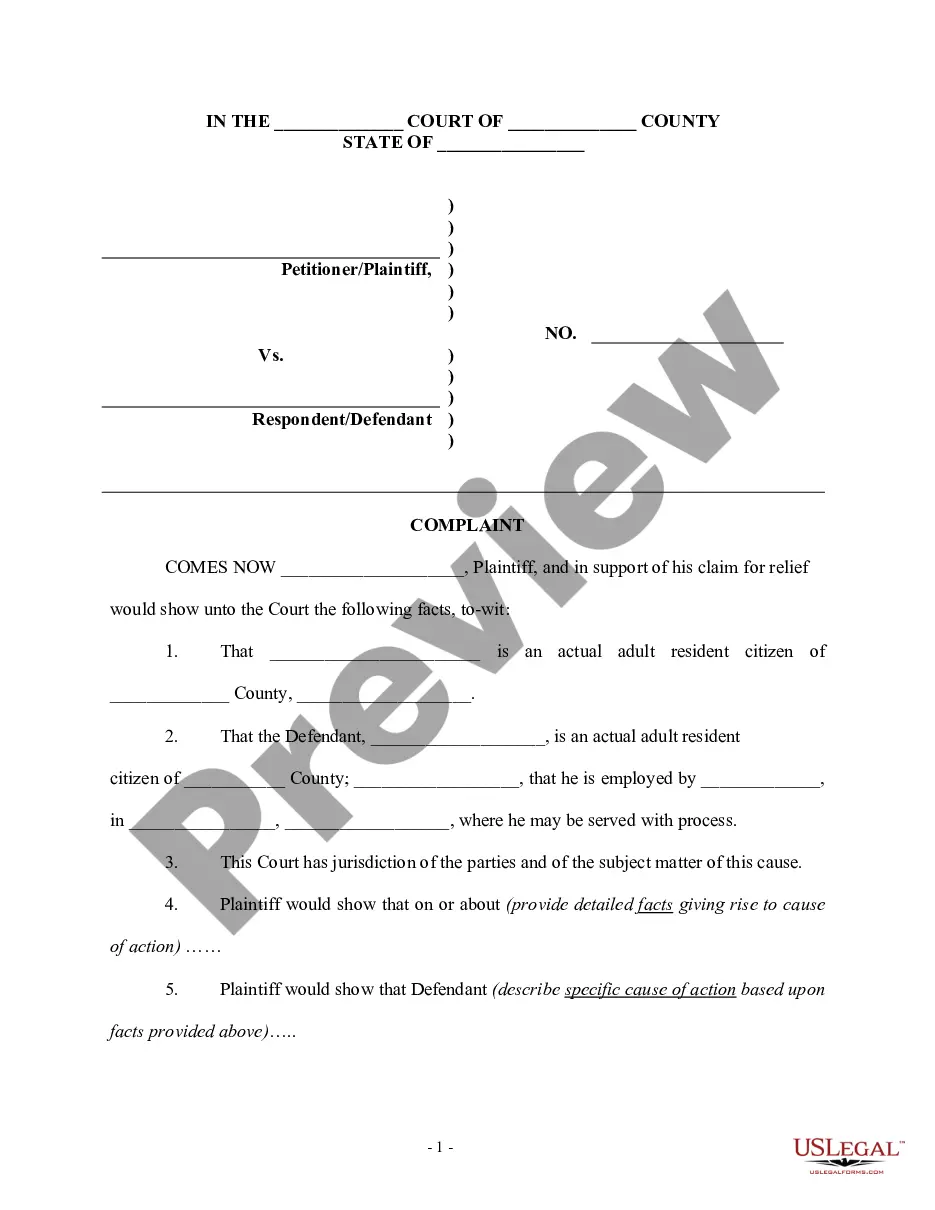
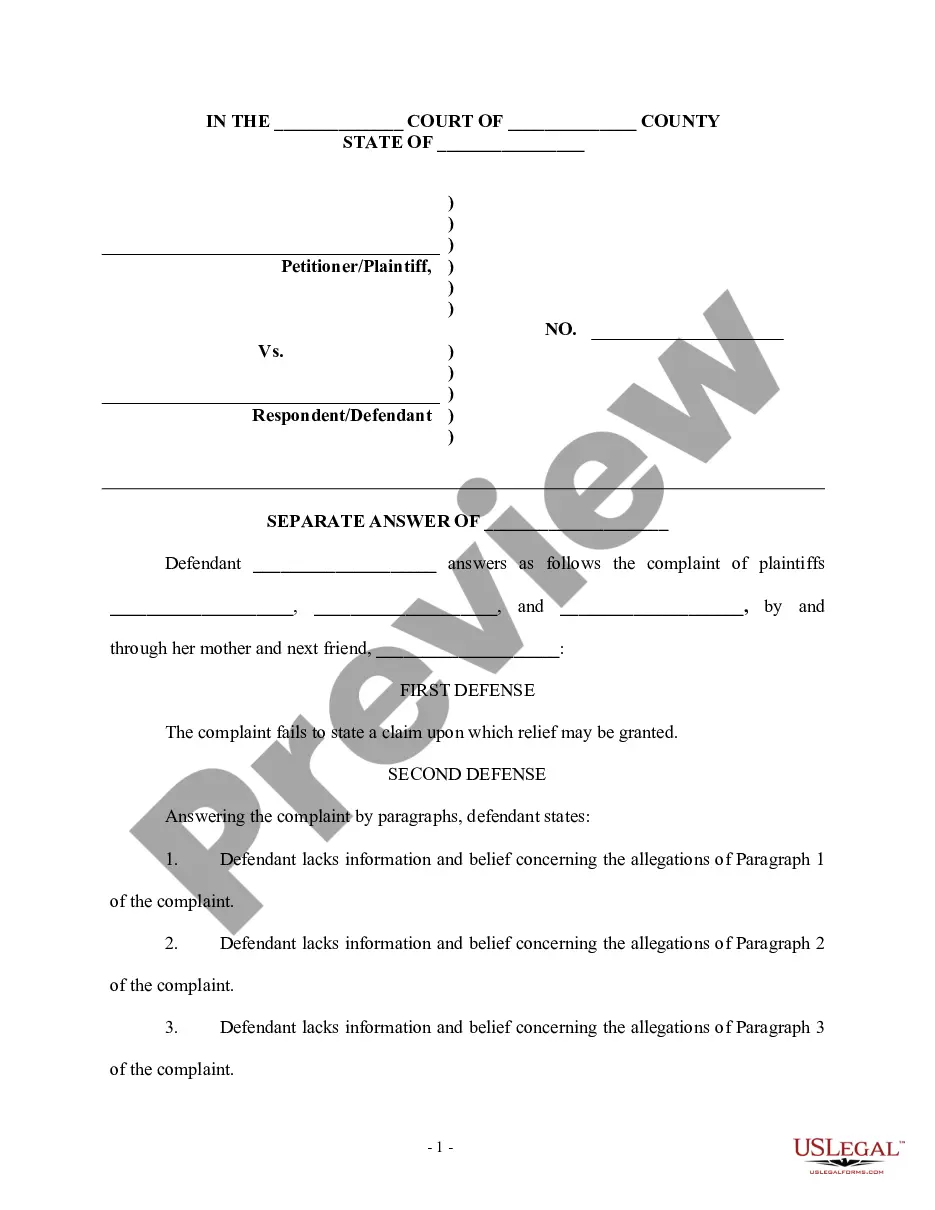
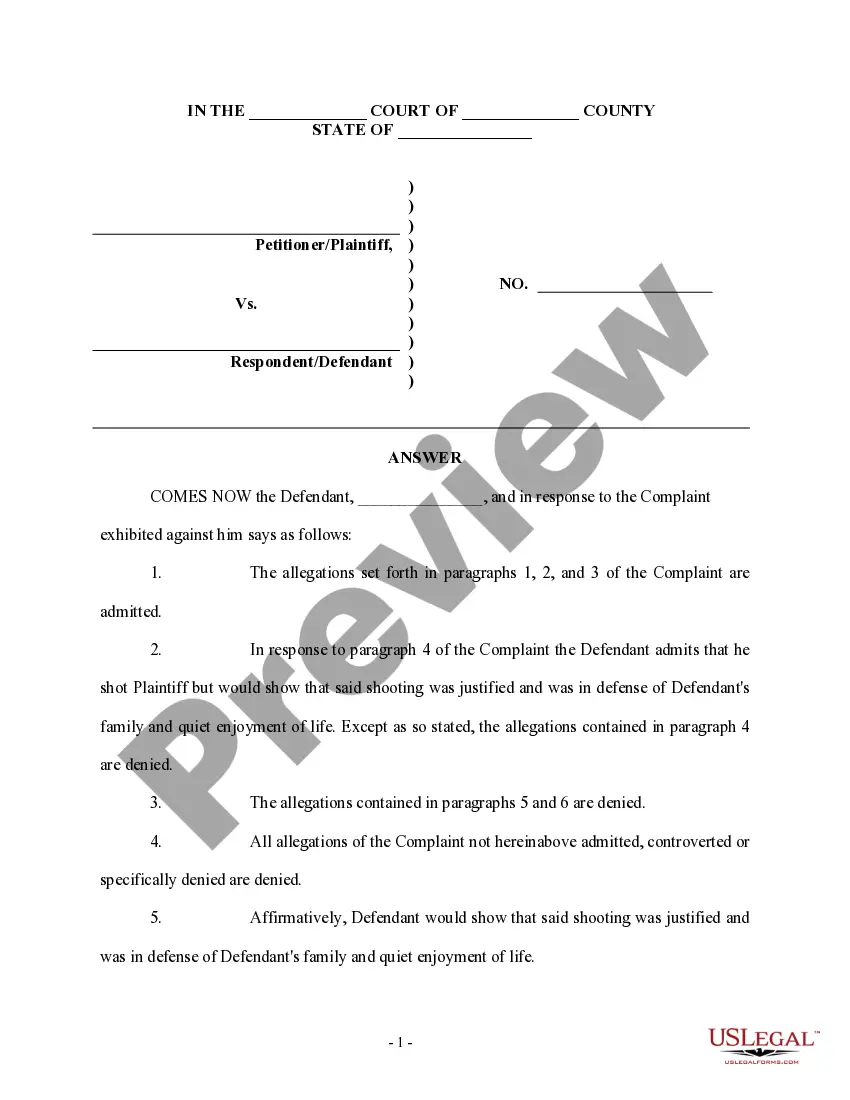
The General Personal Injury Answer is a legal document used by defendants in personal injury lawsuits. This form allows a defendant to respond to the allegations presented in the plaintiff's complaint. Unlike other responses that may address specific claims, this general answer provides a structured way for defendants to admit or deny each allegation, while also asserting any applicable defenses. By completing this form, you can ensure compliance with legal requirements and effectively present your case in court.
Key components of this form
- Admittance or denial of each allegation in the plaintiff's complaint.
- Assertion of any defenses against the plaintiff's claims.
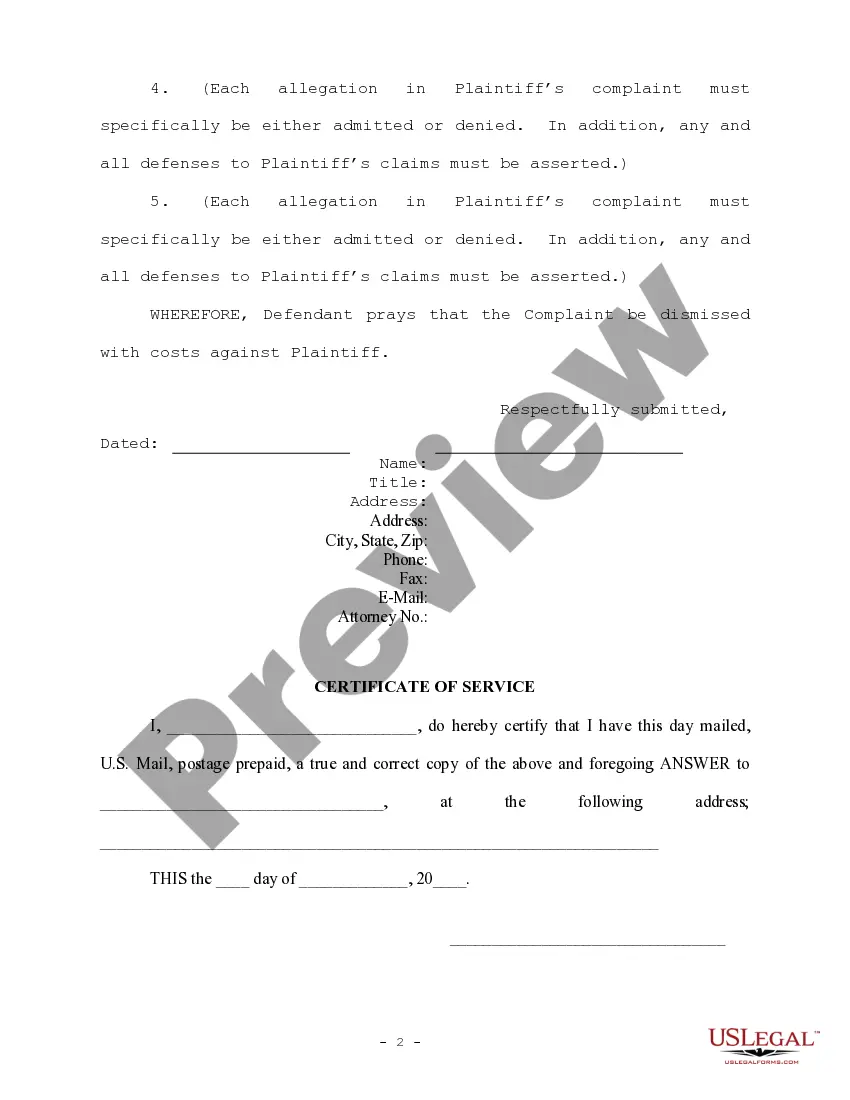
- A formal request for dismissal of the complaint with costs against the plaintiff.
- Space for signatures and date to validate the response.

When this form is needed
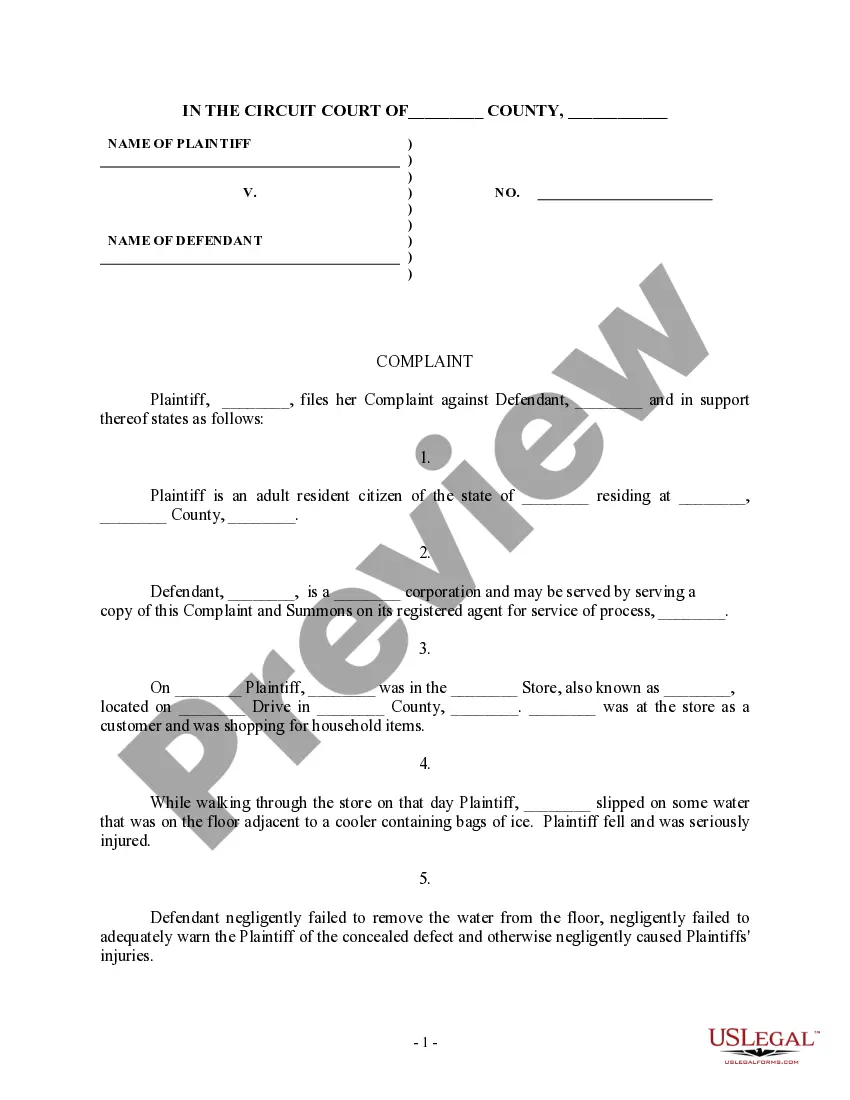
This form should be used when you, as a defendant, receive a complaint for a personal injury case. It is crucial to file this answer within the specified time frame to avoid a default judgment against you. This form can be used in various scenarios, such as car accidents, slip-and-fall incidents, or any instance where someone claims damages due to alleged negligence.
Who needs this form
This form is intended for:
- Defendants in personal injury lawsuits, including individuals and businesses.
- Parties responding to a legal complaint regarding personal injury claims.
- Individuals seeking to protect their legal rights as they navigate their case.
Steps to complete this form
- Identify the parties involved: clearly state the defendant's name and address.
- Review the plaintiff's complaint: ensure you understand each allegation.
- Admit or deny each allegation: respond specifically to each claim made by the plaintiff.
- Assert any defenses: include any legal reasons why the plaintiffâs claims should be dismissed.
- Sign and date the document: ensure your signature and date are added to finalize the answer.
Notarization guidance
This form does not typically require notarization unless specified by local law. However, always check your jurisdictionâs requirements to ensure compliance.
Get your form ready online
Our built-in tools help you complete, sign, share, and store your documents in one place.
Make edits, fill in missing information, and update formatting in US Legal Forms—just like you would in MS Word.
Download a copy, print it, send it by email, or mail it via USPS—whatever works best for your next step.
Sign and collect signatures with our SignNow integration. Send to multiple recipients, set reminders, and more. Go Premium to unlock E-Sign.
If this form requires notarization, complete it online through a secure video call—no need to meet a notary in person or wait for an appointment.
We protect your documents and personal data by following strict security and privacy standards.

Make edits, fill in missing information, and update formatting in US Legal Forms—just like you would in MS Word.

Download a copy, print it, send it by email, or mail it via USPS—whatever works best for your next step.

Sign and collect signatures with our SignNow integration. Send to multiple recipients, set reminders, and more. Go Premium to unlock E-Sign.

If this form requires notarization, complete it online through a secure video call—no need to meet a notary in person or wait for an appointment.

We protect your documents and personal data by following strict security and privacy standards.
Avoid these common issues
- Failing to respond within the required timeframe, which can lead to a default judgment.
- Not specifically admitting or denying allegations, resulting in vague responses.
- Omitting necessary defenses, which may weaken your case.
- Not signing the document, rendering it invalid.
Benefits of using this form online
- Convenience of downloading and filling out the form from anywhere at any time.
- Editability allows you to customize the response according to your specific situation.
- Reliability of having a document drafted with input from licensed attorneys.
Looking for another form?
Form popularity
FAQ
Preparation. Preparation is the key to effective incident response. Detection and Reporting. The focus of this phase is to monitor security events in order to detect, alert, and report on potential security incidents. Triage and Analysis. Containment and Neutralization. Post-Incident Activity.
Have a Specific Settlement Amount in Mind. Do Not Jump at a First Offer. Get the Adjuster to Justify a Low Offer. Emphasize Emotional Points in Your Favor. Wait for a Response. Know When To Engage an Attorney. Put the Settlement in Writing.
A detailed description of what happened. Photos of the scene and any injuries you sustained. Medical records. Receipts related to all medical expenses. Proof of lost wages.
Be Transparent with Your Attorney. Keep Case Details to Yourself. Do Not Talk to Insurance Providers. Ask Yourself if You are Ready for a Legal Battle. Steer Clear of Pie-in-the-Sky Attorneys. Do Your Homework. Try to Get a Medical Professional on Your Side. Document Every Piece of Evidence in Your Case.
How Much Compensation Is Typical in Personal Injury Cases? More than half of our readers received payouts ranging from just $3,000 to $25,000. But another 26% of readers received over $25,000, making the overall average $52,900.
Always Tell the Truth. Never Guess. Remain Calm: Never Argue, Joke, or get Upset. Listen to the Question being Asked. Pause to Give your Lawyer a Chance to Object. Answer JUST that question. Then Stop Talking. Repeat Steps 1 through 7.
The three factors that are needed for a good personal injury claim are large damages or injuries, clear liability, and deep pockets.In other words, they have high damages. Without liability though or someone else who was negligent, like another driver who was at fault, there isn't much of a case.
Take control at the scene and try to restore order. Assure first aid and call for emergency services. Provide immediate care if you're qualified to do so; have someone else call for help. Control potential secondary accidents. Identify people and conditions at the scene. Preserve physical evidence.
Be brief. Answer the allegations in the complaint with one or two sentences. Again remember that the statements you make in your answer can be used as admissions against you. Your response to the allegations in the complaint may admit part of the statement in the specific paragraph and deny part.