Translator or Interpreter Service Agreement
Overview of this form
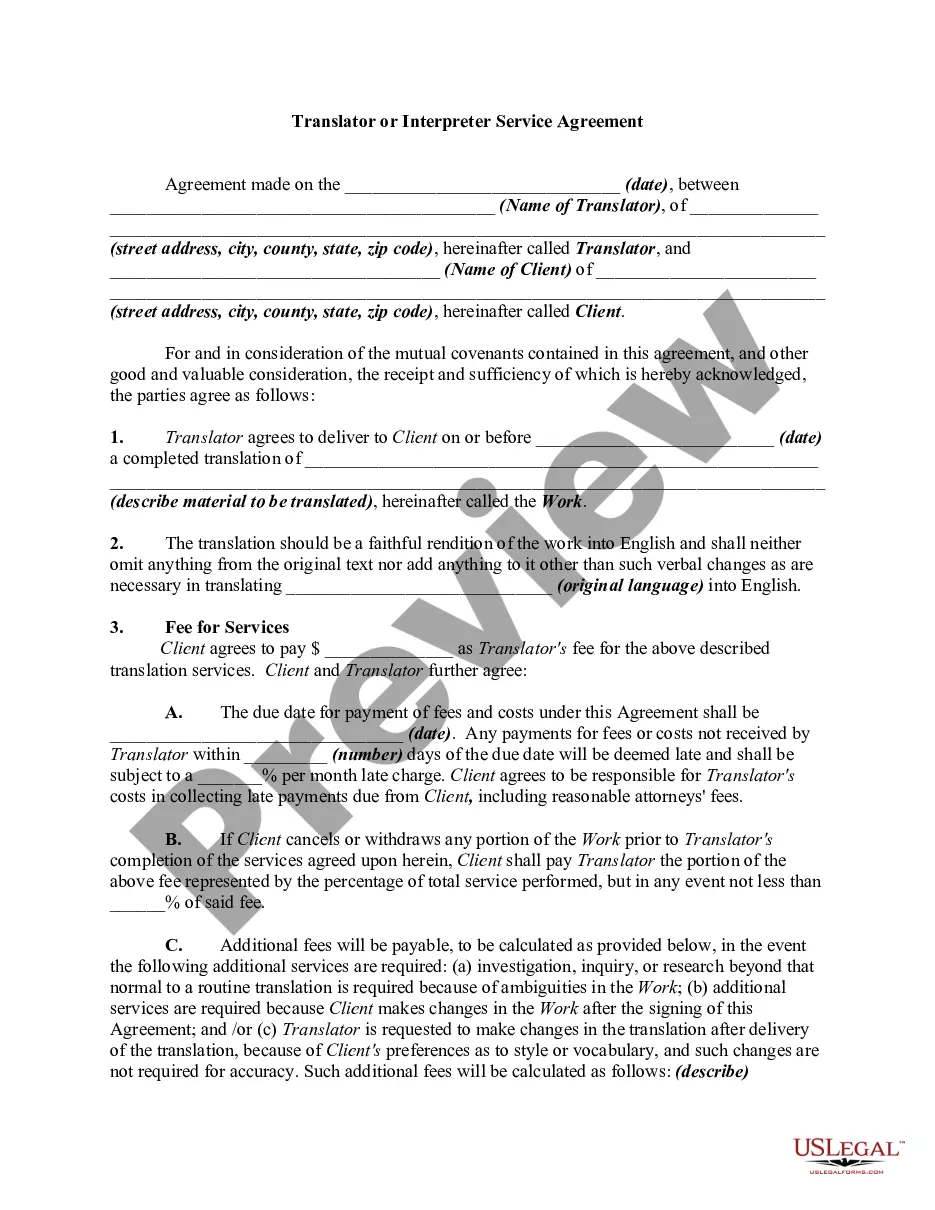
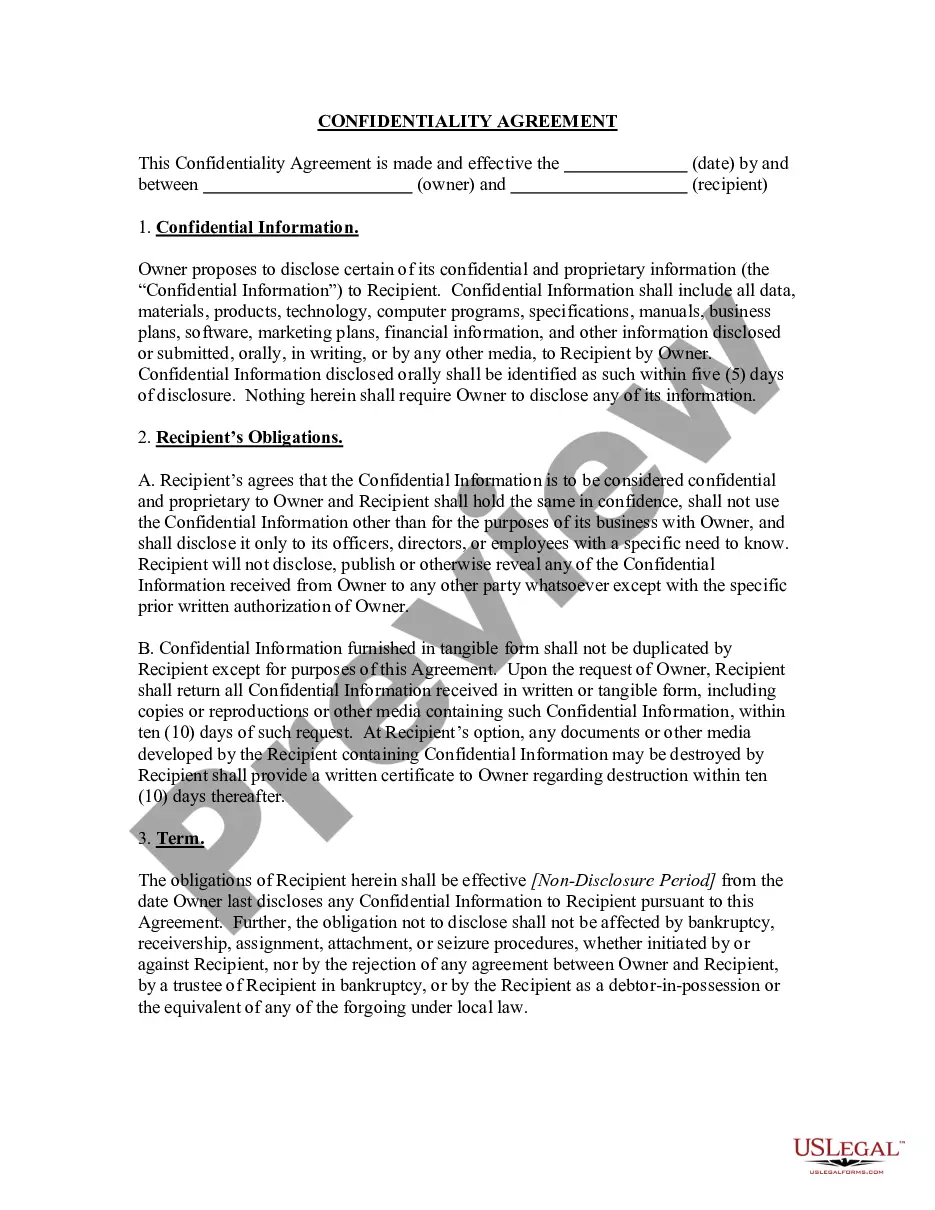
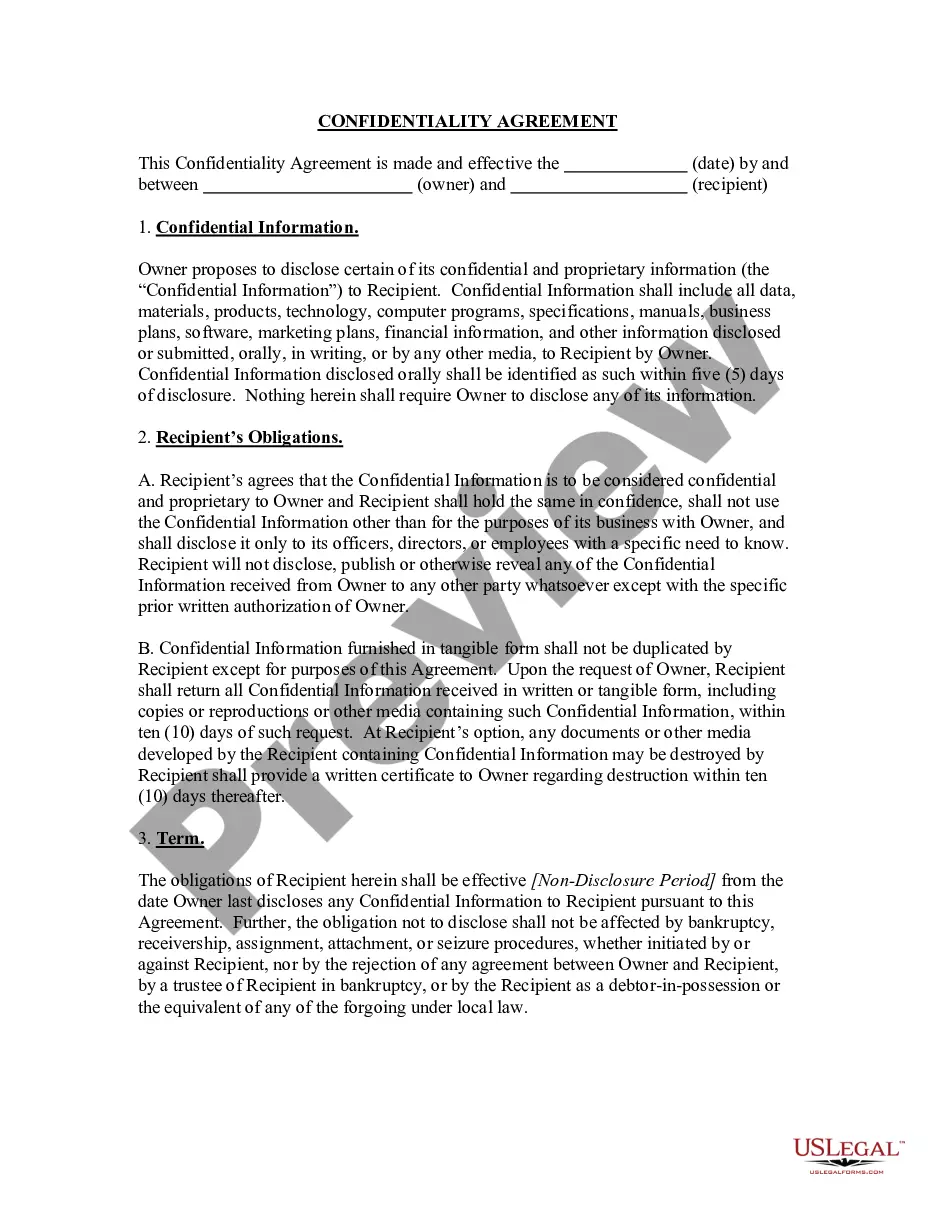
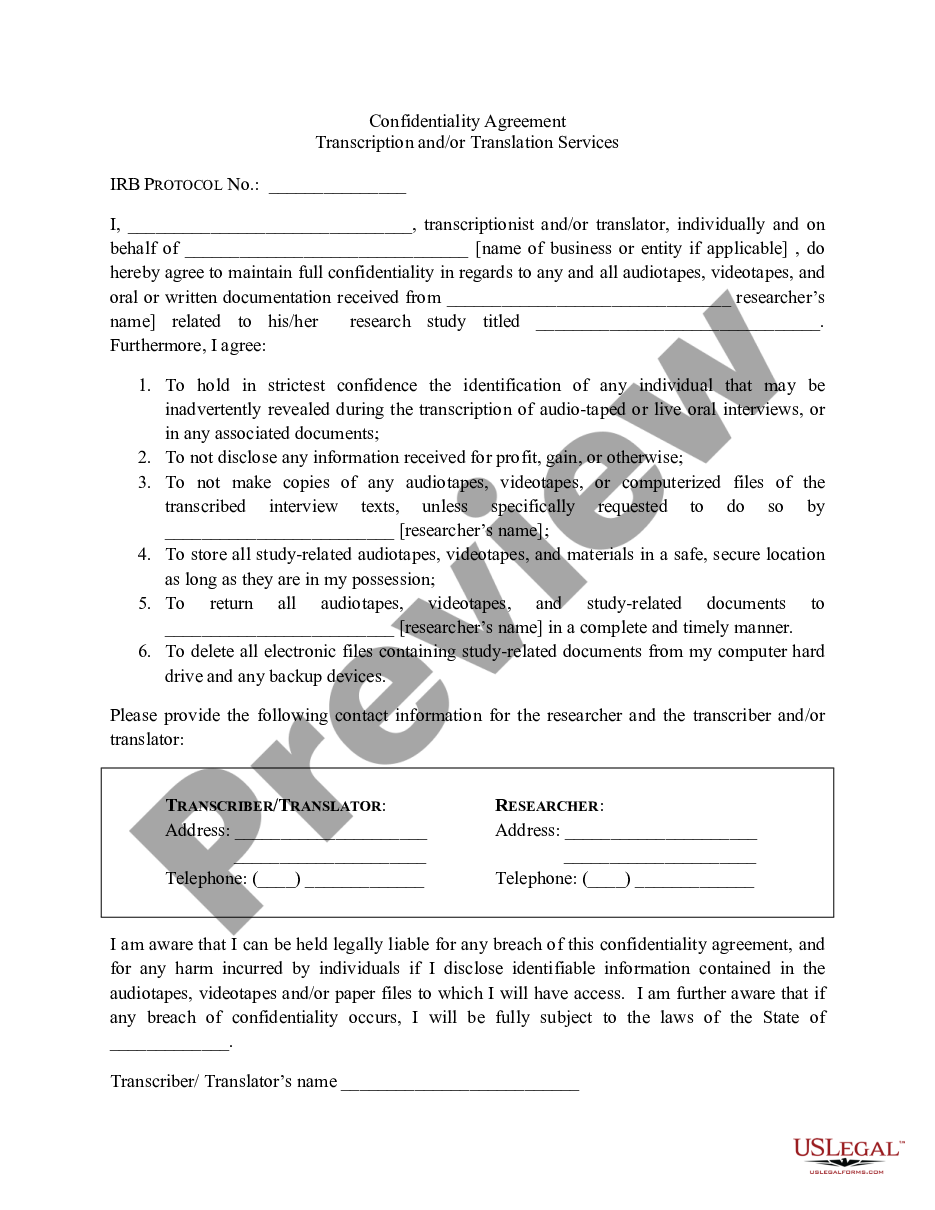
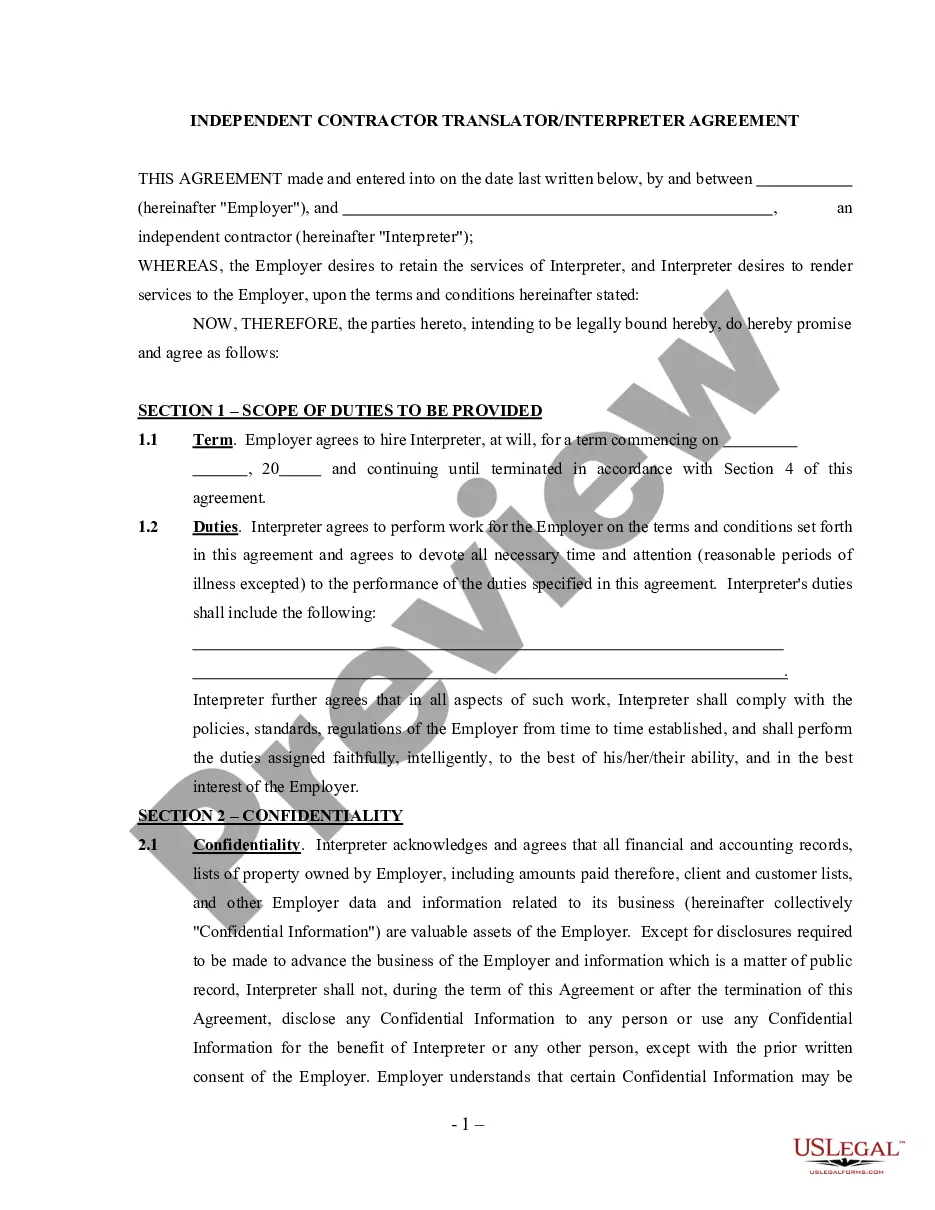
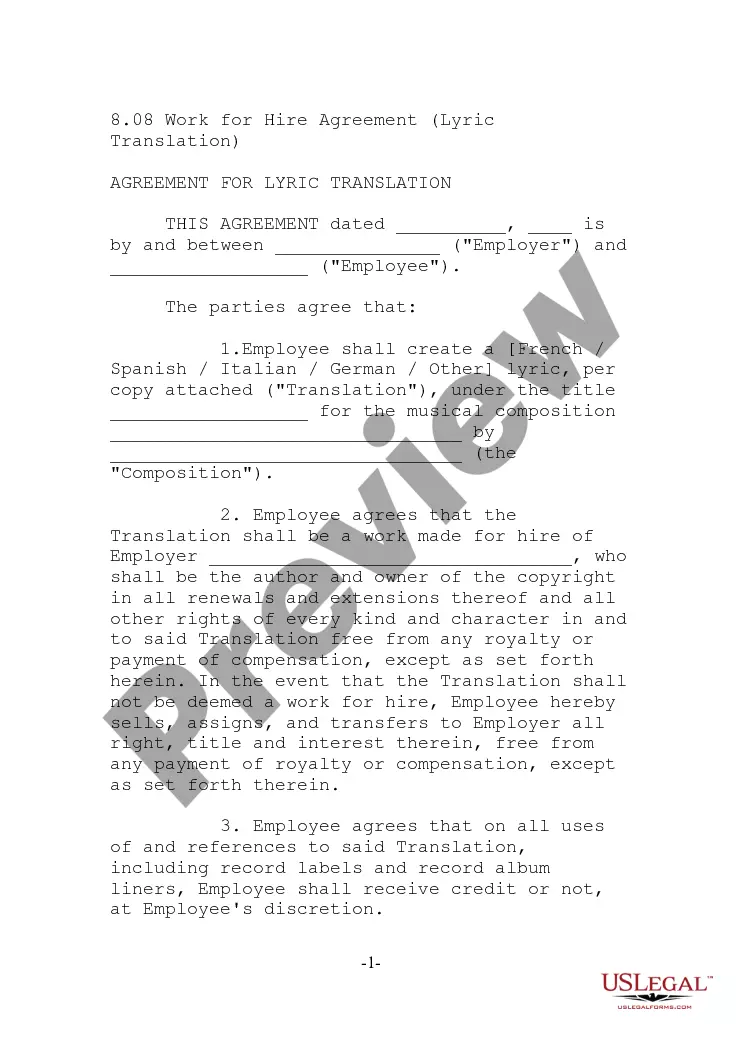
The Translator or Interpreter Service Agreement is a legal document that outlines the terms of hiring a translator or interpreter as an independent contractor. This agreement specifies the services to be provided, the fee for those services, and the responsibilities of both the translator and the client. Unlike generic contracts, this form is tailored to ensure clear communication and expectations regarding translation tasks, protecting the interests of both parties involved.
Form components explained
- Date of the agreement and contact information for both parties.
- Description of the work to be translated and its due date.
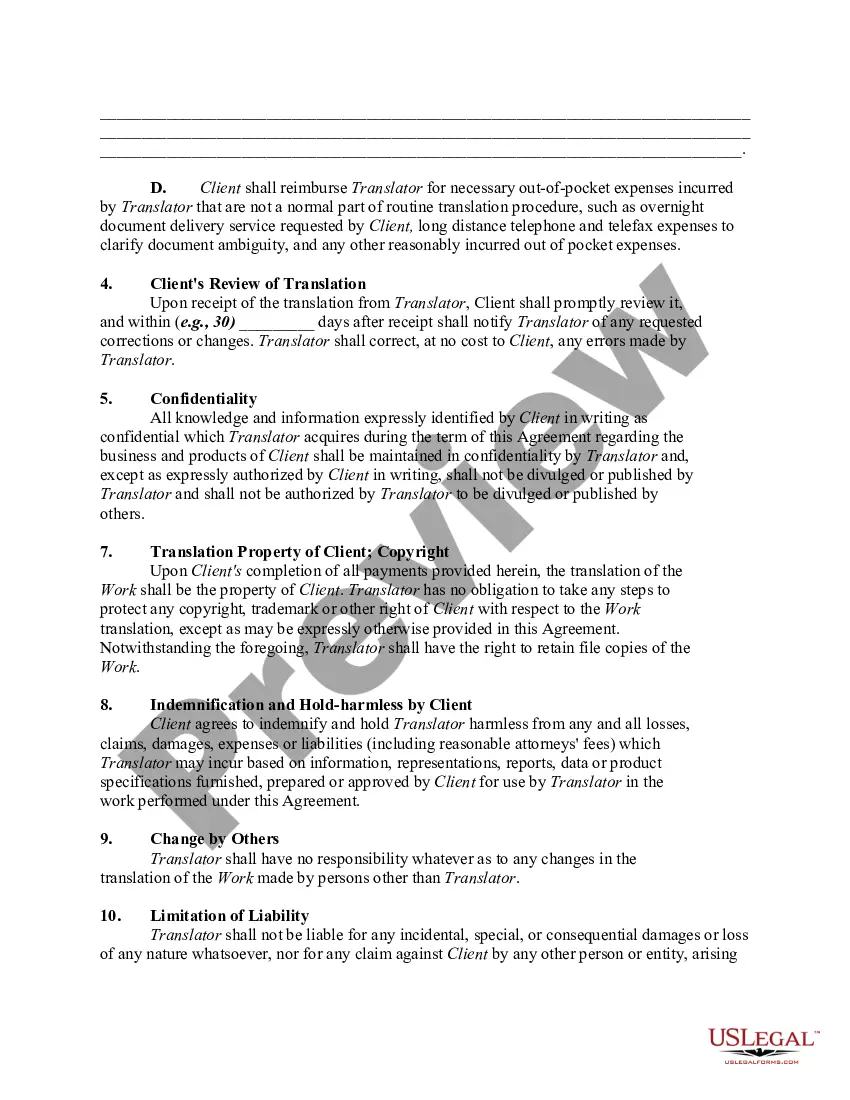
- Fee structure, including conditions for late payments and potential additional fees.
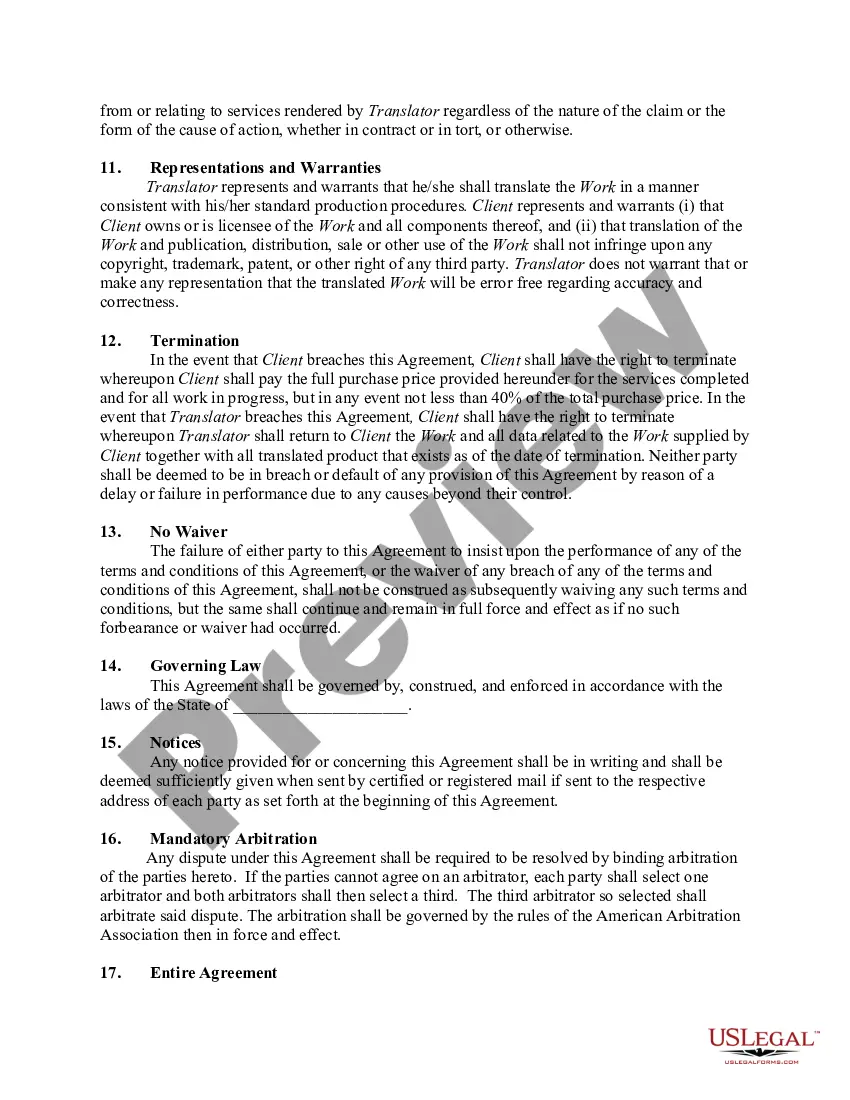
- Confidentiality clauses to protect sensitive client information.
- Review process for the translation and conditions for revisions.
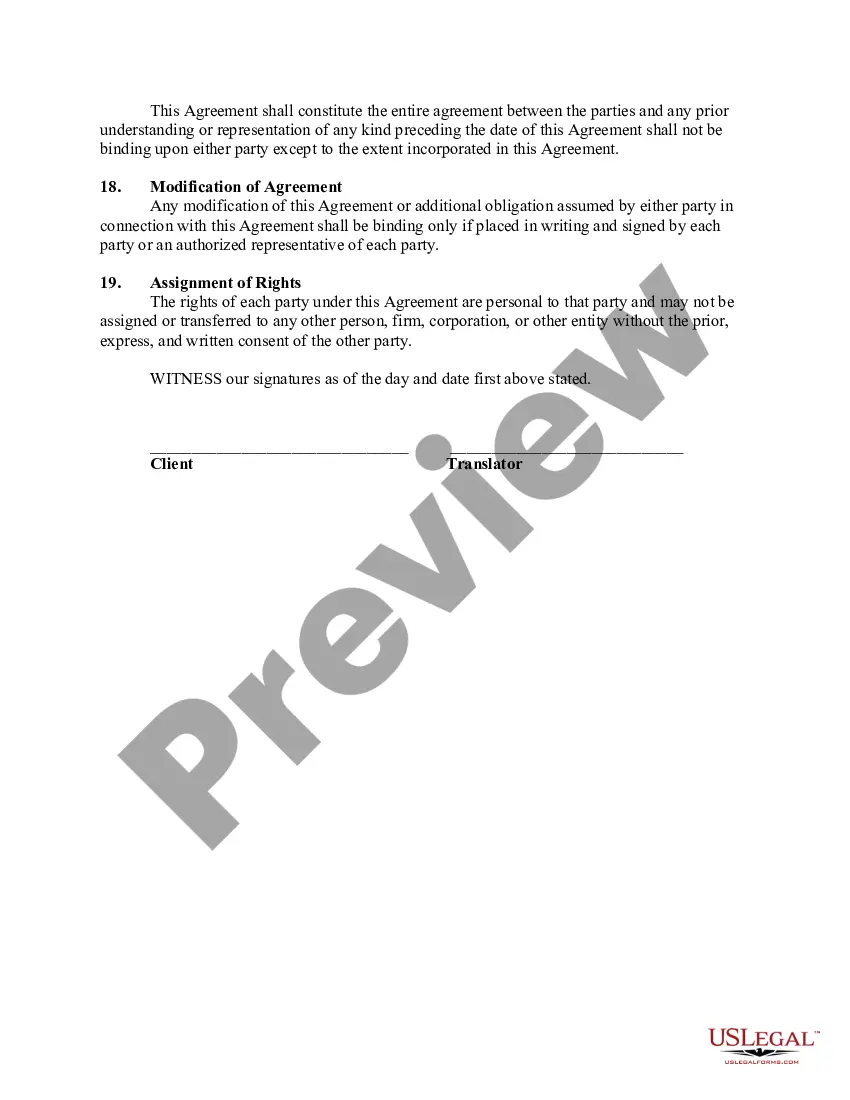
- Conditions for termination of the agreement by either party.
Common use cases
You should use the Translator or Interpreter Service Agreement when you need to hire a translator or interpreter for specific projects. This could include translating legal documents, business materials, or any content requiring accurate language conversion. It's essential when clear terms need to be established regarding deadlines, payment, and the responsibilities of both parties to avoid misunderstandings.
Who can use this document
- Businesses requiring translation of materials for international clients or markets.
- Individuals who need documents translated for personal use, such as immigration or educational purposes.
- Government entities needing accurate translations for official documents and communications.
- Nonprofit organizations working with multilingual communities.
How to prepare this document
- Enter the date the agreement is made at the top of the form.
- Fill in the names and addresses of both the translator and the client.
- Specify the material to be translated and include the due date for completion.
- Outline the fee for services and any conditions for late payment or additional costs.
- Both parties should sign and date the document to validate the agreement.
Notarization requirements for this form
This form does not typically require notarization unless specified by local law. It's important to check your jurisdiction for any specific requirements that might necessitate notarization to ensure the agreement is legally binding.
Get your form ready online
Our built-in tools help you complete, sign, share, and store your documents in one place.
Make edits, fill in missing information, and update formatting in US Legal Forms—just like you would in MS Word.
Download a copy, print it, send it by email, or mail it via USPS—whatever works best for your next step.
Sign and collect signatures with our SignNow integration. Send to multiple recipients, set reminders, and more. Go Premium to unlock E-Sign.
If this form requires notarization, complete it online through a secure video call—no need to meet a notary in person or wait for an appointment.
We protect your documents and personal data by following strict security and privacy standards.

Make edits, fill in missing information, and update formatting in US Legal Forms—just like you would in MS Word.

Download a copy, print it, send it by email, or mail it via USPS—whatever works best for your next step.

Sign and collect signatures with our SignNow integration. Send to multiple recipients, set reminders, and more. Go Premium to unlock E-Sign.

If this form requires notarization, complete it online through a secure video call—no need to meet a notary in person or wait for an appointment.

We protect your documents and personal data by following strict security and privacy standards.
Mistakes to watch out for
- Failing to clearly describe the work to be translated, leading to misunderstandings.
- Not specifying the due date for the translation.
- Neglecting to include payment terms, which can result in disputes.
- Overlooking the confidentiality clause, especially for sensitive materials.
- Not having both parties sign the agreement, making it less enforceable.
Benefits of using this form online
- Convenience of downloading and filling out the form at your own pace.
- Editability allows for customization to meet specific project needs.
- Ensures reliability with professionally drafted language by licensed attorneys.
- Easy access to keep records and share with relevant parties.
Legal use & context
- This agreement can help prevent disputes between the translator and the client by clearly outlining expectations.
- Establishing the terms in writing enhances enforceability in case of disagreement.
- Confidentiality clauses protect sensitive information, ensuring professional standards are maintained.
Summary of main points
- The Translator or Interpreter Service Agreement is essential for formalizing translation services between a client and a translator.
- Key sections address payment terms, deadlines, and confidentiality.
- Using this agreement helps mitigate potential misunderstandings and fosters clear communication.
- This form can be used in multiple states, providing flexibility for various clients and translators.
Looking for another form?


Form popularity
FAQ
Federal regulations and guidance do not require interpreters to be licensed or certified. Use of certified interpreters is required in some states,26 however, and HHS considers certification helpful to establish competency.
STEP 1: Plan your business. STEP 2: Form a legal entity. STEP 3: Register for taxes. STEP 4: Open a business bank account & credit card. STEP 5: Set up business accounting. STEP 6: Obtain necessary permits and licenses. STEP 7: Get business insurance.
As of February 2009, oral interpreter services can be claimed using billing code T-1013 code along with the CPT Code used for the regular medical encounter. States can also raise rates to recognize additional service costs, including interpreter costs, but must do so for services rendered by all providers in the class.
STEP 1: Plan your business. STEP 2: Form a legal entity. STEP 3: Register for taxes. STEP 4: Open a business bank account & credit card. STEP 5: Set up business accounting. STEP 6: Obtain necessary permits and licenses. STEP 7: Get business insurance.
The short answer is yes. This is covered under the Title III of the Americans with Disabilities Act (ADA). If you feel that you need an INTERPRETER in order to understand what your doctor/health care provider is telling you, then the doctor/health care provider is required to provide you with one.
Although you cannot bill a patient for the actual service provided by the interpreter, you may be able to bill a prolonged service code (99354-99357) in addition to the appropriate E/M code.
Earn more with Translation. Set up Your own Agency. Contact End Clients. Hire Translators in every language.
When using a face-to-face interpreter provided through a language-translation service, costs generally range from $45 to $150 per hour, often with a two-hour minimum.