Indiana Complex Will with Credit Shelter Marital Trust for Large Estates
What is this form?
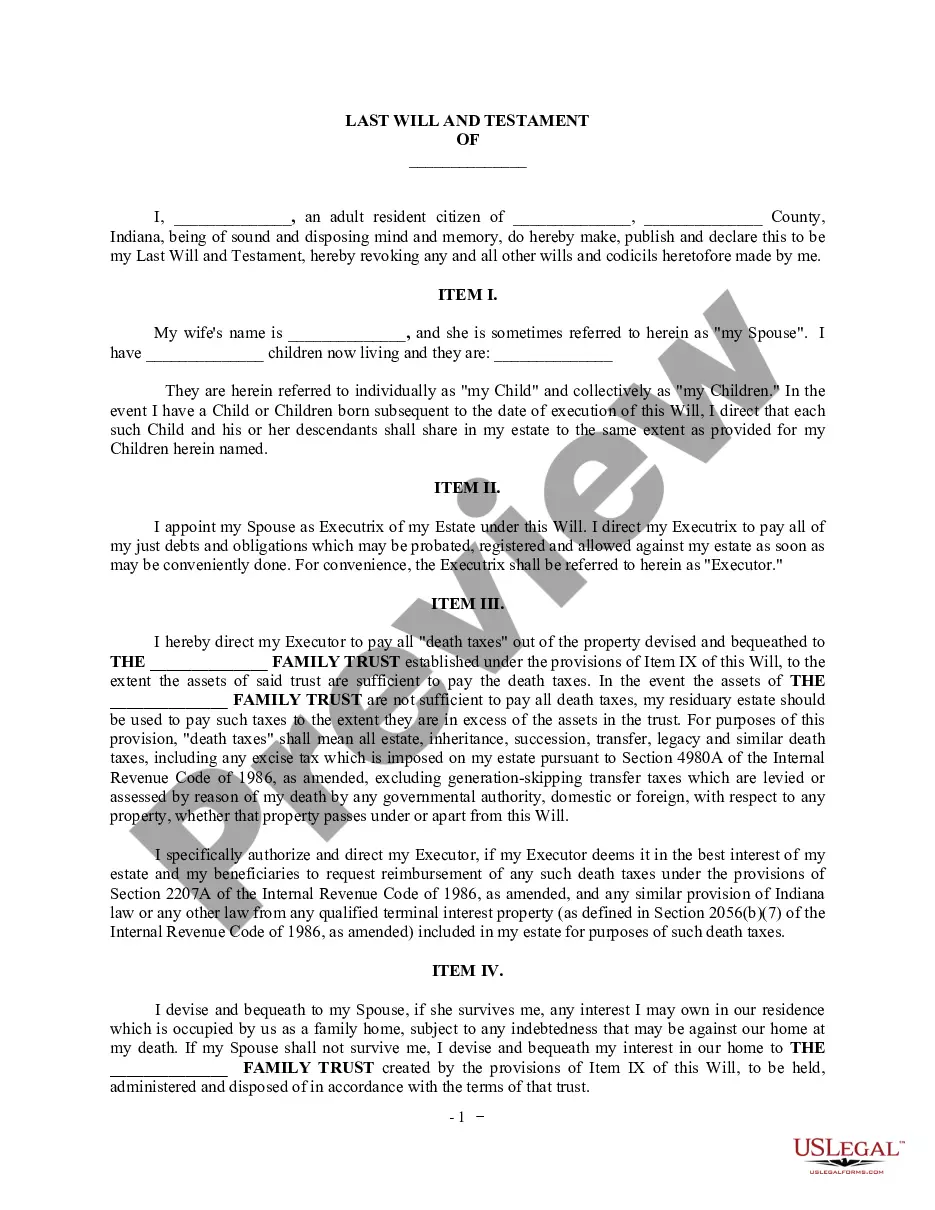
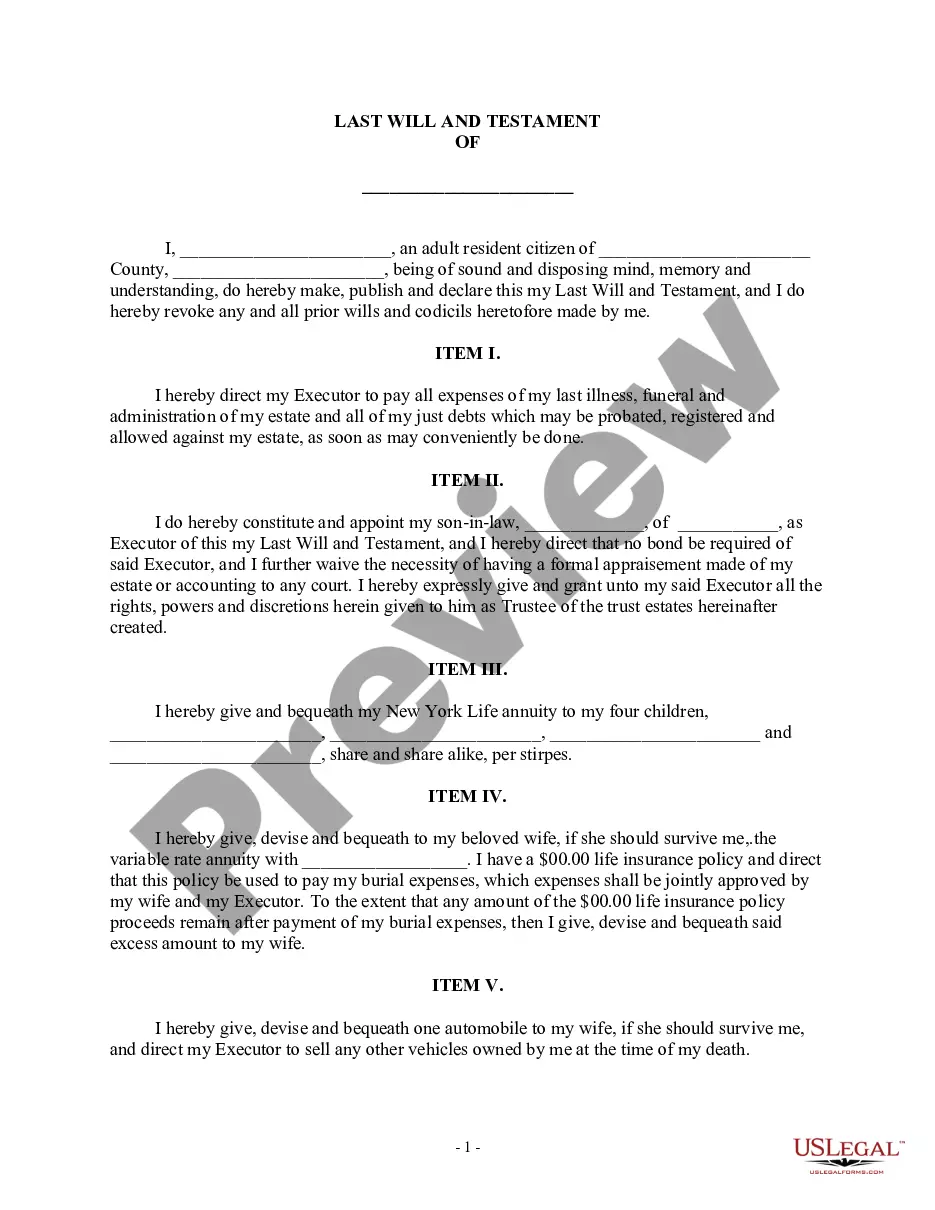
The Complex Will with Credit Shelter Marital Trust for Large Estates is a specialized document designed for couples wishing to maximize the amount of property that can pass free of estate taxes. This will allows the first spouse to pass the federal estate tax exemption amount to a trust, ensuring that the surviving spouse benefits from the remaining estate tax-free. This form is particularly beneficial for high-net-worth individuals, as it enables a couple to shield a significant portion of their estate from taxes, providing increased financial security for their heirs.
Main sections of this form
- Identification of the testator and beneficiaries, including spouse and children.
- Designation of an executor to manage the estate.
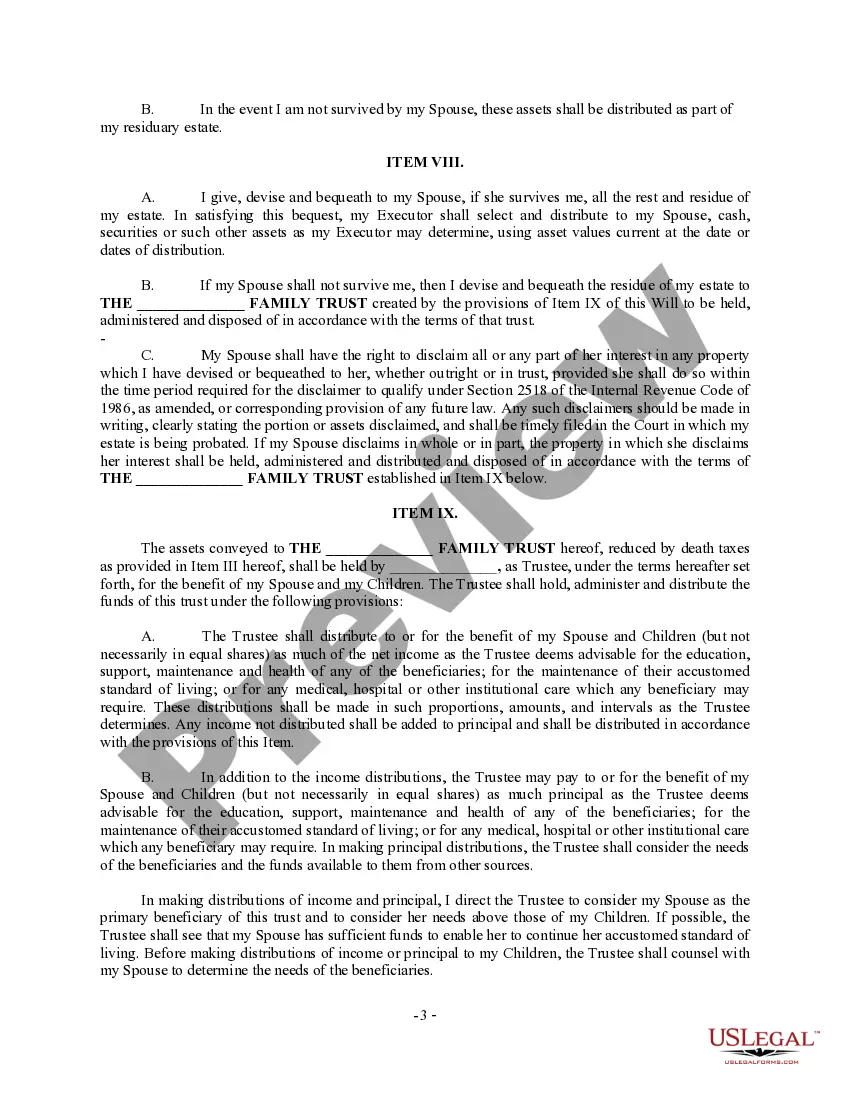
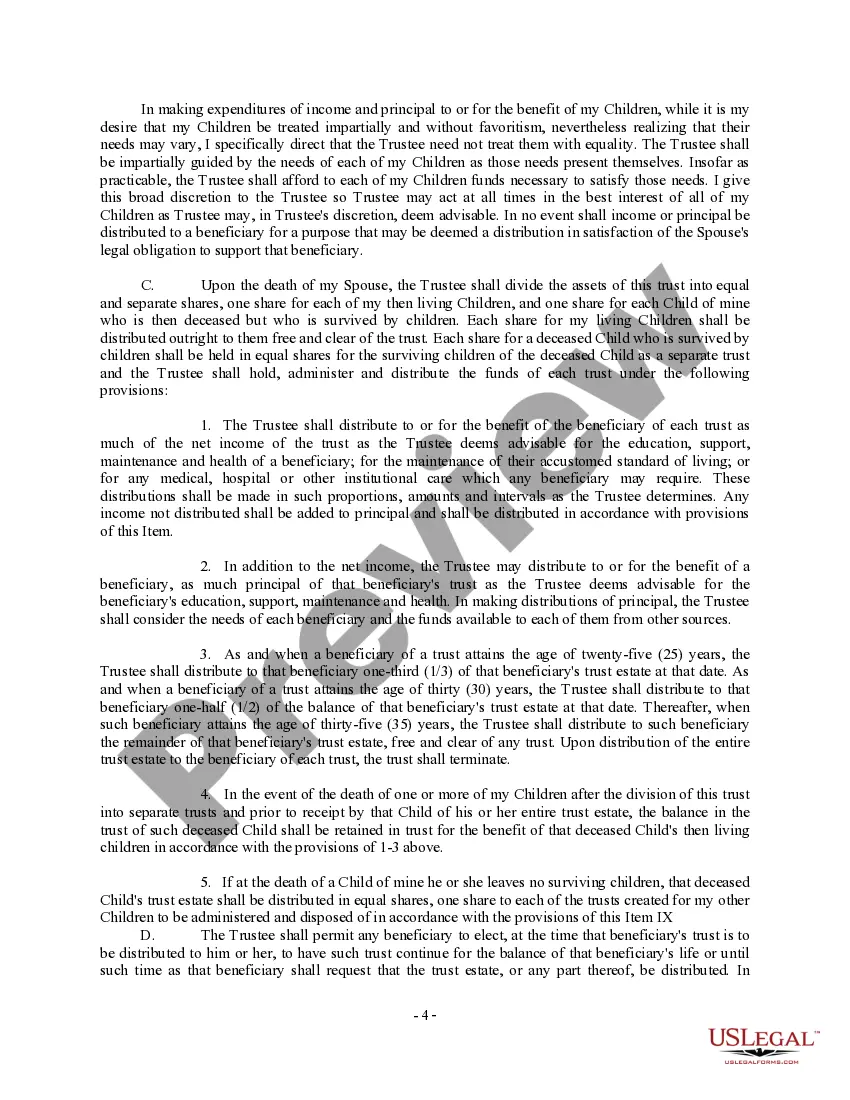
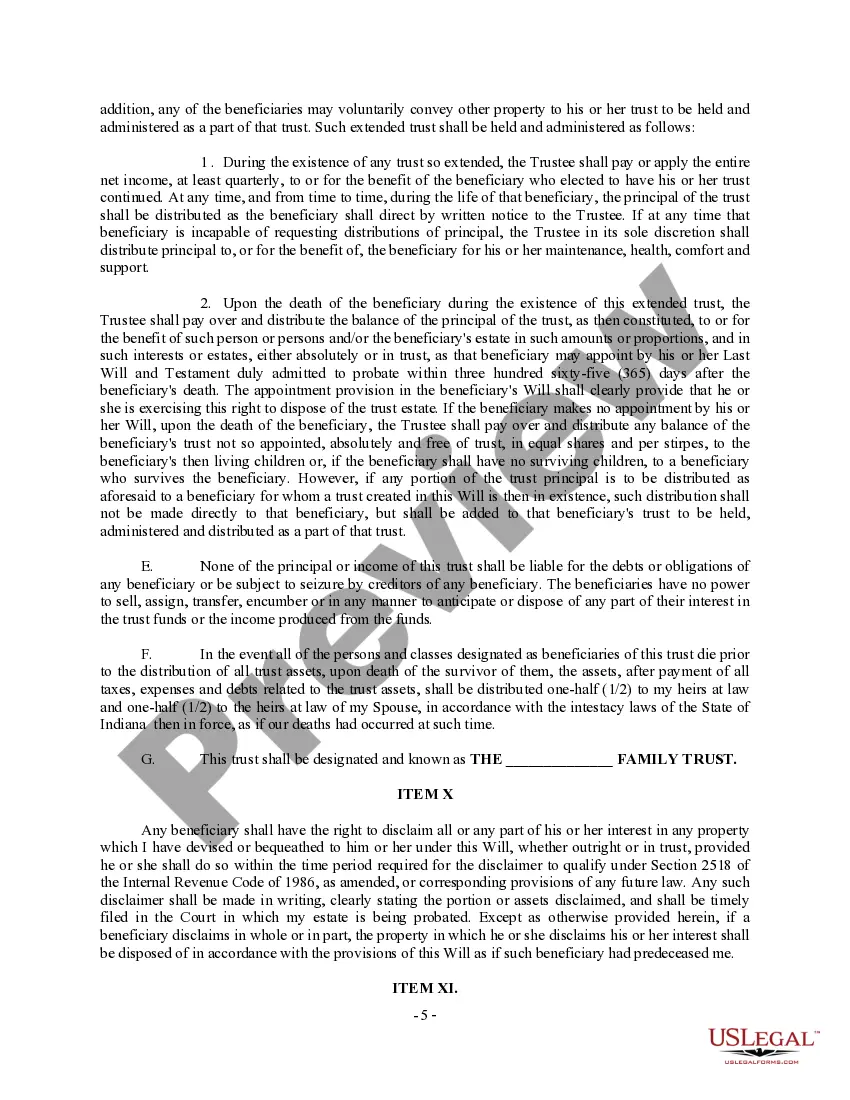
- Provisions for the establishment and management of a family trust.
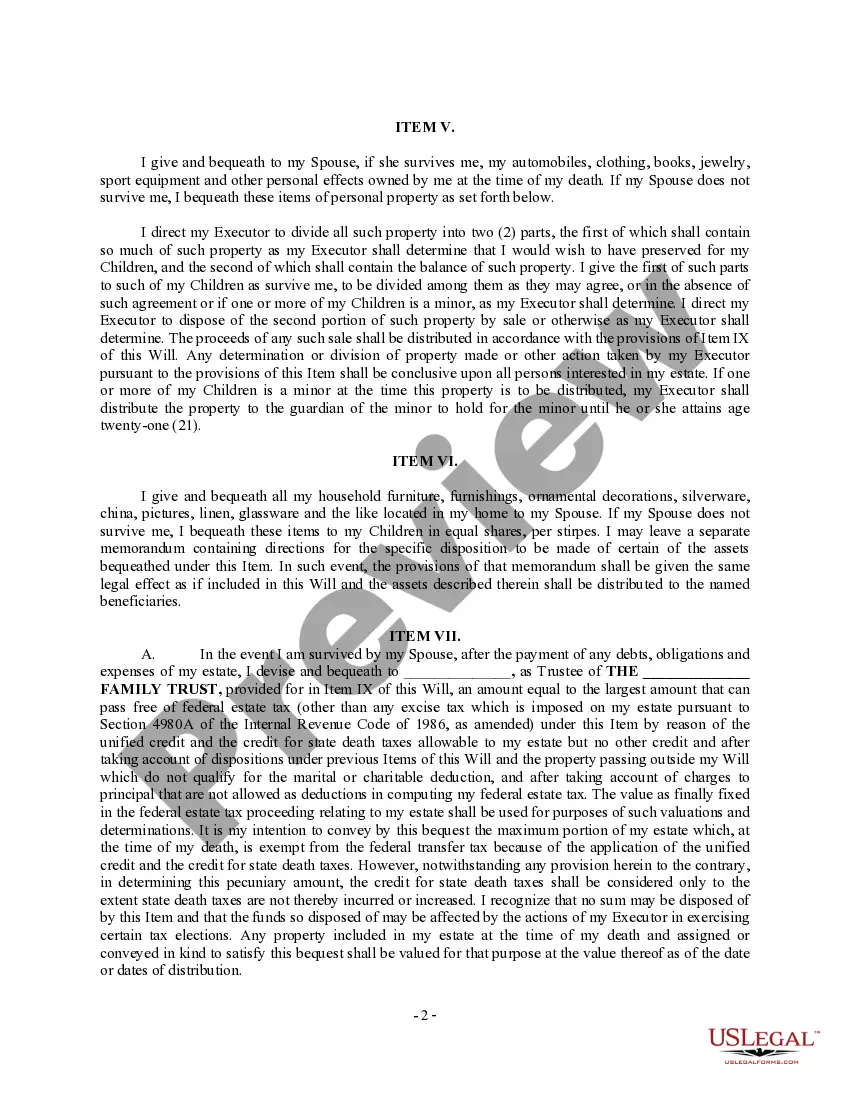
- Instructions for distribution of assets, including residence and personal effects.
- Consideration for tax liabilities and instructions for payment from trust assets.
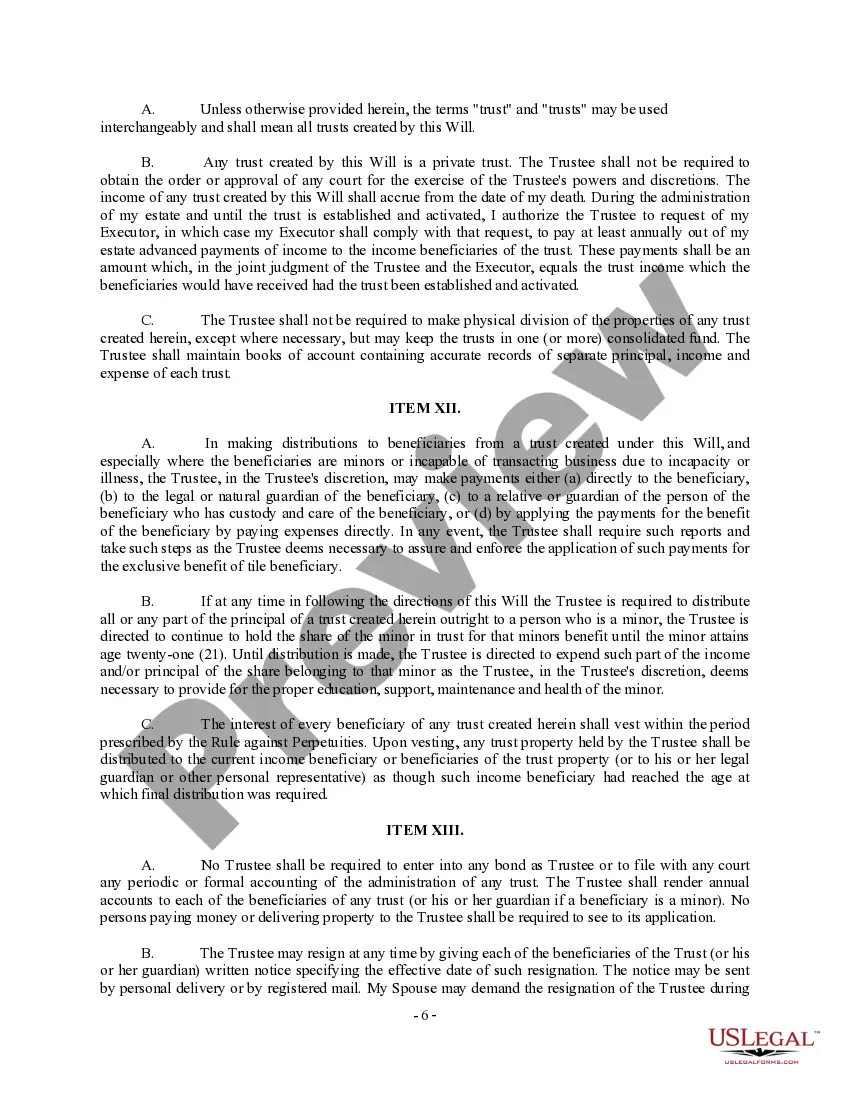
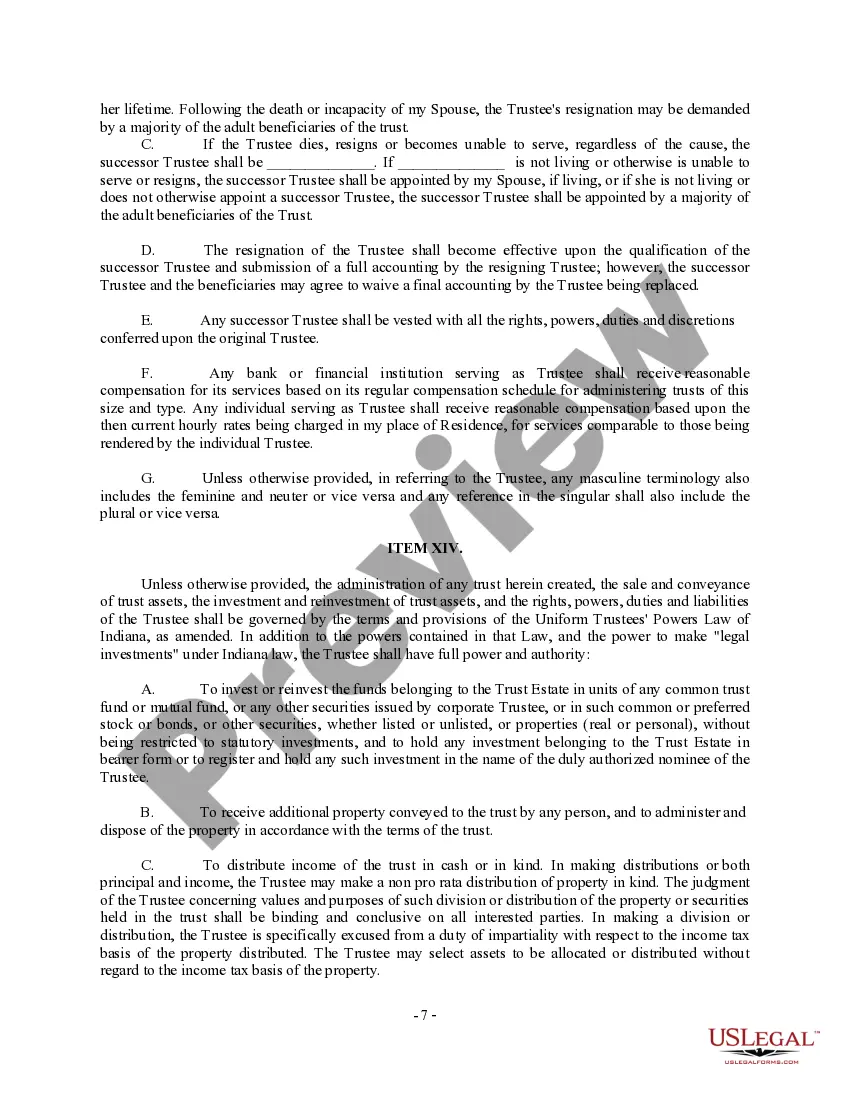
- Provisions for the management of trust income and principal distributions.




When to use this form
This form is ideal for individuals or couples with large estates who want to ensure their assets are distributed according to their wishes while minimizing estate taxes. It is most appropriate when the estate values exceed the exempt amounts set by federal laws, making tax planning crucial. Additionally, those wishing to set up a marital trust that provides for the spouse while safeguarding assets for children or other beneficiaries should consider this form.
Who should use this form
- Married individuals or couples with significant assets.
- Those looking to minimize estate tax liabilities
- People with children or other considerable heirs.
- Individuals seeking to establish a trusted financial plan for a spouse after their passing.
- Anyone considering complex estate planning that requires professional legal advice.
Steps to complete this form
- Identify yourself as the testator, providing your full name and residence.
- Specify your spouse's name and the number of children you have.
- Appoint an executor to handle your estate, detailing their responsibilities.
- Outline how your assets will be divided, including specific bequests and the establishment of a family trust.
- Have the will signed and witnessed according to Indiana laws for validity.
Notarization guidance
This form must be notarized to be legally valid. US Legal Forms provides secure online notarization powered by Notarize, allowing you to complete the process through a verified video call.
Get your form ready online
Our built-in tools help you complete, sign, share, and store your documents in one place.
Make edits, fill in missing information, and update formatting in US Legal Forms—just like you would in MS Word.
Download a copy, print it, send it by email, or mail it via USPS—whatever works best for your next step.
Sign and collect signatures with our SignNow integration. Send to multiple recipients, set reminders, and more. Go Premium to unlock E-Sign.
If this form requires notarization, complete it online through a secure video call—no need to meet a notary in person or wait for an appointment.
We protect your documents and personal data by following strict security and privacy standards.

Make edits, fill in missing information, and update formatting in US Legal Forms—just like you would in MS Word.

Download a copy, print it, send it by email, or mail it via USPS—whatever works best for your next step.

Sign and collect signatures with our SignNow integration. Send to multiple recipients, set reminders, and more. Go Premium to unlock E-Sign.

If this form requires notarization, complete it online through a secure video call—no need to meet a notary in person or wait for an appointment.

We protect your documents and personal data by following strict security and privacy standards.
Typical mistakes to avoid
- Failing to properly witness the will as required by state law.
- Not updating the will after significant life events, such as births or deaths.
- Omitting tax considerations that could result in unexpected liabilities for heirs.
- Not consulting with an attorney if the estate is large or complex.
Advantages of online completion
- Convenience of accessing the form anytime without needing to visit a lawyer's office.
- Editable templates that allow customization according to personal needs.
- Guidance provided to ensure completeness and legality of the document.
- Immediate download for quick use and implementation in estate planning.
Legal use & context
- The form serves as a legally binding document that outlines the testator's final wishes regarding asset distribution.
- It is essential to ensure that the will complies with all local laws to be deemed valid in court.
- The trust provisions included in this will are designed to minimize tax liabilities and secure financial benefits for beneficiaries.
Looking for another form?




Form popularity
FAQ
This law states that no matter what your will says, your spouse has a right to inherit one-third or one-half (depending on the state and sometimes depending on the length of the marriage) of your total estate. To exercise this right, your spouse has to petition the probate court to enforce the law.
The surviving spouse has the right to Family Exempt Property.The surviving spouse has the right to receive Letters of Administration, which means that ahead of all other family members, he/she has the right to serve as the Administrator when someone dies intestate.
At the time of your death, the assets in your family trust are protected by the exemption, and the assets in your marital trust are protected by the marital deduction. No estate taxes are due.
The Spouse Is the Automatic Beneficiary for Married People A federal law, the Employee Retirement Income Security Act (ERISA), governs most pensions and retirement accounts.
Yes, the surviving spouse may serve as trustee of the credit shelter trust.All of the assets in the credit shelter trust, including any appreciation in value during the surviving spouse's lifetime, pass free of estate tax to the beneficiaries.
A marital trust allows the couple's heirs to avoid probate and take less of a hit from estate taxes by taking full advantage of the unlimited marital deductiona provision that enables spouses to pass assets to each other without tax consequences.
Most married couples own most of their assets jointly. Assets owned jointly between husband and wife pass automatically to the survivor.This requires the will to be probated and an executor to be appointed in order to secure the assets. There are exceptions to the probate requirement for estates of $50,000 or less.
Many married couples own most of their assets jointly with the right of survivorship. When one spouse dies, the surviving spouse automatically receives complete ownership of the property. This distribution cannot be changed by Will.
First, in a standard credit shelter trust, there is no step-up in basis at the death of the surviving spouse.Second, the credit shelter trust is a separate taxpayer and requires its own tax return, Form 1041.