Alibi
What this document covers
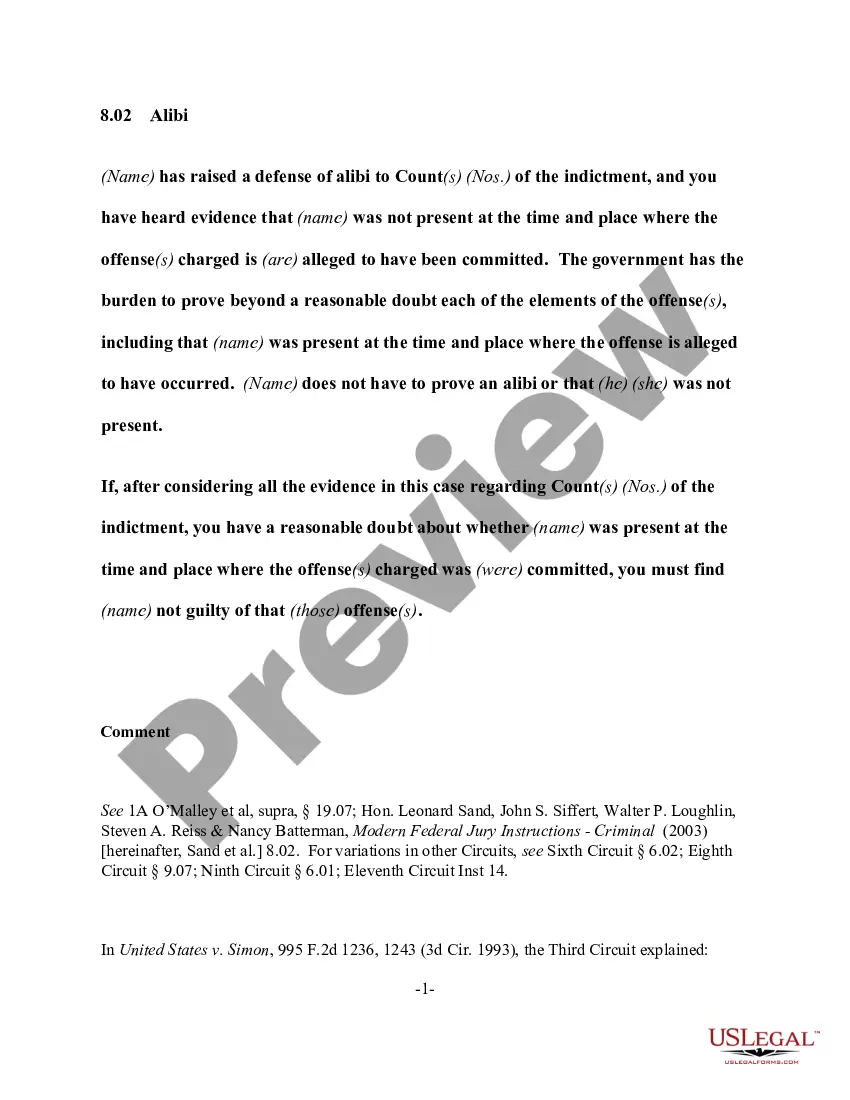
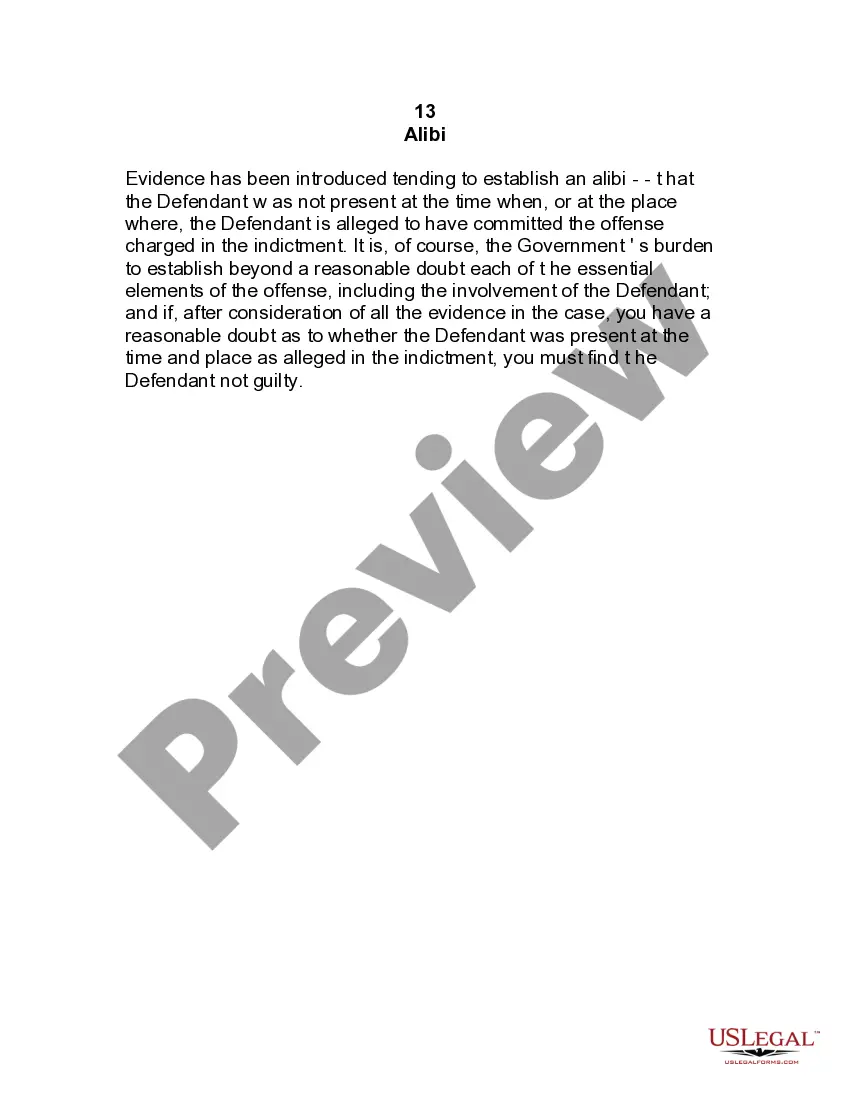
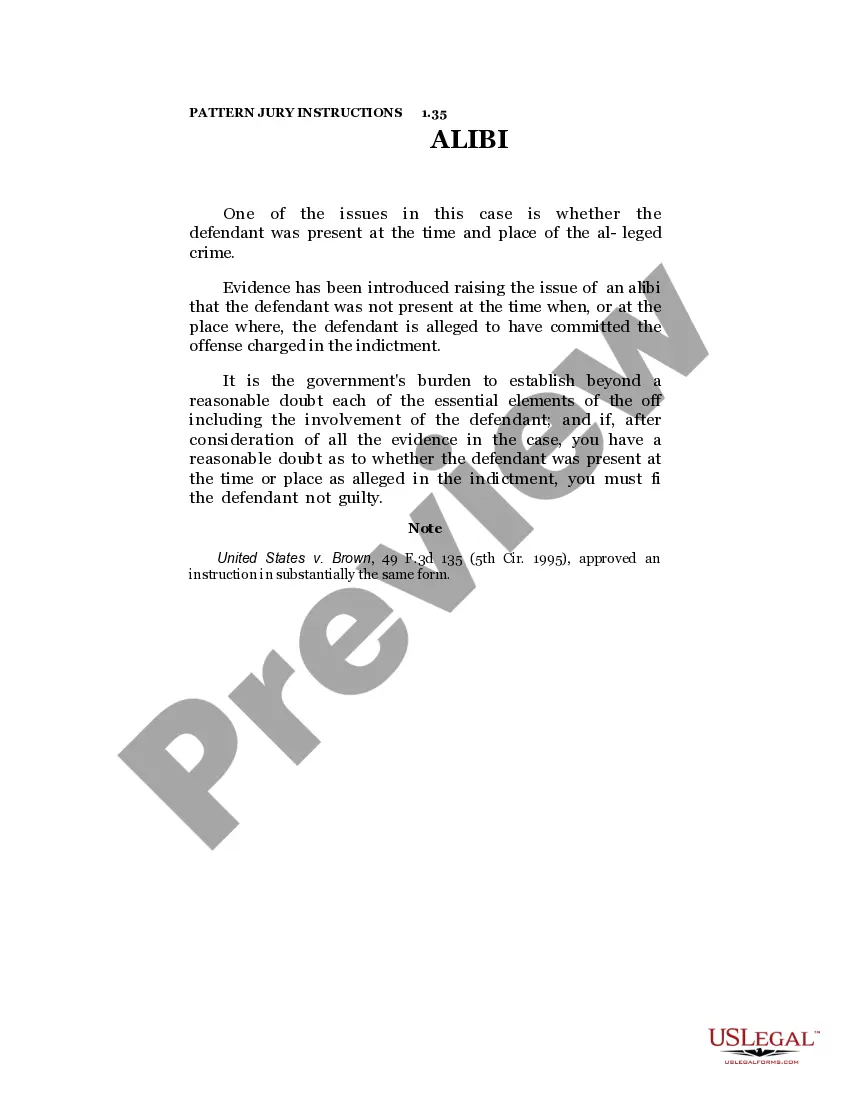
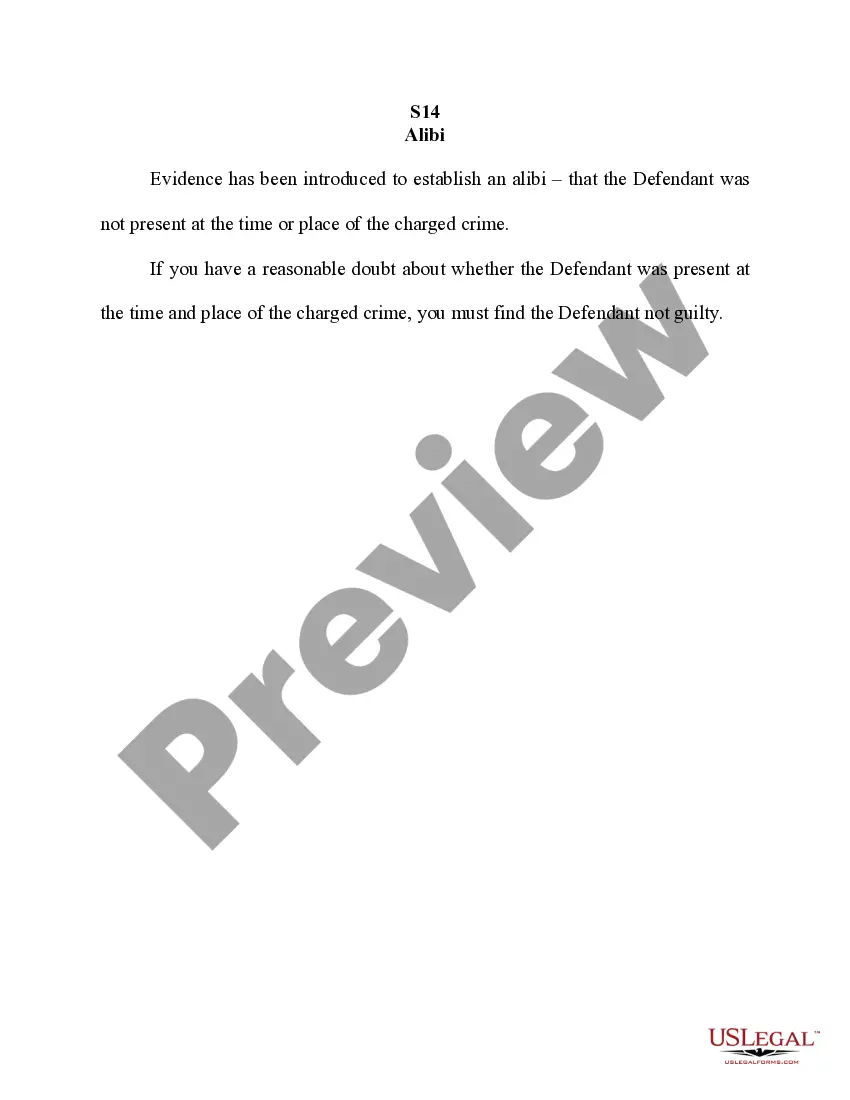
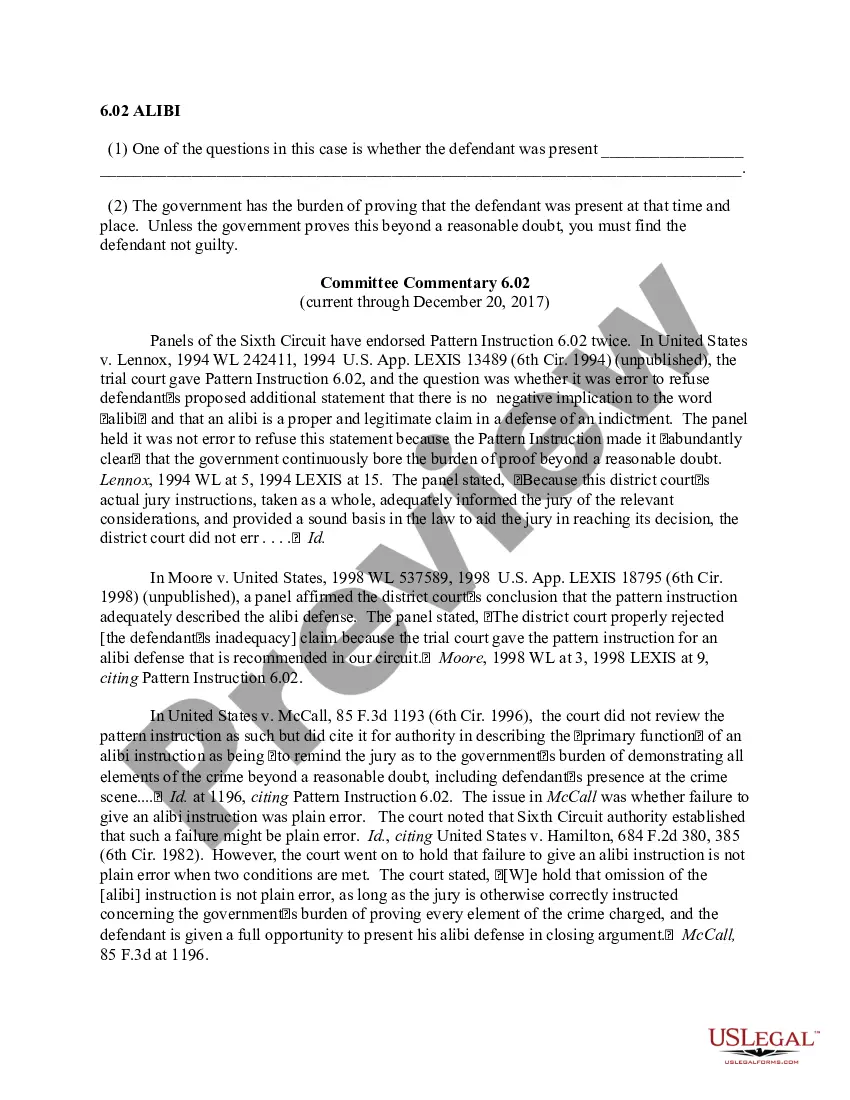
The Alibi form serves as a legal defense document used in criminal cases where the defendant asserts they were not present at the scene of the alleged crime. Unlike other defenses that may focus on arguments related to guilt or innocence, an alibi specifically provides evidence that the accused was in a different location at the time of the offense. This form articulates the conditions under which the burden of proof rests with the government to disprove the alibi beyond a reasonable doubt.
Key parts of this document
- Introduction of the defendant's alibi defense.
- Statement regarding the government's burden of proof.
- A declaration that the defendant does not need to prove their alibi.
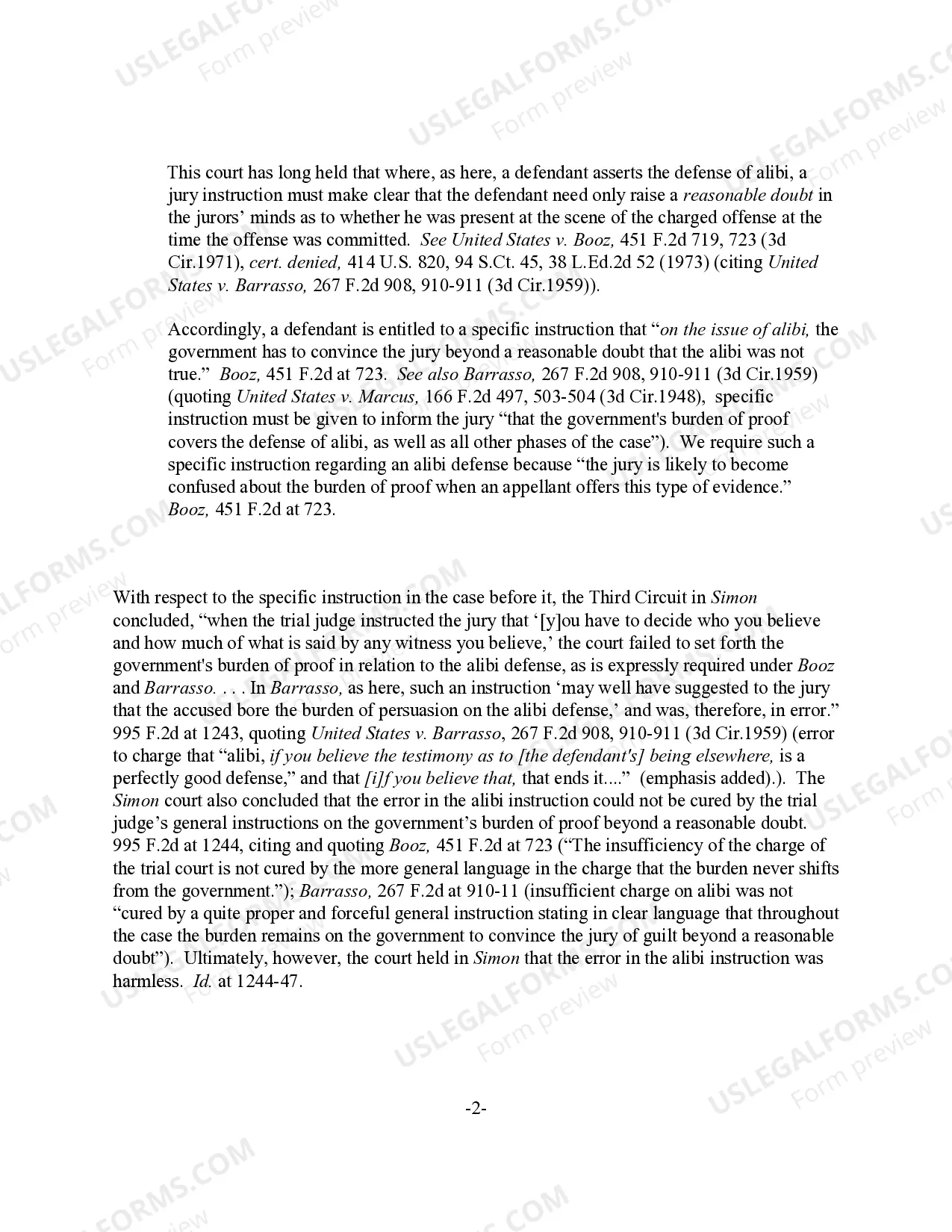
- Instructions on how jurors should interpret reasonable doubt related to the alibi.
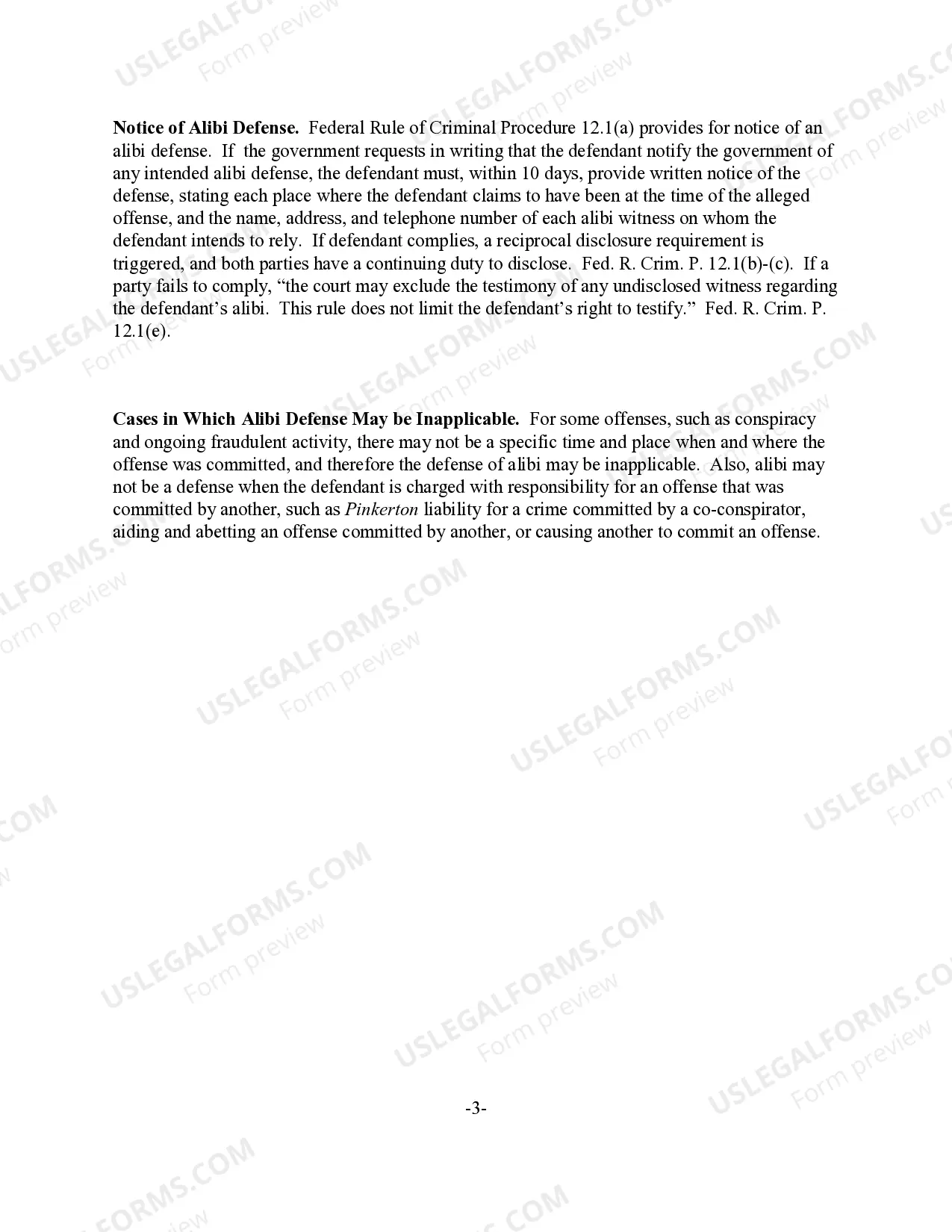
- Notice requirements under Federal Rule of Criminal Procedure 12.1 for alibi defenses.
- Potential limitations on the alibi defense for certain offenses.

Common use cases
This form is necessary when a defendant in a criminal trial claims they have an alibi, meaning they can prove they were in a different location when the alleged crime took place. It is used to formally notify the court and the prosecution of this defense, especially when there is a request for disclosure from the government. Instances that might necessitate this form include robbery, assault, or any other crime where specific timing and location are contested in the indictment.
Who needs this form
- Defendants in criminal cases who have an alibi to present.
- Legal representatives or attorneys handling a case involving an alibi defense.
- Individuals seeking clarity on their legal options regarding location-based defenses.
How to complete this form
- Identify the defendant's name and any relevant case numbers.
- Clearly state the specific location where the defendant claims to have been at the time of the alleged offense.
- Provide the names and contact information for any witnesses supporting the alibi.
- Complete and submit the form within the required timeframe when notified by the prosecution.
- Keep a copy of the completed form for your records.
Notarization requirements for this form
This form does not typically require notarization unless specified by local law. It is recommended to check jurisdiction-specific regulations to ensure compliance.
Get your form ready online
Our built-in tools help you complete, sign, share, and store your documents in one place.
Make edits, fill in missing information, and update formatting in US Legal Forms—just like you would in MS Word.
Download a copy, print it, send it by email, or mail it via USPS—whatever works best for your next step.
Sign and collect signatures with our SignNow integration. Send to multiple recipients, set reminders, and more. Go Premium to unlock E-Sign.
If this form requires notarization, complete it online through a secure video call—no need to meet a notary in person or wait for an appointment.
We protect your documents and personal data by following strict security and privacy standards.

Make edits, fill in missing information, and update formatting in US Legal Forms—just like you would in MS Word.

Download a copy, print it, send it by email, or mail it via USPS—whatever works best for your next step.

Sign and collect signatures with our SignNow integration. Send to multiple recipients, set reminders, and more. Go Premium to unlock E-Sign.

If this form requires notarization, complete it online through a secure video call—no need to meet a notary in person or wait for an appointment.

We protect your documents and personal data by following strict security and privacy standards.
Common mistakes
- Failing to provide notice within the specified time frame outlined in Rule 12.1.
- Not including all necessary witness information, such as addresses and phone numbers.
- Assuming that the burden of proof lies with the defendant instead of the prosecution.
- Omitting details of the specific location of the alibi or the timeline of events.
Benefits of completing this form online
- Convenient access to legal documents without needing legal representation initially.
- Editable templates that can be customized to fit individual cases easily.
- Ensured reliability and compliance with federal requirements.
Legal use & context
- The alibi defense is recognized in criminal law as a legitimate way to contest charges.
- Defendants must communicate their alibi promptly to avoid penalties or exclusion of witness testimony.
- Understanding the local legal context is crucial, as definitions and applications can differ by jurisdiction.
Looking for another form?
Form popularity
FAQ
Examples of an Alibi Defense Witnesses could include Bill's boss, co-workers or the owner of the property ? any credible witness who knows Bill was at the site and did not leave around the time of the crime. Bill is not required to testify on his own behalf to raise this defense.
Eyewitnesses, video footage, or receipts can all serve as examples of alibi evidence. Alibi defenses are valid in all U.S. jurisdictions, and if successful, they can result in an exoneration of your charges.
Alibi (n.) 1743, "a plea of having been elsewhere when an action took place," from Latin alibi (adv.) "elsewhere, somewhere else," locative of alius "another, other, different" (from PIE root al- (1) "beyond").
Alibi evidence can also include non-witness testimony, such as photographs, credit card receipts, videos, signatures on contracts, cell phone data location, employment time cards, etc., all of which may be used to prove that the defendant was not near the location of the alleged offense when the offense was committed.
During a criminal trial, an alibi is a defence raised by the accused as proof that they could not have committed the crime because they were in some other place at the time the alleged offence was committed.
Alibi as a noun is defined as a defense to a criminal charge alleging that the accused was somewhere other than at the scene of the crime at the time it occurred. For example, A could not confirm B's alibi that B was at the dentist office at the time of the robbery.
: an excuse usually intended to avert blame or punishment (as for failure or negligence) made up an alibi for why she missed the meeting.
Here are three examples of good alibis and how you can get legal help as a person of interest to law enforcement authorities. A Store Receipt. A store receipt is one way to prove that you weren't at the scene of the crime at the alleged time it occurred.Security Camera Footage.A Witness Statement.