Settlement Agreement
What this document covers
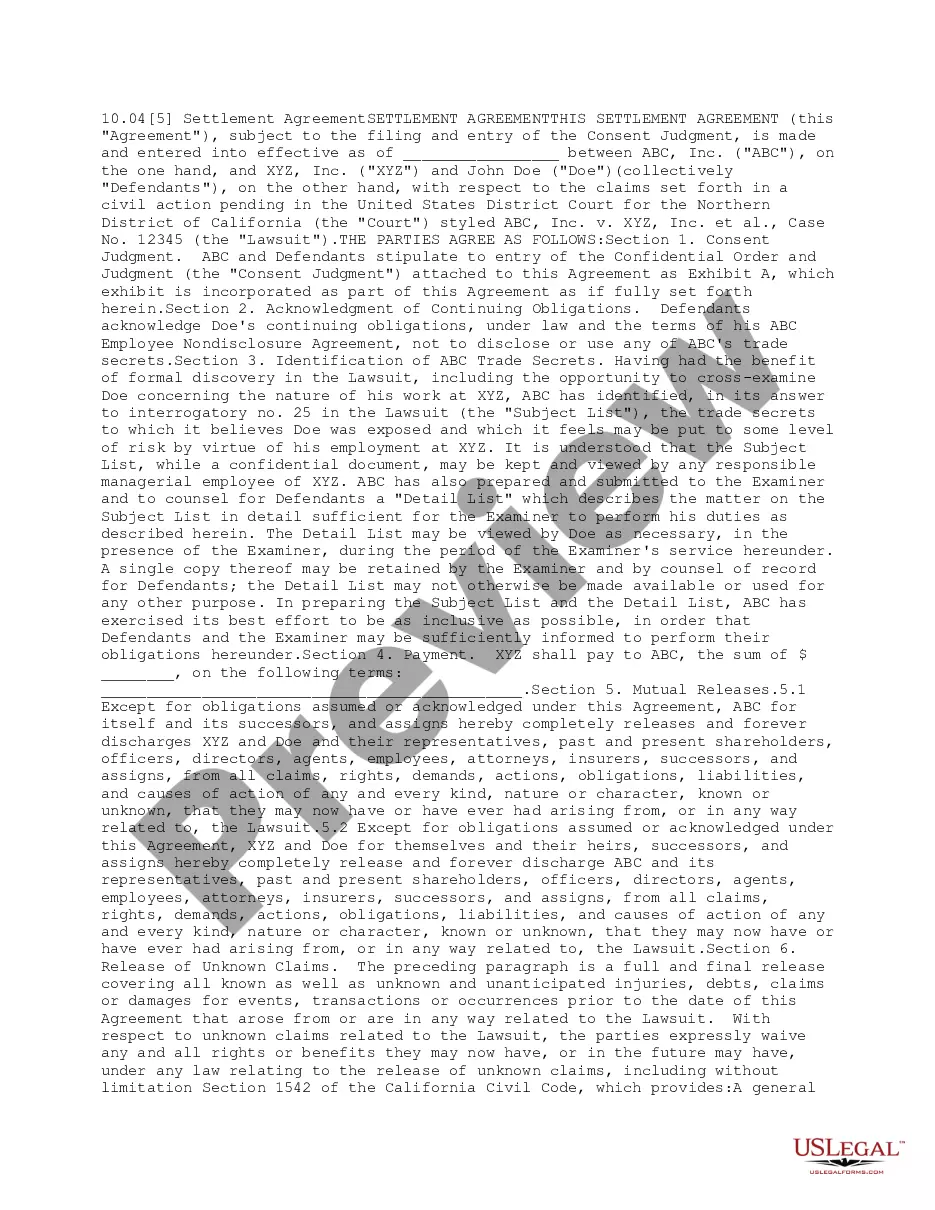
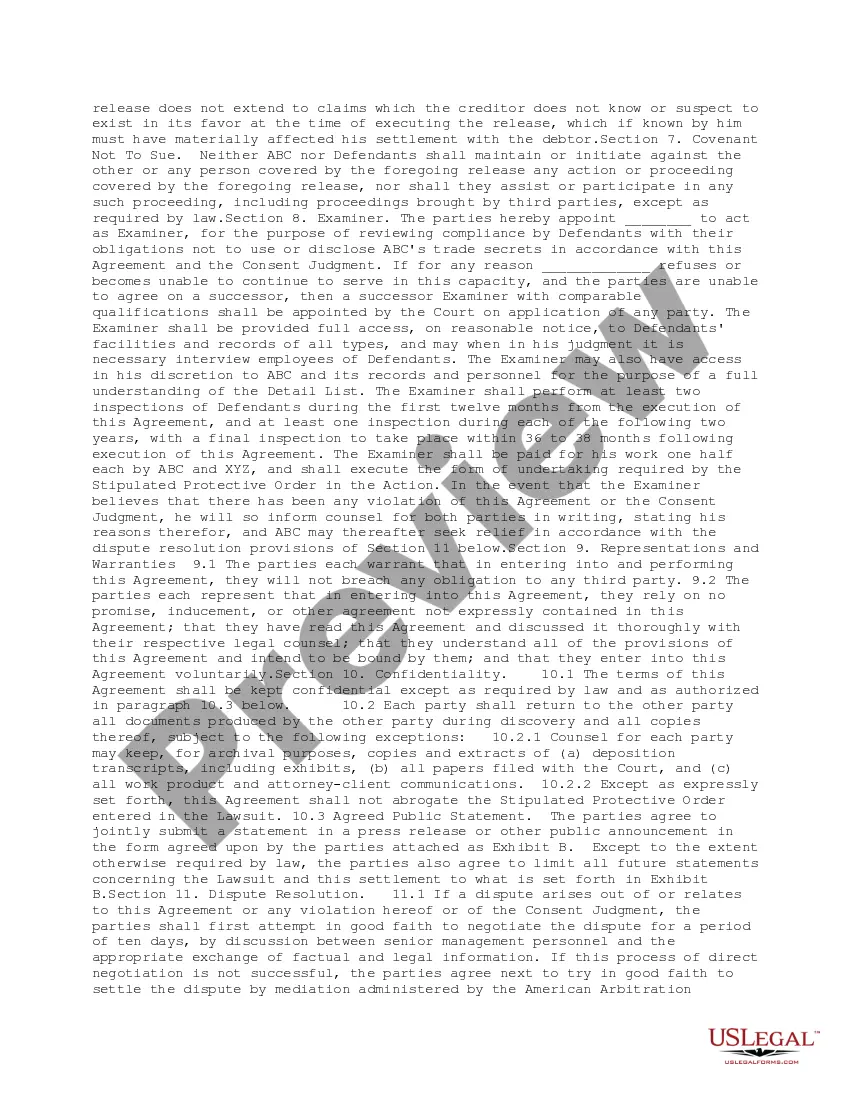
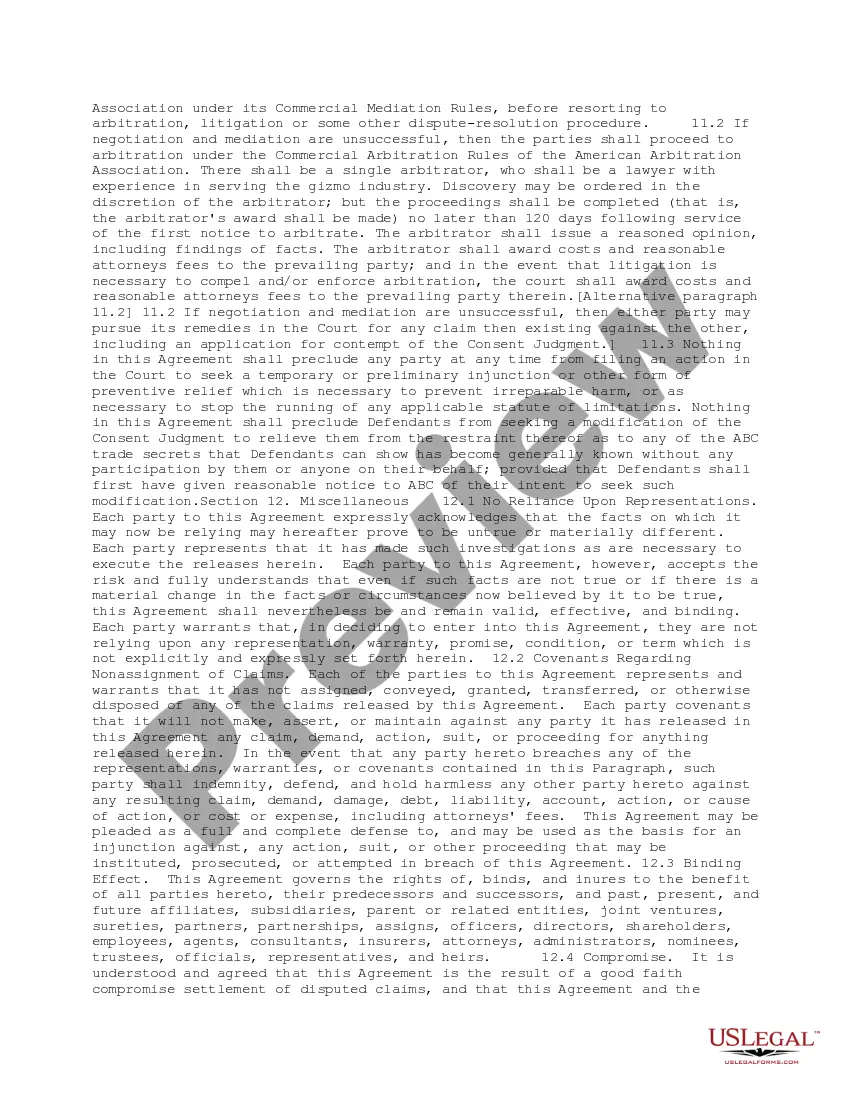
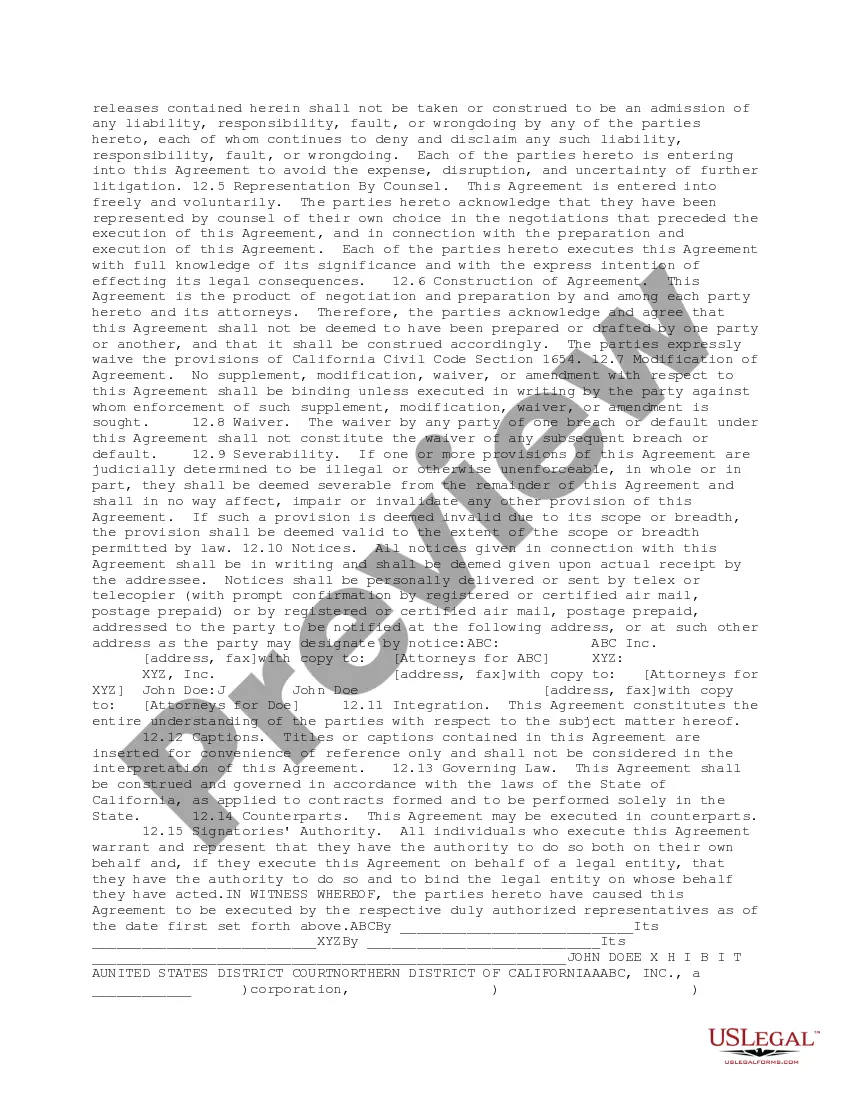
The Settlement Agreement is a legal document used to settle disputes between parties, particularly in cases involving licensing, patents, or commercial trade secrets. This form outlines the terms and conditions of the agreement reached to resolve legal claims and avoid further litigation. Unlike other contracts, this specific agreement includes mutual releases and confidentiality clauses to protect proprietary information from unauthorized disclosure.
What’s included in this form
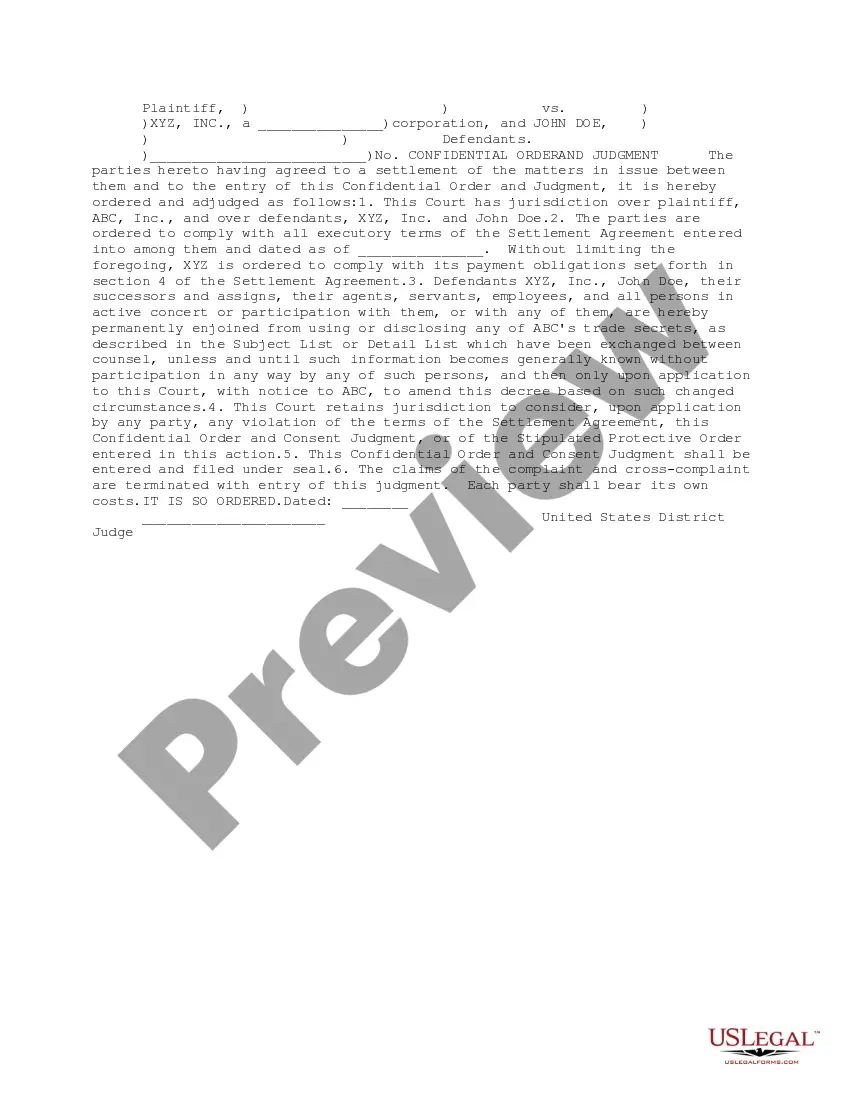
- Consent Judgment: A stipulation to enter a confidential order and judgment.
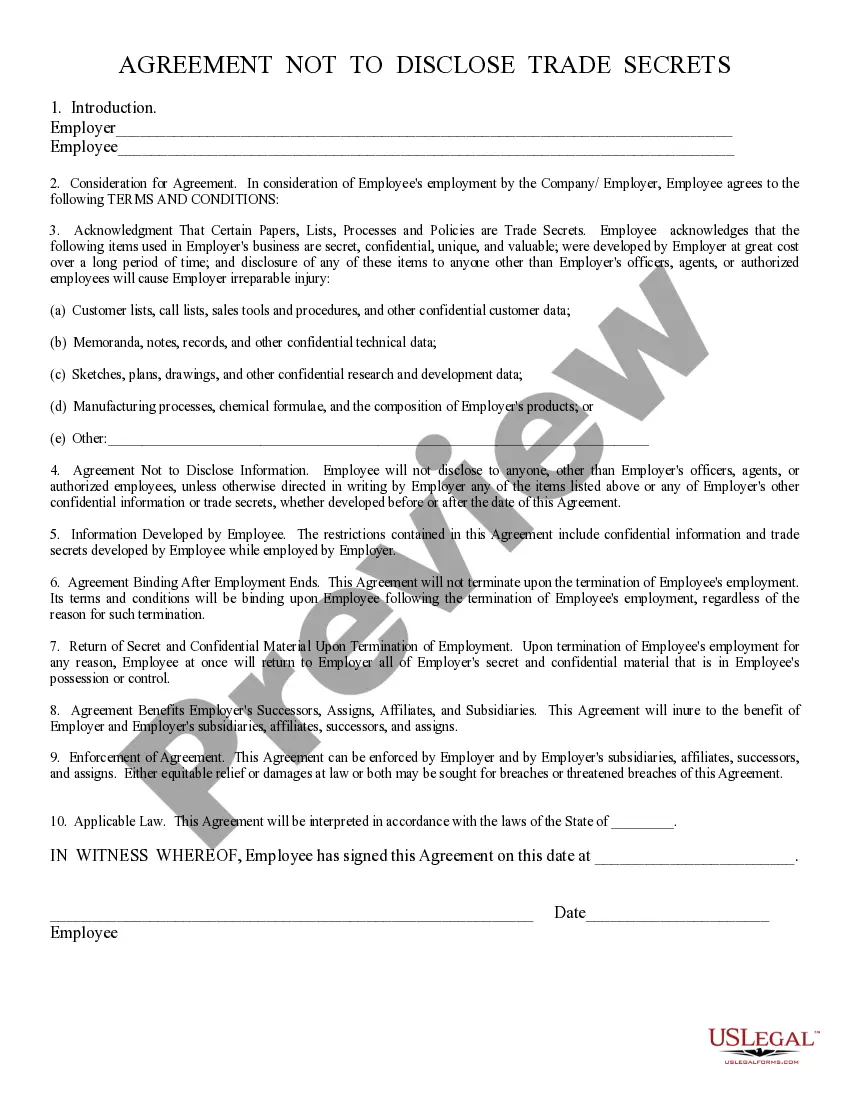
- Acknowledgment of Obligations: Recognition of ongoing legal responsibilities concerning trade secrets.
- Identification of Trade Secrets: Specifics of trade secrets exposed to risks during employment.
- Payment Terms: Details regarding any financial compensation as part of the settlement.
- Mutual Releases: Clauses releasing each party from future claims related to the lawsuit.
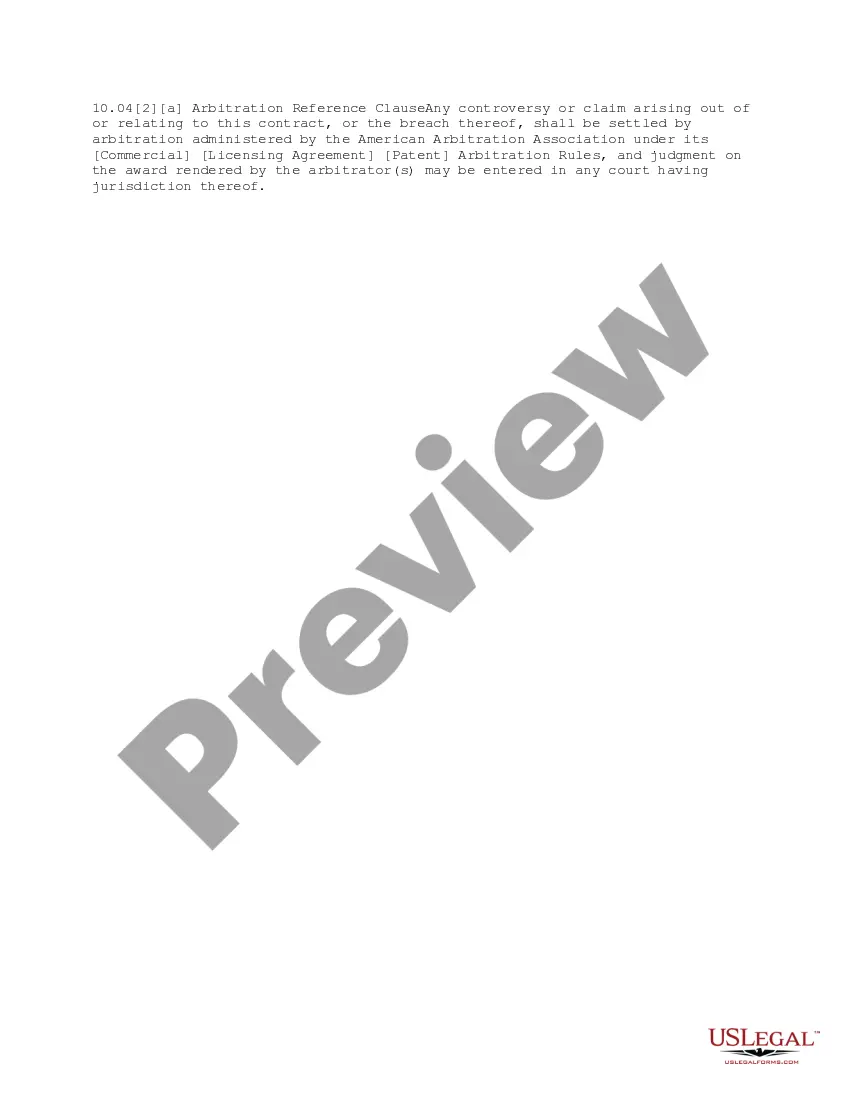
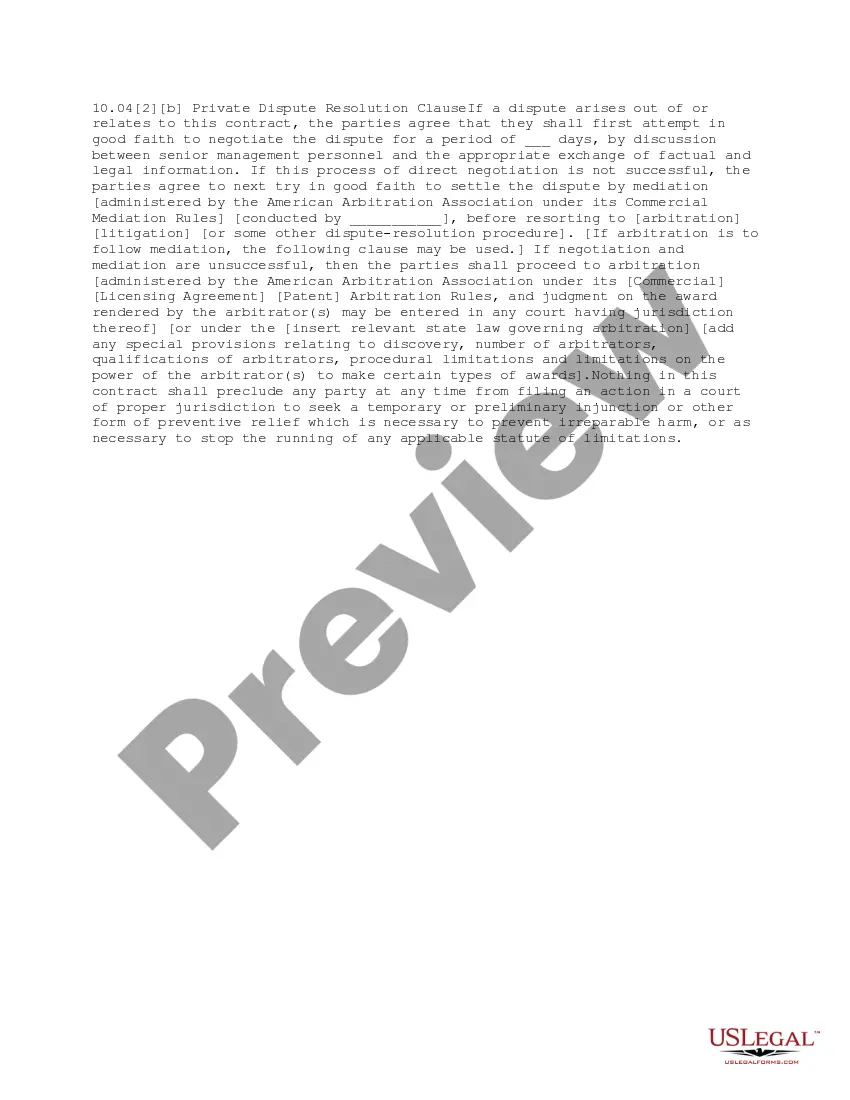
- Dispute Resolution: Procedures for resolving conflicts arising from the agreement.
When to use this form
This form is necessary when parties wish to resolve legal disputes amicably, particularly in cases involving intellectual property issues. If you are engaged in a lawsuit concerning patent infringements, trade secrets, or licensing issues, a Settlement Agreement can formalize the terms of the resolution and prevent future claims from arising.
Who this form is for
- Businesses involved in disputes over trade secrets or intellectual property.
- Individuals or entities seeking to settle disputes before reaching court.
- Legal representatives managing cases that require a formal resolution.
Completing this form step by step
- Identify the parties involved and enter their legal names and addresses.
- Specify the details of the claims being settled and reference the related lawsuit.
- Detail the payment terms including specific amounts and due dates.
- Include acknowledgment sections for parties' ongoing obligations, particularly regarding trade secrets.
- Ensure all parties sign the form to make the settlement binding and specify the date of execution.
Does this document require notarization?
This form does not typically require notarization to be legally valid. However, some jurisdictions or document types may still require it. US Legal Forms provides secure online notarization powered by Notarize, available 24/7 for added convenience.
Get your form ready online
Our built-in tools help you complete, sign, share, and store your documents in one place.
Make edits, fill in missing information, and update formatting in US Legal Forms—just like you would in MS Word.
Download a copy, print it, send it by email, or mail it via USPS—whatever works best for your next step.
Sign and collect signatures with our SignNow integration. Send to multiple recipients, set reminders, and more. Go Premium to unlock E-Sign.
If this form requires notarization, complete it online through a secure video call—no need to meet a notary in person or wait for an appointment.
We protect your documents and personal data by following strict security and privacy standards.

Make edits, fill in missing information, and update formatting in US Legal Forms—just like you would in MS Word.

Download a copy, print it, send it by email, or mail it via USPS—whatever works best for your next step.

Sign and collect signatures with our SignNow integration. Send to multiple recipients, set reminders, and more. Go Premium to unlock E-Sign.

If this form requires notarization, complete it online through a secure video call—no need to meet a notary in person or wait for an appointment.

We protect your documents and personal data by following strict security and privacy standards.
Mistakes to watch out for
- Failing to provide complete details about the claims being settled.
- Not clearly identifying trade secrets in need of protection.
- Overlooking the required signatures from all parties involved.
- Using ambiguous language that might lead to misinterpretation of the agreement's terms.
Why complete this form online
- Convenient access to professionally drafted legal documents.
- Editability allows customization to fit specific needs.
- Instant download enables fast processing of legal agreements.
- Access to legal resources helps ensure compliance and accuracy.
Legal use & context
- The Settlement Agreement provides a binding resolution to legal disputes.
- It includes confidentiality provisions to protect sensitive information from disclosure.
- Mutual releases prevent future claims related to the settled dispute.
- It is advisable to seek legal counsel to ensure enforceability and adherence to state-specific laws.
Key takeaways
- The Settlement Agreement is essential for resolving disputes in intellectual property cases.
- Clear terms and signatures from all parties are crucial for enforceability.
- Always consider state laws and consult with legal professionals when necessary.
Looking for another form?
Form popularity
FAQ
There are many factors to consider, including assets, incomes, living expenses, inflation, alimony, child support, taxes, retirement plans, investments, medical expenses and health insurance costs, and child-related expenses such as education.
Some people wonder if they can save even more by money by writing their own settlement agreement and not seeking the help of a divorce attorney at all. While there is no legal requirement that you have a lawyer draft your settlement agreement, it is certainly a good idea to do so.
When the court grants a divorce, property will be divided equitably (not always equally) between the two spouses. This is decided under the Equitable Distribution Law. During the divorce both spouses have to tell the court about their income and any debts they owe.
Discuss your family finances regularly as a couple. Look ahead to tackle the potential 'what ifs' in the relationship. Seek support from friends but engage a financial adviser early on too. Don't let emotions cloud your judgement on the family home.
#1. Start with the Basics. #2. Include the Details. #3. Confirm Your Agreement. #4. Identify and Divide Assets and Debts. #5. Create a Parenting Plan for Custody and Visitation. #6. Agree on Child Support and Spousal Support (Alimony) #7. Polishing Your Agreement. Conclusion.
A fair settlement should include ample parenting time for each parent. An equitable visitation agreement may not give parents equal custodial time, but it should provide for frequent and continuing contact with each parent.
A detailed parenting-time scheduleincluding holidays! Specifics about support. Life insurance. Retirement accounts and how they will be divided. A plan for the sale of the house.
Your divorce settlement agreement should cover everything that is important to you, including custody of your children, child support payments, alimony, and the separation of your property, such as your family home, vehicles, and other assets.
Make sure you have all of the basic information and divorce forms you need according to the divorce laws in your state. Make sure you have all of the personal information you need. Include a statement that you and the other party are in agreement with the contents of the document.