Pipeline Easements
Understanding this form
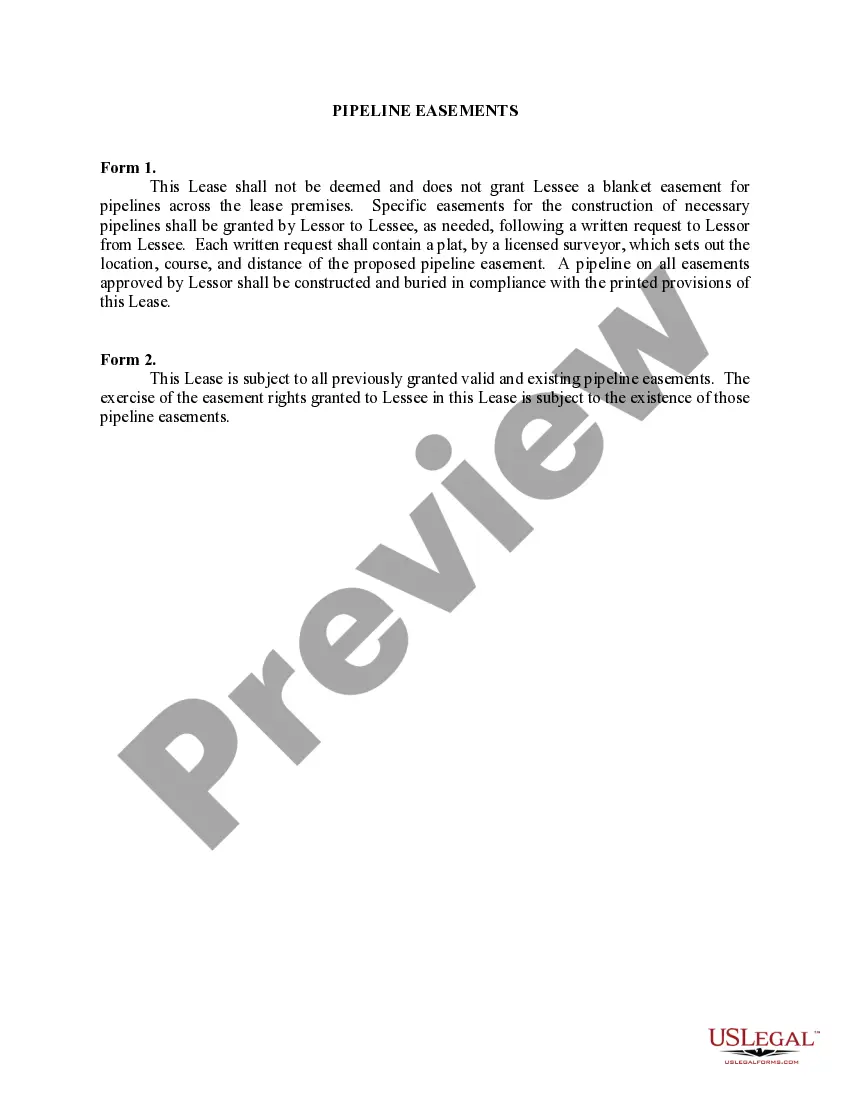
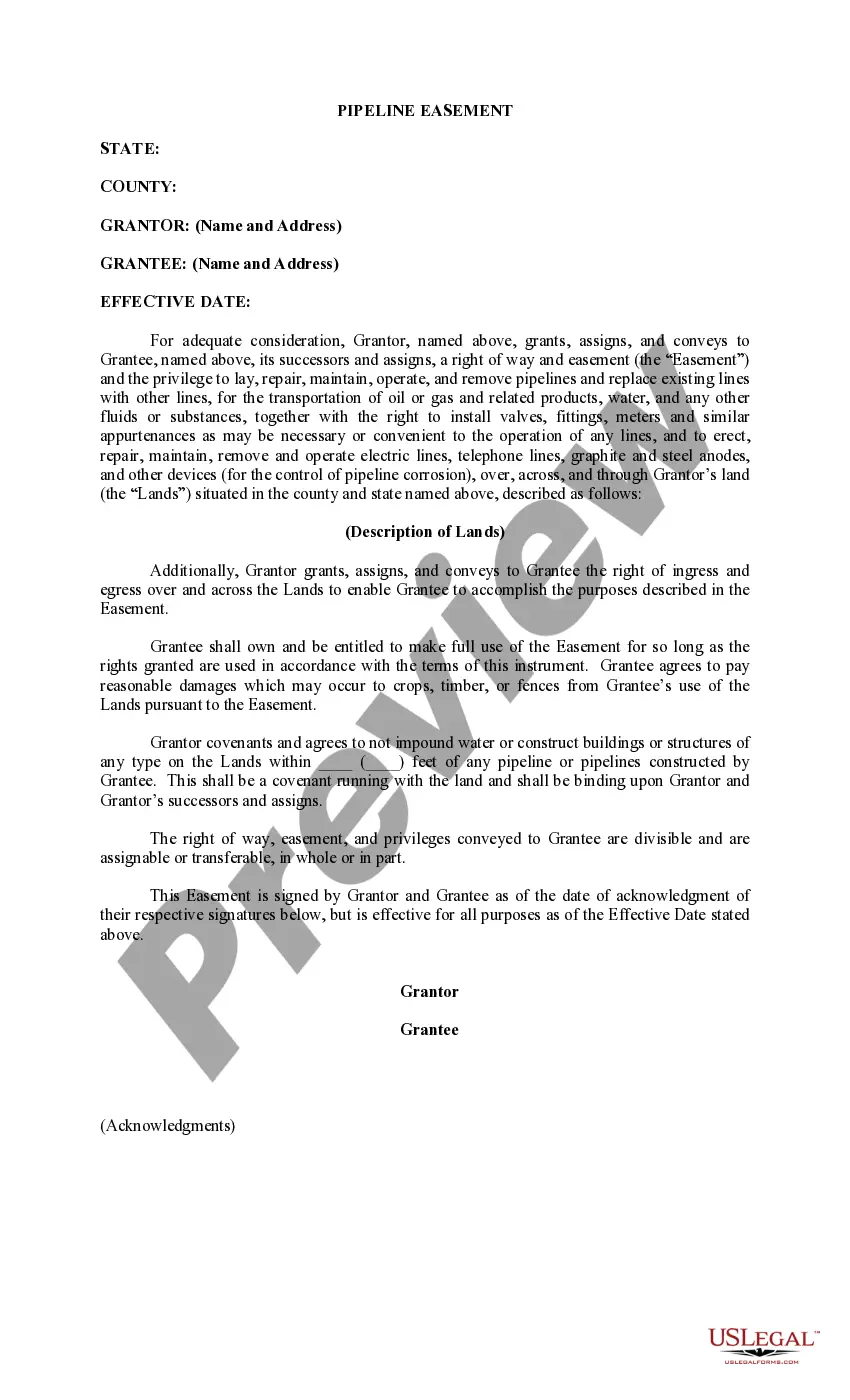
The Pipeline Easements form is a legal document used in lease transactions involving oil and gas leases. It outlines additional provisions to protect the rights of the lessor (property owner) regarding the easement for pipelines. This form ensures that the lessee (tenant) cannot assume blanket rights across the lease premises, requiring them to request specific easements for pipeline construction as needed.
Form components explained
- Provision that prohibits blanket easements for pipelines.
- Requirement for written requests from the lessee for specific easements.
- Obligation for the lessee to provide a plat by a licensed surveyor with easement requests.
- Stipulations regarding the construction of pipelines in compliance with the lease provisions.
- A clause regarding previously granted valid easements affecting the lease.

When to use this document
This form should be utilized when entering into an oil and gas lease agreement where specific pipeline easements are necessary. Use it if you have concerns about granting pipeline rights to the lessee and want to impose limitations or requirements on any easements they might request in the future.
Intended users of this form
- Property owners (lessors) involved in oil and gas leasing.
- Lessee requesting access for pipeline construction.
- Landowners looking to retain control over the use of their property.
- Legal professionals assisting clients with oil and gas leases.
How to complete this form
- Identify the parties involved: lessor and lessee.
- Specify the location of the lease premises.
- Include provisions regarding pipeline easements as needed.
- Attach a plat from a licensed surveyor with any easement requests.
- Ensure that all construction complies with specified lease provisions.
Notarization guidance
This form does not typically require notarization to be legally valid. However, some jurisdictions or document types may still require it. US Legal Forms provides secure online notarization powered by Notarize, available 24/7 for added convenience.
Get your form ready online
Our built-in tools help you complete, sign, share, and store your documents in one place.
Make edits, fill in missing information, and update formatting in US Legal Forms—just like you would in MS Word.
Download a copy, print it, send it by email, or mail it via USPS—whatever works best for your next step.
Sign and collect signatures with our SignNow integration. Send to multiple recipients, set reminders, and more. Go Premium to unlock E-Sign.
If this form requires notarization, complete it online through a secure video call—no need to meet a notary in person or wait for an appointment.
We protect your documents and personal data by following strict security and privacy standards.

Make edits, fill in missing information, and update formatting in US Legal Forms—just like you would in MS Word.

Download a copy, print it, send it by email, or mail it via USPS—whatever works best for your next step.

Sign and collect signatures with our SignNow integration. Send to multiple recipients, set reminders, and more. Go Premium to unlock E-Sign.

If this form requires notarization, complete it online through a secure video call—no need to meet a notary in person or wait for an appointment.

We protect your documents and personal data by following strict security and privacy standards.
Common mistakes
- Failing to attach a surveyor's plat with easement requests.
- Overlooking existing pipeline easements that may affect the lease.
- Not specifying limitations on easements clearly in the lease document.
Why use this form online
- Immediate access to properly drafted legal language.
- Ability to customize the form to fit specific situations.
- A secure and organized way to store essential legal documents.
Looking for another form?

Form popularity
FAQ
How much money should landowners get when an oil or gas pipeline crosses their land? As it stands, landowners receive a one-time payment roughly based on the length of the pipeline, with rates varying from $5 to $50 per foot or more for a Marcellus or Utica shale pipeline right-of-way agreement.
Pipelines can reduce property values by 5 to 40 percent by making them less attractive to potential buyers, according to local Realtors.
How much money should landowners get when an oil or gas pipeline crosses their land? As it stands, landowners receive a one-time payment roughly based on the length of the pipeline, with rates varying from $5 to $50 per foot or more for a Marcellus or Utica shale pipeline right-of-way agreement.
If an easement is 50 rods long, that is almost an acre. In a recent case, a pipeline company paid some owners $180 per rod and others $767 per rod for the same project.
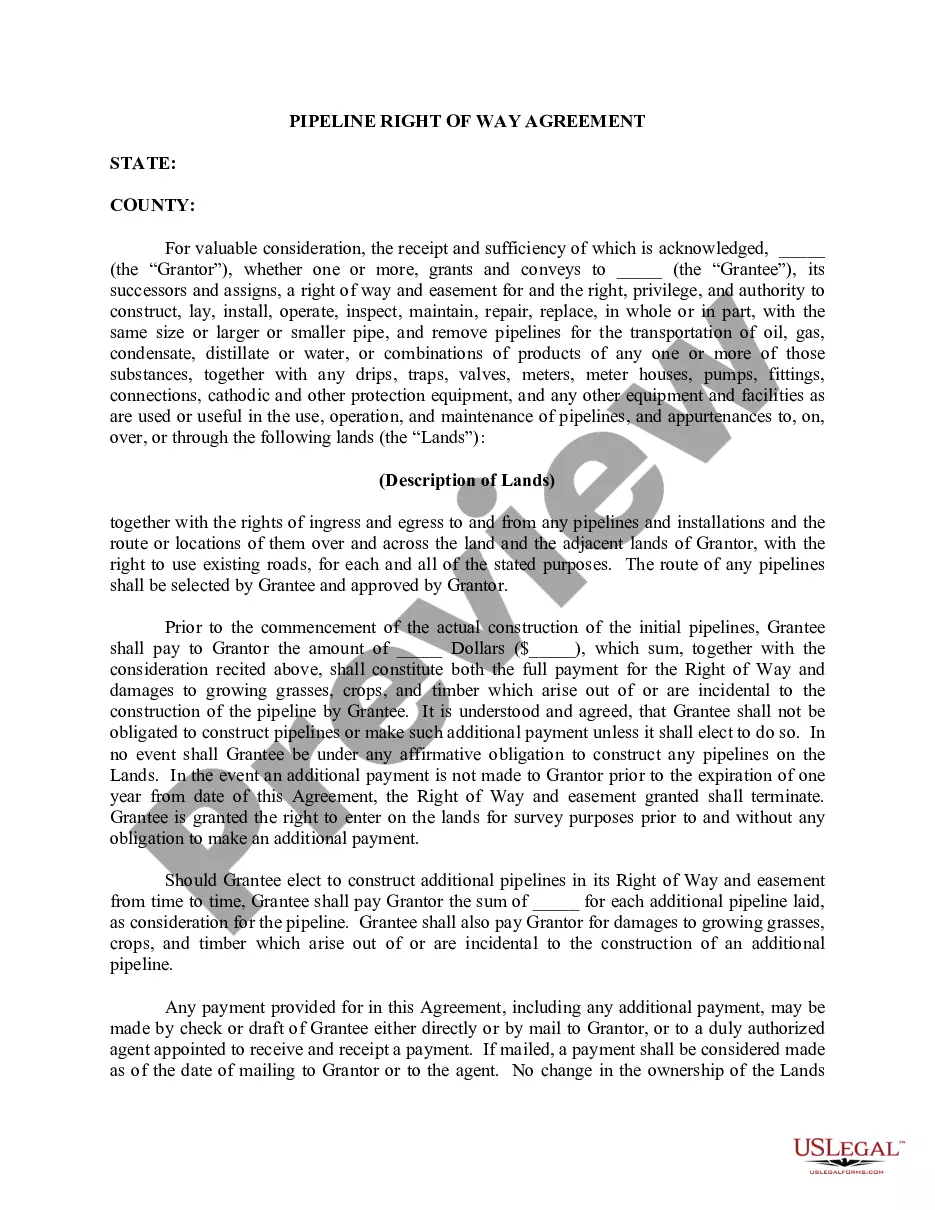
A pipeline easement specifically gives the easement holder the right to build and maintain a pipeline on a landowner's property. It doesn't grant the easement holder actual ownership of the land, just a right to use the land for pipeline purposes.
Easements are treated as a recovery of the basis of the property first, with any excess proceeds treated as capital gain, which is taxed at a lower rate than ordinary income. The basis of property that offsets an easement is limited to the basis of the affected acres or square footage.