Charitable Remainder Inter Vivos Unitrust Agreement
What is this form?
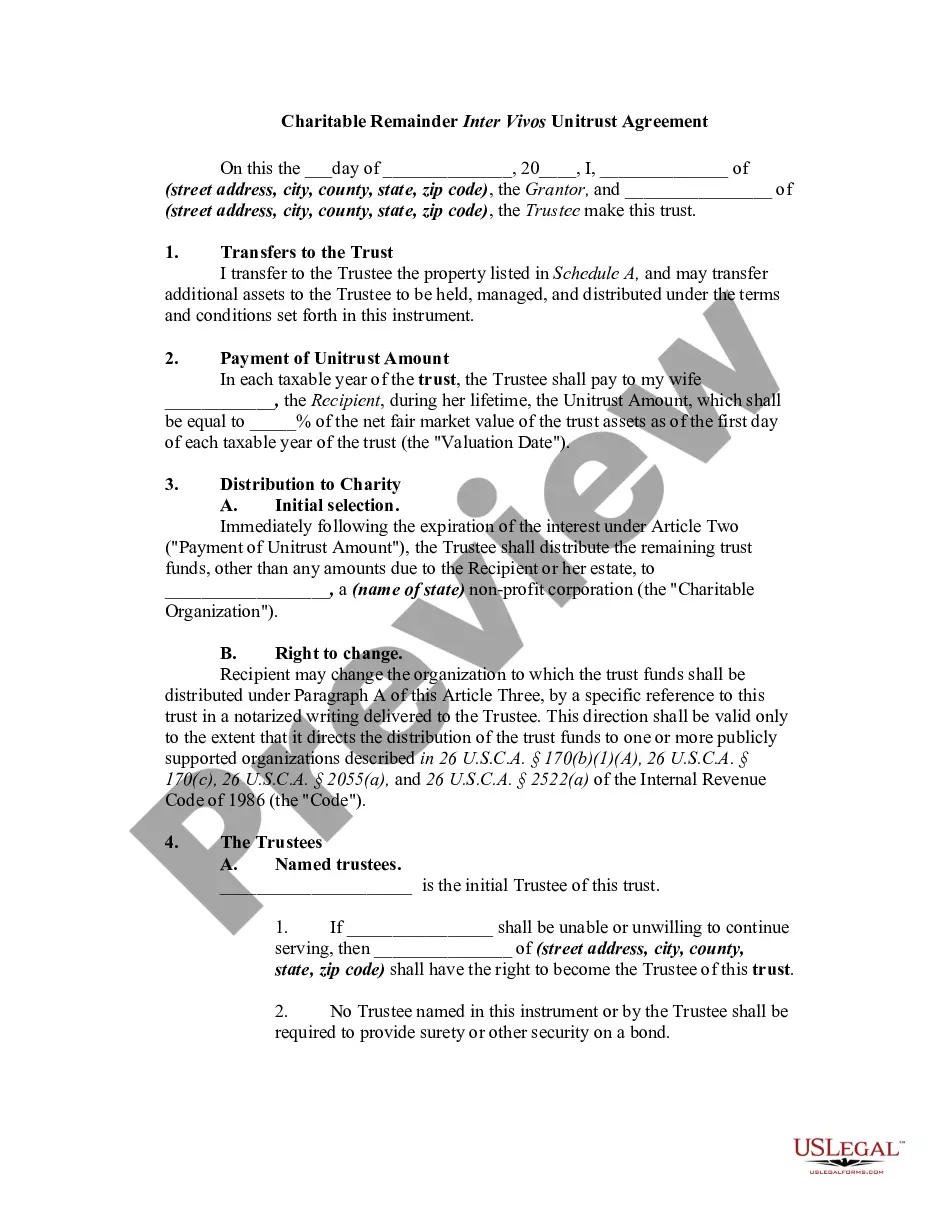
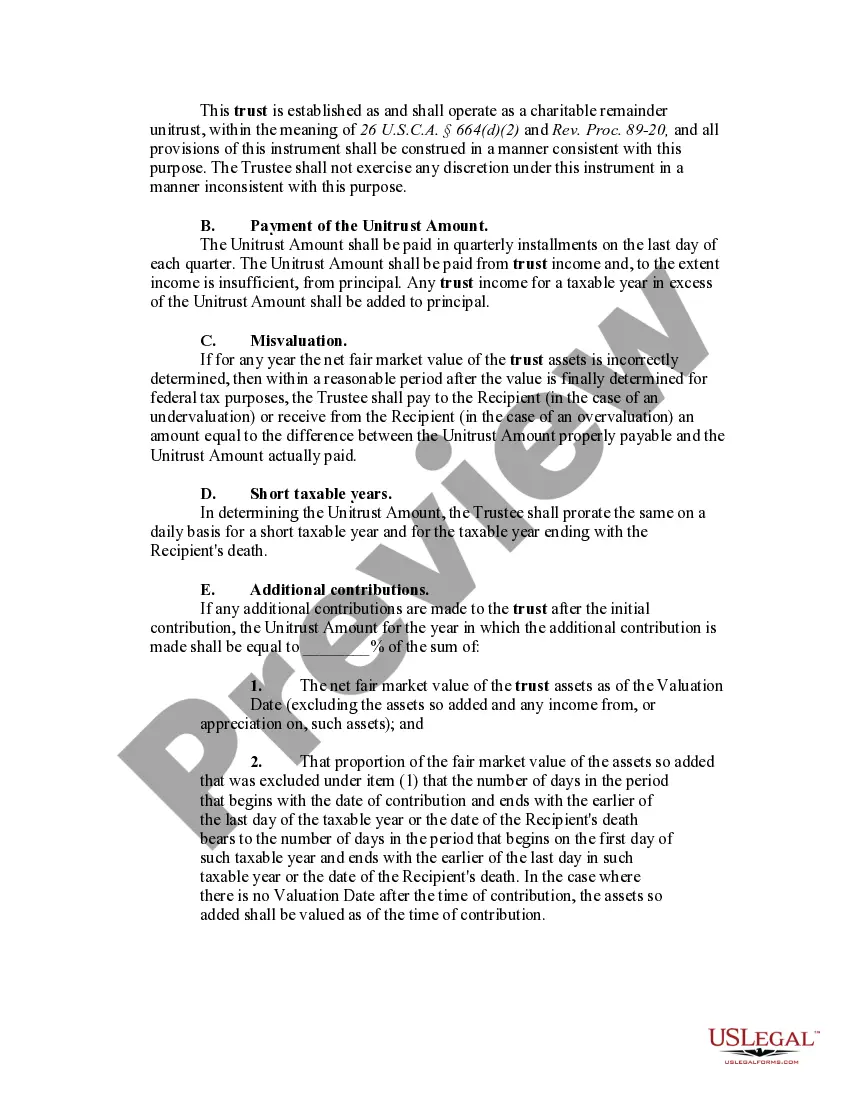
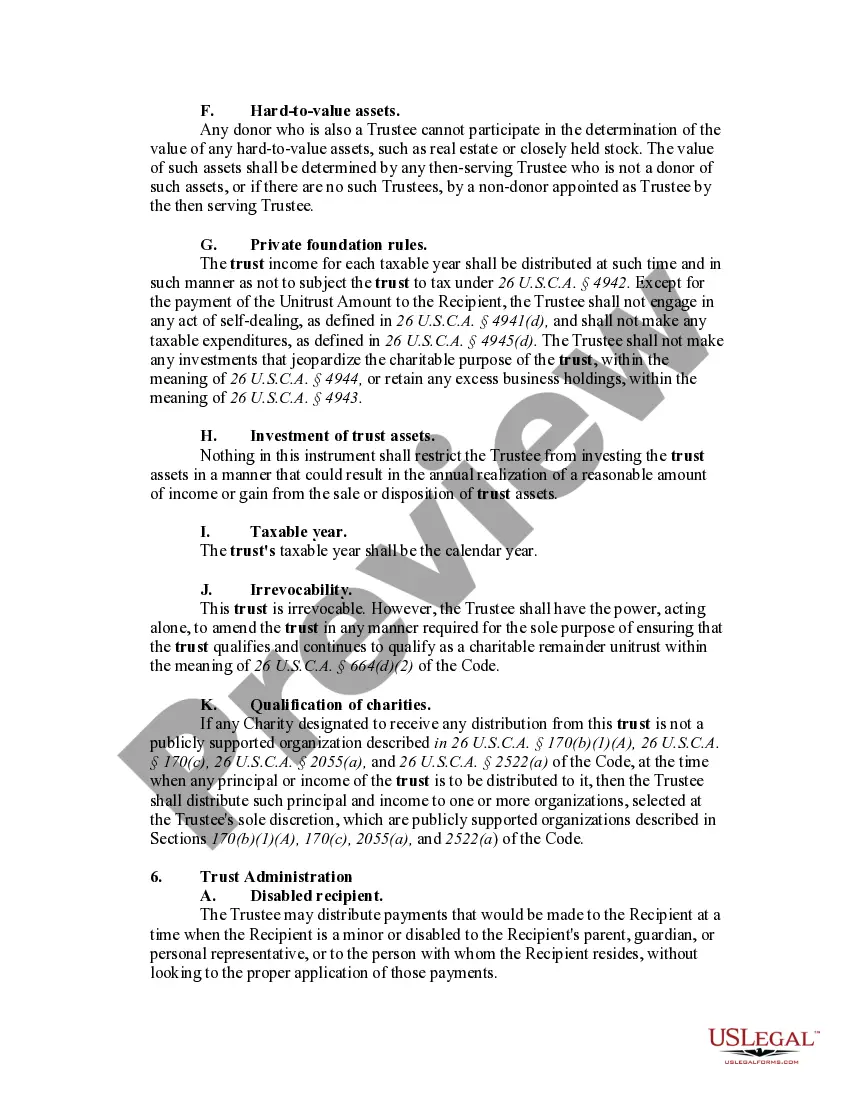
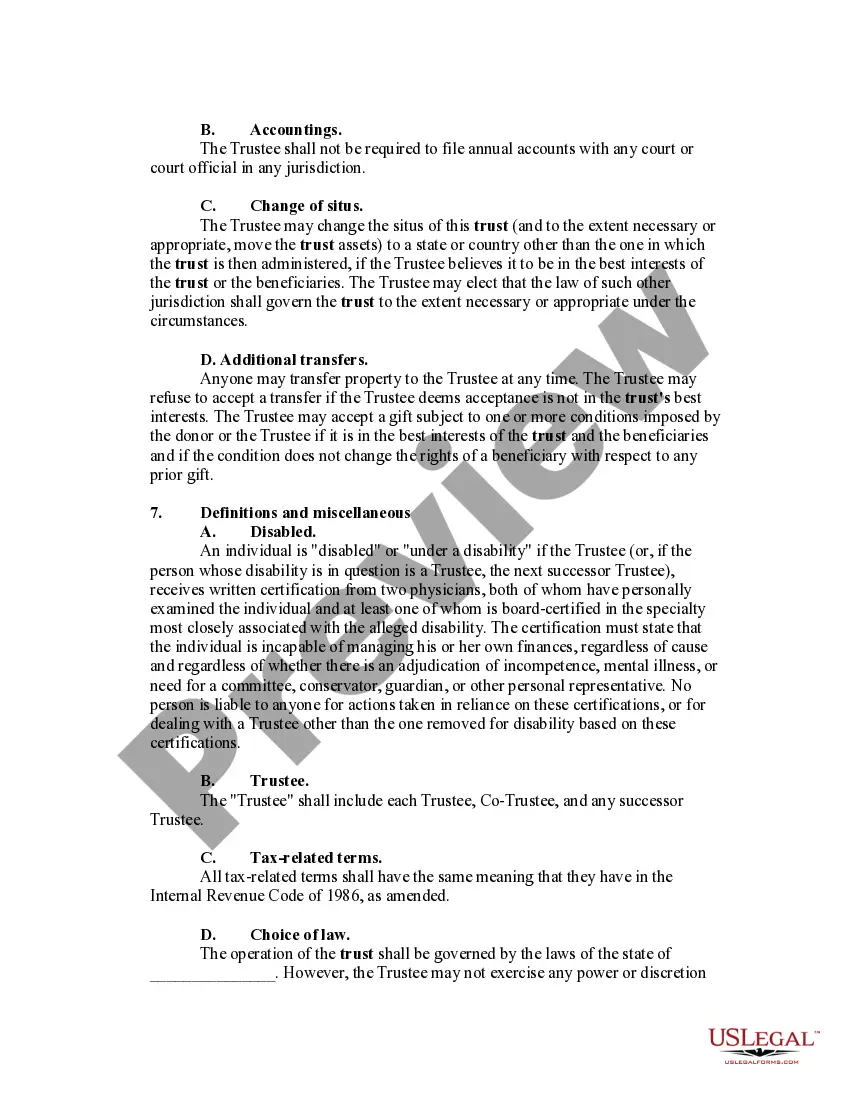
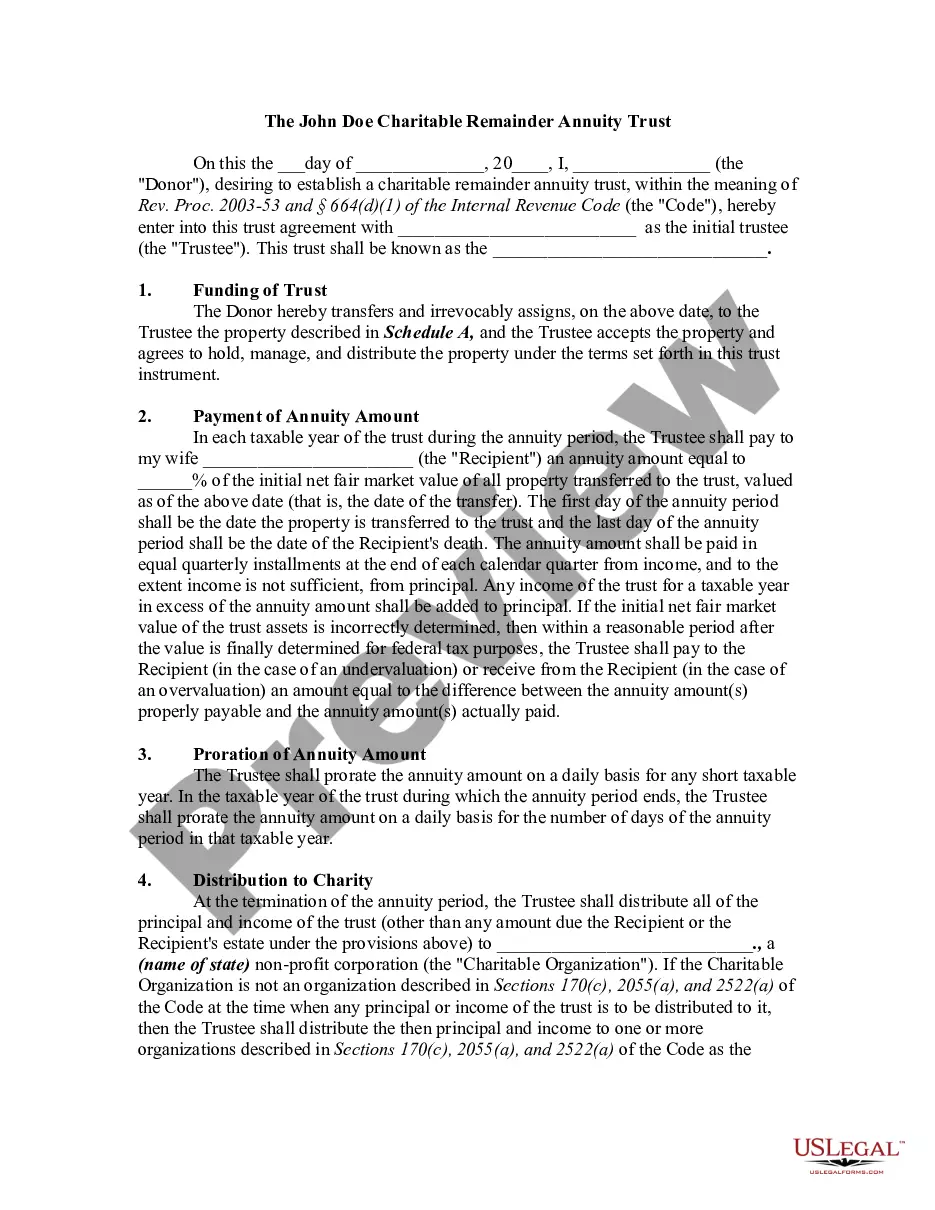
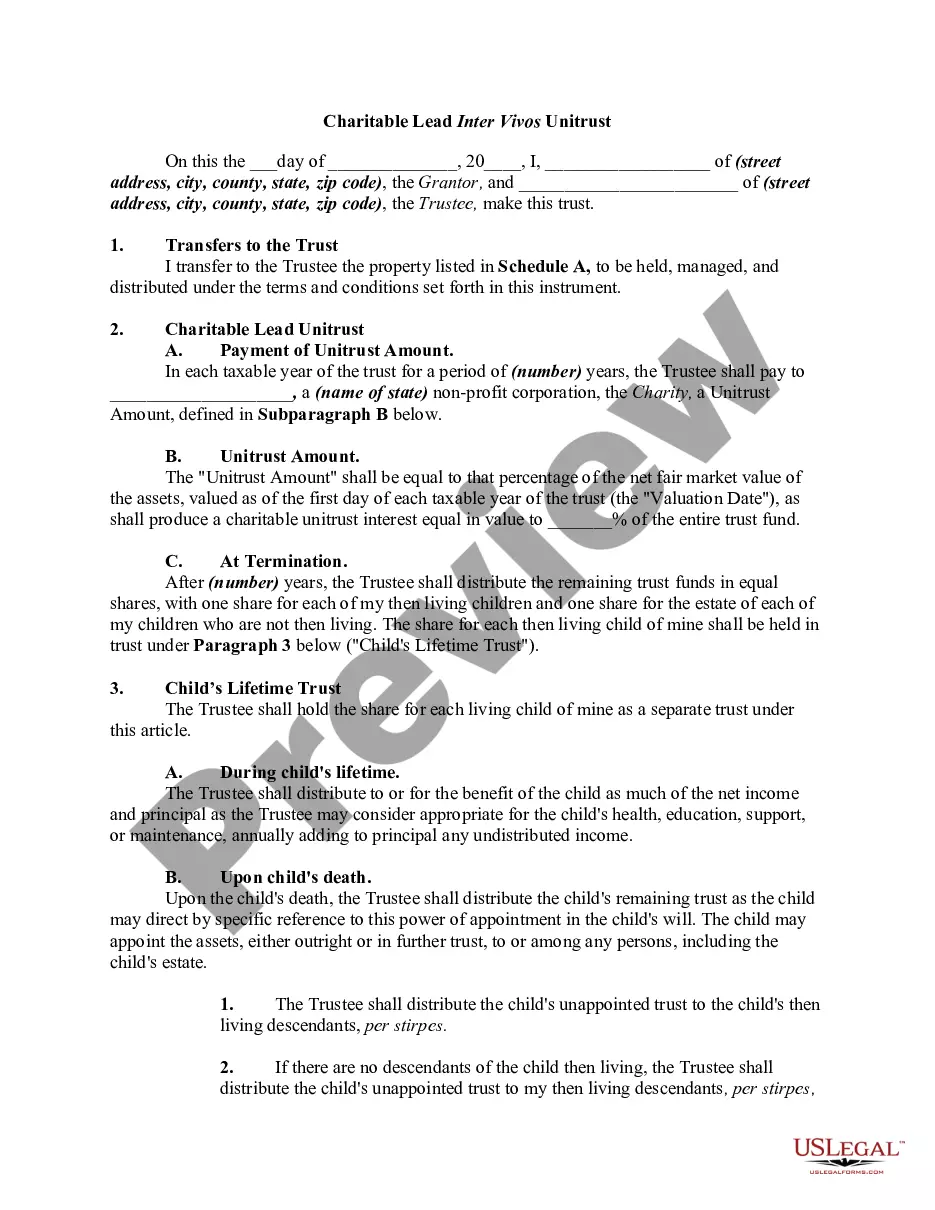
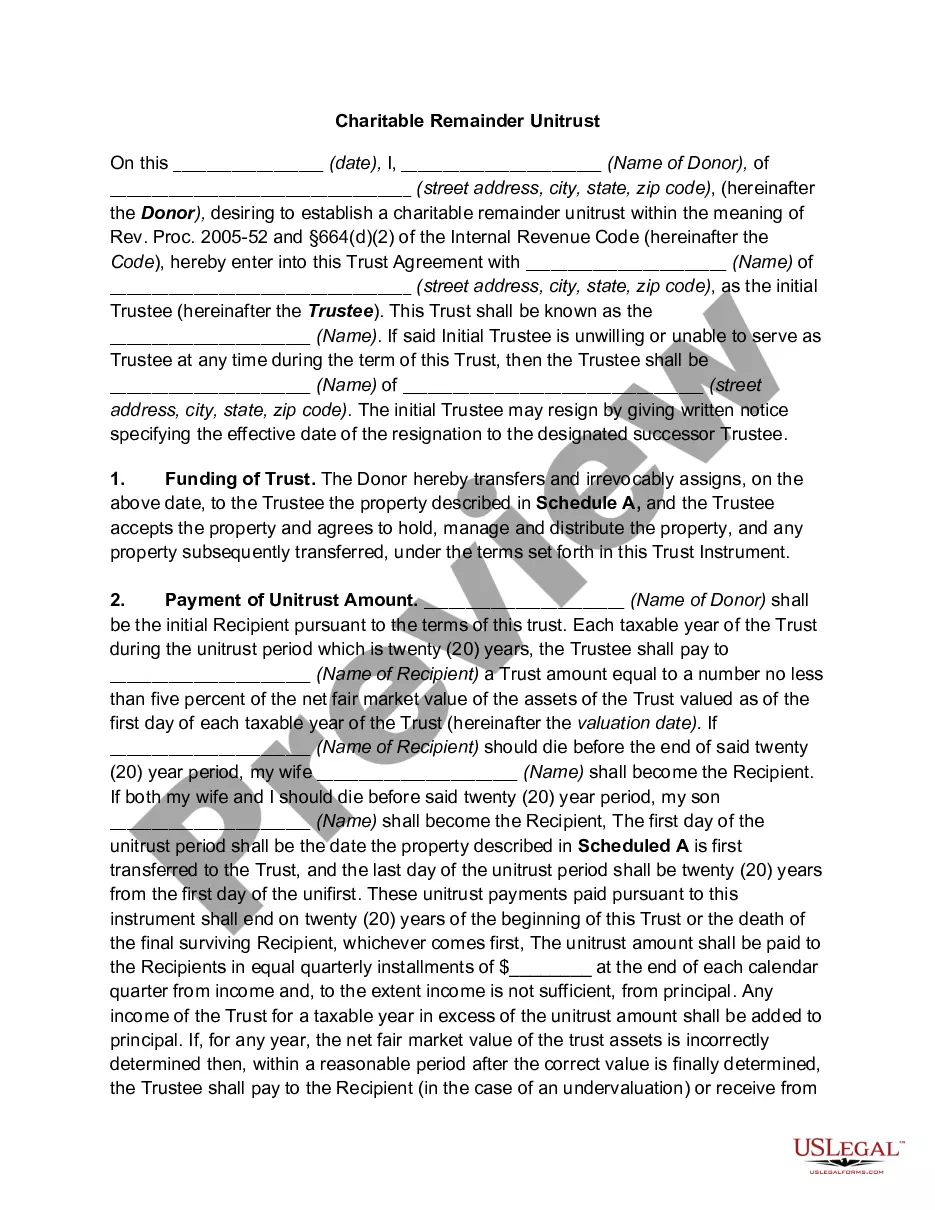
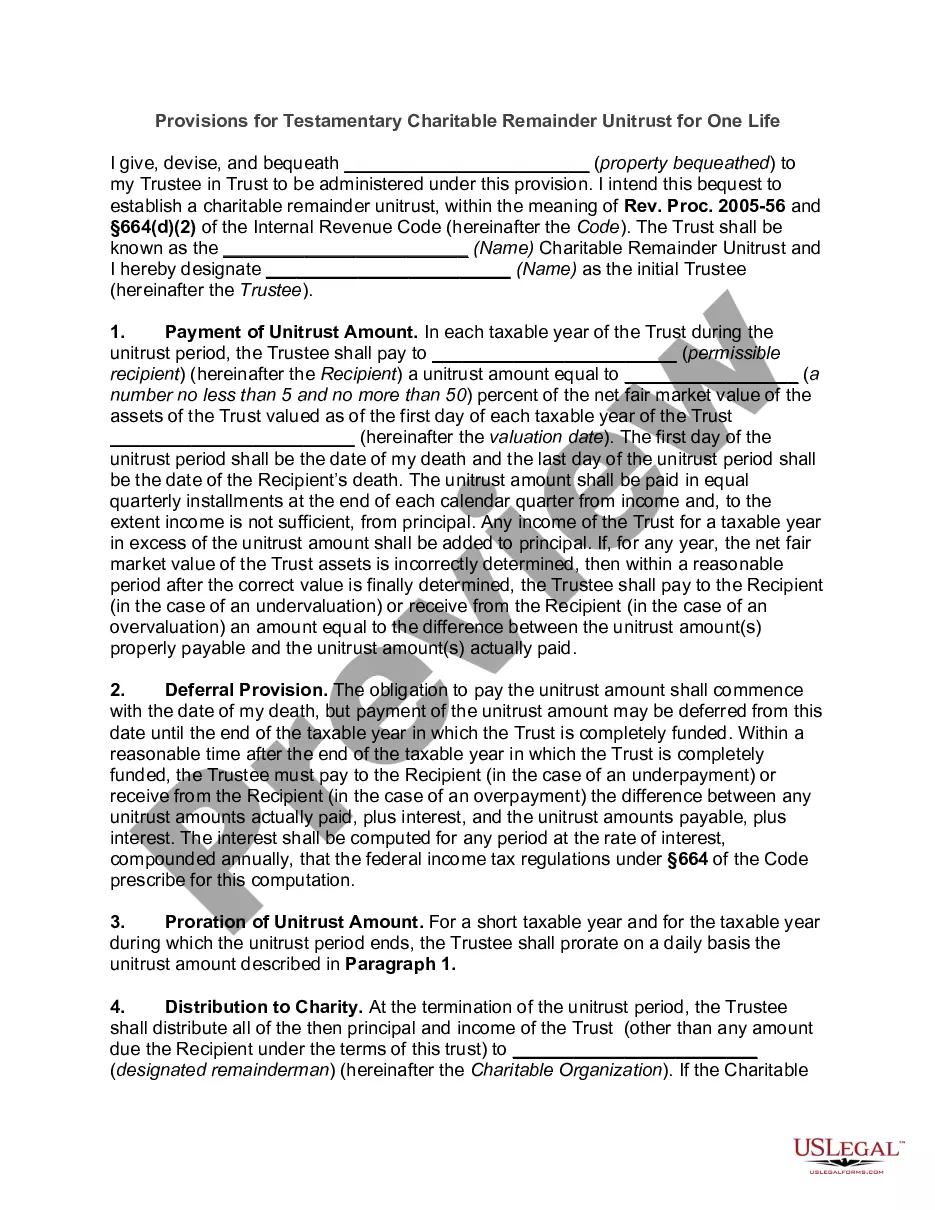
The Charitable Remainder Inter Vivos Unitrust Agreement is a legal document designed to establish a charitable remainder unitrust. This agreement enables the Grantor to transfer assets into a trust, which will provide income to a designated beneficiary (often the Grantor or their spouse) during their lifetime, with the remaining trust assets distributed to a chosen charity upon their death. This form differs from other trust agreements in that it combines elements of income distribution with charitable giving, promoting both financial security for the beneficiary and philanthropic goals.
Main sections of this form
- Date and parties involved in the trust agreement.
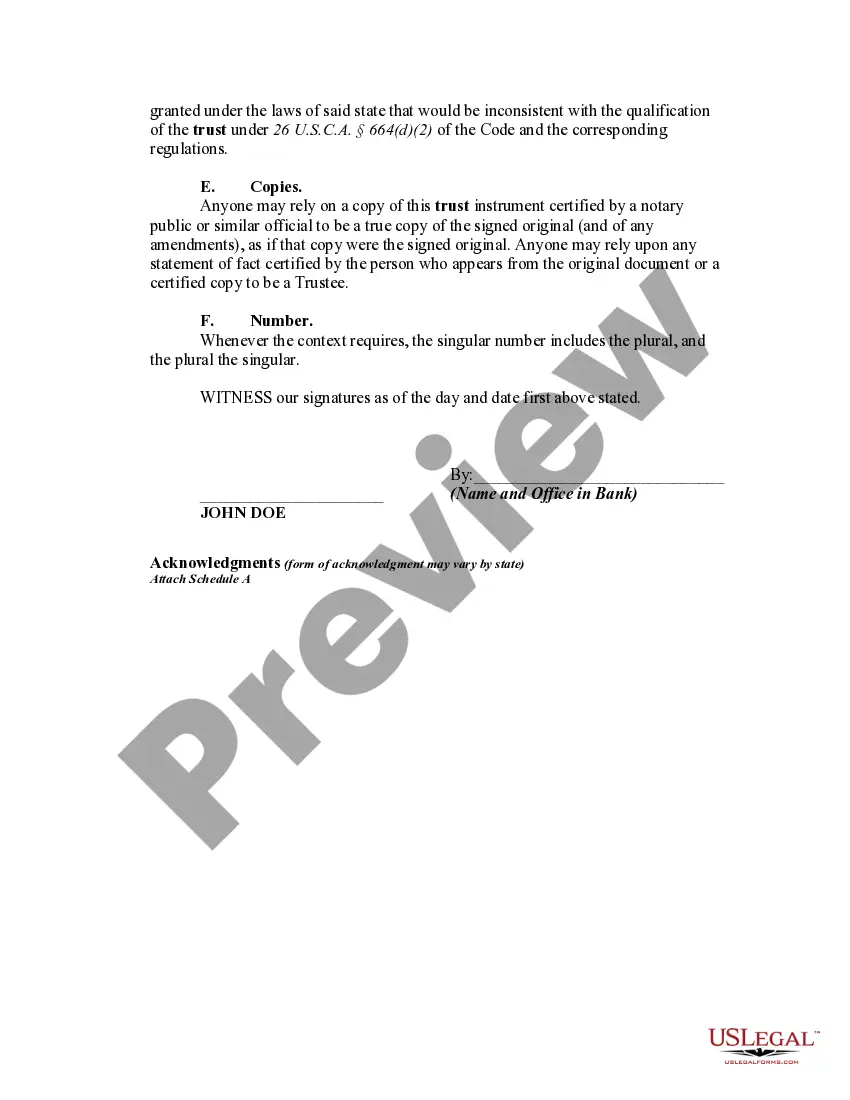
- Details about property transferred to the trust (Schedule A).
- Specifications on the payment of the unitrust amount to the beneficiary.
- Distribution provisions to the chosen charitable organization following the beneficiary's death.
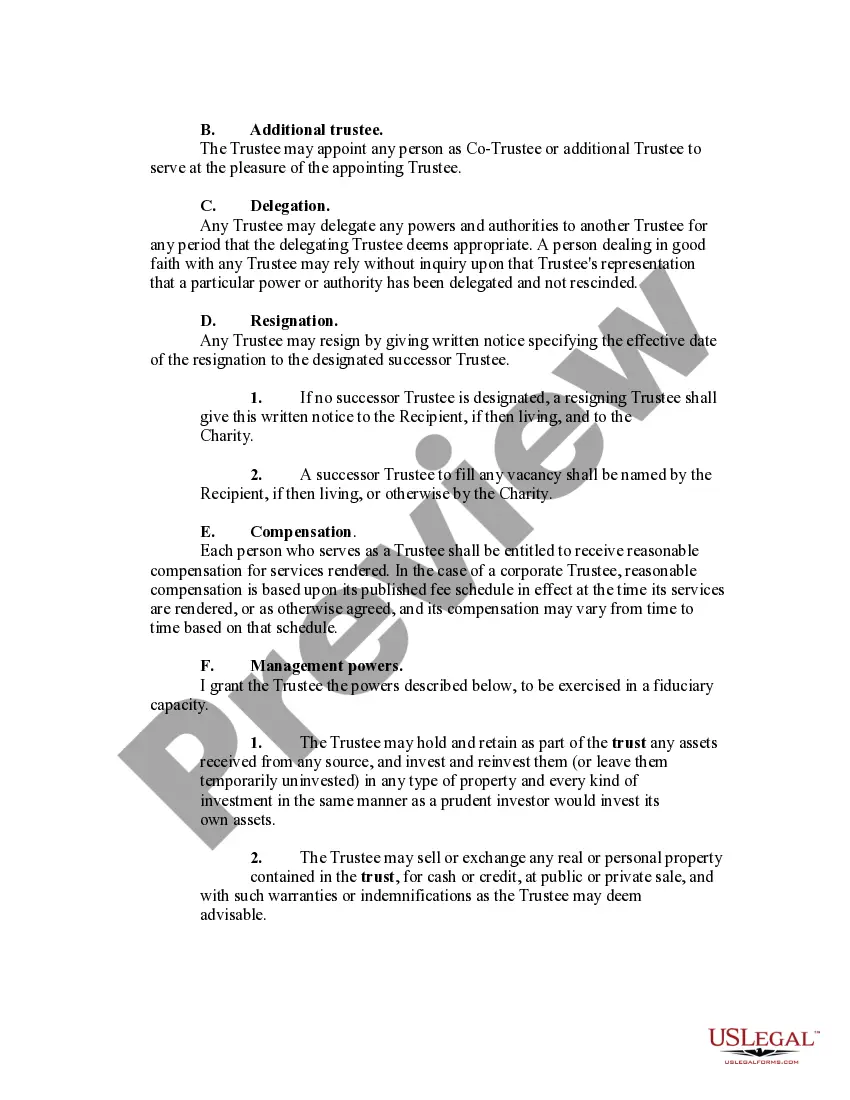
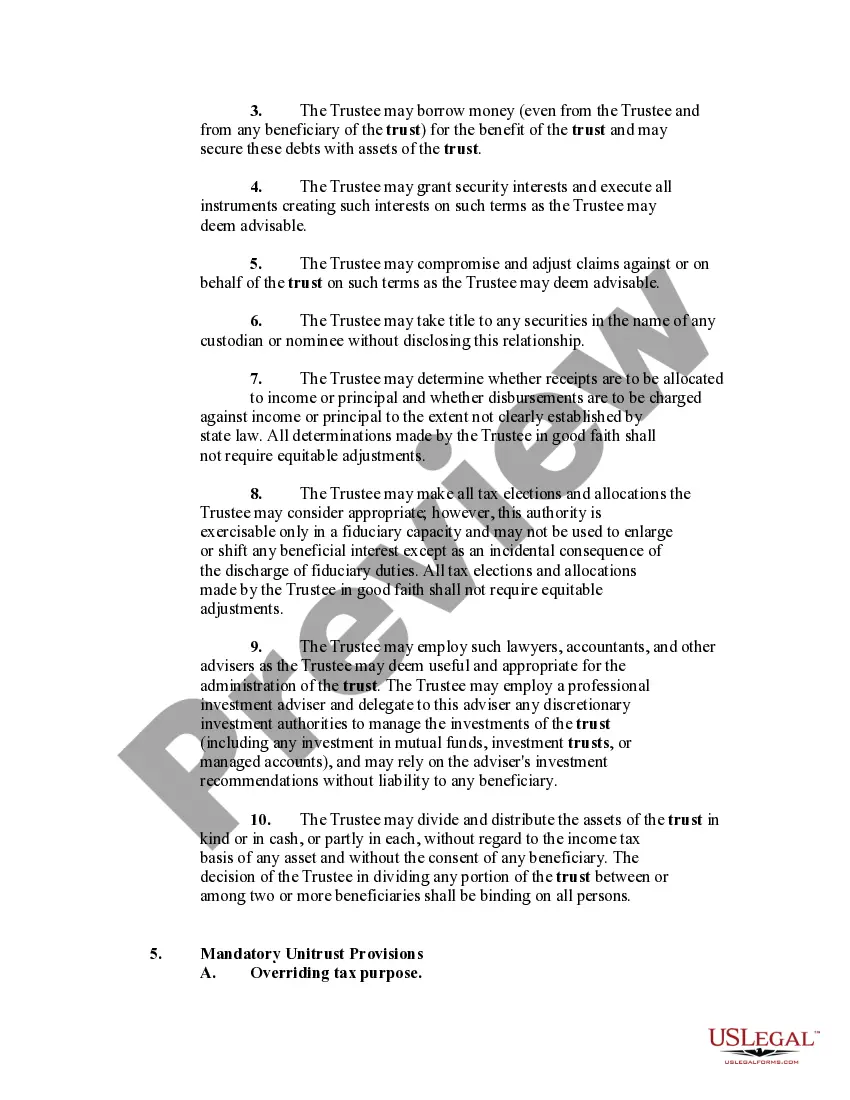
- Trustee powers, including administration and management of the trust assets.
- Mandatory tax-related provisions to ensure compliance with federal laws.
When to use this document
This form is useful in scenarios where individuals wish to make a significant philanthropic contribution while still providing financial support to a loved one. It is often utilized by those who want to secure income for a spouse or partner, ensuring they have financial stability during their lifetime, while also earmarking remaining assets for charity after their death. It serves as an effective estate planning tool for managing assets while maximizing charitable impact.
Who needs this form
- Individuals looking to create a trust that balances income for a designated beneficiary with charitable giving.
- Grantors who are interested in receiving potential tax benefits associated with charitable contributions.
- People with specific charitable organizations in mind that they wish to support in the future.
- Individuals seeking to ensure their financial legacy benefits both their loved ones and chosen charitable causes.
Completing this form step by step
- Identify the parties: Enter the names and addresses of the Grantor and the Trustee.
- Specify the property: List all assets being transferred to the trust in Schedule A.
- Enter the percentage: Indicate the percentage of net fair market value that will be paid as the unitrust amount.
- Designate the charity: Name the charitable organization that will receive the remaining trust assets after the beneficiary's death.
- Sign and date the document: Ensure that the Grantor and any other required parties sign and date the trust agreement to validate it.
Notarization guidance
This form must be notarized to be legally valid. US Legal Forms provides secure online notarization powered by Notarize, allowing you to complete the process through a verified video call.
Get your form ready online
Our built-in tools help you complete, sign, share, and store your documents in one place.
Make edits, fill in missing information, and update formatting in US Legal Forms—just like you would in MS Word.
Download a copy, print it, send it by email, or mail it via USPS—whatever works best for your next step.
Sign and collect signatures with our SignNow integration. Send to multiple recipients, set reminders, and more. Go Premium to unlock E-Sign.
If this form requires notarization, complete it online through a secure video call—no need to meet a notary in person or wait for an appointment.
We protect your documents and personal data by following strict security and privacy standards.

Make edits, fill in missing information, and update formatting in US Legal Forms—just like you would in MS Word.

Download a copy, print it, send it by email, or mail it via USPS—whatever works best for your next step.

Sign and collect signatures with our SignNow integration. Send to multiple recipients, set reminders, and more. Go Premium to unlock E-Sign.

If this form requires notarization, complete it online through a secure video call—no need to meet a notary in person or wait for an appointment.

We protect your documents and personal data by following strict security and privacy standards.
Mistakes to watch out for
- Failing to list all assets in Schedule A, leading to potential issues with asset management.
- Not clearly specifying the unitrust percentage, which can cause ambiguity in payments.
- Neglecting to update the charity designation if preferences change, which could result in unintended beneficiaries.
- Not obtaining proper signatures, which may render the document invalid.
Why complete this form online
- Convenience of downloading and printing your trust agreement from home at any time.
- Editability allows you to customize the document to better fit your specific needs.
- Reliable access to legal forms drafted by licensed attorneys ensures they are up-to-date and compliant with current laws.
- Guidance on filling out the form is often provided to help you complete the document correctly.
Looking for another form?

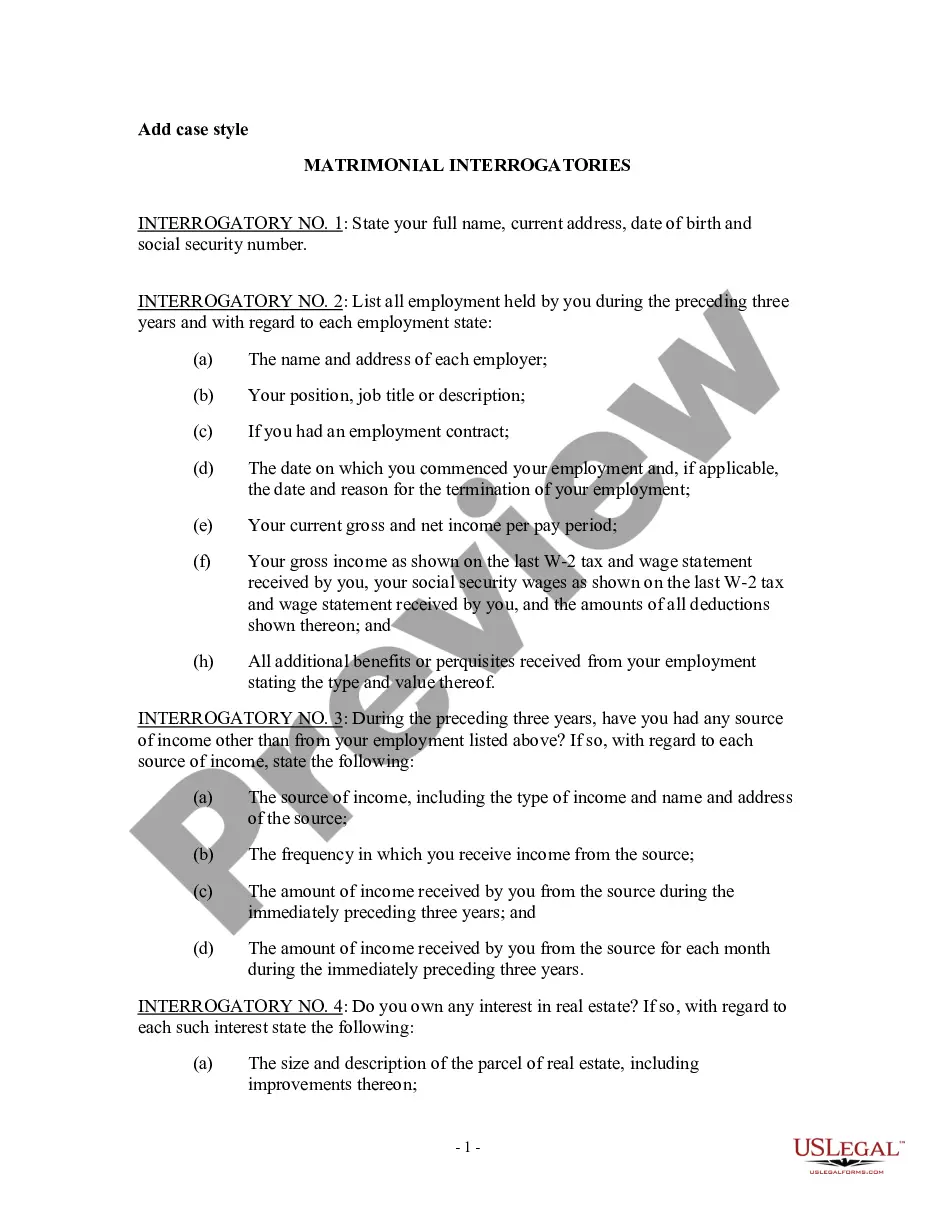
Form popularity
FAQ
Is income tax imposed on the distributions and who pays it? CRTs are exempt from income tax. The CRT assumes the grantor's adjusted cost basis and holding period in the property. If the CRT sells appreciated property, neither the grantor nor the CRT will pay immediate income tax on the sales.
Currently, a trust is required to file income tax returns if, during a taxable year it has gross income of $600 or more, or any amount of taxable income.Because a charitable remainder trust is ordinarily tax-exempt, the trust will calculate net income at the trust level, but will pay no tax.
At the end of the trust's term, the asset (that is, the remainder) goes to charity.When a charitable trust goes bad, the payouts start cutting into principal; each year, then, the donor will receive a smaller payout amount as the principal shrinks.
A charitable remainder trust (CRT) is an irrevocable trust that generates a potential income stream for you, as the donor to the CRT, or other beneficiaries, with the remainder of the donated assets going to your favorite charity or charities.
A CRAT pays a fixed percentage (at least 5%) of the trust's initial value every year until the trust terminates. The donor cannot make additional contributions to a CRAT after the initial contribution. A CRUT, by contrast, pays a fixed percentage (at least 5%) of the trust's value as determined annually.
Charitable remainder trusts are irrevocable. This means that they cannot be modified or terminated without the beneficiary's permission.
A split-interest trust other than an IRC Section 664 charitable remainder trust must file Form 1041 with Form 5227 if it has $600 of gross income or any taxable income during the year.For charitable remainder trusts, there is no requirement that the named charity even know of its impending gift.