Charitable Remainder Unitrust
What this document covers
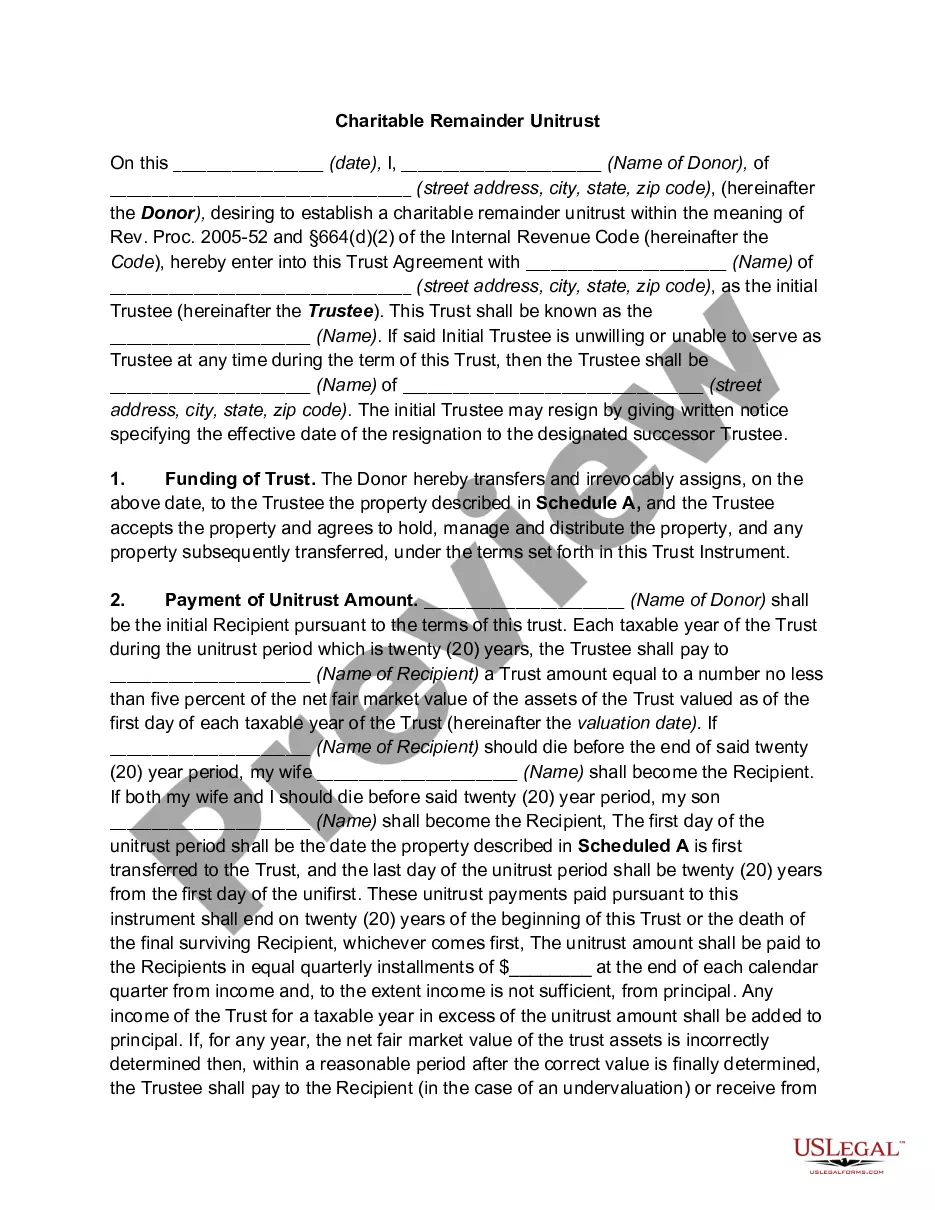
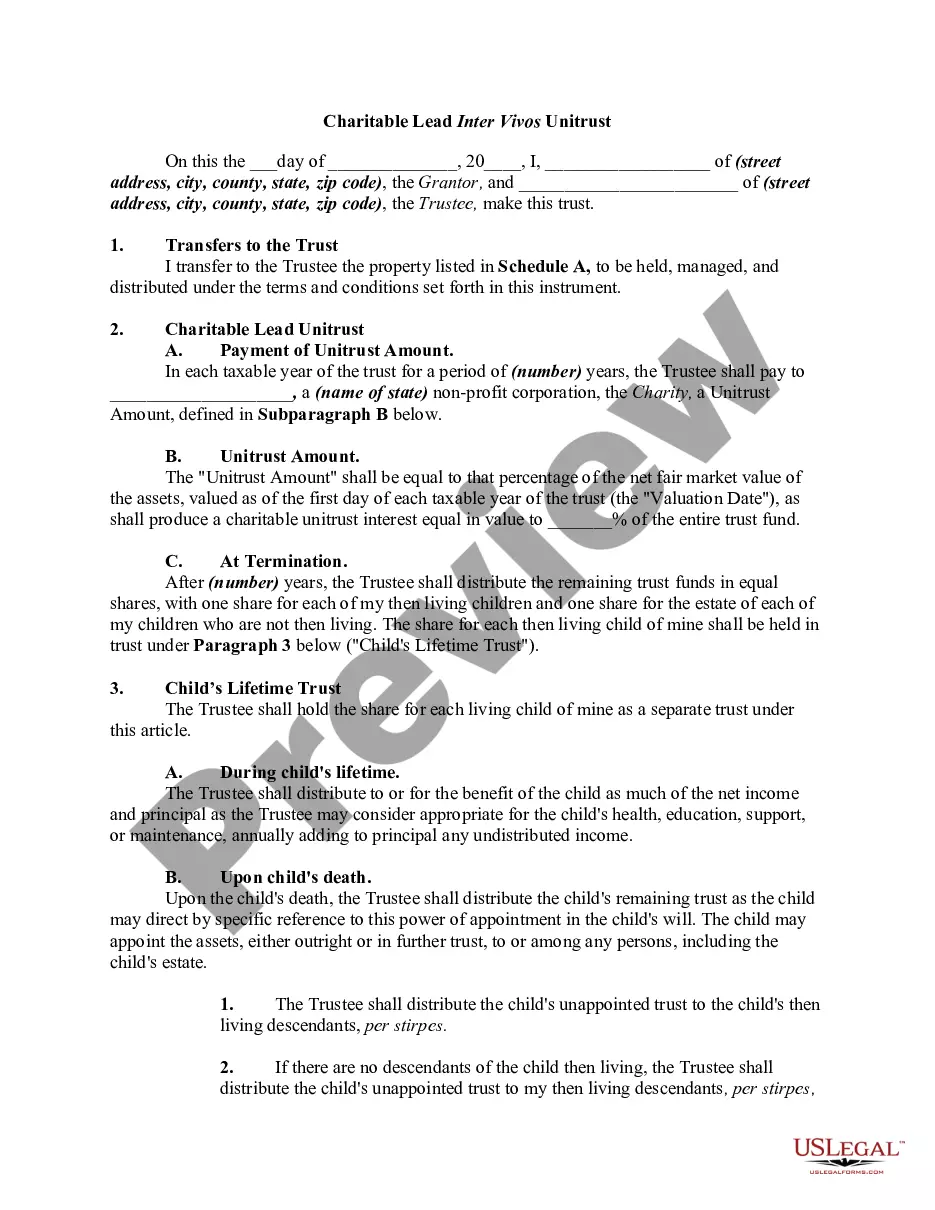
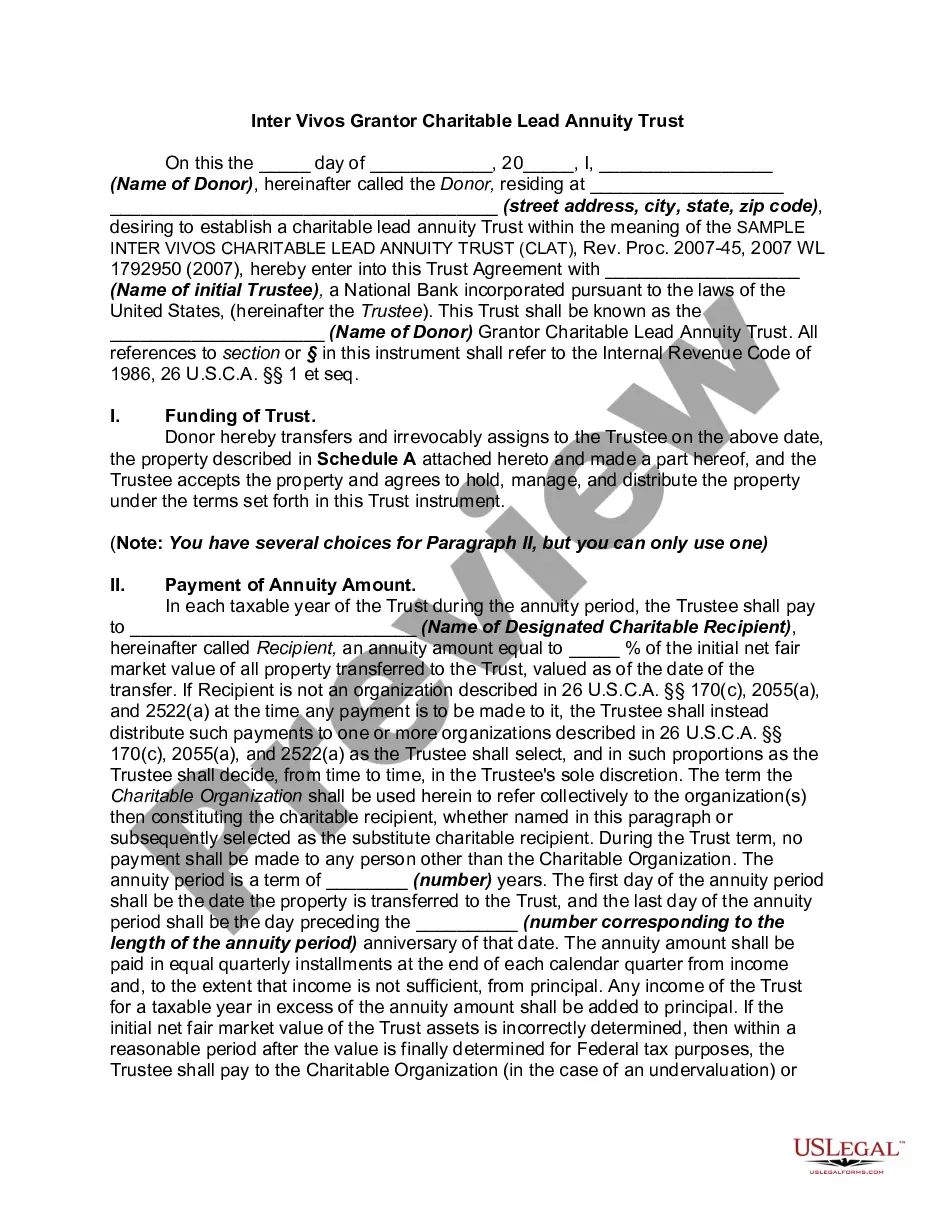
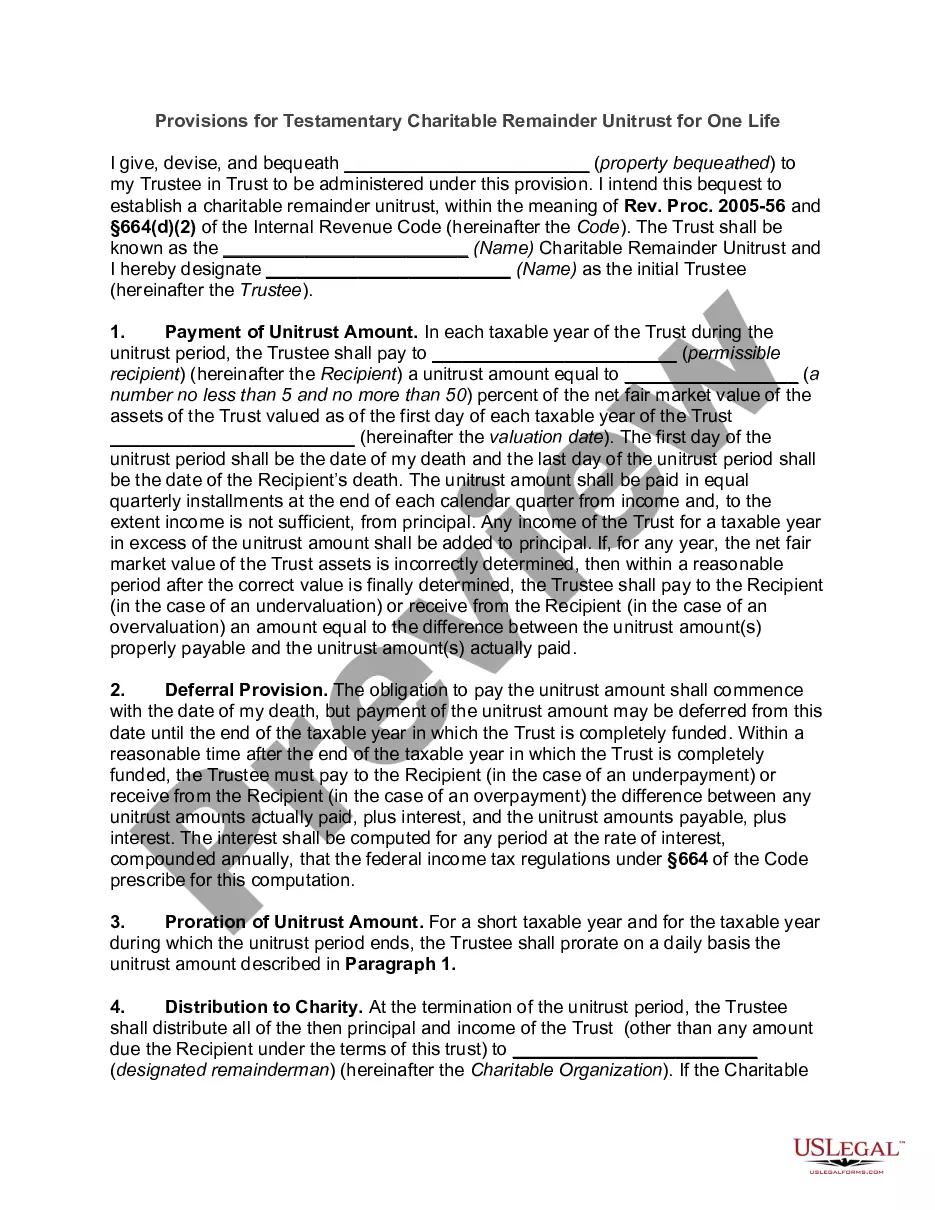
A charitable remainder unitrust is a legal trust established by a donor to provide income to beneficiaries while ultimately transferring the trust's remaining assets to a designated charity. Unlike a standard trust, the unitrust pays a fixed percentage of the trust's annual value to the beneficiaries over a specified term, typically up to 20 years. This setup benefits donors by allowing them to support charitable causes while retaining income from their assets during their lifetime.
Key parts of this document
- Identification of the donor and trustee.
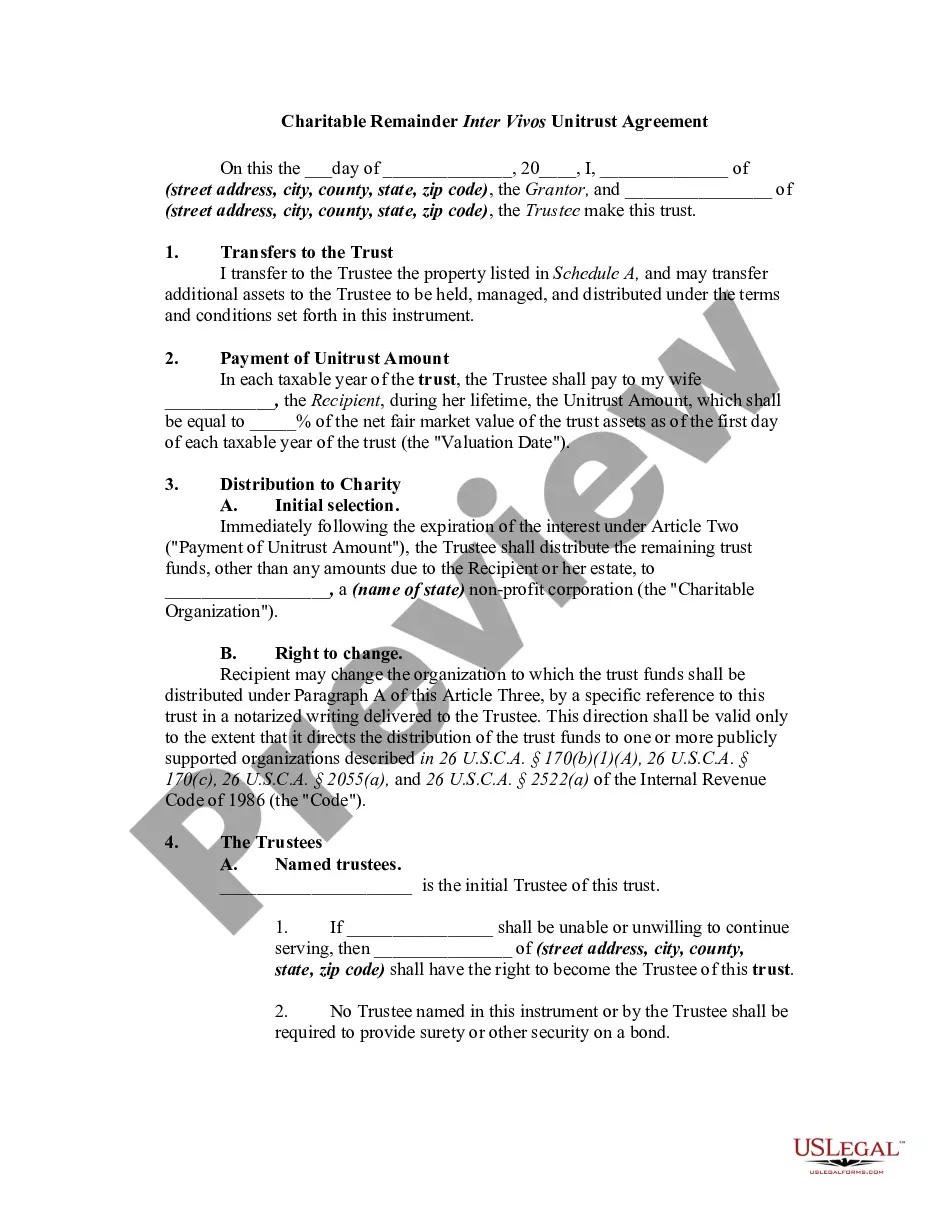
- Funding provisions specifying the transfer of property to the trust.
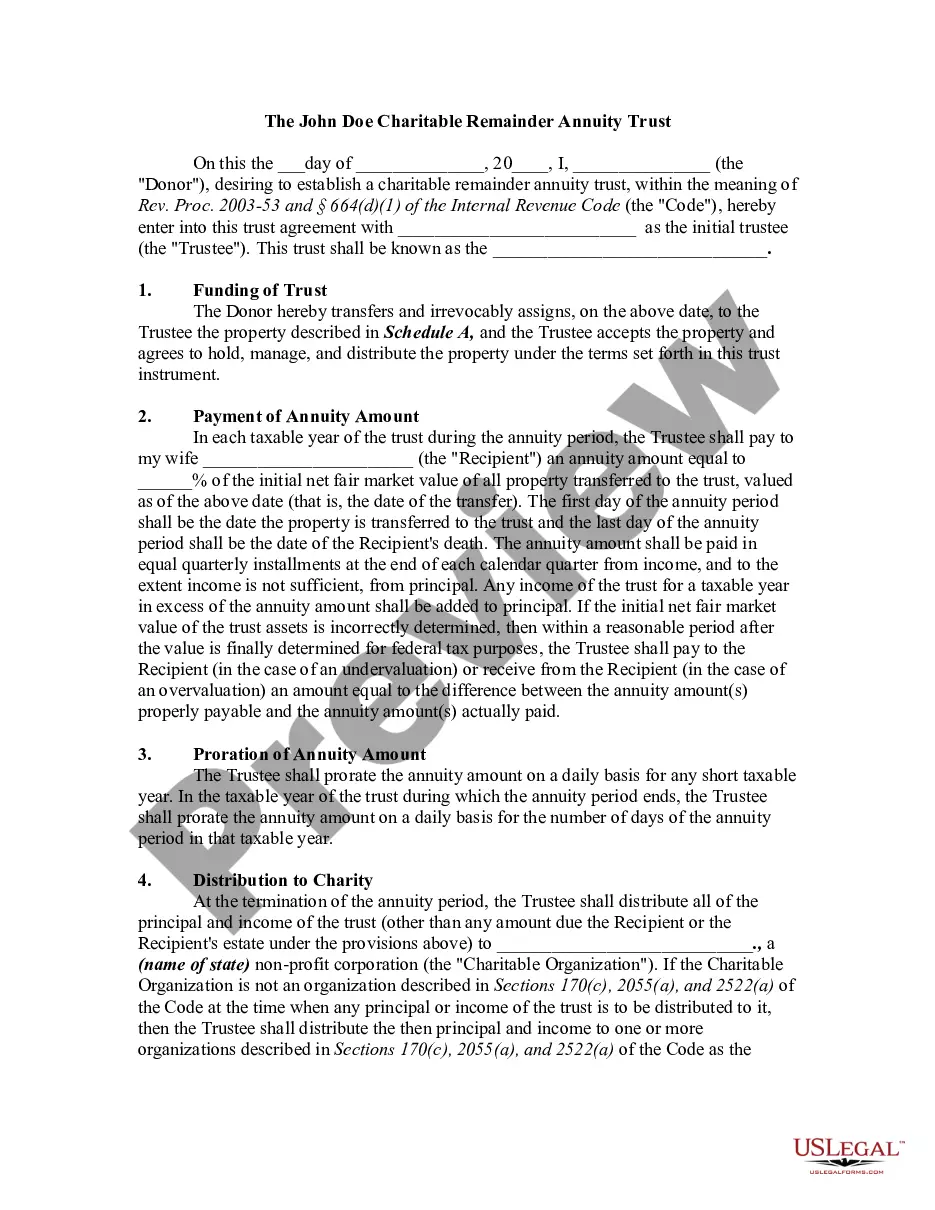
- Payment structure detailing the minimum annual payout to beneficiaries.
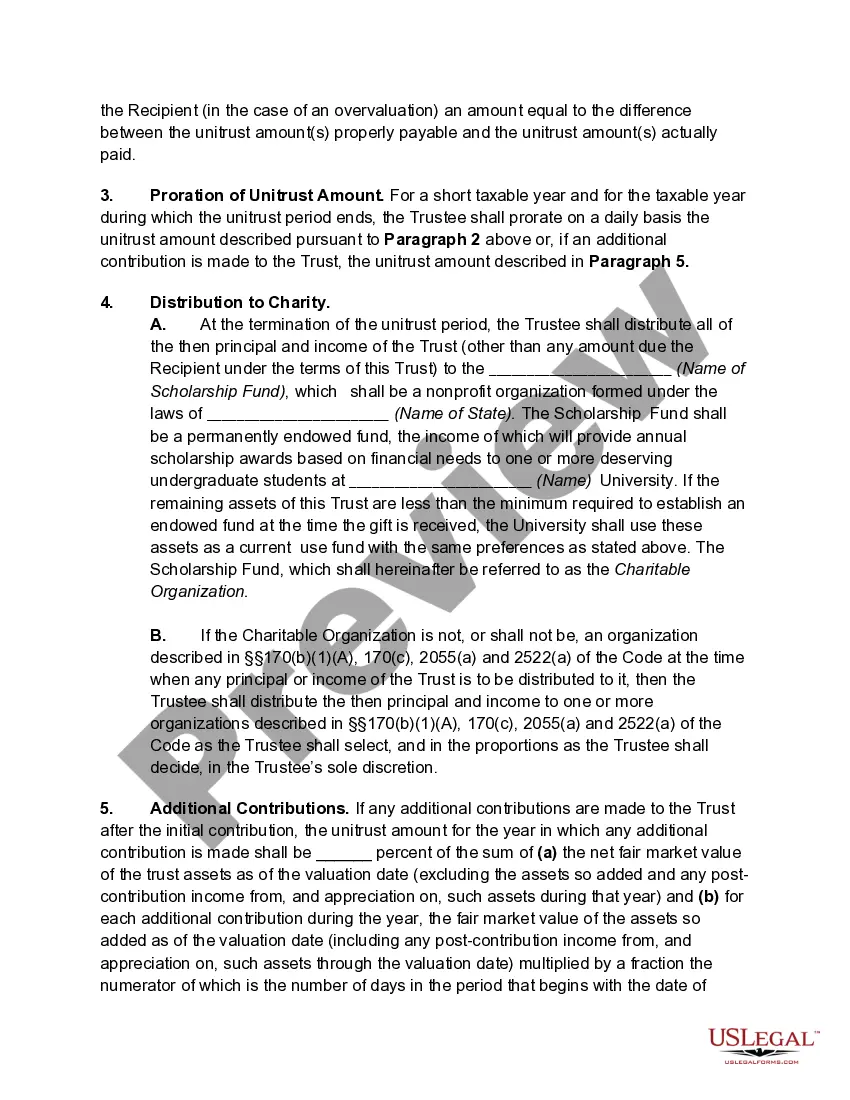
- Distribution clauses outlining how and when assets will be transferred to the designated charity.
- Provisions for additional contributions and payment adjustments.
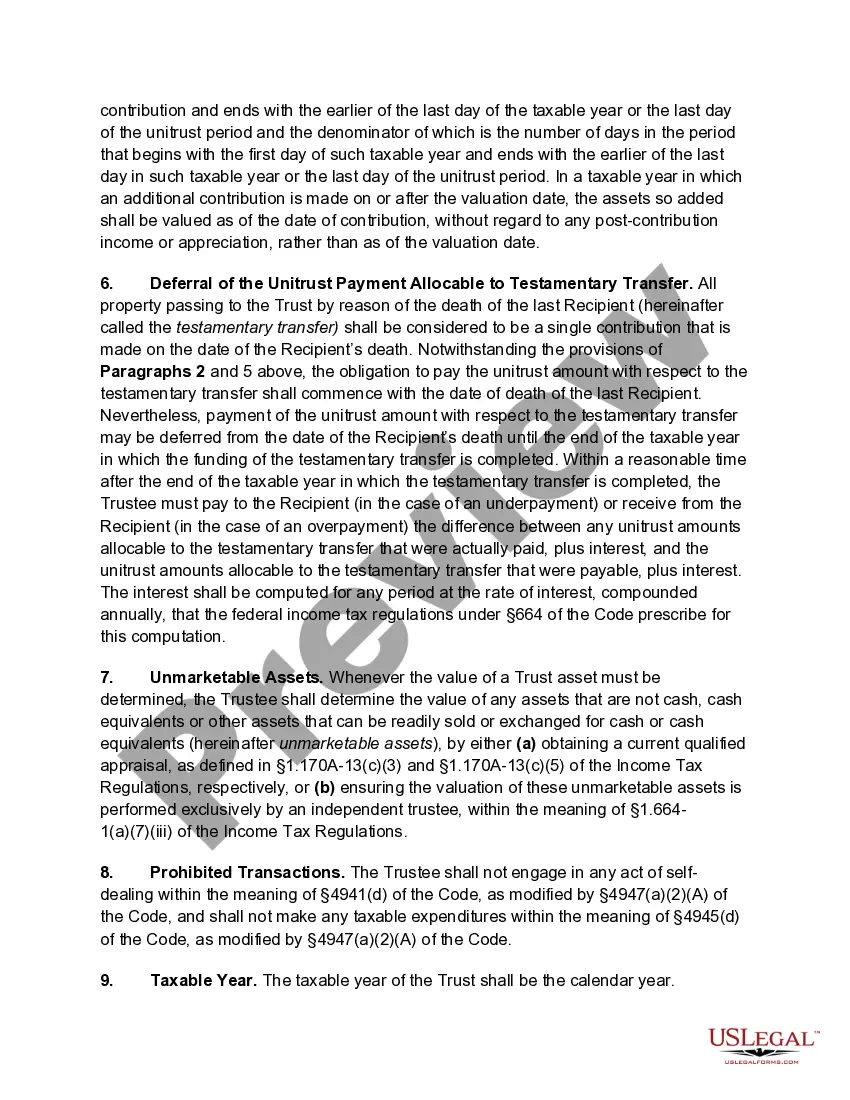
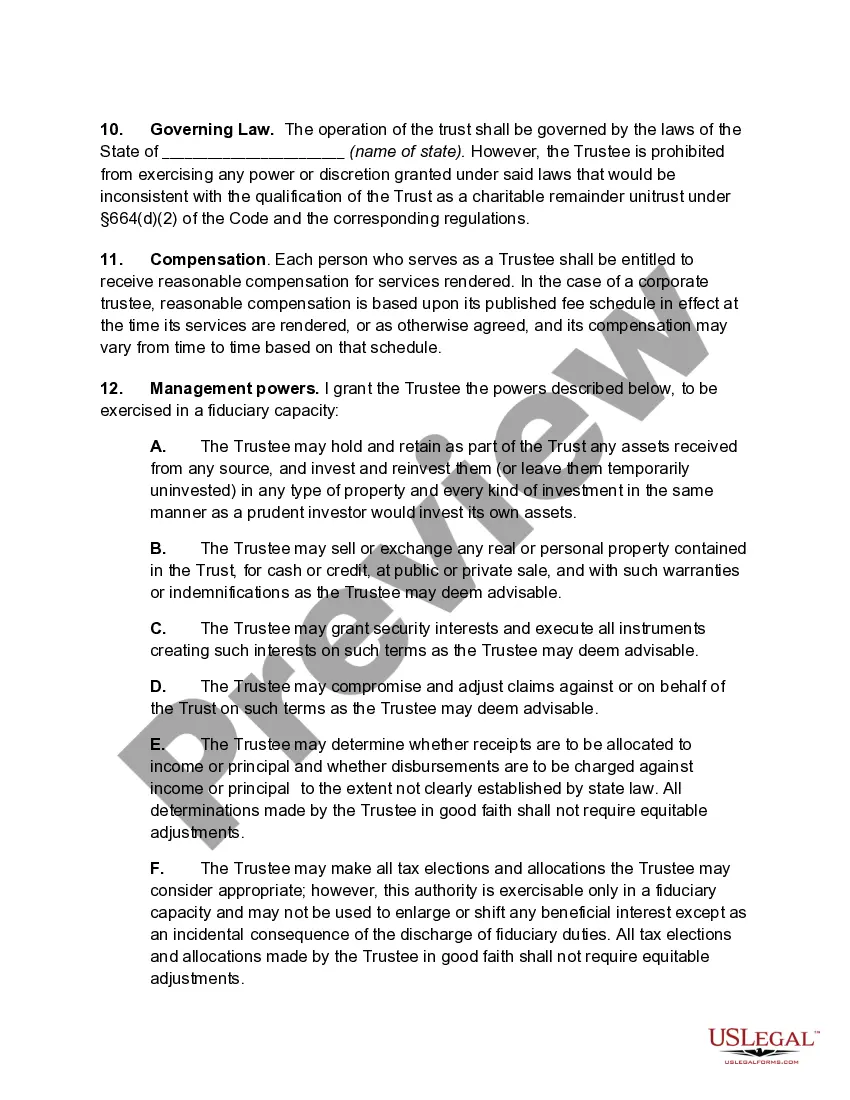
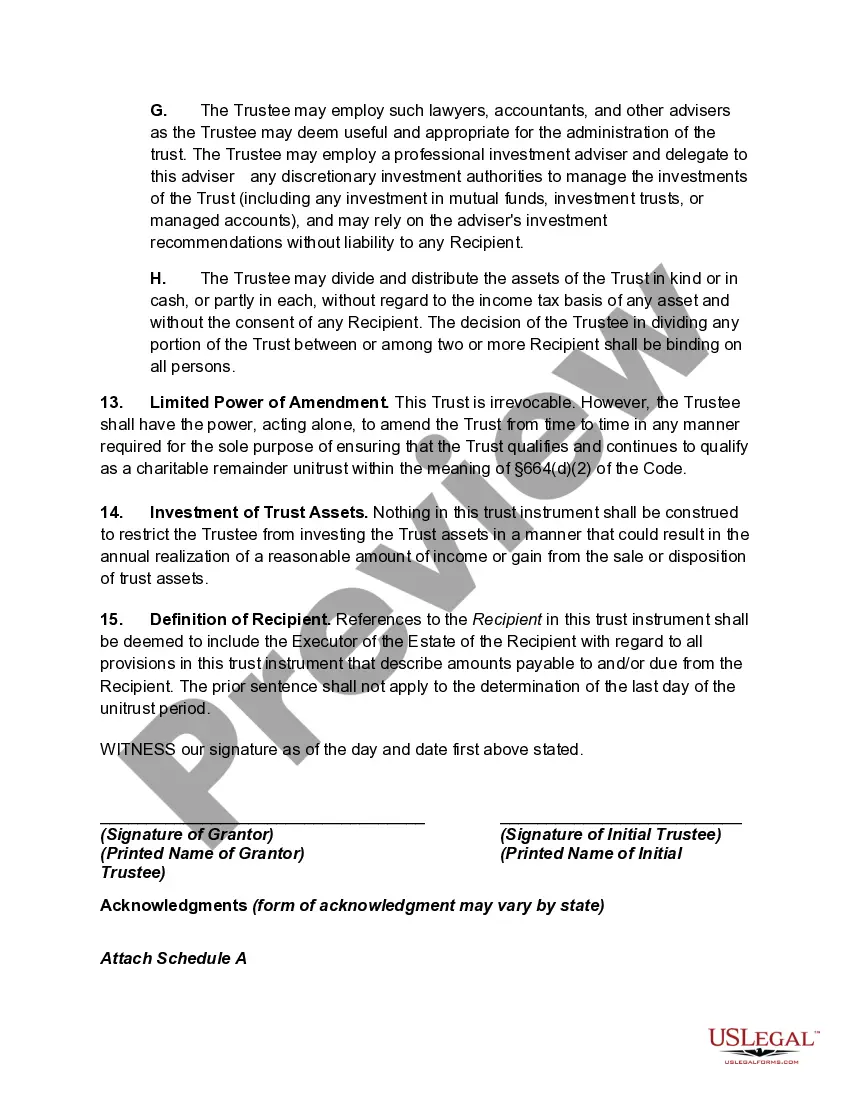
- Management powers granted to the trustee for asset administration.

When to use this form
You should use this form when you want to create a charitable remainder unitrust to provide for beneficiaries while ensuring that the remaining trust assets benefit a charity after a specified period. This form is ideal if you are looking to make charitable contributions while still receiving income from your assets, particularly if you have considerable assets you wish to manage in a tax-advantaged manner.
Who should use this form
- Donors wishing to support a charity while retaining income from their assets.
- Individuals with substantial property or investments seeking a structured giving plan.
- Estate planners looking to establish long-term charitable means in their estate plans.
- Trustees tasked with managing a charitable remainder trust.
How to complete this form
- Identify the donor and trustee by entering their names and addresses at the top of the form.
- Specify the property being transferred to the trust in the designated section.
- Designate the beneficiaries and the percentage payout from the trust.
- Outline the terms for distributions to the chosen charitable organization upon the trust's termination.
- Include signatures of the donor and trustee to validate the trust agreement.
Does this form need to be notarized?
In most cases, this form does not require notarization. However, some jurisdictions or signing circumstances might. US Legal Forms offers online notarization powered by Notarize, accessible 24/7 for a quick, remote process.
Get your form ready online
Our built-in tools help you complete, sign, share, and store your documents in one place.
Make edits, fill in missing information, and update formatting in US Legal Forms—just like you would in MS Word.
Download a copy, print it, send it by email, or mail it via USPS—whatever works best for your next step.
Sign and collect signatures with our SignNow integration. Send to multiple recipients, set reminders, and more. Go Premium to unlock E-Sign.
If this form requires notarization, complete it online through a secure video call—no need to meet a notary in person or wait for an appointment.
We protect your documents and personal data by following strict security and privacy standards.

Make edits, fill in missing information, and update formatting in US Legal Forms—just like you would in MS Word.

Download a copy, print it, send it by email, or mail it via USPS—whatever works best for your next step.

Sign and collect signatures with our SignNow integration. Send to multiple recipients, set reminders, and more. Go Premium to unlock E-Sign.

If this form requires notarization, complete it online through a secure video call—no need to meet a notary in person or wait for an appointment.

We protect your documents and personal data by following strict security and privacy standards.
Common mistakes to avoid
- Failing to provide complete and accurate information about the trust assets.
- Not specifying beneficiaries or distribution amounts clearly.
- Overlooking tax implications and not consulting with a tax advisor.
- Neglecting to update the trust agreement following significant life changes.
Advantages of online completion
- Convenient access to expertly drafted legal documents from licensed attorneys.
- Editability allows for easy customization to meet individual needs.
- Immediate downloads ensure timely completion of important documents.
- Secure storage and retrieval of legal forms for future use.
Main things to remember
- A charitable remainder unitrust allows for both income during the trust term and charitable contributions after.
- Ensure all parties are clearly identified and the payment structure is specified.
- Consider local laws for any additional requirements when creating the trust.
Looking for another form?
Form popularity
FAQ
A Charitable Remainder Unitrust is a trust that pays beneficiaries a fixed percentage of the trust’s annual value, with the remaining assets eventually going to charity. This standard form sets up the donor and trustee identities, funding, the minimum annual payout, distributions to charity, and trustee powers to administer assets.
A Charitable Remainder Unitrust is a type of charitable remainder trust that pays a fixed percentage of the trust’s annual value to beneficiaries. A broader charitable remainder trust category includes CRUTs and CRATs; CRATs pay a fixed dollar amount, while CRUTs use a percentage, making payments vary with asset value.
This template focuses on establishing the donor and trustee, funding the trust, payout structure, distribution to the charity, and management powers. It does not provide tax guidance. For tax questions about a Charitable Remainder Unitrust, consult a licensed tax professional or attorney.
This document is a template and describes the structure—donor and trustee identities, funding, payout, distributions to charity, and trustee powers. It does not assess risk or disadvantages. To weigh drawbacks like long-term commitment or asset-management considerations, consult a qualified attorney or financial advisor.
A Charitable Remainder Unitrust typically lasts up to 20 years under this form, with the term defined in the document. The form supports a defined term and specifies how distributions are made to beneficiaries during the term and to charity after it ends.
A Charitable Remainder Unitrust pays a fixed percentage of the trust’s assets’ value to beneficiaries each year, causing payments to vary with asset value. A Charitable Remainder Annuity Trust pays a fixed dollar amount annually, regardless of value. This form emphasizes percentage payouts and charitable distributions.