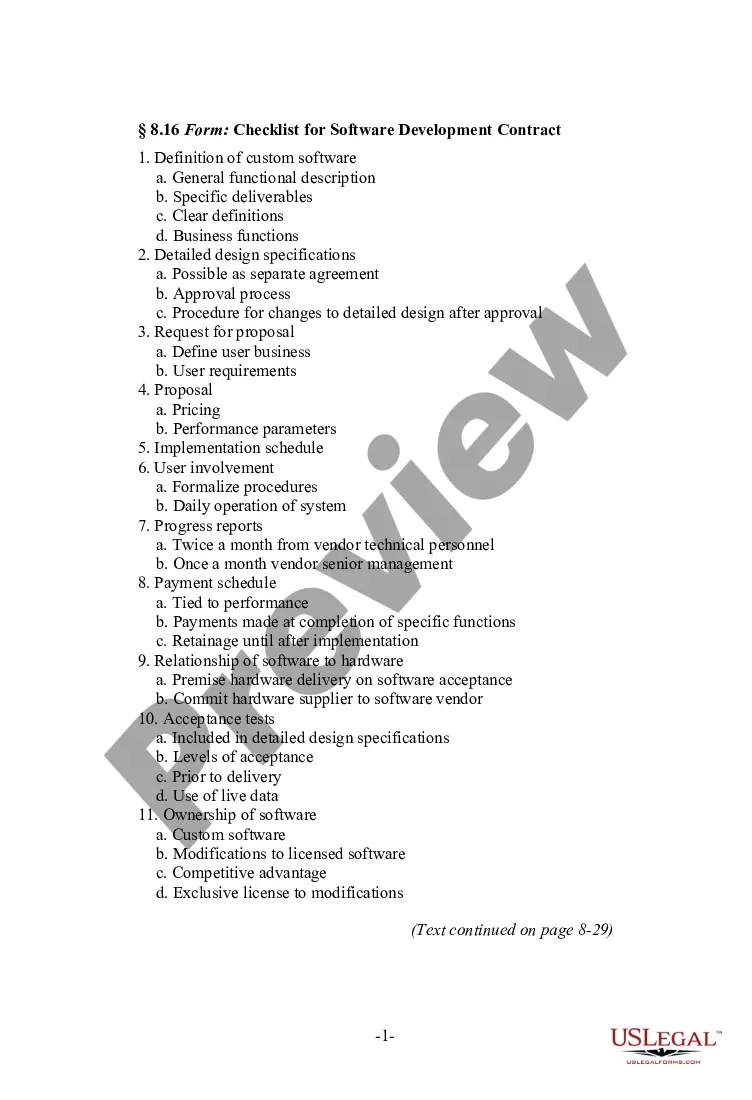
Checklist - Software Development Contract
Understanding this form
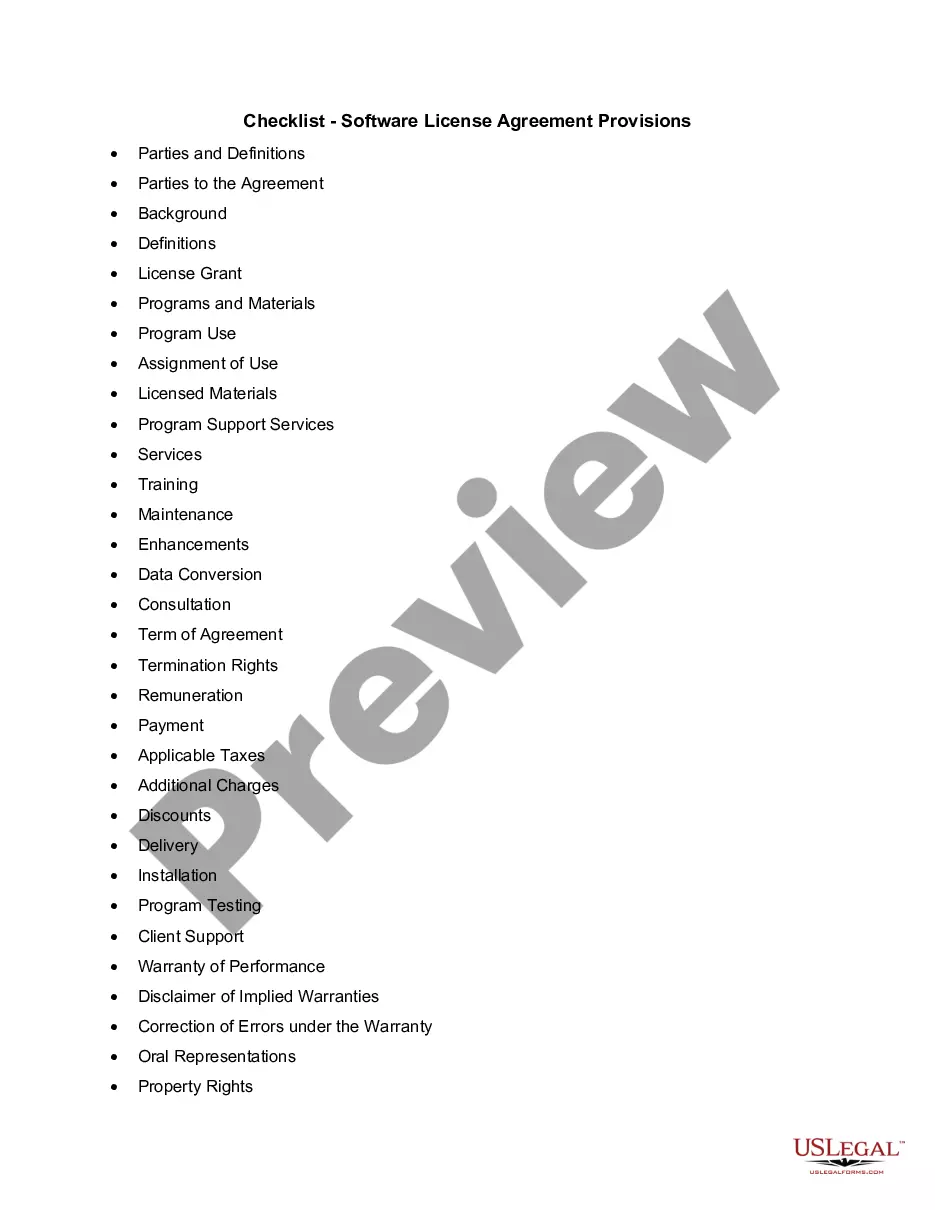
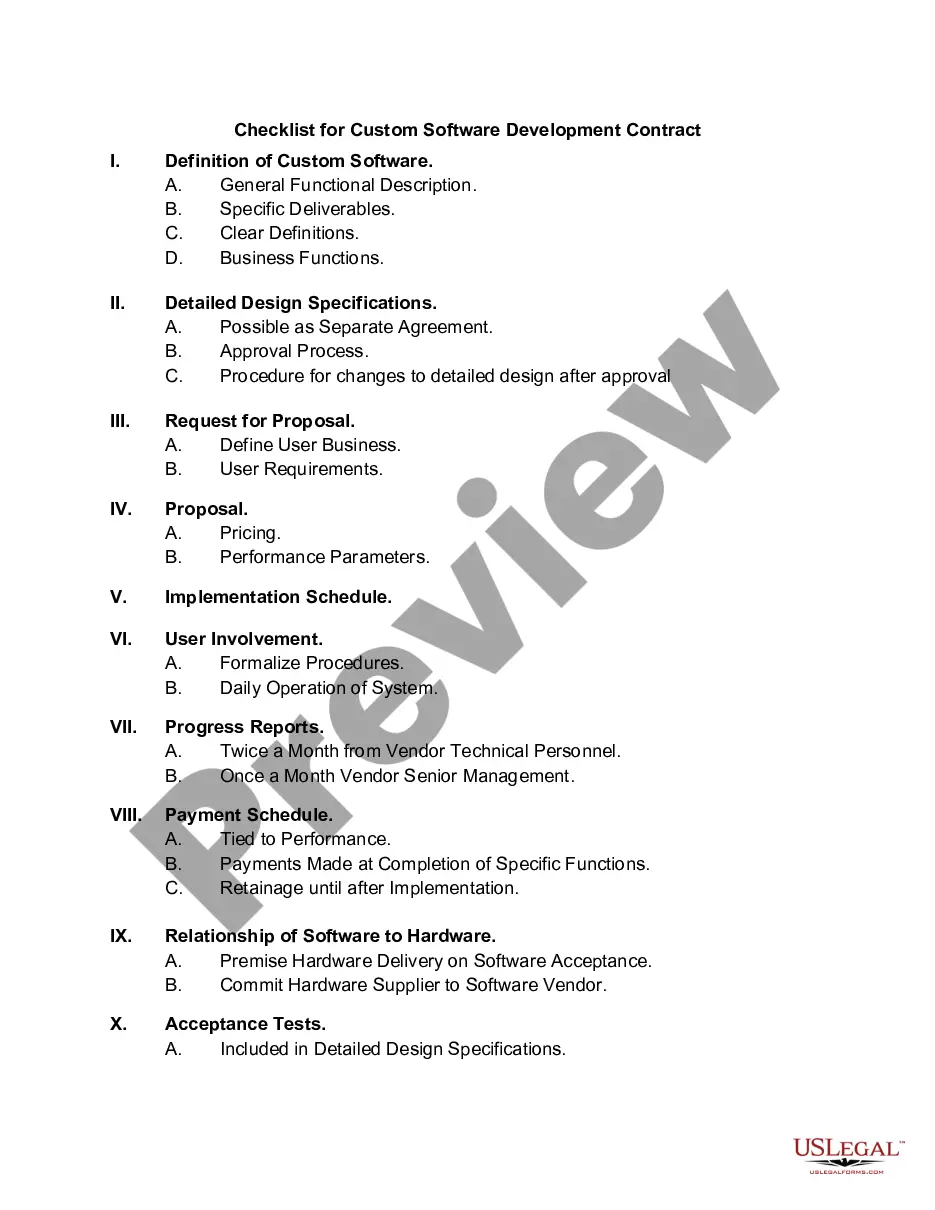
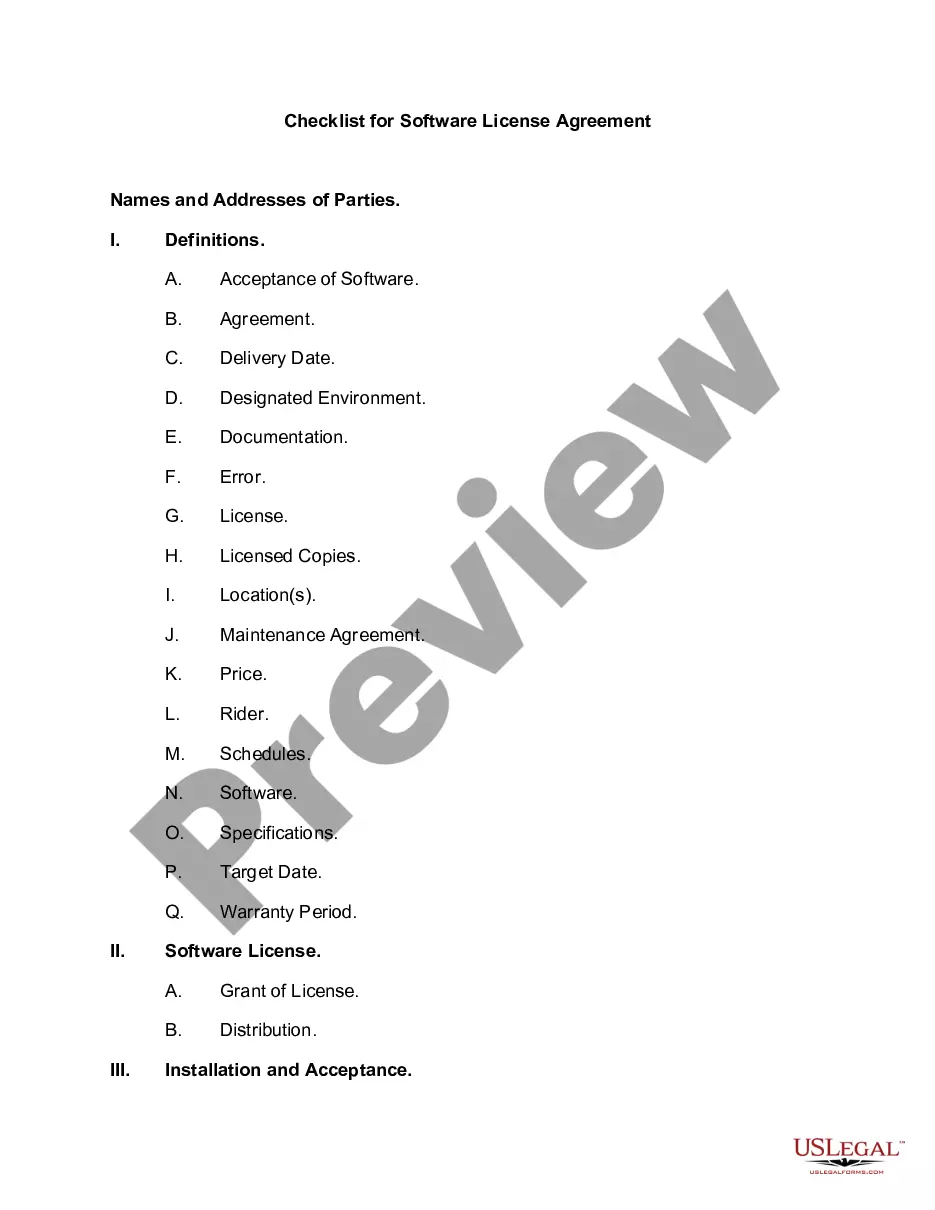
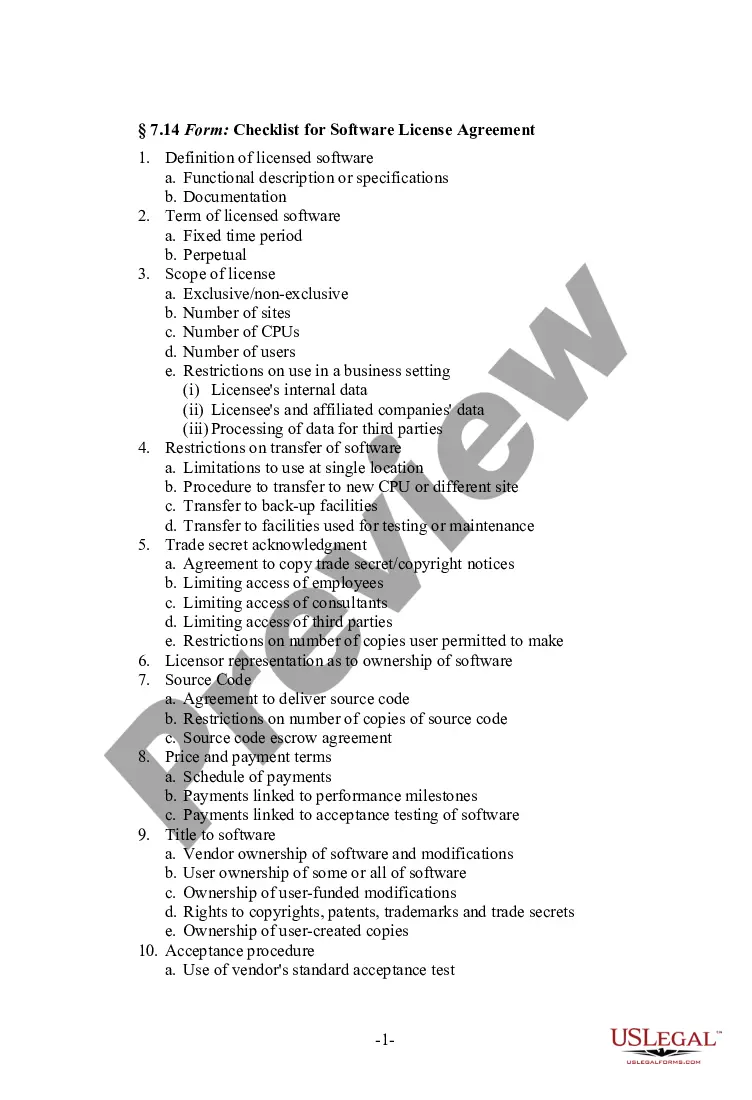
The Checklist - Software Development Contract is a specialized agreement between a company and a software developer. This contract outlines the terms and conditions under which the software developer will create software tailored for the company's specific needs. It addresses key aspects such as the scope of work, deliverables, acceptance criteria, and the process for client approval, which helps prevent potential disputes during the development process.
Form components explained
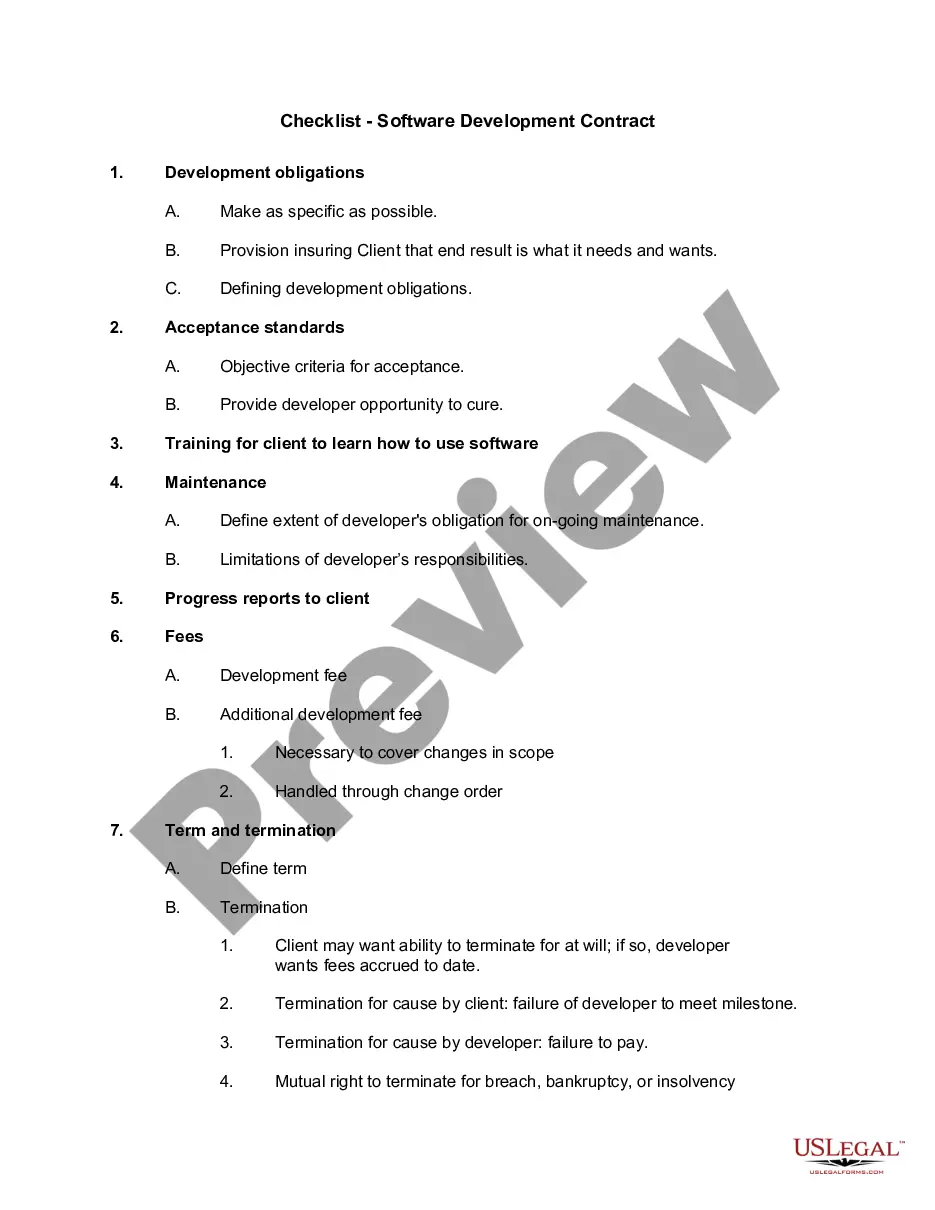
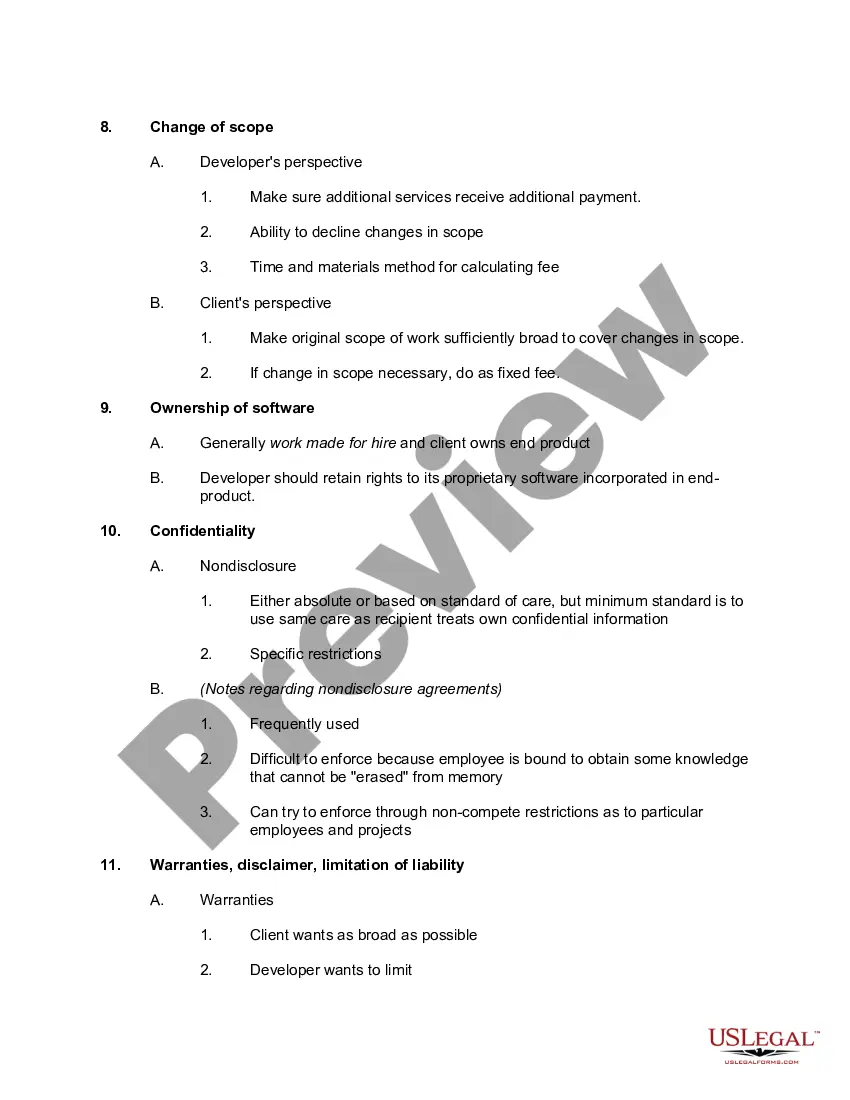
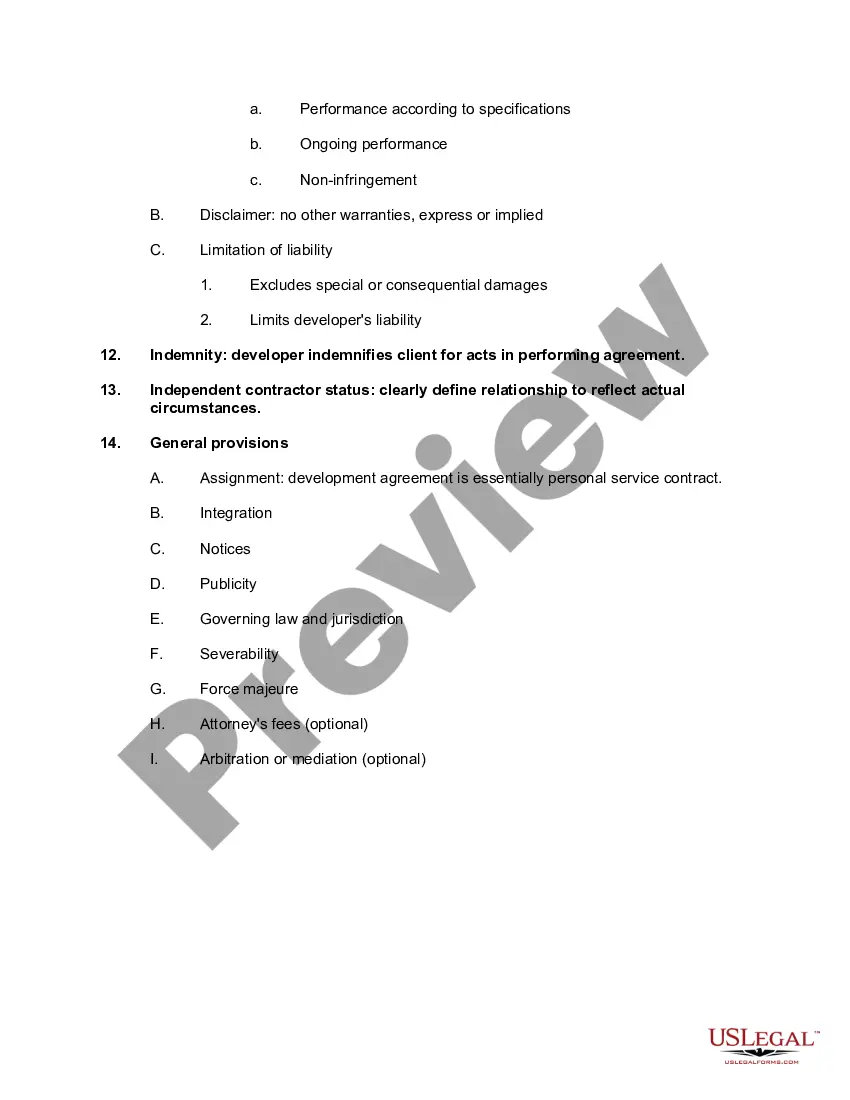
- Development obligations: detailed responsibilities of the developer.
- Acceptance standards: criteria for the client to approve the completed software.
- Training requirements: provisions for client training on the new software.
- Maintenance terms: ongoing support and limitations of the developer's obligations.
- Fee structure: clear outline of development fees and change order procedures.
- Ownership rights: clarification on who owns the final software product.
- Confidentiality provisions: measures to protect sensitive information exchanged during the project.
- Warranties and liability limitations: expected performance standards and disclaimers.
When to use this form
This form is essential when a company engages a software developer to create custom software. It is used to ensure that both parties have a clear understanding of project expectations, timelines, and deliverables. It is particularly beneficial in scenarios involving complex software projects where detailed specifications and milestones are necessary to track progress and maintain accountability.
Who can use this document
- Businesses planning to hire a software developer to create custom software.
- Project managers or team leaders overseeing software development projects.
- Freelance software developers seeking to formalize a contract with a client.
- Companies looking to protect their intellectual property and ensure project clarity.
Completing this form step by step
- Identify the parties involved: include the legal names of the company and the software developer.
- Define the scope of work: specify the detailed tasks the developer is expected to complete.
- Outline acceptance standards: establish the criteria for the client to approve the software.
- Specify fees: clearly list the development fee and any additional charges for changes in scope.
- Include confidentiality clauses: define how sensitive information will be protected.
Is notarization required?
This form does not typically require notarization to be legally valid. However, some jurisdictions or document types may still require it. US Legal Forms provides secure online notarization powered by Notarize, available 24/7 for added convenience.
Get your form ready online
Our built-in tools help you complete, sign, share, and store your documents in one place.
Make edits, fill in missing information, and update formatting in US Legal Forms—just like you would in MS Word.
Download a copy, print it, send it by email, or mail it via USPS—whatever works best for your next step.
Sign and collect signatures with our SignNow integration. Send to multiple recipients, set reminders, and more. Go Premium to unlock E-Sign.
If this form requires notarization, complete it online through a secure video call—no need to meet a notary in person or wait for an appointment.
We protect your documents and personal data by following strict security and privacy standards.

Make edits, fill in missing information, and update formatting in US Legal Forms—just like you would in MS Word.

Download a copy, print it, send it by email, or mail it via USPS—whatever works best for your next step.

Sign and collect signatures with our SignNow integration. Send to multiple recipients, set reminders, and more. Go Premium to unlock E-Sign.

If this form requires notarization, complete it online through a secure video call—no need to meet a notary in person or wait for an appointment.

We protect your documents and personal data by following strict security and privacy standards.
Common mistakes
- Vague descriptions of the scope of work, leading to misunderstandings.
- Failure to define clear acceptance criteria for completed work.
- Neglecting to include a change order procedure for adjustments during development.
- Overlooking confidentiality clauses that protect sensitive company information.
- Not addressing maintenance responsibilities post-delivery of the software.
Benefits of using this form online
- Convenient downloading and printing options to provide flexibility.
- Editable templates that allow for customization to fit specific project needs.
- Access to legal forms drafted by licensed attorneys to ensure compliance.
- Quick access to necessary documents at any time, streamlining the contract process.
Legal use & context
- A Software Development Contract serves to protect both the client and the developer legally.
- Clearly defined terms help in resolving disputes if they arise.
- Provides legal recourse for issues related to non-completion or failure to meet specifications.
What to keep in mind
- A Software Development Contract checklist helps clarify expectations and reduce conflict.
- Ensuring thorough definitions of scope, acceptance, and ownership is vital.
- Use this form to protect both the developer's and client's interests effectively.
Looking for another form?
Form popularity
FAQ
A software Development Contract is an agreement entered into between a company and a software developer where the company mentions their concepts and requirements.Such contracts are usually essential in software companies where developers are hired for creating computer softwares for both commercial and private use.
The license or access clause, which defines the ways users may use your product. Your customer's license to you (essential for those SaaS products that receive and use customer data) Product warranties, which vary significantly for B2B and B2C products.
Challenge 1: Project Infrastructure. Challenge 2: Development Expectations and Outcome. Challenge 3: Quality Assurance. Challenge 4: Undefined Quality Standards. Challenge 5: Adapting the Latest Market Trends. Challenge 6: Design Influences. Challenge 7: System & Application Integration.
In general, a good contract is understandable and unambiguous.A contract which goes to detail with the terms agreed to and the scope of services offered will fare better if there is ever a disagreement, for obvious reasons, there are clear terms and conditions which have been laid out and agreed to by both parties.
Seven essential elements must be present before a contract is binding: the offer, acceptance, mutual assent (also known as meeting of the minds), consideration, capacity, and legality. Contracts are typically in writing and signed to prove all of those elements are present.
Usage and Restrictions. Ownership. Term and Termination. Fees and payment. Indemnification.
Name of contractor and contact information. Name of homeowner and contact information. Describe property in legal terms. List attachments to the contract. The cost. Failure of homeowner to obtain financing. Description of the work and the completion date. Right to stop the project.
As you may know, a legally binding contract requires several necessary elements: offer, acceptance, parties who have the legal capacity to contract (minors under 18 years old and people who are mentally incompetent do not have the legal capacity to enter into contracts), lawful subject matter, mutuality of agreement,
The five requirements for creating a valid contract are an offer, acceptance, consideration, competency and legal intent.