Motion for Default for Failure to Plead and Answer
About this form
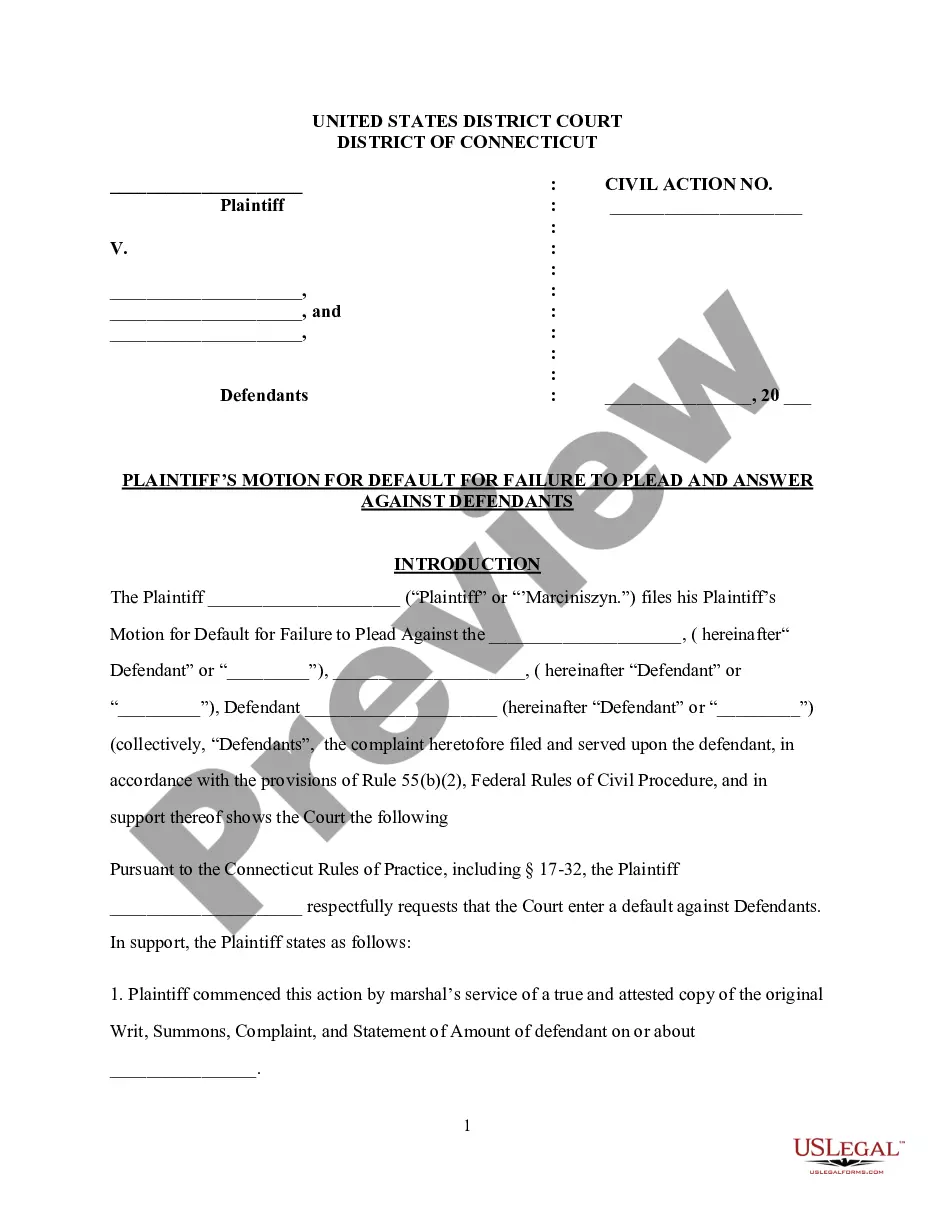
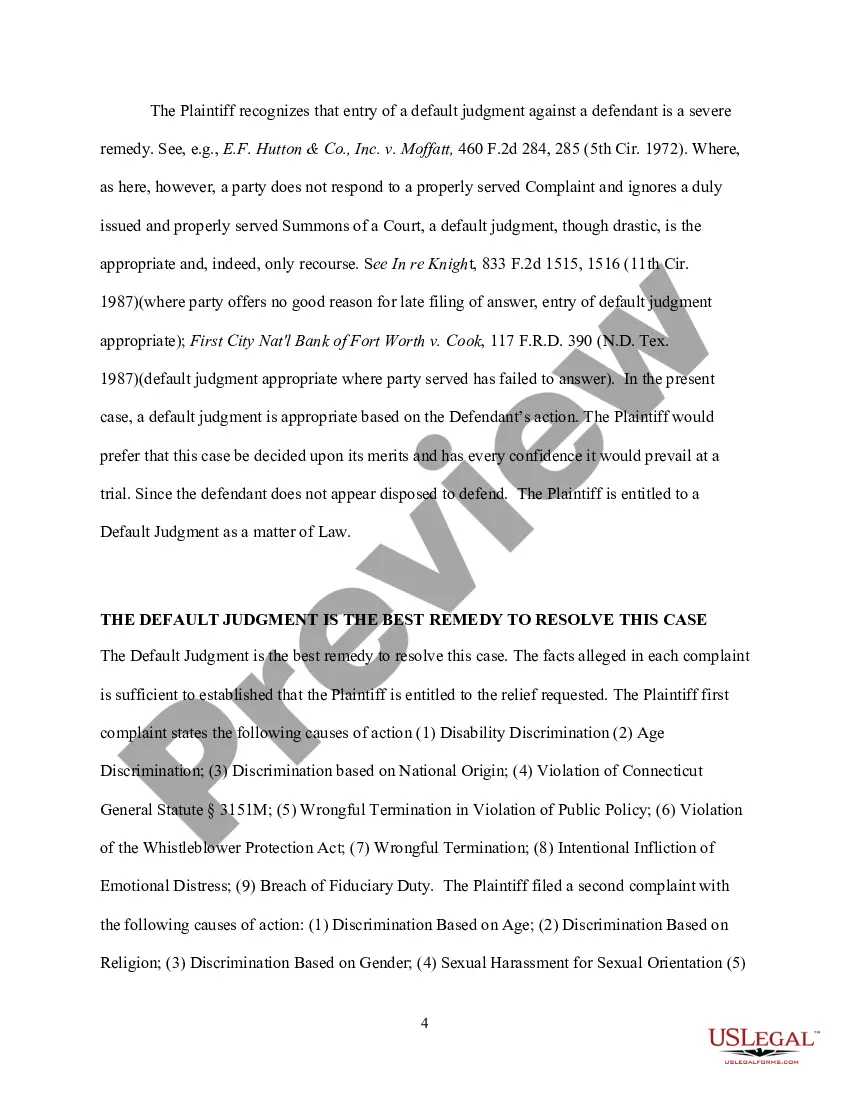
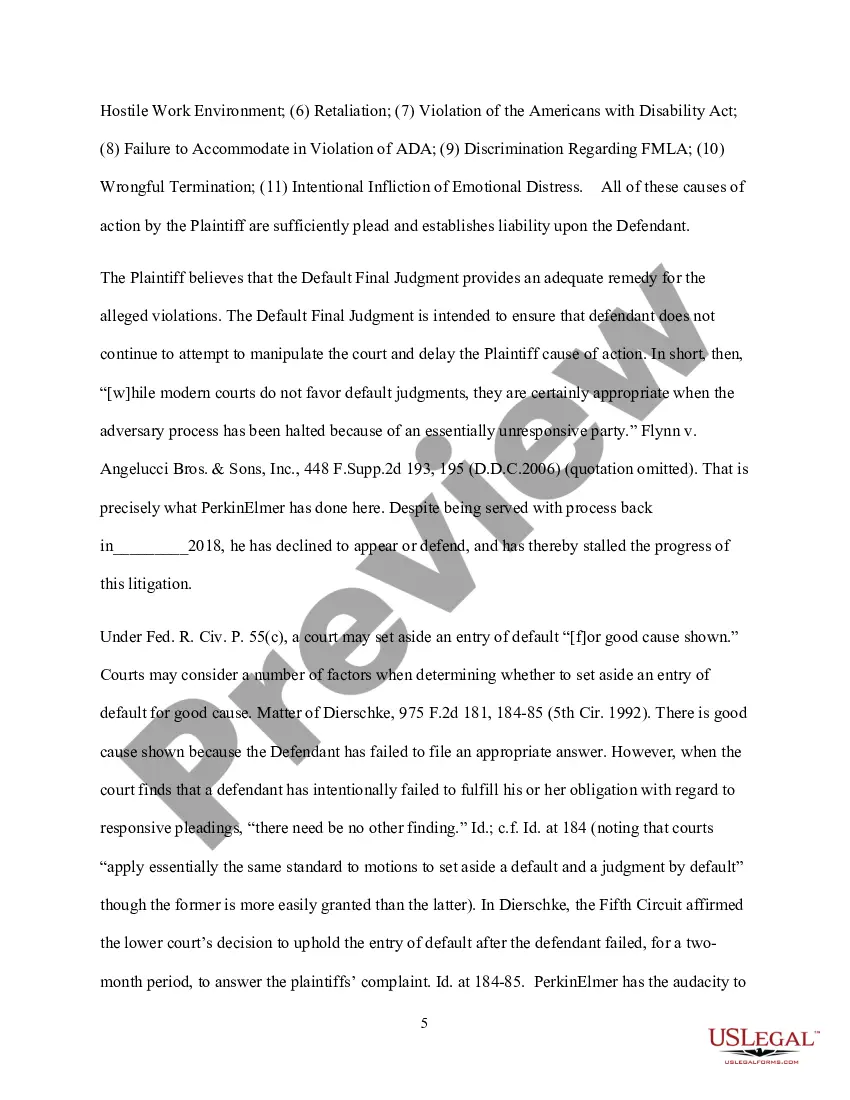
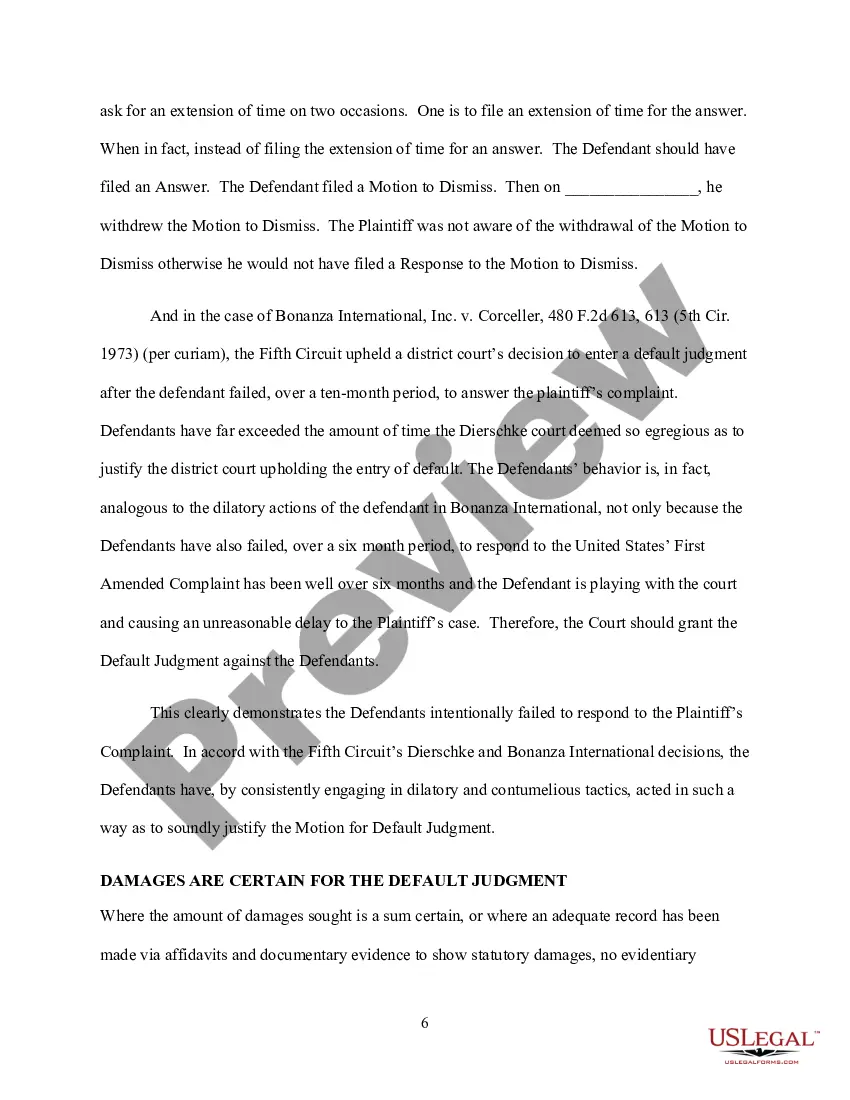
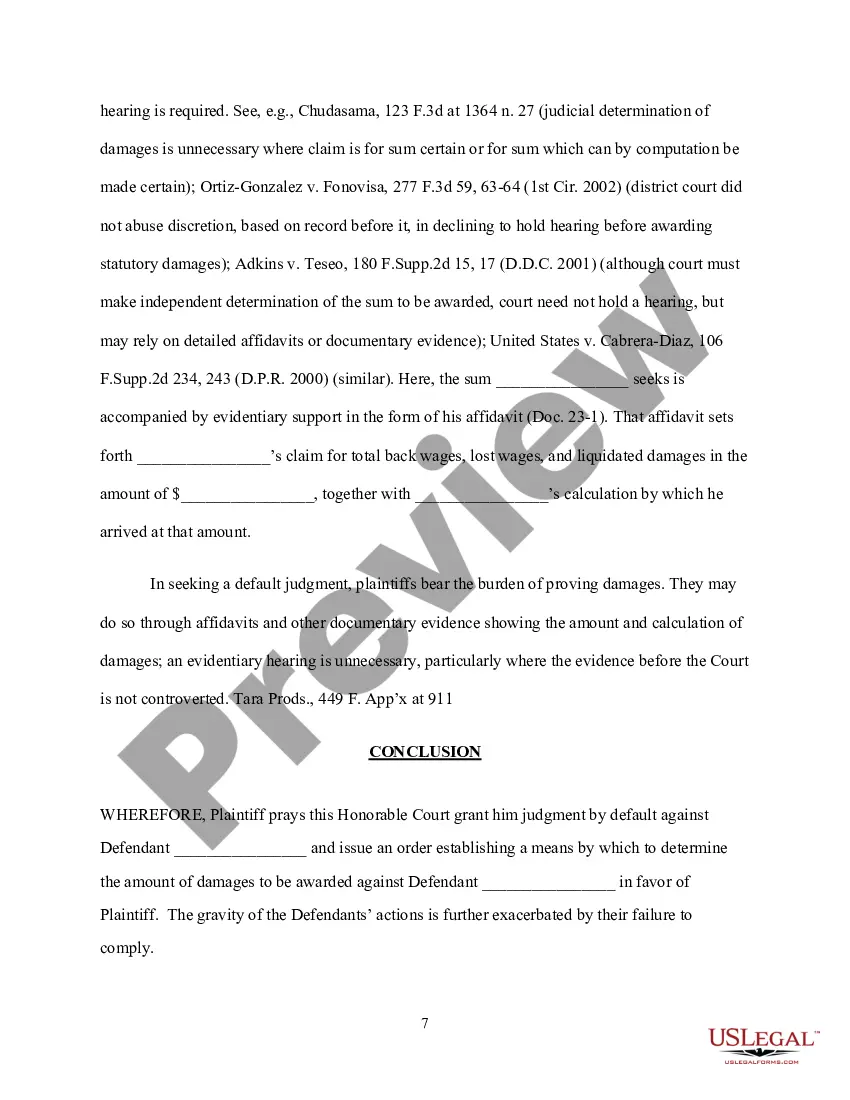
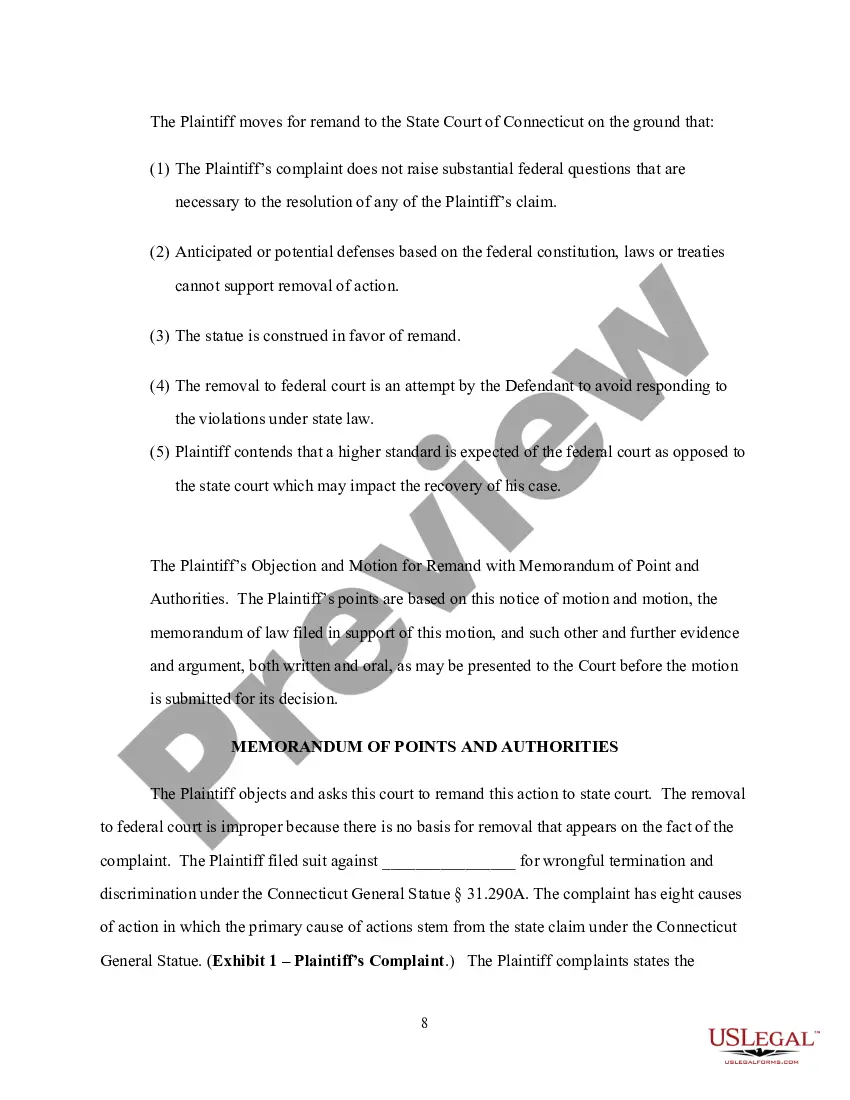
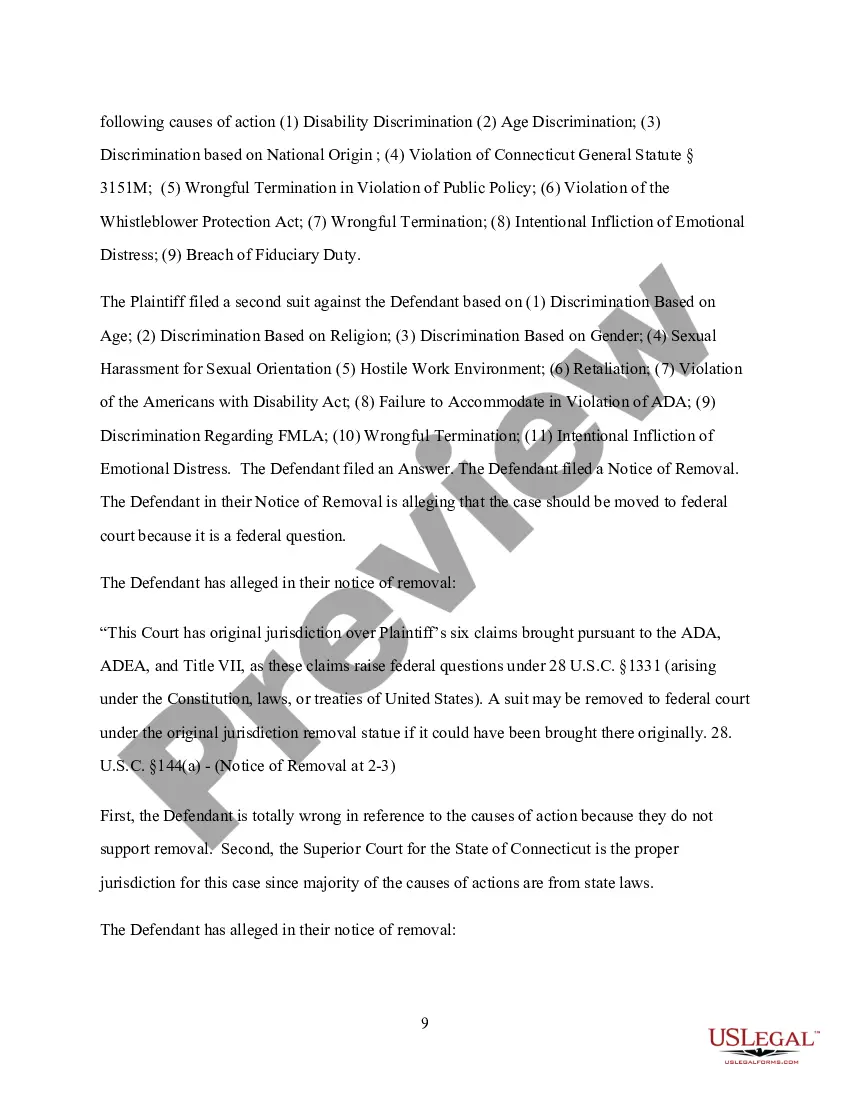
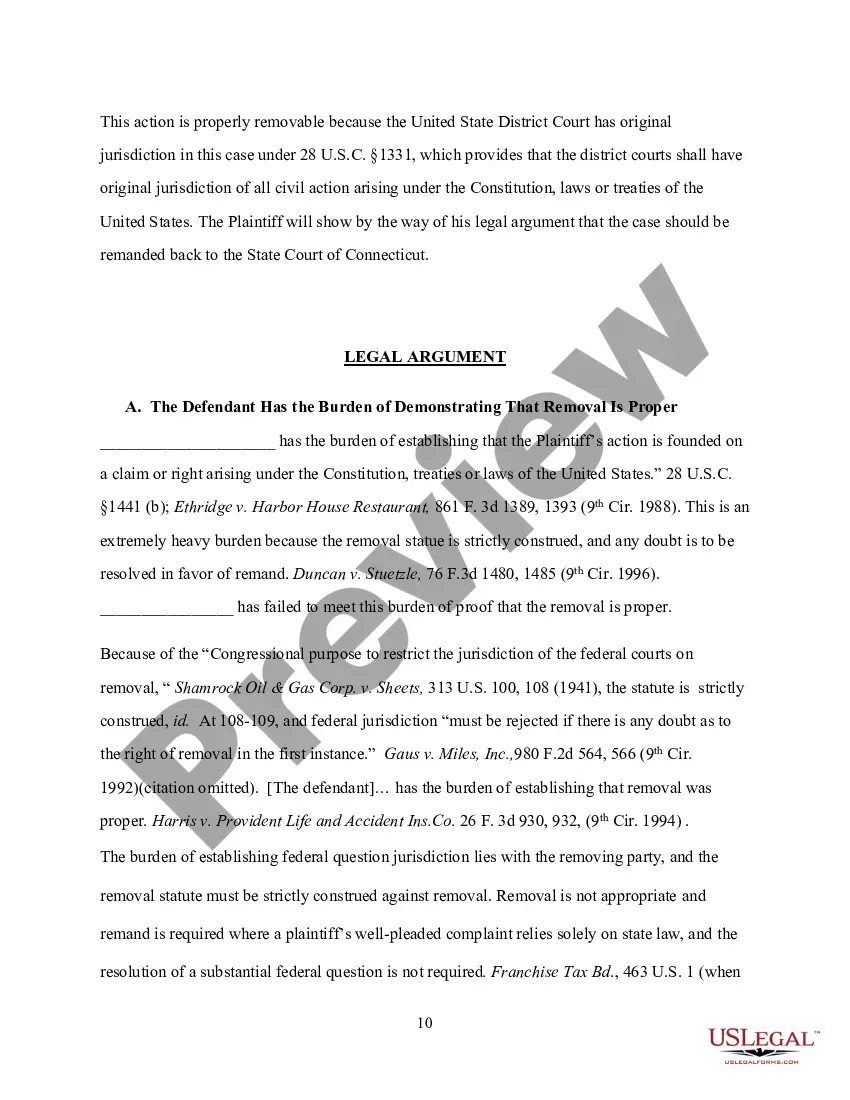
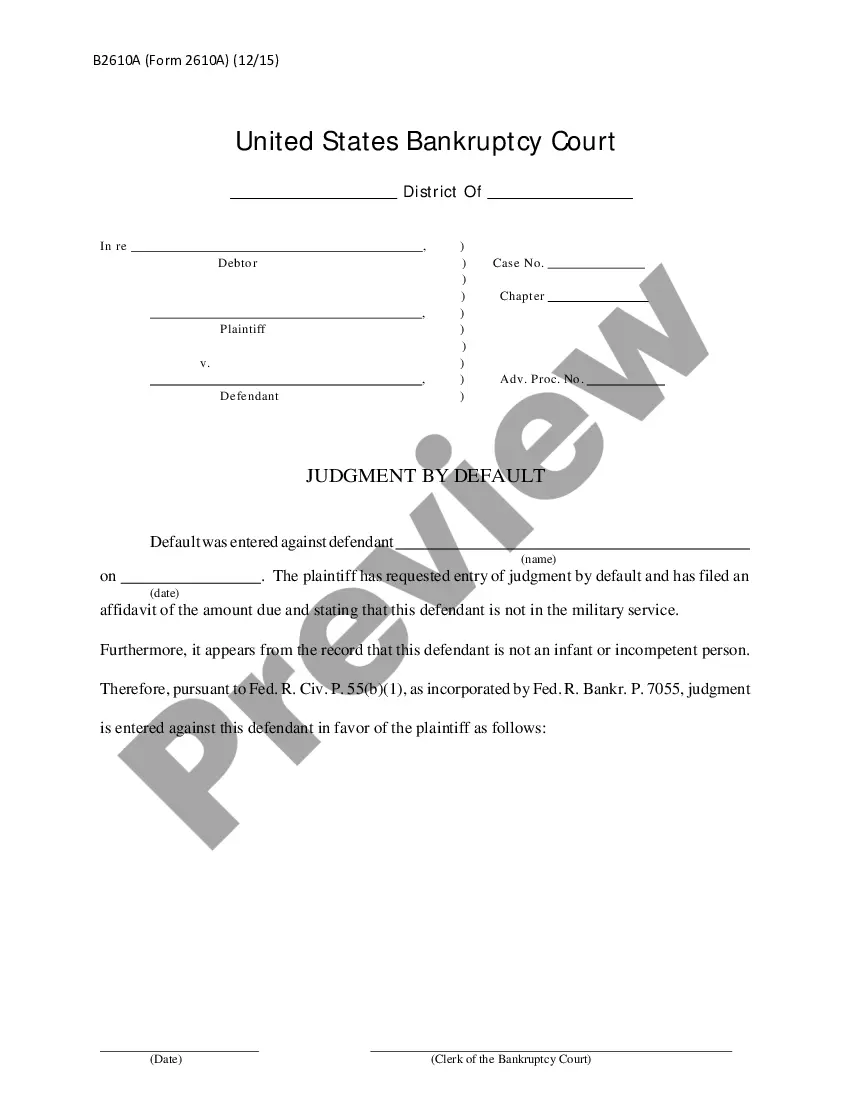
The Motion for Default for Failure to Plead and Answer is a formal request filed in the U.S. District Court, District of Connecticut, stating that the defendants have not responded to the plaintiff's complaint within the required timeframe. This motion seeks a judgment in favor of the plaintiff, asserting that the defendants' inaction allows the court to accept the allegations in the complaint as true. This motion is crucial for plaintiffs who require legal recognition of their claims when a defendant fails to participate in the litigation process.
Form components explained
- Civil Action Number: A unique identifier for the case.
- Parties Involved: Names of the plaintiff and defendants.
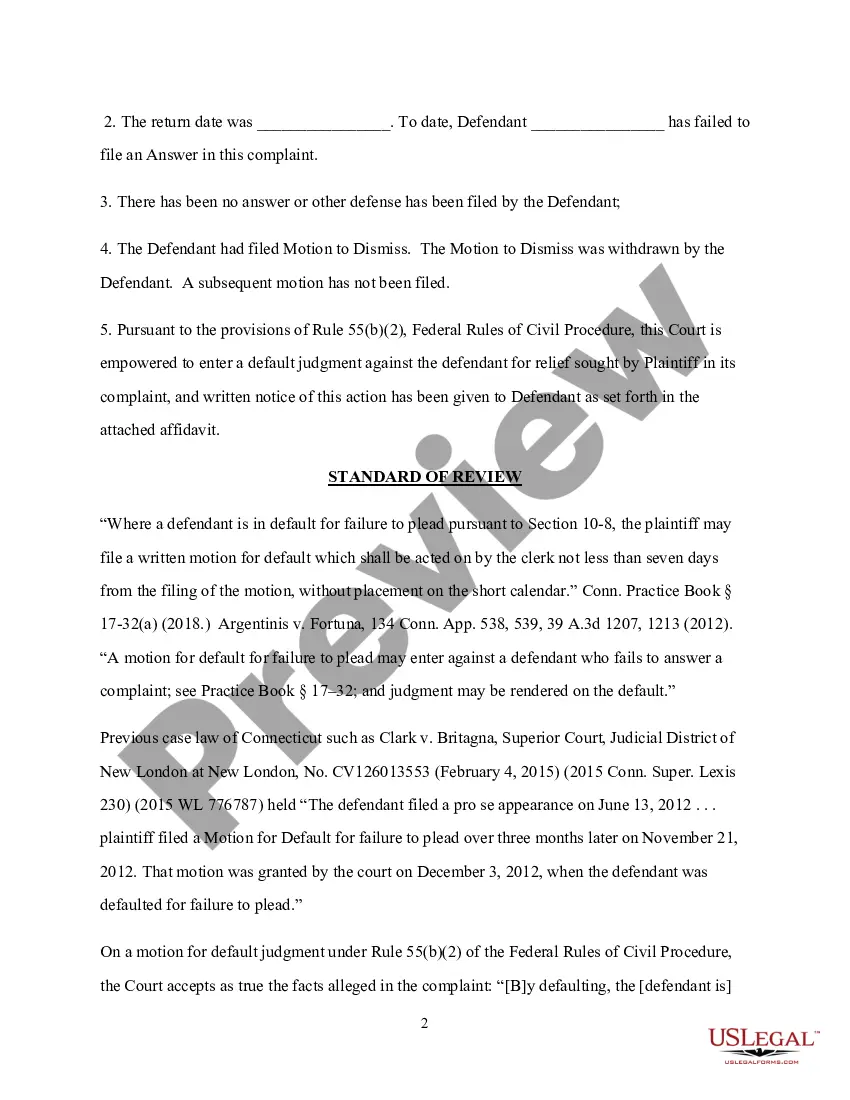
- Factual Basis: Detailed explanation of how the defendant failed to answer the complaint.
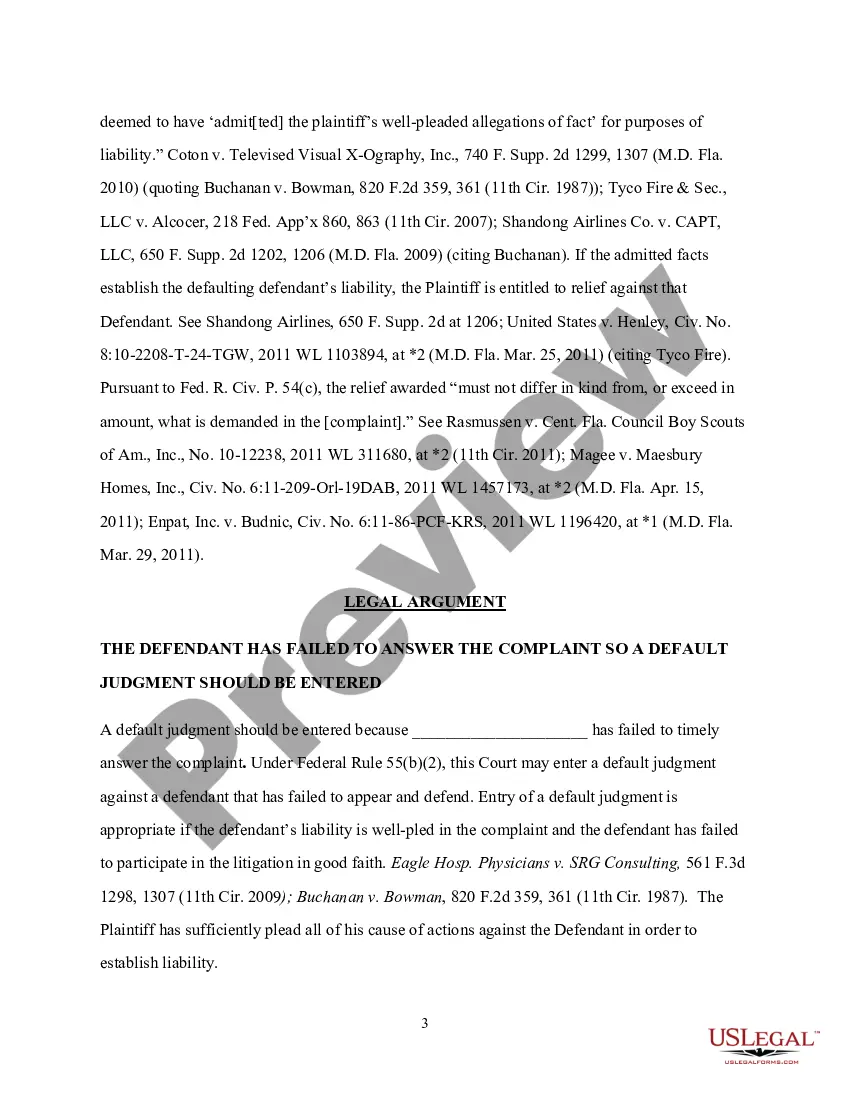
- Legal Standard: Reference to relevant laws and regulations governing default judgments.
- Request for Relief: The specific relief or judgment sought by the plaintiff.
- Certificate of Service: Proof that the motion has been served to the opposing counsel.

When this form is needed
This form is used when a defendant does not respond to a complaint within the timeframe allowed by law, as outlined in the Federal Rules of Civil Procedure and Connecticut Rules of Practice. Situations may include instances where the defendant has not filed an answer, has missed the deadline to respond, or has withdrawn a previous motion without filing a new response. The motion helps the plaintiff move forward with their case and obtain a default judgment for relief.
Intended users of this form
Eligible Users:
- Individuals or entities who have filed a lawsuit and require a default judgment due to the opposing party's lack of response.
- Plaintiffs seeking legal recognition of their claims when defendants fail to plead.
- Pro se litigants who wish to navigate legal processes without an attorney.
Steps to complete this form
Steps to Complete this Form:
- Fill in the civil action number and the names of the plaintiff and defendants accurately.
- Provide a detailed statement of the facts supporting the motion, indicating how the defendant has failed to respond.
- Cite the relevant legal standards that authorize the entry of default judgments.
- Clearly specify the relief sought from the court.
- Sign and date the form, and include a certificate of service to confirm that the opposing party has been notified.
Notarization requirements for this form
Notarization is generally not required for this form. However, certain states or situations might demand it. You can complete notarization online through US Legal Forms, powered by Notarize, using a verified video call available anytime.
Get your form ready online
Our built-in tools help you complete, sign, share, and store your documents in one place.
Make edits, fill in missing information, and update formatting in US Legal Forms—just like you would in MS Word.
Download a copy, print it, send it by email, or mail it via USPS—whatever works best for your next step.
Sign and collect signatures with our SignNow integration. Send to multiple recipients, set reminders, and more. Go Premium to unlock E-Sign.
If this form requires notarization, complete it online through a secure video call—no need to meet a notary in person or wait for an appointment.
We protect your documents and personal data by following strict security and privacy standards.

Make edits, fill in missing information, and update formatting in US Legal Forms—just like you would in MS Word.

Download a copy, print it, send it by email, or mail it via USPS—whatever works best for your next step.

Sign and collect signatures with our SignNow integration. Send to multiple recipients, set reminders, and more. Go Premium to unlock E-Sign.

If this form requires notarization, complete it online through a secure video call—no need to meet a notary in person or wait for an appointment.

We protect your documents and personal data by following strict security and privacy standards.
Common mistakes to avoid
- Failing to accurately fill out names and details of the parties involved.
- Neglecting to provide sufficient factual support for the motion.
- Not adhering to the required timeline for filing the motion.
- Forgetting to include a certificate of service or failing to serve the opposing counsel correctly.
Benefits of using this form online
- Convenient online access to legal forms ensures users can fill, download, and file at their own pace.
- Templates drafted by licensed attorneys reduce the risk of errors in legal documentation.
- Forms are typically easier to complete than traditional methods, streamlining the legal process.
- This form is legally recognized and enforceable in U.S. District Court, District of Connecticut.
- Properly completing and filing the motion may lead to a default judgment if the defendant fails to contest the claims made.
- Use of this form is subject to state laws and federal rules, so accuracy is crucial to avoid complications.
Looking for another form?



Form popularity
FAQ
In determining whether the neglect is excusable, courts take a flexible approach and consider all relevant circumstances. For example, clerical errors, like a misreading of the filing date, have been considered excusable.
A default judgment (also known as judgment by default) is a ruling granted by a judge or court in favor of a plaintiff in the event that the defendant in a legal case fails to respond to a court summons or does not appear in court.
You cannot appeal this kind of judgment and have a new trial until you ?vacate the default judgment?, that is, until you have the judgment removed or erased. To vacate a default judgment, do the following: 1. Get the form called Notice of Motion to Vacate Judgment from the small claims clerk.
A default judgment (also known as judgment by default) is a ruling granted by a judge or court in favor of a plaintiff in the event that the defendant in a legal case fails to respond to a court summons or does not appear in court.
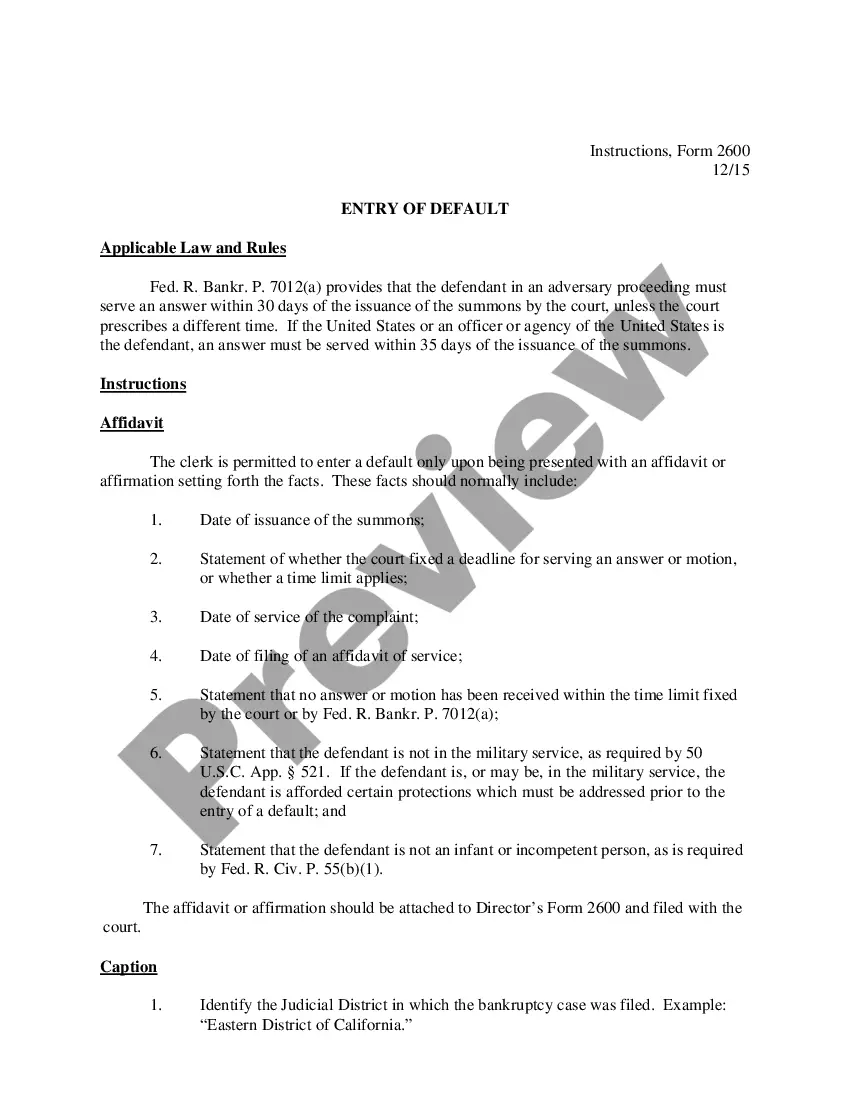
Entry of Default ? First, the plaintiff must file a Motion for Entry of Default and show the court that the opposing party has ?failed to plead or is otherwise subject to default judgment as provided by the Rules of Civil Procedure or by statute.? Rule 55(a).
Excusable Default Excusable default is the most common reason for vacating a default judgment. It has two parts: (1) a reasonable excuse for not filing an Answer within the 30 day time; and (2) a meritorious defense (a good defense).
New York courts will usually vacate a default judgment in two situations: The defendant had a good excuse for not responding to the lawsuit, or. There's a lack of jurisdiction over the defendant. This usually means that the defendant wasn't properly served required notices.
A default judgment occurs in Illinois civil cases when the defendant has been properly served with a complaint and summons and has failed to file an answer to the complaint by the first court date or to appear in court for the first court date.