Corrective, Correction or Confirmation Deed - Correction of Mistakes in Prior Deed
What this document covers
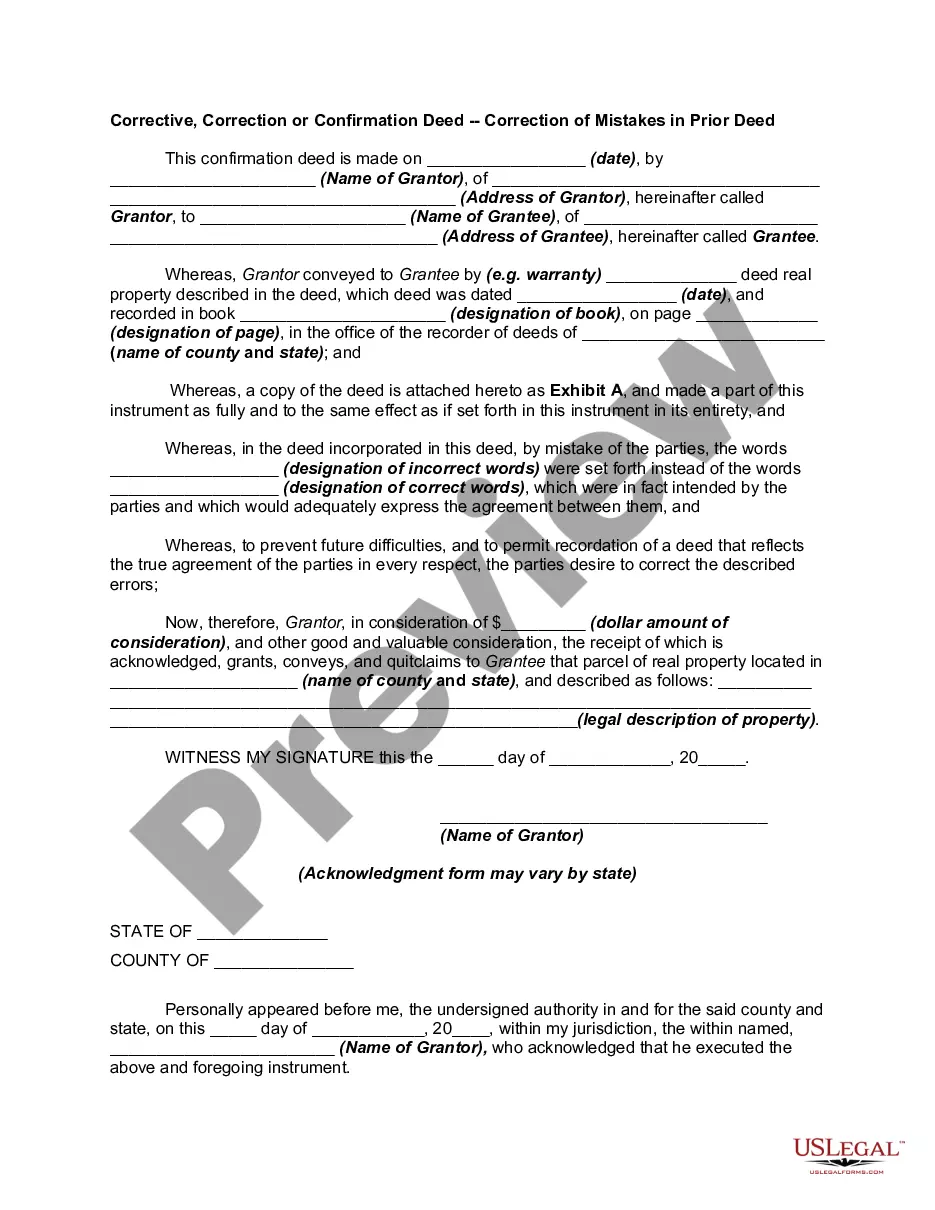
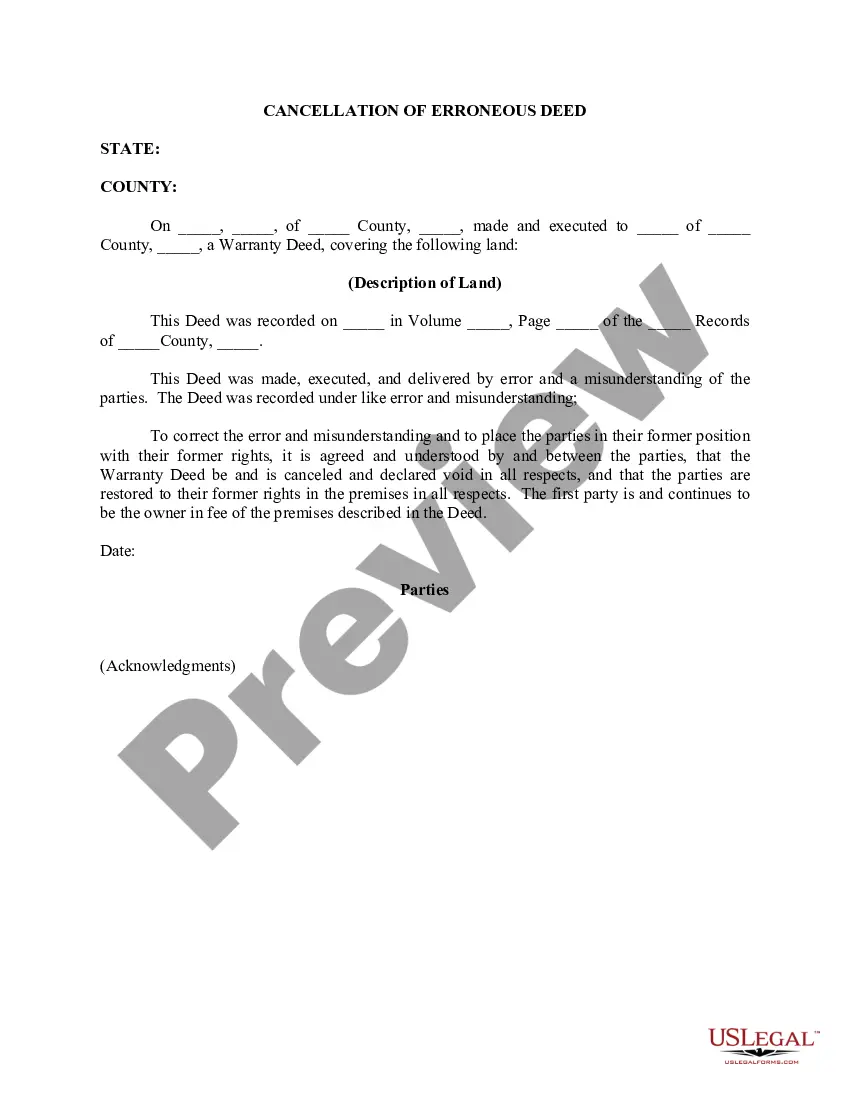
A corrective, correction, or confirmation deed is a legal document used to resolve ambiguities in a previously executed deed that contained irregularities. Unlike a quitclaim deed, which merely transfers any interest without warranties, a confirmation deed clarifies the original intent of the parties involved, making it clear what was meant to be conveyed. This document helps ensure the effectiveness of the original deed while maintaining the original effective date of the transaction.
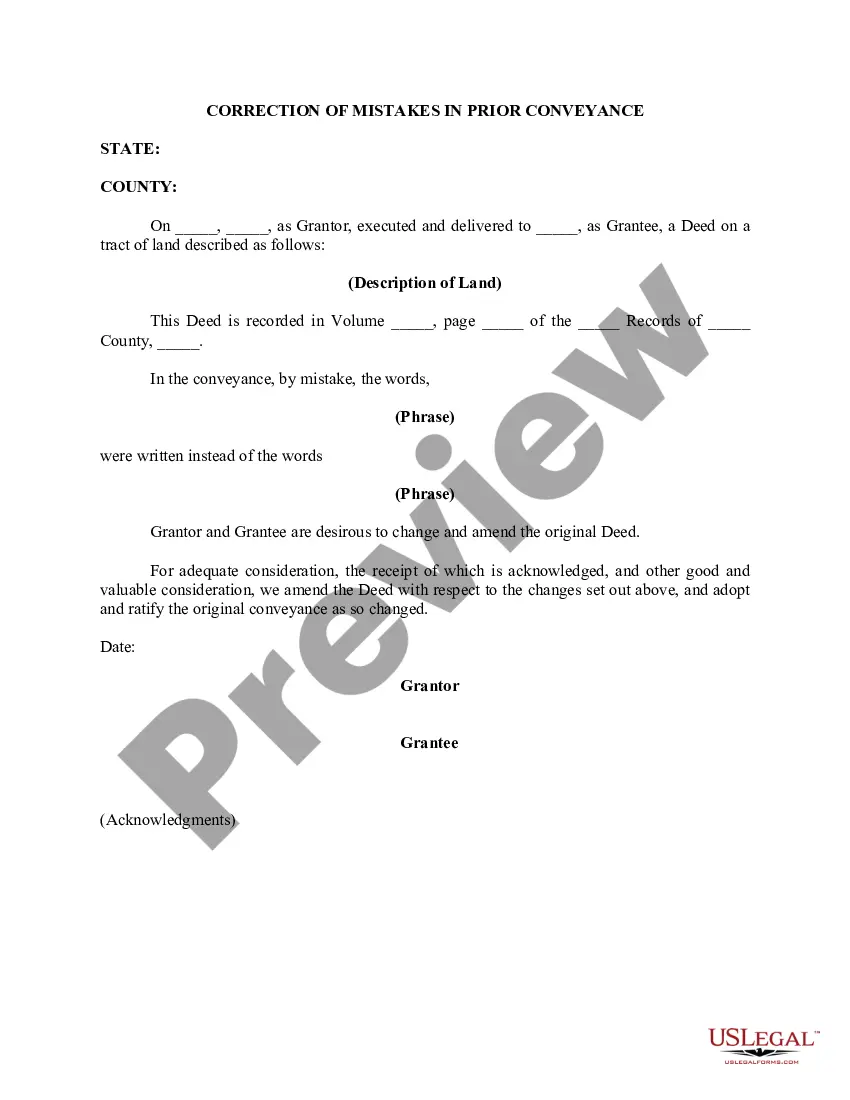
Key components of this form
- Date of the corrective deed.
- Names and addresses of the Grantor and Grantee.
- Details of the original deed, including date and recording information.
- Specific wording of the errors to be corrected.
- Consideration amount represented in the deed.
- Clear legal description of the property in question.


When to use this form
This form is useful when there are inaccuracies or unclear language in a previously recorded deed, yet the original deed is still valid. Common reasons for using a confirmation deed include correcting misprints in names, property descriptions, or other essential terms that affect the original intent of the conveyance. Utilizing this form can help avoid disputes regarding property ownership in the future.
Who can use this document
This confirmation deed is intended for:
- Property owners (Grantors) who wish to rectify errors in previously executed deeds.
- Buyers (Grantees) who need assurance that the original agreement is accurately represented.
- Real estate professionals and attorneys assisting clients with property transactions.
Completing this form step by step
- Identify the parties involved by entering the names and addresses of the Grantor and Grantee.
- Specify the date of the correction deed and the original deed details, including the date and recording information.
- Clearly articulate the incorrect words intended for correction and provide the correct wording.
- Fill in the consideration amount for the transaction and include a legal description of the property being conveyed.
- Ensure all parties sign the deed and have it notarized if required by state law.
Notarization guidance
This form does not typically require notarization unless specified by local law. Always check your local jurisdiction for specific requirements regarding notarization to ensure validity.
Get your form ready online
Our built-in tools help you complete, sign, share, and store your documents in one place.
Make edits, fill in missing information, and update formatting in US Legal Forms—just like you would in MS Word.
Download a copy, print it, send it by email, or mail it via USPS—whatever works best for your next step.
Sign and collect signatures with our SignNow integration. Send to multiple recipients, set reminders, and more. Go Premium to unlock E-Sign.
If this form requires notarization, complete it online through a secure video call—no need to meet a notary in person or wait for an appointment.
We protect your documents and personal data by following strict security and privacy standards.

Make edits, fill in missing information, and update formatting in US Legal Forms—just like you would in MS Word.

Download a copy, print it, send it by email, or mail it via USPS—whatever works best for your next step.

Sign and collect signatures with our SignNow integration. Send to multiple recipients, set reminders, and more. Go Premium to unlock E-Sign.

If this form requires notarization, complete it online through a secure video call—no need to meet a notary in person or wait for an appointment.

We protect your documents and personal data by following strict security and privacy standards.
Common mistakes to avoid
- Failing to properly identify the parties involved in the deed.
- Neglecting to include accurate property descriptions.
- Using incorrect or vague language when stating the errors being corrected.
- Omitting the date of the original deed or incorrectly recording the recording information.
Benefits of using this form online
- Convenient access to legal forms without needing to visit a legal office.
- Edit and customize the form to your specific needs and details easily.
- Reliable templates drafted by licensed attorneys ensure legal validity.
Key takeaways
- A Corrective, Correction or Confirmation Deed resolves mistakes in a prior deed without voiding it.
- This form must be filled out accurately to prevent future legal disputes over property ownership.
- Notarization is typically required to validate the document.
- Consider consulting legal advice to ensure compliance with state regulations.
Looking for another form?

Form popularity
FAQ
A Corrective, Correction or Confirmation Deed is a legal instrument used to fix ambiguities in a previously recorded deed and to confirm the original conveyance. It preserves the original transaction date and clarifies the intended ownership. It’s typically used when there are inaccuracies or unclear terms in the original deed, by the grantor, grantee, or their advisers.
To correct an incorrect name on a deed, use this form to reflect the proper name and reference the original deed. The form requires the date of the corrective deed, the grantor and grantee names and addresses, details of the original deed (date and recording information), the specific wording of the errors, and the consideration and a clear legal description.
The Corrective, Correction or Confirmation Deed is the form typically used to fix errors in a previously recorded deed and to confirm the original conveyance terms. It is chosen when inconsistencies or ambiguities in a prior deed risk misinterpretation, and it is designed to preserve the original date of the transaction while documenting the corrected language for recording.
Common deed-related mistakes include misprints in names, errors in property descriptions, or other essential terms that affect conveyance. This form is designed to correct those issues by documenting the errors and referencing the original deed to preserve the intended transfer.
Changing a deed using this form focuses on correcting or confirming the original deed; the difficulty depends on ensuring all required details—the date, parties, original deed information, the exact errors, and the property description—are accurate, and consulting a licensed attorney can help ensure proper completion.
Unlike a Quitclaim Deed, which transfers any interest without warranties, this instrument is used to correct or confirm the original deed and preserve its date, clarifying the parties’ intent and the specific errors without creating a new transfer of ownership.