Changing Will with Codicil to Will Revoking Bequest and Devise
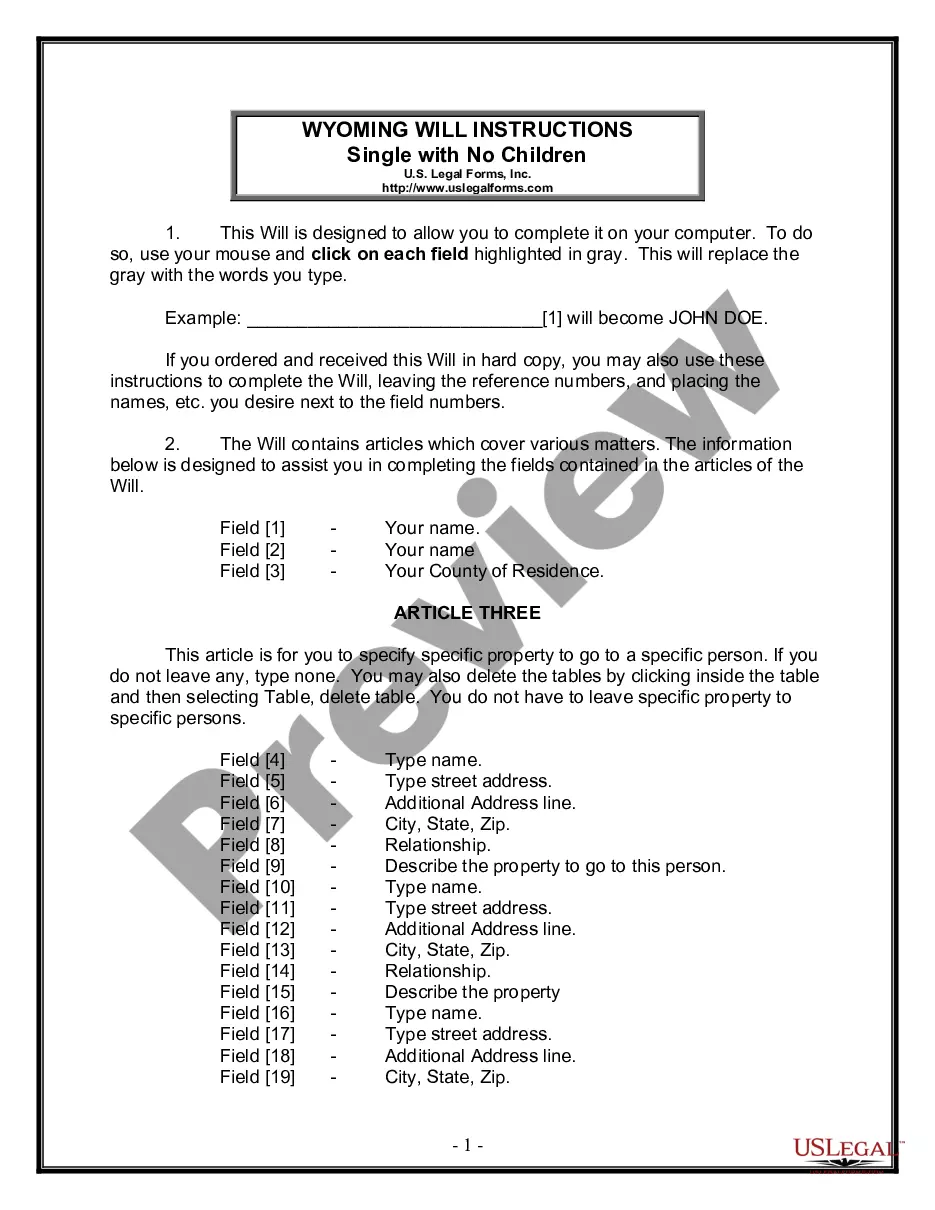
About this form
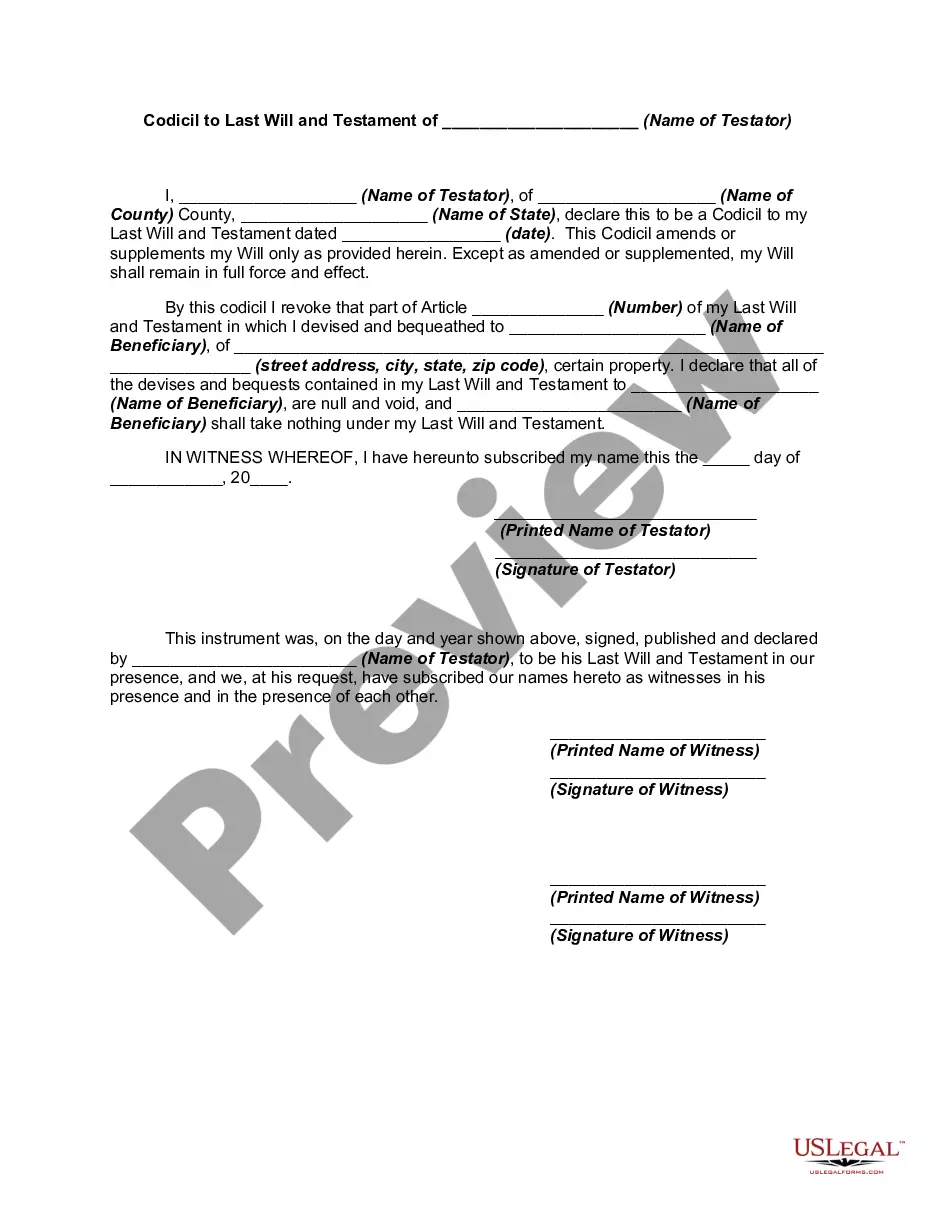
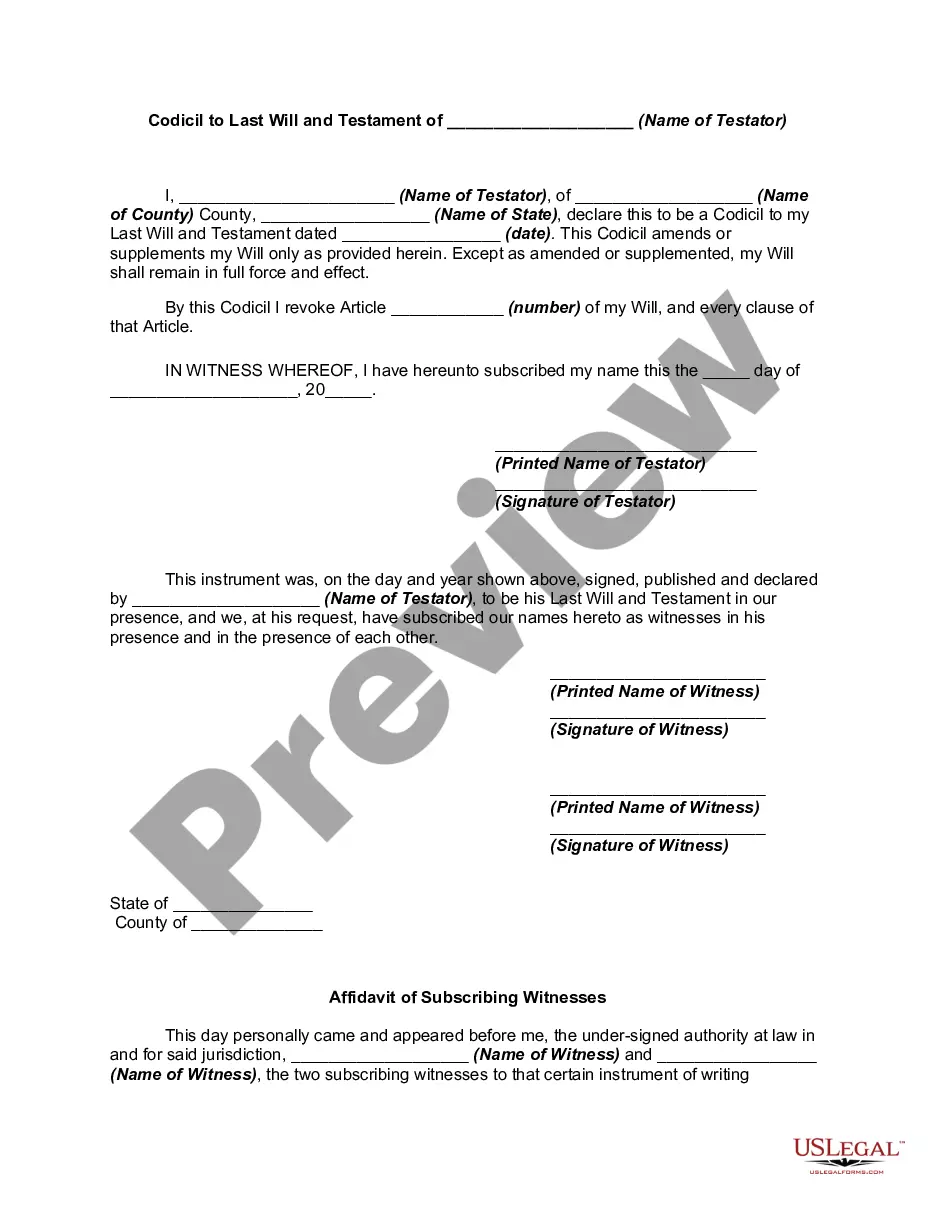
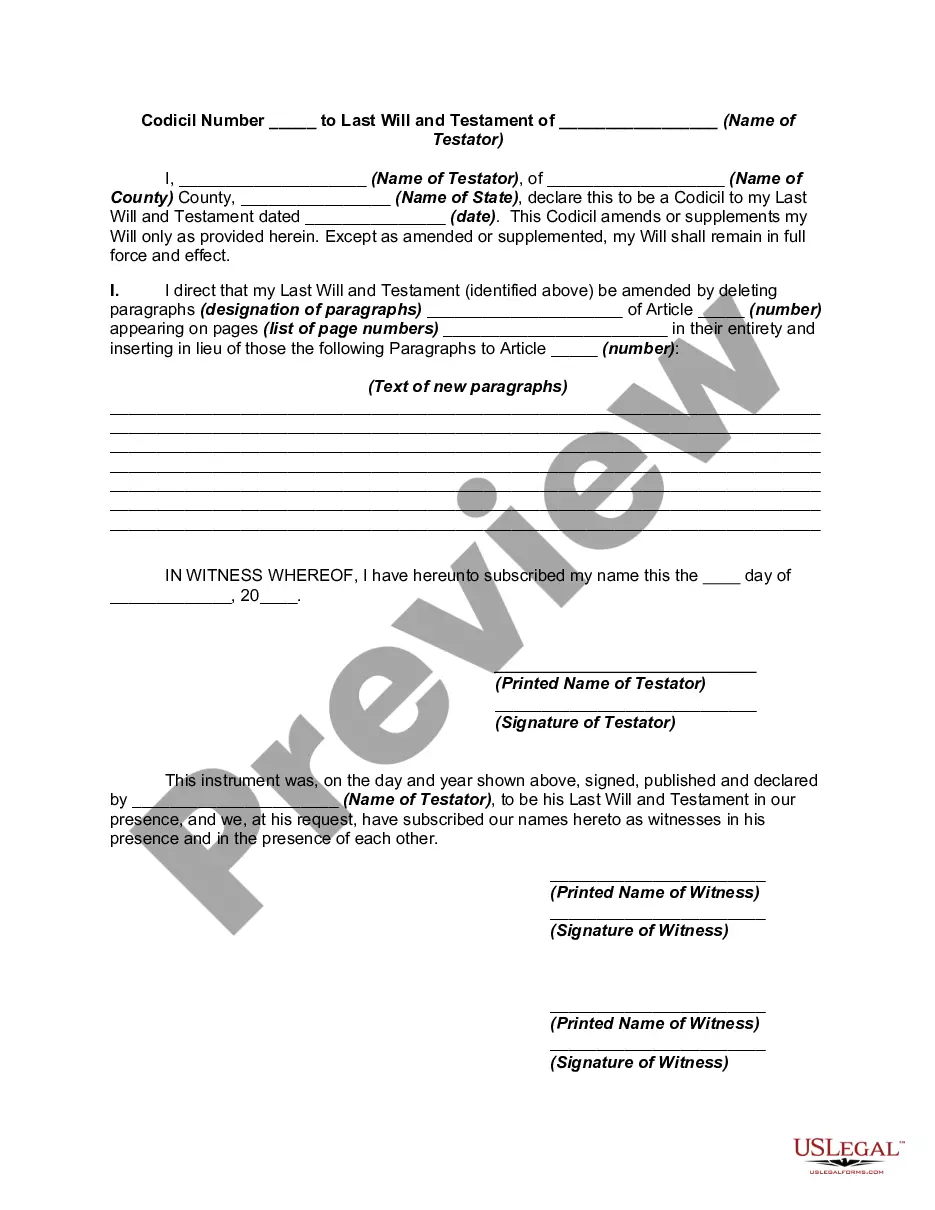
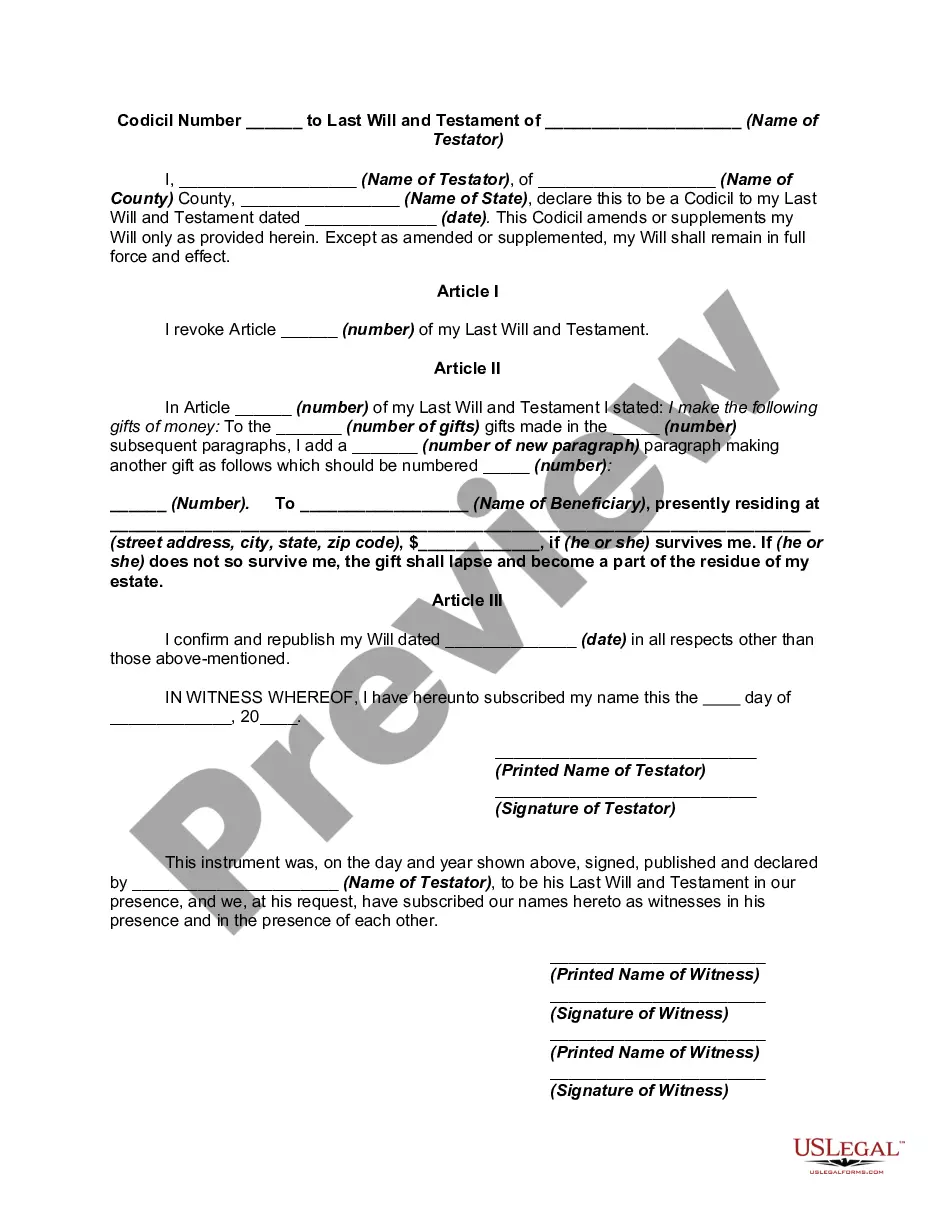
This form is a Changing Will with Codicil to Will Revoking Bequest and Devise, which acts as an amendment to an existing will. A codicil allows you to update provisions in your will without rewriting the entire document. It must be signed and witnessed according to the same legal requirements as the original will. The codicil serves to clarify changes, including the revocation of specific bequests, ensuring that your final wishes are accurately reflected during probate.
What’s included in this form
- Name of the testator (the person making the will).
- The specific date of the original will being amended.
- Details of the bequest being revoked, including the name and address of the beneficiary.
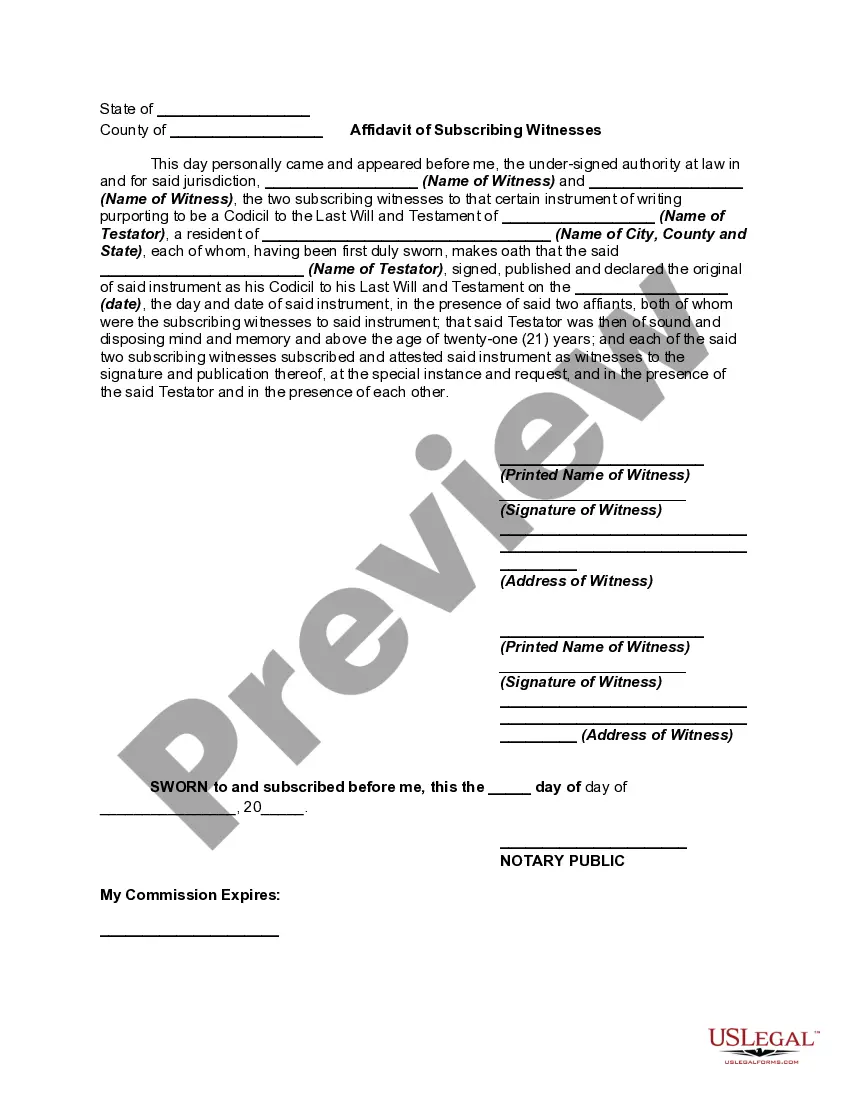
- Witness signatures, which are mandatory to validate the codicil.
- A statement that clarifies the existing will remains effective except where amended.
- Notarization section for witnesses verifying the codicil's signing.

Situations where this form applies
You should use this form when you need to make specific changes to your existing will, such as revoking a bequest to a beneficiary or modifying how your estate will be distributed. For example, if your relationship with a beneficiary changes or if you wish to make amendments to your asset distribution, a codicil is an efficient way to update your will without starting from scratch.
Who needs this form
- Individuals with a previously established will who need to make specific amendments.
- Those who wish to revoke certain bequests or devise provisions without rewriting their entire will.
- People planning their estate and ensuring their last wishes are reflected accurately.
How to prepare this document
- Enter your name and the county and state where you reside.
- Specify the date of your original will that the codicil will modify.
- Clearly state the article number of your will and describe the bequest being revoked.
- Sign the codicil in the presence of two witnesses who will also sign.
- Submit the completed codicil along with your original will for probate when necessary.
Notarization guidance
Yes, this form must be notarized to be legally valid. The notarization process helps verify the identities of the witnesses and ensures that the codicil was signed voluntarily. US Legal Forms offers integrated online notarization services, allowing you to complete this step securely via video call at any time.
Get your form ready online
Our built-in tools help you complete, sign, share, and store your documents in one place.
Make edits, fill in missing information, and update formatting in US Legal Forms—just like you would in MS Word.
Download a copy, print it, send it by email, or mail it via USPS—whatever works best for your next step.
Sign and collect signatures with our SignNow integration. Send to multiple recipients, set reminders, and more. Go Premium to unlock E-Sign.
If this form requires notarization, complete it online through a secure video call—no need to meet a notary in person or wait for an appointment.
We protect your documents and personal data by following strict security and privacy standards.

Make edits, fill in missing information, and update formatting in US Legal Forms—just like you would in MS Word.

Download a copy, print it, send it by email, or mail it via USPS—whatever works best for your next step.

Sign and collect signatures with our SignNow integration. Send to multiple recipients, set reminders, and more. Go Premium to unlock E-Sign.

If this form requires notarization, complete it online through a secure video call—no need to meet a notary in person or wait for an appointment.

We protect your documents and personal data by following strict security and privacy standards.
Avoid these common issues
- Not dating the codicil, which may lead to disputes about the validity.
- Failing to have the document properly witnessed, which can invalidate the changes.
- Not referring specifically to the original will and its provisions that are being amended.
- Using vague language that could cause confusion regarding your intentions.
Why complete this form online
- Convenience of downloading and filling out at your own pace.
- Ability to edit the document to suit your specific needs accurately.
- Access to templates drafted by licensed attorneys to ensure legal compliance.
- Immediate access without the need for appointments or consultations.
Key takeaways
- A codicil allows modifications to an existing will without needing a complete rewrite.
- Accuracy and clarity are essential when detailing changes to avoid legal complications.
- Always ensure compliance with state-specific laws regarding wills and codicils.
Looking for another form?
Form popularity
FAQ
A codicil is a formal written amendment and in order for a codicil to be deemed valid, it must be dated, signed, and witnessed in the same way a will would be. In addition, it must make some specific reference to the will it amends.
A codicil is a legal document that changes specific provisions of a last will and testament but leaves all the other provisions the same. You can modify, update, or even completely revoke your last will and testament at any time as long as you're mentally competent.
A codicil may be a legally binding amendment to a will. It can add, further explain, modify, or revoke portions of a given will.
The codicil, if valid, does not revoke the Will (if it revokes the prior Will , then it is a Will not a codicil), but it does alter the terms of the Will.
Rather than taking the will to an attorney, you may attempt to change the will yourself. Not all handwritten changes to a will may be valid, however.A codicil is a legal document, added to your will, through which you can make valid changes to your estate plan.
A codicil has the same requirements as does a will.A codicil is a formal written amendment and in order for a codicil to be deemed valid, it must be dated, signed, and witnessed in the same way a will would be. In addition, it must make some specific reference to the will it amends.
The Codicil cross-refers to the original Will and gives details of the amendments or additions you want to make to it. The Codicil must then be executed in the same way as for the Will i.e. signed with two witnesses (although the witnesses do not need to be the same people as the witnesses on the Will).
How do I write a Codicil? You can handwrite or type a Codicil. It should state at the top it is a codicil, and make reference to the document it is altering. You should then describe the clause to be changed, and explain the changes.
You cannot amend your will after it's been signed and witnessed. The only way you can change a will is by making an official alteration called a codicil. You must sign a codicil and get it witnessed in the same way as witnessing a will. There's no limit on how many codicils you can add to a will.