Changing Will with Codicil to Will Adding new Bequest and Republishing
What this document covers
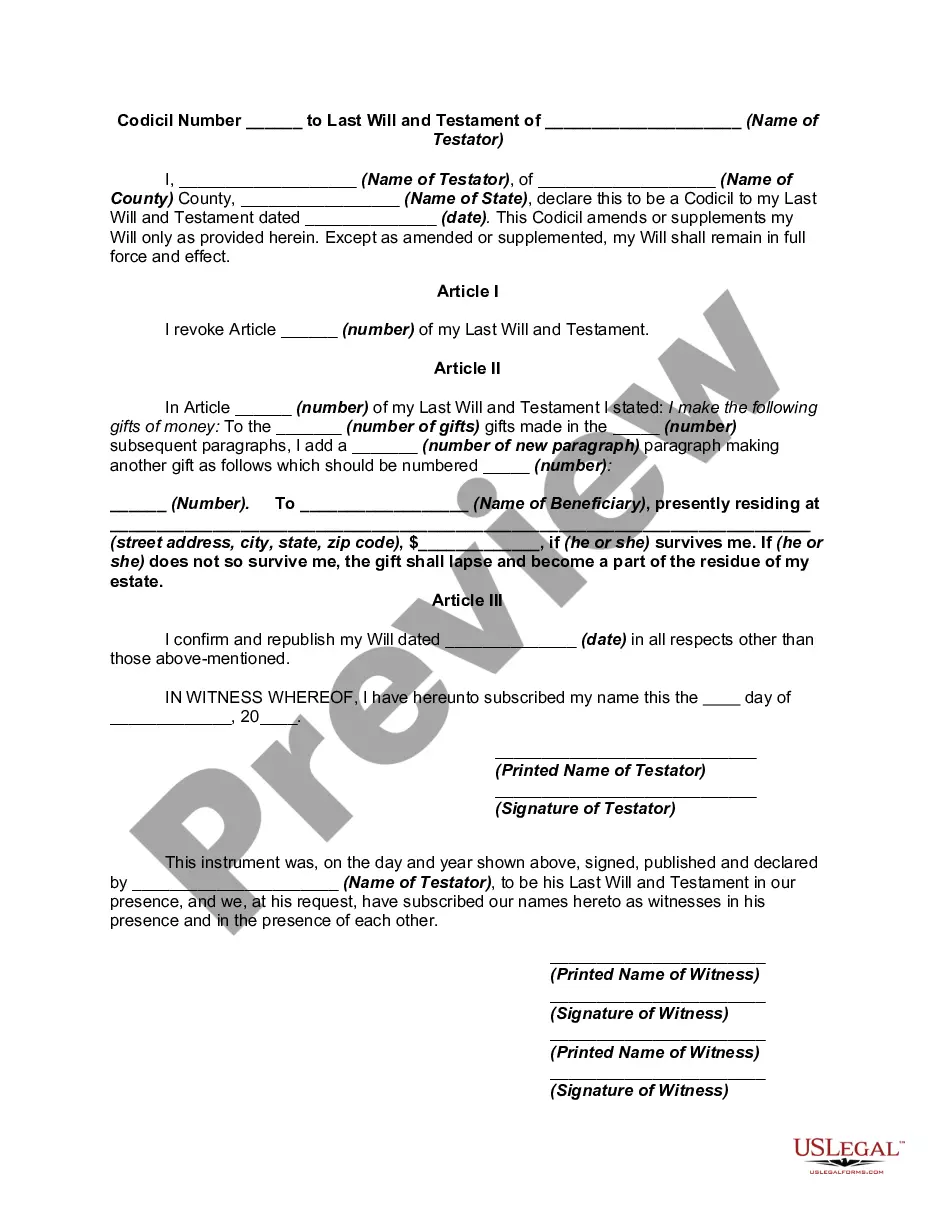
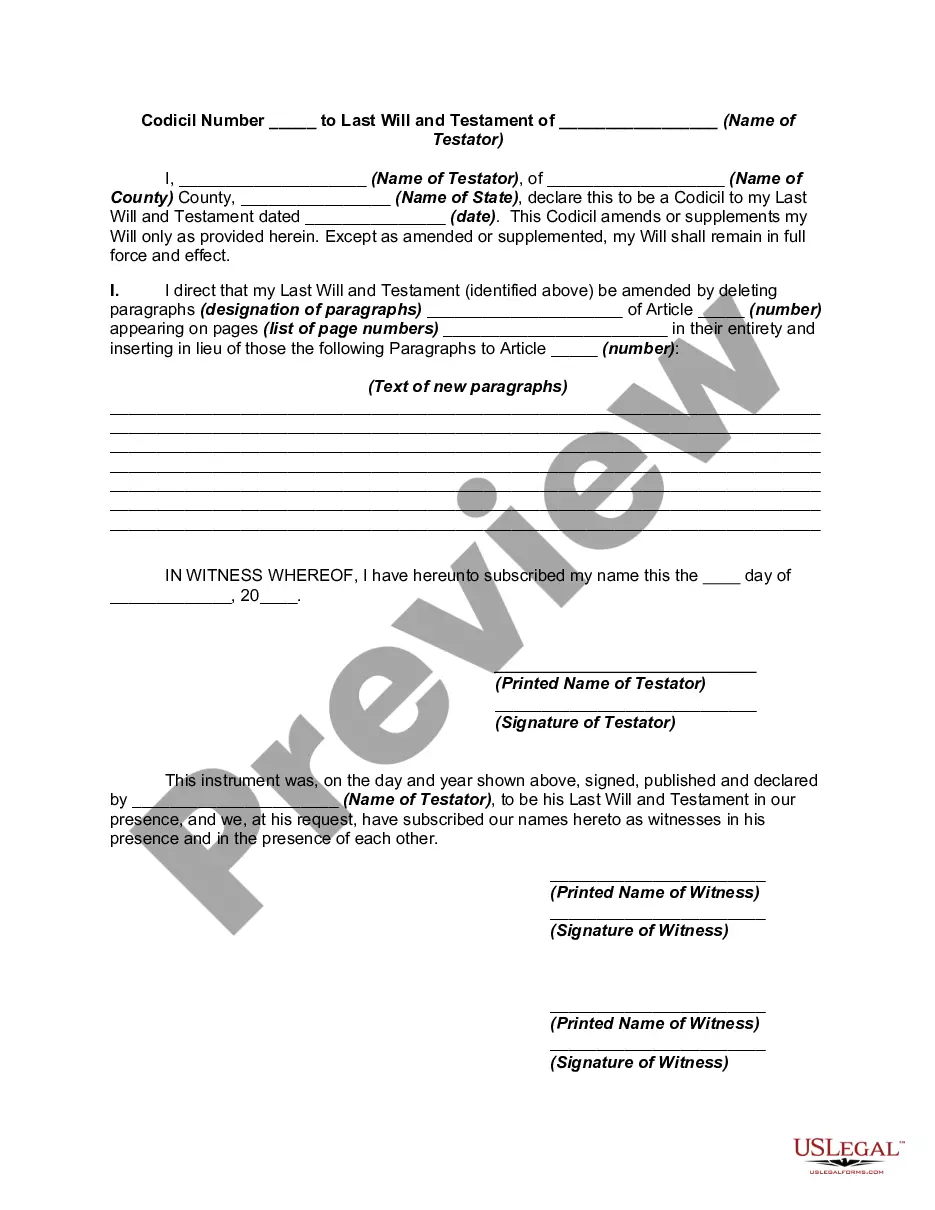
The "Changing Will with Codicil to Will Adding New Bequest and Republishing" form allows you to amend your existing will without starting from scratch. A codicil is a legally recognized supplement to a will, which can add, modify, or revoke specific provisions. This form ensures any new gifts or changes are integrated while preserving the rest of the original will intact. It serves as a useful tool when you want to make minor adjustments without rewriting the entire document.
Main sections of this form
- Declaration of the codicil and identification of the testator.
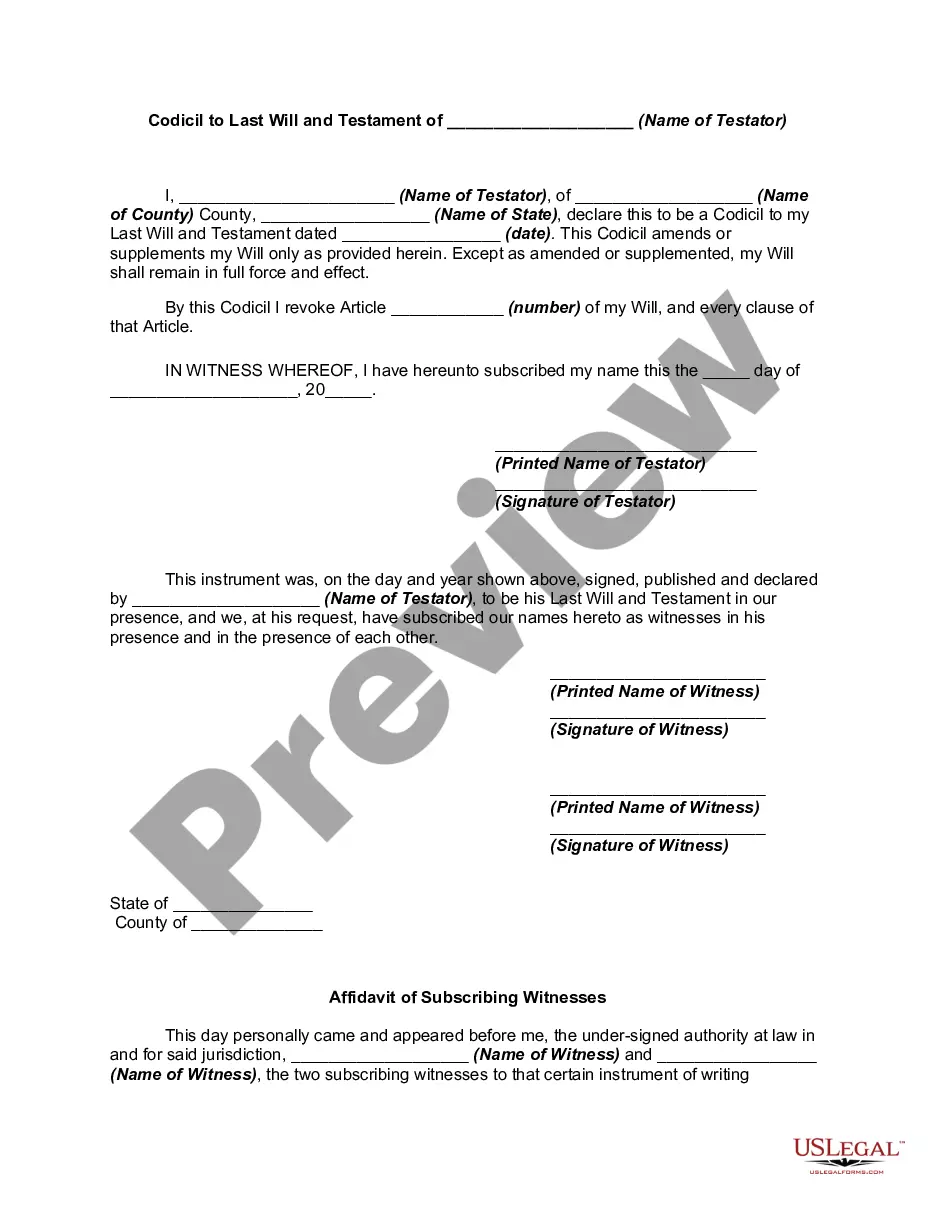
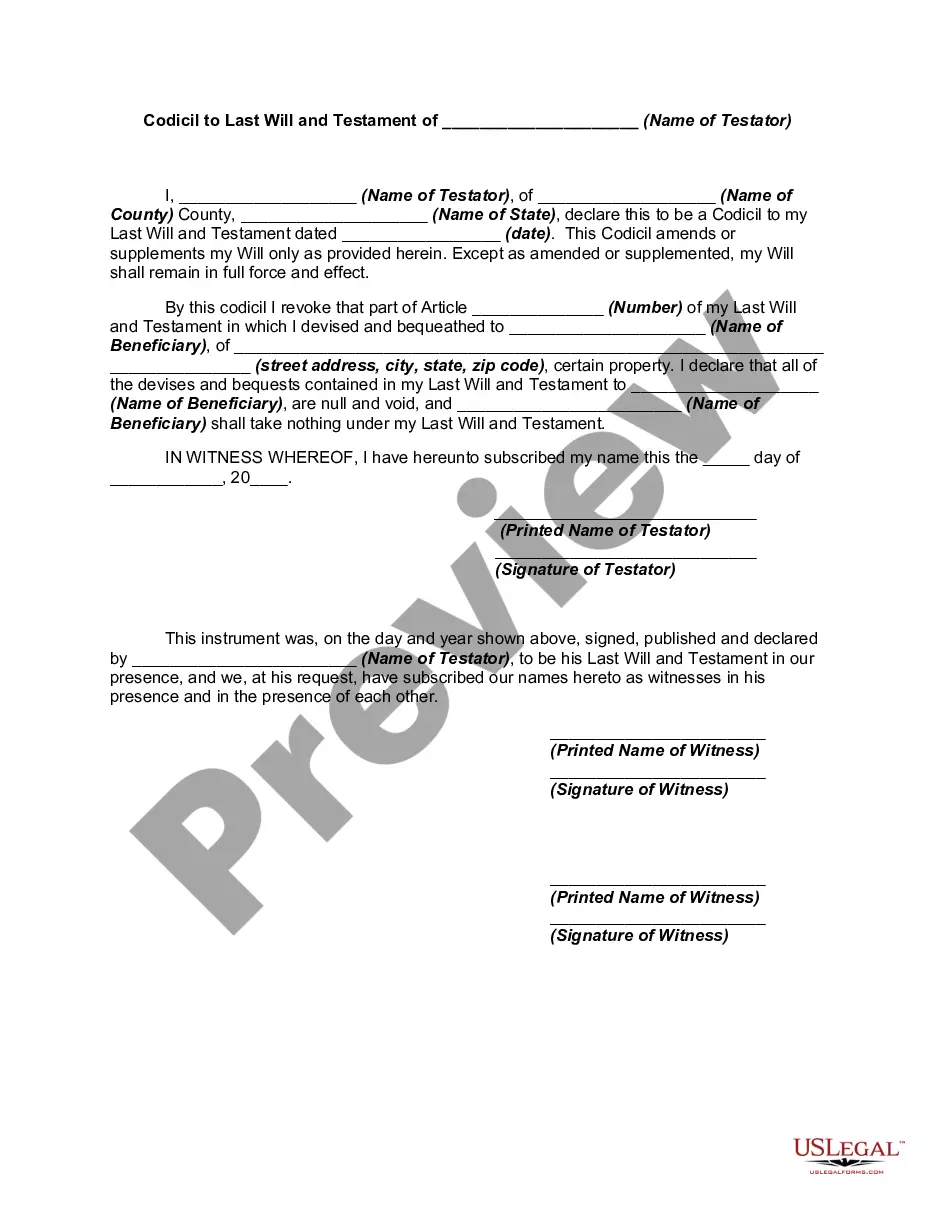
- Revocation of specific articles from the original will.
- Addition of new bequests along with the recipients' details.
- Confirmation and republication of the original will.
- Signature lines for the testator and witnesses.
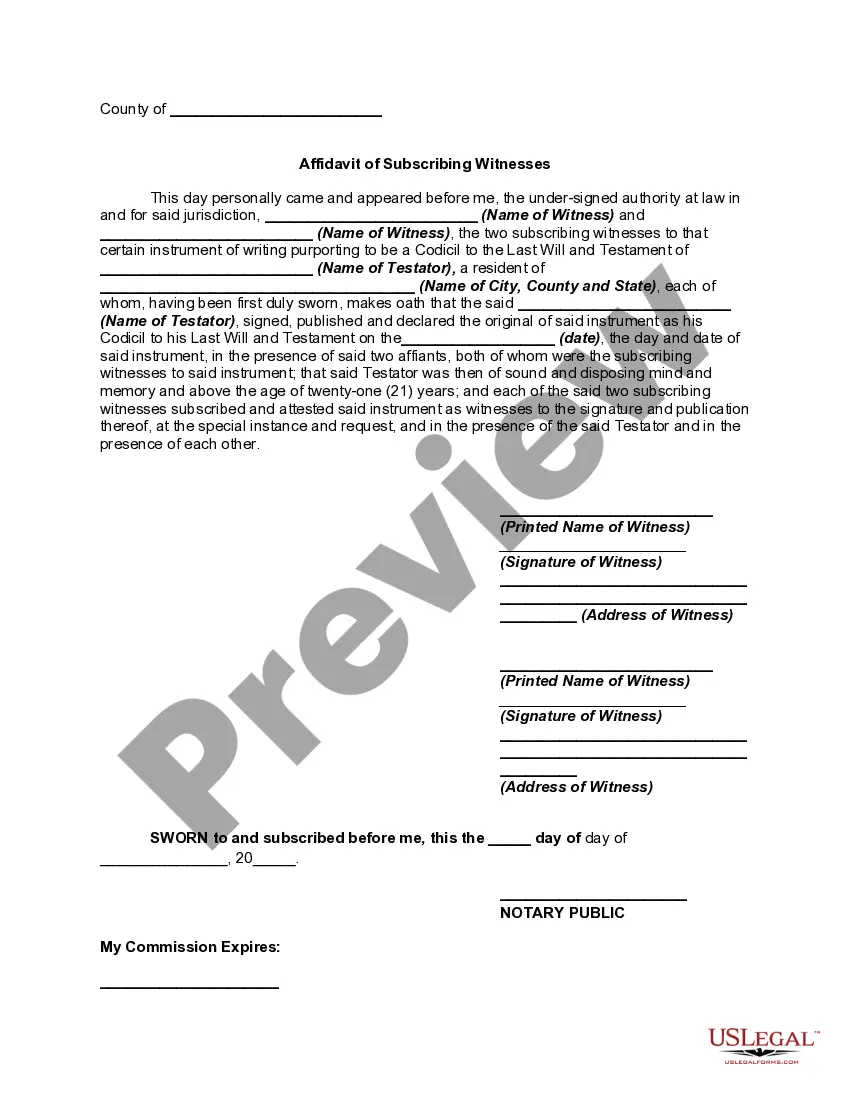
- Notarization affidavit for the witnesses' signatures.


When this form is needed
This form is ideal when you want to make changes to an existing will without drafting a completely new document. Situations may include adding new beneficiaries, changing the amount of certain bequests, or addressing life changes such as the birth of a child or the acquisition of additional property. Using a codicil can simplify the process of updating your estate plans.
Who should use this form
This form is suitable for individuals who have a current will but need to make amendments. Specifically, it is for:
- Testators wanting to adjust their estate plans.
- People who have recently acquired new assets or beneficiaries.
- Individuals needing to revoke or modify specific aspects of their existing will.
Instructions for completing this form
- Enter your name, county, and state at the top of the form.
- Clearly state the date of your original will and reference the specific articles you wish to revoke or amend.
- Add details of any new bequests, including the beneficiary's name and address.
- Confirm the republication of your original will.
- Have the form signed in the presence of at least two witnesses.
- Consider notarizing the document to enhance its validity.
Does this document require notarization?
This form must be notarized to be legally valid. US Legal Forms provides secure online notarization powered by Notarize, allowing you to complete the process through a verified video call.
Get your form ready online
Our built-in tools help you complete, sign, share, and store your documents in one place.
Make edits, fill in missing information, and update formatting in US Legal Forms—just like you would in MS Word.
Download a copy, print it, send it by email, or mail it via USPS—whatever works best for your next step.
Sign and collect signatures with our SignNow integration. Send to multiple recipients, set reminders, and more. Go Premium to unlock E-Sign.
If this form requires notarization, complete it online through a secure video call—no need to meet a notary in person or wait for an appointment.
We protect your documents and personal data by following strict security and privacy standards.

Make edits, fill in missing information, and update formatting in US Legal Forms—just like you would in MS Word.

Download a copy, print it, send it by email, or mail it via USPS—whatever works best for your next step.

Sign and collect signatures with our SignNow integration. Send to multiple recipients, set reminders, and more. Go Premium to unlock E-Sign.

If this form requires notarization, complete it online through a secure video call—no need to meet a notary in person or wait for an appointment.

We protect your documents and personal data by following strict security and privacy standards.
Common mistakes
- Failing to date the codicil, which can cause ambiguity.
- Not clearly referencing the specific articles being changed or revoked.
- Omitting the signatures of witnesses or not following state witness requirements.
- Not keeping a copy of the original will and codicil together.
Benefits of completing this form online
- Convenience of immediate access and download.
- Editability to tailor the document to your specific needs.
- Reliability, knowing the form is crafted by licensed attorneys.
Quick recap
- A codicil allows for specific changes to an existing will without rewriting it.
- It must be executed with proper witnessing to be legally binding.
- Consult local laws to ensure compliance with state-specific requirements.
Looking for another form?





Form popularity
FAQ
Making changes to your will You cannot amend your will after it's been signed and witnessed. The only way you can change a will is by making an official alteration called a codicil. You must sign a codicil and get it witnessed in the same way as witnessing a will.
Rather than taking the will to an attorney, you may attempt to change the will yourself. Not all handwritten changes to a will may be valid, however.A codicil is a legal document, added to your will, through which you can make valid changes to your estate plan.
The Codicil cross-refers to the original Will and gives details of the amendments or additions you want to make to it. The Codicil must then be executed in the same way as for the Will i.e. signed with two witnesses (although the witnesses do not need to be the same people as the witnesses on the Will).
Identify the section and content you want to change. The first step in amending your will is to review it. Type up the changes. Take the time to type up the codicil. Sign and date the codicil. Store your codicil in a safe place.
In short, no a codicil to a Will does not have to be notarized. However, laws and requirements vary from state to state. A codicil does have to be signed in front of at least two witnesses who are not listed as beneficiaries, guardians, or executors in your Will.
You cannot amend your will after it's been signed and witnessed. The only way you can change a will is by making an official alteration called a codicil. You must sign a codicil and get it witnessed in the same way as witnessing a will. There's no limit on how many codicils you can add to a will.
A codicil is like a legal P.S. to your will. To create a codicil, you write down what you want to remove or add to your existing will, sign it, have two witnesses sign it (as you did with your original will), and then keep it with your will. After your death, your two documents will be read and interpreted together.
Step 1 Find the Latest Version of the Will. The effective date from the Last Will along with referencing the sections needed to be changed is needed in order to complete the codicil. Step 2 Decide the Changes. Step 3 Write the Codicil. Step 4 Sign the Codicil. Step 5 Attach to the Will.
If executed correctly, a codicil is simply an amendment to the original will and therefor in essence becomes part of the original will. So, there is really no "will overriding a codicil" as they are in essence one and the same.