Application for Variance
Overview of this form
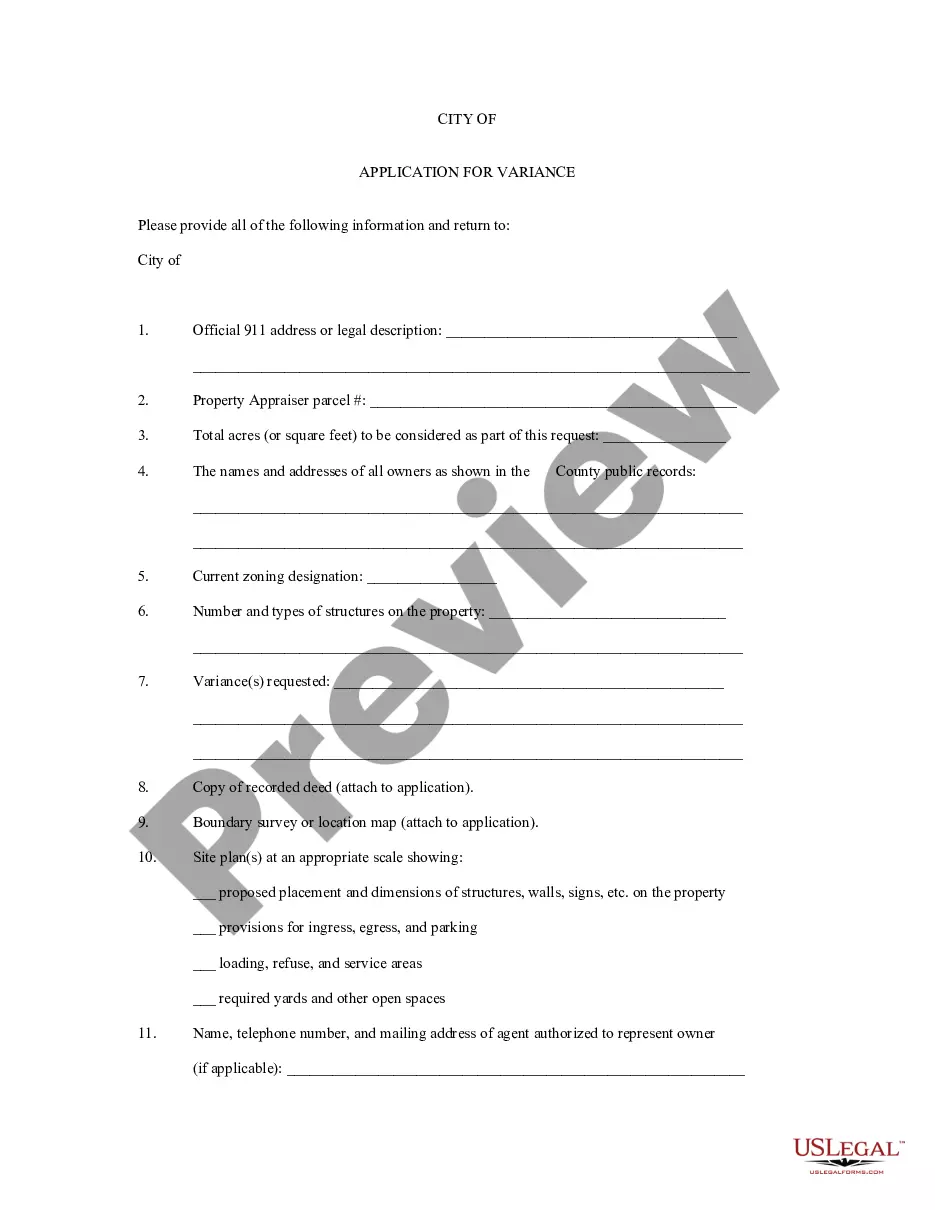
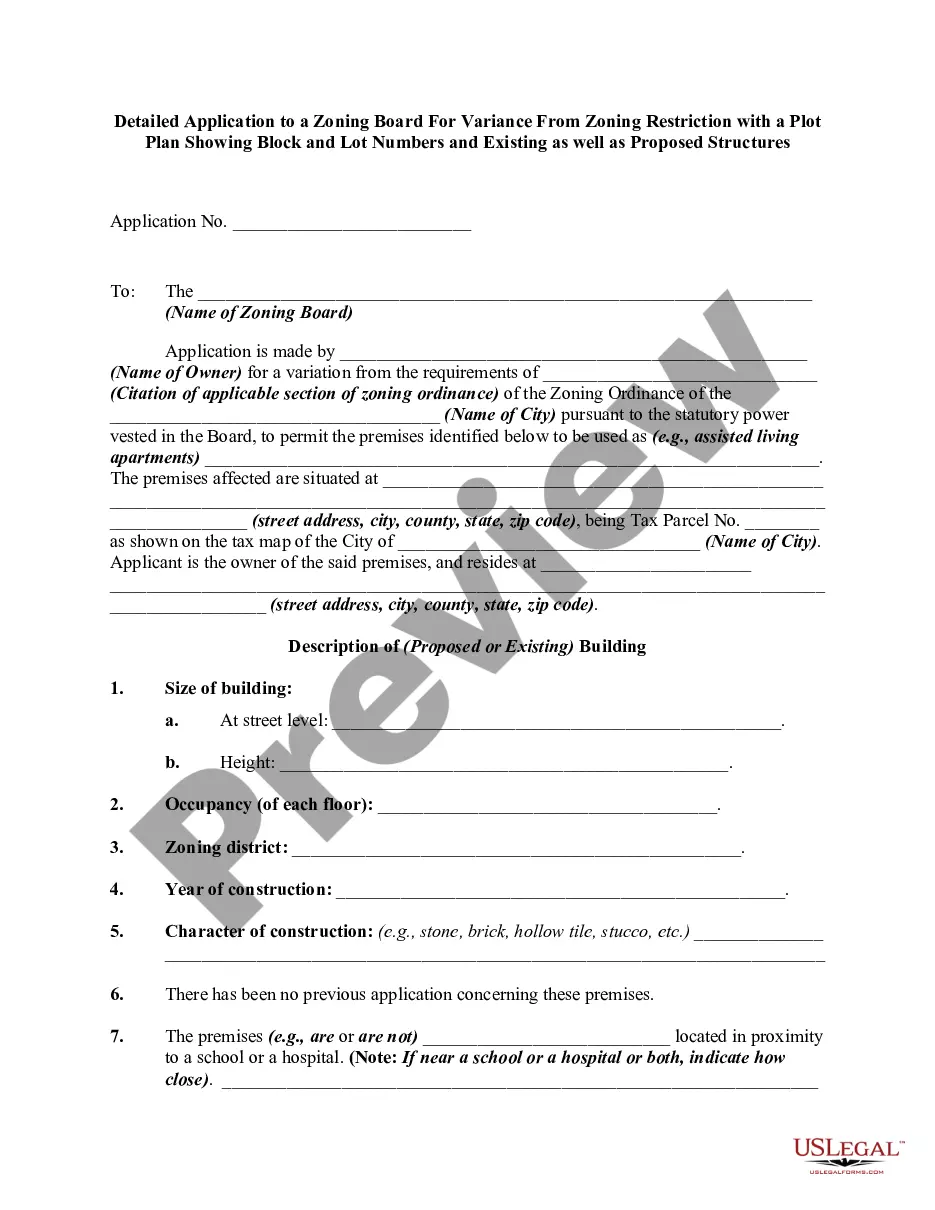
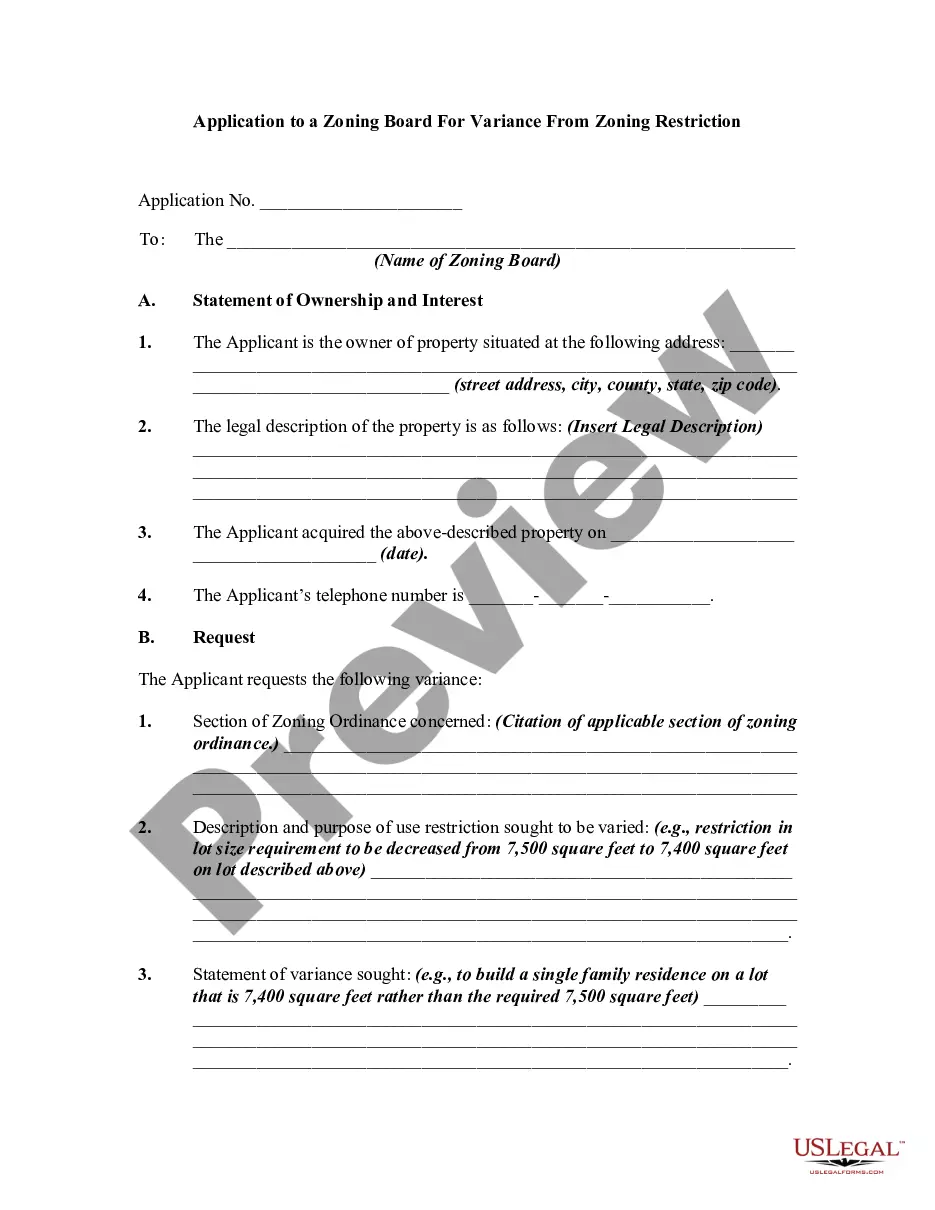
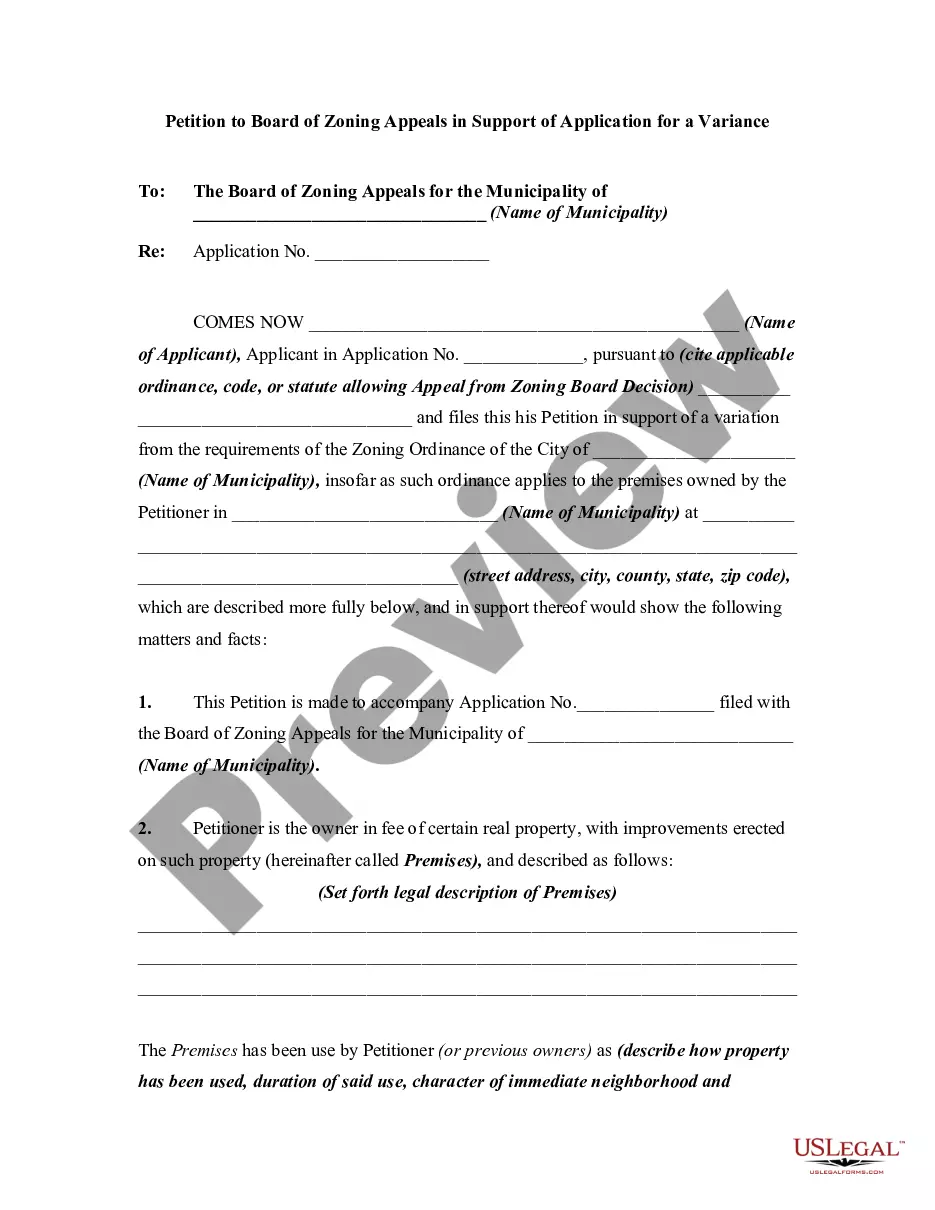
The Application for Variance is a formal request submitted to local governing authorities, seeking permission to deviate from specific zoning ordinances or regulations. This form is particularly important for property owners who want to utilize their land differently than current zoning laws permit. Unlike standard property applications, a variance seeks exceptions based on unique circumstances of the property, allowing for flexibility in land use while still adhering to community standards.
Key components of this form
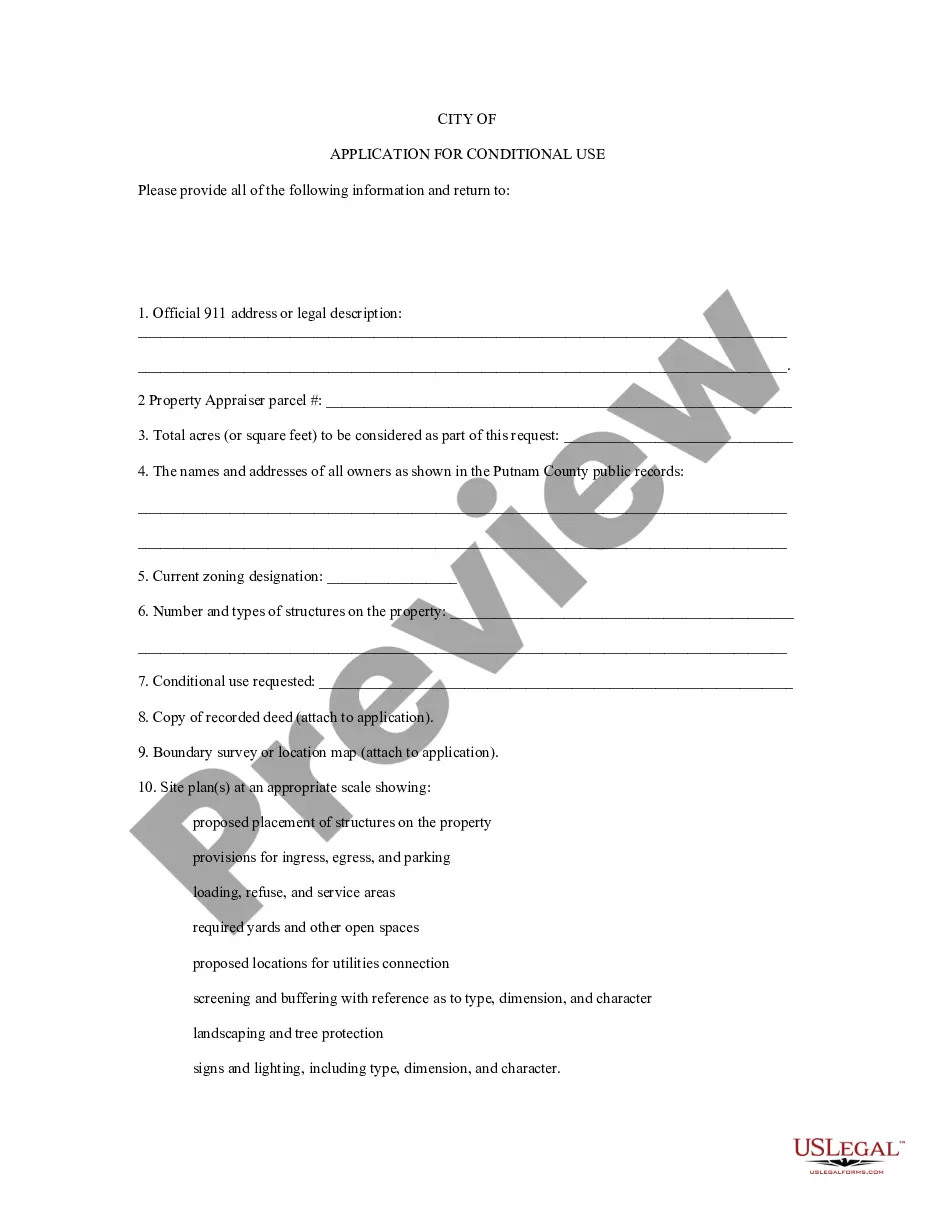
- Official 911 address or legal description of the property
- Parcel number from the Property Appraiser
- Total acreage or square footage being requested
- Names and addresses of property owners listed in public records
- Current zoning designation of the property
- Details of any existing structures on the property
- Specific variances being requested
- Copy of the recorded deed
- Boundary survey or location map
- Site plans showing proposed alterations and property layout
- Contact information for an authorized representative, if applicable
- Application fee
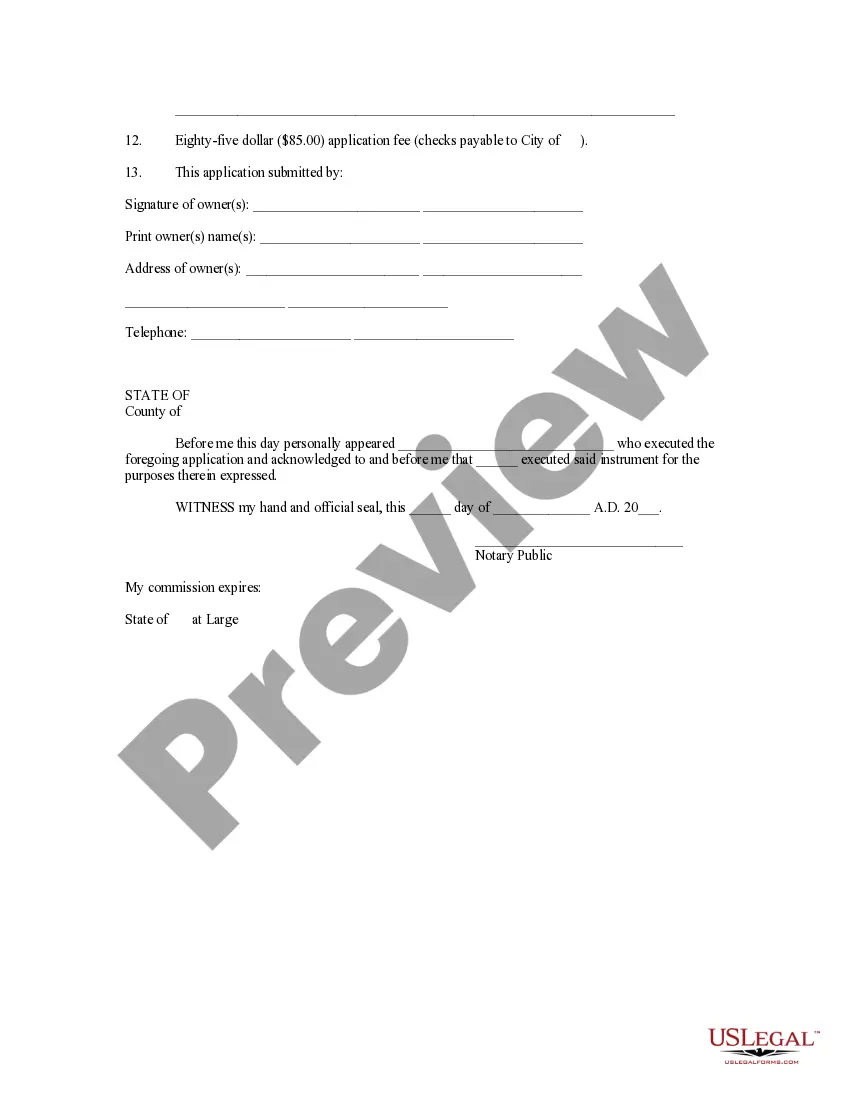
- Signature and acknowledgment by the property owner
Common use cases
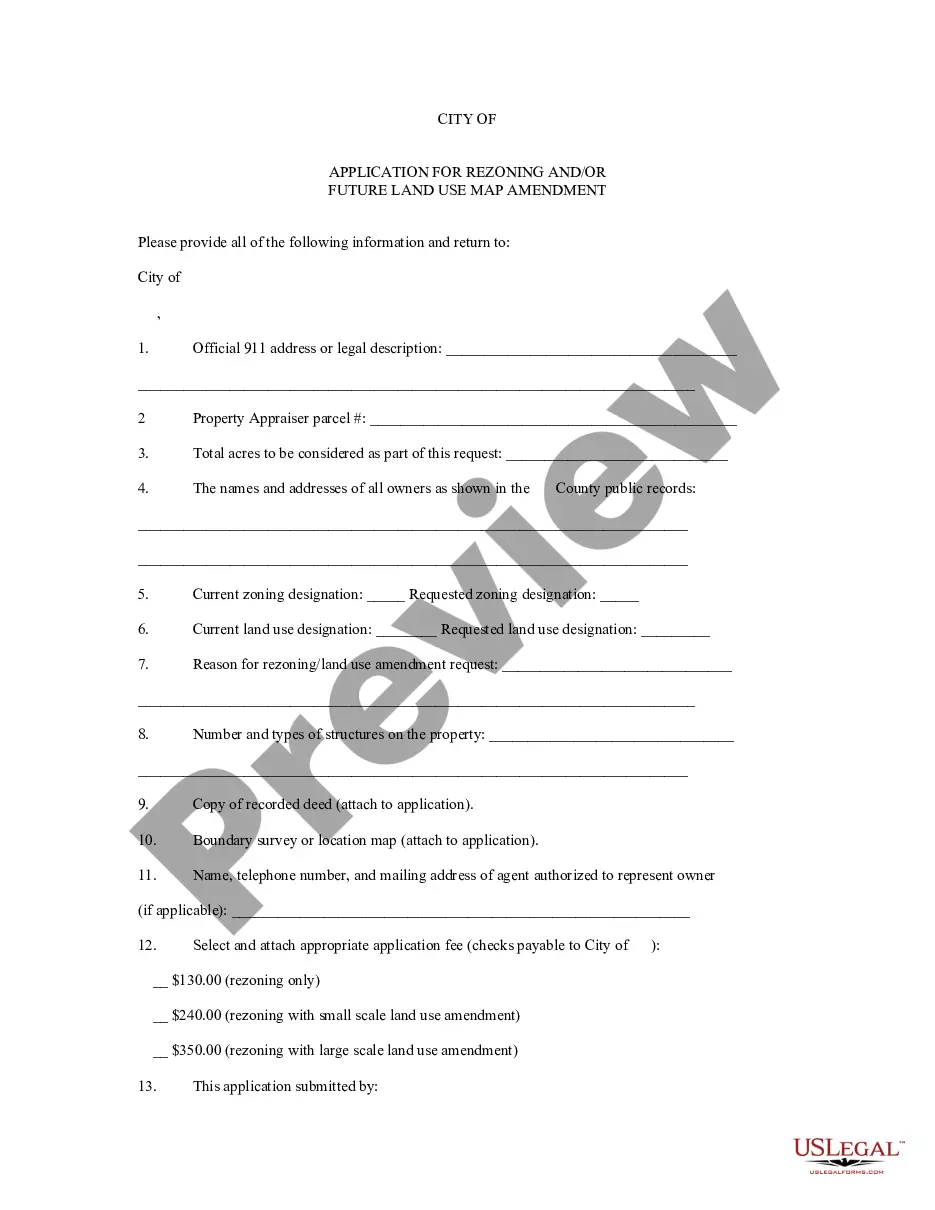
This form should be used when a property owner wishes to request a variance from the local zoning ordinance. Common scenarios include seeking permission to build closer to a property line, increase building height, reduce parking requirements, or allow for non-conforming uses. It is essential to submit this form before starting any construction or significant changes to the property, as it ensures compliance with local laws and regulations.
Intended users of this form
Individuals or entities that should consider using this form include:
- Property owners seeking to make changes that conflict with local zoning regulations
- Developers looking to create or modify projects on existing properties
- Real estate investors evaluating the potential development of land
- Land use planners assisting clients with zoning issues
Steps to complete this form
- Provide the official address or legal description of your property.
- Include the Property Appraiser parcel number associated with your land.
- Specify the size of the property area for which you are requesting a variance.
- List the names and addresses of all property owners according to local records.
- Detail the current zoning designation and the variances being requested.
- Attach required documents such as the recorded deed, boundary survey, and site plans.
Is notarization required?
To make this form legally binding, it must be notarized. Our online notarization service, powered by Notarize, lets you verify and sign documents remotely through an encrypted video session.
Get your form ready online
Our built-in tools help you complete, sign, share, and store your documents in one place.
Make edits, fill in missing information, and update formatting in US Legal Forms—just like you would in MS Word.
Download a copy, print it, send it by email, or mail it via USPS—whatever works best for your next step.
Sign and collect signatures with our SignNow integration. Send to multiple recipients, set reminders, and more. Go Premium to unlock E-Sign.
If this form requires notarization, complete it online through a secure video call—no need to meet a notary in person or wait for an appointment.
We protect your documents and personal data by following strict security and privacy standards.

Make edits, fill in missing information, and update formatting in US Legal Forms—just like you would in MS Word.

Download a copy, print it, send it by email, or mail it via USPS—whatever works best for your next step.

Sign and collect signatures with our SignNow integration. Send to multiple recipients, set reminders, and more. Go Premium to unlock E-Sign.

If this form requires notarization, complete it online through a secure video call—no need to meet a notary in person or wait for an appointment.

We protect your documents and personal data by following strict security and privacy standards.
Mistakes to watch out for
- Failing to provide complete contact information for all property owners.
- Not including required attachments, such as the site plans or deed.
- Submitting an inaccurate parcel number or property description.
- Neglecting to verify local zoning rules prior to submitting the application.
Advantages of online completion
- Convenient download and completion at your own pace.
- Editable fields allow for easy updates as needed.
- Reliable templates drafted by licensed attorneys ensure compliance with legal standards.
What to keep in mind
- The Application for Variance is essential for seeking exceptions to zoning laws.
- Completing the form accurately and fully is crucial to avoid delays in processing.
- Always verify local guidelines for any additional requirements.
- Include all necessary attachments to support your application.
Looking for another form?
Form popularity
FAQ
Present a (real) hardship. Be Respectful. Be Prepared. Create exhibits. Practice your argument. Review with the ZEO.
The standard of approval for a dimensional variance is practical difficulty, which the courts have defined to mean that strict compliance is unnecessarily burdensome and granting the variance would do substantial justice to the owner. The undue hardship standard for a use variance is much more difficult to meet
In real estate, a variance is an exception to the local zoning law.Rather, it acts as a waiver to a zoning regulation, granted on a case-by-case basis for specific requests. Once a zoning variance has been granted, it runs with the land, which means it's attached to the property rather than its owner.
A variance is a form of relief that is granted when the application of the zoning regulations results in peculiar or unusual practical difficulties to a property owner.
A complete Variance application submitted to the Planning Division office by the deadline date will be scheduled for the Planning Commission meeting at the end of the following month. The entire process typically takes 45 to 50 days to complete.
The variance is a measure of variability. It is calculated by taking the average of squared deviations from the mean. Variance tells you the degree of spread in your data set. The more spread the data, the larger the variance is in relation to the mean.
Usually, the land owner seeking the variance files a request or written application for a variance and pays a fee. Normally, the requests go first to a zoning board. The zoning board notifies nearby and adjacent property owners. The zoning examiner may then hold a hearing to determine if the variance should be granted.
The standard of approval for a dimensional variance is practical difficulty, which the courts have defined to mean that strict compliance is unnecessarily burdensome and granting the variance would do substantial justice to the owner. The undue hardship standard for a use variance is much more difficult to meet
We know that variance is a measure of how spread out a data set is. It is calculated as the average squared deviation of each number from the mean of a data set. For example, for the numbers 1, 2, and 3 the mean is 2 and the variance is 0.667.