Sample Letter to Client regarding Quitclaim Deed Delivery - cover Letter
What this document covers
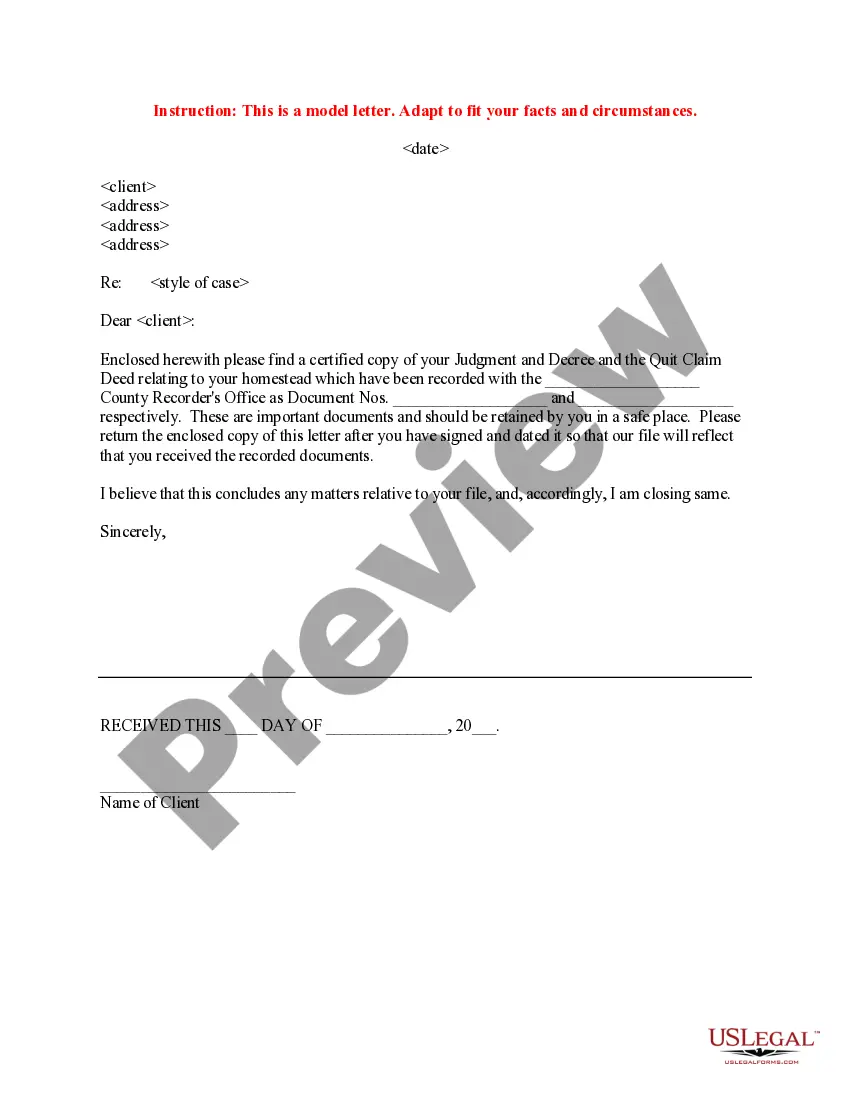
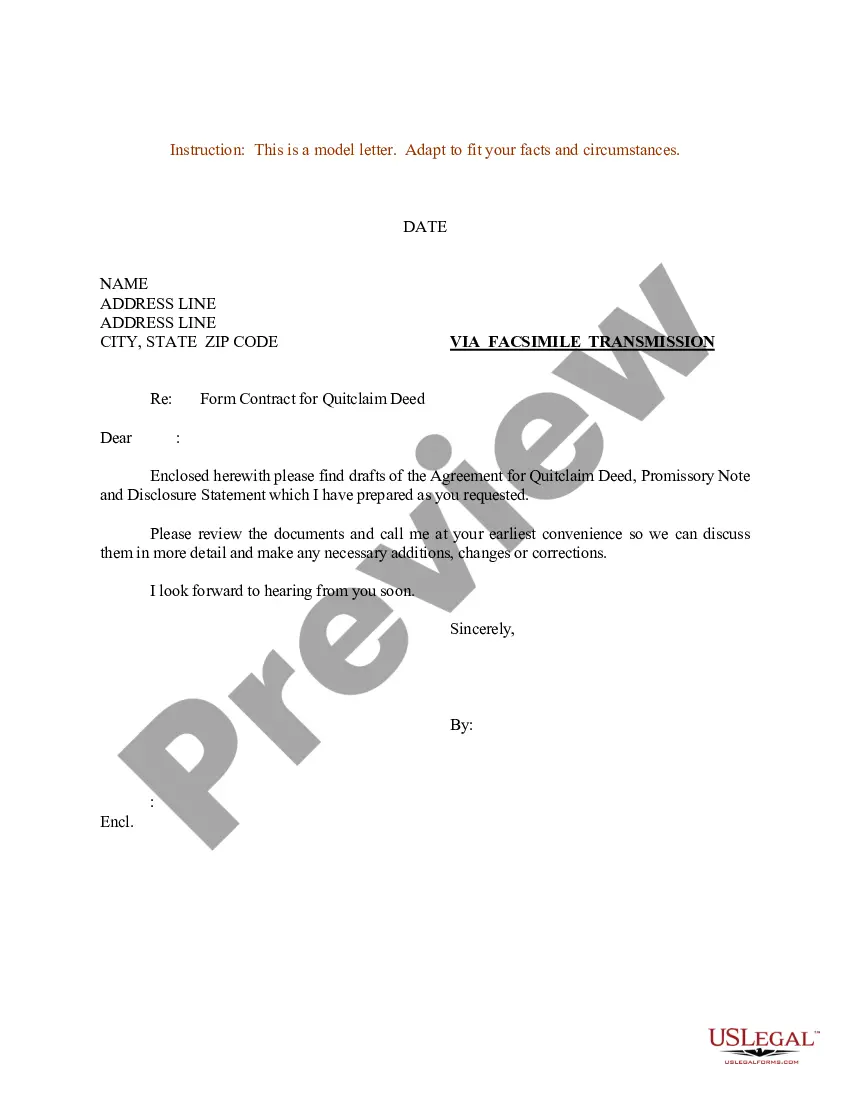
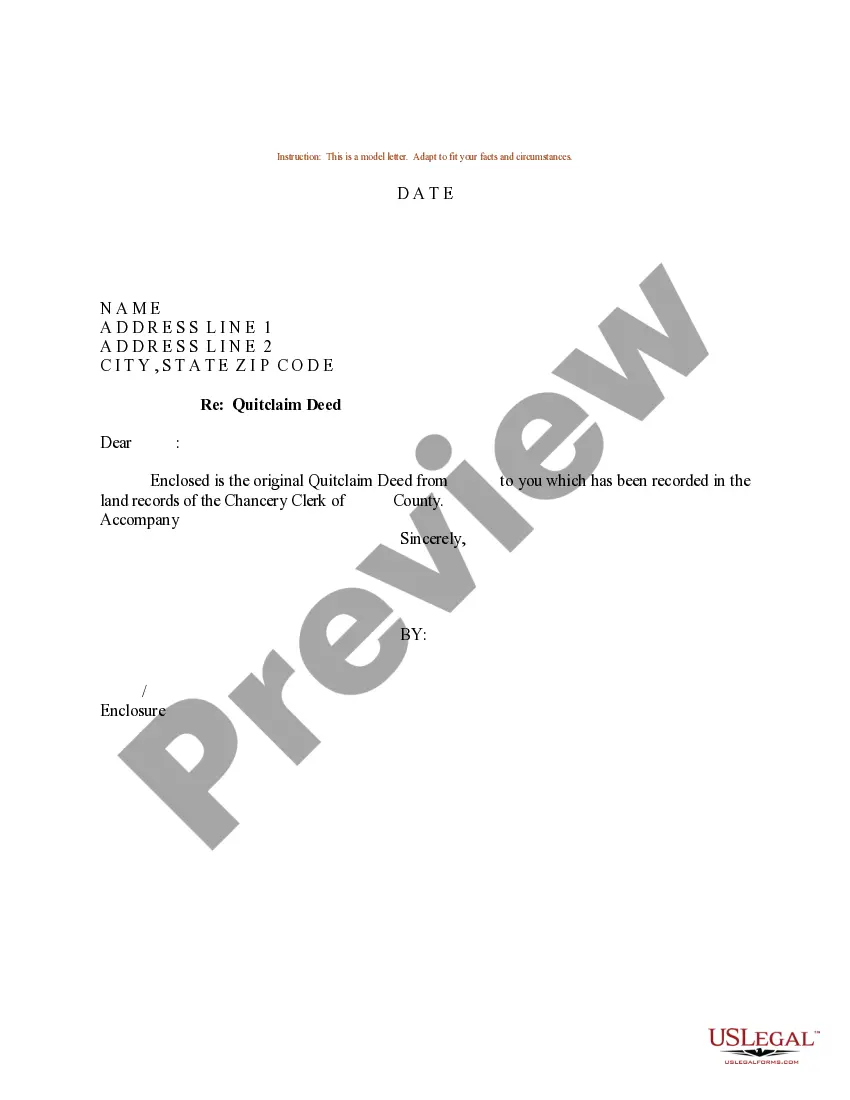
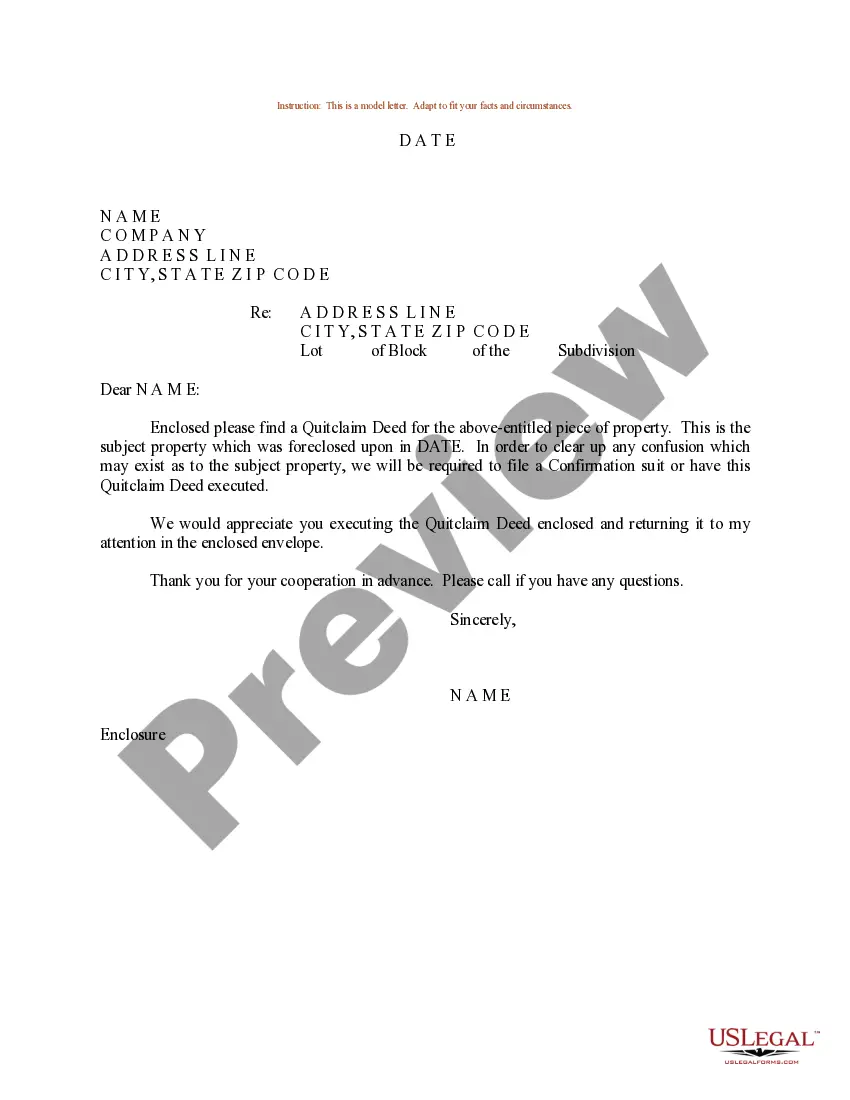
This Sample Letter to Client regarding Quitclaim Deed Delivery serves as a formal communication from an attorney to their client, confirming the delivery of a quitclaim deed. This document is crucial for clients who have recently dealt with property transfers and requires acknowledgment of receipt for legal records. Unlike general notification letters, this form is tailored to the context of quitclaim deeds, ensuring the client understands the significance of the documents enclosed.
Main sections of this form
- Date of the letter.
- Client's name and address details.
- Reference to the specific case related to the quitclaim deed.
- Details of the enclosed documents, including their recording information.
- Instruction for the client to sign and return the letter.
- Attorney's signature and closing statement.
When this form is needed
This form should be used when an attorney is sending a client the recorded quitclaim deed and related legal documents. It is particularly useful after the completion of a property transfer involving a quitclaim deed, ensuring that clients have received important legal documentation related to their property rights.
Who needs this form
- Attorneys communicating with clients about property transactions.
- Clients who have been involved in transactions involving quitclaim deeds.
- Legal assistants or paralegals responsible for client correspondence.
How to prepare this document
- Insert the date of the letter.
- Fill in the client's name and address correctly.
- Reference the relevant case in the subject line.
- Provide the document numbers for the Judgment and Decree and the Quitclaim Deed.
- Include instructions for the client to sign and return the letter.
- Sign the letter and include your name for official recognition.
Does this document require notarization?
This form must be notarized to be legally valid. US Legal Forms provides secure online notarization powered by Notarize, allowing you to complete the process through a verified video call.
Get your form ready online
Our built-in tools help you complete, sign, share, and store your documents in one place.
Make edits, fill in missing information, and update formatting in US Legal Forms—just like you would in MS Word.
Download a copy, print it, send it by email, or mail it via USPS—whatever works best for your next step.
Sign and collect signatures with our SignNow integration. Send to multiple recipients, set reminders, and more. Go Premium to unlock E-Sign.
If this form requires notarization, complete it online through a secure video call—no need to meet a notary in person or wait for an appointment.
We protect your documents and personal data by following strict security and privacy standards.

Make edits, fill in missing information, and update formatting in US Legal Forms—just like you would in MS Word.

Download a copy, print it, send it by email, or mail it via USPS—whatever works best for your next step.

Sign and collect signatures with our SignNow integration. Send to multiple recipients, set reminders, and more. Go Premium to unlock E-Sign.

If this form requires notarization, complete it online through a secure video call—no need to meet a notary in person or wait for an appointment.

We protect your documents and personal data by following strict security and privacy standards.
Common mistakes to avoid
- Forgetting to include the correct document numbers.
- Not specifying the client's address accurately.
- Failing to include a request for the signed letter to be returned.
- Not signing the letter prior to sending it.
Why use this form online
- Convenience of downloading and editing as needed.
- Access to templates drafted by licensed attorneys.
- Time-saving option without the need for in-person visits.
- Instant access to legal documentation helps maintain organization.
Looking for another form?

Form popularity
FAQ
Quitclaim deeds are most often used to transfer property between family members. Examples include when an owner gets married and wants to add a spouse's name to the title or deed, or when the owners get divorced and one spouse's name is removed from the title or deed.
It is a legal document, hence should be short and precise. The letter must be addressed to the concerned authority. The letter must contain all the required details. You must mention your contact details for any queries or doubts.
Yes, you can use a Quitclaim Deed to transfer a gift of property to someone. You must still include consideration when filing your Quitclaim Deed with the County Recorder's Office to show that title has been transferred, so you would use $10.00 as the consideration for the property.
Fill out the quit claim deed form, which can be obtained online, or write your own using the form as a guide. The person giving up the interest in the property is the grantor, and the person receiving the interest is the grantee.
Discuss property ownership interests. Access a copy of your title deed. Complete, review and sign the quitclaim or warranty form. Submit the quitclaim or warranty form. Request a certified copy of your quitclaim or warranty deed.
A quitclaim deed transfers title but makes no promises at all about the owner's title.A person who signs a quitclaim deed to transfer property they do not own results in no title at all being transferred since there is no actual ownership interest. The quitclaim deed only transfers the type of title you own.
The word is properly spelled "quitclaim." A quitclaim deed isn't a deed at all. It's an instrument of estoppal. Its purpose is to get a recordable instrument from a person to keep that person from later claiming an ownership interest in a specific real property.
But you might be wondering if an owner can transfer a deed to another person without a real estate lawyer. The answer is yes. Parties to a transaction are always free to prepare their own deeds.A quitclaim deed, for example, is far simpler than a warranty deed.