Basic Sample Joint Venture Agreement
What this document covers
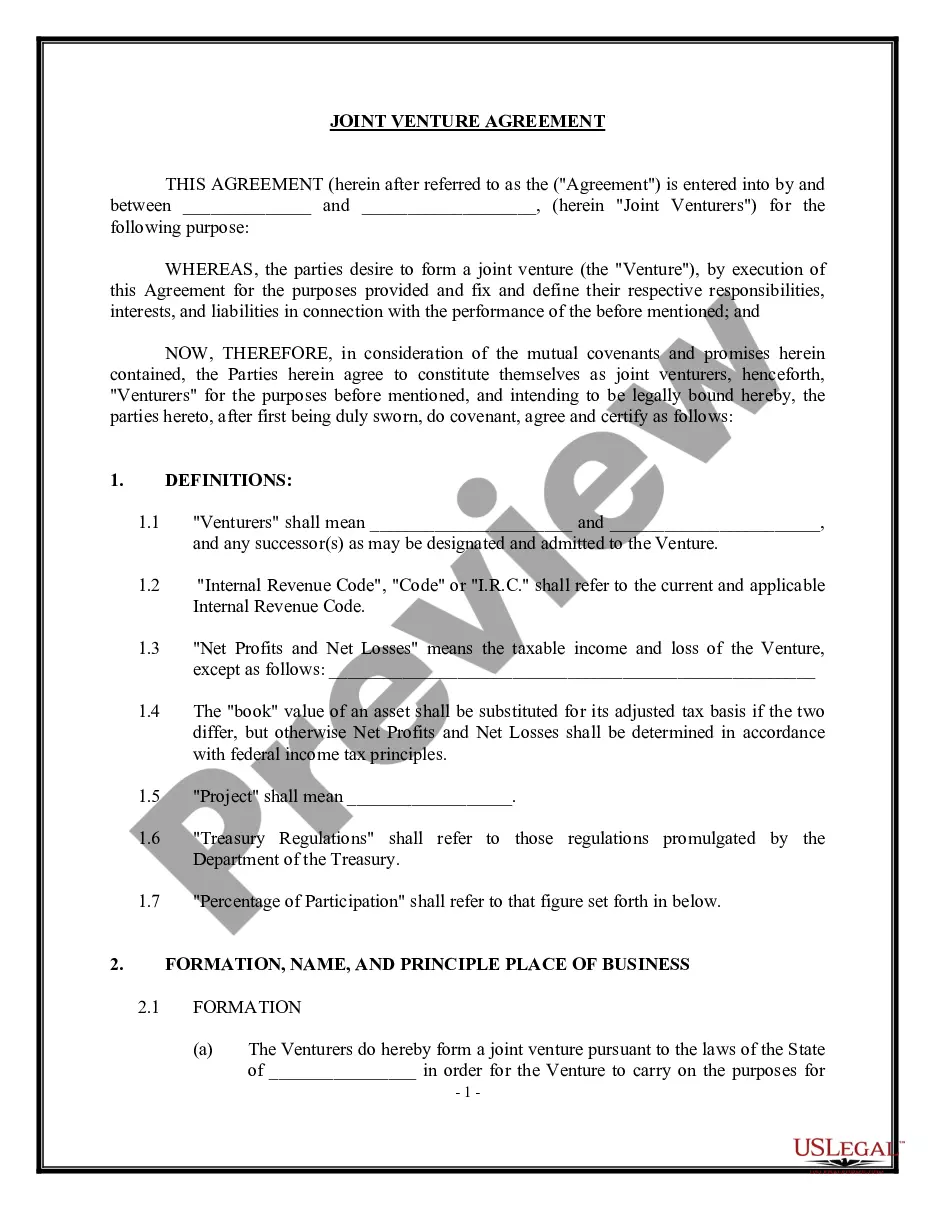
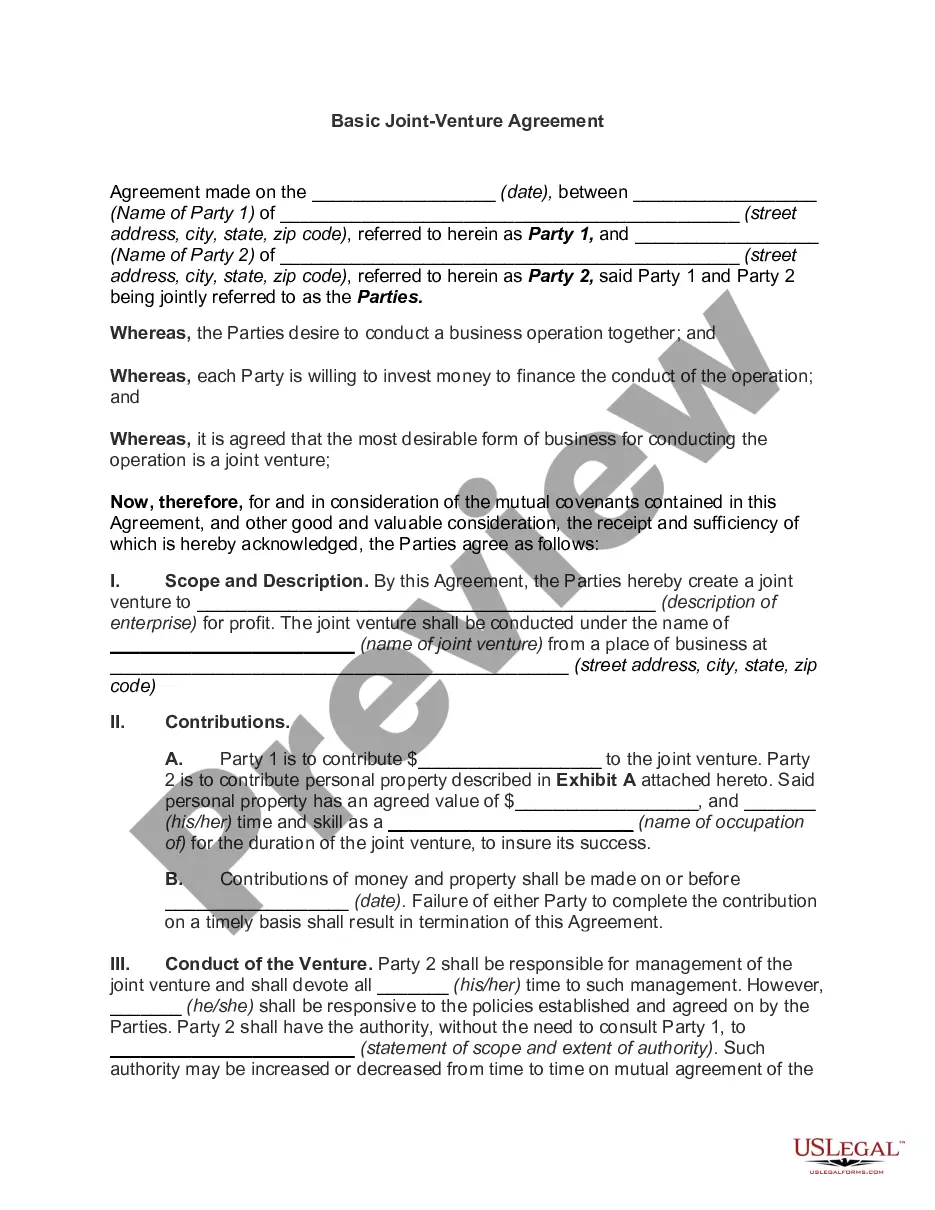
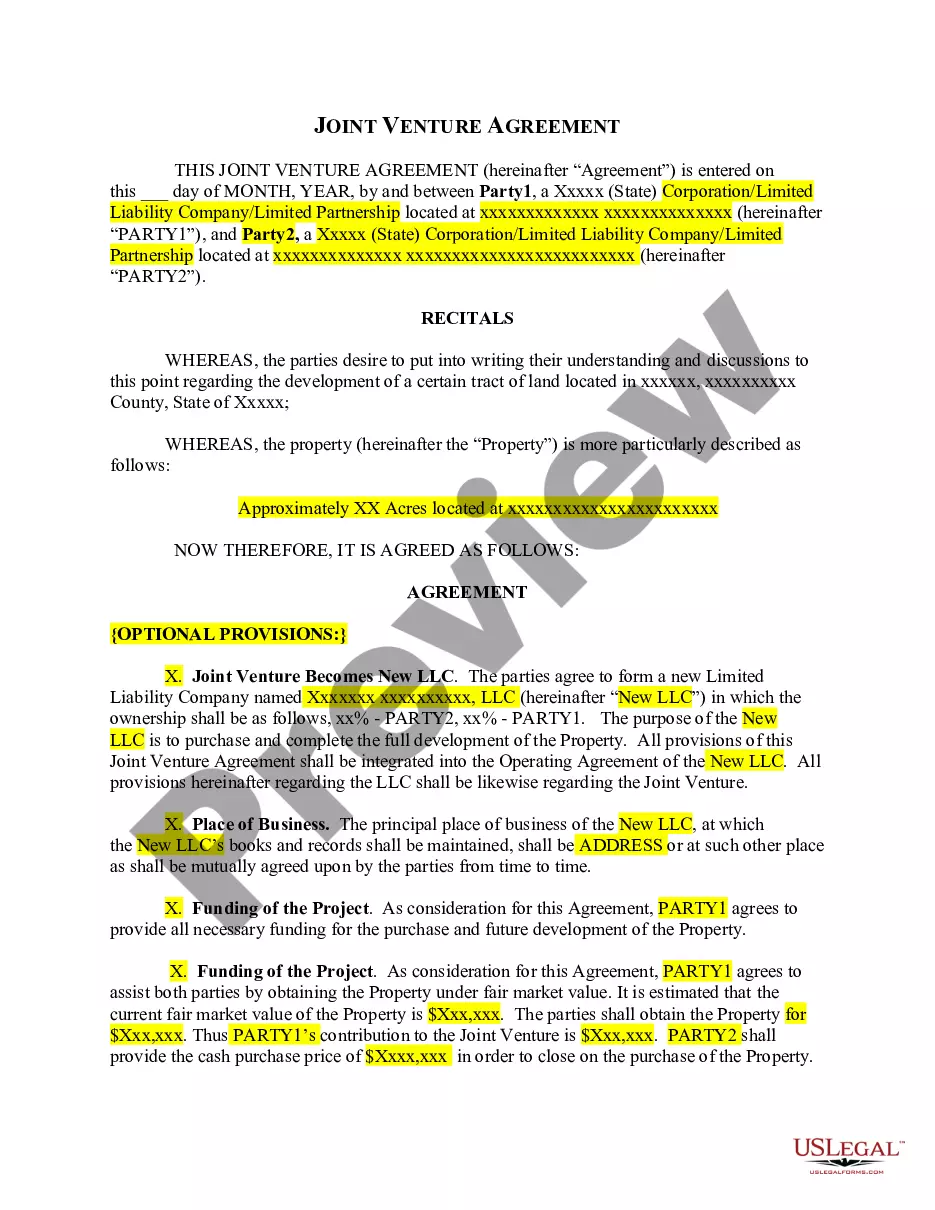
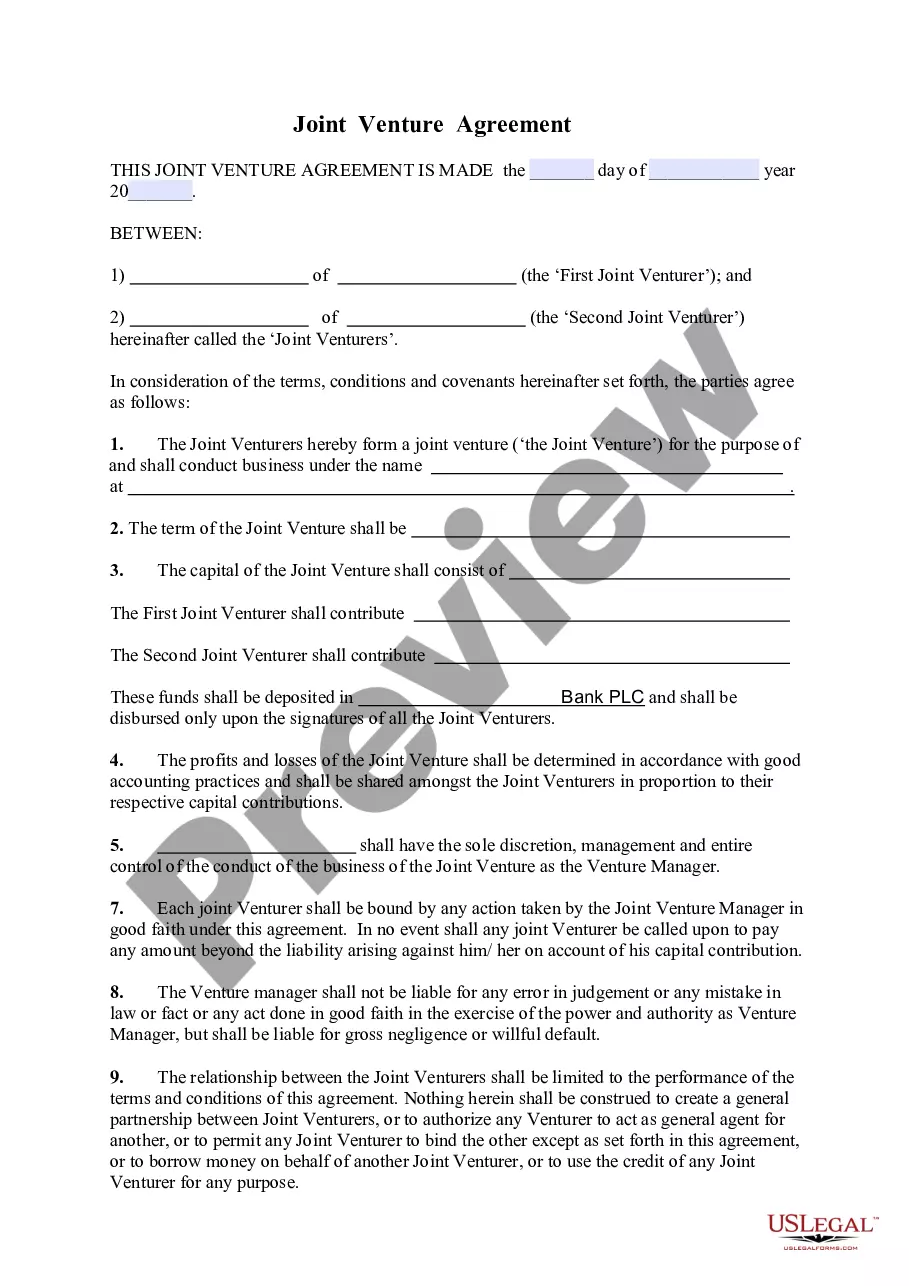
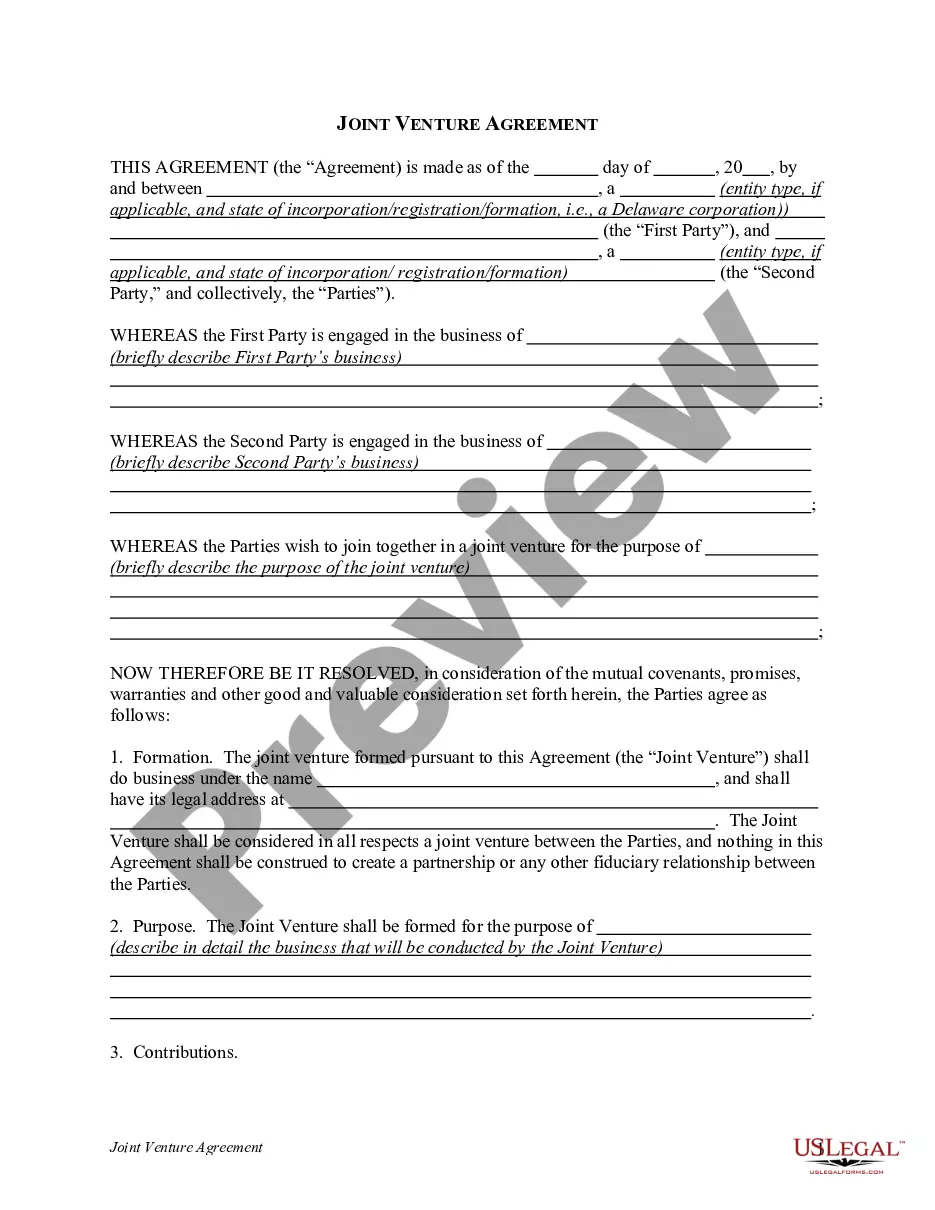
The Basic Sample Joint Venture Agreement is a legal document that formalizes the terms and conditions under which two or more parties collaborate to pursue a specific business objective. This agreement outlines each party's contributions, the management of the venture, profit-sharing, and responsibilities. Unlike other agreements, such as partnership agreements, a joint venture agreement specifically focuses on a single project or business activity, allowing for a tailored approach to collaboration.
What’s included in this form
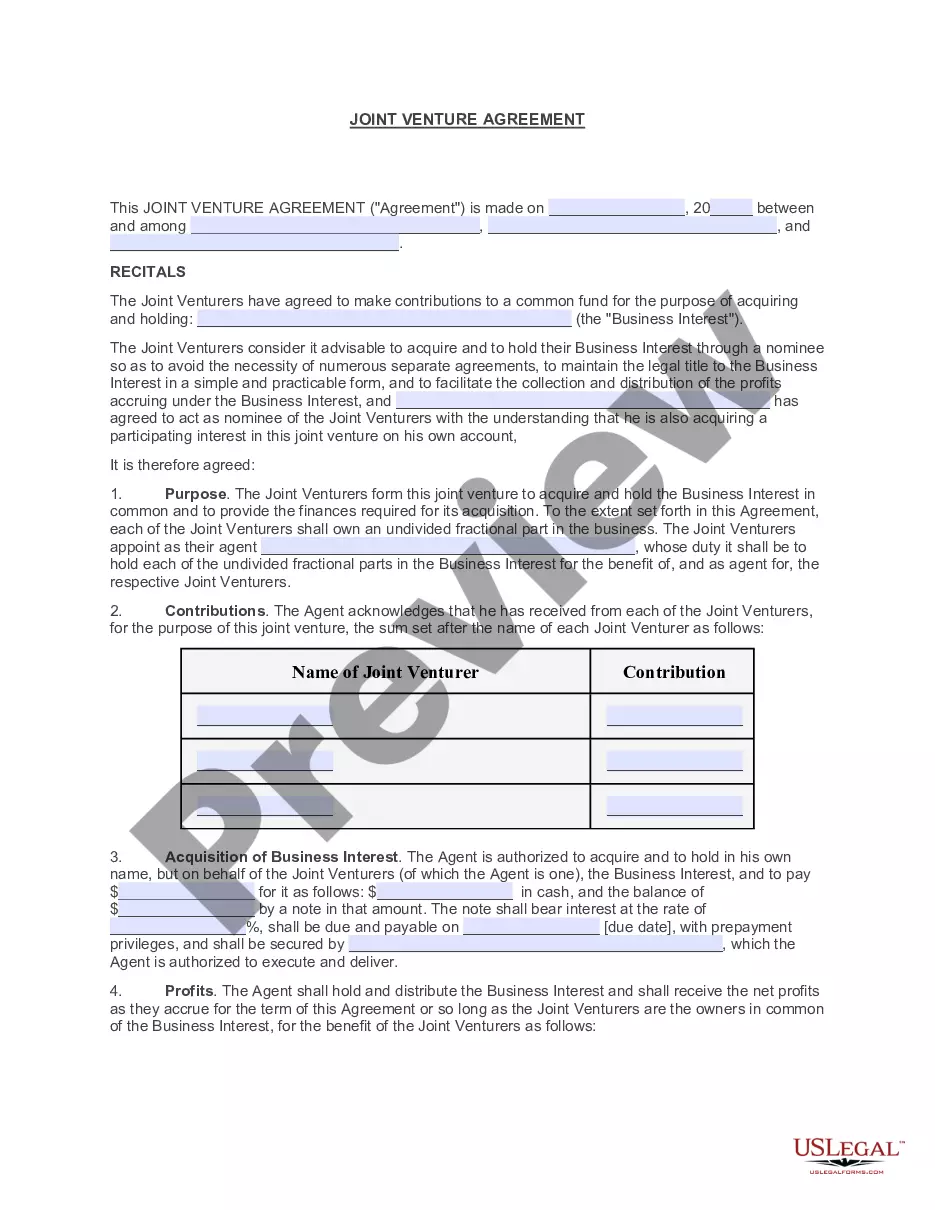
- Definition of the joint venture purpose and business interest.
- Contribution details from each joint venturer.
- Authorization of an agent to manage the joint venture.
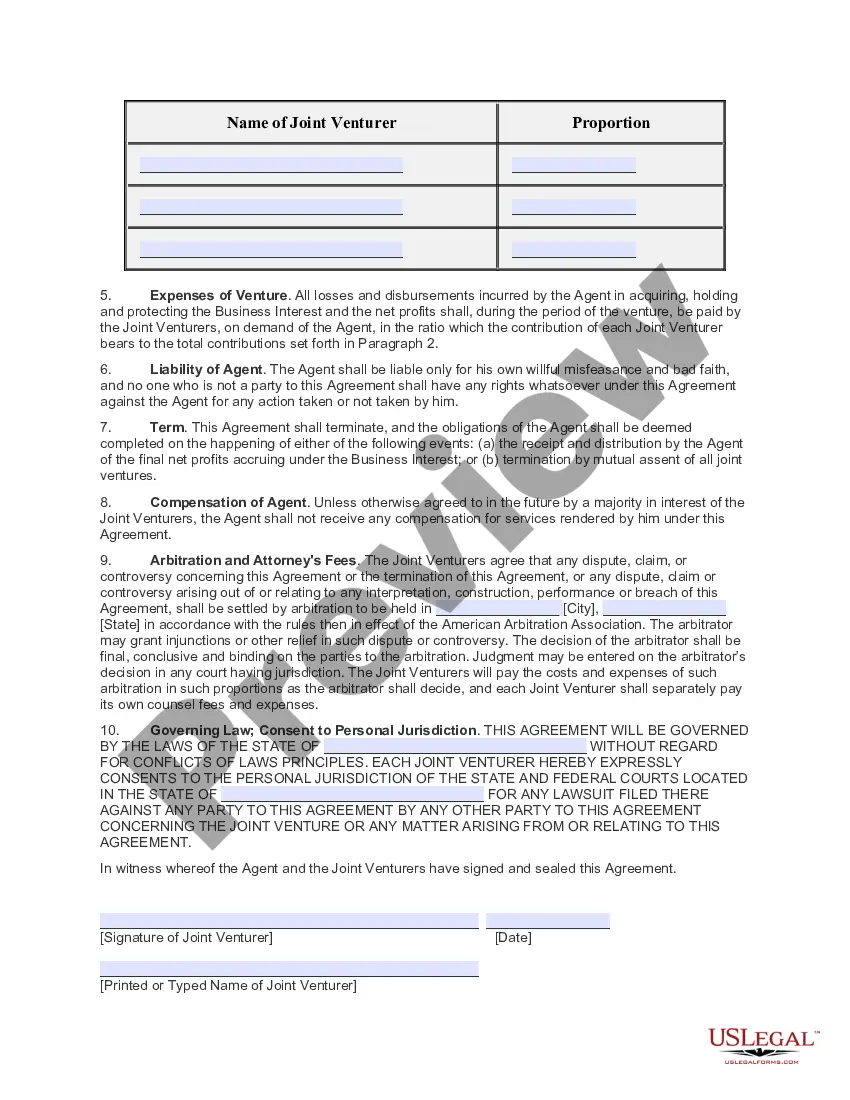
- Profit distribution agreement among the venturers.
- Terms for the expenses incurred by the venture.
- Dispute resolution via arbitration and governing law.
Common use cases
This form should be used when individuals or businesses wish to enter into a temporary partnership for a specific project or business investment. Common scenarios include joint marketing campaigns, collaborative product development, or co-investment in real estate ventures. When parties want to clearly outline their contributions and share profits or losses equitably, this agreement serves as a comprehensive legal framework.
Who should use this form
This form is suitable for:
- Small business owners looking to partner with others for a project.
- Individuals seeking to invest together in a business opportunity.
- Corporations interested in collaboration for specific ventures.
- Legal practitioners assisting clients in forming joint ventures.
Steps to complete this form
- Identify the parties involved in the joint venture and enter their names and dates.
- Clearly define the purpose of the joint venture and what business interest is being pursued.
- Fill in the financial contributions from each party in the designated areas.
- Specify how profits and expenses will be distributed among the parties.
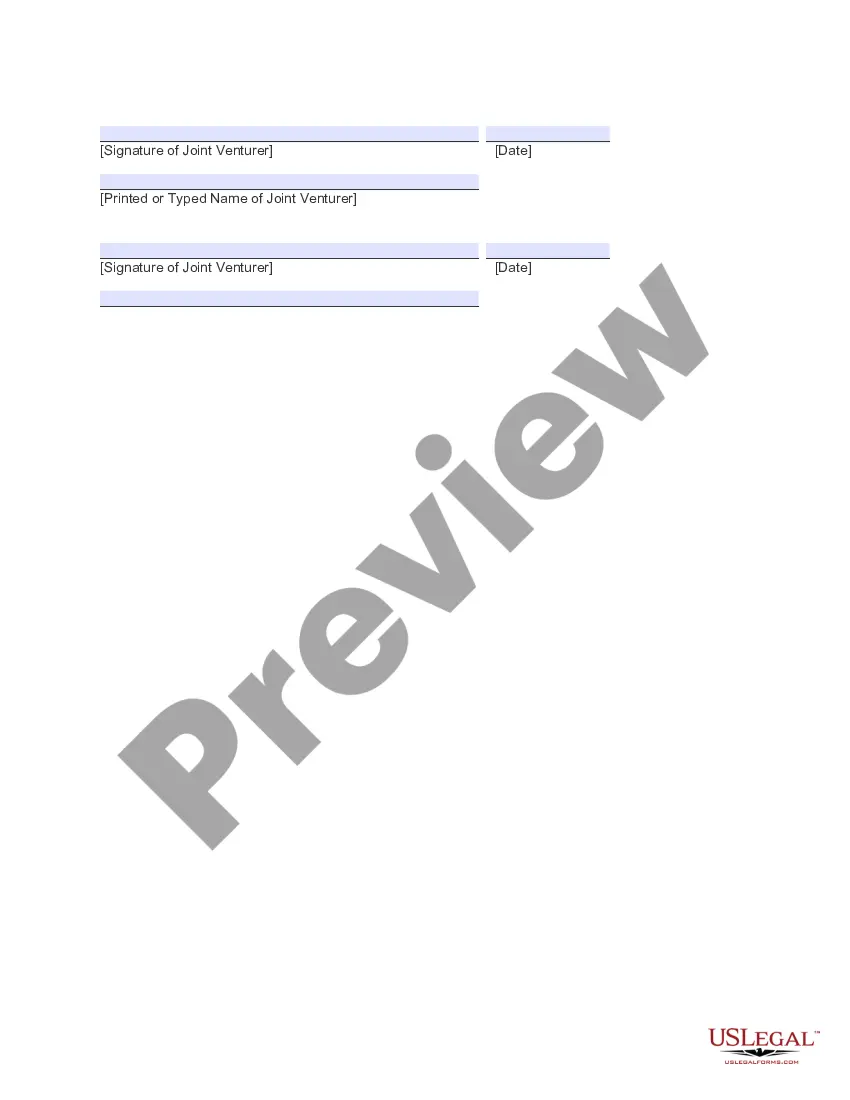
- Ensure all parties read the dispute resolution clause and sign the document.
Is notarization required?
This form does not typically require notarization unless specified by local law. Ensure that all parties sign the agreement in the presence of witnesses, if necessary, to enhance its validity.
Get your form ready online
Our built-in tools help you complete, sign, share, and store your documents in one place.
Make edits, fill in missing information, and update formatting in US Legal Forms—just like you would in MS Word.
Download a copy, print it, send it by email, or mail it via USPS—whatever works best for your next step.
Sign and collect signatures with our SignNow integration. Send to multiple recipients, set reminders, and more. Go Premium to unlock E-Sign.
If this form requires notarization, complete it online through a secure video call—no need to meet a notary in person or wait for an appointment.
We protect your documents and personal data by following strict security and privacy standards.

Make edits, fill in missing information, and update formatting in US Legal Forms—just like you would in MS Word.

Download a copy, print it, send it by email, or mail it via USPS—whatever works best for your next step.

Sign and collect signatures with our SignNow integration. Send to multiple recipients, set reminders, and more. Go Premium to unlock E-Sign.

If this form requires notarization, complete it online through a secure video call—no need to meet a notary in person or wait for an appointment.

We protect your documents and personal data by following strict security and privacy standards.
Typical mistakes to avoid
- Failing to specify the purpose of the joint venture clearly.
- Not detailing each party's contributions accurately.
- Neglecting to establish the ratio for profit-sharing.
- Forgetting to include a clause for dispute resolution.
- Leaving out necessary signatures from all joint venturers.
Why complete this form online
- Easy customization to meet specific needs of the parties involved.
- Convenience of downloading and completing the form at any time.
- Access to professionally drafted legal language by licensed attorneys.
- Reduced time and effort in creating a comprehensive agreement from scratch.
Looking for another form?
Form popularity
FAQ
How Do You Form a Joint Venture? Choose Your Joint Venture Partner. To create a JV, the first thing you'll need to do is choose a partner.Decide on the Type of Venture You Want.Draft Your Joint Venture Agreement.Create a Separate Legal Entity, If Necessary.
BMW and Brilliance Auto Group. BMW needed a Chinese partner to manufacture cars in China due to local laws at the time. It therefore joined forces with the Brilliance Auto Group to create BMW Brilliance.
Taxi giant Uber and heavy vehicle manufacturer Volvo announced a joint venture agreement to develop self-driving cars. The two companies planned to jointly invest $300 million in the project, each contributing $150 million. Hence, the ownership ratio between the two companies was 50%-50%.
Joint venture agreements, also called JV agreements, are contractual consortiums of two parties. They usually seek to join both party's resources to achieve a specific objective. The party's benefit by receiving proportionately split profits and distributed ventures.
Your joint venture agreement must be in writing and follow SBA requirements. The joint venture must be separately identified with its own name and have both a Unique Entity Identifier (UEI) and a Commercial And Government Entity (CAGE) code in the federal government's System for Award Management at SAM.gov .
How to write a Joint Venture Agreement Establish the details of the joint venture. Add information about your industry, location, and which type of venture you'll form.Describe the members of the joint venture.Set terms for business management.Set terms to help avoid or manage disputes.
A Joint Venture Agreement is a legal document where two or more entities combine to do business or undertake an economic activity together. The parties agree to create a new entity by contributing equity and share the revenues, expenses and control of the enterprise in the proportion of their capital contribution.