Termination Letter for Absenteeism
Overview of this form
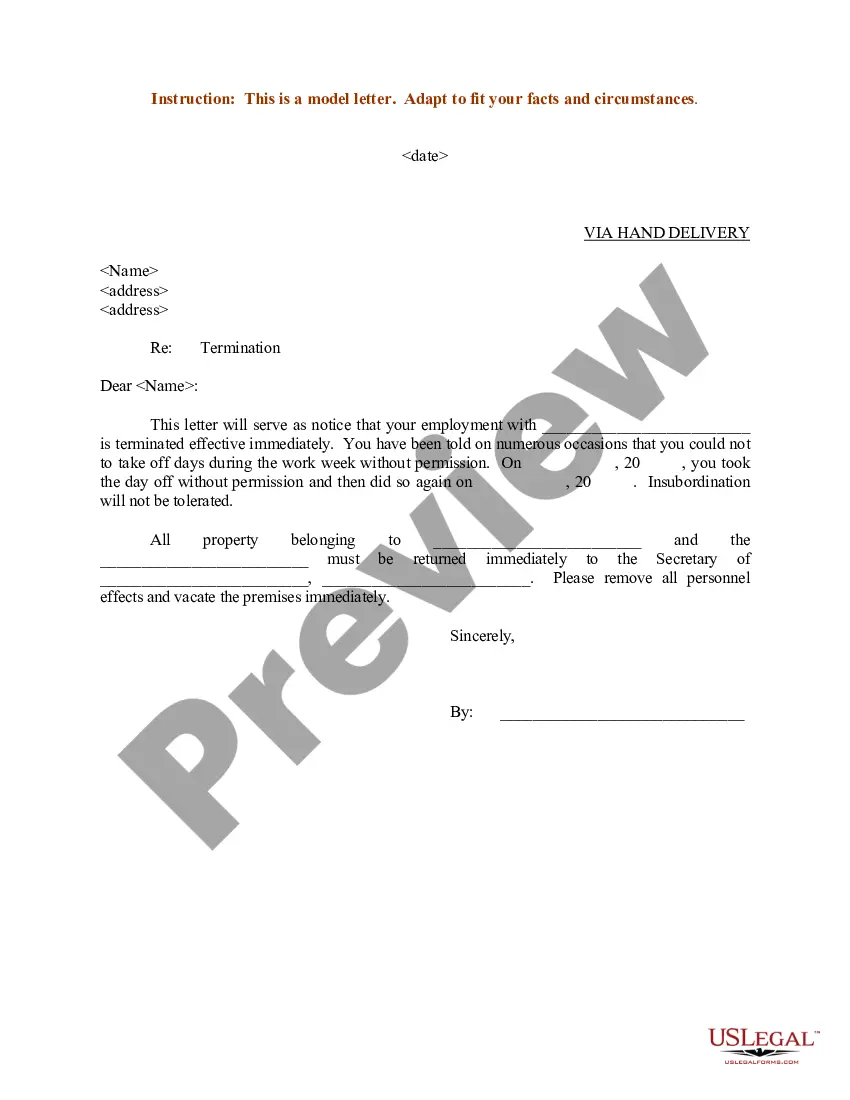
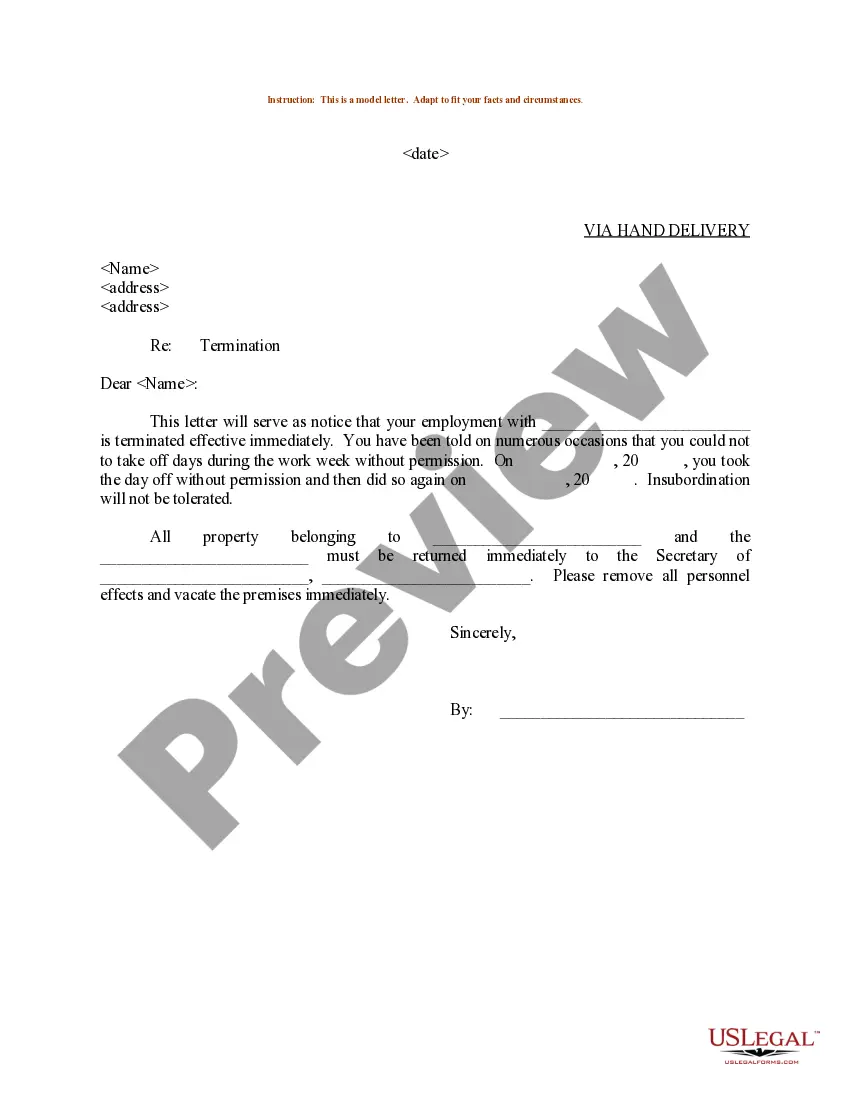
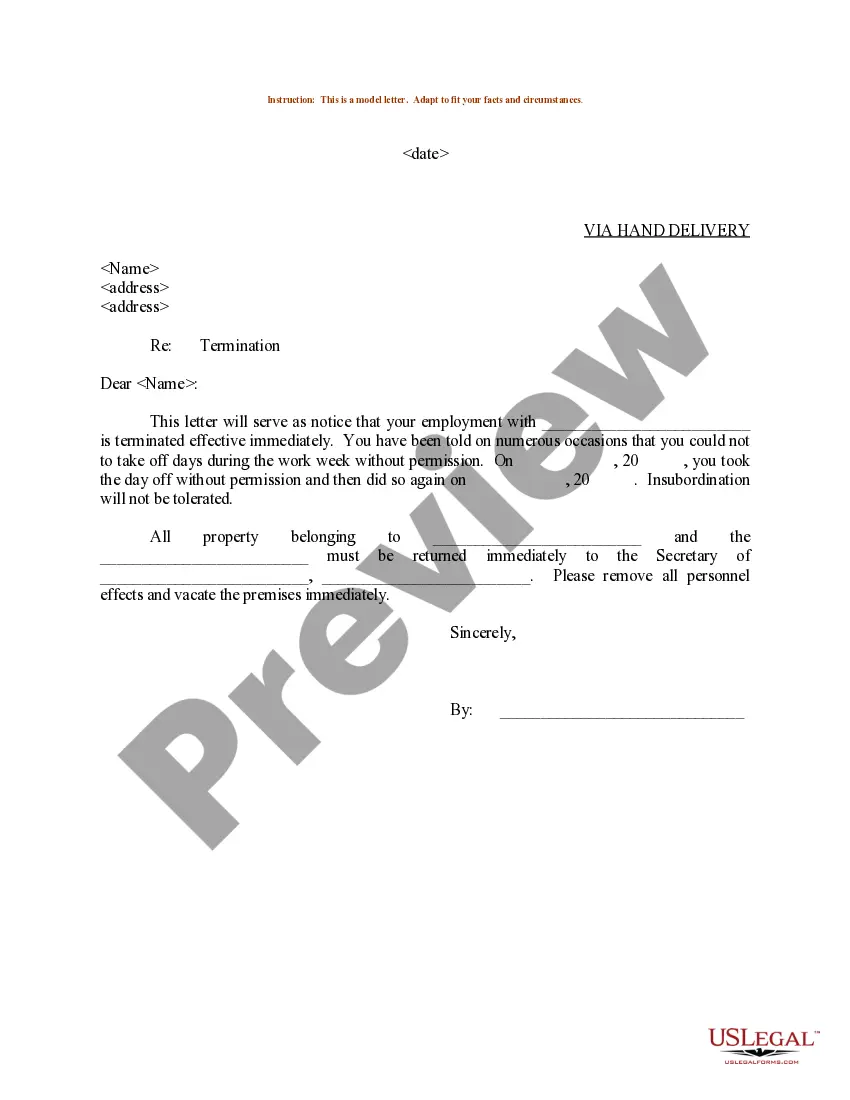
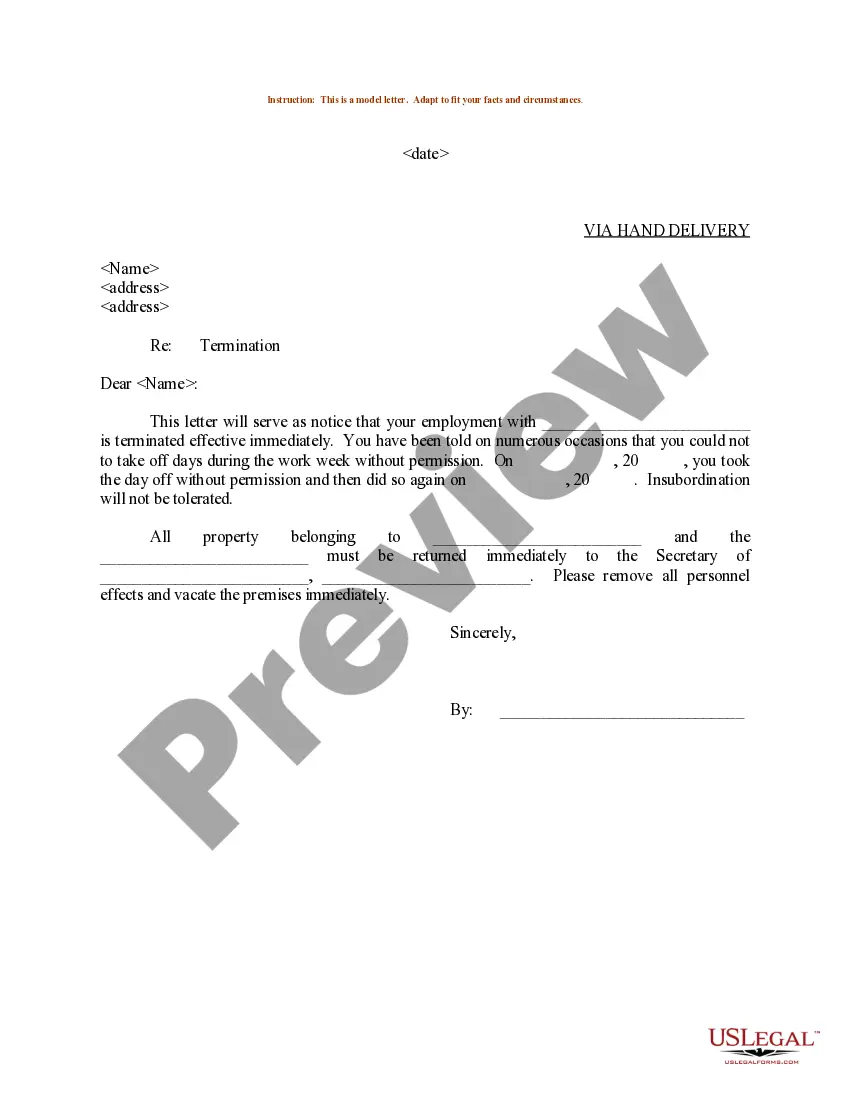
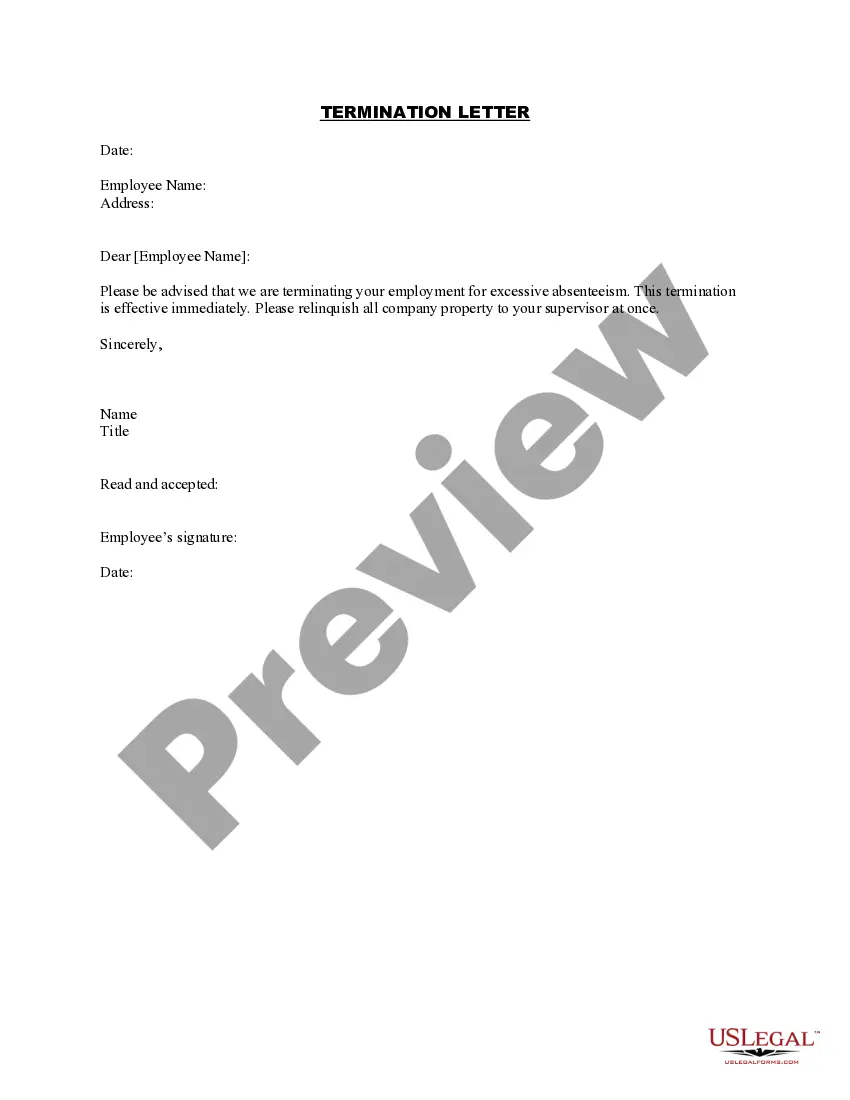
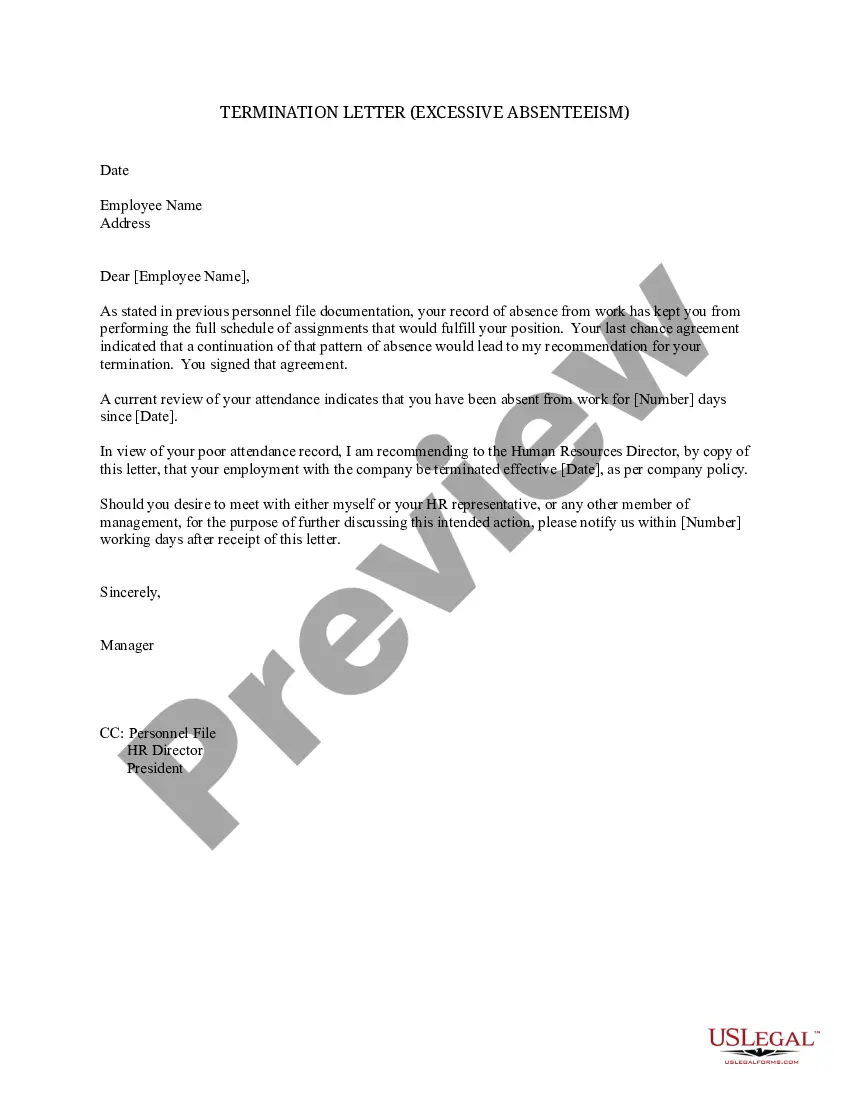
A termination letter for absenteeism is a formal document that an employer uses to dismiss an employee due to excessive unexcused absences. This letter outlines the reasons for termination, providing a clear record of the actions taken. Unlike general termination letters, this specific form focuses on absenteeism, addressing an employee's repeated failure to attend work without valid justification.
Main sections of this form
- Date of the letter
- Recipient's name and address
- Subject line mentioning termination
- Personalized greeting to the recipient
- Explanation of the reasons for termination
- Signature line for the employer
When to use this document
This form should be used by employers when they need to formally notify an employee of their termination due to unexcused absenteeism. Common scenarios include instances where an employee has not reported to work for an extended period without proper notification or documentation. This letter serves to document the employer's decision and provide the employee with the reason for their separation from the company.
Who should use this form
- Employers managing personnel matters
- Human Resources professionals
- Managers responsible for employee conduct
- Business owners implementing employee disciplinary actions
How to complete this form
- Identify the date on which the letter is delivered.
- Enter the recipient's name and address accurately.
- State the subject clearly, indicating it is a termination notice.
- Compose a personalized message detailing the reasons for the termination.
- Sign the letter, including your name and position.
Notarization guidance
This form does not typically require notarization unless specified by local law. It is advisable to keep a copy for your records and provide the employee with a copy as well.
Get your form ready online
Our built-in tools help you complete, sign, share, and store your documents in one place.
Make edits, fill in missing information, and update formatting in US Legal Forms—just like you would in MS Word.
Download a copy, print it, send it by email, or mail it via USPS—whatever works best for your next step.
Sign and collect signatures with our SignNow integration. Send to multiple recipients, set reminders, and more. Go Premium to unlock E-Sign.
If this form requires notarization, complete it online through a secure video call—no need to meet a notary in person or wait for an appointment.
We protect your documents and personal data by following strict security and privacy standards.

Make edits, fill in missing information, and update formatting in US Legal Forms—just like you would in MS Word.

Download a copy, print it, send it by email, or mail it via USPS—whatever works best for your next step.

Sign and collect signatures with our SignNow integration. Send to multiple recipients, set reminders, and more. Go Premium to unlock E-Sign.

If this form requires notarization, complete it online through a secure video call—no need to meet a notary in person or wait for an appointment.

We protect your documents and personal data by following strict security and privacy standards.
Common mistakes
- Failing to document specific instances of absenteeism.
- Using vague language instead of clear justifications for termination.
- Neglecting to send the letter via a verifiable method of delivery.
- Not considering state-specific employment laws regarding termination.
Benefits of using this form online
- Convenient access to customizable templates.
- Easy to edit and personalize for your specific situation.
- Reliable legal compliance, ensuring you meet all formal requirements.
- Quick downloading process for immediate use.
Looking for another form?
Form popularity
FAQ
Notify the employee of their termination date. State the reason(s) for termination. Explain their compensation and benefits going forward. Notify them of any company property they must return. Remind them of signed agreements. Include HR contact information.
Make very clear what is and isn't acceptable. Put it in writing and make sure everyone has access. Better yet, put it in your employee handbook. Require new hires to read it before they start working. Have all employees sign a form acknowledging they've read and understand the policy.
Follow business letter format. Use the official business letter format when writing your letter. Understand your employer's policies. Have a legitimate excuse. Send the letter as soon as possible. Keep it brief. Offer to help.
If you have any rules regarding an absence or what an employee should do in case of absence, remind them of the rules. State that you or management is having a problem with that employee's attendance. Make sure you have the exact dates and times documented, and then present it to them. Express concern over the issue.
Specific facts (not opinions) about the situation. The rule or policy violated. Objectives and expectations for improvement. Disciplinary action being taken. Consequences for not correcting the problem. Signatures and dates.
1) Names And All Employee Information. 2) Dates. 3) Reason For Termination. 4) Receipt Of Company Property. 5) Severance, Benefits, And Other Compensation Information. 6) Legal Agreements. 7) Details About Their Final Paycheck. 1) Severance To Waive Legal Claims.
Create a form that includes spots for the employee's name, description of the offense, dates of absenteeism and the actions you've taken so far to reduce the absenteeism. The standardized approach keeps the write-up professional and organized, helping you remain tactful even when the employee's behavior is frustrating.
Generally, if there has been no prior instance of absenteeism, the employer is not entitled to dismiss. But if the absence is coupled with insubordination, dismissal may be justified.If an employee fails to report for duty for an extended period, what the employer must do before a dismissal can be called fair.
For example, the employee was absent for three days without permission and the dates listed. The reprimand should be stated in the first paragraph. It should inform the employee that the letter is a formal warning that may result in further action if the situation continues.