Termination Letter (Excessive Absenteeism)
Overview of this form
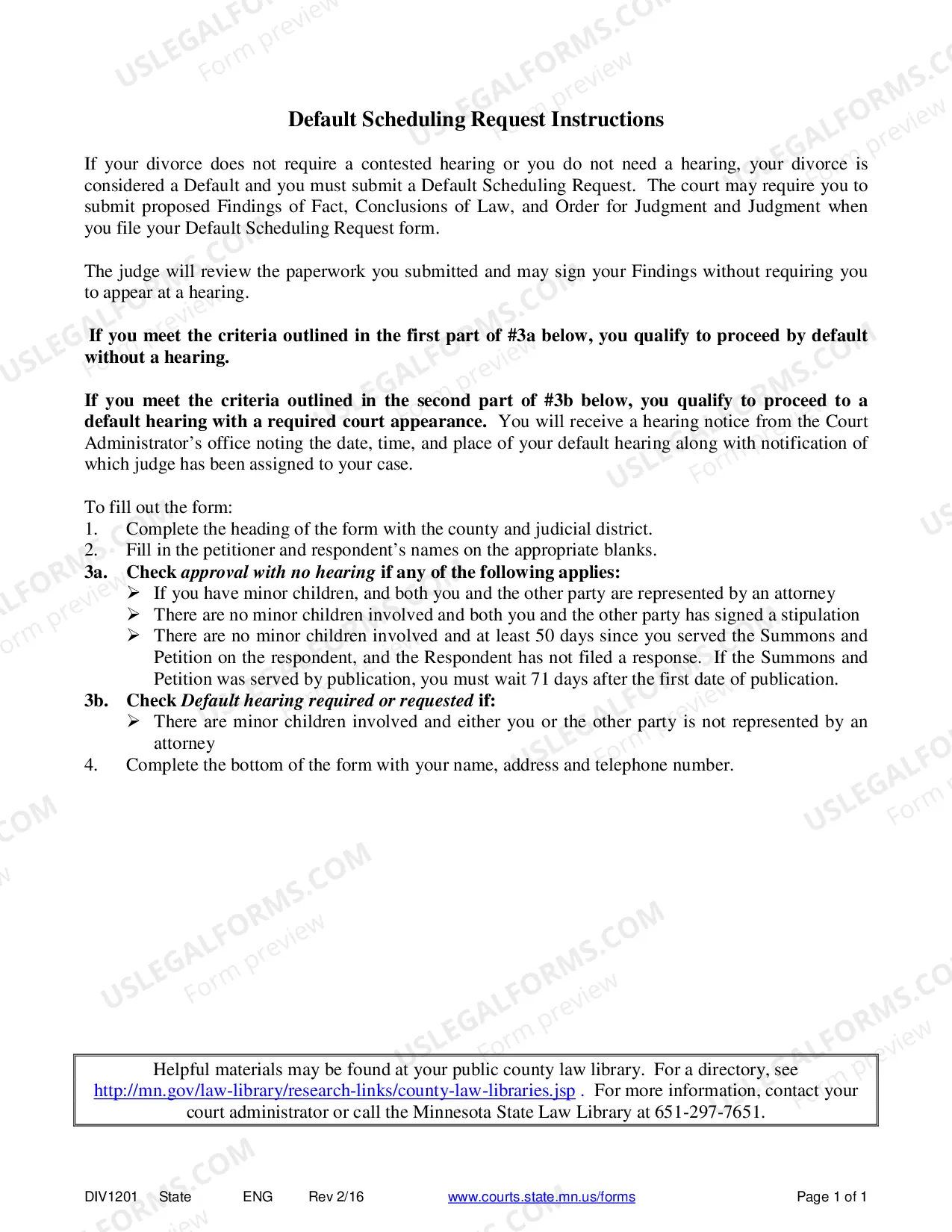
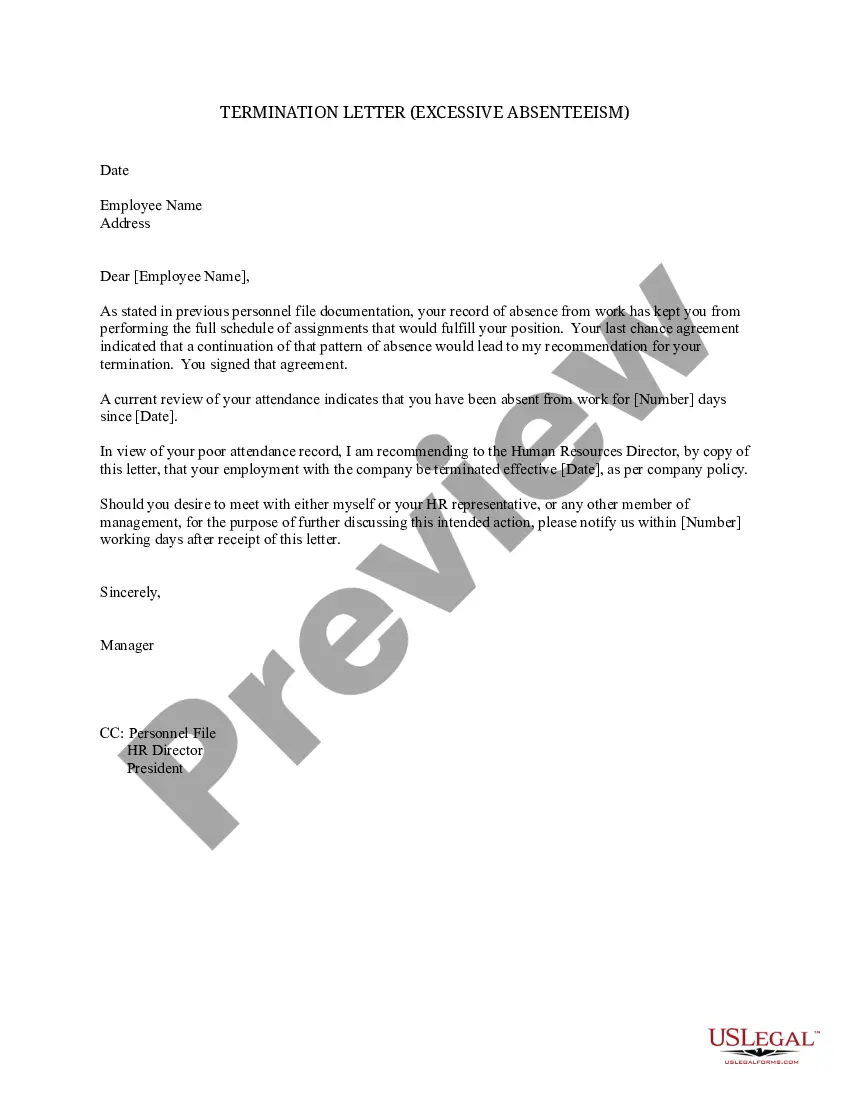
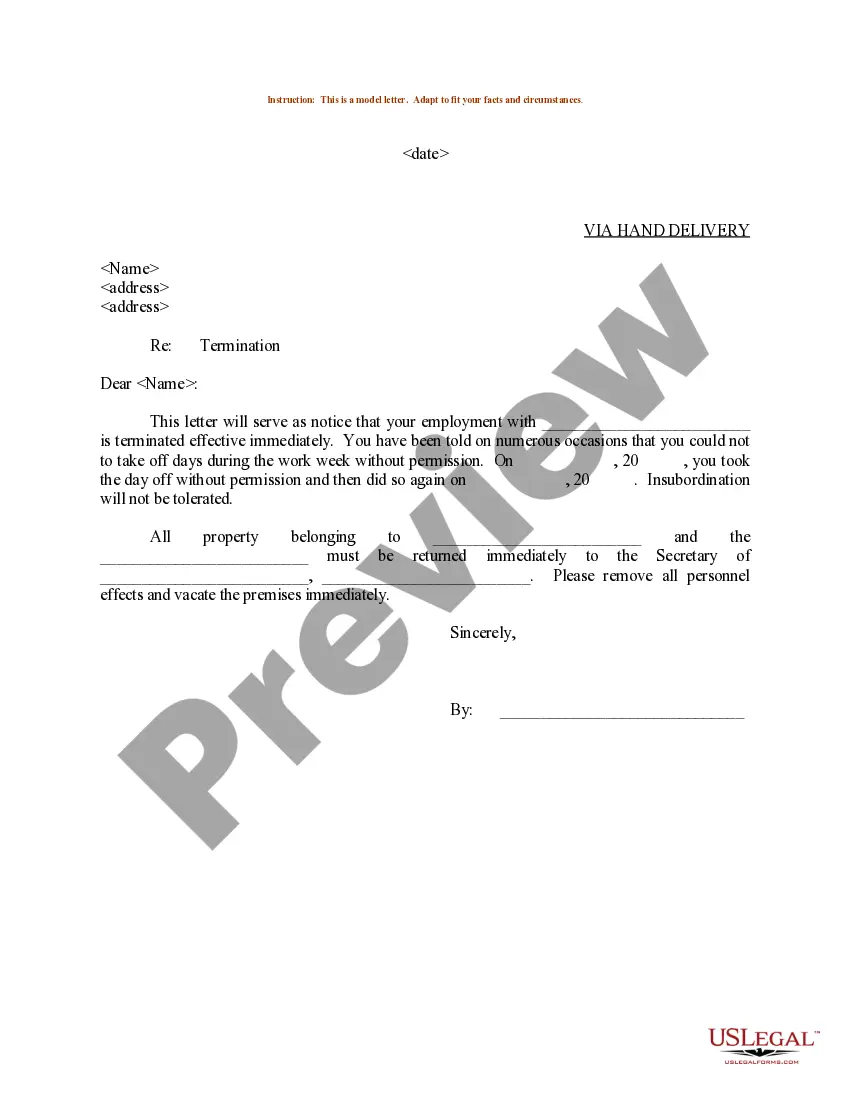
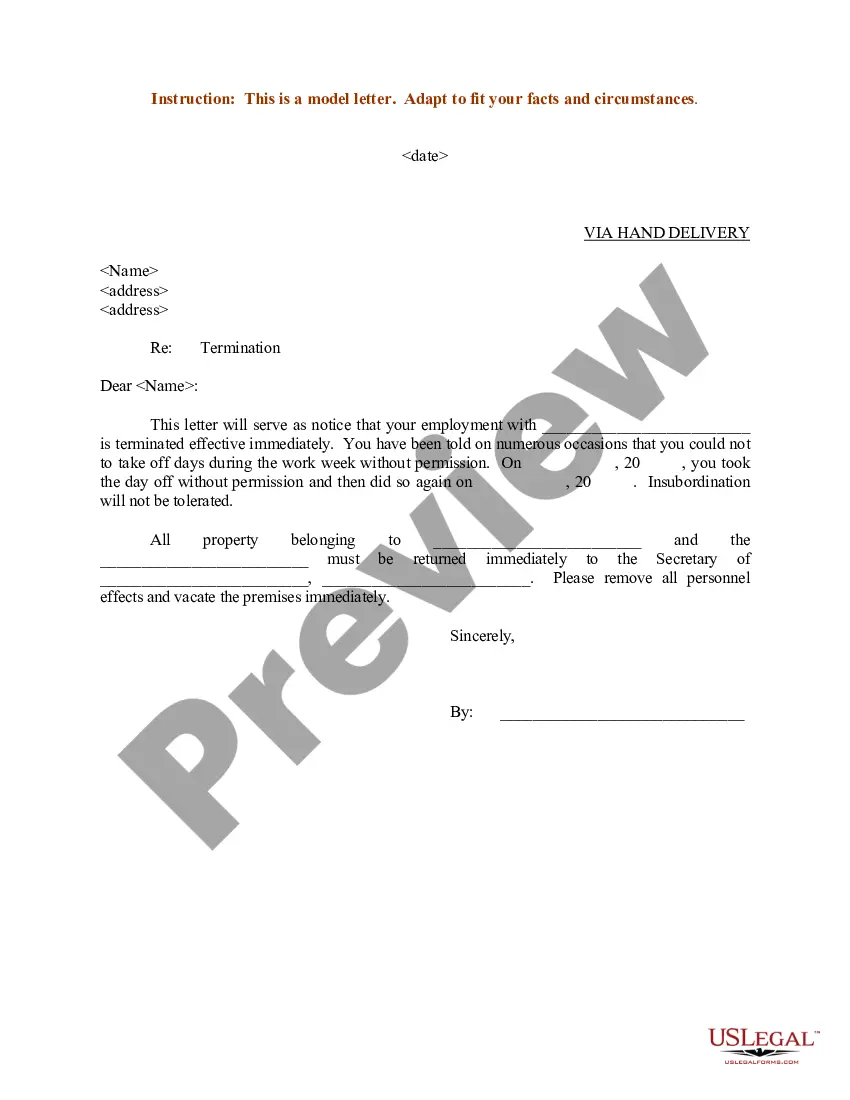
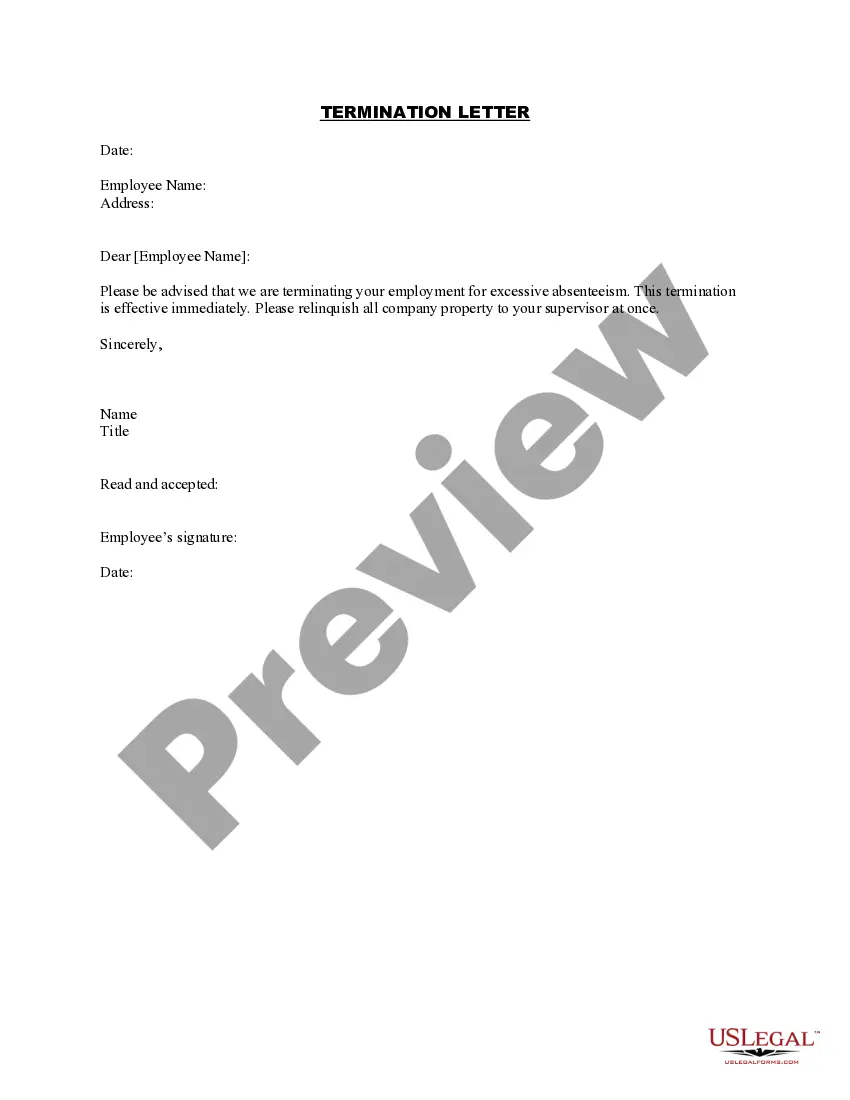
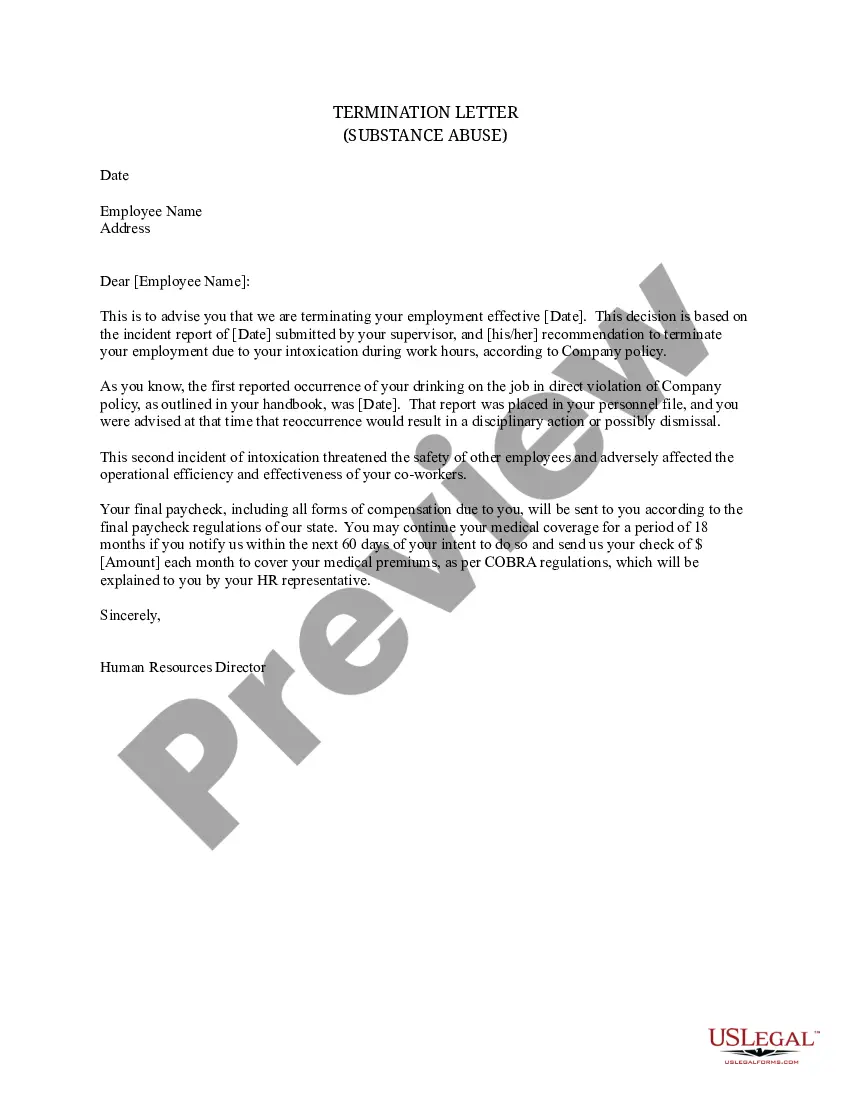
The termination letter for excessive absenteeism is a formal document issued by an employer to notify an employee of their termination due to poor attendance. This letter is essential to provide a clear record of the reasons for termination, citing previous agreements or warnings regarding attendance policies. Unlike other general termination letters, this specific form directly addresses absenteeism as the basis for the termination decision.
Form components explained
- Date of the letter
- Employee name and address
- A statement outlining the employee's attendance issues
- Details of previous agreements regarding attendance
- Effective date of termination
- Contact information for further discussion
Situations where this form applies
This form should be used in situations where an employee's pattern of absenteeism continues despite prior warnings or agreements. It is applicable when the employer has made an effort to address the issue but has seen no improvement, making termination necessary. Examples include frequent unexcused absences or failing to provide proper notifications when unable to attend work.
Intended users of this form
This termination letter is intended for:
- Employers seeking to terminate an employee due to absenteeism
- HR personnel responsible for managing employee records and documentation
- Managers who oversee employee performance and disciplinary actions
Completing this form step by step
- Fill in the date of the letter at the top of the document.
- Enter the employee's full name and address in the appropriate fields.
- Clearly state the reasons for termination, referencing any relevant attendance agreements.
- Specify the effective date of termination to avoid any confusion.
- Include contact information for any follow-up discussion regarding the termination.
Does this document require notarization?
This form does not typically require notarization unless specified by local law. Always check your jurisdiction's requirements to ensure compliance.
Get your form ready online
Our built-in tools help you complete, sign, share, and store your documents in one place.
Make edits, fill in missing information, and update formatting in US Legal Forms—just like you would in MS Word.
Download a copy, print it, send it by email, or mail it via USPS—whatever works best for your next step.
Sign and collect signatures with our SignNow integration. Send to multiple recipients, set reminders, and more. Go Premium to unlock E-Sign.
If this form requires notarization, complete it online through a secure video call—no need to meet a notary in person or wait for an appointment.
We protect your documents and personal data by following strict security and privacy standards.

Make edits, fill in missing information, and update formatting in US Legal Forms—just like you would in MS Word.

Download a copy, print it, send it by email, or mail it via USPS—whatever works best for your next step.

Sign and collect signatures with our SignNow integration. Send to multiple recipients, set reminders, and more. Go Premium to unlock E-Sign.

If this form requires notarization, complete it online through a secure video call—no need to meet a notary in person or wait for an appointment.

We protect your documents and personal data by following strict security and privacy standards.
Mistakes to watch out for
- Failing to document previous attendance issues before termination
- Using vague language that could lead to misunderstandings
- Not providing adequate notice or opportunities for the employee to discuss the termination
Why use this form online
- Immediate access to legal templates drafted by licensed attorneys
- Easy customization to suit specific situations and local laws
- Secure storage options for important employment documents
Legal use & context:
- Employers must ensure that the reason for termination aligns with company policy and documented attendance records.
- This document serves as a legal protective measure for the employer should the termination be challenged.
- Proper issuance of this letter may help mitigate potential wrongful termination claims.
Key takeaways
- The Termination Letter for Excessive Absenteeism is essential for documenting the termination process.
- Clear and specific details in the letter can protect against disputes.
- Ensure compliance with state-specific laws when using this form.
Looking for another form?
Form popularity
FAQ
Remain aware that the meeting is investigative in nature and not disciplinary. Ensure the meeting is private. Have your facts ready before the meeting. Ask the employee for more details about the absences. Explain to the employee that their absences are affecting operations.
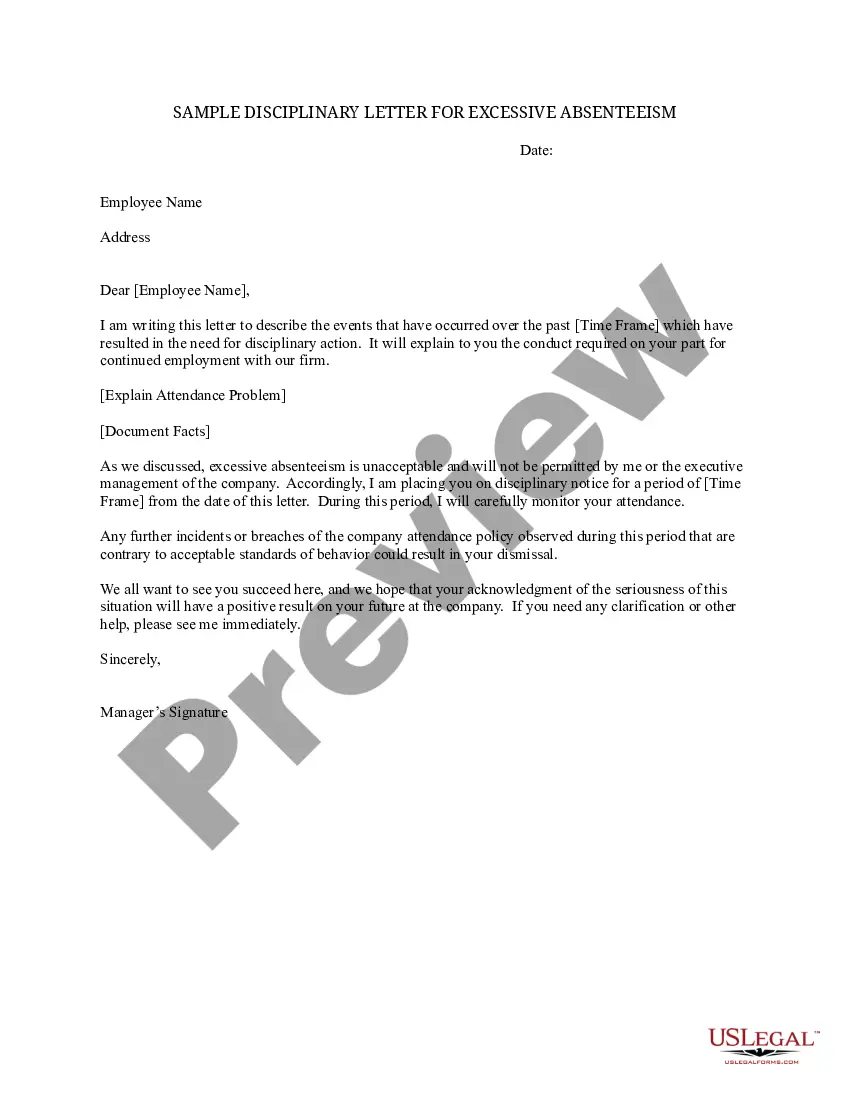
For example, the employee was absent for three days without permission and the dates listed. The reprimand should be stated in the first paragraph. It should inform the employee that the letter is a formal warning that may result in further action if the situation continues.
Create an employee attendance policy. Enforce your attendance policy consistently. Keep track of employee absences. Address unscheduled absences and no-show's immediately. Don't just treat the symptoms, discover the cause. Don't forget to reward good behavior.
If you have any rules regarding an absence or what an employee should do in case of absence, remind them of the rules. State that you or management is having a problem with that employee's attendance. Make sure you have the exact dates and times documented, and then present it to them. Express concern over the issue.
John, there is no easy way to say this, but we have decided to let you go. Your last day will be on (Date). Thank you for everything you have done here and I hope we can leave on good terms. I'll go over some logistics with you, then we can address any questions you might have.
Notify the employee of their termination date. State the reason(s) for termination. Explain their compensation and benefits going forward. Notify them of any company property they must return. Remind them of signed agreements. Include HR contact information.
Put Your Attendance Policy in Writing. Take Time to Collect Evidence. Make Sure Employees Know You Are Aware of What is Going On. Show Concern For Employees. Keep Lines of Communication Open. Be Willing to Accommodate Employees.
Create a clear attendance policy and set expectations. Provide support. Reduce workplace stress. Provide feedback. Reward good attendance.
Making use of electronic registers, regular reporting, and communication between individual teachers, as well as between the school and the student's families can help reduce the risk of an individual student falling into the pattern of absenteeism.