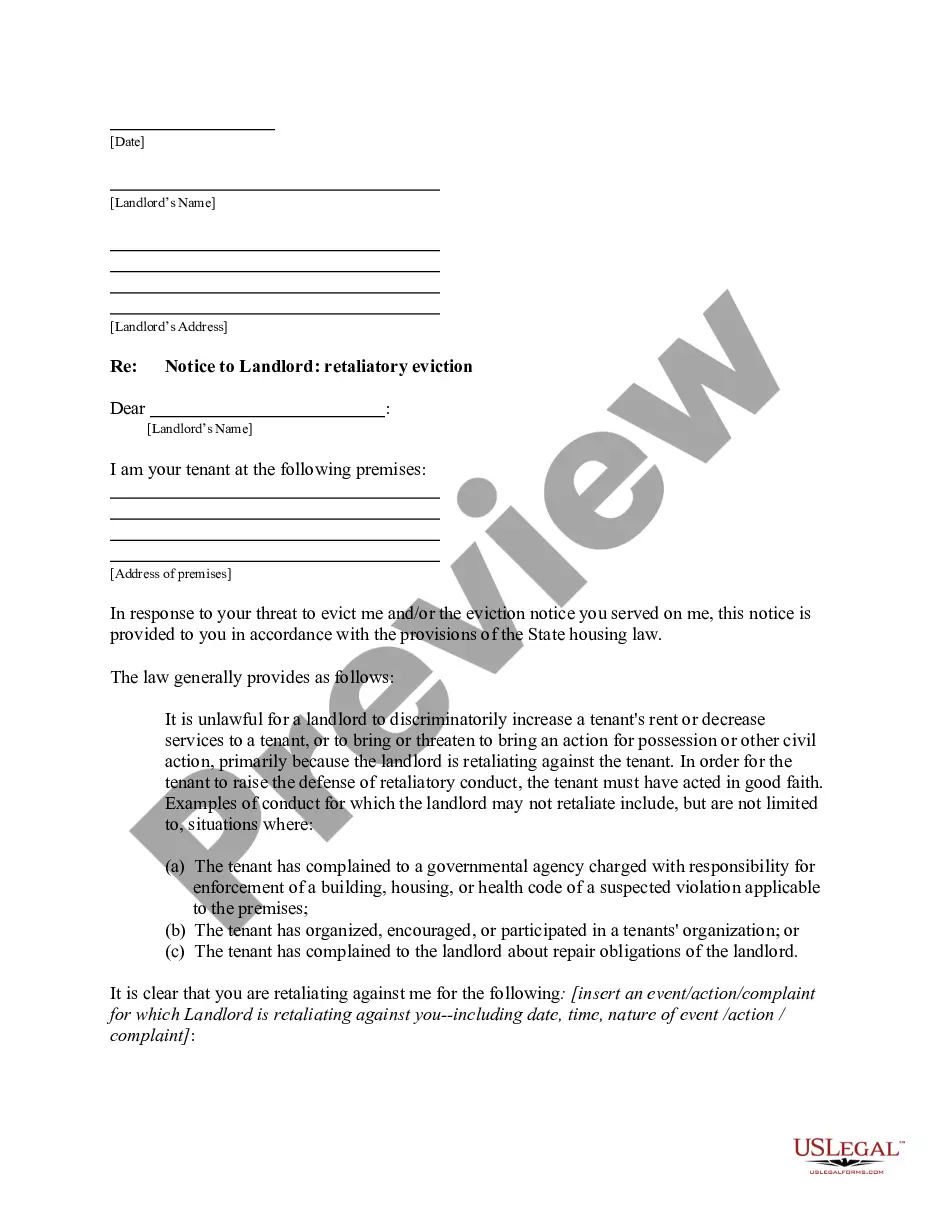
Request for Documents in Copyright Infringement Suit
What is this form?
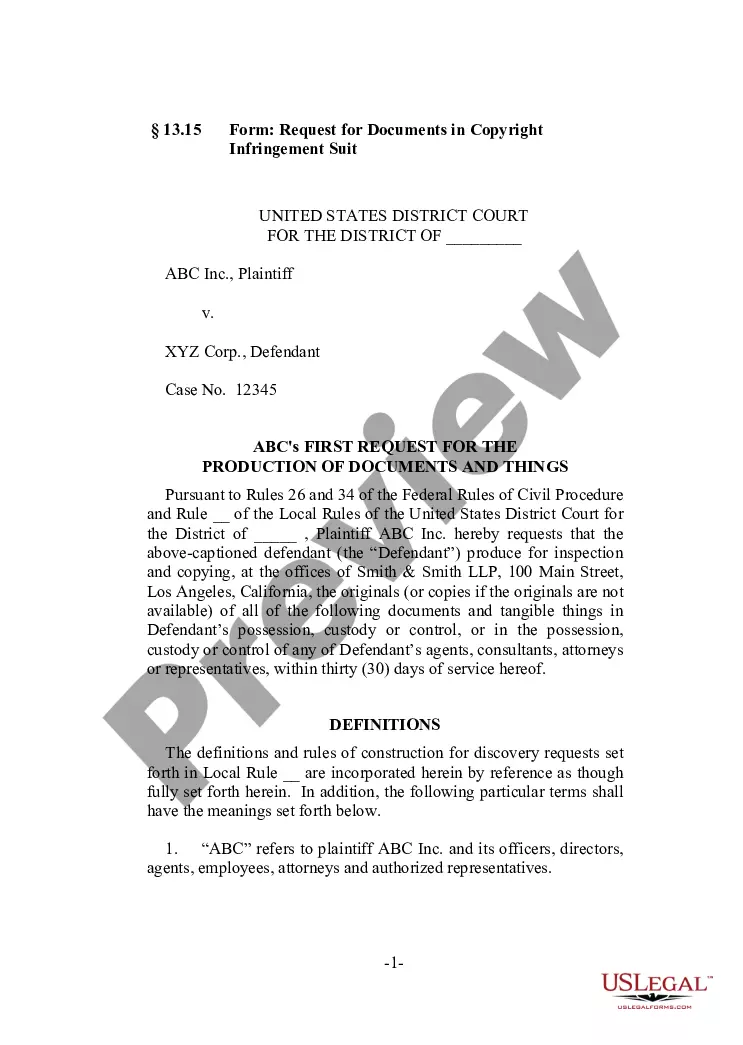
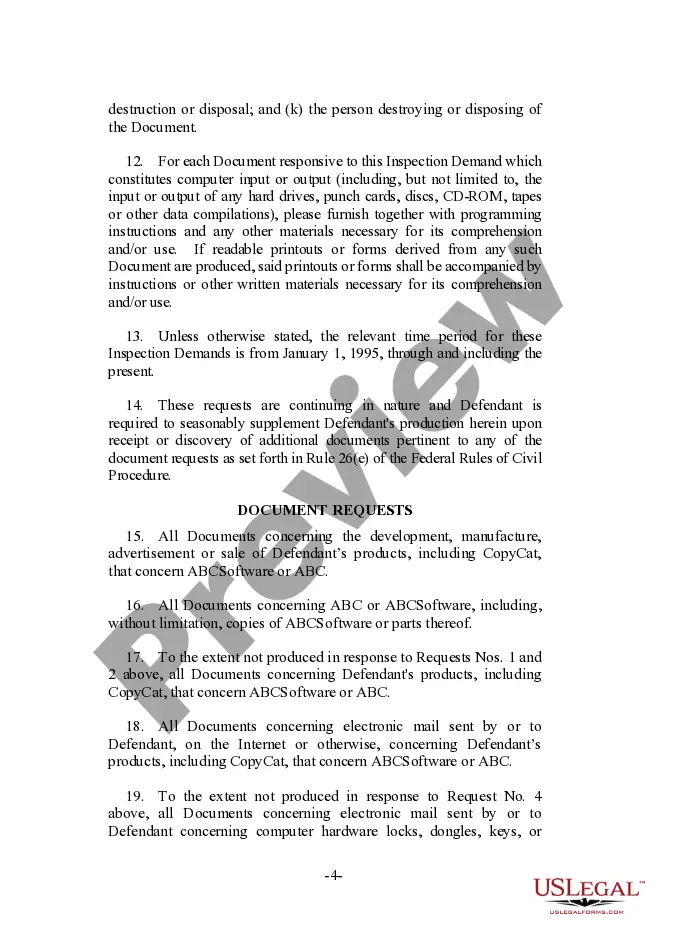
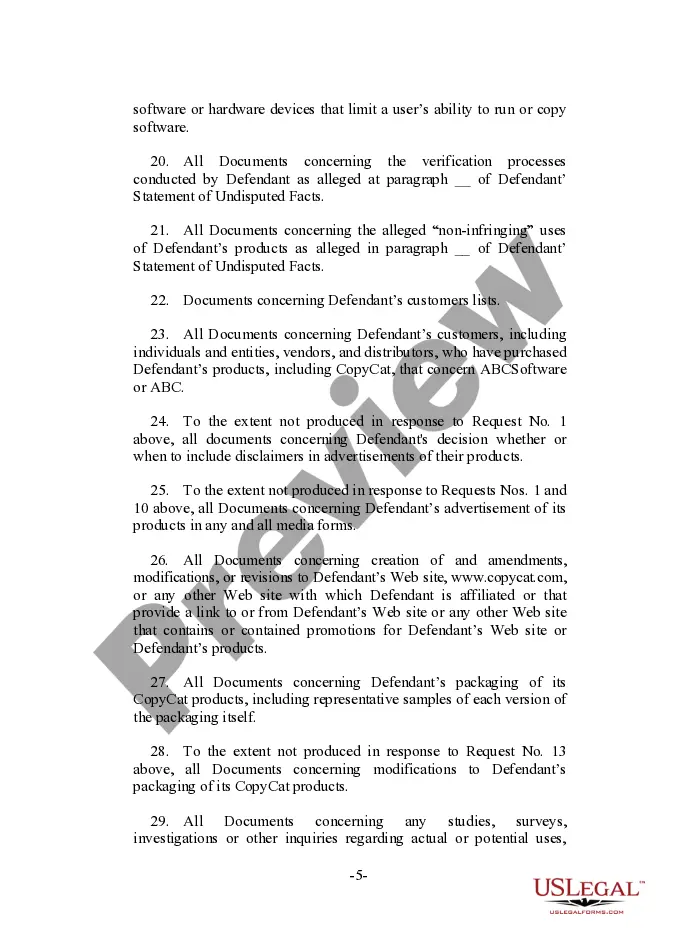
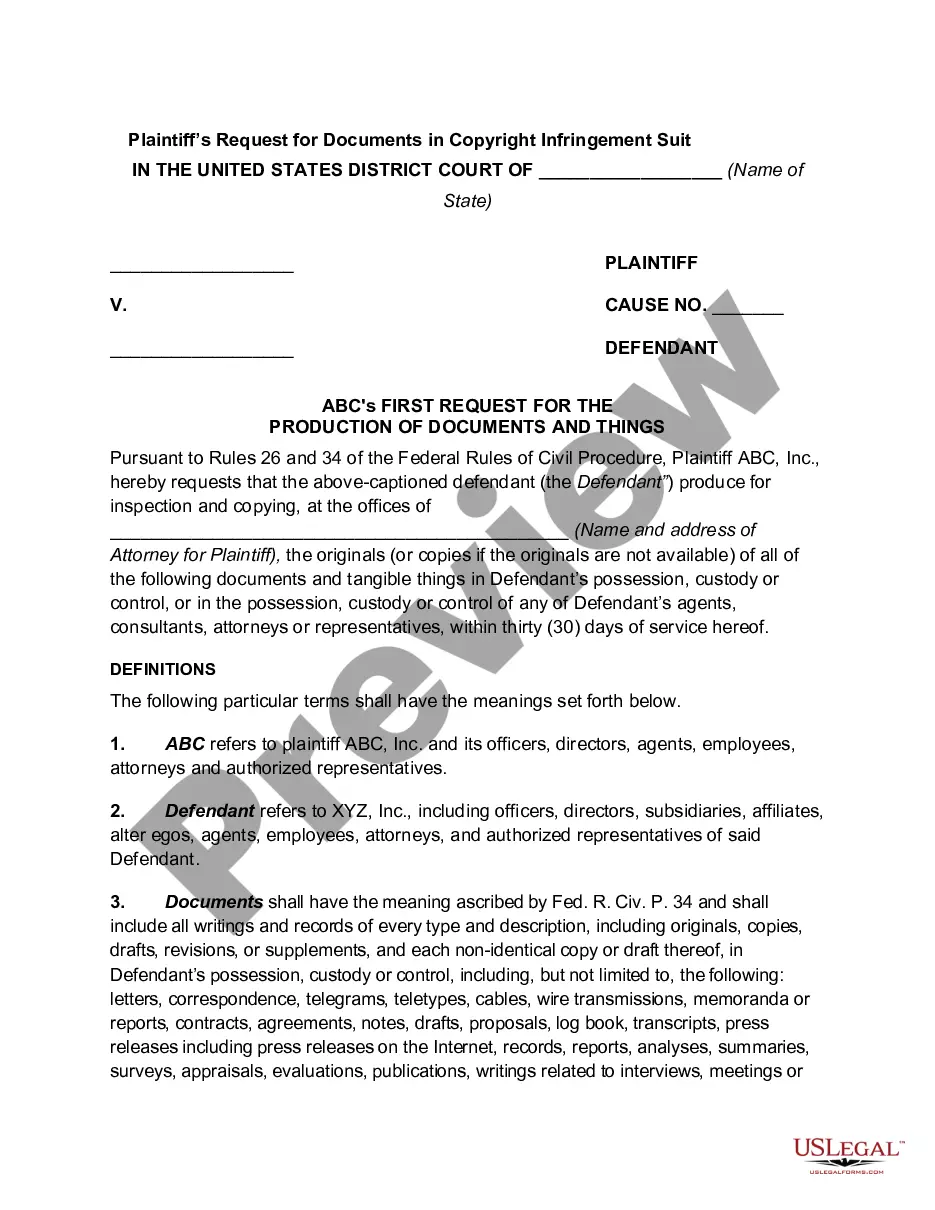
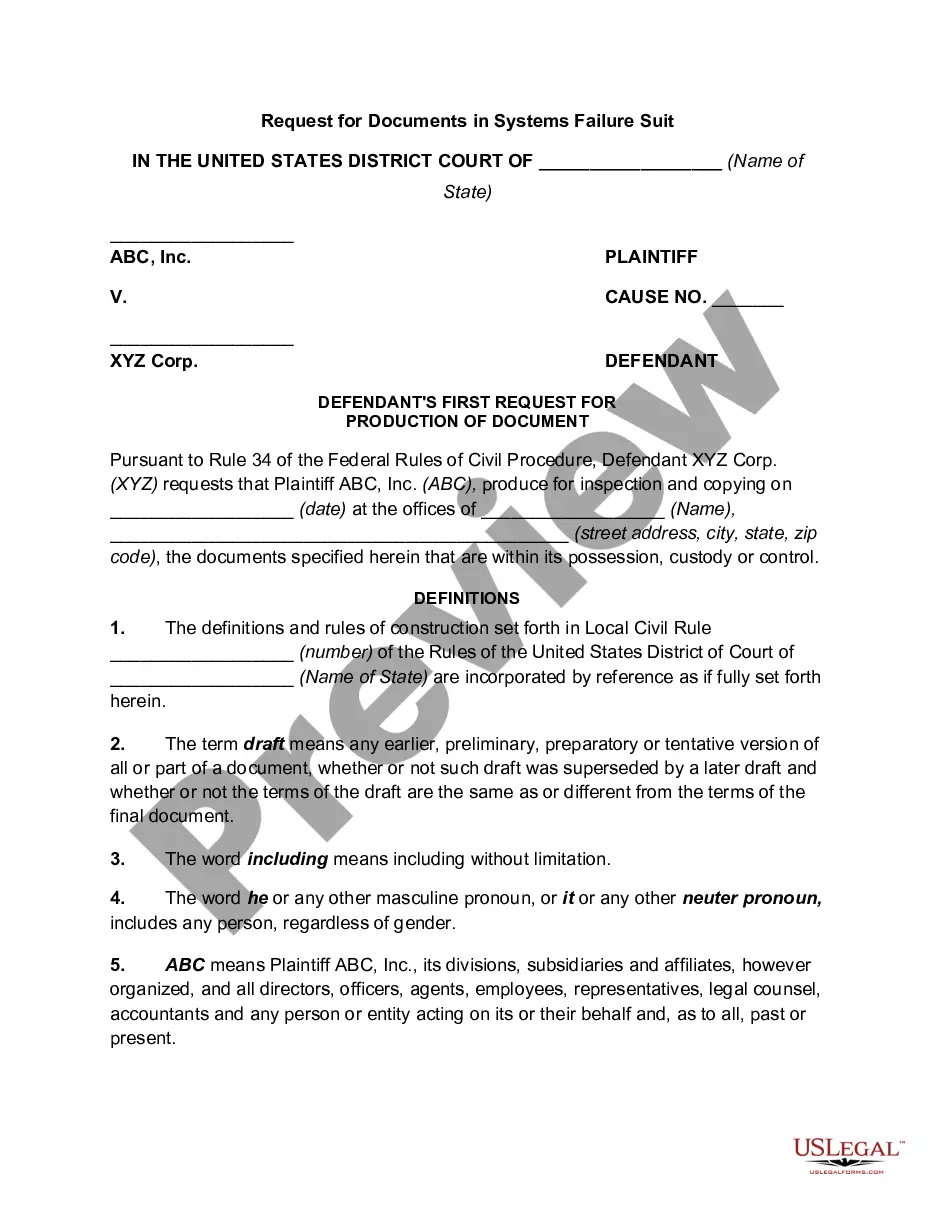
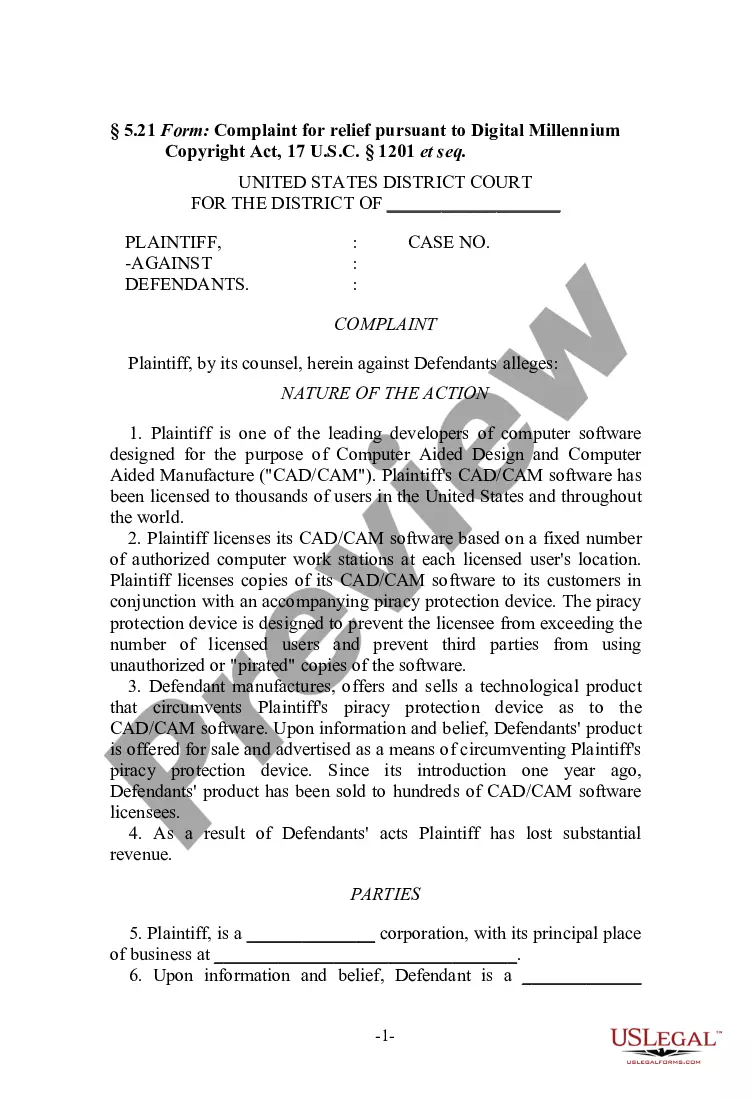
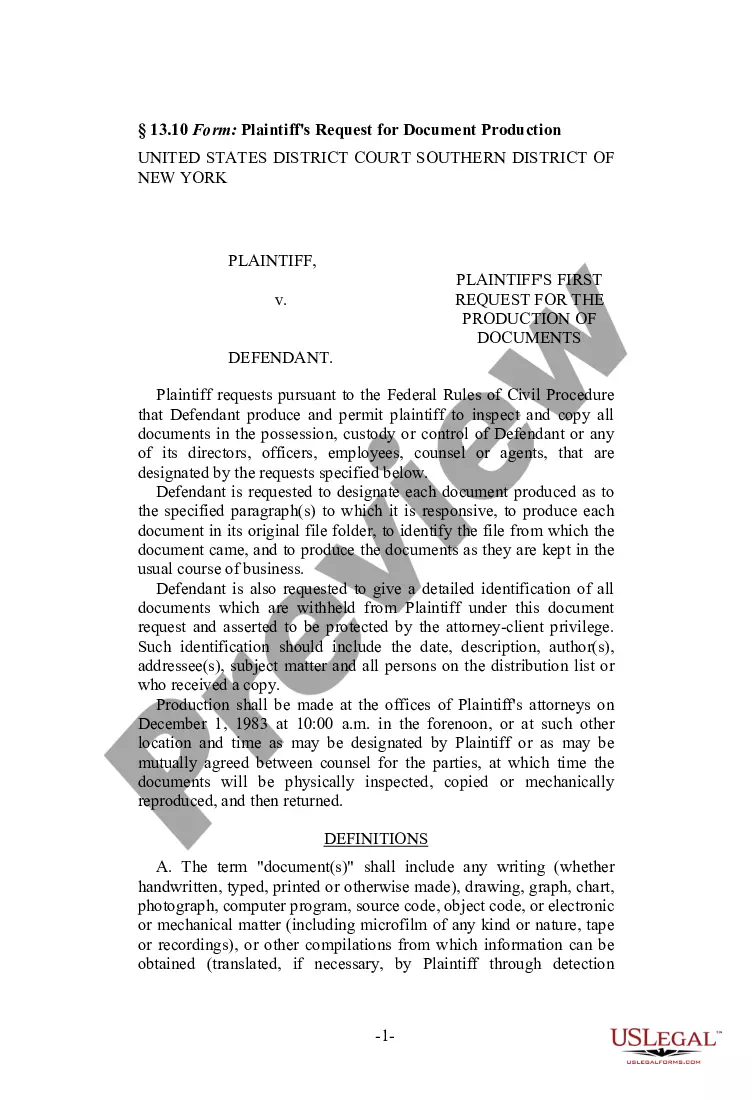
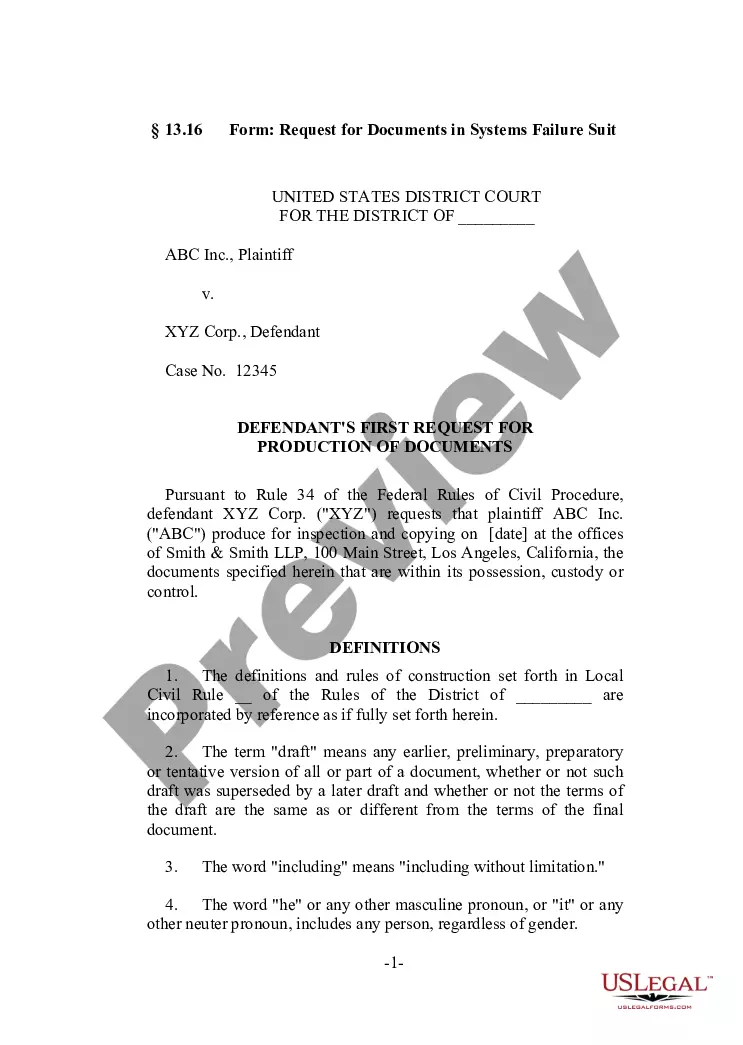
The Request for Documents in Copyright Infringement Suit is a legal form used to compel the production of documents related to an ongoing copyright infringement case. This form assists plaintiffs in gathering evidence relevant to their claims, particularly in the computer, internet, and software industries. Unlike similar forms, this request is tailored to address specific information needed during the discovery phase of litigation.
Key components of this form
- Identification of parties involved: Clearly states who the plaintiff (ABC Inc.) and defendant (XYZ Corp.) are.
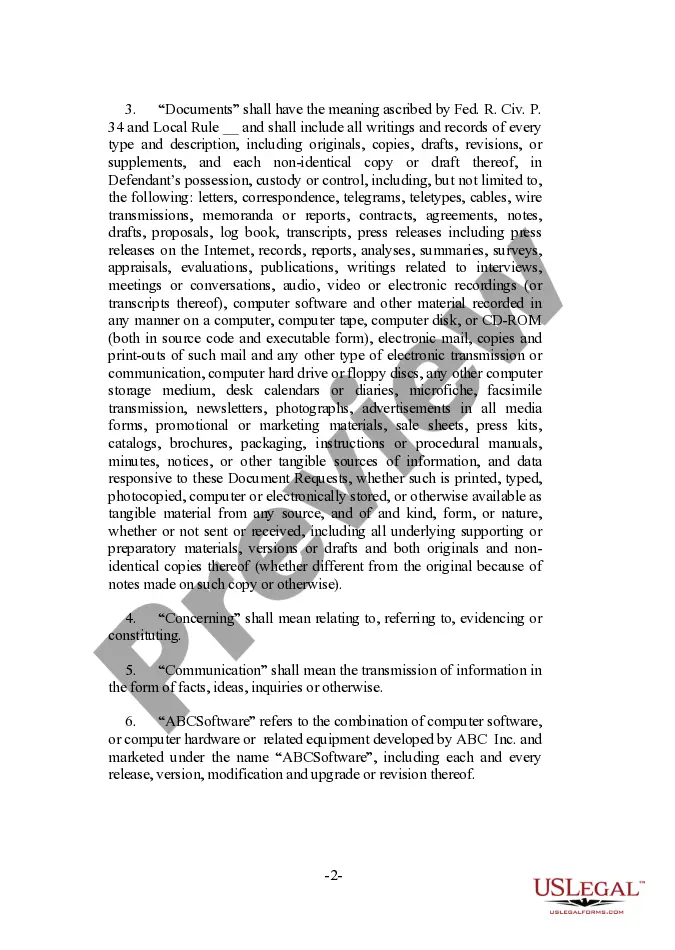
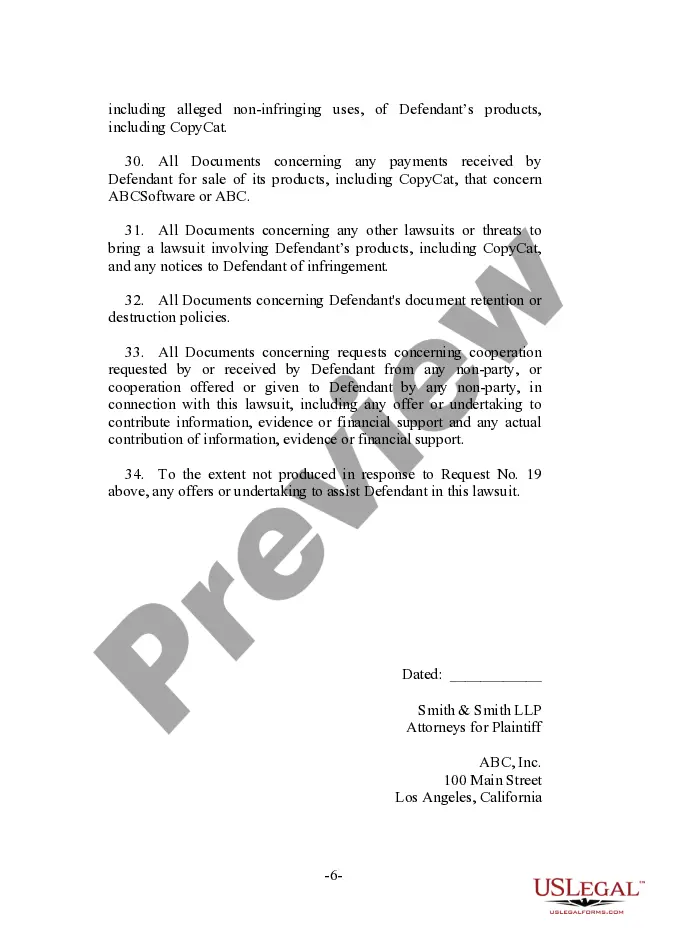
- Document request specifications: Detailed list of documents the defendant is required to produce.
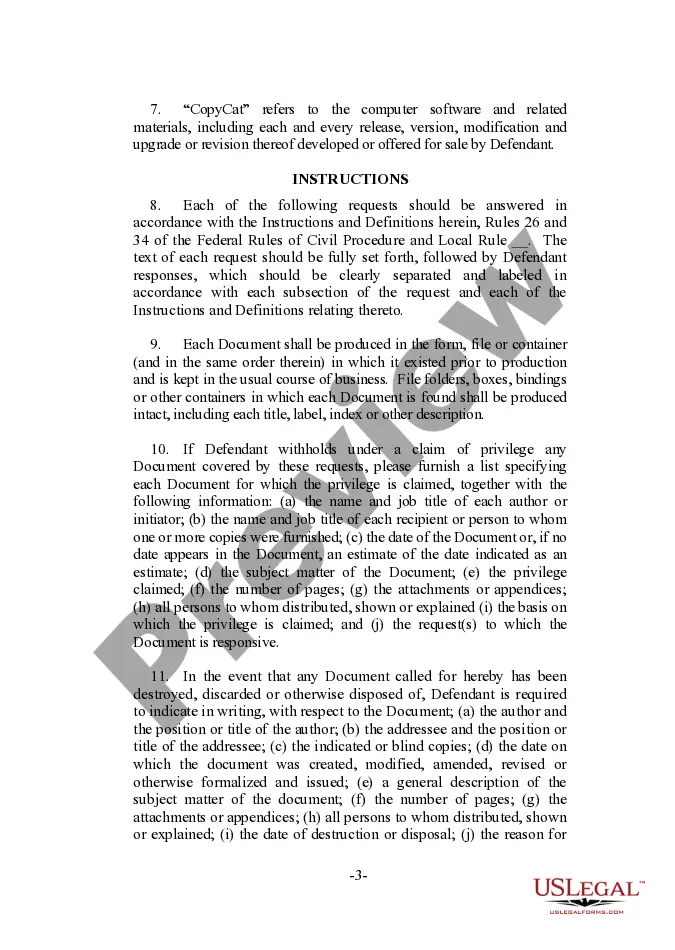
- Definitions and instructions: Clarifies terminology and outlines how requests should be answered.
- Timeframe for document production: Specifies that documents must be produced within thirty days of service.
- Continuing nature of requests: Ensures the defendant supplements their production as new documents are discovered.
When to use this document
This form should be used when a plaintiff in a copyright infringement suit needs to obtain specific documents from the defendant. It is appropriate during the discovery phase when parties are required to share relevant information. Situations may include disputes over software infringement or unauthorized use of copyrighted materials.
Who can use this document
- Plaintiffs in copyright infringement lawsuits seeking evidence to support their claims.
- Attorneys representing clients involved in intellectual property disputes.
- Parties in the software or internet industry who need to address allegations of copyright violations.
Completing this form step by step
- Start by entering the names of the parties involved in the lawsuit at the top of the document.
- Fill in the case number to reference the appropriate legal case.
- Clearly specify the documents you are requesting from the defendant based on the categories outlined in the form.
- Ensure all definitions are understood and applicable to your request to avoid confusion.
- Sign and date the form at the bottom after reviewing for accuracy.
Does this document require notarization?
This form does not typically require notarization to be legally valid. However, some jurisdictions or document types may still require it. US Legal Forms provides secure online notarization powered by Notarize, available 24/7 for added convenience.
Get your form ready online
Our built-in tools help you complete, sign, share, and store your documents in one place.
Make edits, fill in missing information, and update formatting in US Legal Forms—just like you would in MS Word.
Download a copy, print it, send it by email, or mail it via USPS—whatever works best for your next step.
Sign and collect signatures with our SignNow integration. Send to multiple recipients, set reminders, and more. Go Premium to unlock E-Sign.
If this form requires notarization, complete it online through a secure video call—no need to meet a notary in person or wait for an appointment.
We protect your documents and personal data by following strict security and privacy standards.

Make edits, fill in missing information, and update formatting in US Legal Forms—just like you would in MS Word.

Download a copy, print it, send it by email, or mail it via USPS—whatever works best for your next step.

Sign and collect signatures with our SignNow integration. Send to multiple recipients, set reminders, and more. Go Premium to unlock E-Sign.

If this form requires notarization, complete it online through a secure video call—no need to meet a notary in person or wait for an appointment.

We protect your documents and personal data by following strict security and privacy standards.
Common mistakes to avoid
- Failing to clearly identify all requested documents, leading to incomplete production.
- Not specifying the correct time period for document requests.
- Neglecting to check local rules and requirements for discovery requests, which may differ by jurisdiction.
Why complete this form online
- Convenience: Easily download and fill out the form from anywhere.
- Editability: Customize the document to suit specific case details before final printing.
- Reliability: Access professionally drafted templates ensuring compliance with legal standards.
Legal use & context
- This form is legally enforceable within the context of copyright infringement litigation when properly completed and filed.
- It supports the request for relevant evidence, crucial for establishing the plaintiff's case.
- Failure to comply with document requests can result in legal penalties for the non-compliant party.
Looking for another form?

Form popularity
FAQ
Whether you determine that copyright infringement exists or you can prove that you had permission or the work is yours, reply to the notice. Your reply can be as simple as informing them you have removed the infringing content or a receipt from Shutterstock attesting to the license to use an image.
Your physical or electronic signature; your name, address, and phone number; identification of the material and its location before it was removed; a statement under penalty of perjury that the material was removed by mistake or misidentification;
Proving copyright infringement in court can be difficult.That the infringing party had access to the copyrighted work. That the infringing party had the opportunity to steal that work. Prove that protected elements of the original work have been copied.
You will need to collect evidence of the infringement, such as images of the "stolen" work being sold in stores, or printouts of the pages where it appears online. From there, your attorney will compile a document known as a complaint, which makes all of your formal legal allegations against the defendant.
Don't ignore it As we mentioned above, copyright infringement notices are usually harmless. In most cases, the copyright holder will simply ask your business to cease and desist. If you're guilty, remove the copyrighted material from whatever platform it's on.
To prove copyright infringement, a copyright holder must establish a valid copyright and that original material was used illegally. To prove a valid copyright, the plaintiff can produce a copyright certificate or other proof that establishes the date the copyrighted material was created.
While many users panic when receiving infringement notices from their ISP, in the majority of cases there is no need to worry. Stopping sharing the content in question usually solves the problem and if no additional sharing takes place, no further warnings should be received, for that content at least.
Remedies for Infringement of Copyright Section 55(1) of the copyright act, provides that the copyright holder is entitled to remedy by way of injunction. The injunction is the most effective remedy in case of copyright infringement.