Missouri Self-Settled Irrevocable Trust for Lifetime Benefit of Trustor with Power of Invasion in Trustor
Understanding this form
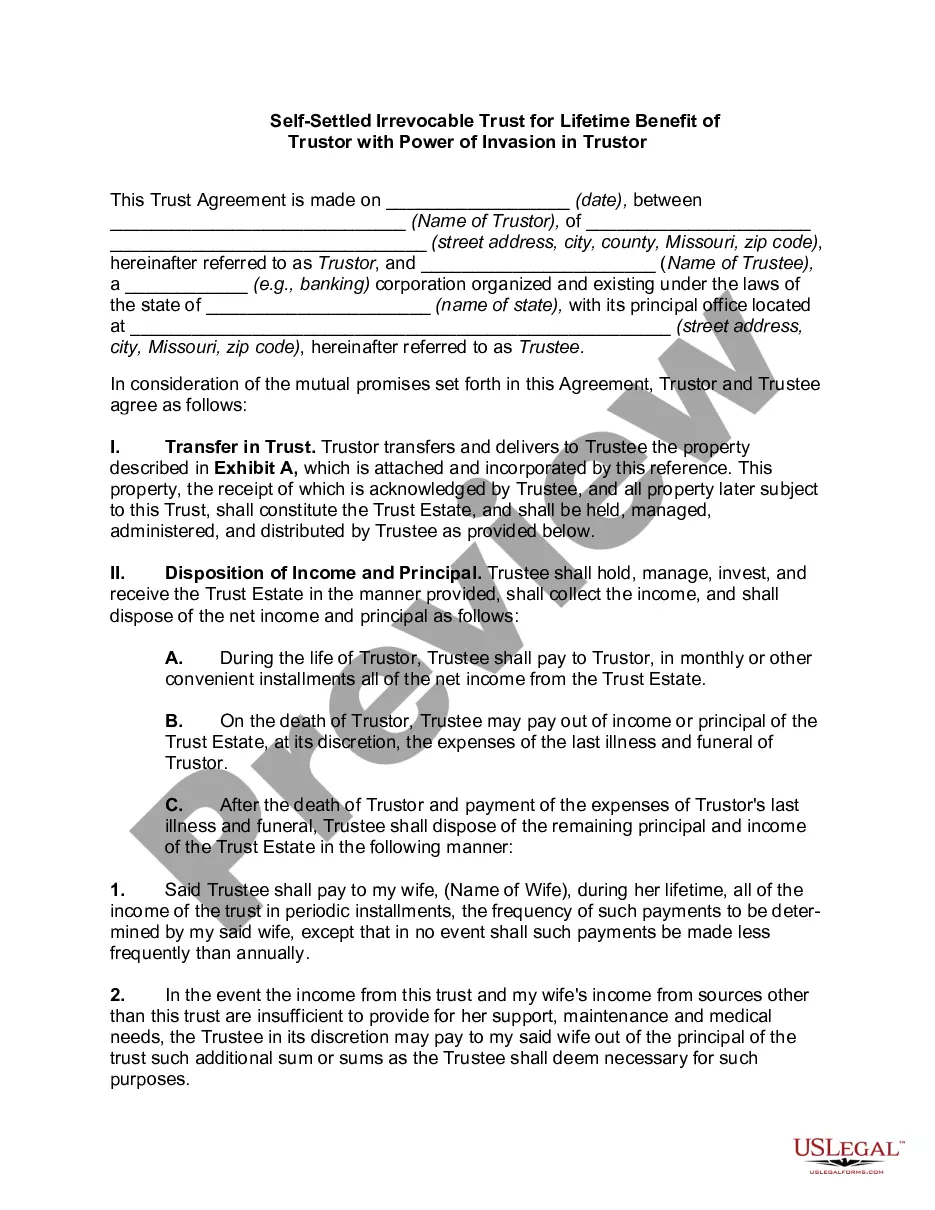
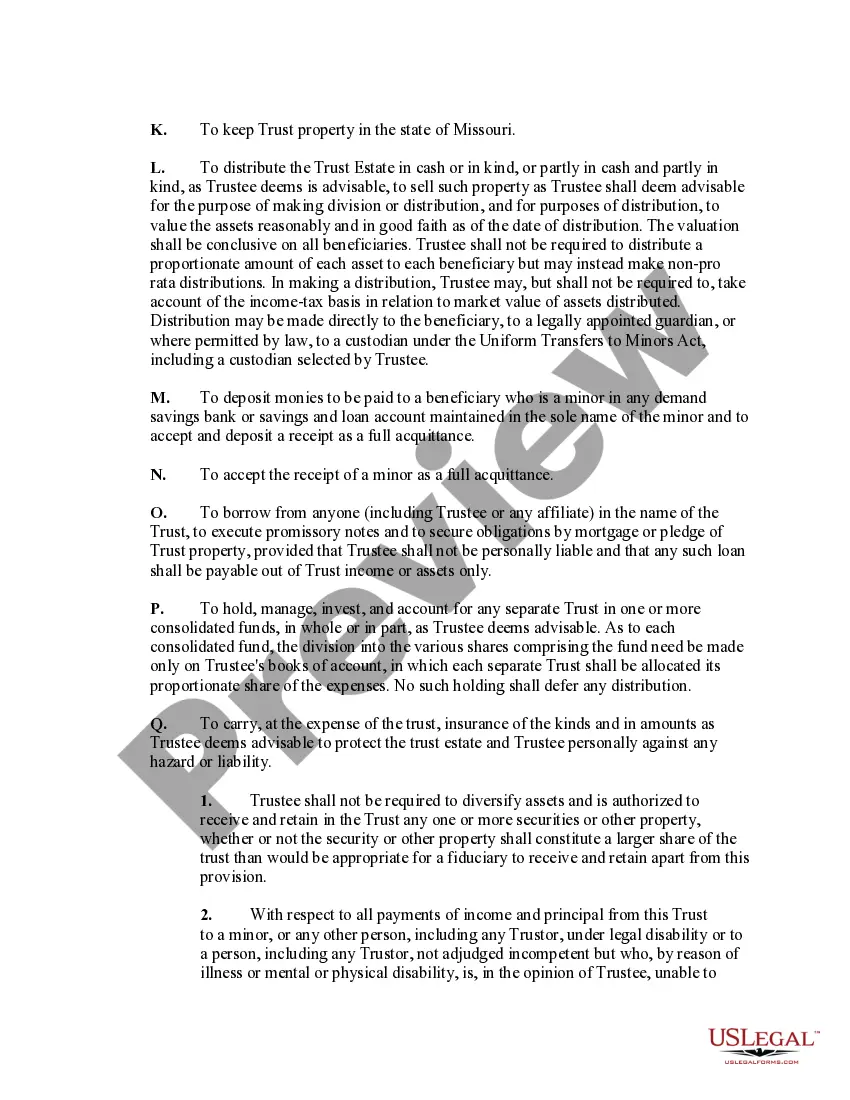
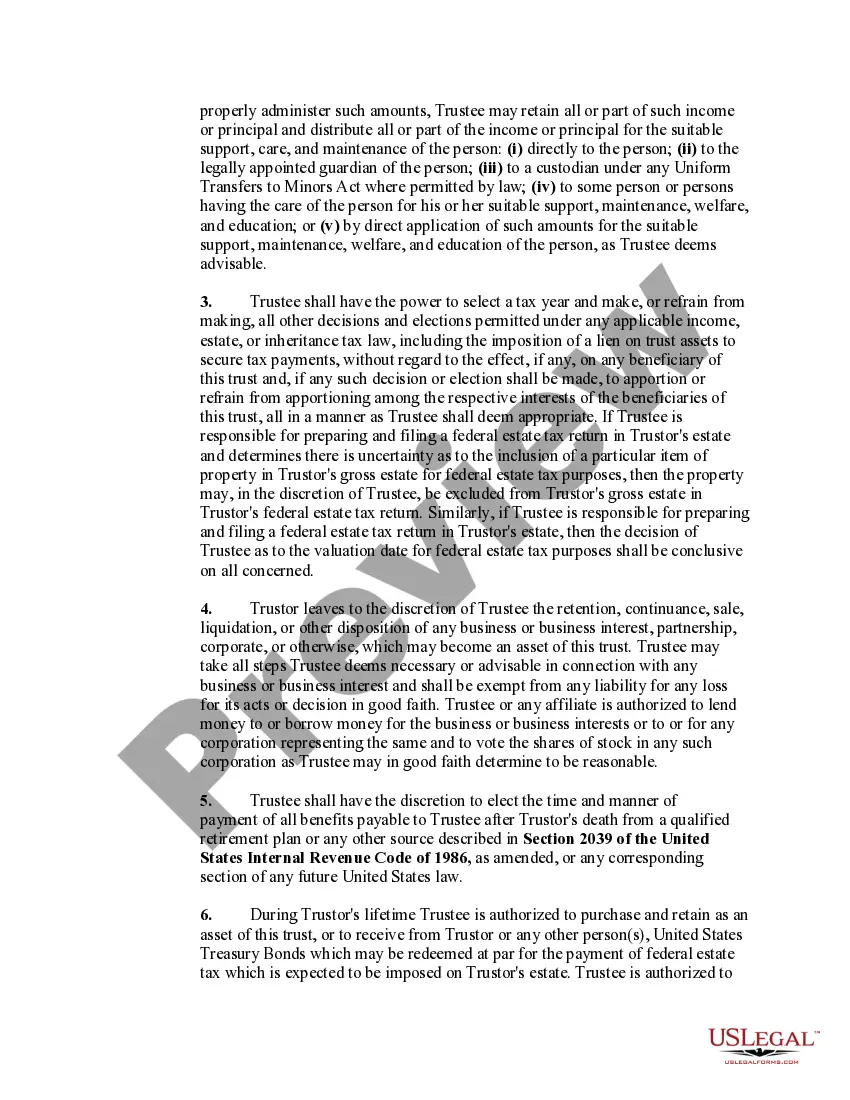
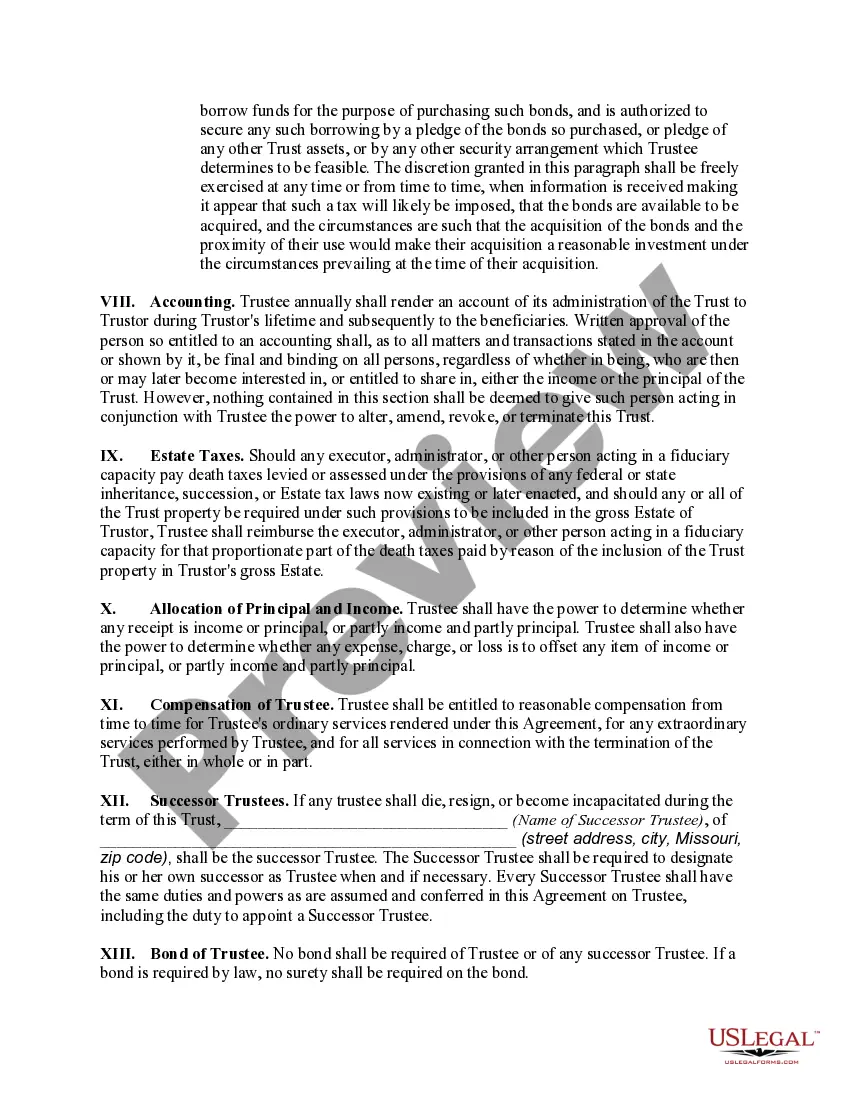
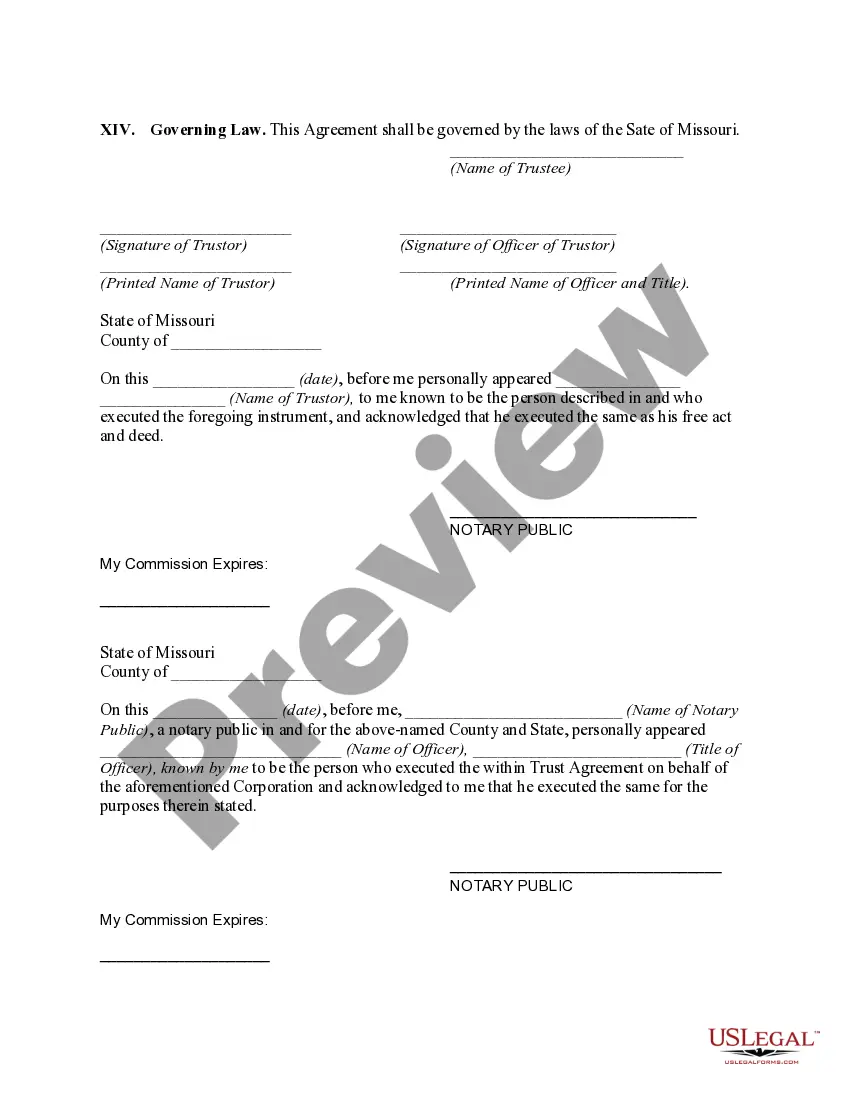
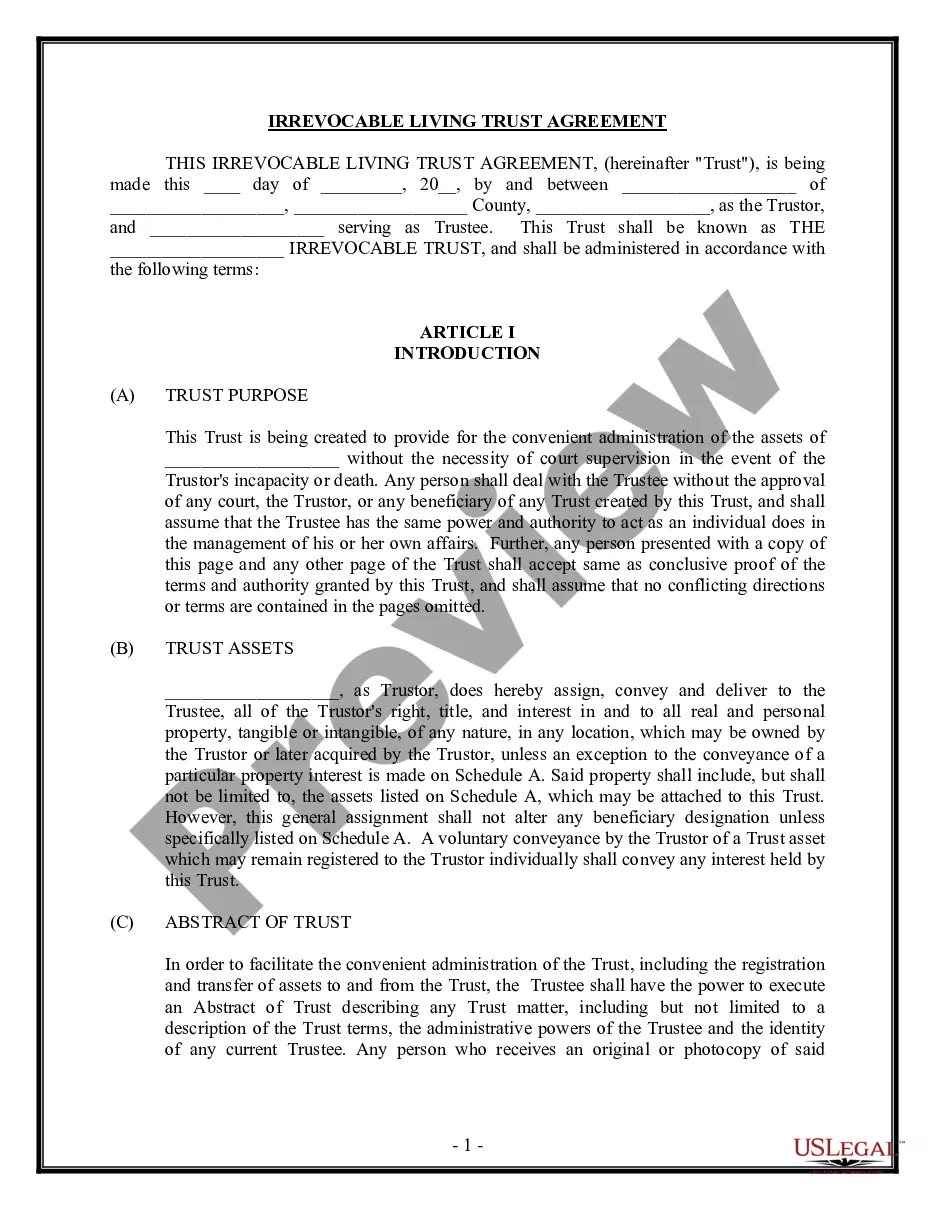
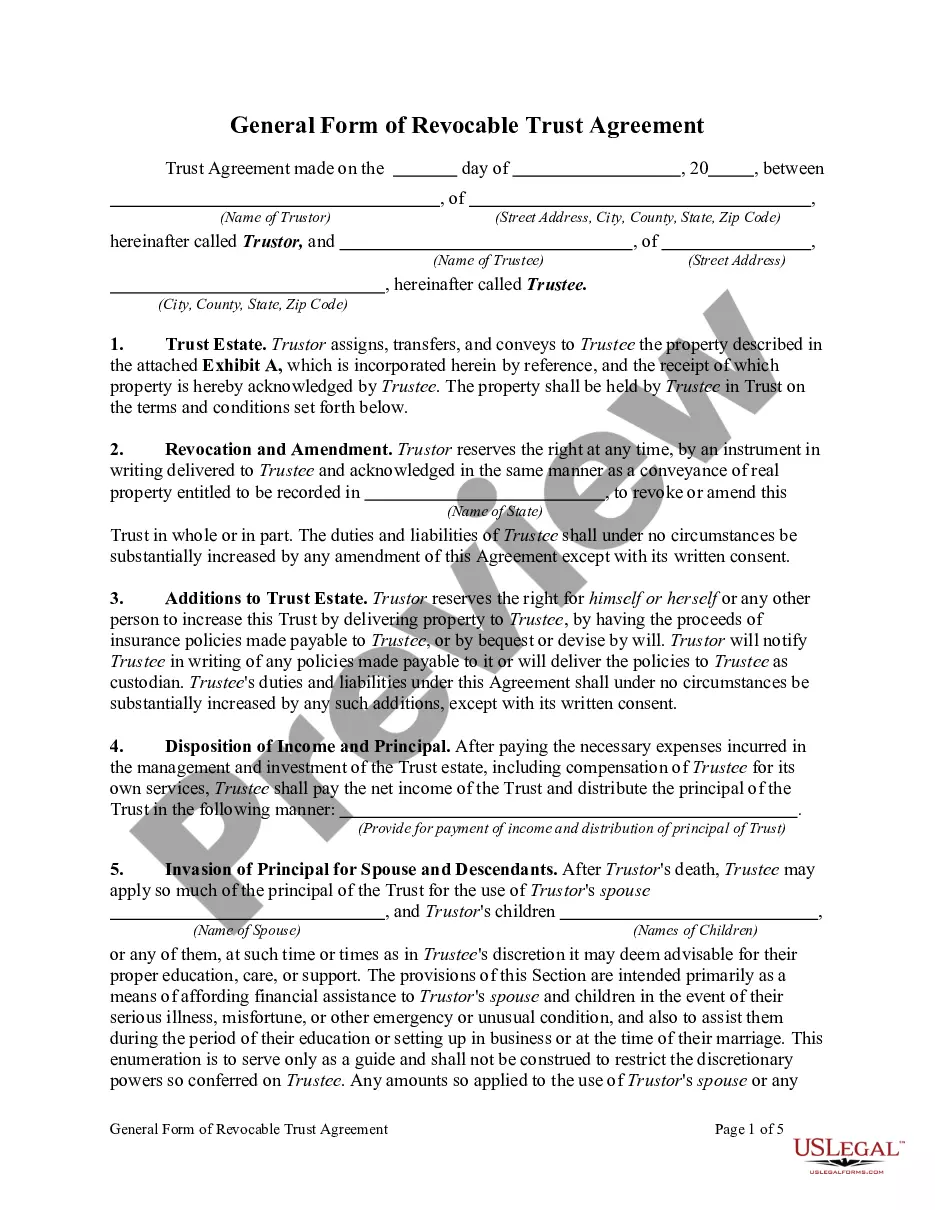
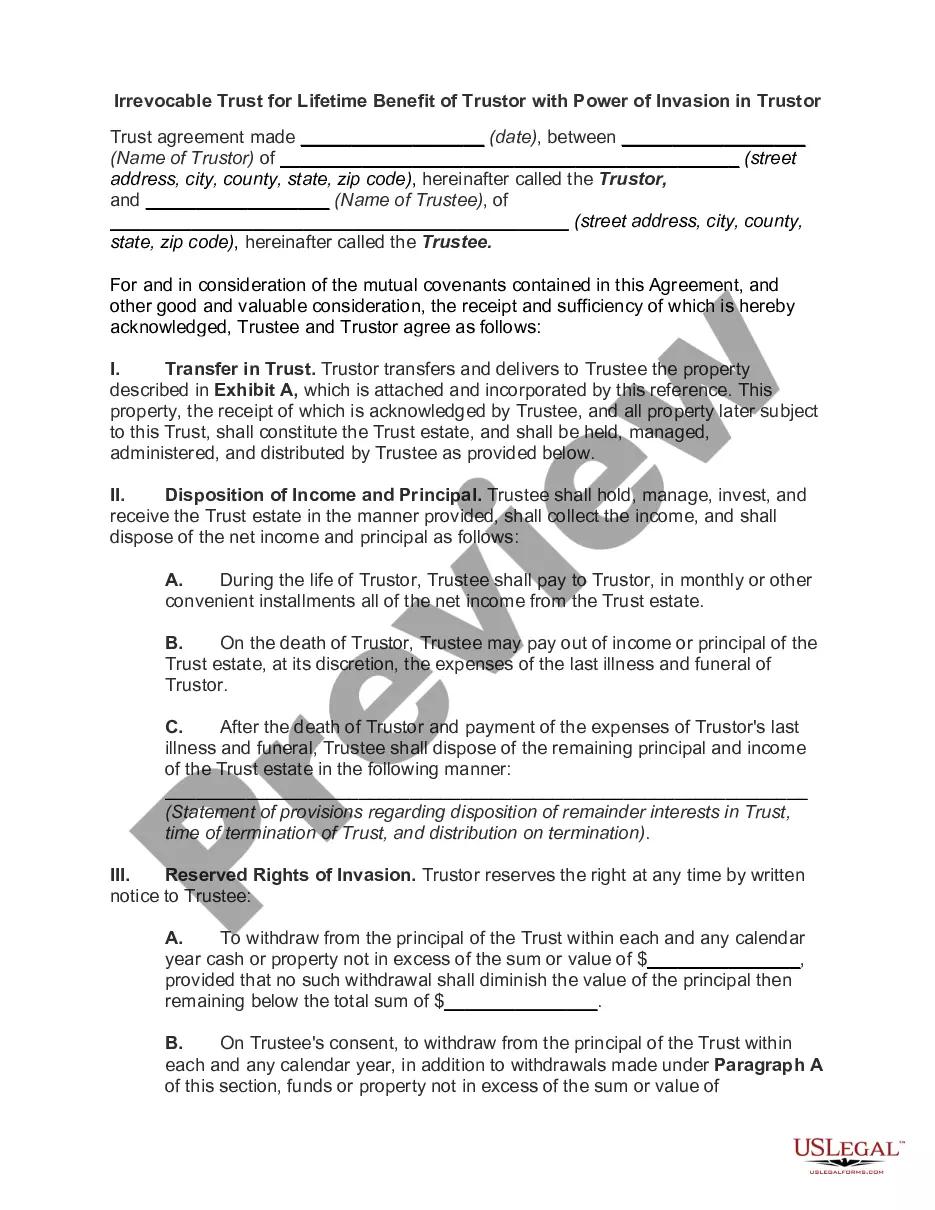
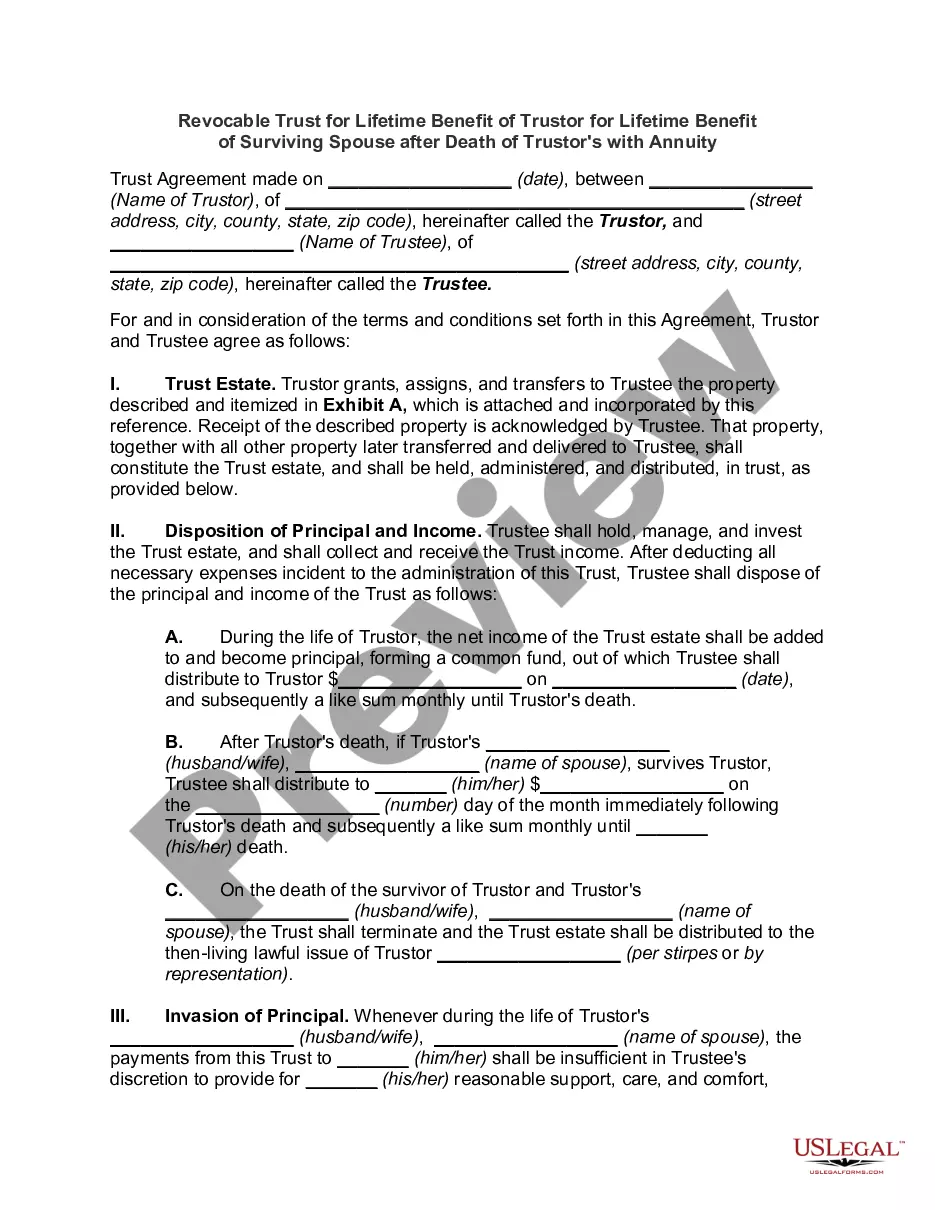
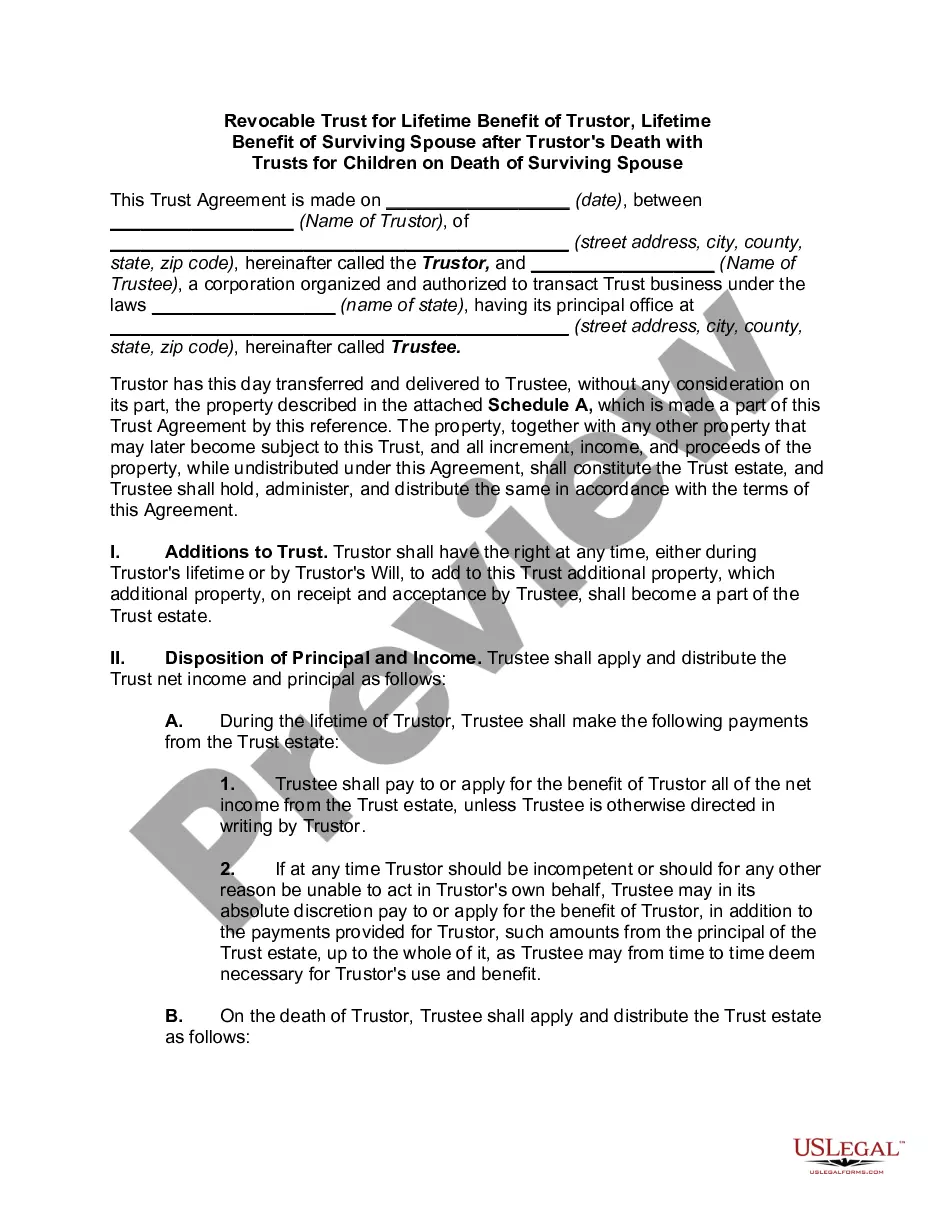
The Self-Settled Irrevocable Trust for Lifetime Benefit of Trustor with Power of Invasion in Trustor is a legal document that establishes a spendthrift trust. This trust allows the trustor to maintain control over assets while also being a beneficiary. It helps shield the trustorâs assets from future creditors, making it a vital tool for asset protection. Unlike other types of trusts, this self-settled trust specifically provides for the trustor's benefit during their lifetime, while also detailing how assets will be distributed after their death.
Key components of this form
- Transfer in Trust: Details the initial transfer of assets to the trustee.
- Disposition of Income and Principal: Outlines how the trust income and principal will be distributed during and after the trustor's lifetime.
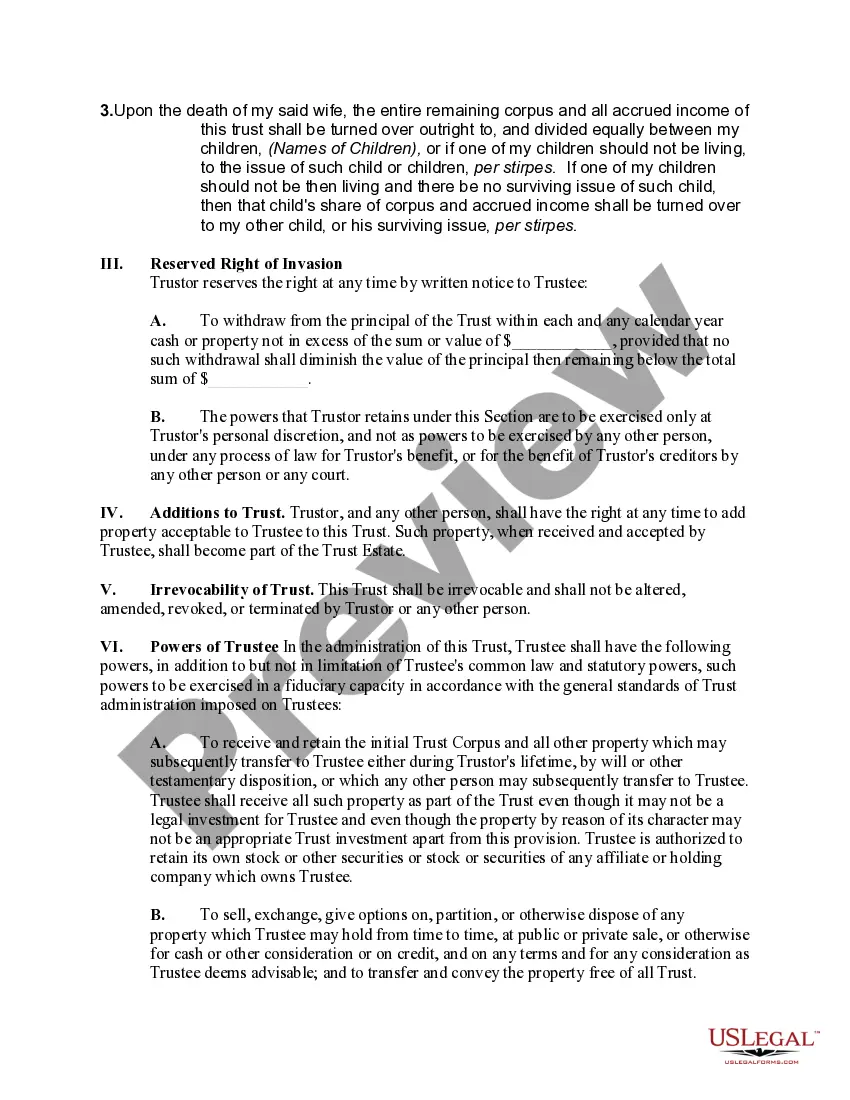
- Reserved Right of Invasion: Allows the trustor to withdraw a specific amount from the trust under certain conditions.
- Irrevocability: States that the trust cannot be altered or revoked by the trustor once established.
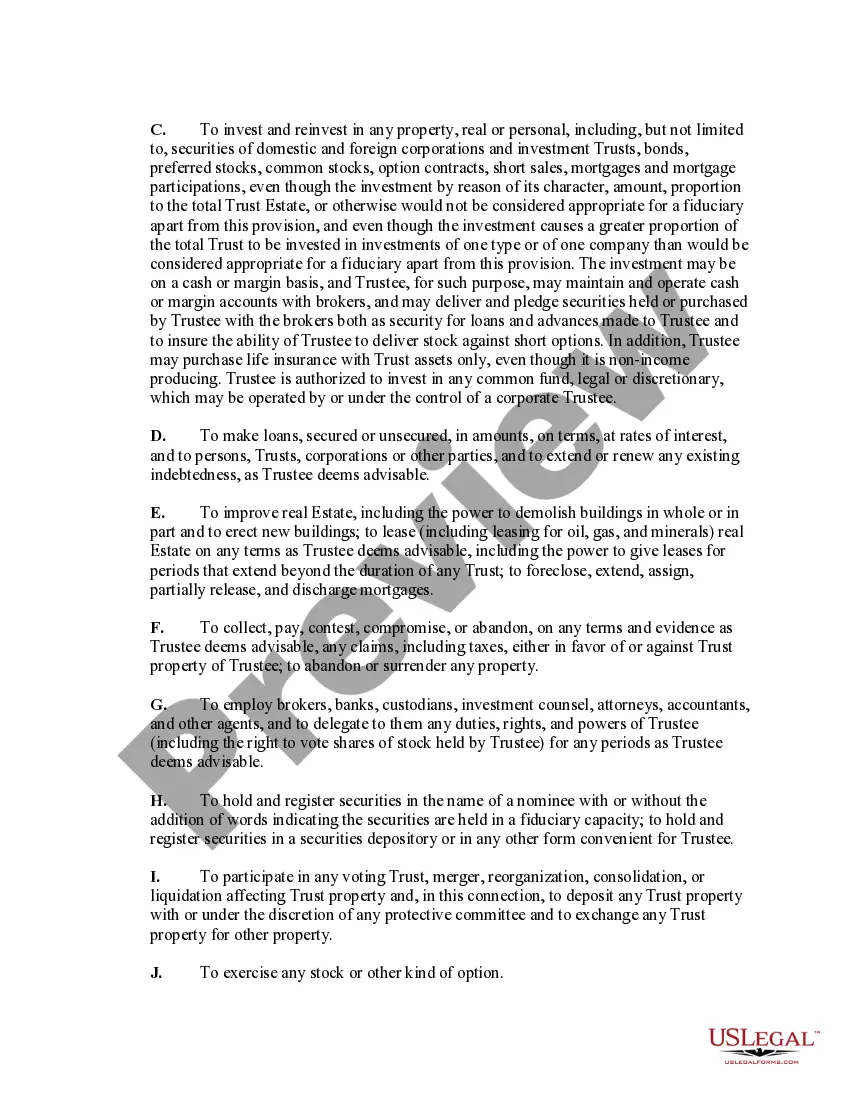
- Powers of Trustee: Lists the powers granted to the trustee for managing trust assets.

Common use cases
This form is useful for individuals looking to establish a self-settled trust to protect their assets from creditors while ensuring their financial support during their lifetime. It is particularly beneficial for those who may face risks from potential future liabilities such as lawsuits or bankruptcy. Additionally, this trust can assist in estate planning, ensuring that beneficiaries receive assets according to the trustor's wishes after their death.
Who can use this document
- Individuals who want to protect their assets from creditors.
- Those who wish to maintain some control over their assets while being a beneficiary.
- People planning for their estate and desiring specific asset distribution after death.
Instructions for completing this form
- Identify the parties: Fill in the name of the trustor and trustee along with their addresses.
- Specify the property: List the property being transferred to the trust in Exhibit A.
- Detail income and principal distribution: Clearly outline how the income and principal should be managed and distributed.
- Review powers of the trustee: Ensure all necessary powers and responsibilities of the trustee are included.
- Sign and notarize: Have the trustor and any required witnesses or notaries sign the document to make it legally binding.
Notarization guidance
This form does not typically require notarization unless specified by local law. However, it is advisable to consult legal guidelines relevant to your jurisdiction to confirm this requirement.
Get your form ready online
Our built-in tools help you complete, sign, share, and store your documents in one place.
Make edits, fill in missing information, and update formatting in US Legal Forms—just like you would in MS Word.
Download a copy, print it, send it by email, or mail it via USPS—whatever works best for your next step.
Sign and collect signatures with our SignNow integration. Send to multiple recipients, set reminders, and more. Go Premium to unlock E-Sign.
If this form requires notarization, complete it online through a secure video call—no need to meet a notary in person or wait for an appointment.
We protect your documents and personal data by following strict security and privacy standards.

Make edits, fill in missing information, and update formatting in US Legal Forms—just like you would in MS Word.

Download a copy, print it, send it by email, or mail it via USPS—whatever works best for your next step.

Sign and collect signatures with our SignNow integration. Send to multiple recipients, set reminders, and more. Go Premium to unlock E-Sign.

If this form requires notarization, complete it online through a secure video call—no need to meet a notary in person or wait for an appointment.

We protect your documents and personal data by following strict security and privacy standards.
Common mistakes
- Failing to adequately detail the trust property in Exhibit A.
- Not recognizing the irrevocable nature of the trust, leading to future changes.
- Inadequately specifying the powers of the trustee, causing ambiguity in asset management.
Benefits of completing this form online
- Convenience: Access and fill out the form from any location at your own pace.
- Editability: Make necessary changes easily without the hassle of paper forms.
- Reliability: The forms are vetted by licensed attorneys, ensuring legal compliance.
Legal use & context
- This trust is recognized by Missouri law and can provide protection against creditors if set up correctly.
- It is advisable to consult with a legal professional to ensure compliance with local regulations and personal circumstances.
Main things to remember
- The Self-Settled Irrevocable Trust offers asset protection while allowing the Trustor to remain a beneficiary.
- Proper completion and notarization are essential for the Trust to be legally valid.
- Understanding the specific clauses and provisions can help avoid common mistakes.
Looking for another form?
Form popularity
FAQ
The 5-year rule for irrevocable trusts is a critical consideration when planning for asset protection and Medicaid eligibility. Specifically, for Missouri Self-Settled Irrevocable Trusts for Lifetime Benefit of Trustor with Power of Invasion in Trustor, this rule states that any assets transferred into the trust within five years of applying for Medicaid may be subject to penalties. Understanding this rule can help you effectively plan your trust to ensure you maintain eligibility for benefits while securing your assets. For comprehensive guidance, consider utilizing the tools offered by US Legal Forms.
The recent rule on irrevocable trusts emphasizes the importance of clarity and transparency in trust management, particularly for Missouri Self-Settled Irrevocable Trusts for Lifetime Benefit of Trustor with Power of Invasion in Trustor. This rule mandates that all trust documents must clearly define the powers granted to the trustor and the terms under which benefits may be accessed. As a result, individuals can better understand their rights and responsibilities, making it essential to consult legal resources or platforms like US Legal Forms to ensure compliance with the latest regulations.
Statute 456.8 813 in Missouri pertains to the establishment and regulation of Missouri Self-Settled Irrevocable Trusts for the Lifetime Benefit of Trustors with Power of Invasion in Trustors. This statute outlines the legal framework that allows individuals to create trusts that provide lifelong benefits while maintaining certain powers. Understanding this statute is crucial for anyone considering setting up such a trust, as it defines the rights and obligations of the trustor and beneficiaries. For detailed information and assistance, you can explore the resources available on the US Legal Forms platform.
As of 2019, attorney fees can range from $1,000 to $2,500 to set up a trust, depending upon the complexity of the document and where you live. You can also hire an online service provider to set up your trust. As of 2019, you can expect to pay about $300 for an online trust.
To manage and control spending and investments to protect beneficiaries from poor judgment and waste; To avoid court-supervised probate of trust assets and be private; To protect trust assets from the beneficiaries' creditors;To reduce income taxes or shelter assets from estate and transfer taxes.
Paperwork. Setting up a living trust isn't difficult or expensive, but it requires some paperwork. Record Keeping. After a revocable living trust is created, little day-to-day record keeping is required. Transfer Taxes. Difficulty Refinancing Trust Property. No Cutoff of Creditors' Claims.
A trust can be used to determine how a person's money should be managed and distributed while that person is alive, or after their death. A trust helps avoid taxes and probate. It can protect assets from creditors, and it can dictate the terms of an inheritance for beneficiaries.
Using a revocable living trust instead of a will means assets owned by your trust will bypass probate and flow to your heirs as you've outlined in the trust documents. A trust lets investors have control over their assets long after they pass away.
A will and a trust are separate legal documents that typically share a common goal of facilitating a unified estate plan.Since revocable trusts become operative before the will takes effect at death, the trust takes precedence over the will, when there are discrepancies between the two.
Wills and Trusts FAQs Deciding between a will or a trust is a personal choice, and some experts recommend having both. A will is typically less expensive and easier to set up than a trust, an expensive and often complex legal document.