Mississippi Agreed Order of Forfeiture
Understanding this form
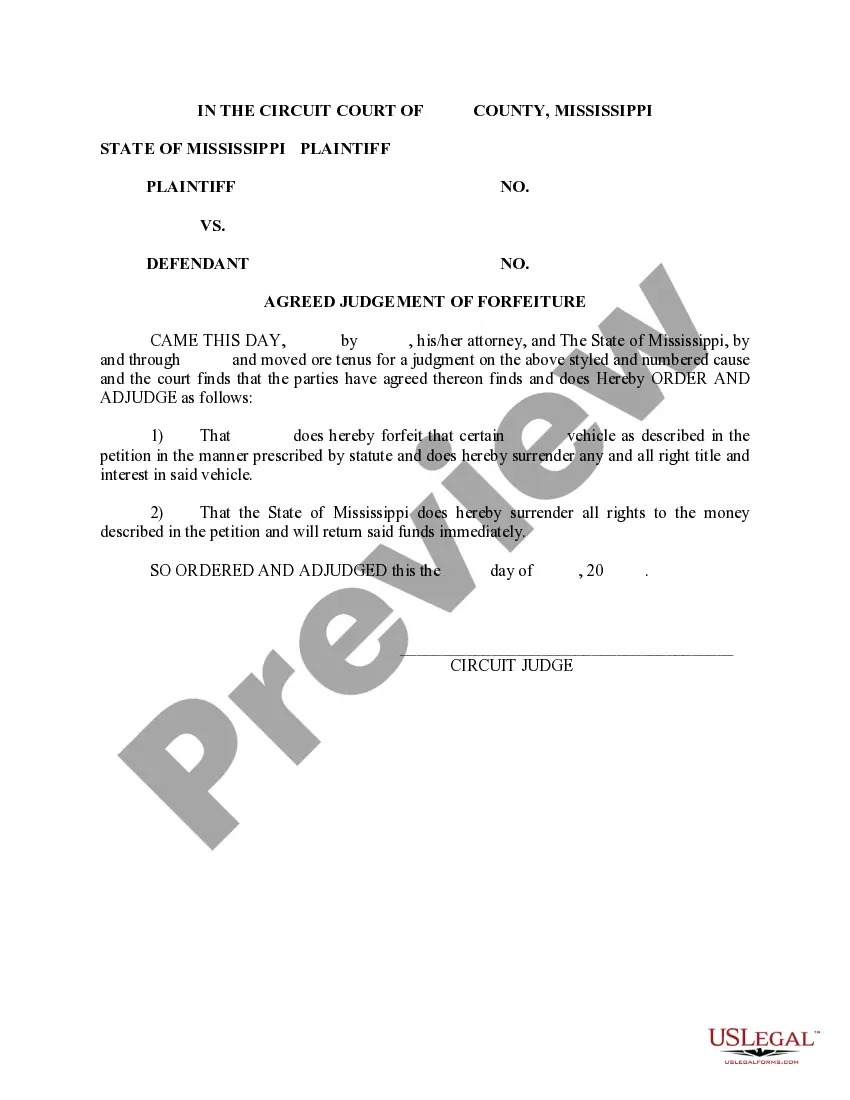
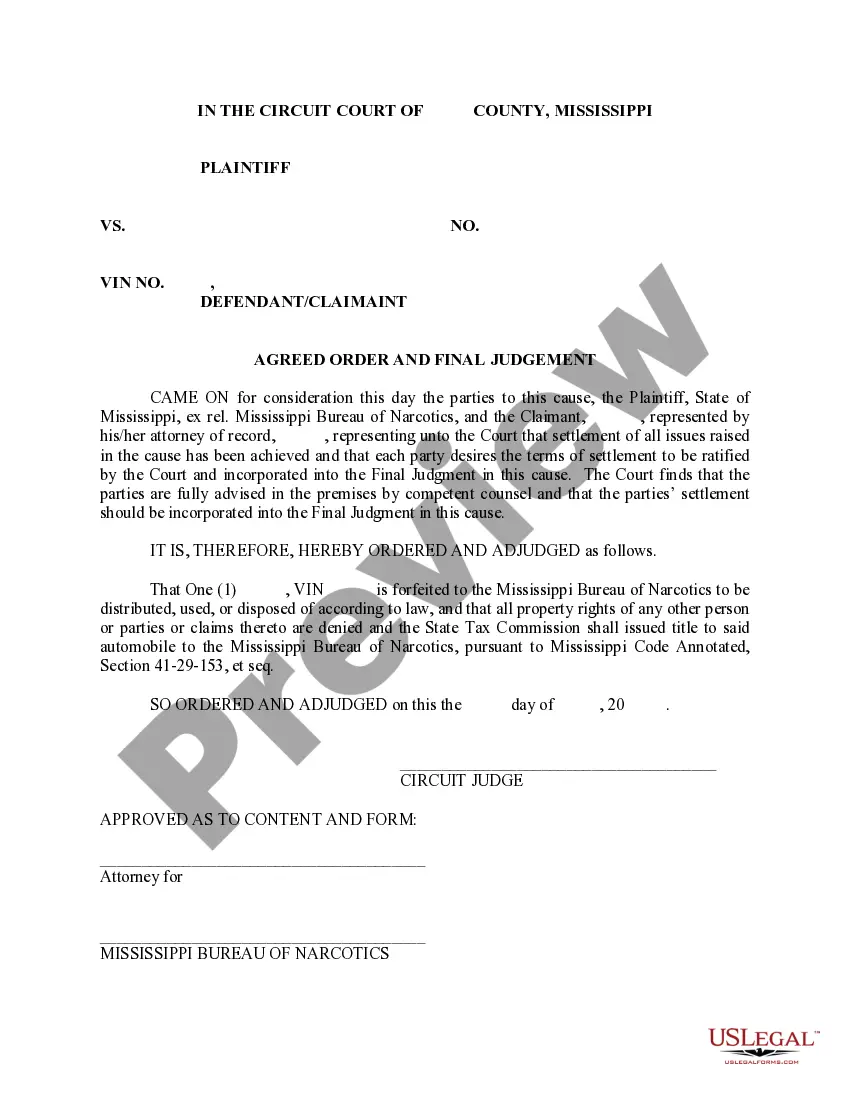
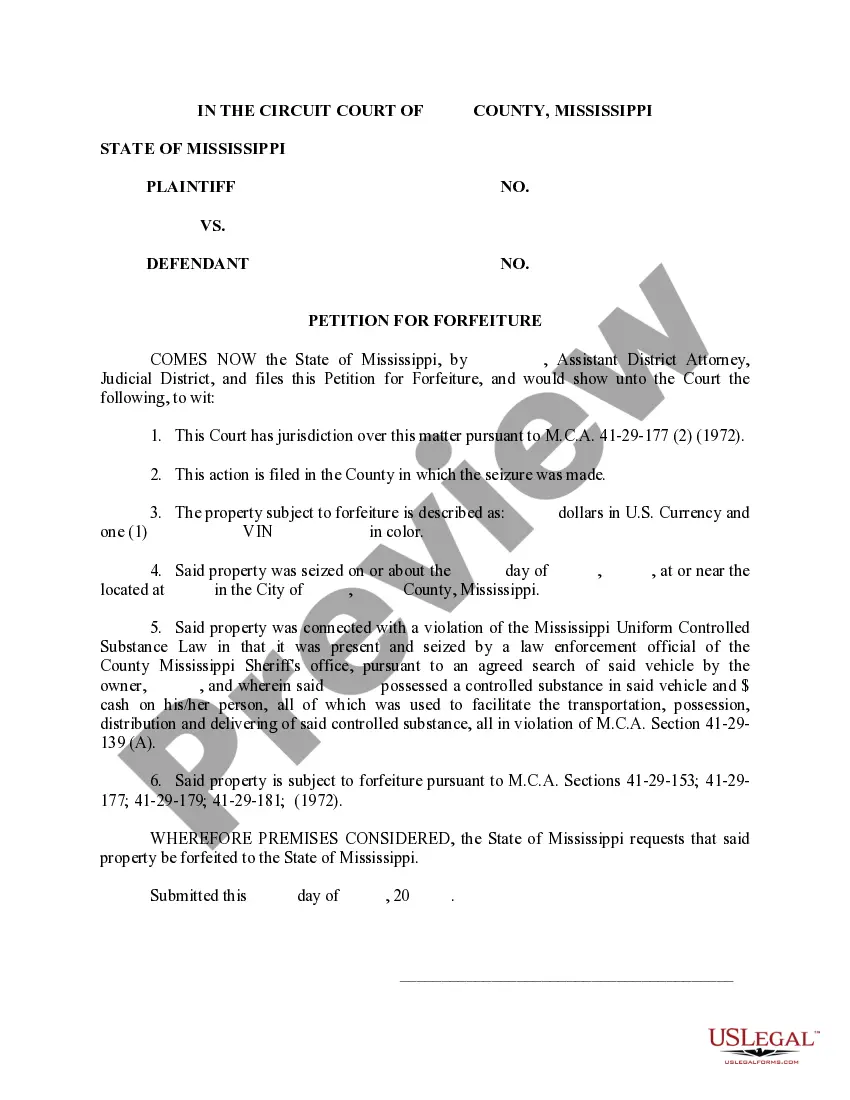
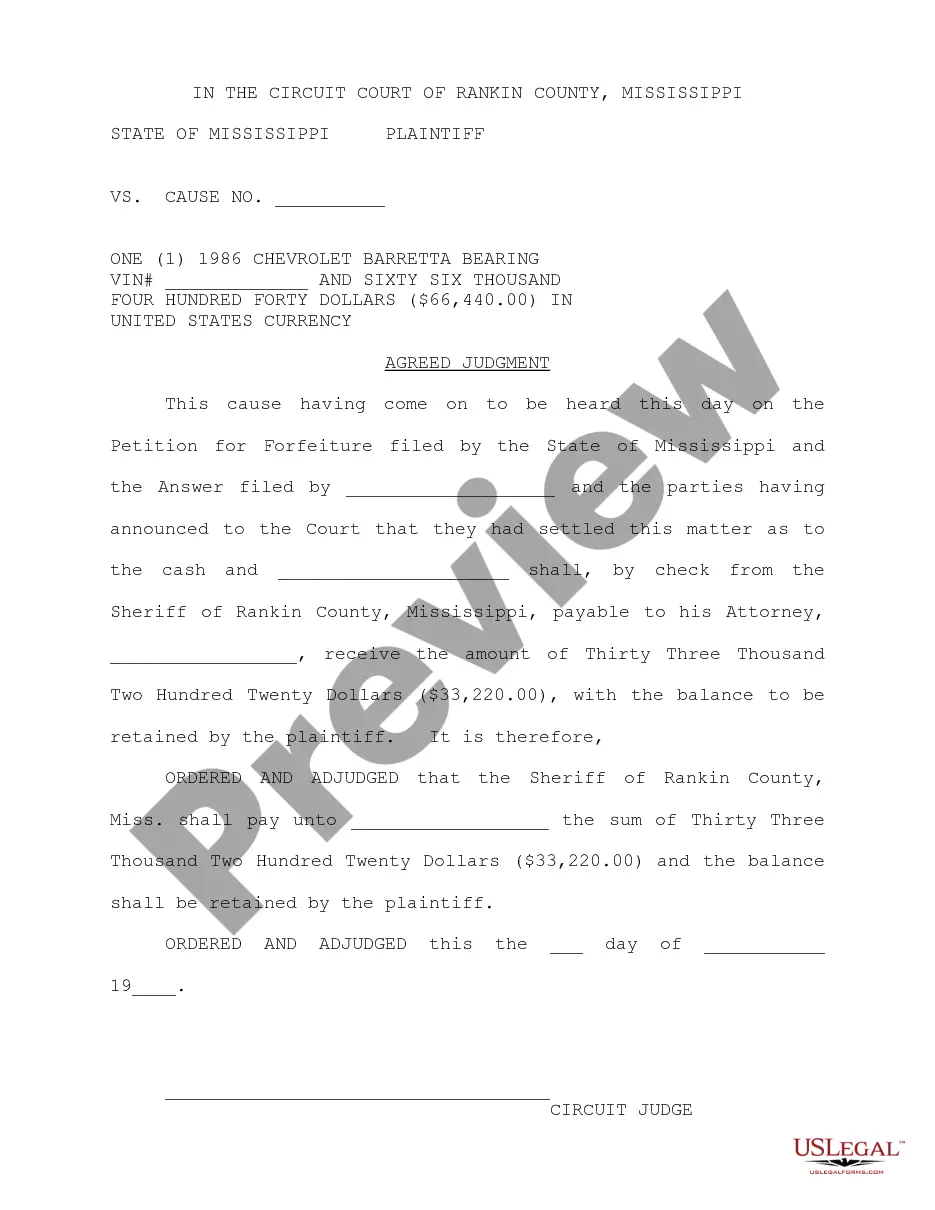
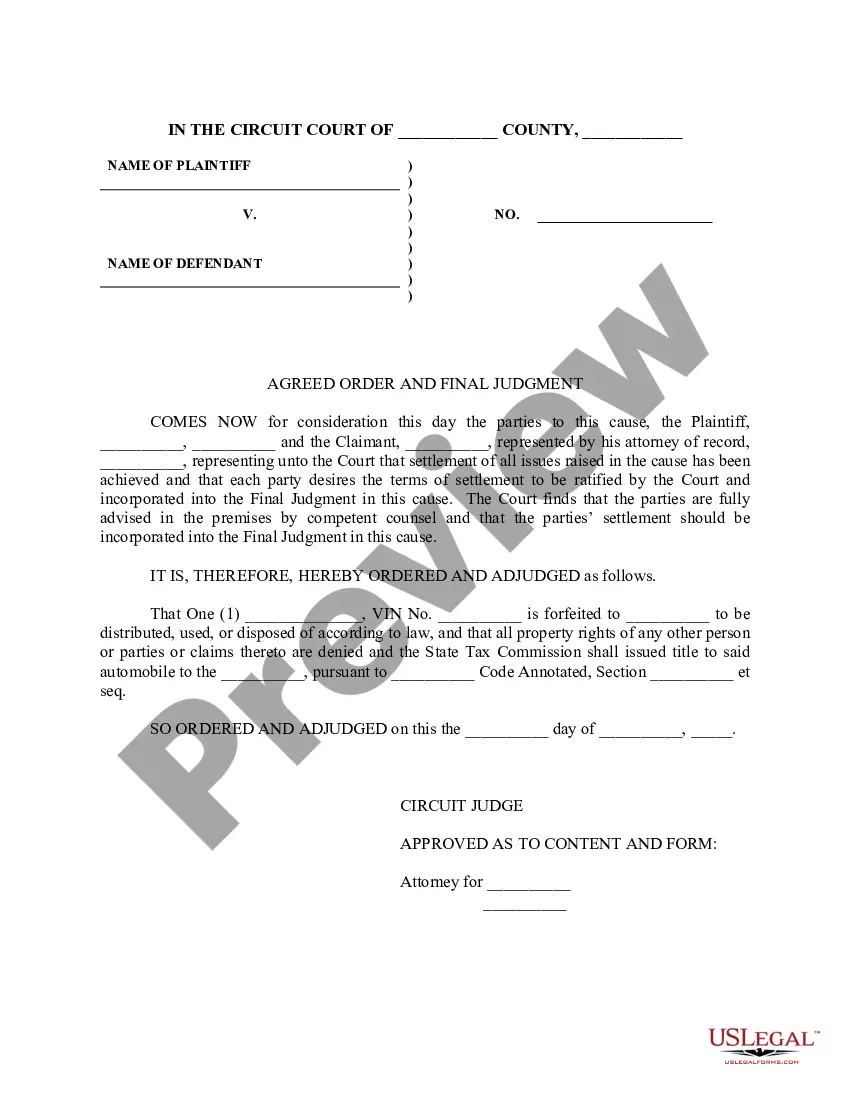
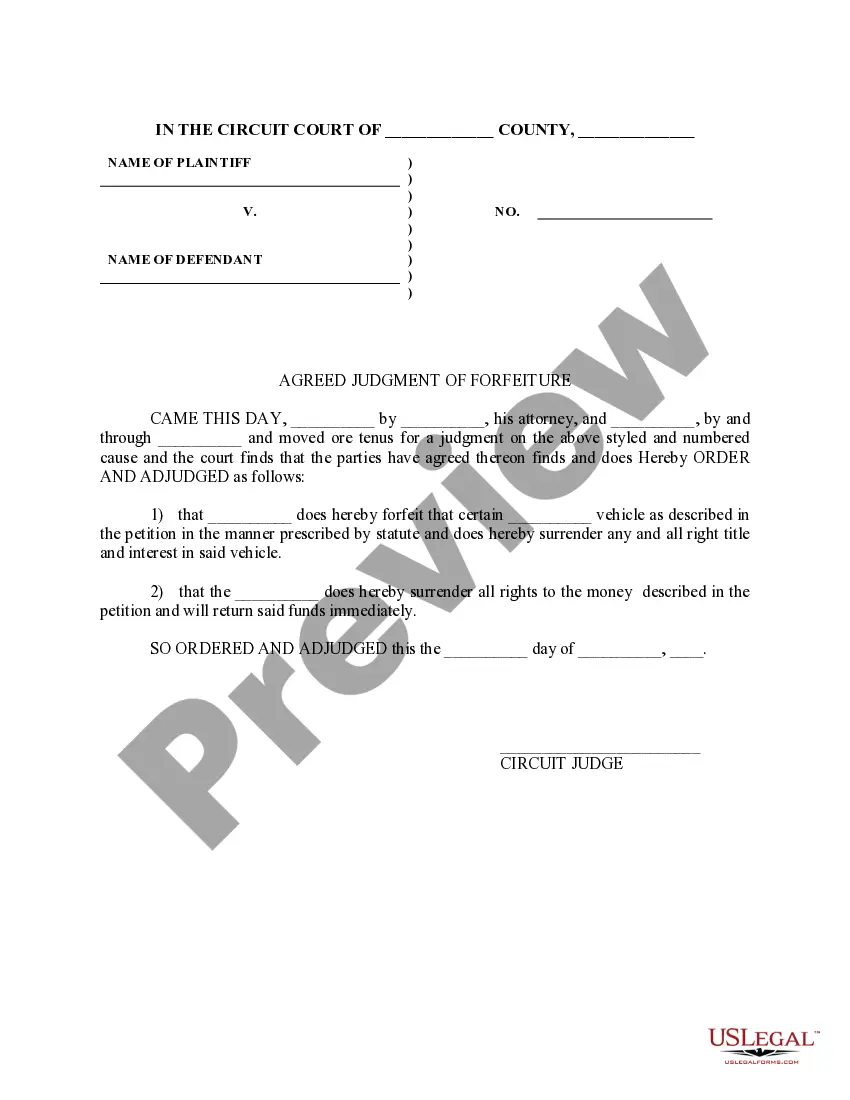
The Agreed Order of Forfeiture is a legal document used in Mississippi that completes the agreement between two parties involved in a lawsuit. This form signifies that both parties have agreed on their issues and wish to conclude the case amicably, effectively surrendering all rights to certain funds as outlined in the petition. Unlike other legal forms, this document specifically targets cases of forfeiture, making it a specialized tool for resolving disputes related to asset seizure.
Main sections of this form
- Identification of the parties involved in the lawsuit.
- Statement of agreement between the parties to end the lawsuit.
- Declaration that the State of Mississippi surrenders rights to specified funds.
- Provision for the immediate return of funds described in the petition.
- Signatures of both parties to validate the agreement.
When this form is needed
This form is typically used in scenarios where two parties in a legal dispute regarding forfeiture reach an agreement. It is applicable in situations where one party has seized assets and both parties prefer to resolve the matter without continuing litigation. Using the Agreed Order of Forfeiture enables the parties to formally document their agreement and enforce it legally.
Who needs this form
- Individuals or entities involved in a forfeiture lawsuit in Mississippi.
- Parties who have reached an amicable settlement regarding asset seizures.
- Legal representatives seeking to formalize a forfeiture agreement.
Instructions for completing this form
- Identify the names of the parties involved in the lawsuit.
- Clearly state the agreement reached between the parties regarding the forfeiture.
- Specify the details of the funds being surrendered and the return process.
- Ensure that both parties sign the form to validate the agreement.
- Submit the completed form as necessary to the appropriate legal authority.
Is notarization required?
This form usually doesn’t need to be notarized. However, local laws or specific transactions may require it. Our online notarization service, powered by Notarize, lets you complete it remotely through a secure video session, available 24/7.
Get your form ready online
Our built-in tools help you complete, sign, share, and store your documents in one place.
Make edits, fill in missing information, and update formatting in US Legal Forms—just like you would in MS Word.
Download a copy, print it, send it by email, or mail it via USPS—whatever works best for your next step.
Sign and collect signatures with our SignNow integration. Send to multiple recipients, set reminders, and more. Go Premium to unlock E-Sign.
If this form requires notarization, complete it online through a secure video call—no need to meet a notary in person or wait for an appointment.
We protect your documents and personal data by following strict security and privacy standards.

Make edits, fill in missing information, and update formatting in US Legal Forms—just like you would in MS Word.

Download a copy, print it, send it by email, or mail it via USPS—whatever works best for your next step.

Sign and collect signatures with our SignNow integration. Send to multiple recipients, set reminders, and more. Go Premium to unlock E-Sign.

If this form requires notarization, complete it online through a secure video call—no need to meet a notary in person or wait for an appointment.

We protect your documents and personal data by following strict security and privacy standards.
Typical mistakes to avoid
- Failing to include all required signatures.
- Not clearly defining the amount and details of the forfeited funds.
- Incorrectly identifying the parties involved in the agreement.
Benefits of using this form online
- Convenient access to the Agreed Order of Forfeiture anytime and anywhere.
- Editable templates that can be customized to suit specific needs.
- Reliability as forms are drafted and updated by licensed attorneys.
Looking for another form?
Form popularity
FAQ
Criminal forfeiture is an action brought as a part of the criminal prosecution of a defendant.If the jury finds the property forfeitable, the court issues an order of forfeiture.
Letter of forfeiture means a notice in varied forms, sent to a bail bond agency/branch office, advising the agency/branch office that a defendant who has secured a bail bond with that agency has failed to appear on a given date in a given court in accordance with RCW 10.19. 090.
The term money judgment is used to describe a particular kind of directly forfeitable property. It is a short-hand way of describing the defendant's continuing obligation to forfeit the money derived from or used to commit his criminal offense whether he has retained the actual dollars in his possession or not.
Seizure is the act of taking property.Forfeiture occurs when your rights to the seized property are permanently lost through a court order or judgment. Forfeiture occurs after seizure, and seizure does not always end in forfeiture. In our example, the seizure takes place when Officer Potts takes the money from Steve.
When a decree of divorce is granted on the ground of the irretrievable break-down of a marriage the court may make an order that the patrimonial benefits of the marriage be forfeited by one party in favour of the other, either wholly or in part, if the court, having regard to the duration of the marriage, the
Forfeiture refers to a loss of any property, money, or assets without consideration or compensation in return. A forfeiture generally occurs due to default in complying with repayment obligations under a contract. It can also be used as a penalty for an illegal way of conducting business.
The term money judgment is used to describe a particular kind of directly forfeitable property. It is a short-hand way of describing the defendant's continuing obligation to forfeit the money derived from or used to commit his criminal offense whether he has retained the actual dollars in his possession or not.
United States. There are two types of forfeiture (confiscation) cases, criminal and civil.
Forfeiture takes two distinct forms -- criminal and civil. Nearly all contemporary forfeiture involves the civil variety. Criminal forfeiture operates as punishment for a crime. It, therefore, requires a conviction, following which the state takes the assets in question from the criminal.