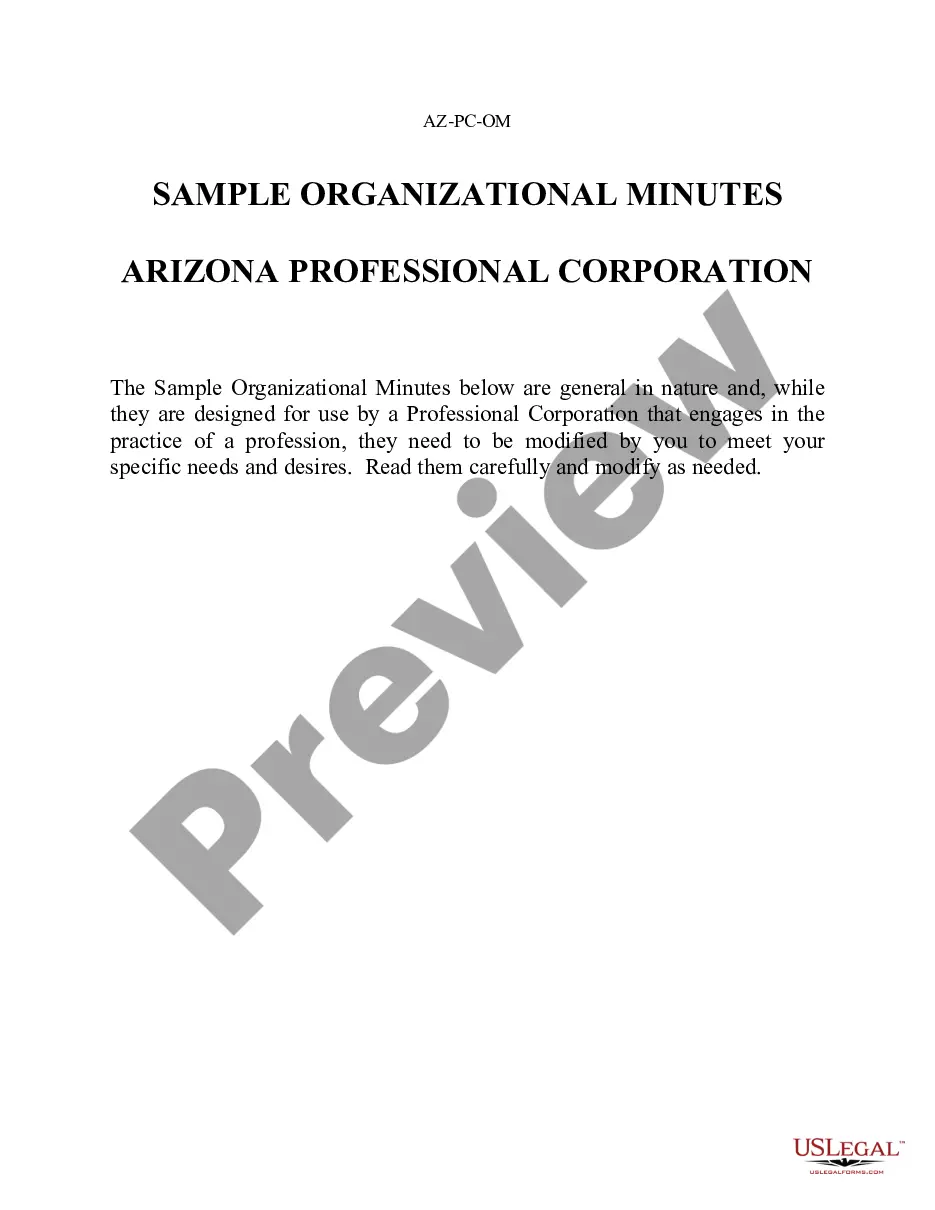
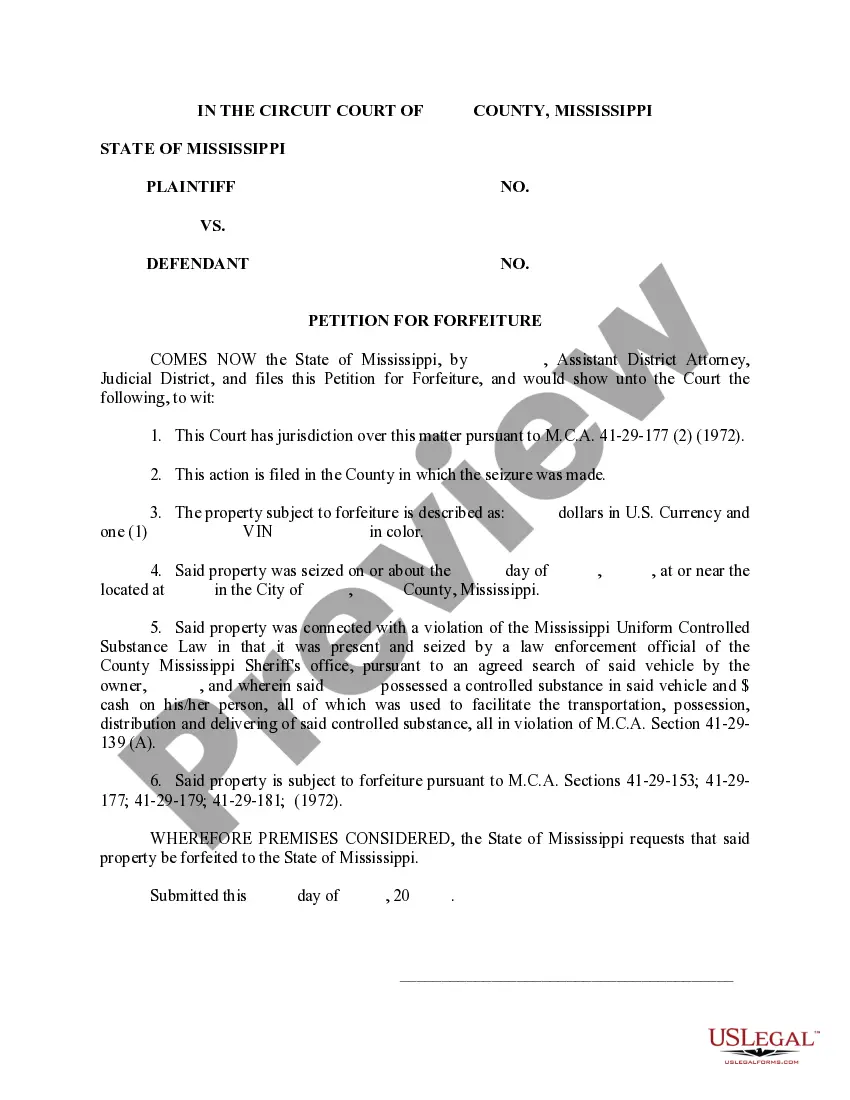
Mississippi Petition for Forfeiture
What is this form?
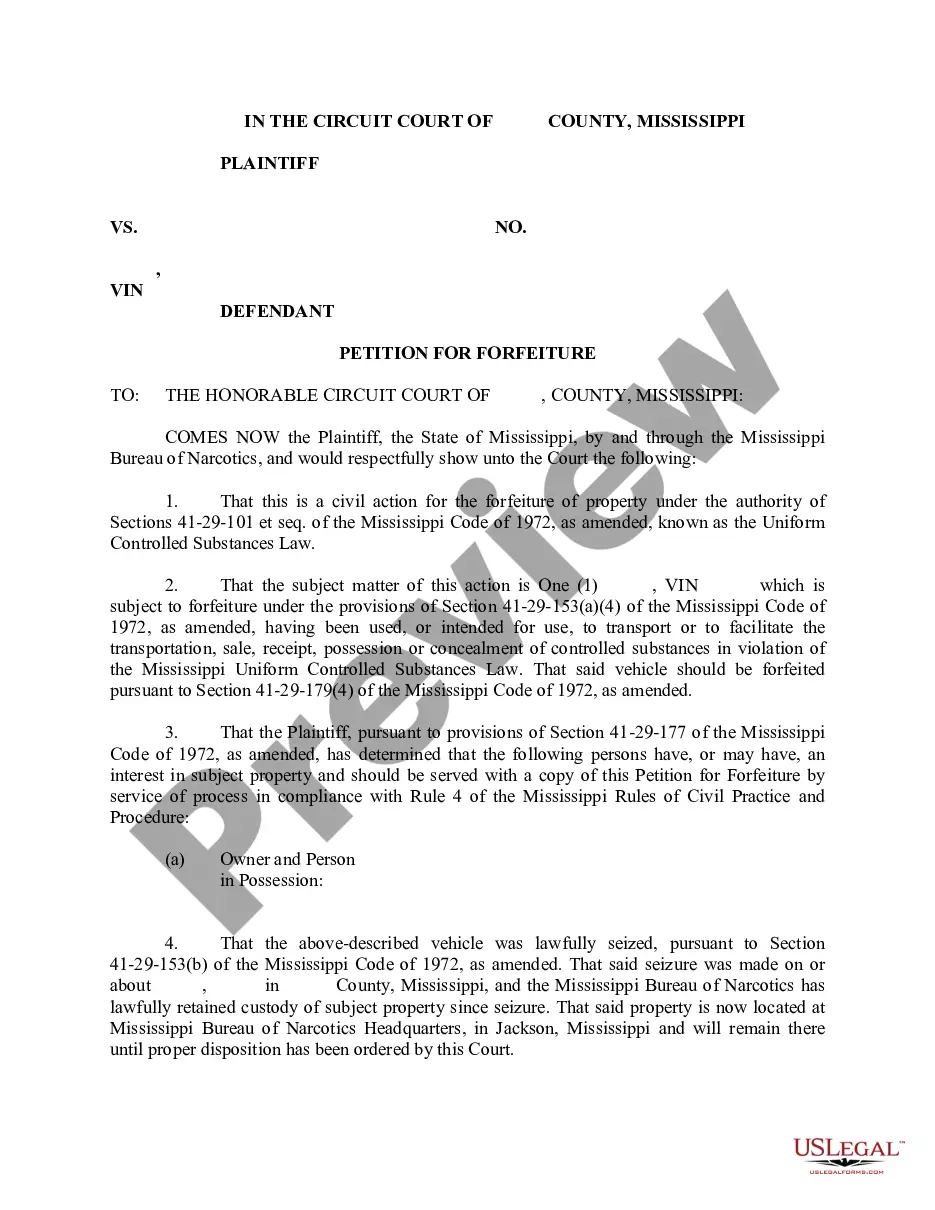
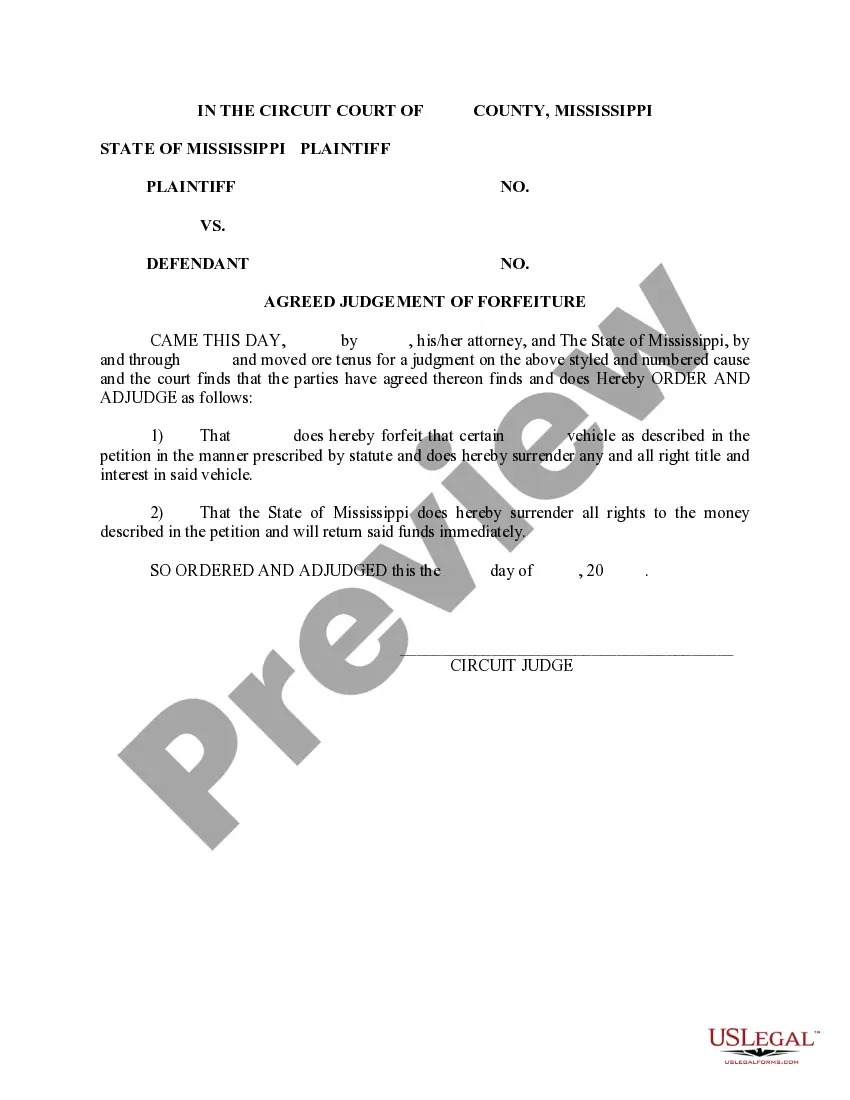
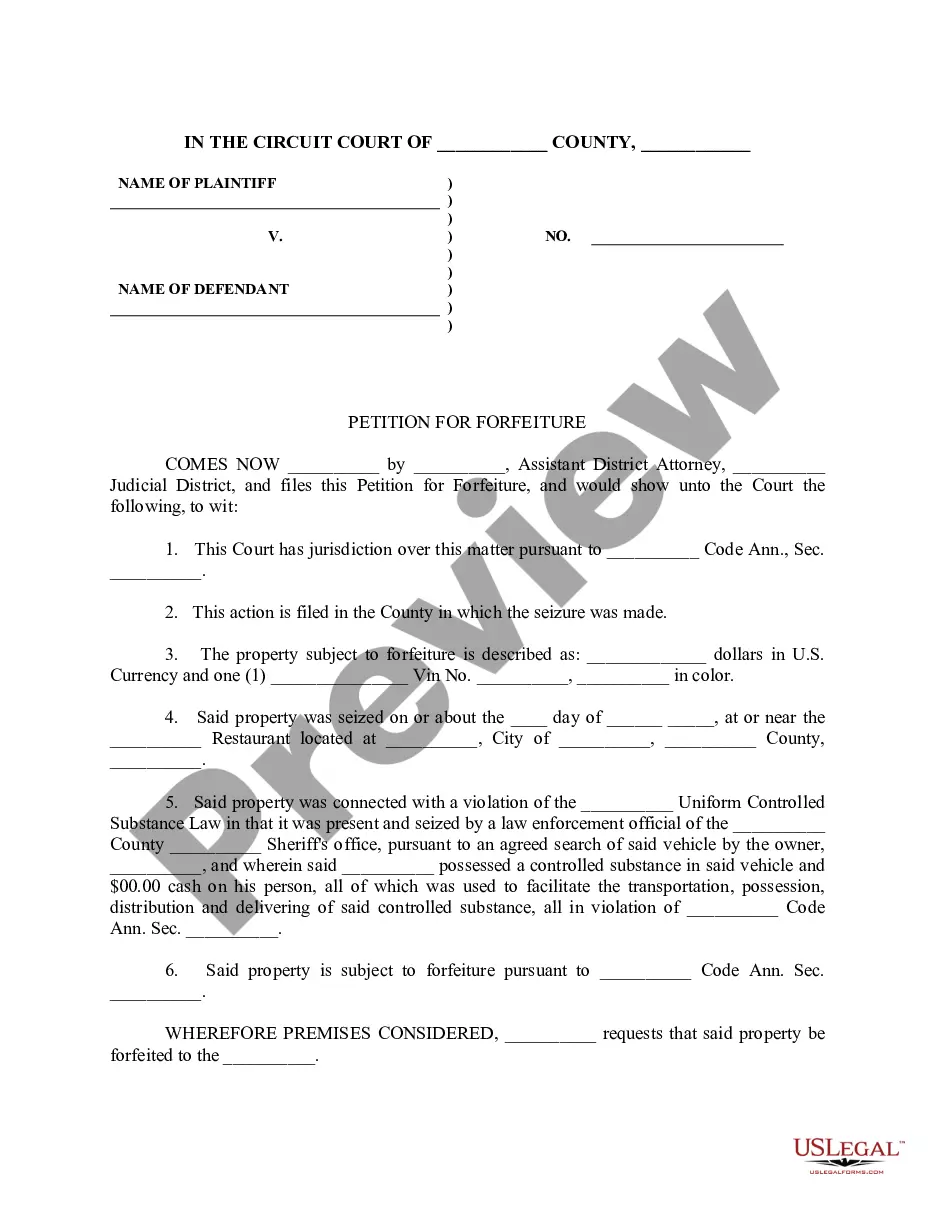
The Petition for Forfeiture is a legal document used to request that the court recognizes property as forfeited to the state. This form serves as a crucial step in legal proceedings related to the seizure of property, distinguishing it from other property-related forms by specifically addressing forfeiture actions. It can be adapted to fit particular circumstances, making it a versatile resource for those seeking to initiate such court actions.
Form components explained
- Identification of the property subject to forfeiture.
- Citation of applicable legal statutes under which the forfeiture is sought.
- Request for the court's approval for the forfeiture.
- Signature area for the petitioner or their representative.
- Space for any additional declarations or affidavits related to the petition.
Common use cases
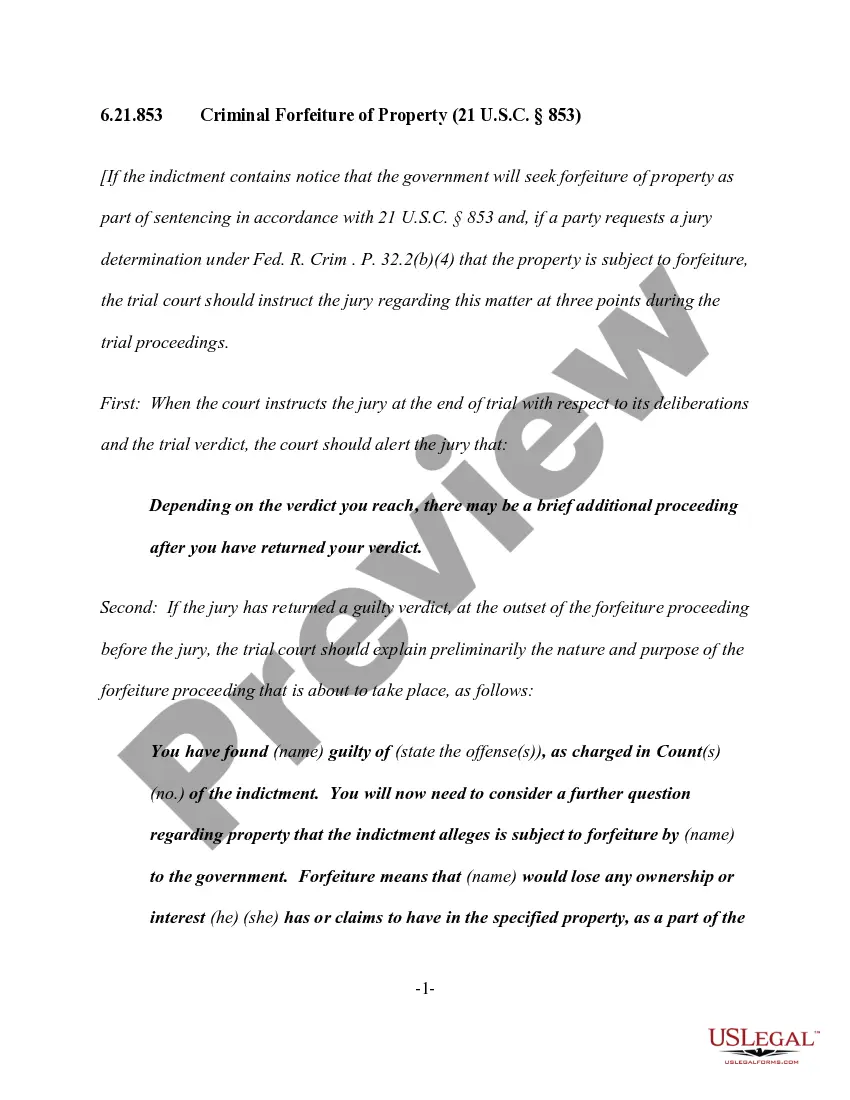
This form should be used when the state seeks to forfeit property allegedly involved in illegal activities, such as drug offenses or other crimes. It may be necessary in situations where law enforcement has seized property believed to be associated with unlawful conduct and the state must formally initiate the legal process for its forfeiture.
Who can use this document
- State officials or attorneys representing the state in forfeiture cases.
- Individuals or organizations involved in legal proceedings regarding property seizure.
- Law enforcement agencies looking to formally request property forfeiture through the court system.
Steps to complete this form
- Identify the specific property that is being requested for forfeiture.
- Cite the relevant legal statutes that support the forfeiture action.
- Clearly state the request for the court to approve the forfeiture of the property.
- Include the signature of the petitioner or their authorized representative.
- Review the form for completeness and accuracy before submitting it to the court.
Does this document require notarization?
This form does not typically require notarization to be legally valid. However, some jurisdictions or document types may still require it. US Legal Forms provides secure online notarization powered by Notarize, available 24/7 for added convenience.
Get your form ready online
Our built-in tools help you complete, sign, share, and store your documents in one place.
Make edits, fill in missing information, and update formatting in US Legal Forms—just like you would in MS Word.
Download a copy, print it, send it by email, or mail it via USPS—whatever works best for your next step.
Sign and collect signatures with our SignNow integration. Send to multiple recipients, set reminders, and more. Go Premium to unlock E-Sign.
If this form requires notarization, complete it online through a secure video call—no need to meet a notary in person or wait for an appointment.
We protect your documents and personal data by following strict security and privacy standards.

Make edits, fill in missing information, and update formatting in US Legal Forms—just like you would in MS Word.

Download a copy, print it, send it by email, or mail it via USPS—whatever works best for your next step.

Sign and collect signatures with our SignNow integration. Send to multiple recipients, set reminders, and more. Go Premium to unlock E-Sign.

If this form requires notarization, complete it online through a secure video call—no need to meet a notary in person or wait for an appointment.

We protect your documents and personal data by following strict security and privacy standards.
Common mistakes
- Failing to properly cite applicable statutes, which can lead to the petition being dismissed.
- Not providing complete identification of the property, resulting in confusion or delays.
- Omitting necessary signatures or declarations that validate the petition.
Benefits of completing this form online
- Convenience of downloading and filling the form at any time from any location.
- Editable format allowing you to customize the details to fit your specific situation.
- Preparation and accessibility of legally drafted content by licensed attorneys.
Main things to remember
- The Petition for Forfeiture is essential for initiating legal requests to forfeit property to the state.
- It must accurately reflect the property involved and relevant legal statutes.
- This form is specific to Mississippi law and should comply with local requirements.
Looking for another form?
Form popularity
FAQ
There are three types of forfeiture under federal law: criminal forfeiture, civil judicial forfeiture, and administrative forfeiture.The government then must prove that the property facilitated criminal activity or represents criminal proceeds.
Seizure is the act of taking property.Forfeiture occurs when your rights to the seized property are permanently lost through a court order or judgment. Forfeiture occurs after seizure, and seizure does not always end in forfeiture. In our example, the seizure takes place when Officer Potts takes the money from Steve.
When a decree of divorce is granted on the ground of the irretrievable break-down of a marriage the court may make an order that the patrimonial benefits of the marriage be forfeited by one party in favour of the other, either wholly or in part, if the court, having regard to the duration of the marriage, the
Forfeiture refers to a loss of any property, money, or assets without consideration or compensation in return. A forfeiture generally occurs due to default in complying with repayment obligations under a contract. It can also be used as a penalty for an illegal way of conducting business.
United States. There are two types of forfeiture (confiscation) cases, criminal and civil.
Forfeiture is the loss of any property without compensation as a result of defaulting on contractual obligations, or as a penalty for illegal conduct.
Criminal forfeiture is an action brought as a part of the criminal prosecution of a defendant.Civil judicial forfeiture is an in rem (against the property) action brought in court against the property. The property is the defendant and no criminal charge against the owner is necessary.
Criminal forfeiture is an action brought as a part of the criminal prosecution of a defendant.If the jury finds the property forfeitable, the court issues an order of forfeiture.
Forfeiture laws allow the government to keep the seized cash and property, destroy the property, or sell it and keep the proceeds to fund a number of activities.