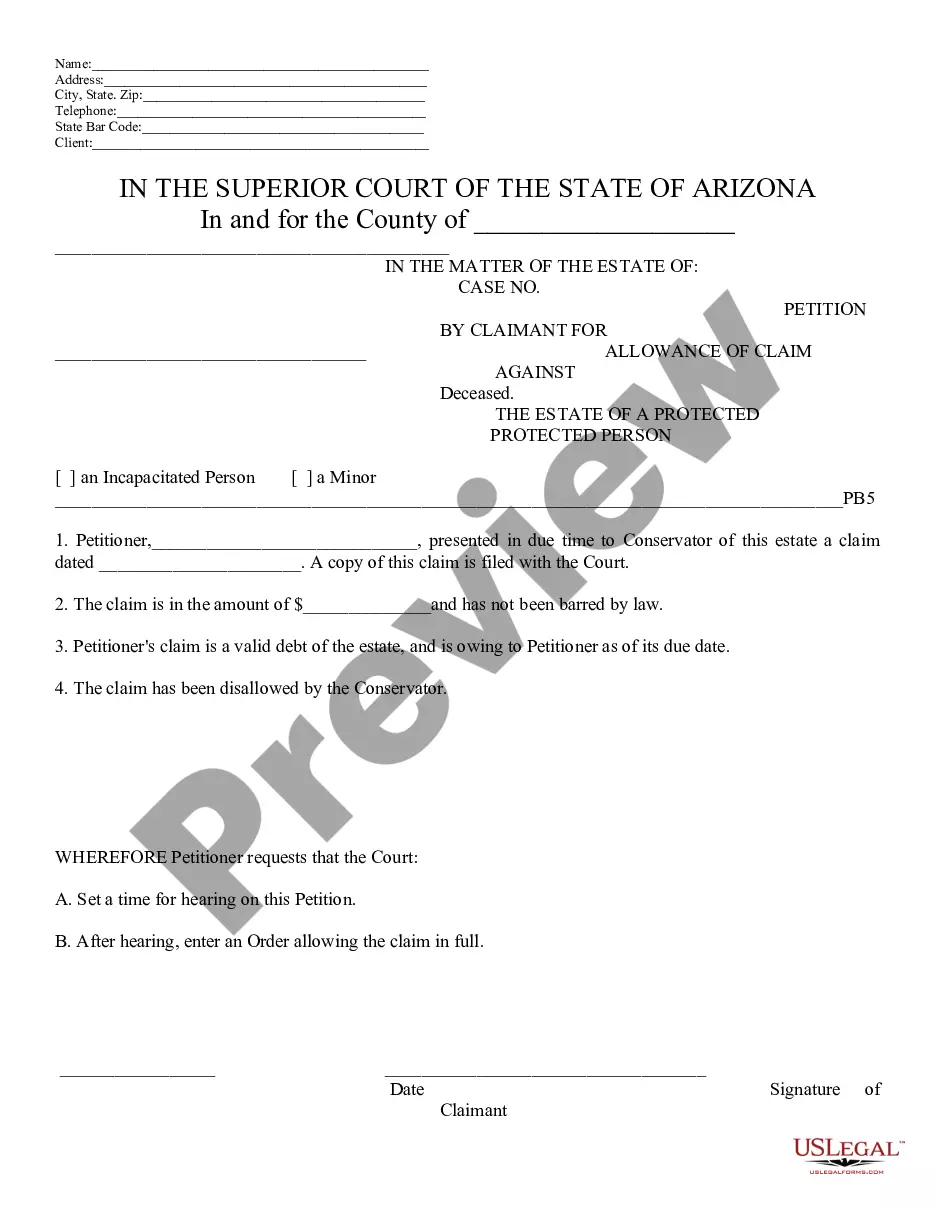
This model form, a Petition by Claimant for Allowance of Claim against Estate of a Protected Person - Arizona, is intended for use to initiate a request to the court to take the stated action. The form can be easily completed by filling in the blanks and/or adapted to fit your specific facts and circumstances. Available in for download now, in standard format(s).
Arizona Petition by Claimant for Allowance of Claim against Estate of a Protected Person
Instant download
Description
Free preview


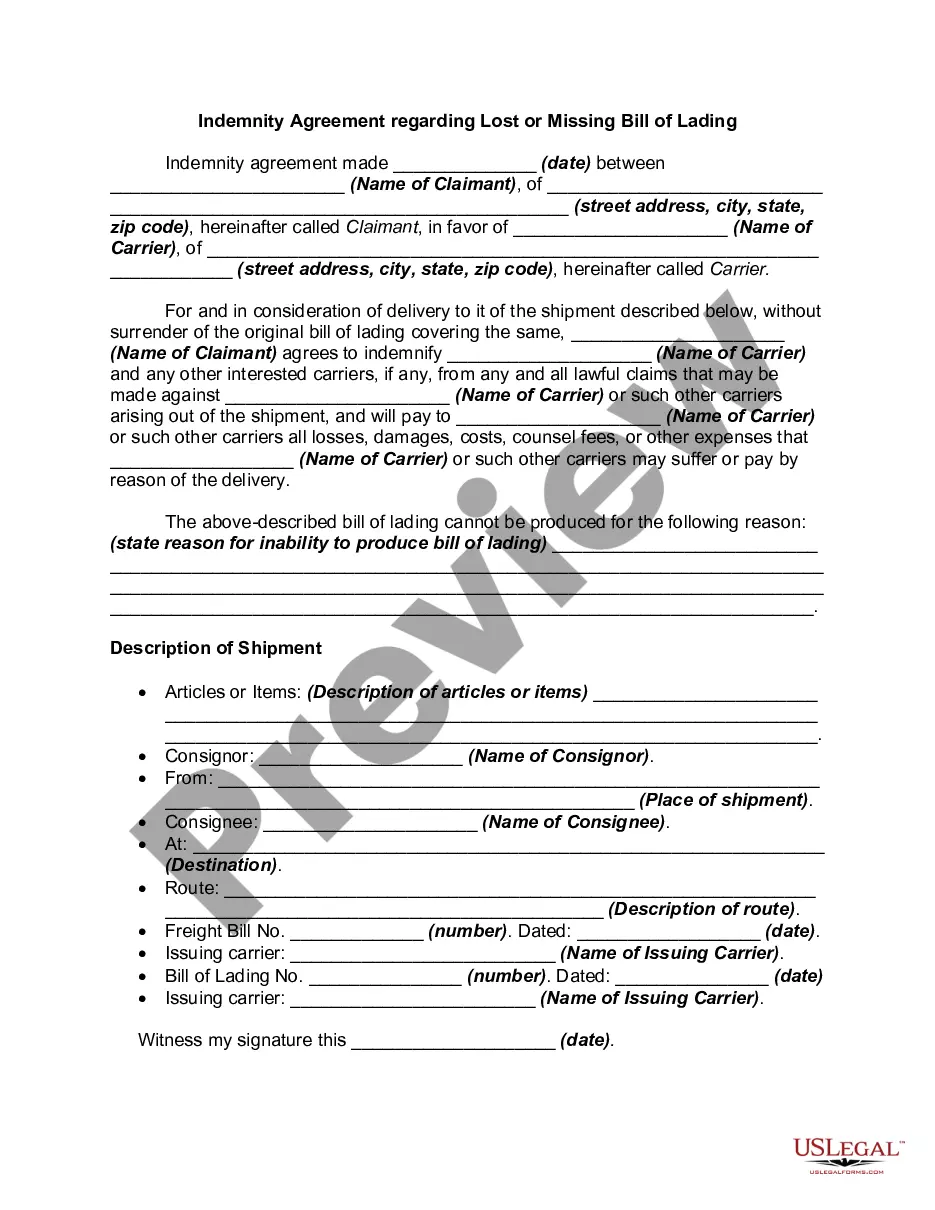

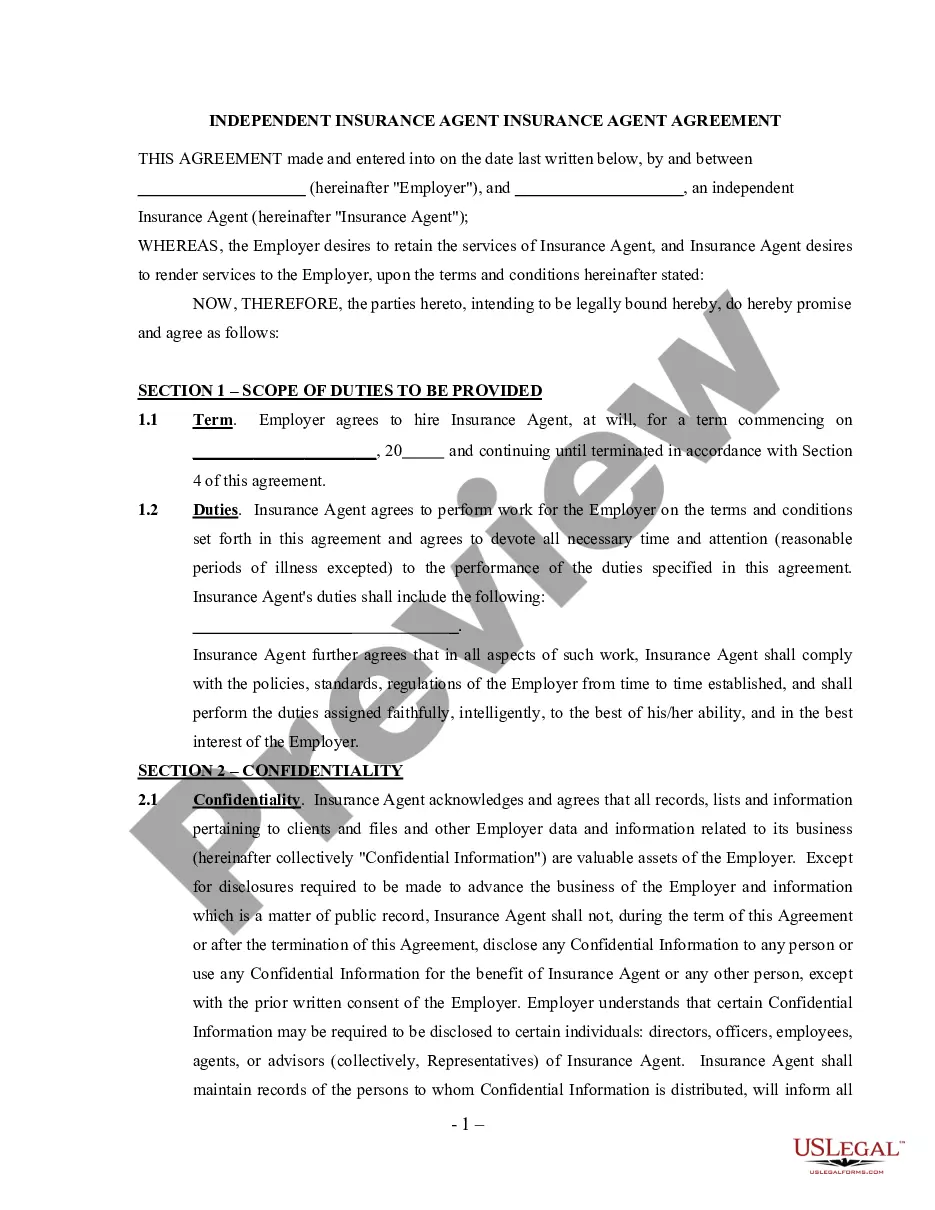
How to fill out Arizona Petition By Claimant For Allowance Of Claim Against Estate Of A Protected Person?
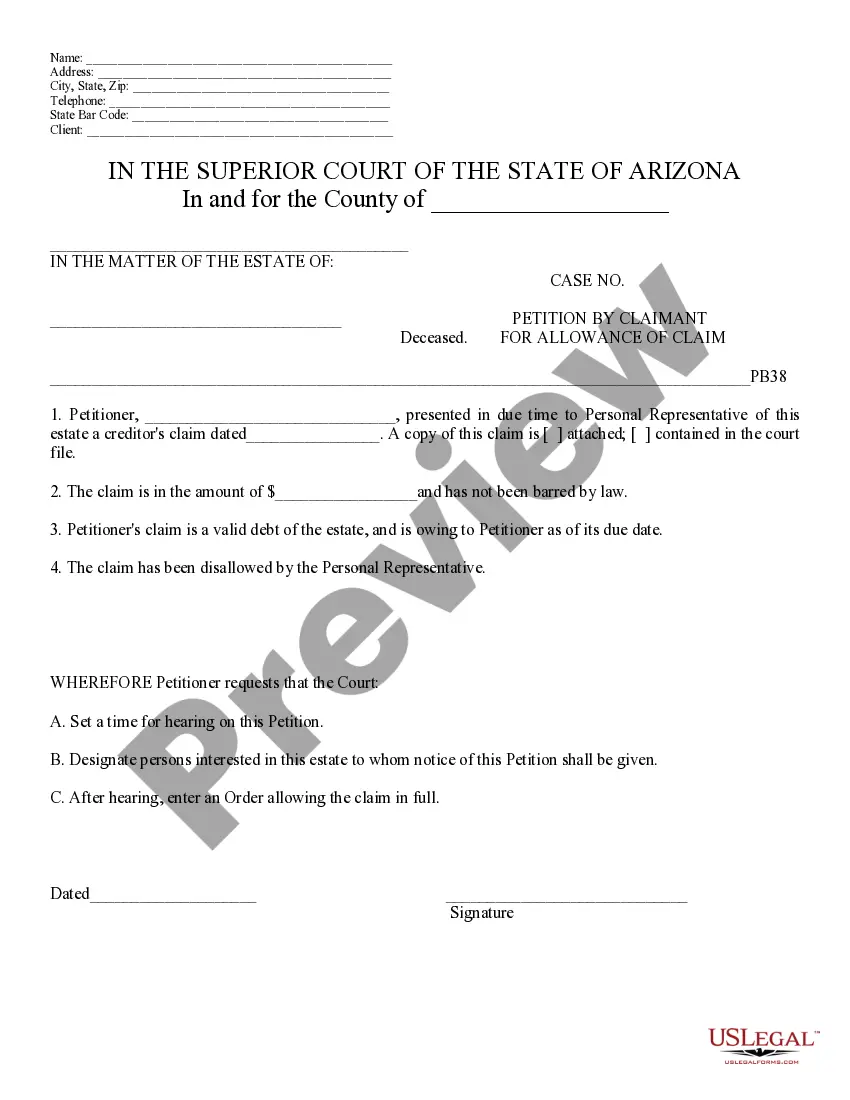
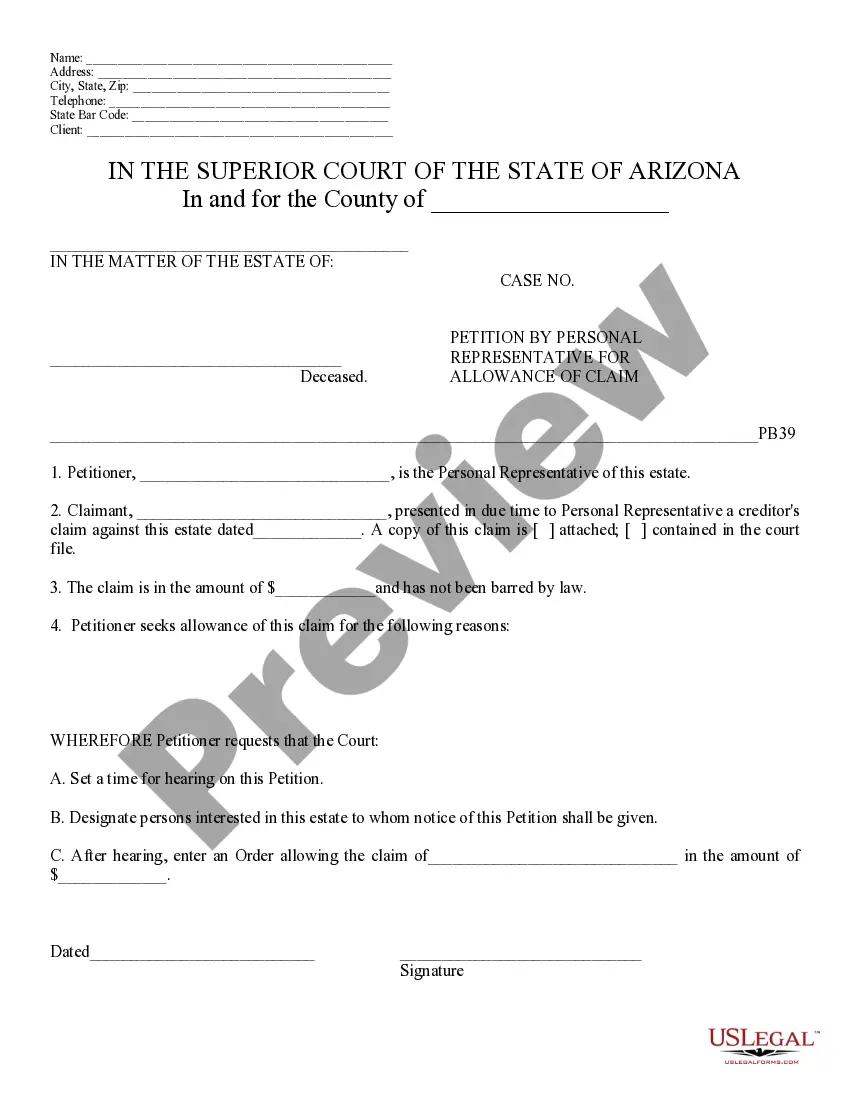
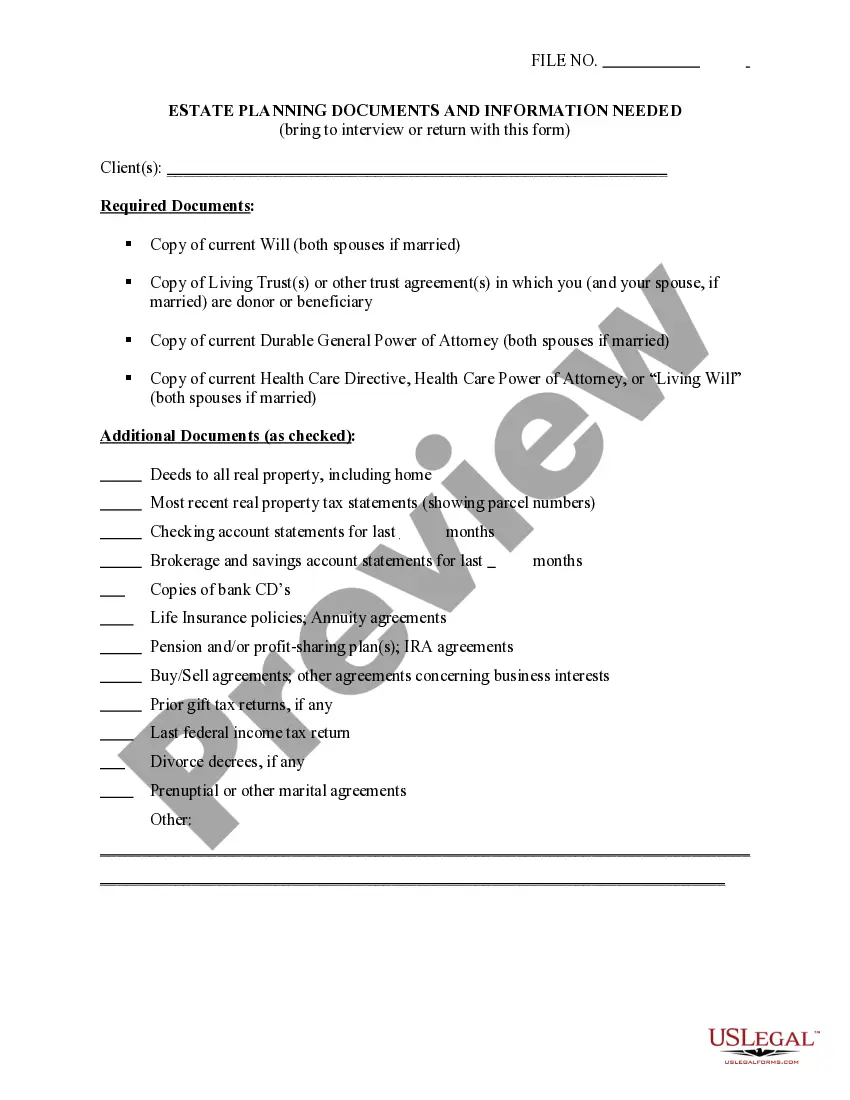
If you are seeking precise Arizona Petition by Claimant for Allowance of Claim against Estate of a Protected Person templates, US Legal Forms is what you require; locate documents created and verified by state-licensed legal professionals.
Using US Legal Forms not only spares you from concerns related to legal documentation; furthermore, you save time, effort, and money! Downloading, printing, and completing a professional template is significantly more affordable than hiring an attorney to handle it for you.
And that's it. With just a few simple clicks, you have an editable Arizona Petition by Claimant for Allowance of Claim against Estate of a Protected Person. After creating an account, all future orders will be processed even more easily. If you have a US Legal Forms subscription, simply Log In to your profile and click the Download button on the form's page. Then, when you need to use this template again, you will always find it in the My documents section. Don’t waste your time and effort searching through numerous forms on various websites. Obtain precise copies from one secure platform!
- To get started, complete your registration by entering your email and creating a password.
- Follow the instructions below to set up your account and acquire the Arizona Petition by Claimant for Allowance of Claim against Estate of a Protected Person example to address your needs.
- Utilize the Preview feature or review the document details (if accessible) to confirm that the template is the one you are seeking.
- Check its validity in your region.
- Click on Buy Now to place your order.
- Select a suggested pricing option.
- Create your account and pay using your credit card or PayPal.
- Choose a suitable file format and save the document.
Form popularity
FAQ
An executor in Arizona generally has 1 year to distribute assets after an estate has been settled, although this can vary depending on the complexity of the estate. They must ensure all debts and claims have been dealt with first, which impacts the distribution timeline. Using an Arizona Petition by Claimant for Allowance of Claim against Estate of a Protected Person can streamline claims and hasten the distribution process. Focus on timely management to fulfill your responsibilities.
To become a personal representative for an estate in Arizona, you must be appointed by the court through the probate process. Typically, this requires filing an application that may include an Arizona Petition by Claimant for Allowance of Claim against Estate of a Protected Person. It is important to meet specific eligibility criteria, which can include being a resident or a relative of the deceased. Completing this process accurately ensures you can act on behalf of the estate.
Creditors have 1 year to collect a debt from an estate after the probate proceedings have started. Once this period passes, the estate may be closed, and creditors could lose their opportunity to recover owed amounts. Hence, utilizing an Arizona Petition by Claimant for Allowance of Claim against Estate of a Protected Person can help protect your right to collect within this timeframe. Act swiftly to secure your claim.
In Arizona, probate should generally be filed within 2 years of the decedent's passing. Delaying this process can lead to complications in settling the estate and may affect your rights as a beneficiary. If you are considering an Arizona Petition by Claimant for Allowance of Claim against Estate of a Protected Person, timely initiation of probate is critical. Proactive steps can ease the complexities involved.
You have 4 months to file a claim against an estate in Arizona, starting from the date you receive notice from the personal representative. This timeframe is crucial in protecting your interests as a creditor. Filing your claim through an Arizona Petition by Claimant for Allowance of Claim against Estate of a Protected Person can help facilitate this process effectively. Don't wait until the last moment to ensure your claim is recognized.
Creditors in Arizona typically have 4 months to file a claim against an estate after the personal representative sends notice of the probate proceedings. This period ensures that all debts are settled before distributing assets. If you are a creditor, it's important to be aware of this timeframe when preparing your Arizona Petition by Claimant for Allowance of Claim against Estate of a Protected Person. Timely action ensures you are considered in the settlement process.
In Arizona, you have a limited timeframe to contest a will, usually within 4 months after the will is admitted to probate. If you miss this deadline, you can lose your right to challenge the will. Understanding this timeline is crucial for anyone considering filing an Arizona Petition by Claimant for Allowance of Claim against Estate of a Protected Person. Seeking legal advice can help clarify your options.
The informal probate process in Arizona is a simpler, faster way to settle an estate without a court hearing. It typically involves filing an Arizona Petition by Claimant for Allowance of Claim against Estate of a Protected Person, which allows for the approval of claims. This process is less costly and often leads to quicker distributions for beneficiaries. It is essential to follow state guidelines to ensure a smooth experience.
A letter of appointment of personal representative in Arizona is an official document that authorizes an individual to act on behalf of a deceased person's estate. This letter grants the personal representative the necessary powers to manage the estate's affairs, ensuring all obligations are met and assets are properly distributed. When filing claims, the Arizona Petition by Claimant for Allowance of Claim against Estate of a Protected Person often requires presenting this document to confirm the representative's authority.
In Arizona, a personal representative estate refers to the legal authority assigned to an individual who manages the estate of a deceased person. This representative is responsible for settling debts, distributing assets, and ensuring the estate complies with Arizona law. If you are navigating this process, understanding the Arizona Petition by Claimant for Allowance of Claim against Estate of a Protected Person can be essential for addressing claims properly.