Notice of Credit Limit
Understanding this form
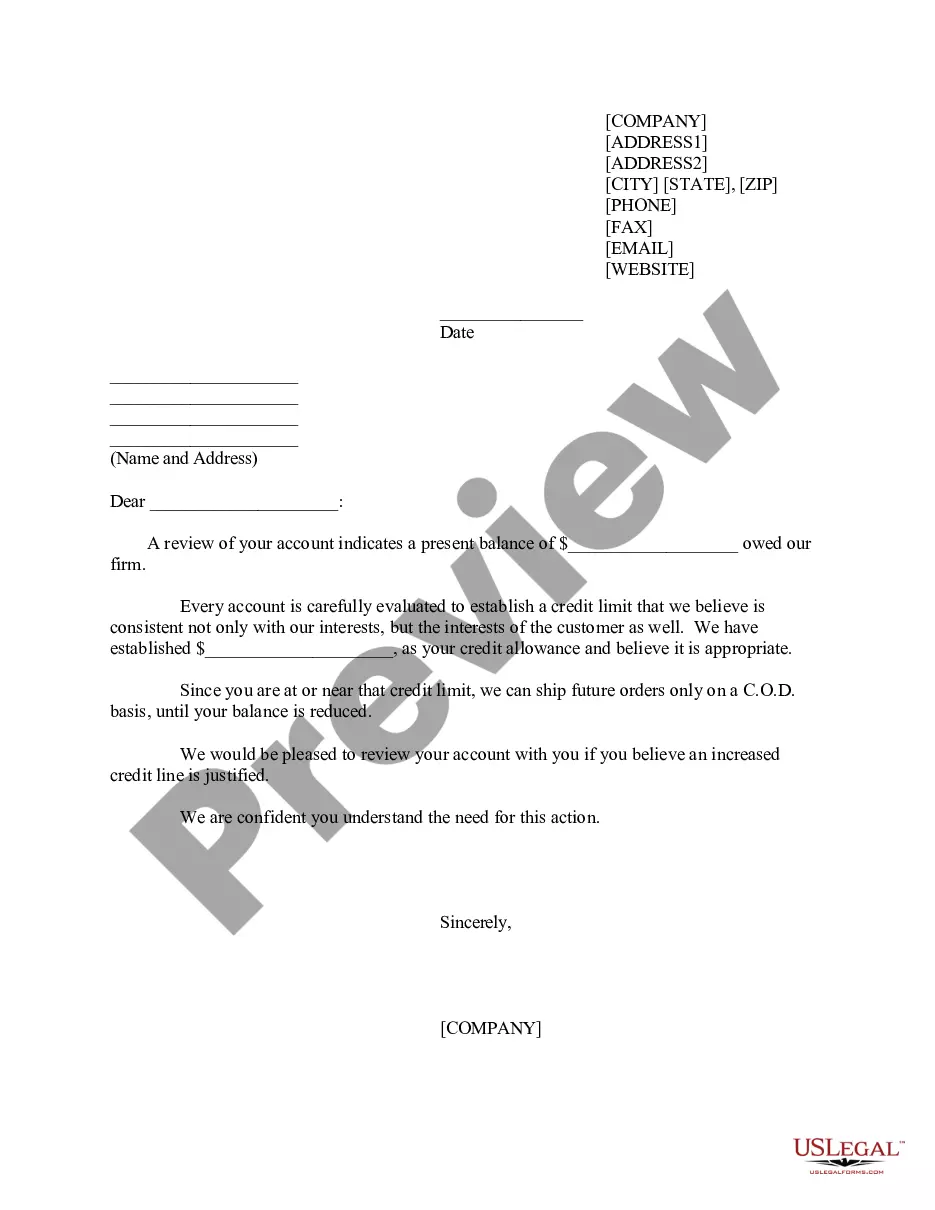
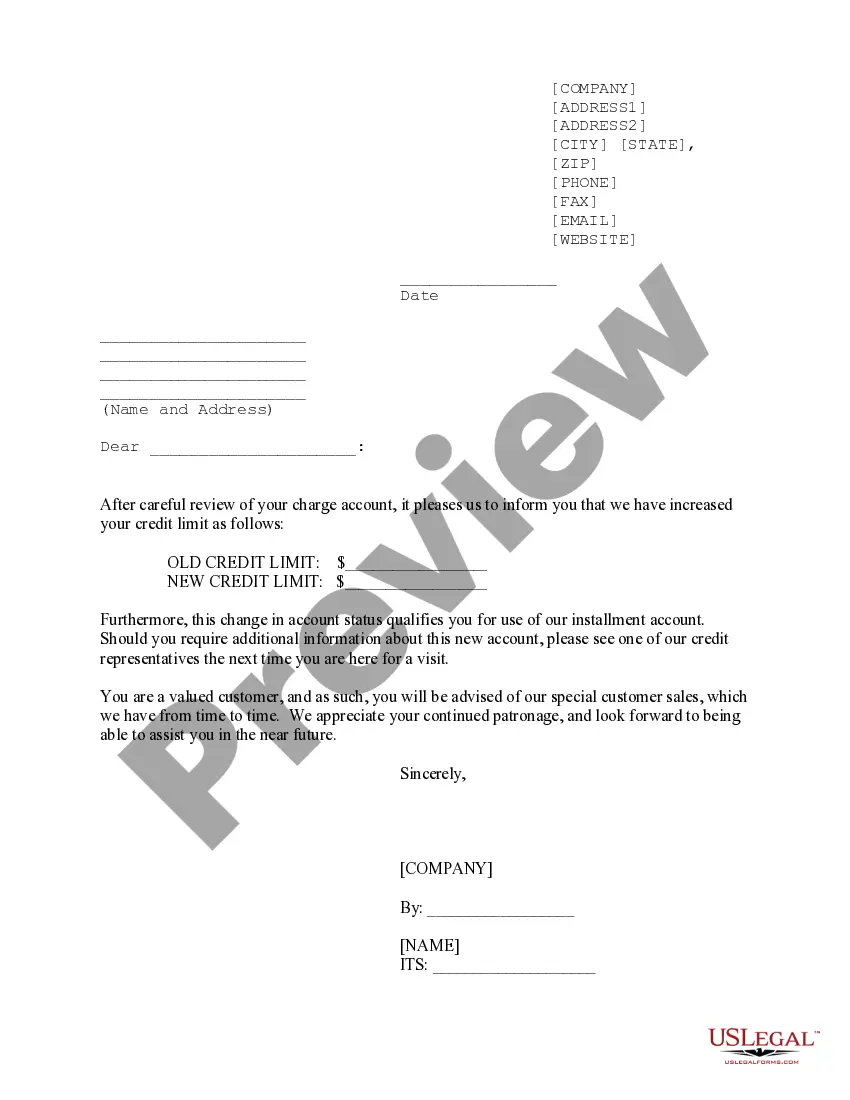
The Notice of Credit Limit is a formal document used by businesses to inform clients about their current credit status and limit. This form serves to communicate that the client has reached or is nearing their established credit limit, which may affect future credit transactions. Unlike other credit-related documents, this notice specifically addresses the implications of credit limits on account activity, ensuring clarity for both the company and its client.
Key components of this form
- Sender's contact information: Includes the companyâs address, phone number, and email.
- Date of notice: Indicates when the notice is being issued.
- Recipient's name and address: Personalizes the communication to the specific client.
- Current balance: States the amount currently owed by the client.
- Established credit limit: Defines the credit allowance granted to the client.
- Action notice: Informs the client of future shipping terms based on their credit status.

When this form is needed
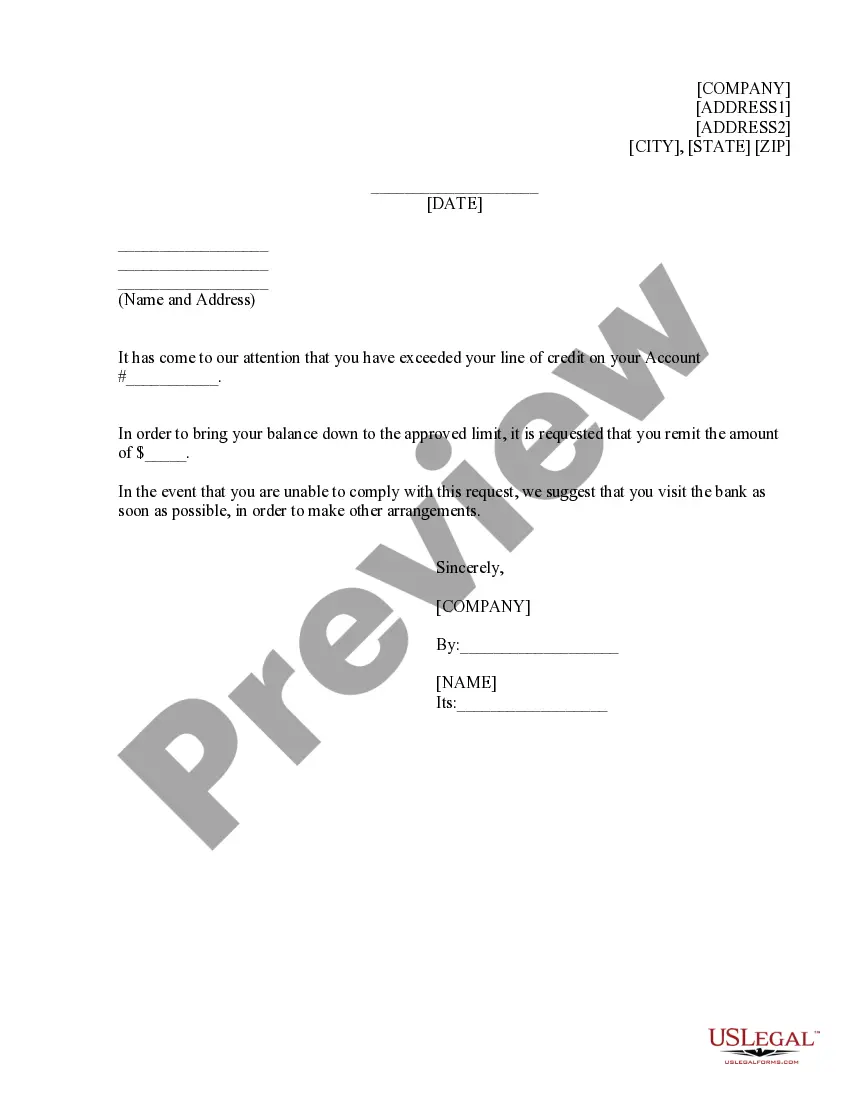
This form should be used when a business needs to notify a client that they are approaching or have exceeded their credit limit. It is particularly relevant for companies that extend credit to customers and need to manage risk by ensuring clients are aware of their limits. This notice can help prevent disputes regarding future orders and clarify the companyâs shipping policy until the account balance is settled.
Who can use this document
- Businesses that extend credit to their clients.
- Accounting or finance departments managing customer accounts.
- Any company seeking to maintain clear communication regarding credit limits.
Instructions for completing this form
- Fill in your companyâs contact information at the top of the form.
- Enter the date the notice is being issued.
- Provide the name and address of the client receiving the notice.
- State the current balance owed by the client.
- Specify the established credit limit for the client.
- Sign and date the notice, including your position within the company.
Notarization guidance
This form does not typically require notarization unless specified by local law. It serves primarily as a communication tool between businesses and clients regarding credit limits.
Get your form ready online
Our built-in tools help you complete, sign, share, and store your documents in one place.
Make edits, fill in missing information, and update formatting in US Legal Forms—just like you would in MS Word.
Download a copy, print it, send it by email, or mail it via USPS—whatever works best for your next step.
Sign and collect signatures with our SignNow integration. Send to multiple recipients, set reminders, and more. Go Premium to unlock E-Sign.
If this form requires notarization, complete it online through a secure video call—no need to meet a notary in person or wait for an appointment.
We protect your documents and personal data by following strict security and privacy standards.

Make edits, fill in missing information, and update formatting in US Legal Forms—just like you would in MS Word.

Download a copy, print it, send it by email, or mail it via USPS—whatever works best for your next step.

Sign and collect signatures with our SignNow integration. Send to multiple recipients, set reminders, and more. Go Premium to unlock E-Sign.

If this form requires notarization, complete it online through a secure video call—no need to meet a notary in person or wait for an appointment.

We protect your documents and personal data by following strict security and privacy standards.
Common mistakes to avoid
- Failing to update the current balance before sending the notice.
- Not personalizing the notice with the clientâs name and address.
- Neglecting to include a clear explanation of the situation regarding credit limits.
Advantages of online completion
- Easy to download and customize according to specific business needs.
- Accessible at any time, allowing for quick updates and distribution.
- Eliminates the need for physical storage, enabling digital organization and retrieval.
Main things to remember
- The Notice of Credit Limit is vital for managing customer credit relationships.
- Accurate completion ensures both clarity and legal integrity.
- This form can help protect your business from financial disputes with customers.
Looking for another form?

Form popularity
FAQ
A credit card limit is the total amount of money you can charge to a credit card. If your credit card has a limit of $5,000, for example, it means you can carry a balance of up to $5,000 on your credit card.
If you're issued a credit card with a low credit limit, it could be for a number of reasons, including: Poor credit history. High balances with other credit cards. Low income.
A credit limit is the maximum amount of money a lender will allow you to spend on a credit card or a line of credit. Knowing your maximum, however, does not mean it's a good idea to reach it.
Letter of Credit Limit means, on any date, a maximum amount (as such amount may be reduced from time to time pursuant to Section 2.2) equal to the Total Commitment Amount.
A credit limit on a credit card is the maximum dollar amount a cardholder can access for purchases, balance transfers, cash advances, fees and interest charges combined.
A credit limit is the maximum amount of money a lender offers to a borrower.
Card issuers can change your credit limit without notice There are a number of protections in place to ensure that your card issuer does not unfairly increase your APR or charge fees without adequate notice. However, your card issuer can change some terms without telling you first, and that includes your credit limit.
The credit limit is the total amount you can borrow, whereas available credit is the amount that is remaining for you to use, including if you carry a balance. For example, if you have a credit card with a $1,000 credit limit, and you charge $600, you have an additional $400 to spend.