Mississippi Agreed Order Awarding Forfeiture
What is this form?
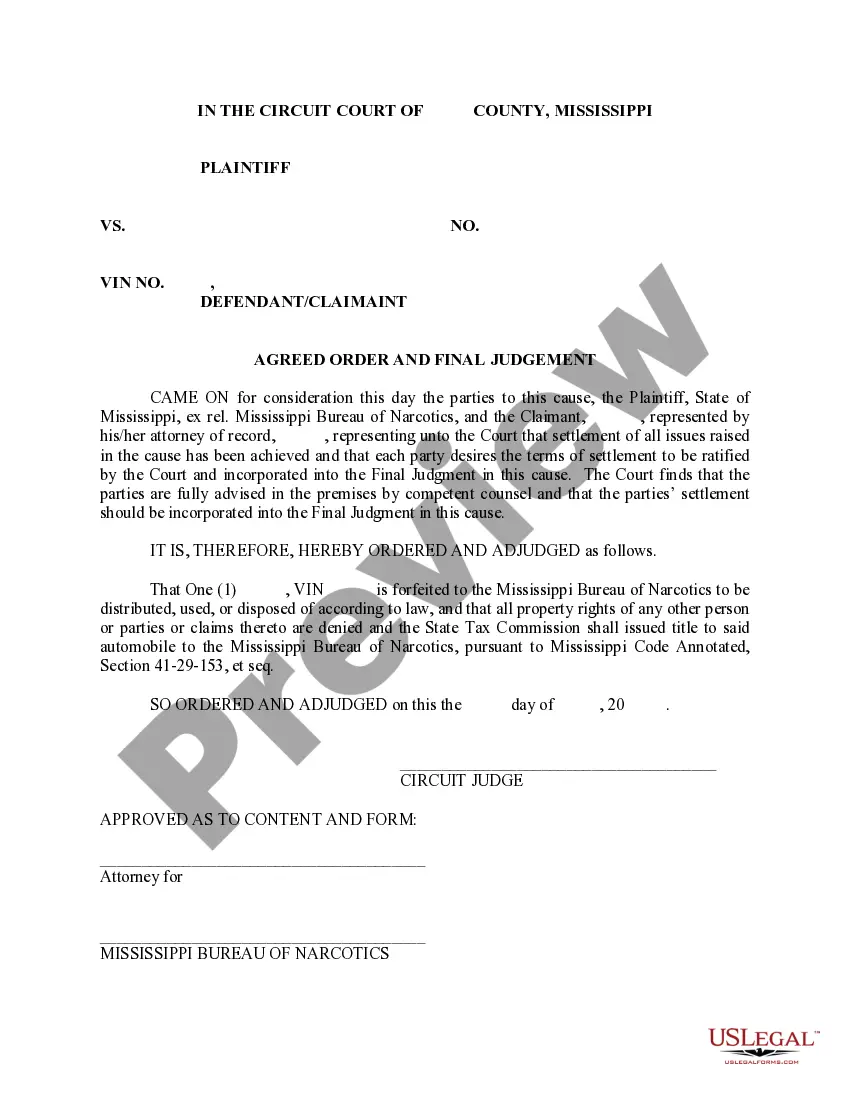
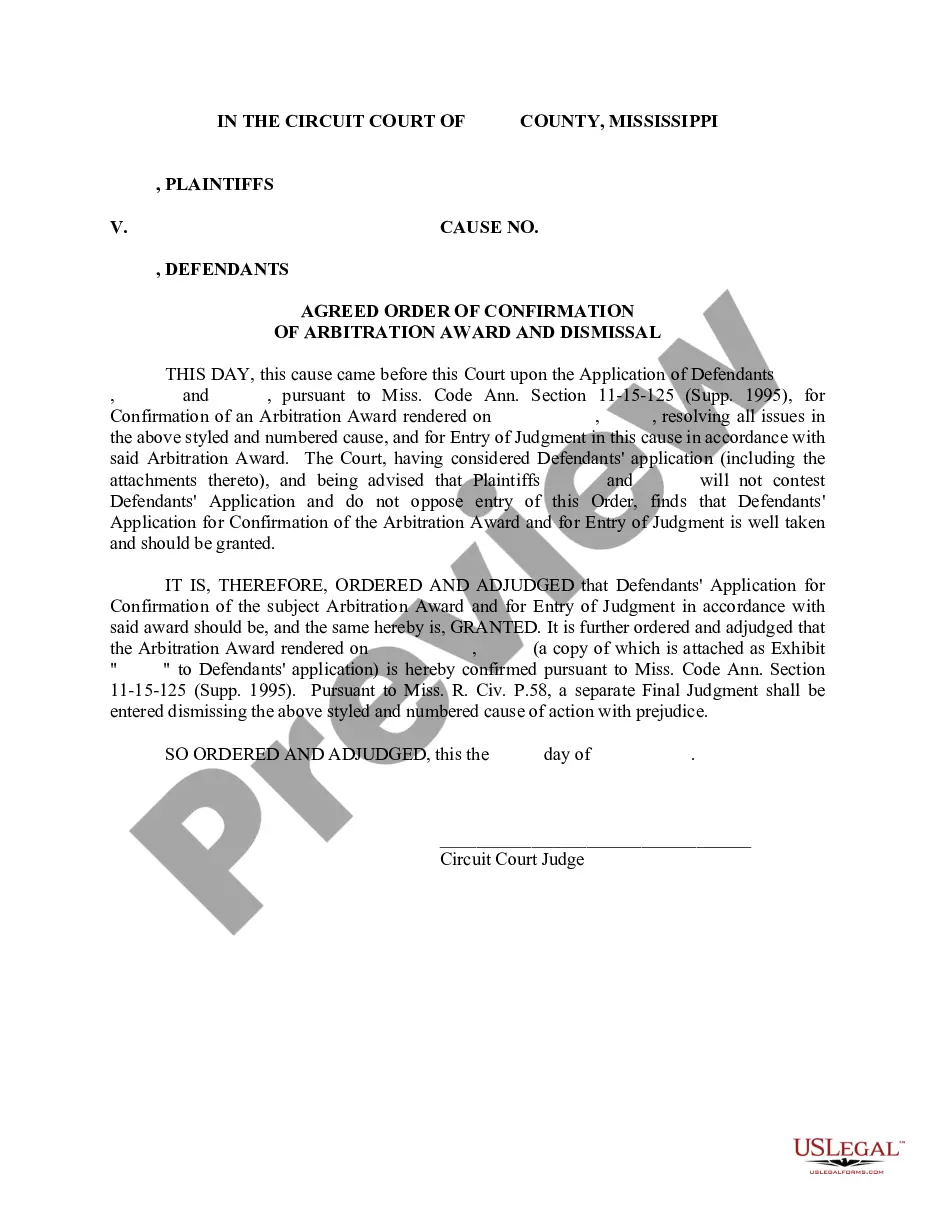
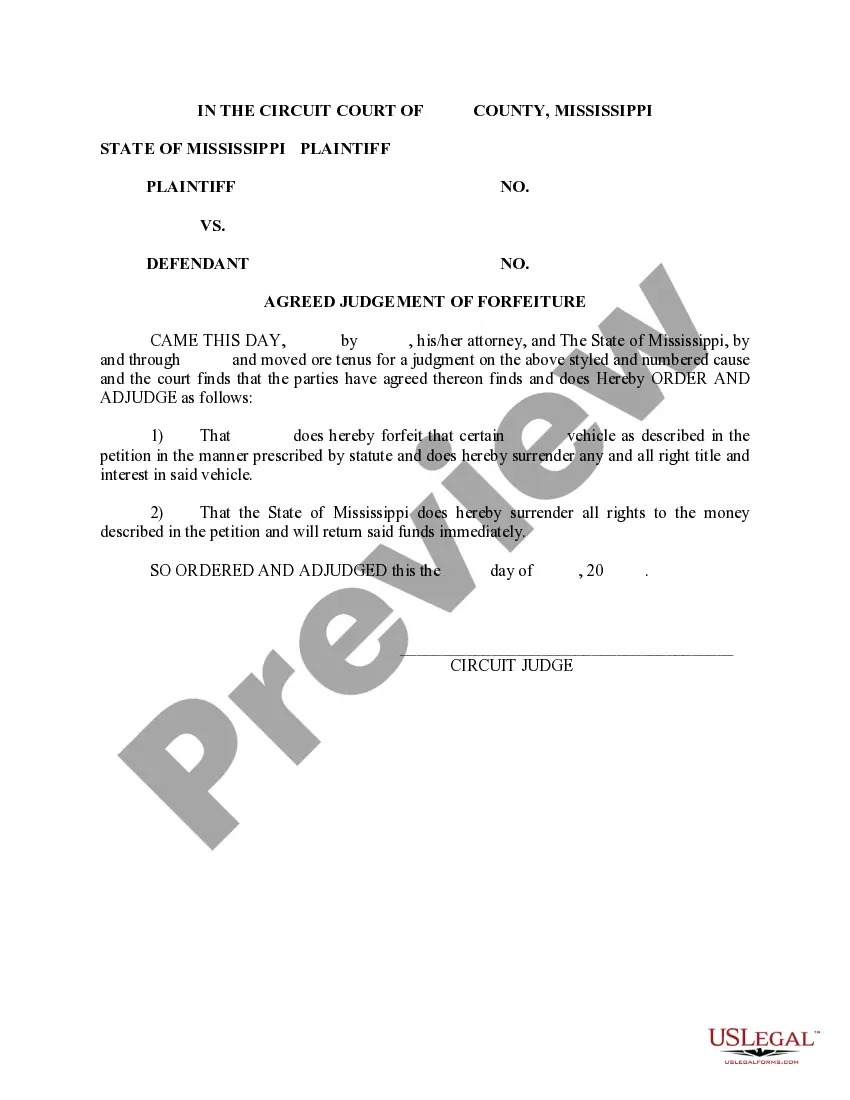
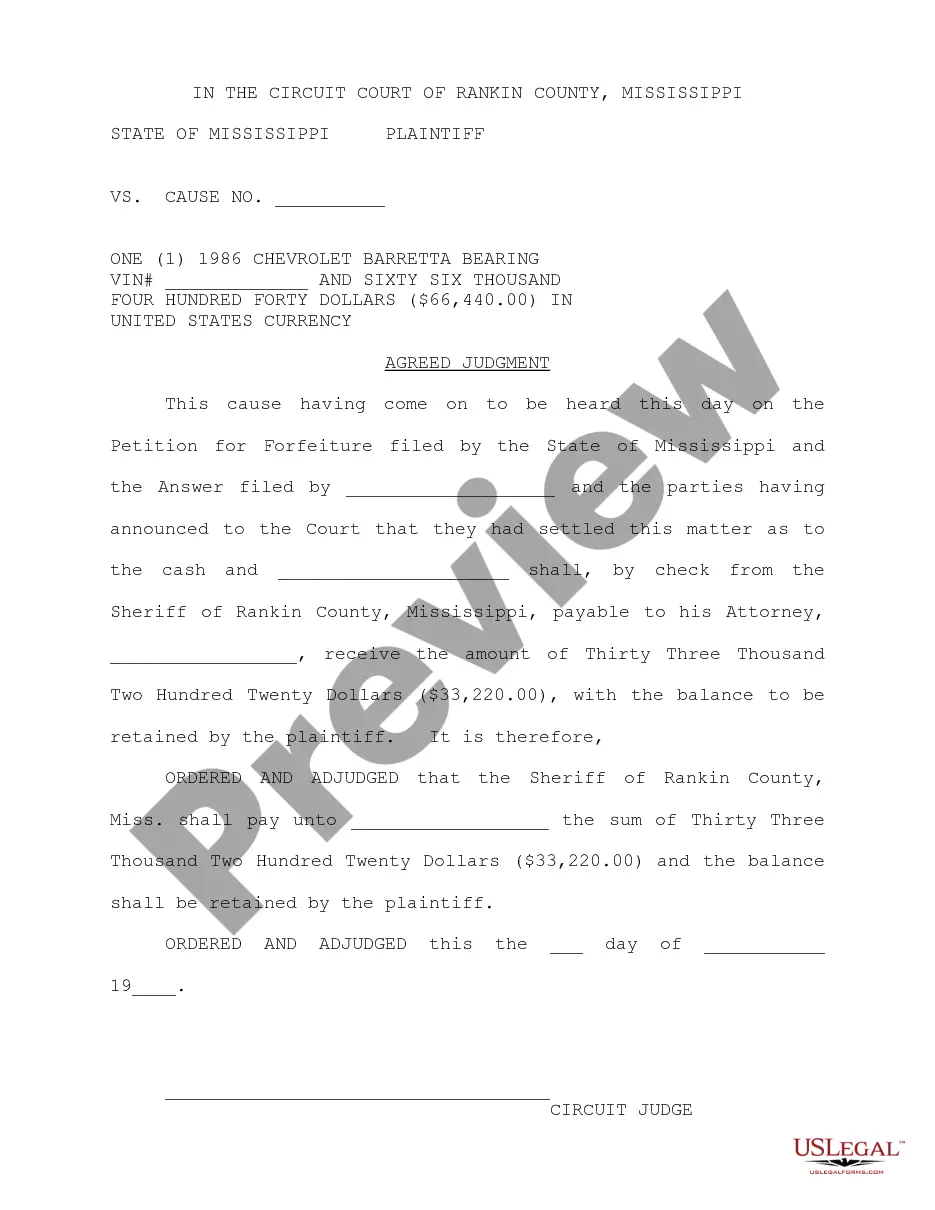
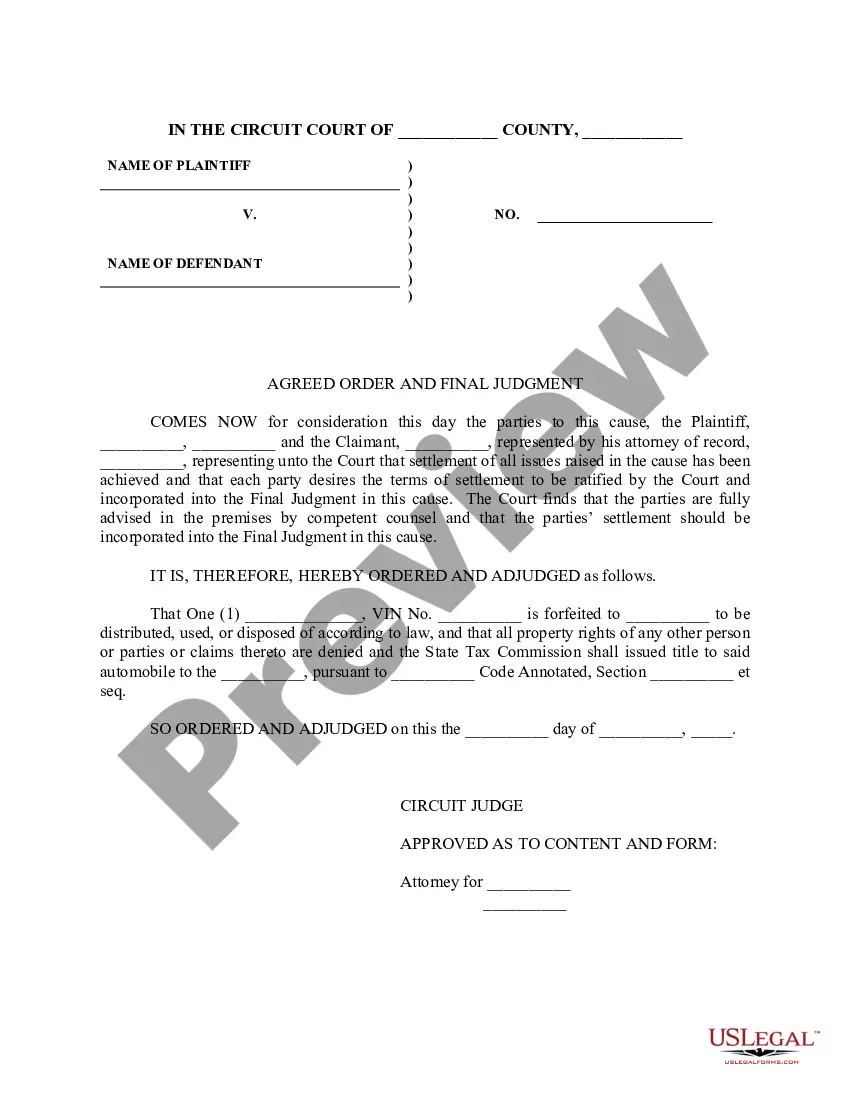
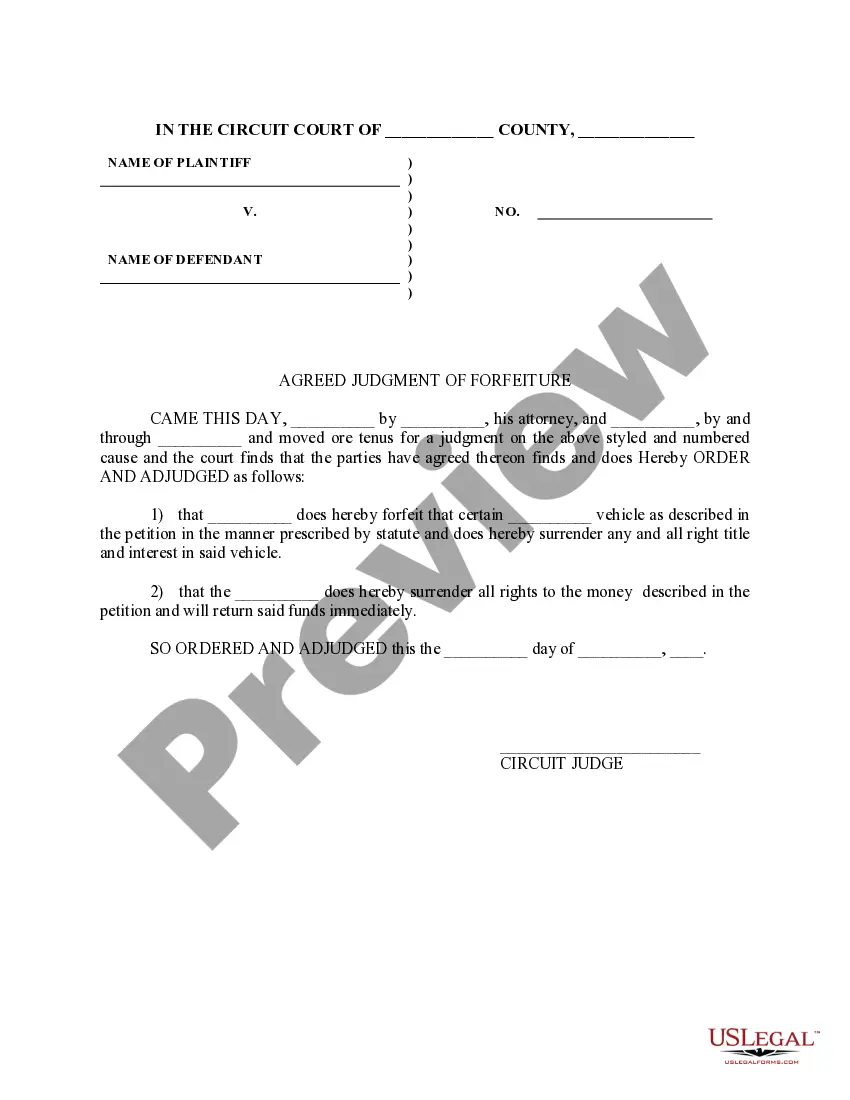
The Agreed Order Awarding Forfeiture is a legal document specific to Mississippi that allows parties involved in legal action to settle their disputes amicably. This form confirms that both parties have reached an agreement regarding their causes of action and intend to end the lawsuit. It differs from other legal forms by emphasizing mutual consent in the forfeiture process, ensuring compliance with Mississippi laws and statutes.
What’s included in this form
- Order and adjudication clause detailing the agreement.
- Identification of the parties involved in the legal action.
- Statement of the causes of action being forfeited.
- Signatures of both parties indicating their agreement.
- Confirmation of compliance with Mississippi legal requirements.
Situations where this form applies
This form should be used when two parties in a legal dispute have reached an agreement to resolve their issues through forfeiture. It is particularly useful when both parties wish to avoid further litigation and formalize their resolution in a legally binding document. Common scenarios include settling disputes over property, assets, or claims without proceeding to trial.
Who can use this document
- Individuals or entities involved in a legal dispute in Mississippi.
- Parties seeking to settle a lawsuit amicably through forfeiture.
- Lawyers representing clients who wish to formalize an agreement.
- Anyone looking to expedite the resolution of a legal issue without going to trial.
How to prepare this document
- Identify the parties involved in the case, including their full names and contact information.
- Clearly state the causes of action that are being forfeited.
- Enter the date on which the agreement is made.
- Both parties must review the agreement and sign to demonstrate mutual consent.
- File the completed form with the appropriate court to formalize the agreement.
Does this document require notarization?
This form does not typically require notarization to be legally valid. However, some jurisdictions or document types may still require it. US Legal Forms provides secure online notarization powered by Notarize, available 24/7 for added convenience.
Get your form ready online
Our built-in tools help you complete, sign, share, and store your documents in one place.
Make edits, fill in missing information, and update formatting in US Legal Forms—just like you would in MS Word.
Download a copy, print it, send it by email, or mail it via USPS—whatever works best for your next step.
Sign and collect signatures with our SignNow integration. Send to multiple recipients, set reminders, and more. Go Premium to unlock E-Sign.
If this form requires notarization, complete it online through a secure video call—no need to meet a notary in person or wait for an appointment.
We protect your documents and personal data by following strict security and privacy standards.

Make edits, fill in missing information, and update formatting in US Legal Forms—just like you would in MS Word.

Download a copy, print it, send it by email, or mail it via USPS—whatever works best for your next step.

Sign and collect signatures with our SignNow integration. Send to multiple recipients, set reminders, and more. Go Premium to unlock E-Sign.

If this form requires notarization, complete it online through a secure video call—no need to meet a notary in person or wait for an appointment.

We protect your documents and personal data by following strict security and privacy standards.
Common mistakes to avoid
- Failing to provide complete or accurate information about the parties.
- Not including all necessary signatures on the form.
- Leaving out the specific causes of action, which may render the agreement unclear.
- Neglecting to file the form with the court after completion.
Benefits of completing this form online
- Convenience of accessing and downloading the form at any time.
- Editable format allows customization before printing.
- Reliable templates drafted by licensed attorneys to ensure legal compliance.
Legal use & context
- This form is legally binding once signed by both parties and filed with the court.
- Proper completion and filing of the form can prevent further legal action.
- Ensures both parties' agreements are recognized by the court.
Summary of main points
- The Agreed Order Awarding Forfeiture formalizes an agreement between two parties.
- It is essential for parties to ensure accurate information is included.
- The form helps in resolving legal disputes without the need for extensive litigation.
Looking for another form?

Form popularity
FAQ
Forfeiture takes two distinct forms -- criminal and civil. Nearly all contemporary forfeiture involves the civil variety. Criminal forfeiture operates as punishment for a crime. It, therefore, requires a conviction, following which the state takes the assets in question from the criminal.
In criminal forfeiture, the government takes property after obtaining a conviction, as part of the defendant's sentence. In civil forfeiture, a criminal charge or conviction is not needed; the government only needs to show by a preponderance of the evidence that the property was used to facilitate a crime.
United States. There are two types of forfeiture (confiscation) cases, criminal and civil.
Forfeiture refers to a loss of any property, money, or assets without consideration or compensation in return. A forfeiture generally occurs due to default in complying with repayment obligations under a contract. It can also be used as a penalty for an illegal way of conducting business.
It is an in personam (against the person) action and requires that the government indict (charge) the property used or derived from the crime along with the defendant. If the jury finds the property forfeitable, the court issues an order of forfeiture.
The criminal statute of limitations requires prosecutors to file criminal charges against a suspect within two years for misdemeanors and within five years for certain felonies, but there is no time limit in Mississippi for charges of murder, kidnapping, rape, burglary, robbery, larceny, and several other serious
Forfeiture laws allow the government to keep the seized cash and property, destroy the property, or sell it and keep the proceeds to fund a number of activities.
When a decree of divorce is granted on the ground of the irretrievable break-down of a marriage the court may make an order that the patrimonial benefits of the marriage be forfeited by one party in favour of the other, either wholly or in part, if the court, having regard to the duration of the marriage, the
Criminal forfeiture is an action brought as a part of the criminal prosecution of a defendant.If the jury finds the property forfeitable, the court issues an order of forfeiture.