Arizona Informal Appointment of Special Administrator
Understanding this form
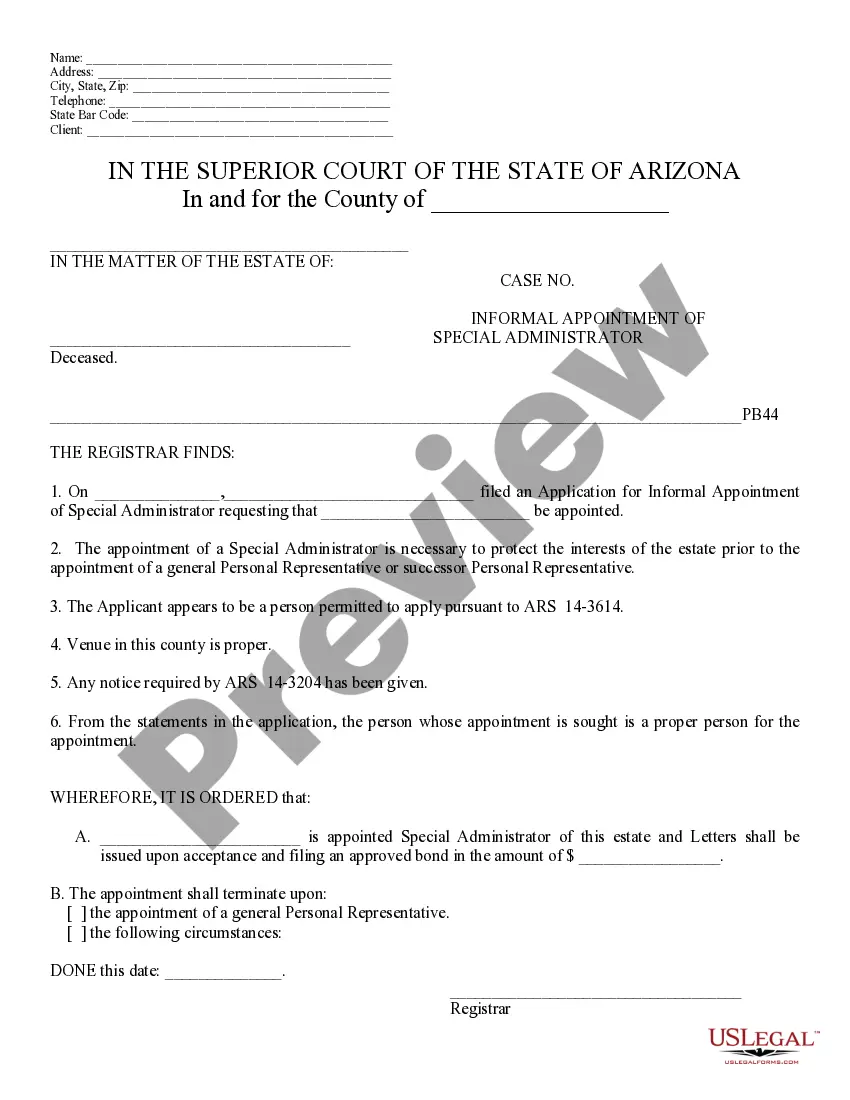
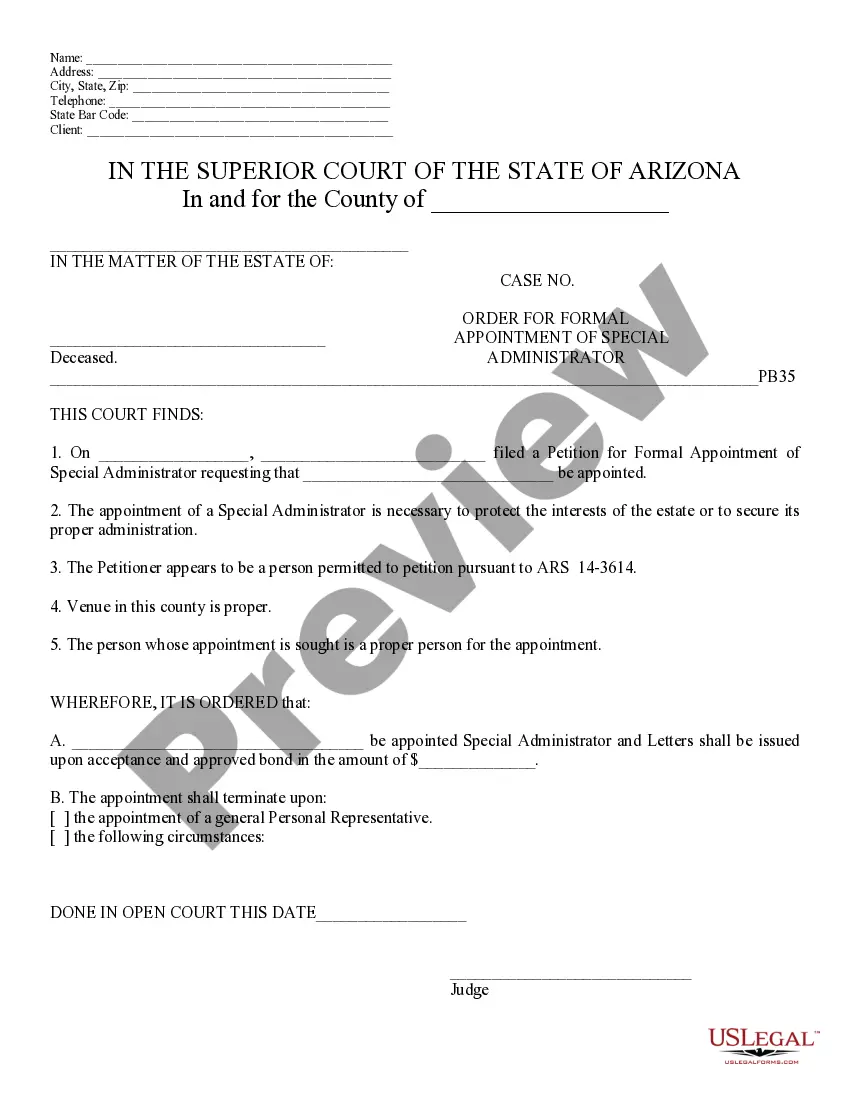
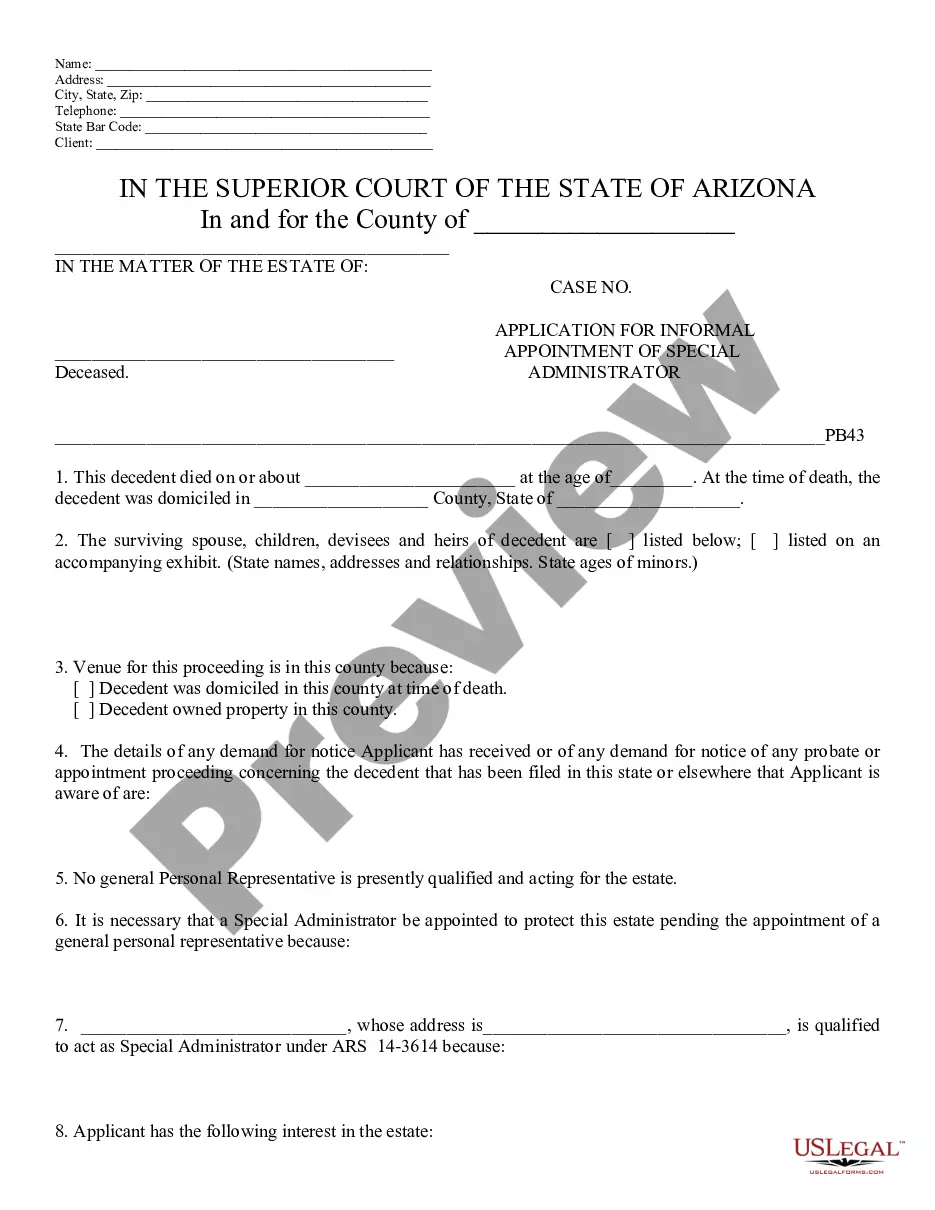
The Informal Appointment of Special Administrator is a legal document used to appoint an individual as a special administrator for an estate in Arizona. This form serves the critical purpose of designating a personal representative to manage the estate's affairs until a general personal representative is appointed. Unlike other estate-related forms, this document is specifically tailored for temporary appointments, ensuring that the estate's interests are protected during the initial stages of probate.
Main sections of this form
- Identifying information for the applicant and the deceased
- Details of the special administrator being appointed
- Confirmation of the necessity for appointment and eligibility of the applicant
- Conditions for terminating the appointment
- Space for the court registrar's approval and issuance of letters

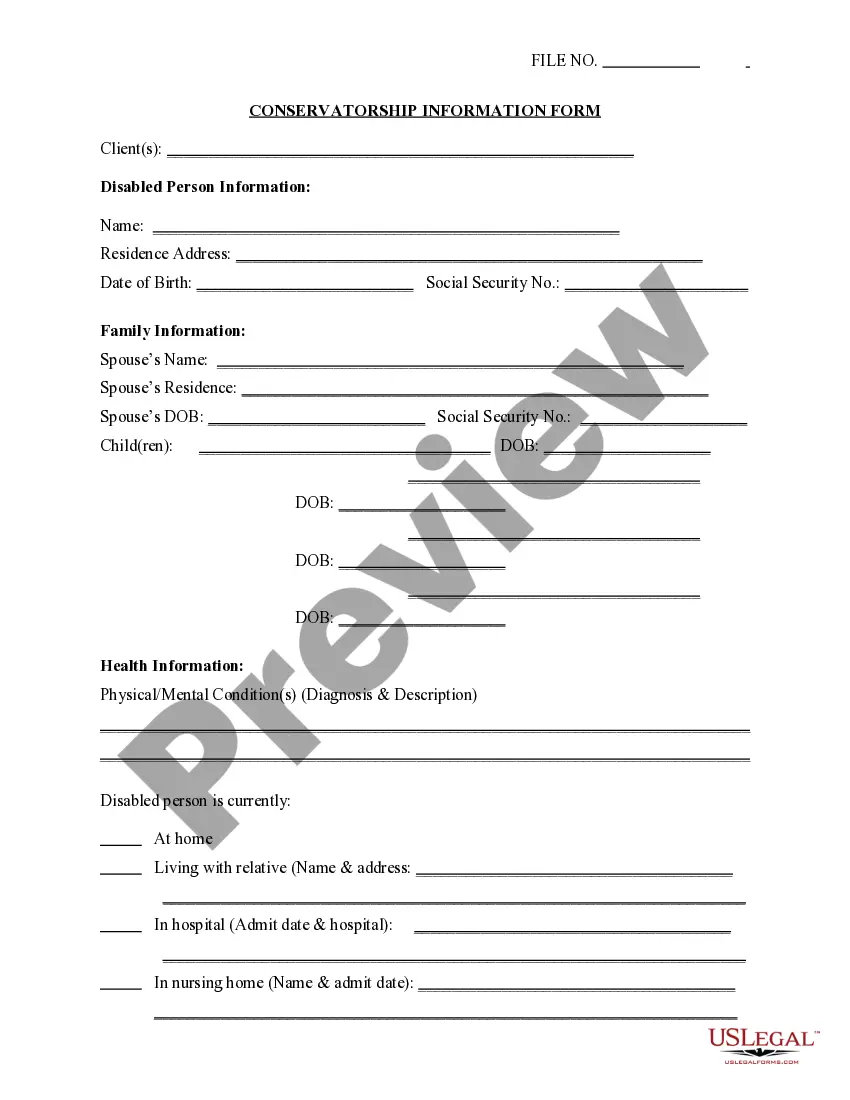
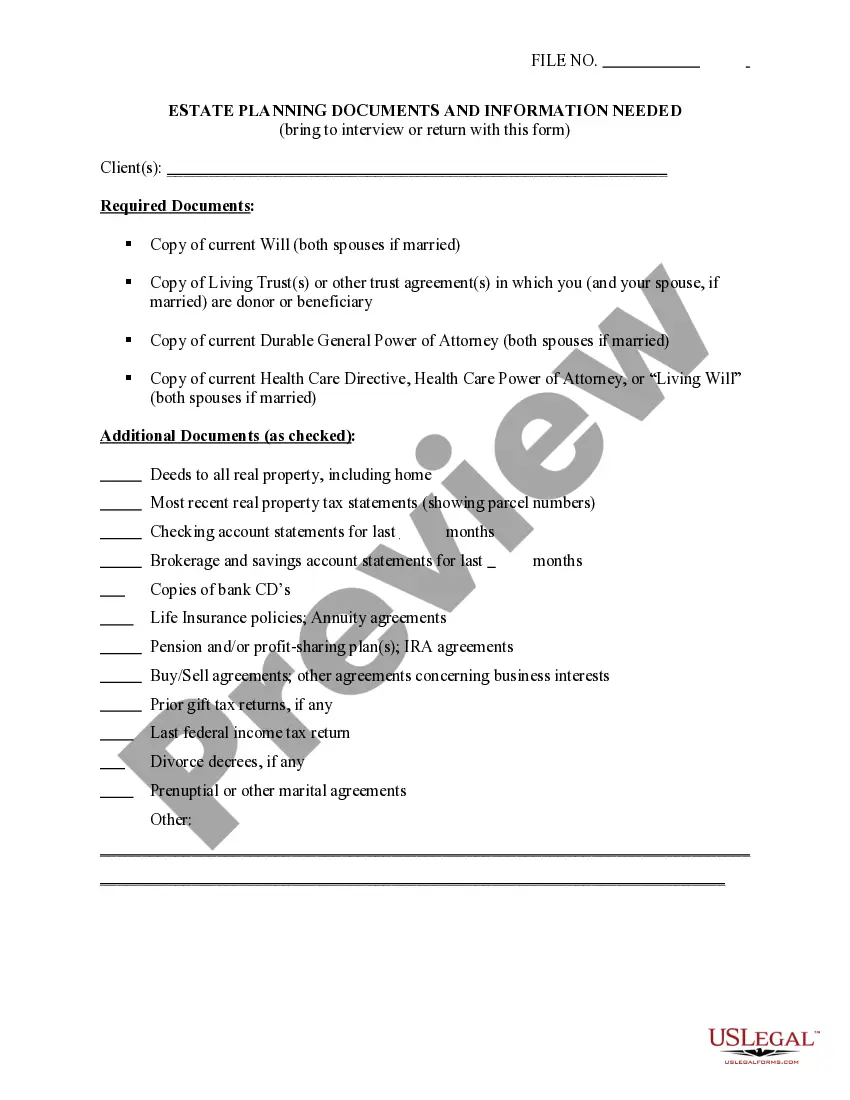
When to use this form
This form should be used when there is an immediate need to appoint a special administrator for an estate whose assets may require urgent management or protection. Scenarios include situations where the deceased's affairs need to be handled quickly due to potential losses or where the usual personal representative cannot be immediately appointed.
Who can use this document
This form is intended for individuals who meet the following criteria:
- Individuals nominated to serve as special administrator
- Persons holding a vested interest in the estate, such as heirs or beneficiaries
- Individuals seeking legal authority to manage the estate's affairs temporarily
Steps to complete this form
- Fill in the personal details, including your name, address, and contact information.
- Specify the county in Arizona where the estate will be managed.
- Provide the name of the deceased and the case number assigned by the court.
- Indicate the name of the person being appointed as the special administrator.
- Complete sections confirming eligibility and necessity for the appointment.
- Sign and date the form where required for court acceptance.
Is notarization required?
To make this form legally binding, it must be notarized. Our online notarization service, powered by Notarize, lets you verify and sign documents remotely through an encrypted video session.
Get your form ready online
Our built-in tools help you complete, sign, share, and store your documents in one place.
Make edits, fill in missing information, and update formatting in US Legal Forms—just like you would in MS Word.
Download a copy, print it, send it by email, or mail it via USPS—whatever works best for your next step.
Sign and collect signatures with our SignNow integration. Send to multiple recipients, set reminders, and more. Go Premium to unlock E-Sign.
If this form requires notarization, complete it online through a secure video call—no need to meet a notary in person or wait for an appointment.
We protect your documents and personal data by following strict security and privacy standards.

Make edits, fill in missing information, and update formatting in US Legal Forms—just like you would in MS Word.

Download a copy, print it, send it by email, or mail it via USPS—whatever works best for your next step.

Sign and collect signatures with our SignNow integration. Send to multiple recipients, set reminders, and more. Go Premium to unlock E-Sign.

If this form requires notarization, complete it online through a secure video call—no need to meet a notary in person or wait for an appointment.

We protect your documents and personal data by following strict security and privacy standards.
Common mistakes
- Failing to provide complete personal information for all parties involved.
- Not signing the form, which may result in rejection by the court.
- Leaving out necessary details about the estate that require immediate attention.
- Using incorrect terminology or improper format according to local rules.
Why complete this form online
- Immediate access to the required form without the need for an attorney's office visit.
- Editability, allowing you to customize the document to fit your specific needs.
- Secure storage of your completed form, reducing the risk of loss or damage.
- Peace of mind knowing that the form is drafted to reflect current legal standards.
Looking for another form?
Form popularity
FAQ
Not all estates in Arizona are required to go through probate. For instance, small estates may qualify for simplified procedures that avoid probate entirely. In some cases, an Arizona Informal Appointment of Special Administrator may be beneficial if probate is needed, as it can expedite matters and reduce administrative burdens. Familiarizing yourself with the specifics through resources or platforms like US Legal Forms can provide clarity on the necessary steps.
To apply to be an administrator of an estate in Arizona, you need to file a petition with the court. It’s important to include necessary documentation, such as a death certificate and information about the decedent's assets. If you want a quicker route, consider the Arizona Informal Appointment of Special Administrator, as it provides a less formal process to gain authority quickly. Using platforms like US Legal Forms can help you find the right forms and guidance for your application.
To become an executor of an estate in Arizona, you must be appointed by the court. This usually happens during the probate process, where you may need to provide a will or proof that you are the nominated executor. If the deceased did not leave a will, you may pursue an Arizona Informal Appointment of Special Administrator to initiate this process. It helps streamline the management of the estate and ensures timely settlement.
In Arizona, the highest priority for appointment as a personal representative typically goes to the surviving spouse, followed by adult children, parents, and siblings. When choosing a personal representative, the court considers the decedent's wishes and any consent from other potential candidates. Understanding this priority can aid in the informal appointment of a special administrator, helping you secure the role that aligns with your responsibilities to the estate.
To become a personal representative in Arizona, you must first file a petition with the court outlining your relationship to the deceased and your suitability for the role. If no one contests the appointment, the court can grant you this authority via an informal appointment. Utilizing platforms like USLegalForms can streamline this process by providing you with the necessary legal documents and guidance for a smooth appointment.
In Arizona, a personal representative typically has a reasonable time, around one year, to settle an estate. However, the timeline can vary based on the complexity of the estate and any potential disputes. It’s essential to act promptly and efficiently to maintain compliance with state laws, especially when navigating the informal appointment of a special administrator, which can facilitate this process.
A special administrator refers to a person appointed by the court to manage the affairs of an estate temporarily, specifically during times of urgency. This role is crucial when immediate action is necessary to preserve the estate's assets or address any legal matters. In Arizona, the informal appointment process allows for a quicker resolution, ensuring that the estate is managed effectively and efficiently while the formal procedures are underway.
The key difference between formal and informal probate in Arizona lies in the level of court supervision and procedure complexity. Informal probate is generally more straightforward and allows for an Arizona Informal Appointment of Special Administrator, while formal probate involves more stringent court oversight and hearings. Understanding these differences can help you choose the best route for estate administration.
The special administrator statute in Arizona allows for the appointment of an individual to manage an estate temporarily. This is especially useful when urgent actions are required or the regular executor is not immediately available. By utilizing the Arizona Informal Appointment of Special Administrator, you can ensure that the estate is handled promptly and effectively.
Yes, a beneficiary deed allows property to pass directly to the named beneficiaries upon the owner’s death, thereby avoiding probate. This method simplifies the process and can save time. However, it is important to ensure that the deed is properly executed to be valid, which minimizes complications during the Arizona Informal Appointment of Special Administrator.