Self-Employed Elevator Services Contract
What is this form?
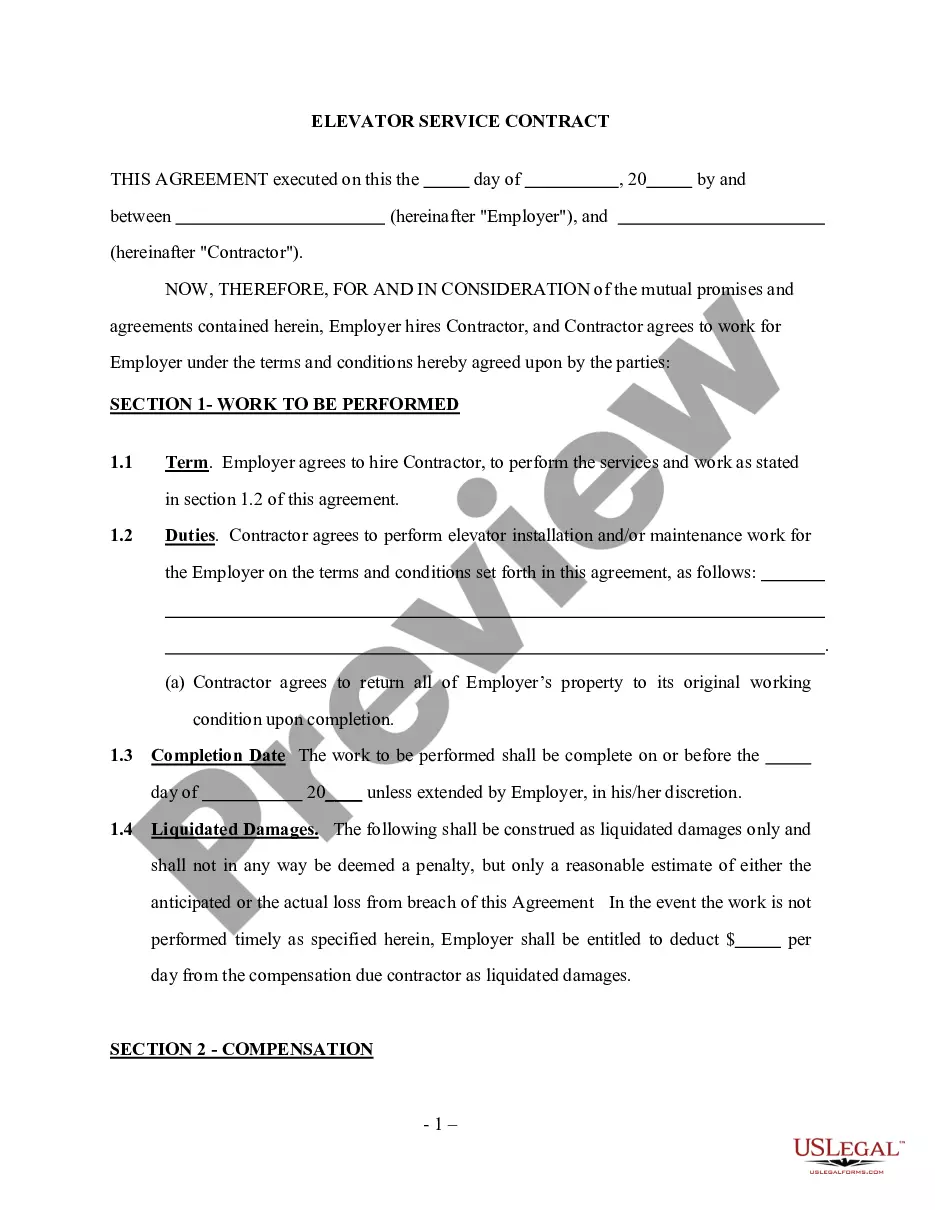
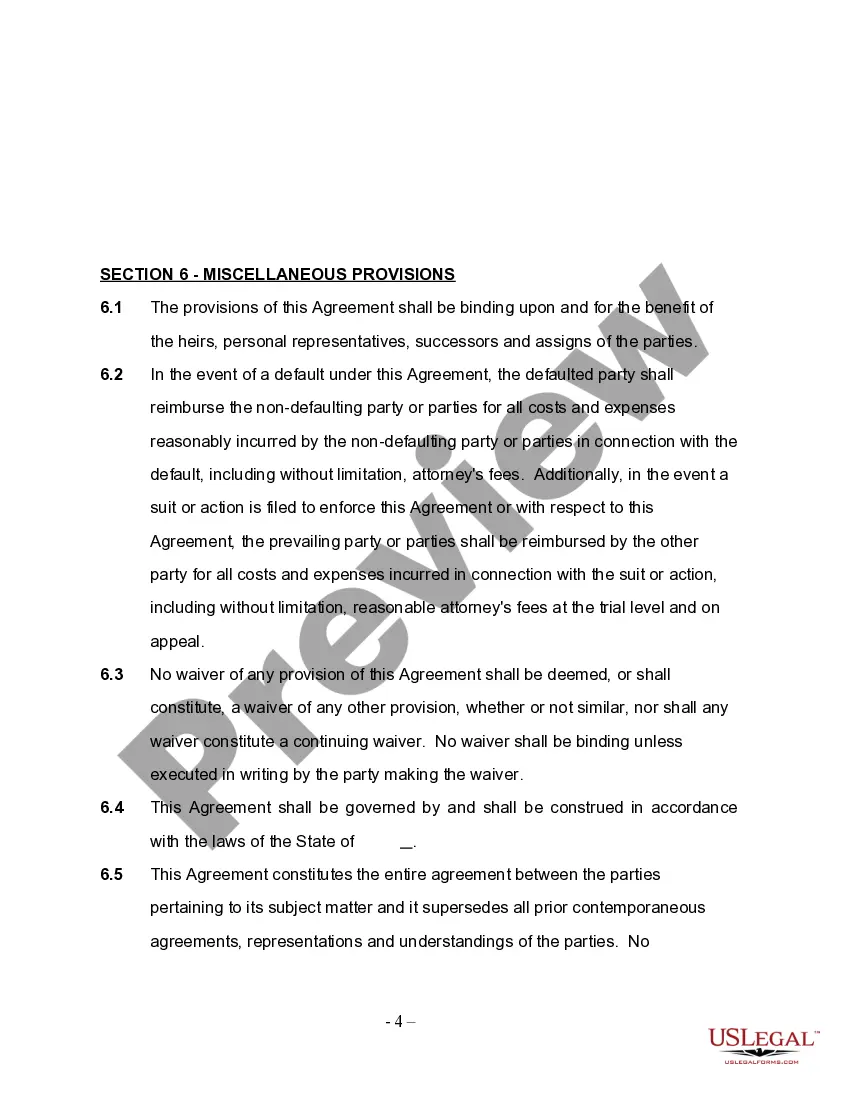
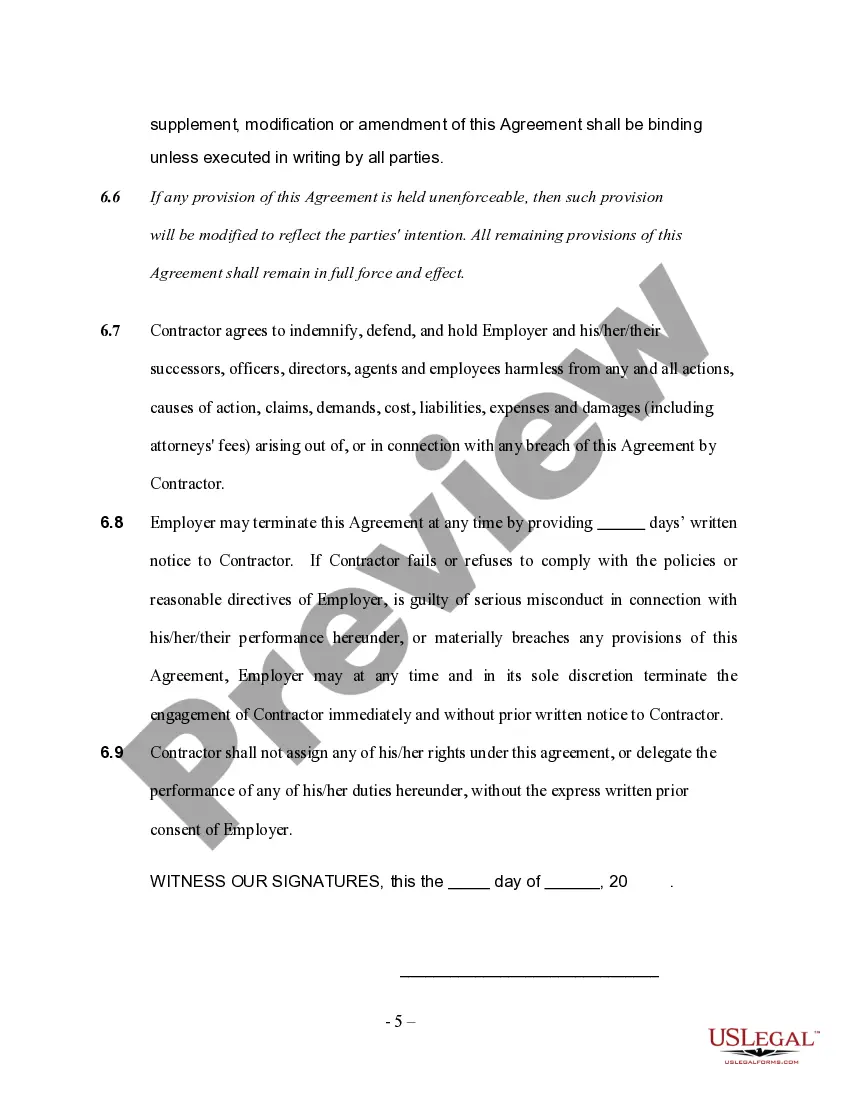
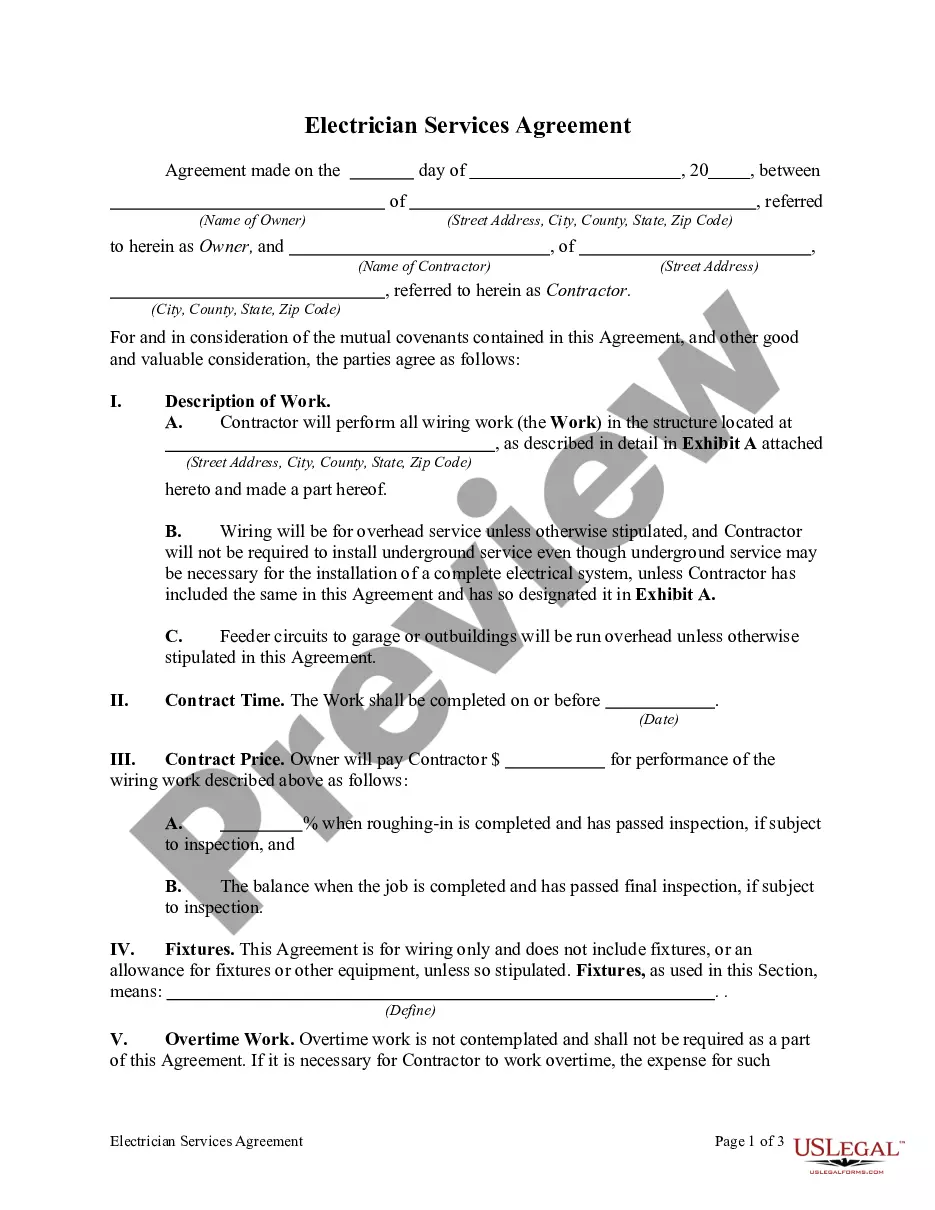
The Self-Employed Elevator Services Contract is a legally binding agreement between an employer and an independent contractor. This contract outlines the scope of work for the installation and servicing of elevators. It is specifically designed for freelance elevator technicians and service providers, setting out clear terms for the work to be performed. This form distinguishes itself from other contracts by emphasizing the contractor's independent status and defining their responsibilities without creating an employer-employee relationship.
What’s included in this form
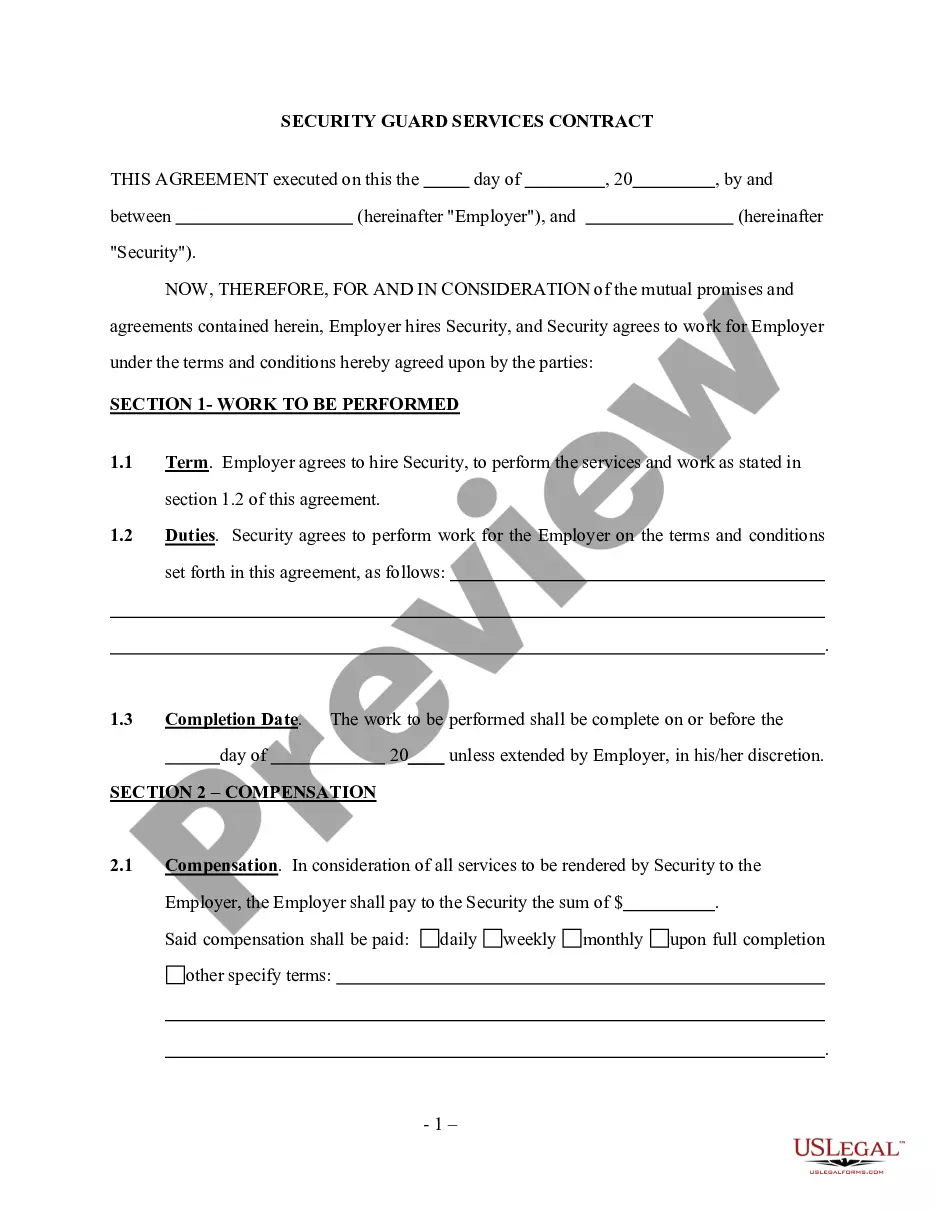
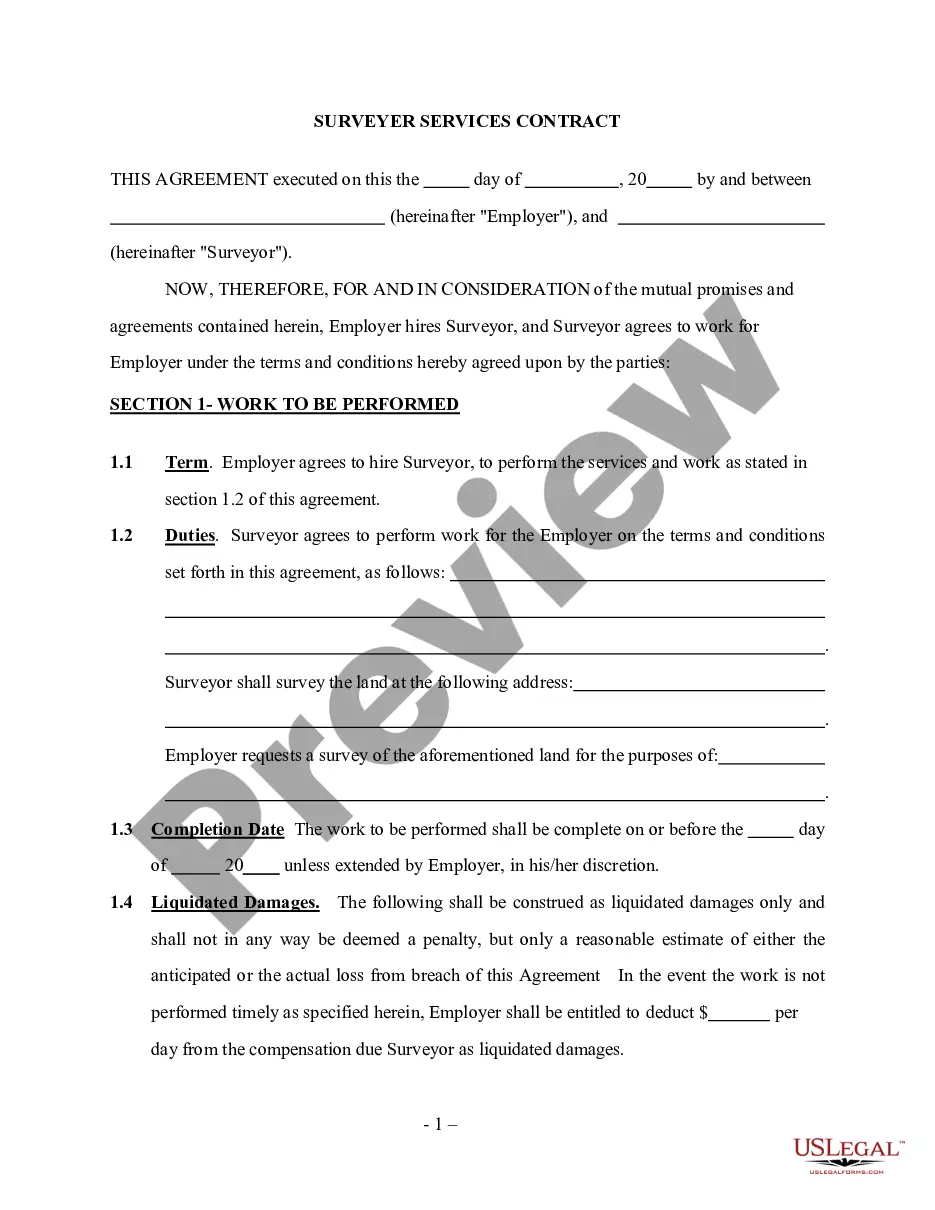
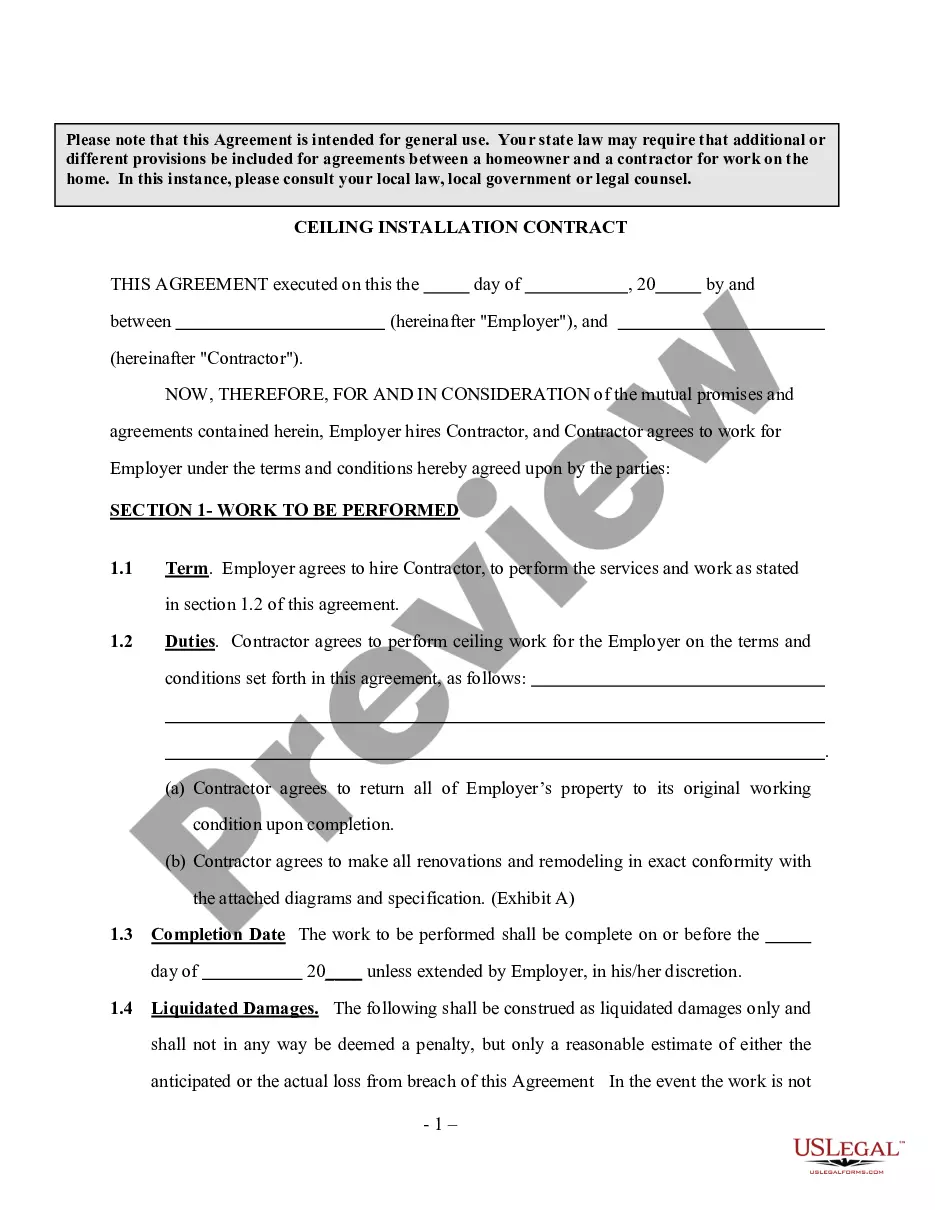
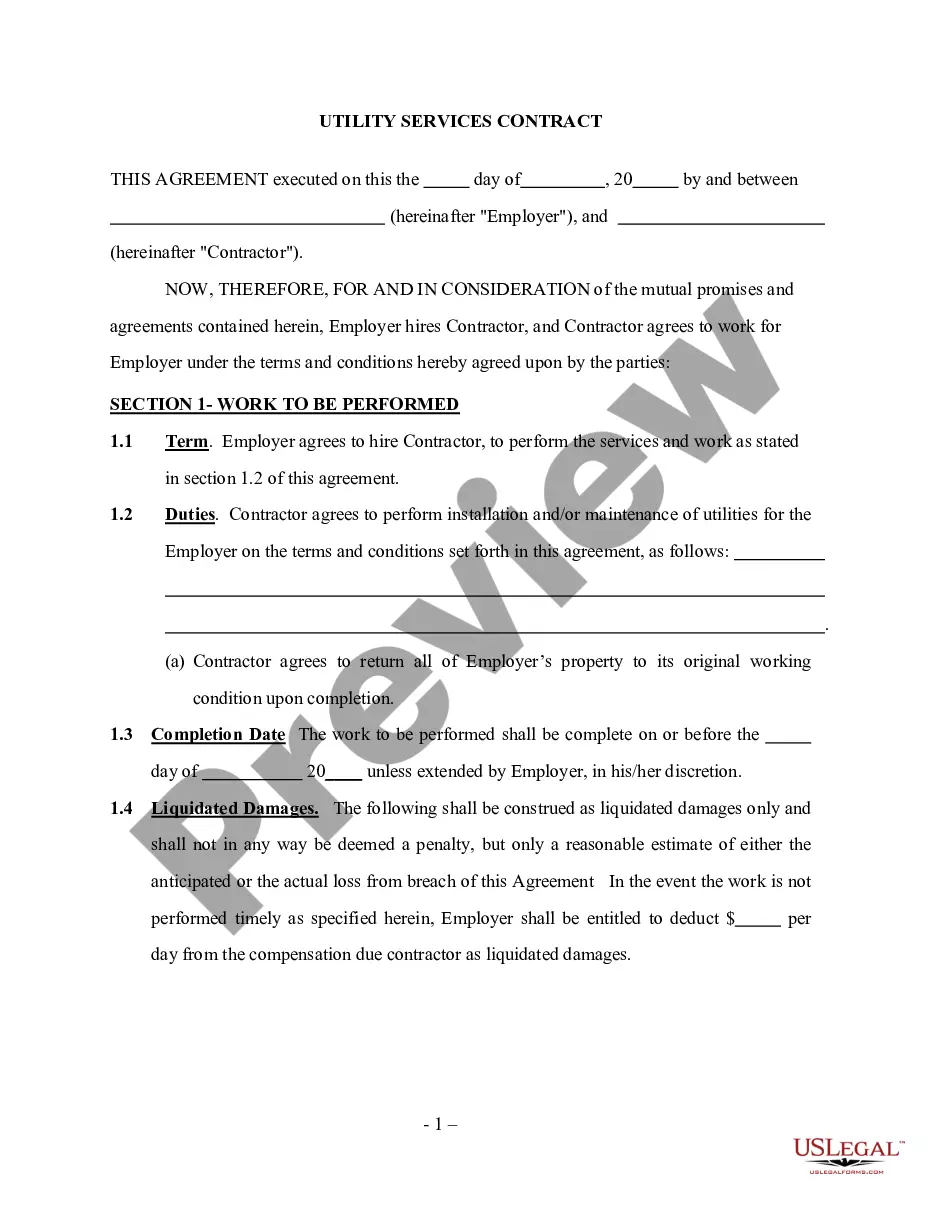
- Work to be performed: Specifies the services that the contractor will provide.
- Term: Defines the duration of the contract between the employer and the contractor.
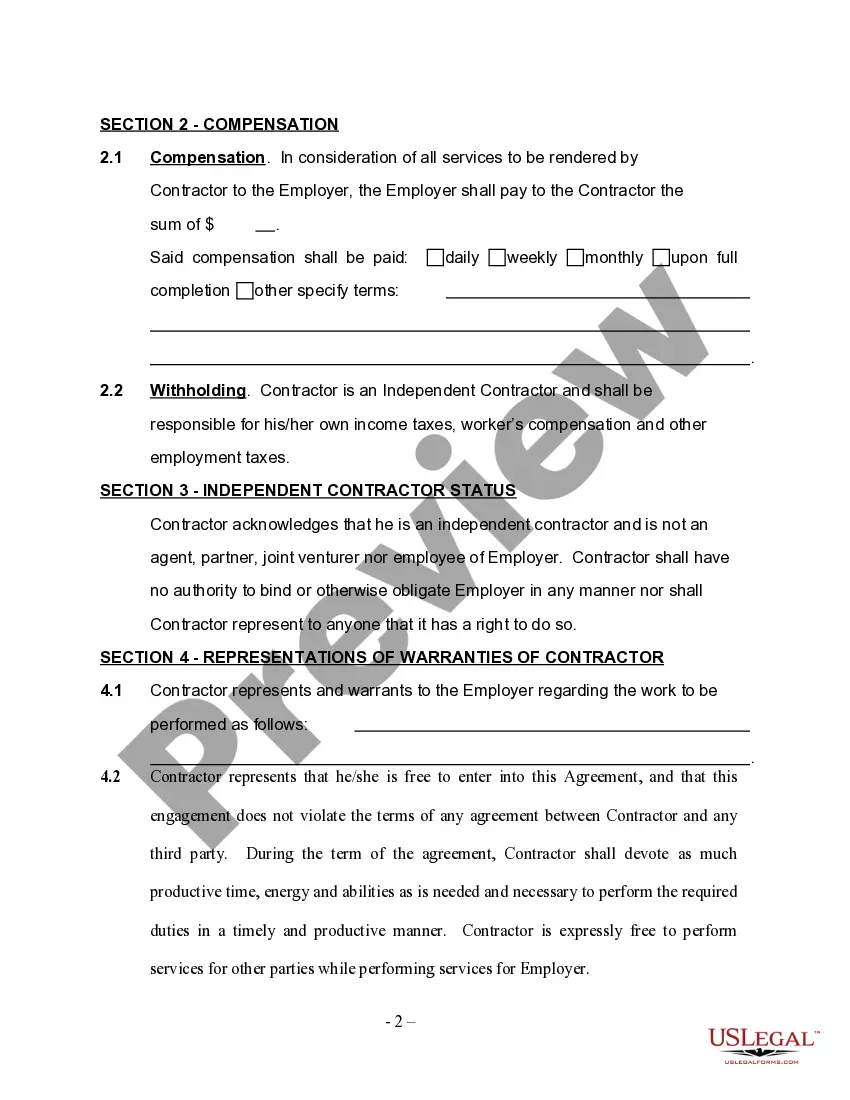
- Independent contractor status: Clarifies that the contractor is not an employee and cannot bind the employer.
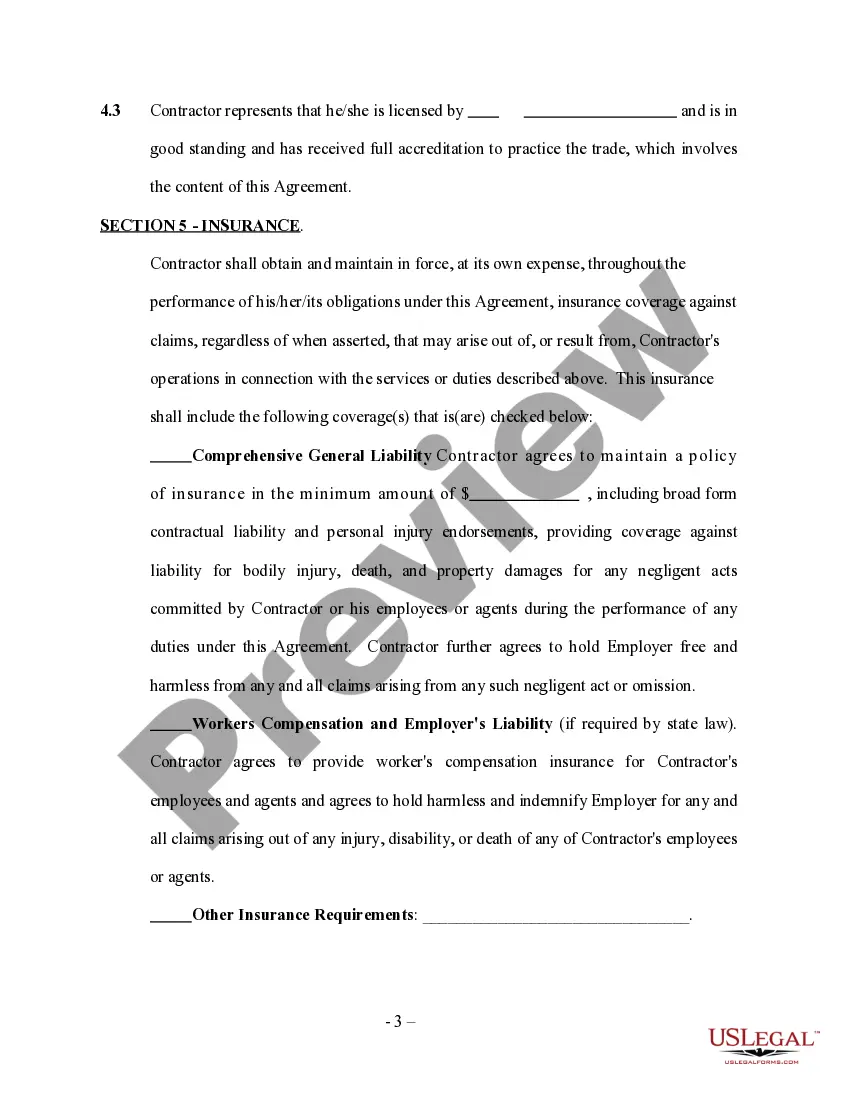
- Representations and warranties: Details the assurances made by the contractor regarding their qualifications and services.
When to use this form
This form is useful in situations where an employer needs to engage a self-employed contractor for elevator installation and maintenance. It is applicable for small businesses, commercial properties, or residential buildings that require professional elevator services. Use this contract to formalize the arrangement and ensure all parties are clear on the project scope and expectations.
Who can use this document
- Property owners seeking elevator installation or repair services.
- Independent contractors specializing in elevator services.
- Businesses looking to hire self-employed technicians for specific projects.
- Real estate management companies overseeing properties with elevator systems.
How to complete this form
- Identify the parties involved: include the employer's and contractor's names and contact information.
- Specify the work to be performed: detail the installation or maintenance tasks agreed upon.
- Set the term of the contract: clearly state the start date and duration of services.
- Review and understand the independent contractor clause: confirm the contractor's status and limitations.
- Sign and date the contract: ensure all parties have reviewed the terms before signing.
Notarization guidance
This form does not typically require notarization unless specified by local law. It is advisable to check state regulations to confirm if notarization is necessary for your specific situation.
Get your form ready online
Our built-in tools help you complete, sign, share, and store your documents in one place.
Make edits, fill in missing information, and update formatting in US Legal Forms—just like you would in MS Word.
Download a copy, print it, send it by email, or mail it via USPS—whatever works best for your next step.
Sign and collect signatures with our SignNow integration. Send to multiple recipients, set reminders, and more. Go Premium to unlock E-Sign.
If this form requires notarization, complete it online through a secure video call—no need to meet a notary in person or wait for an appointment.
We protect your documents and personal data by following strict security and privacy standards.

Make edits, fill in missing information, and update formatting in US Legal Forms—just like you would in MS Word.

Download a copy, print it, send it by email, or mail it via USPS—whatever works best for your next step.

Sign and collect signatures with our SignNow integration. Send to multiple recipients, set reminders, and more. Go Premium to unlock E-Sign.

If this form requires notarization, complete it online through a secure video call—no need to meet a notary in person or wait for an appointment.

We protect your documents and personal data by following strict security and privacy standards.
Mistakes to watch out for
- Failing to define the scope of work clearly, leading to misunderstandings.
- Neglecting to specify the duration of the contract.
- Inadvertently treating the contractor as an employee, which can cause legal issues.
- Not including essential terms such as payment details or project milestones.
Benefits of using this form online
- Convenience of downloading and printing the form at your convenience.
- Editability allows you to customize the contract to meet specific project needs.
- Access reliable forms drafted by licensed attorneys, providing peace of mind.
Legal use & context
- The contract formalizes the relationship between the employer and contractor, establishing clear terms and obligations.
- It is essential for protecting both parties against potential disputes over services provided.
- The enforceability of the agreement may vary based on jurisdictional laws, particularly regarding contractor rights and responsibilities.
What to keep in mind
- The Self-Employed Elevator Services Contract is essential for formalizing agreements between employers and independent contractors.
- Clarity in detailing services and responsibilities is crucial to prevent misunderstandings.
- Always comply with state-specific laws to ensure the contractâs validity.
Looking for another form?
Form popularity
FAQ
Nothing lasts forever not even your elevator. Years of wear-and-tear caused by regular use will eventually impact performance and efficiency. The average lifespan of an elevator is about 20 to 25 years, at which point many experts will recommend modernization services.
Elevator maintenance or elevator preventive maintenance is one of the major tasks involved in elevator service. It involves ensuring that no accidents or breakdowns happen on elevators.
A commercial elevator may require more frequent maintenance than the other systems in your building. Elevator companies typically recommend that their customers have their units serviced at least once every month.
An elevator maintenance agreement is essentially a type of insurance that protects property owners from the erratic and unpredictable costs of elevator service, maintenance, and repairs by offering a fixed rate for each service.
In General, Have Lifts Inspected Annually While the above factors come into play when deciding how often to have your residential elevator or chairlift inspected, a general rule of thumb is to have your elevator serviced once every year. This is the amount of time recommended by most elevator companies.
Elevators and escalators shall be thoroughly inspected at intervals not exceeding one year. Additional monthly inspections for satisfactory operation shall be conducted by designated persons. Records of the results of the latest annual elevator inspections shall be posted in elevators.
Elevator repairs cost between $185 and $488, or an average of $337. The overall price can be as low as $100 or as high as $1,900. If full replacement is necessary, the price can range from $10,000 to $20,000, depending on the type of drive and number of floors it traverses.