California Grant Deed
What this document covers
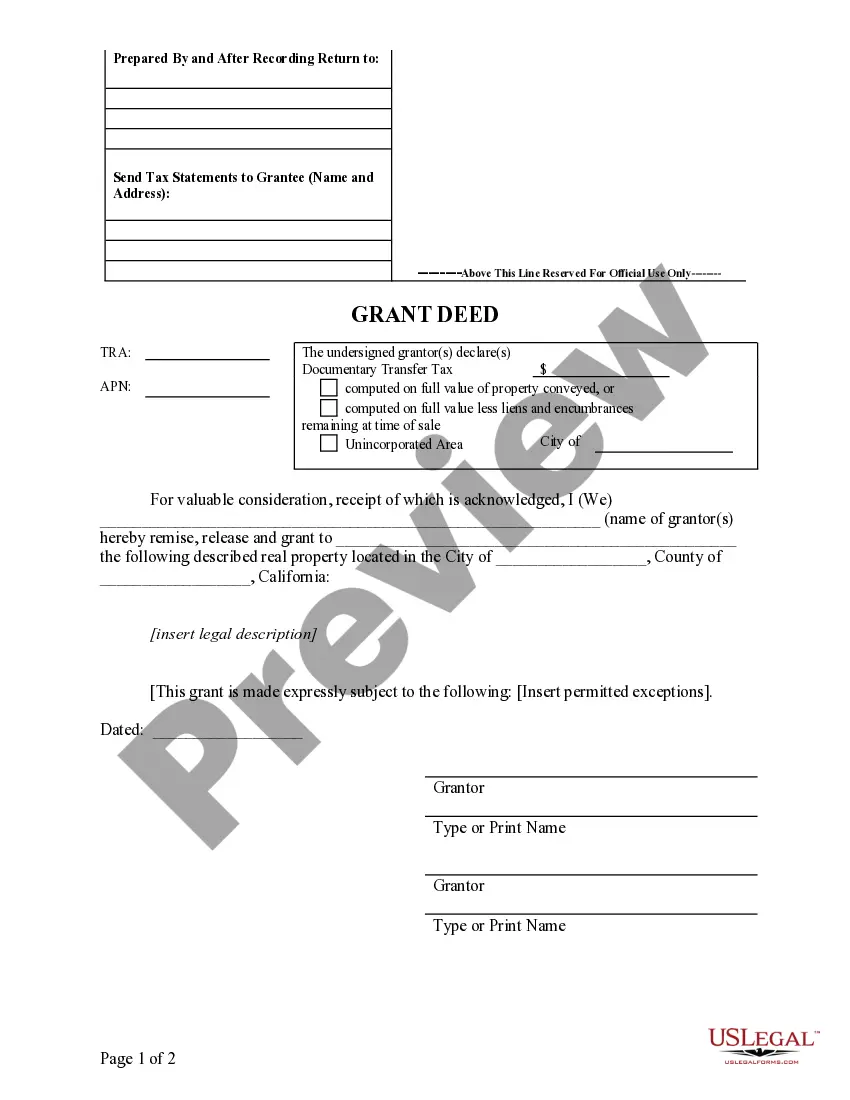
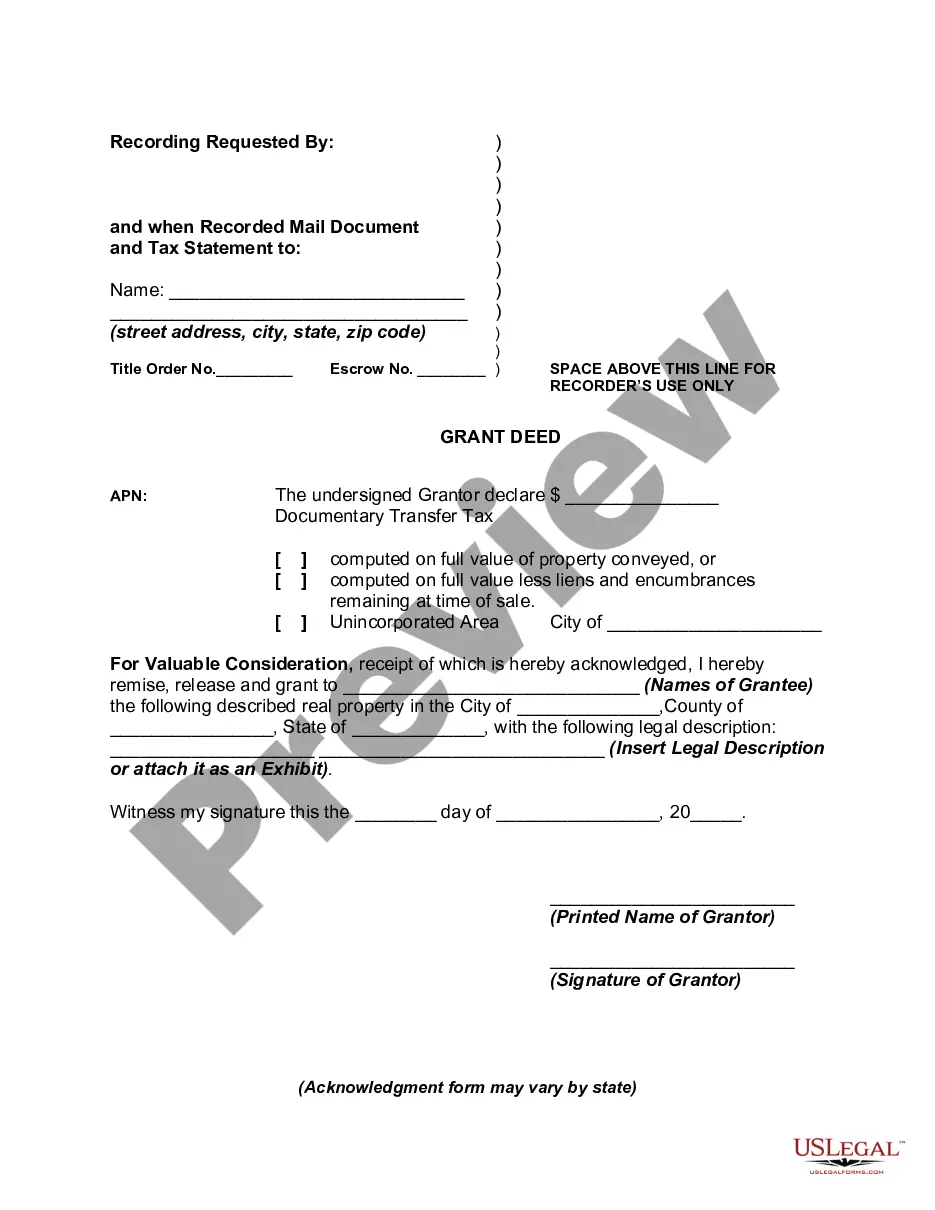
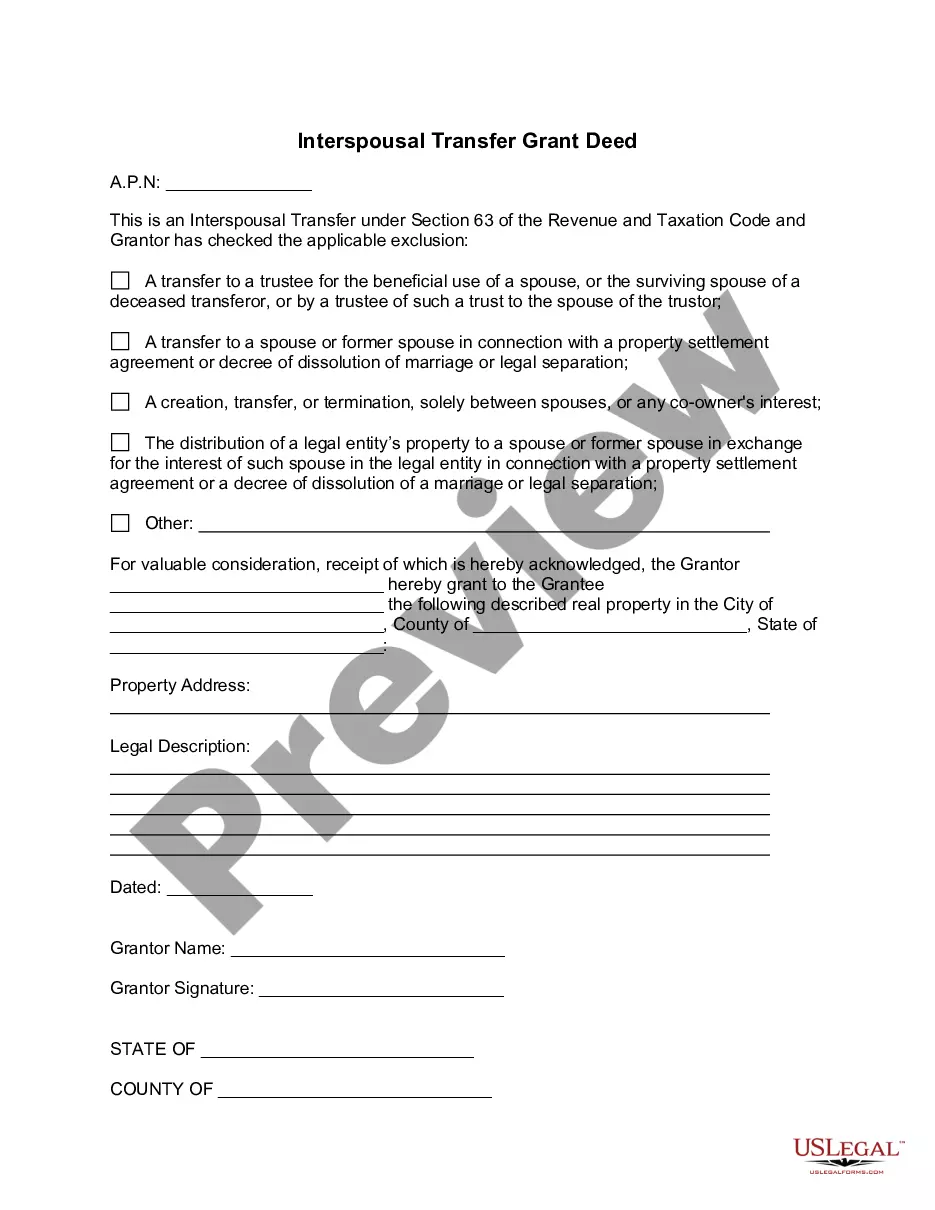
A Grant Deed is a legal document used to transfer ownership of real property from one party (the grantor) to another (the grantee). This deed is particularly important in property transactions as it guarantees that the property is being transferred free of any claims other than those specifically noted in the deed. Unlike other deeds, such as quitclaim deeds, a Grant Deed provides guarantees regarding the title, making it crucial for buyers and sellers involved in real estate transactions in California.
Form components explained
- Parties Involved: Information on the grantor(s) and grantee(s) must be specified.
- Property Description: A detailed legal description of the property being transferred is required.
- Consideration: A clause acknowledging the receipt of value (consideration) for the property must be included.
- Exceptions: Any exceptions or restrictions related to the property should be clearly stated.
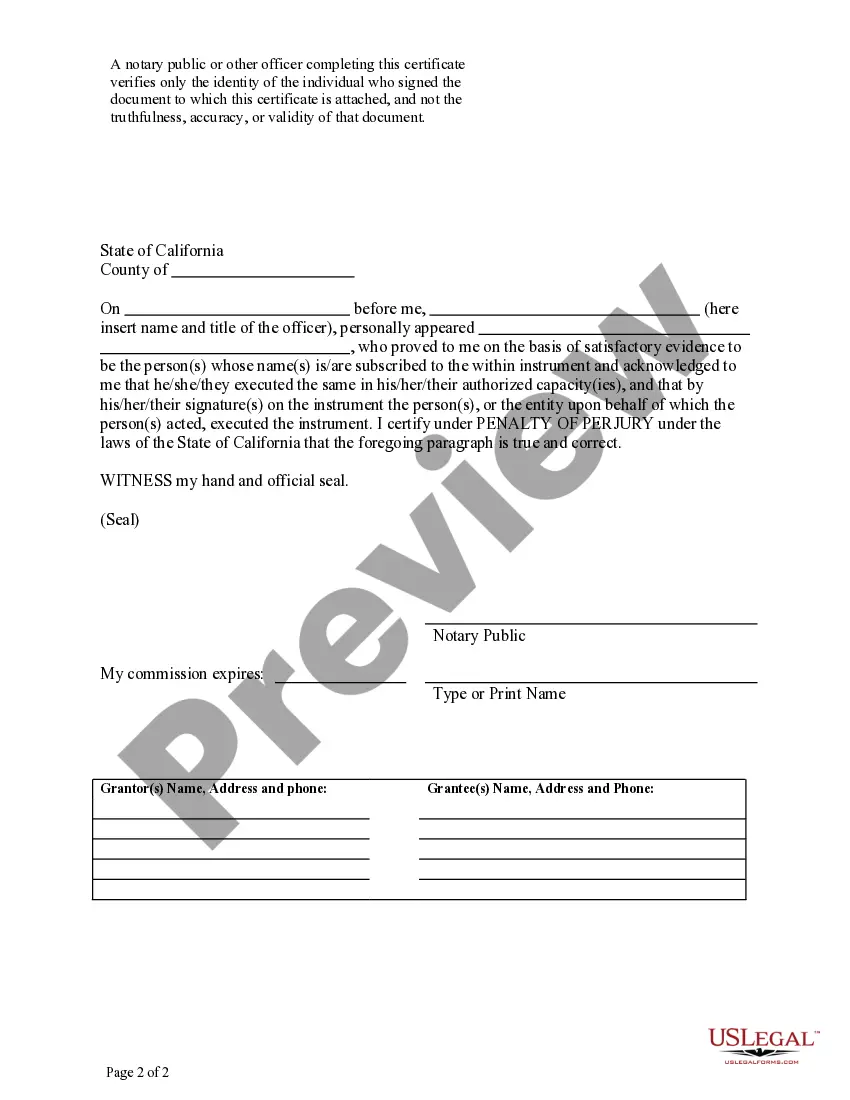
- Notarization: The form must be notarized to verify the identities of the parties involved.
- Tax Information: Relevant tax declarations related to the property transfer need to be noted.
Common use cases
This form should be used when an individual or entity is transferring real property, such as a house or land, to another party. It is typically utilized in scenarios such as selling property, gifting property to family members, or formalizing a transfer between business partners. Using a Grant Deed ensures that the new owner has clear title to the property whereas the seller can demonstrate they are relinquishing their rights to it.
Who this form is for
- Property owners looking to sell or transfer ownership of their property.
- Individuals or entities involved in gifting real estate to family members.
- Partners in a business seeking to formalize a transfer of property interests.
- Anyone who requires a legally binding agreement for the conveyance of real estate in California.
How to prepare this document
- Identify the grantor(s) and grantee(s) by entering their names and addresses in the designated fields.
- Describe the property being transferred by including a detailed legal description.
- Specify the consideration amount or type being exchanged for the property.
- Include any exceptions to the deed, such as easements or property conditions.
- Sign the deed in the presence of a notary public, ensuring all parties acknowledge their signatures.
- Submit the completed Grant Deed to the appropriate county recorder's office for legal filing.
Notarization guidance
Yes, this form must be notarized to be legally valid. Notarization helps to verify the identities of the parties signing the document, ensuring that the transfer of property is legitimate. You can easily complete this step through U.S. Legal Forms' integrated online notarization service, which offers secure video calls and legal equivalence without the need for in-person visits.
Get your form ready online
Our built-in tools help you complete, sign, share, and store your documents in one place.
Make edits, fill in missing information, and update formatting in US Legal Forms—just like you would in MS Word.
Download a copy, print it, send it by email, or mail it via USPS—whatever works best for your next step.
Sign and collect signatures with our SignNow integration. Send to multiple recipients, set reminders, and more. Go Premium to unlock E-Sign.
If this form requires notarization, complete it online through a secure video call—no need to meet a notary in person or wait for an appointment.
We protect your documents and personal data by following strict security and privacy standards.

Make edits, fill in missing information, and update formatting in US Legal Forms—just like you would in MS Word.

Download a copy, print it, send it by email, or mail it via USPS—whatever works best for your next step.

Sign and collect signatures with our SignNow integration. Send to multiple recipients, set reminders, and more. Go Premium to unlock E-Sign.

If this form requires notarization, complete it online through a secure video call—no need to meet a notary in person or wait for an appointment.

We protect your documents and personal data by following strict security and privacy standards.
Common mistakes to avoid
- Failing to include a complete legal description of the property.
- Not notarizing the document, which may invalidate the deed.
- Omitting exceptions or conditions, leading to misunderstandings about property rights.
- Incorrectly identifying either the grantor(s) or grantee(s).
- Not submitting the document to the county recorder, which prevents the transfer from being legally recognized.
Benefits of using this form online
- Access to professionally drafted templates that comply with California law.
- The ability to fill out the form electronically, reducing errors and saving time.
- Immediate access to downloadable forms, allowing for quick action on property transfers.
- Flexibility to customize the form as needed, fitting every unique property situation.
- Peace of mind knowing the forms are created by licensed attorneys.
Looking for another form?
Form popularity
FAQ
The primary purpose of a grant deed is to provide a clear and legally binding transfer of property ownership with specific guarantees about the title. In contrast, a quitclaim deed simplifies the transfer process, focusing on the relinquishment of any claim the grantor has without offering assurances. Knowing when to use each type of deed can facilitate smoother property transactions and ensure better legal protections in California.
A quitclaim deed transfers ownership of a property, but it does not guarantee that the grantor holds valid title. Therefore, while it can give the recipient a share of ownership, it may come without clear title or the right to the property. For those seeking more security, a California Grant Deed is a better option, as it offers assurances about the property's ownership.
The primary difference between a grant deed and a quitclaim deed lies in the level of protection they offer. A grant deed provides assurances regarding the ownership and condition of the property, ensuring that the grantor has the right to transfer it. Conversely, a quitclaim deed merely transfers whatever interest the grantor has, with no warranties attached. Understanding these distinctions can help you choose the right option for your needs in California.
To obtain a copy of your grant deed in California, you can visit your local county assessor's office or their website. You may also request a copy online or by mail, depending on the services offered by your county. Additionally, using platforms like USLegalForms can simplify the process by providing guidance on obtaining and organizing your grant deed effectively.
Individuals who want to transfer property ownership quickly and simply often benefit the most from a quitclaim deed. This type of deed is useful in situations like transferring property between family members or settling a divorce. However, it's crucial to understand that a quitclaim deed does not guarantee that the person transferring the property has legal title. In many cases, those who need to clarify ownership may also consider obtaining a California Grant Deed for added security.
In California, anyone can prepare a Grant Deed, but it's often best to have a real estate attorney or a qualified professional handle it for accuracy. Utilizing services like US Legal Forms can help you create a compliant deed without legal confusion. Their templates guide you through the process, ensuring you meet California's legal standards.
Filling out a California Grant Deed involves entering the names of the property owners, providing a detailed property description, and including the grantor's signature. You can access templates through online services, such as US Legal Forms, which simplifies the process and ensures compliance with state requirements.
A valid California Grant Deed must contain specific elements, including the names of the grantor and grantee, a clear description of the property, and the grantor's signature. Additionally, the deed should state the intent to transfer ownership. Meeting these requirements ensures the deed is legally effective.
To file a California Grant Deed, you must complete the required form and submit it to the county recorder's office. Include any applicable fees and additional documentation, if necessary. It's a straightforward process that ensures your deed is properly recognized and recorded.
Yes, a California Grant Deed must be recorded with the county recorder's office where the property is located. Recording the deed protects your ownership rights, making it public record. By recording, you ensure future buyers and lenders can verify your ownership, which is essential in real estate transactions.