Client Oriented Web Site Development Agreement
What this document covers
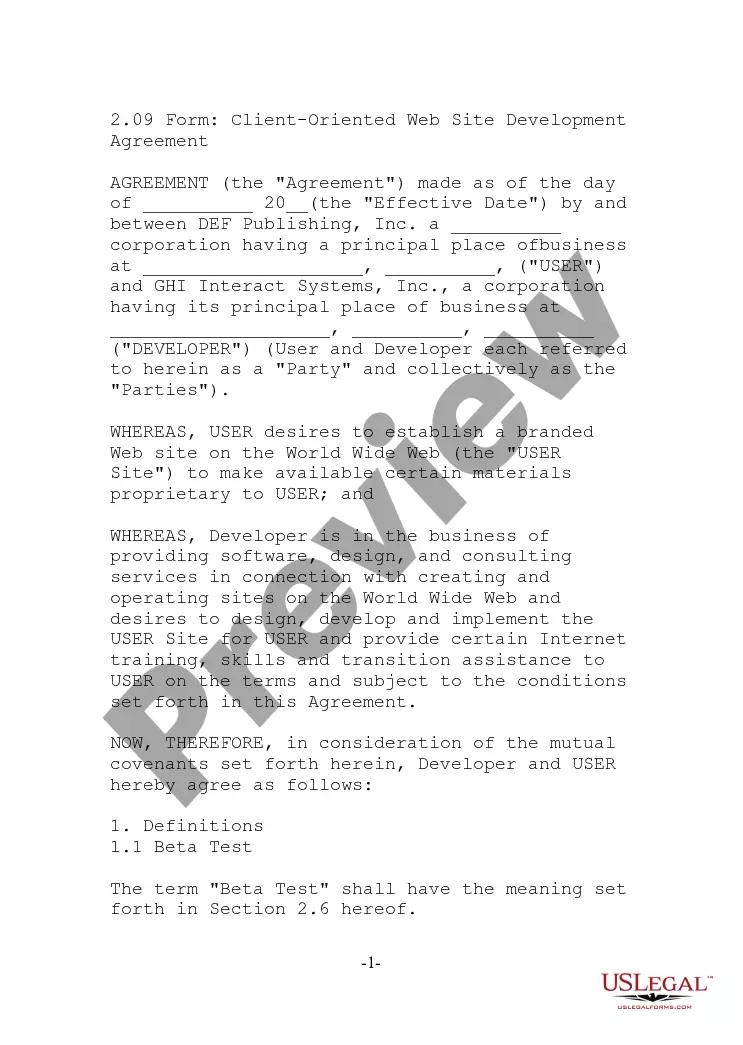
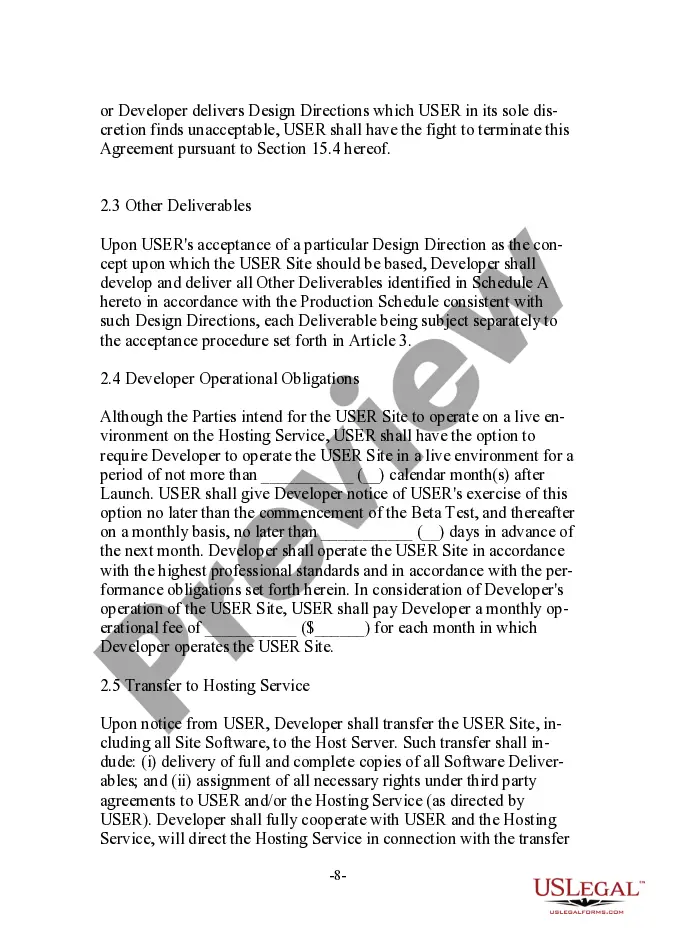
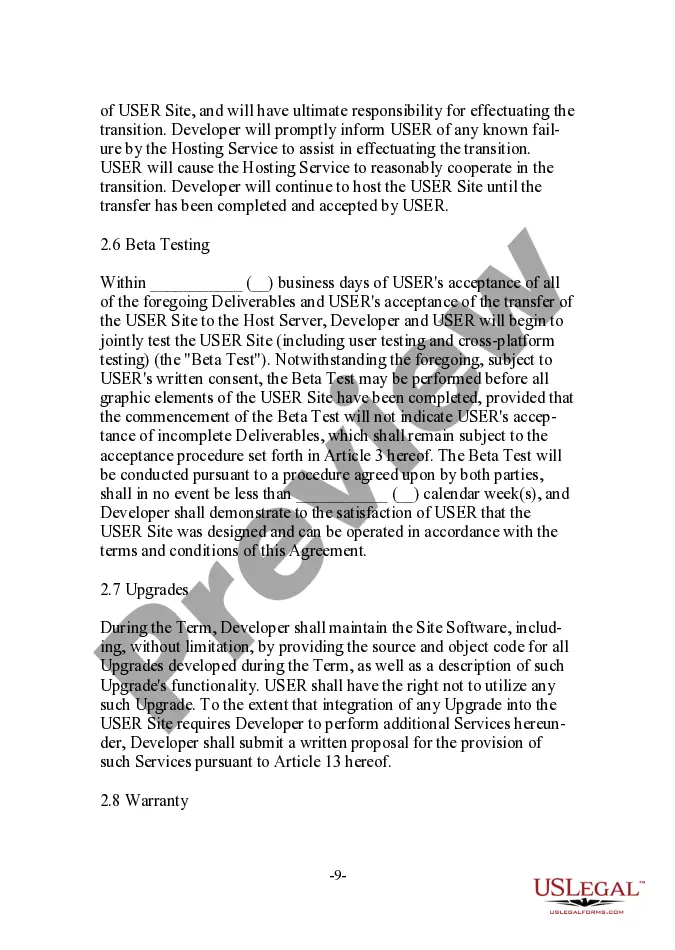
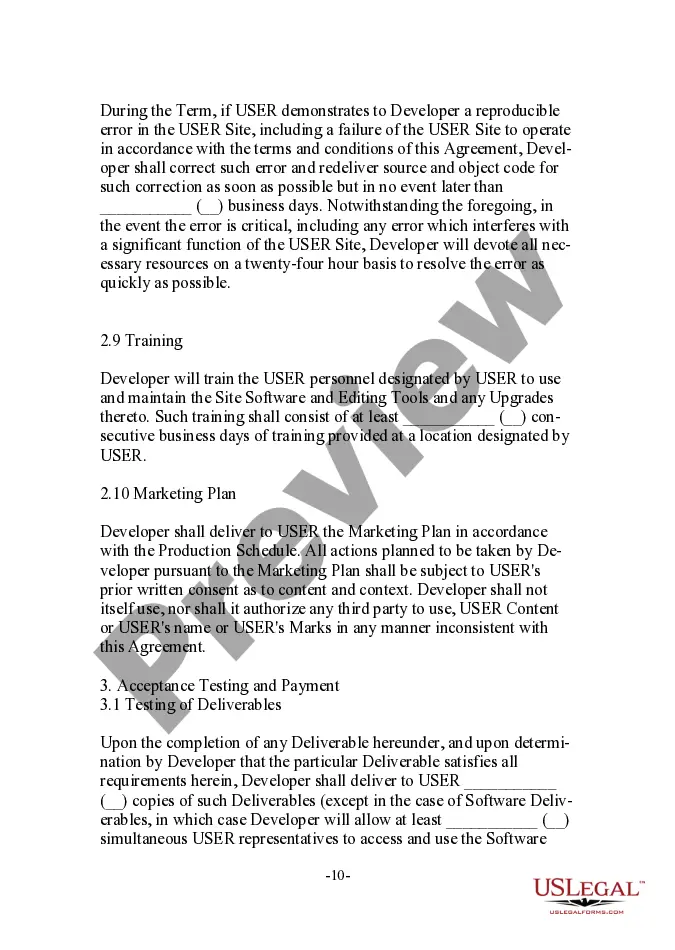
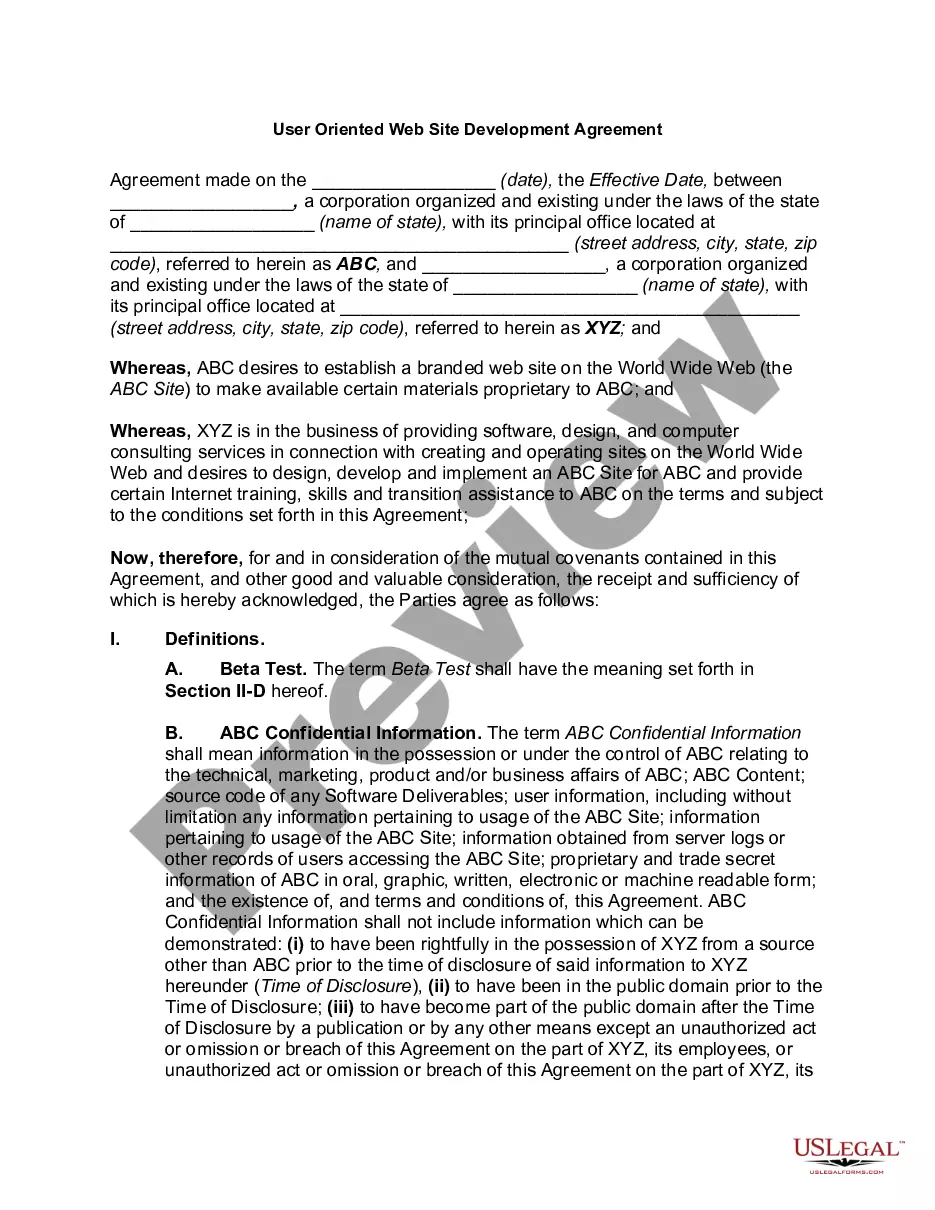
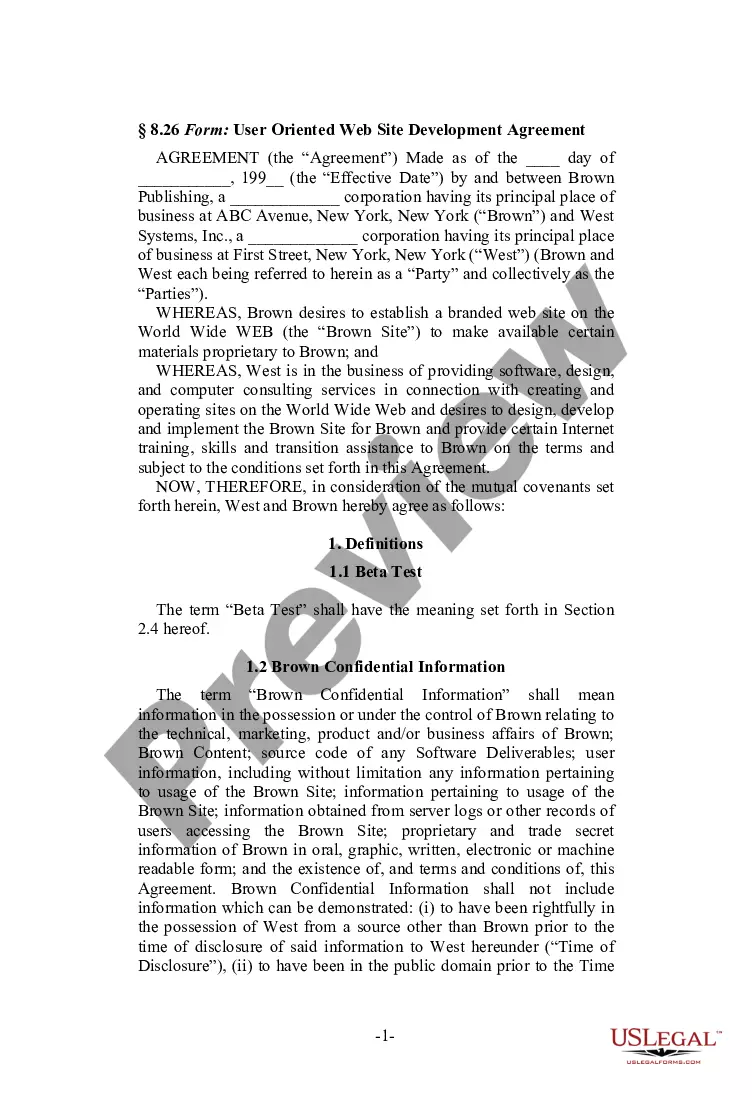
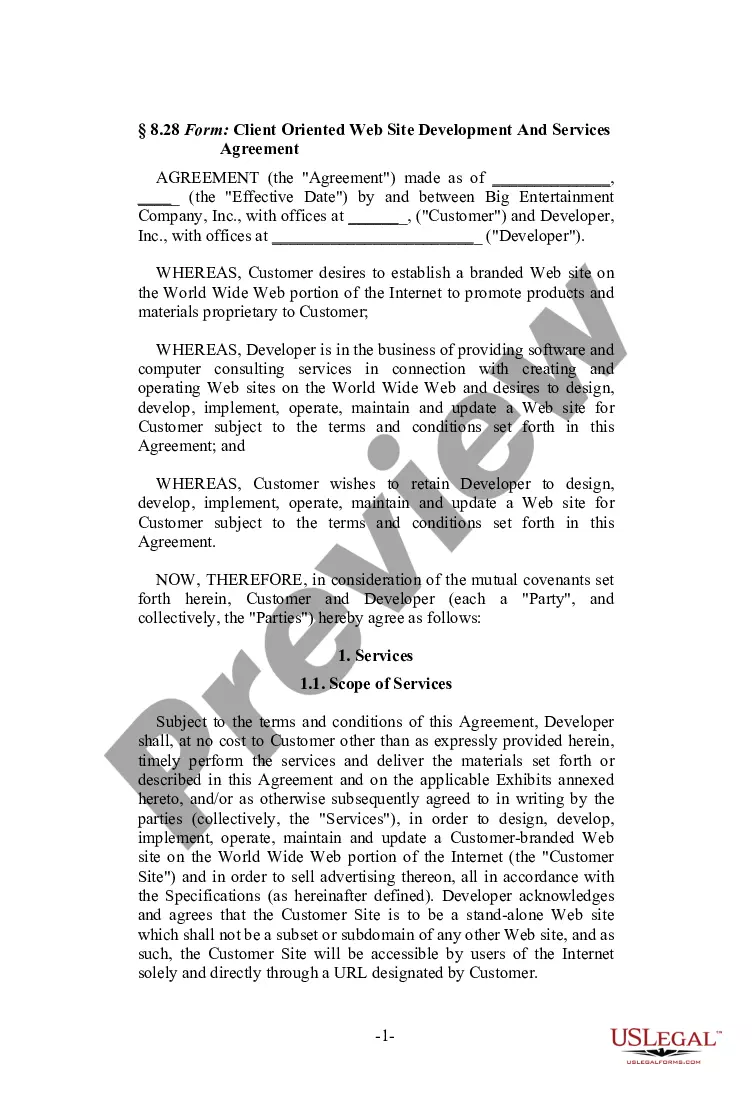
The Client Oriented Web Site Development Agreement is a legal document that outlines the responsibilities and expectations between a user and a developer for creating a branded website. This form is specifically designed for businesses in the internet industry and is adaptable for various online projects. Unlike generic contracts, this form includes detailed clauses related to design specifications, delivery timelines, and ownership of website content, ensuring that both parties clearly understand their rights and obligations throughout the development process.
Main sections of this form
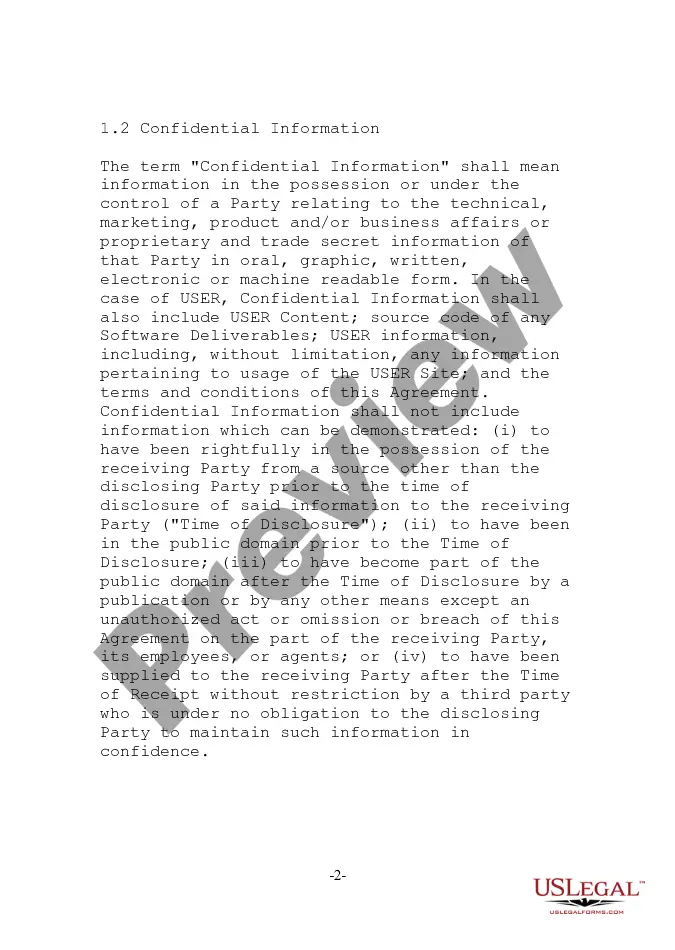
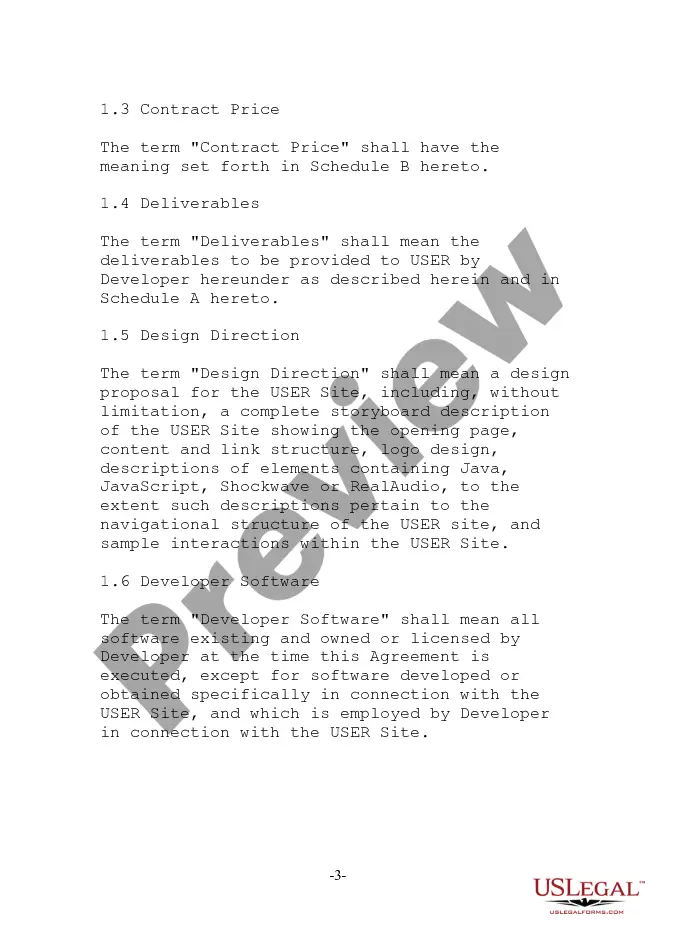
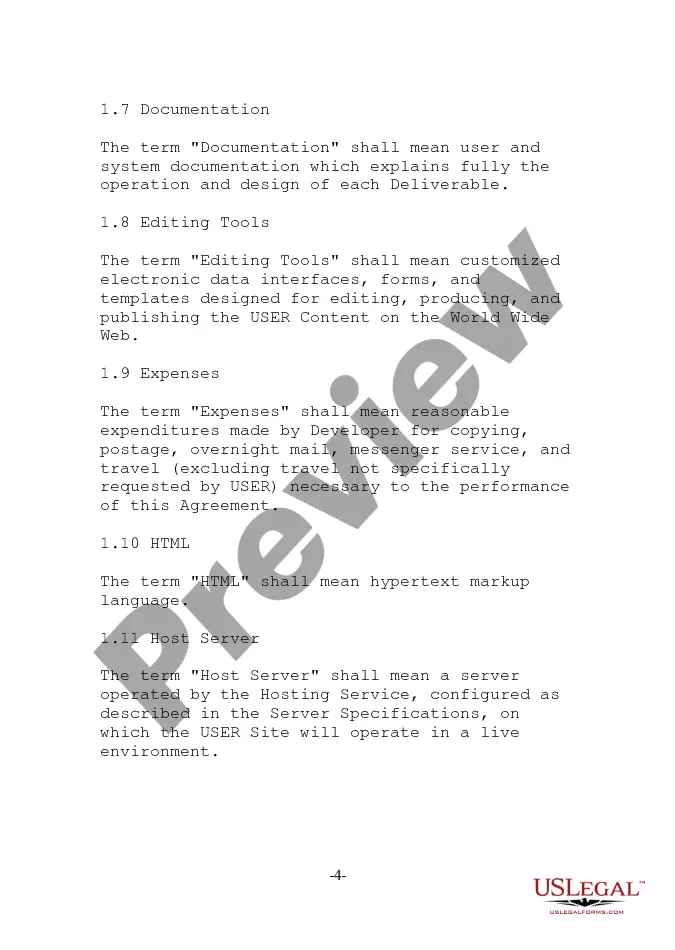
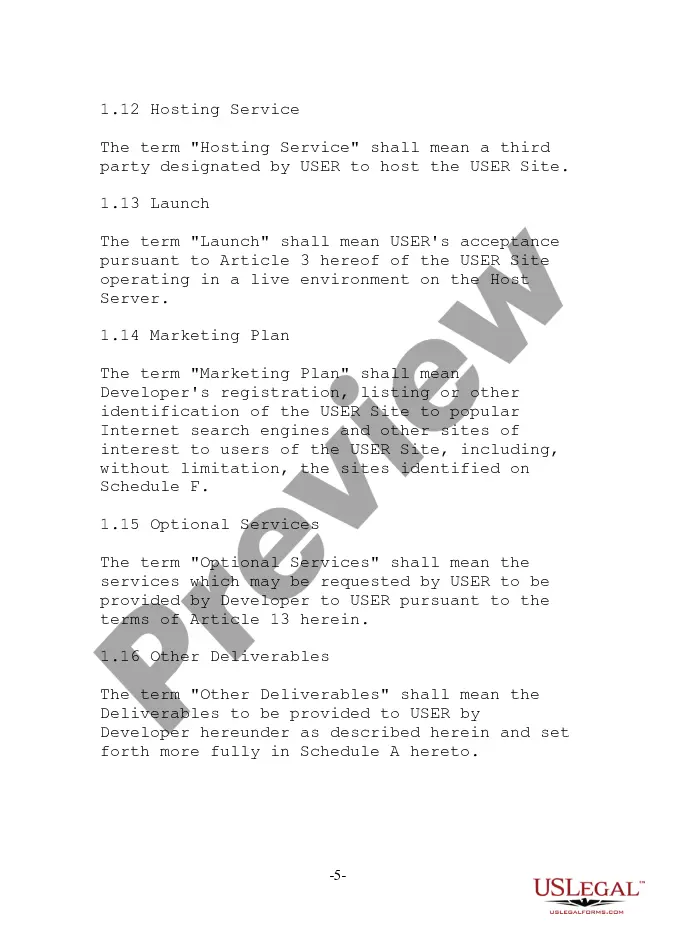
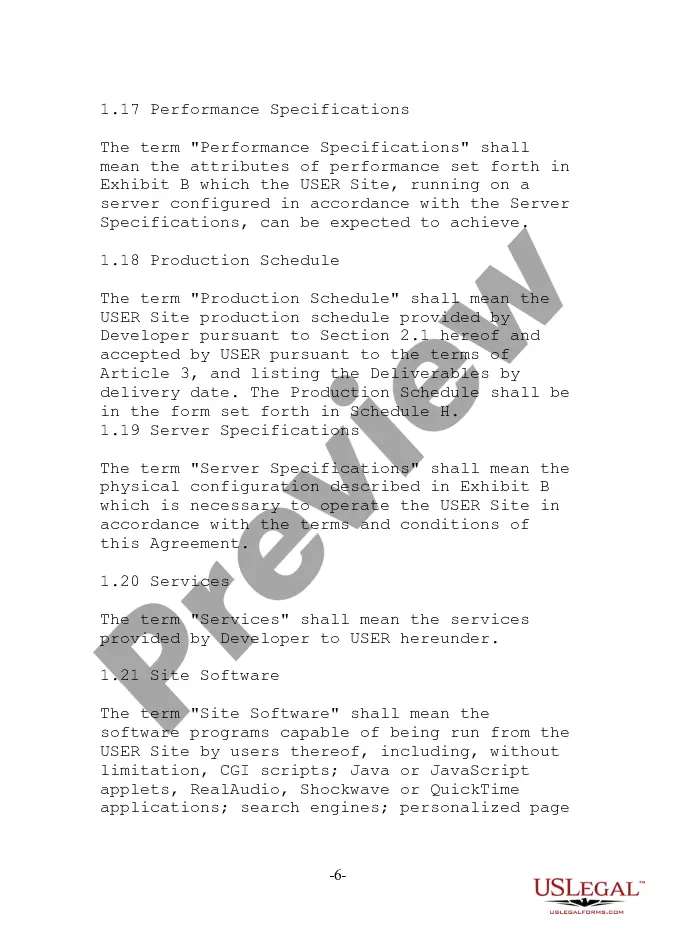
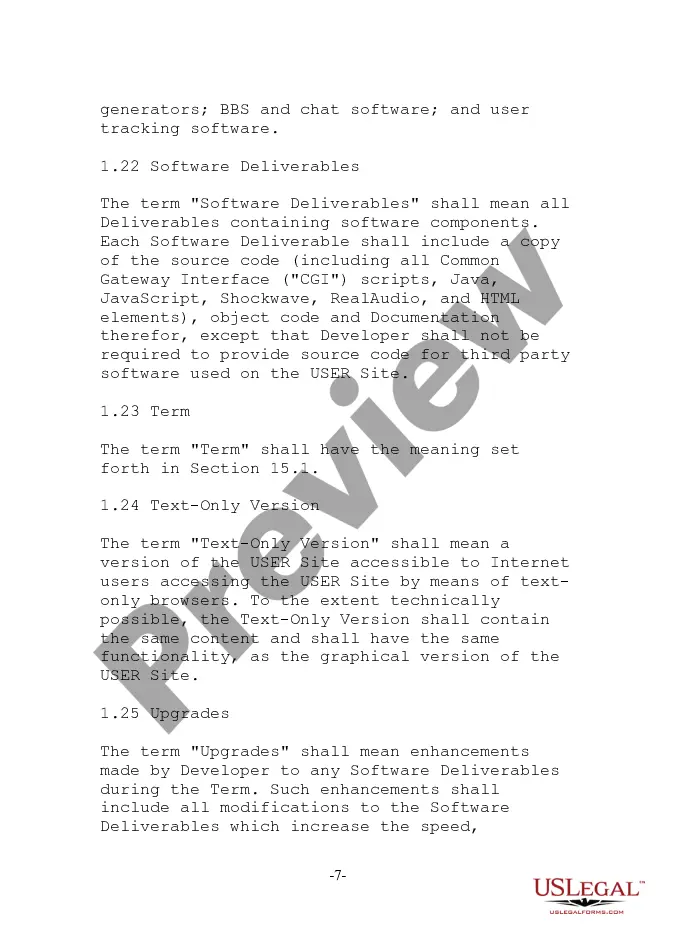
- Definitions: Clarifies key terms used within the agreement.
- Services and Deliverables: Details the specific services the developer will provide and the expected deliverables.
- Acceptance Testing: Sets forth the process for evaluating and accepting completed work.
- Ownership Rights: Specifies that the user retains ownership of the content while granting the developer limited rights to use it during the project.
- Termination Conditions: Outlines the conditions under which either party may terminate the agreement.
- Confidentiality Provisions: Ensures that both parties protect each other's sensitive information.

Situations where this form applies
This form should be used when two partiesâtypically a business (user) and a website development firm (developer)âare entering into an agreement to create a custom website. It is suitable for situations where the user requires a tailored solution, involves multiple stakeholders, or needs specific functionalities to be included. Use this agreement to ensure that all aspects of the development are agreed upon clearly, including timelines, costs, and terms of service.
Who should use this form
- Business owners looking to develop or enhance their online presence.
- Web developers and agencies engaging in custom web development contracts.
- Organizations that need clear terms regarding the design, functionality, and maintenance of their website.
- Individuals or entities wishing to ensure ownership and control over their website content.
Instructions for completing this form
- Identify the parties involved: Enter the names and addresses of both the user and the developer.
- Define the scope of work: Specify the services to be provided and the timeline for delivery.
- Detail acceptance testing: Indicate the criteria for acceptance and the timeframe for review.
- Insert payment terms: Outline the payment schedule and conditions for additional costs, if applicable.
- Sign and date the agreement: Ensure both parties sign and date the document to validate the contract.
Notarization guidance
This form does not typically require notarization unless specified by local law. However, having it notarized can provide an additional layer of verification for both parties involved.
Get your form ready online
Our built-in tools help you complete, sign, share, and store your documents in one place.
Make edits, fill in missing information, and update formatting in US Legal Forms—just like you would in MS Word.
Download a copy, print it, send it by email, or mail it via USPS—whatever works best for your next step.
Sign and collect signatures with our SignNow integration. Send to multiple recipients, set reminders, and more. Go Premium to unlock E-Sign.
If this form requires notarization, complete it online through a secure video call—no need to meet a notary in person or wait for an appointment.
We protect your documents and personal data by following strict security and privacy standards.

Make edits, fill in missing information, and update formatting in US Legal Forms—just like you would in MS Word.

Download a copy, print it, send it by email, or mail it via USPS—whatever works best for your next step.

Sign and collect signatures with our SignNow integration. Send to multiple recipients, set reminders, and more. Go Premium to unlock E-Sign.

If this form requires notarization, complete it online through a secure video call—no need to meet a notary in person or wait for an appointment.

We protect your documents and personal data by following strict security and privacy standards.
Common mistakes
- Failing to specify acceptance criteria clearly, leading to disputes over deliverables.
- Not detailing the scope of work, resulting in misunderstandings about project expectations.
- Neglecting to include a termination clause, which can create complications if the contract needs to end.
- Overlooking confidentiality provisions, risking sensitive information exposure.
Benefits of using this form online
- Convenience of creating and customizing the agreement digitally without the need for printing.
- Easy download in various formats, allowing for quick edits and modifications.
- Access to legal advice integrated within the form template, ensuring compliance and reliability.
- Efficient tracking of changes and updates made to the agreement, providing transparency.
- This agreement is legally binding upon the parties who sign it, creating enforceable obligations.
- Modifications to the agreement must be made in writing and signed by both parties to be valid.
- Each party retains rights to their respective intellectual property as outlined in the agreement.
Quick recap
- The Client-Oriented Web Site Development Agreement formalizes the relationship between client and developer.
- Clear terms help prevent misunderstandings and disputes throughout the project.
- Proper completion and execution of the agreement are crucial for legal protection.
Looking for another form?
Form popularity
FAQ
Services: Clearly outline the scope of services and how they will be provided. Payment: Set out the fees that are payable by the client, how these fees are calculated, the required payment methods, key payment dates, and any consequences for failure to make the payments as required.
Get it in writing. Keep it simple. Deal with the right person. Identify each party correctly. Spell out all of the details. Specify payment obligations. Agree on circumstances that terminate the contract. Agree on a way to resolve disputes.
However, the purpose of a written contract is to provide certainty as to what has been agreed and the process of writing and negotiating the contract can be invaluable in drawing out each party's motivations and requirements. A contract does not have to be complicated.
A client agreement is a contract that you make with a customer. In it, you explain the terms and conditions under which you will provide your service to them. Previously, client agreements commonly took the form of a service agreement signed by both parties.
Include Contact Information of Both Parties. Specify Project Terms and Scope. Establish Payment Terms. Set the Schedule. Decide What Happens If a Contract Is Terminated. Determine Who Owns Final Copyrights.
A customer agreement is a legally binding contract between your company and customers, specifying the terms and conditions for using your products and services.
A client agreement is a contract that you make with a customer. In it, you explain the terms and conditions under which you will provide your service to them. Previously, client agreements commonly took the form of a service agreement signed by both parties.