Checklist for Software Development Contract
About this form
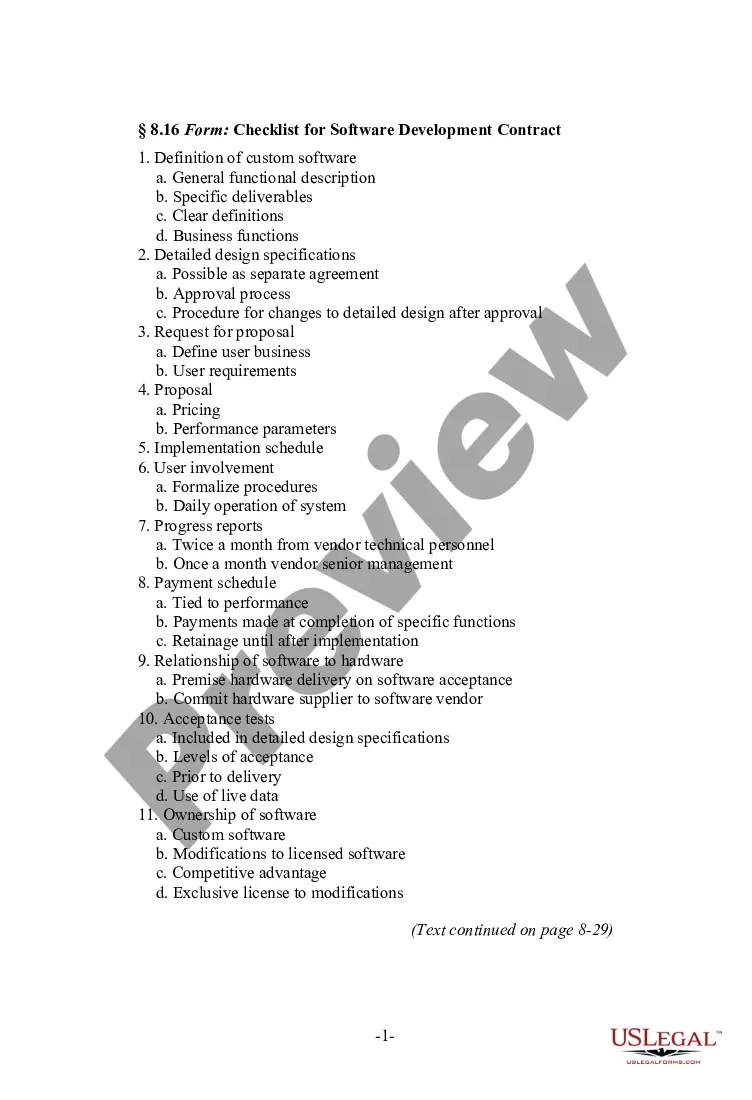
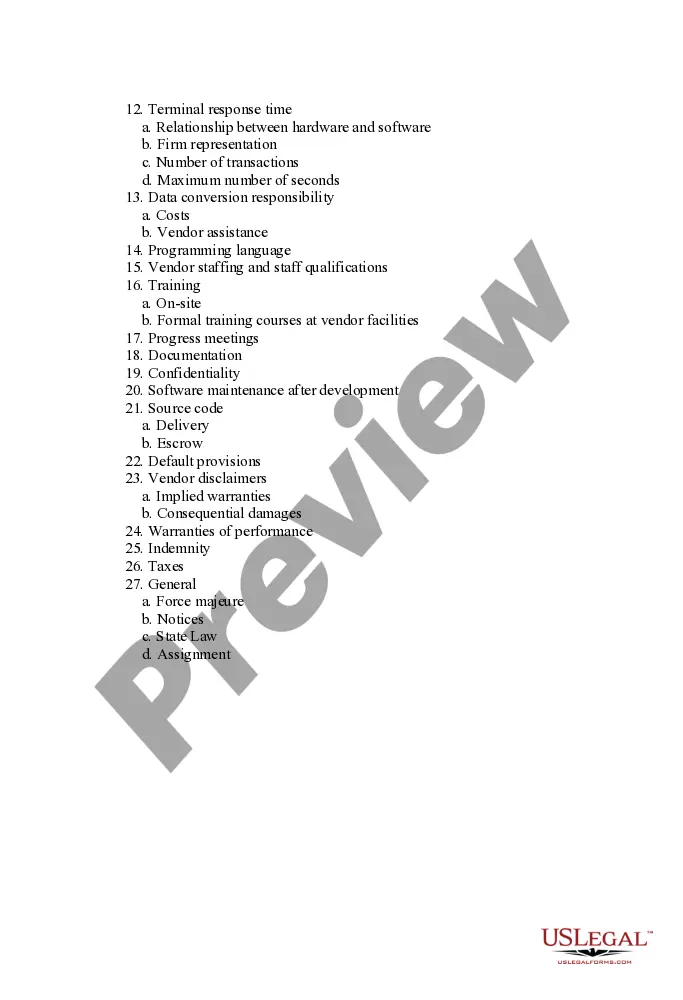
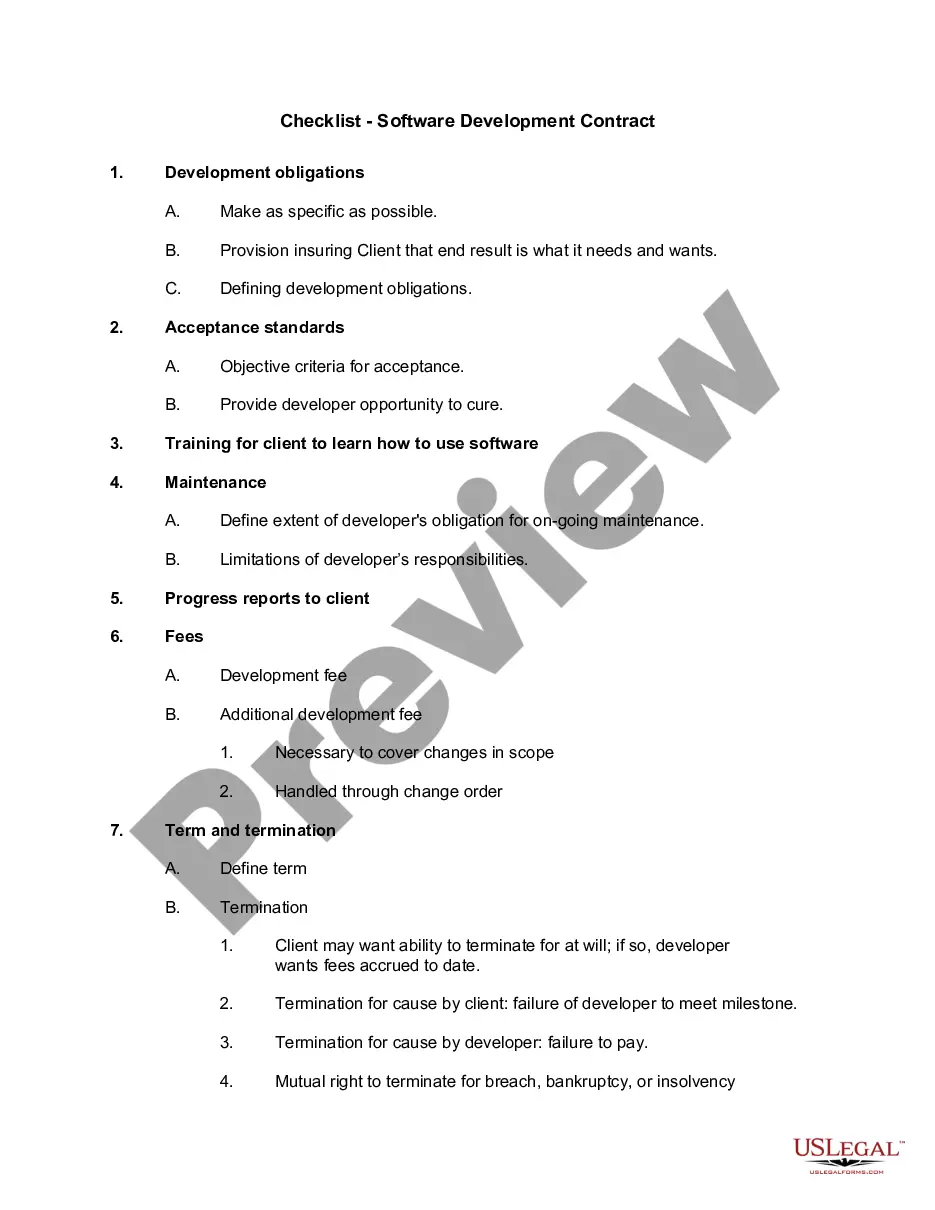
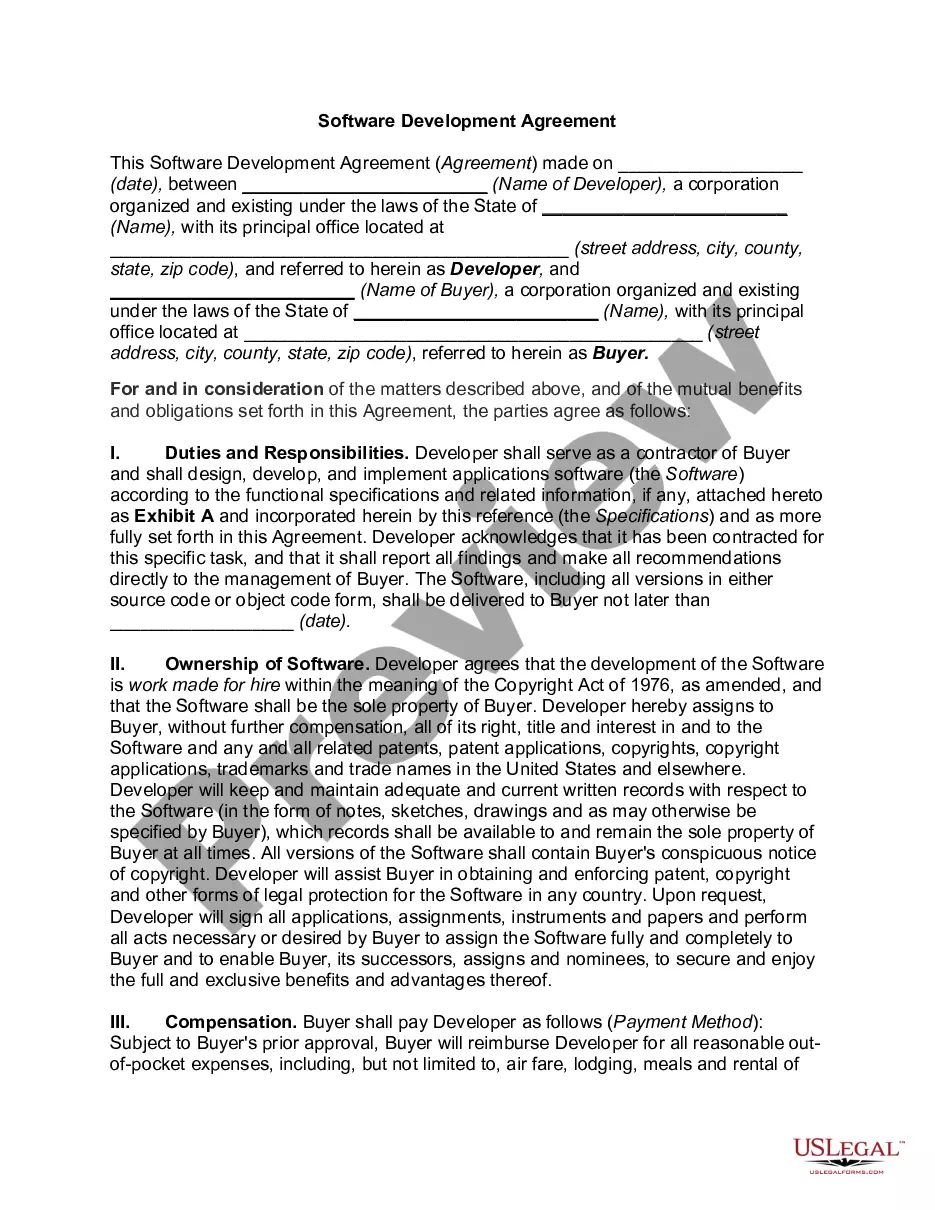
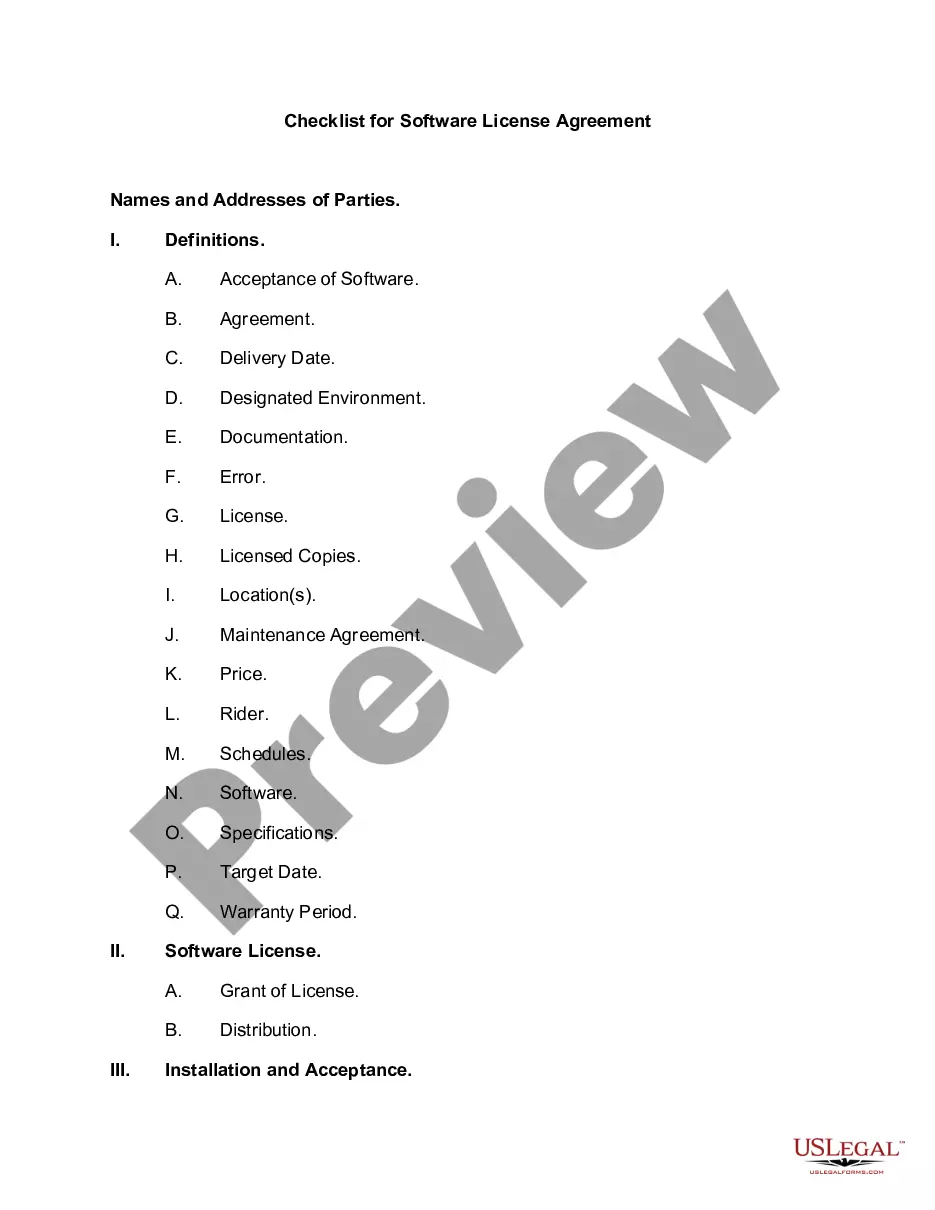
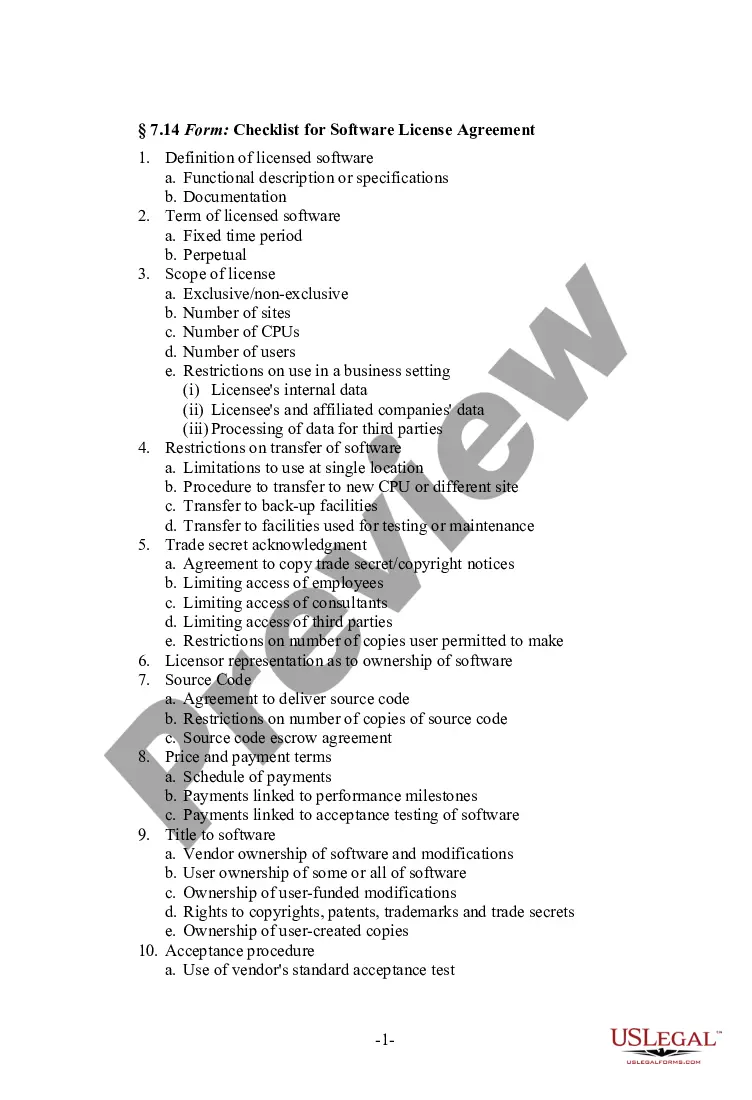
The Checklist for Software Development Contract is a comprehensive legal document designed for software or computer services agreements. This contract is useful for businesses or individual contractors who require clear terms for software development projects. It includes detailed sections that outline the scope of work, deliverables, and performance metrics, distinguishing it from other agreements by emphasizing a structured approach to software project execution.
Key components of this form
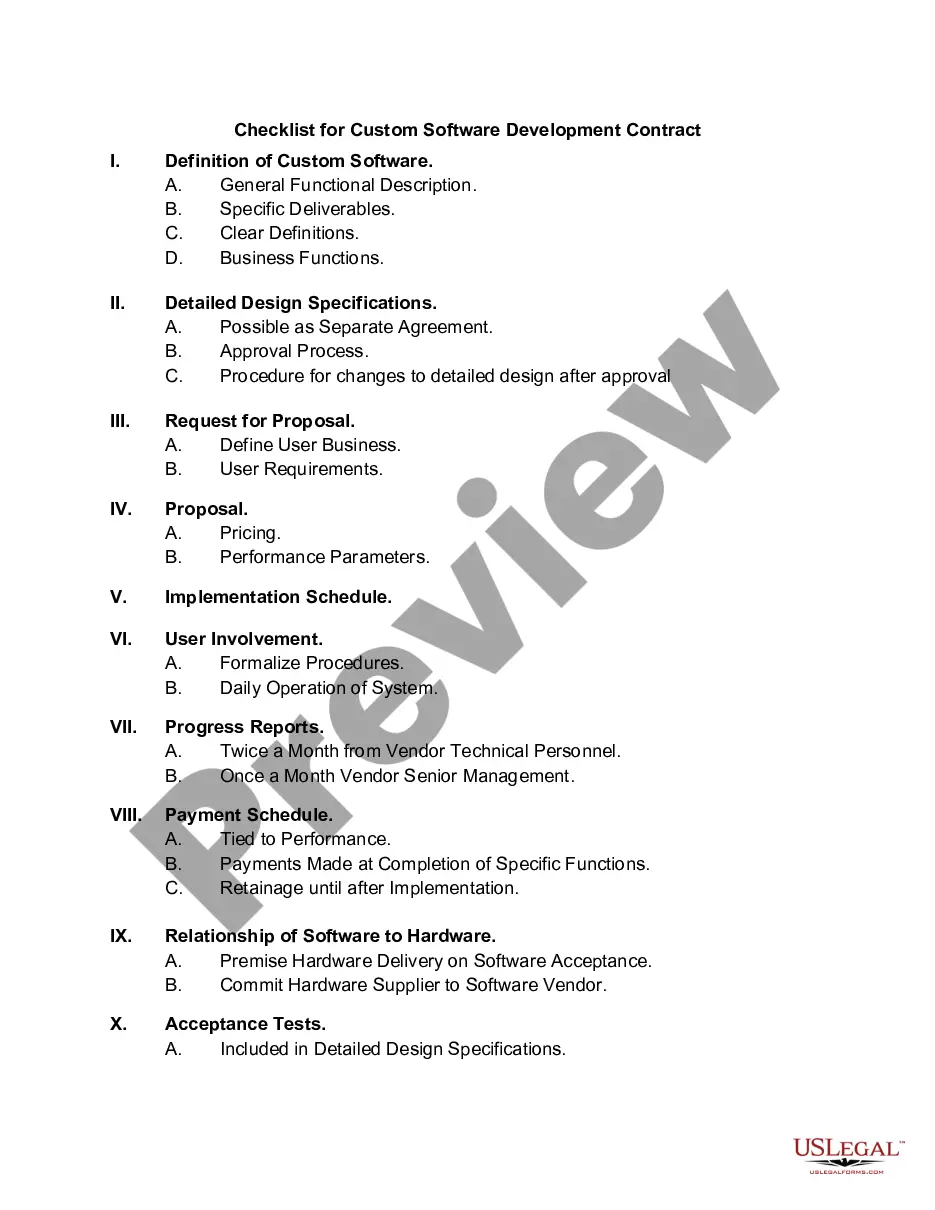
- Definition of custom software, including functional descriptions and specific deliverables
- Detailed design specifications with an approval process and change procedures
- Request for proposal outlining user requirements and project goals
- Implementation schedule to guide project timelines
- Progress reports scheduled for vendor updates
- Payment schedule linked to performance milestones
- Ownership and confidentiality clauses protecting intellectual property
Common use cases
This form should be used when engaging a contractor or a business for software development. It is ideal for scenarios where a customized software solution is required, ensuring that both parties are aligned on expectations, deliverables, and timelines. Additionally, it is suitable when clear procedures for changes and progress tracking are essential for project success.
Who this form is for
This form is intended for:
- Businesses seeking to formalize contracts for software development projects
- Independent contractors offering software or computer services
- Project managers needing a clear framework for custom software solutions
- Individuals or startups looking to protect their software investments legally
Steps to complete this form
- Identify and define the parties involved in the contract, including their roles.
- Clearly specify the software deliverables and functions required.
- Outline the approval process for design specifications and modifications.
- Set a payment schedule tied directly to the completion of specified project phases.
- Include terms regarding ownership rights and confidentiality agreements.
Does this form need to be notarized?
In most cases, this form does not require notarization. However, some jurisdictions or signing circumstances might. US Legal Forms offers online notarization powered by Notarize, accessible 24/7 for a quick, remote process.
Get your form ready online
Our built-in tools help you complete, sign, share, and store your documents in one place.
Make edits, fill in missing information, and update formatting in US Legal Forms—just like you would in MS Word.
Download a copy, print it, send it by email, or mail it via USPS—whatever works best for your next step.
Sign and collect signatures with our SignNow integration. Send to multiple recipients, set reminders, and more. Go Premium to unlock E-Sign.
If this form requires notarization, complete it online through a secure video call—no need to meet a notary in person or wait for an appointment.
We protect your documents and personal data by following strict security and privacy standards.

Make edits, fill in missing information, and update formatting in US Legal Forms—just like you would in MS Word.

Download a copy, print it, send it by email, or mail it via USPS—whatever works best for your next step.

Sign and collect signatures with our SignNow integration. Send to multiple recipients, set reminders, and more. Go Premium to unlock E-Sign.

If this form requires notarization, complete it online through a secure video call—no need to meet a notary in person or wait for an appointment.

We protect your documents and personal data by following strict security and privacy standards.
Common mistakes
- Failing to provide clear definitions and descriptions of software deliverables.
- Not including a well-defined approval process for changes to the design.
- Neglecting to establish a detailed payment schedule tied to project milestones.
- Overlooking the inclusion of confidentiality and ownership clauses.
Why complete this form online
- Convenience of instant access and download for immediate use.
- Editability allows customization to suit specific project needs.
- Reliability, as these forms are drafted by licensed attorneys who understand legal requirements.
Legal use & context
- This form provides a legally binding agreement between parties involved in software development.
- Usage of this form supports enforceability in court if disputes arise.
- It's important to ensure that all terms comply with local laws to maintain validity.
Key takeaways
- The Checklist for Software Development Contract is essential for defining expectations in software projects.
- It includes various sections to clarify deliverables, payment terms, and ownership.
- The form is versatile and can be adapted for use in various jurisdictions.
Looking for another form?


Form popularity
FAQ
Usage and Restrictions. Ownership. Term and Termination. Fees and payment. Indemnification.
Explanation: The parent document that serves as a contract between the client and the developer is the SRS document, and it contains all the details related to software that needs to be developed.
Software development contracts refer to legally enforceable agreements that govern the provision of software development services. Such a contract binds a software developer and a client to fulfill certain obligations within a specified time frame.
A software development agreement is a contract between a software team and a client. It can be frustrating to have to work through legal documents before starting the work.
Project Development Agreements (PDAs) are often used in urban regeneration and other development projects; they allow the government landowner to keep control of the precinct development and allow the developer to defer payment and land acquisition.
THIS AGREEMENT IS A LEGALLY BINDING CONTRACT BETWEEN YOU AND UPTRENDS AND SETS FORTH THE TERMS AND CONDITIONS THAT GOVERN YOUR USE OF THE SOFTWARE SERVICES.
Software developers are the creative minds behind computer programs. Some develop the applications that allow people to do specific tasks on a computer or another device. Others develop the underlying systems that run the devices or that control networks.
A software Development Contract is an agreement entered into between a company and a software developer where the company mentions their concepts and requirements.Such contracts are usually essential in software companies where developers are hired for creating computer softwares for both commercial and private use.
Challenge 1: Project Infrastructure. Challenge 2: Development Expectations and Outcome. Challenge 3: Quality Assurance. Challenge 4: Undefined Quality Standards. Challenge 5: Adapting the Latest Market Trends. Challenge 6: Design Influences. Challenge 7: System & Application Integration.