License Agreement to Use Product
What is this form?
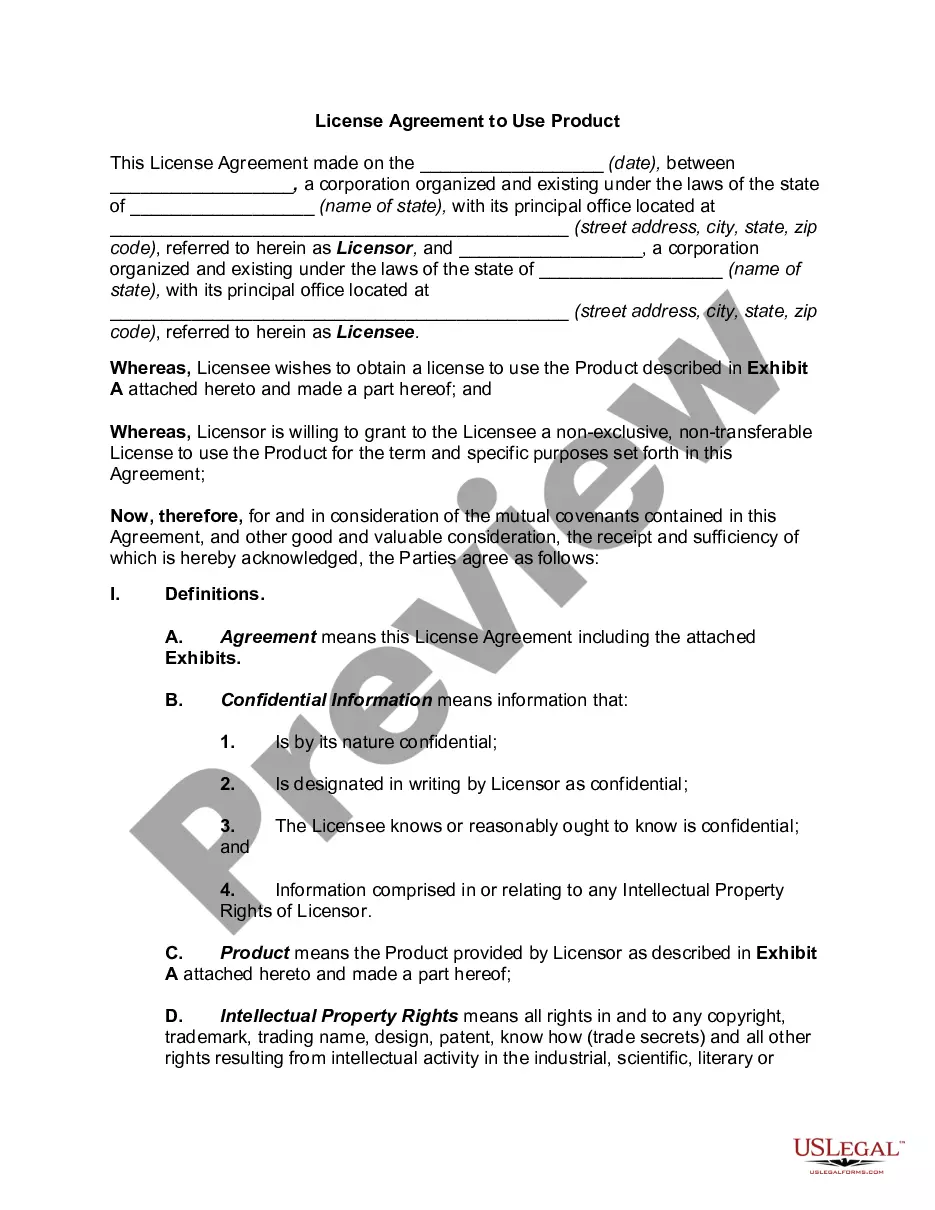
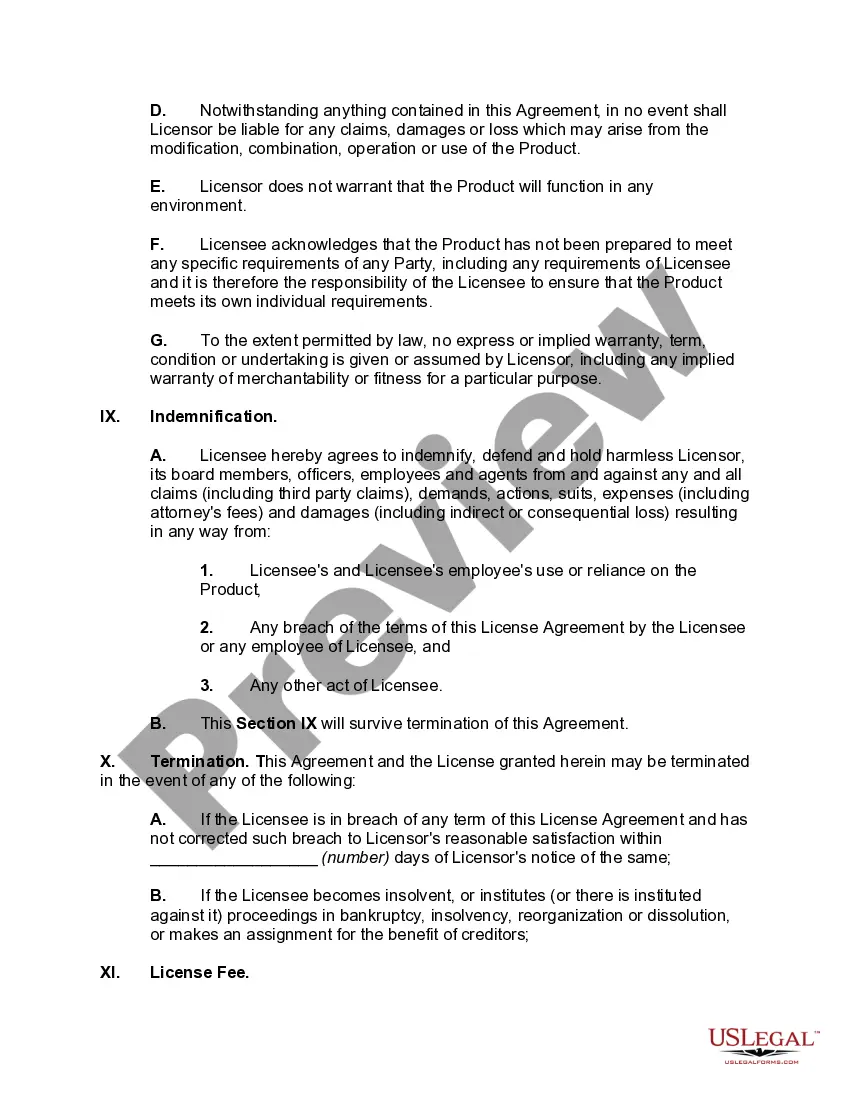
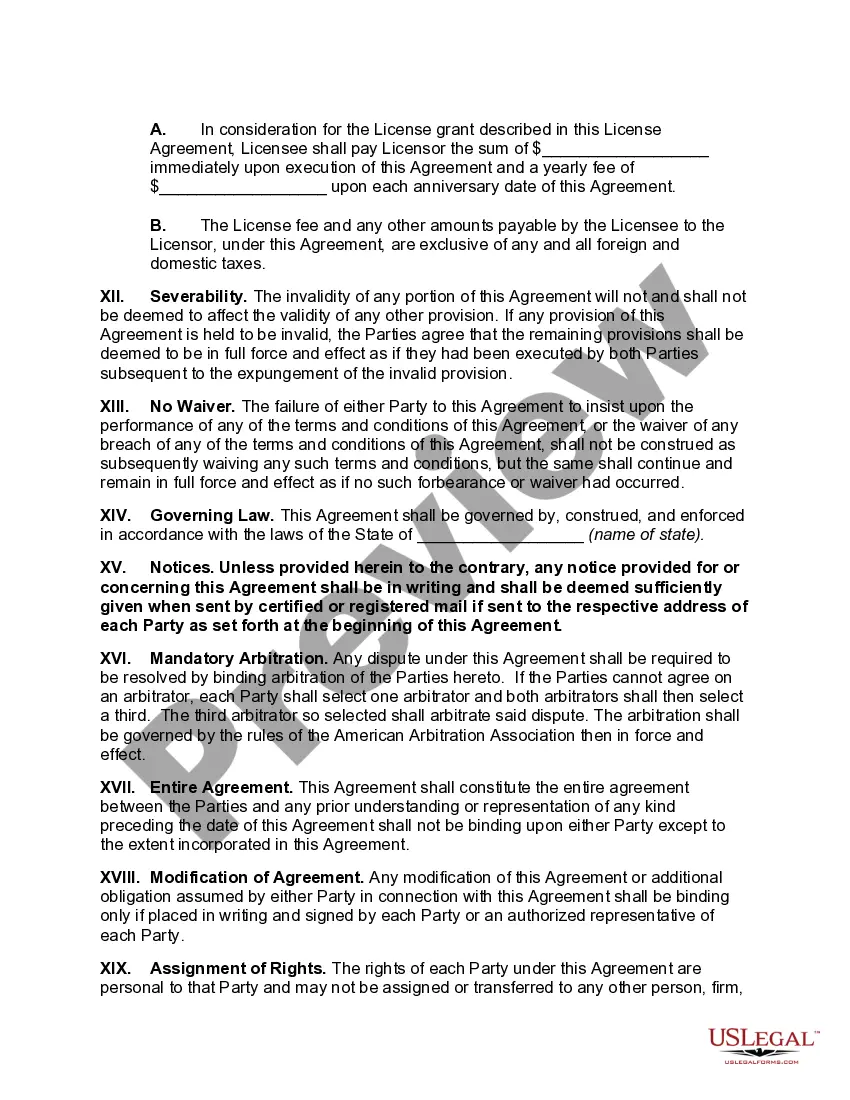
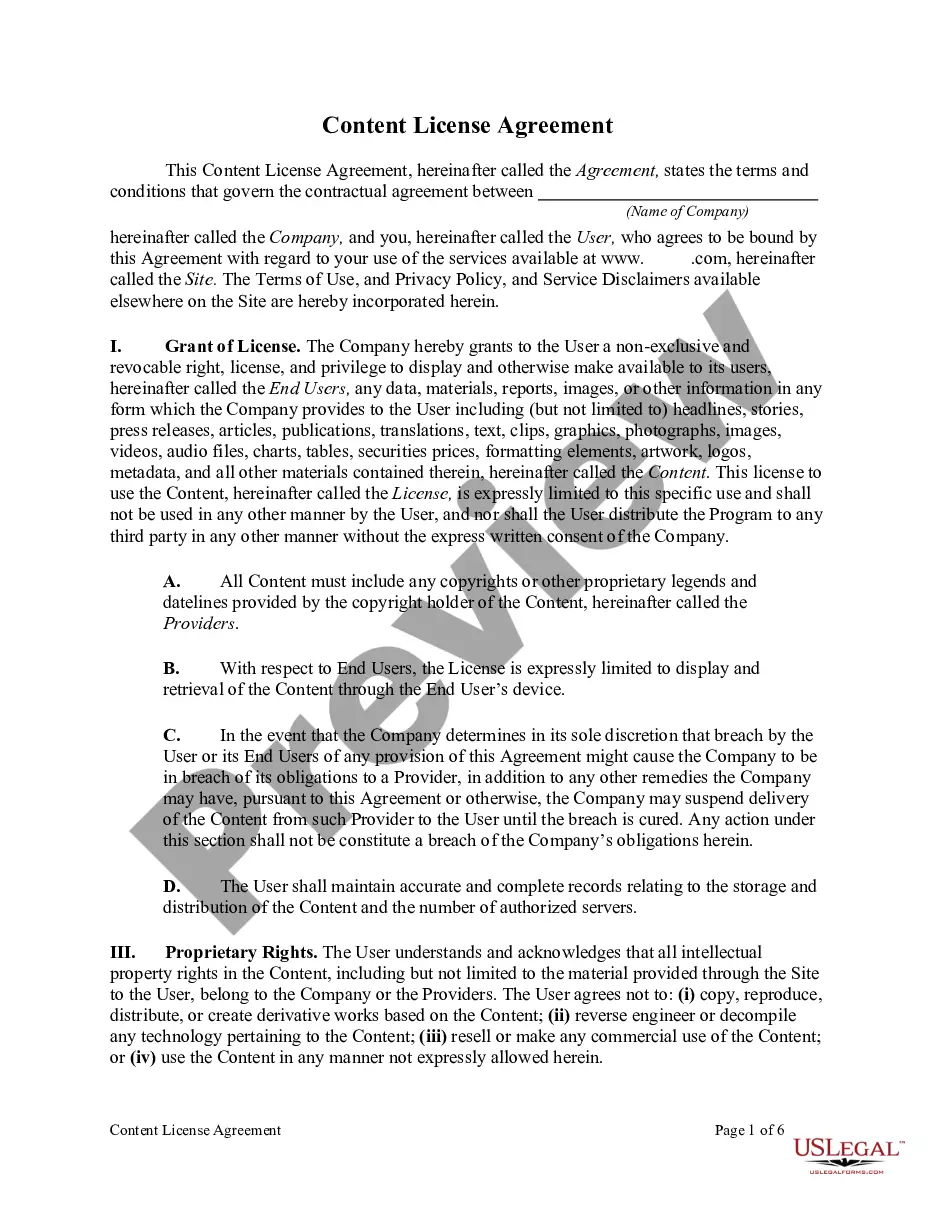
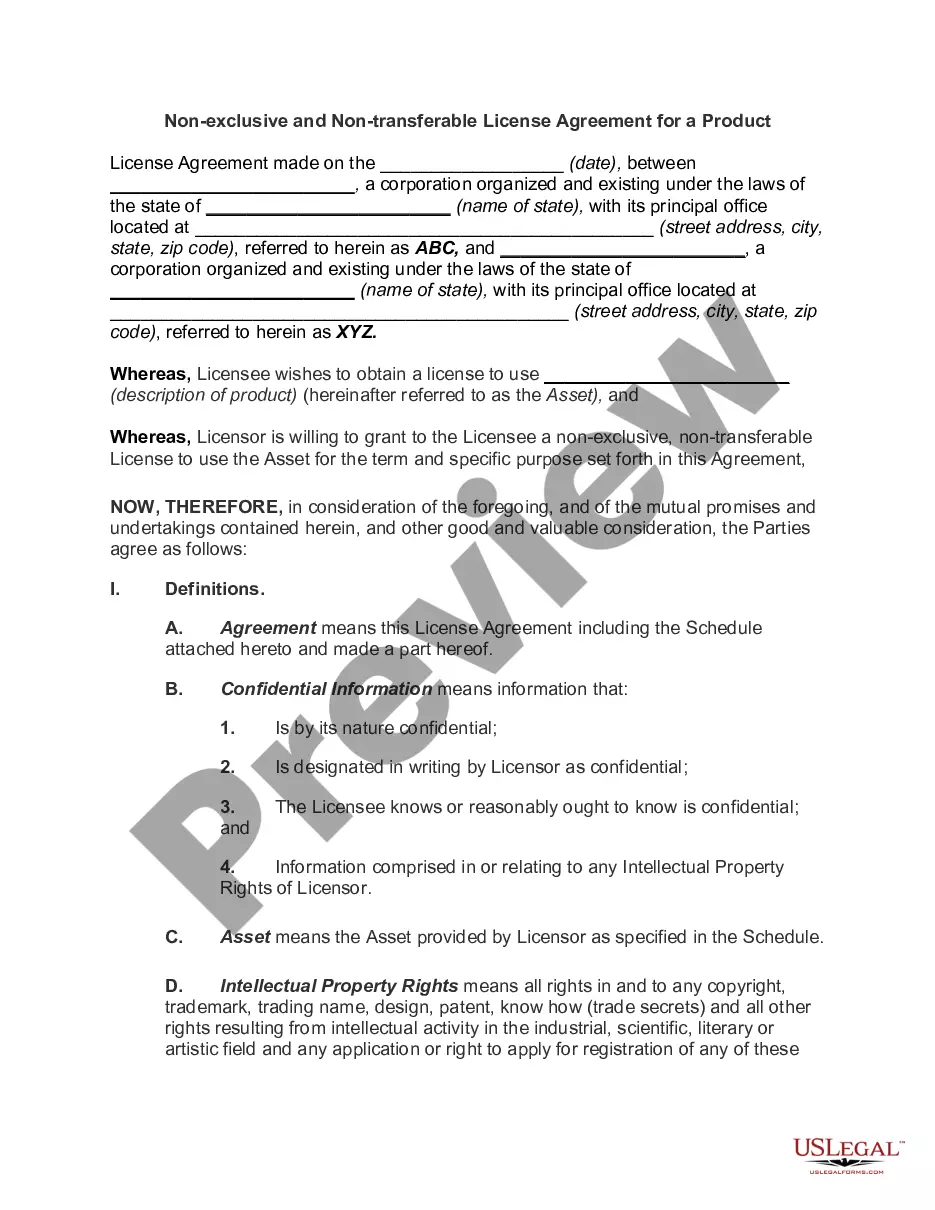
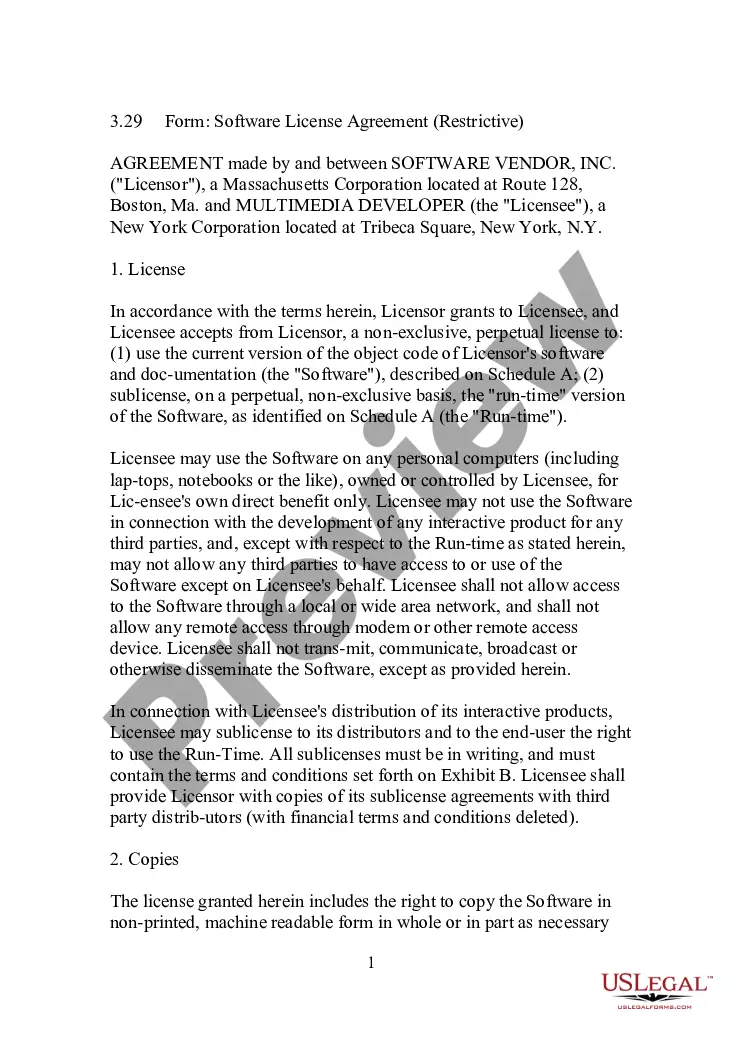
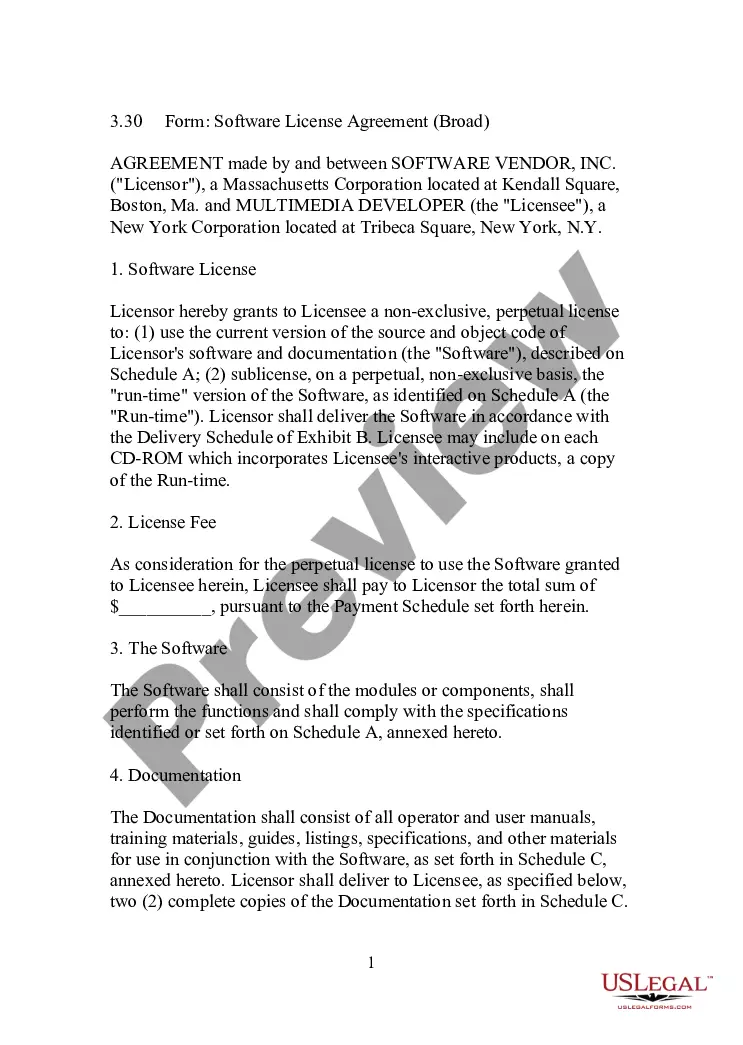
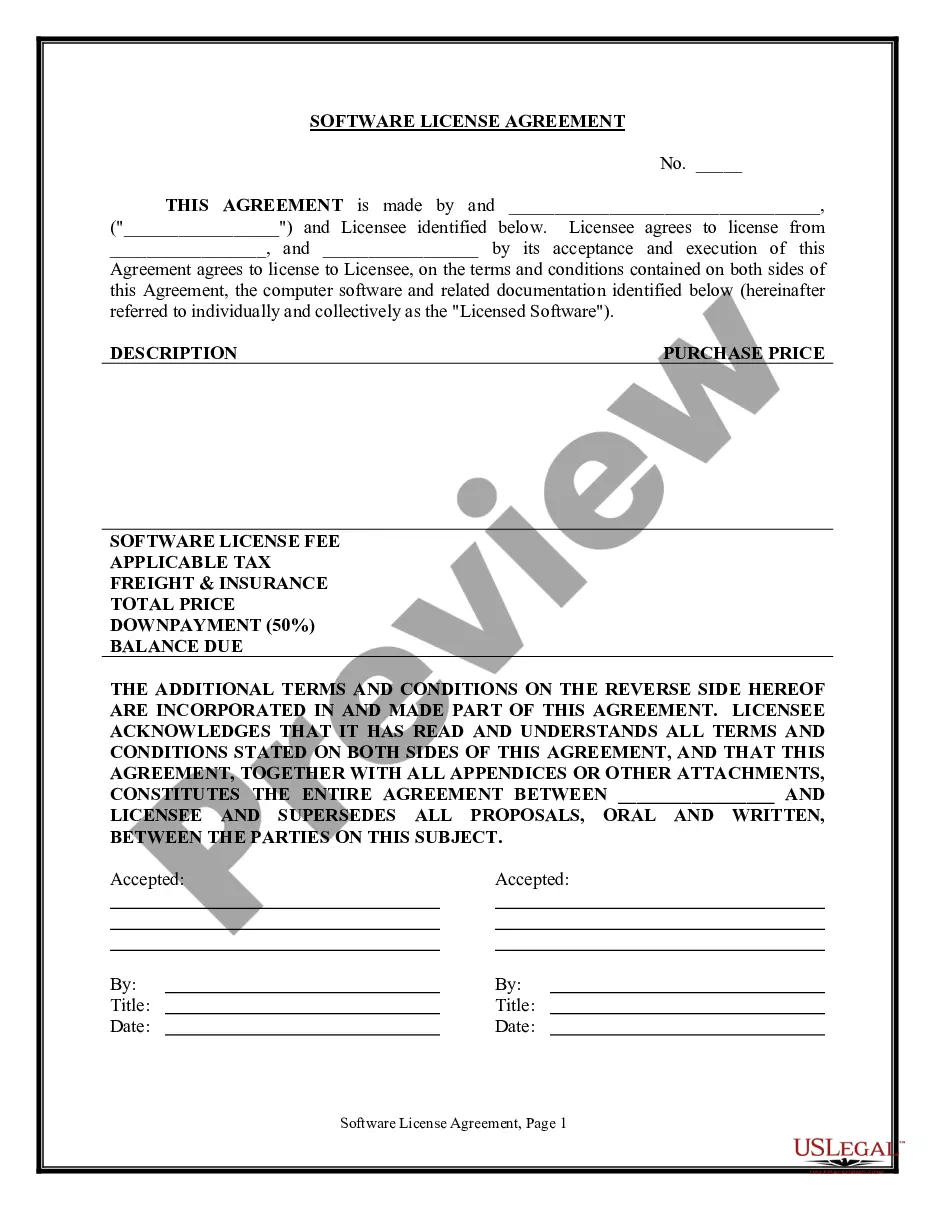
A License Agreement to Use Product is a legal contract that defines the terms under which a licensee can use a product or intellectual property owned by a licensor. This type of agreement typically establishes the rights and obligations of both parties involved, differentiating it from standard purchase agreements by focusing specifically on licensing rights rather than ownership transfer.
Key parts of this document
- Definitions of key terms, including "Licensor," "Licensee," and "Product."
- Grant of License outlining the permissions given to the Licensee.
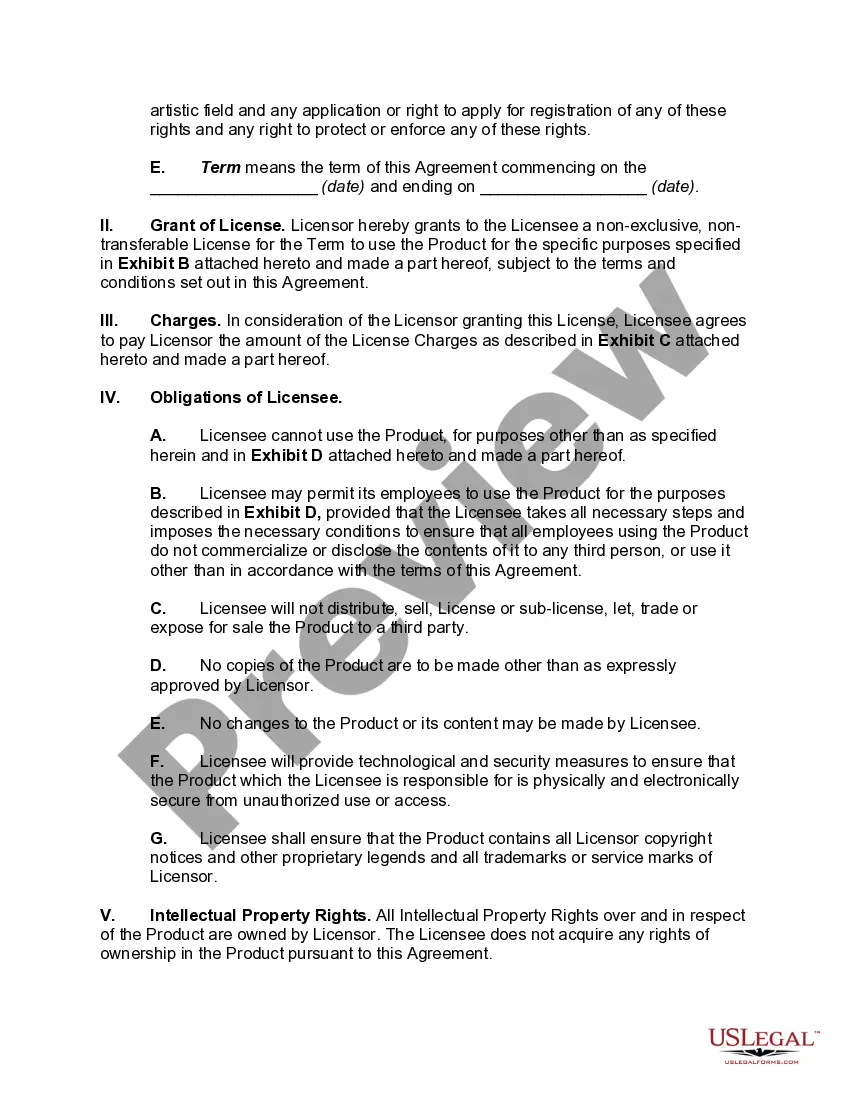
- Terms related to charges and payments the Licensee must make to the Licensor.
- Obligations of the Licensee regarding the use of the Product.
- Intellectual Property Rights and their ownership.
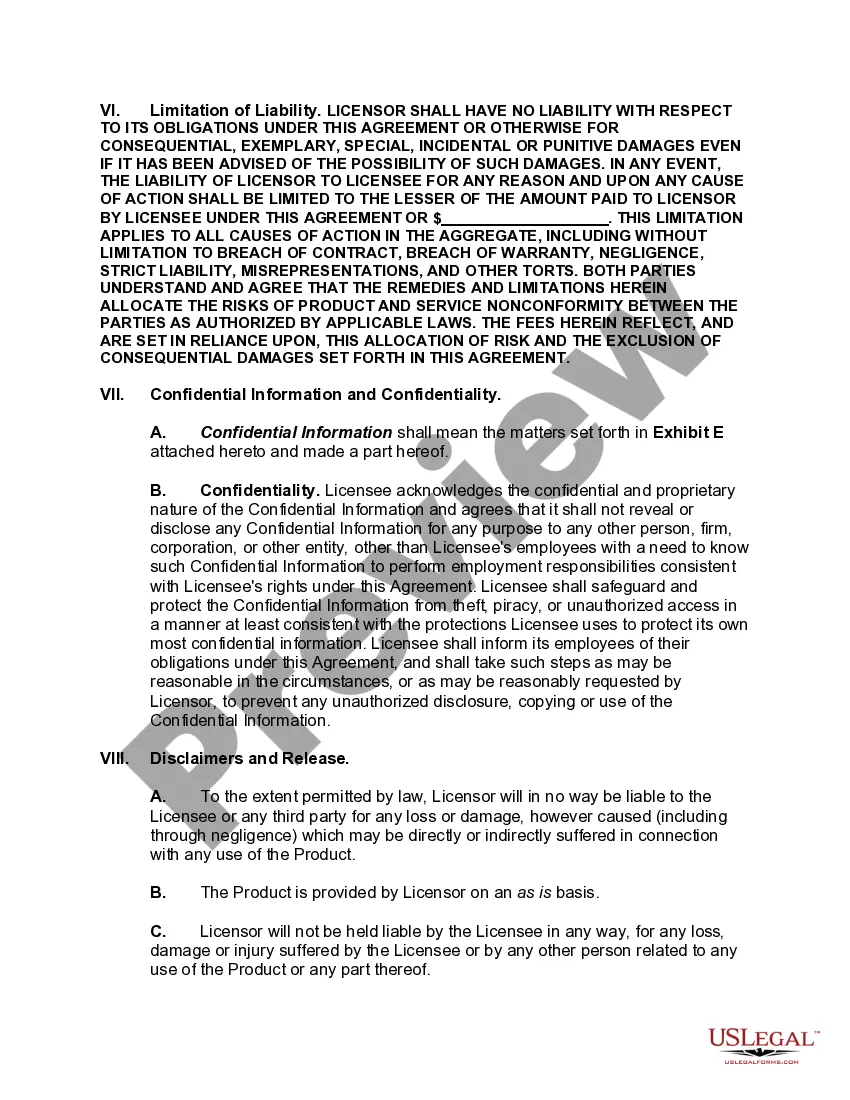
- Clauses on confidentiality and limitations of liability.
Situations where this form applies
This form is essential when an individual or organization (the Licensee) wishes to use a product or intellectual property owned by another party (the Licensor) under specific conditions. For instance, it might be used when a business wants to produce and sell goods utilizing a trademark or proprietary technology owned by another entity. This agreement helps ensure that both parties understand their rights and responsibilities regarding the use of the agreed-upon product.
Who this form is for
- Businesses wanting to license products for commercial use.
- Individuals or organizations seeking permission to use patented technology or trademarks.
- Entrepreneurs collaborating with established brands to leverage existing products.
- Any party needing a formal agreement to outline terms of product usage and protection of intellectual property rights.
How to complete this form
- Identify the parties involved by filling in the names and addresses of the Licensor and Licensee.
- Specify the date when the agreement is made and the term of the agreement.
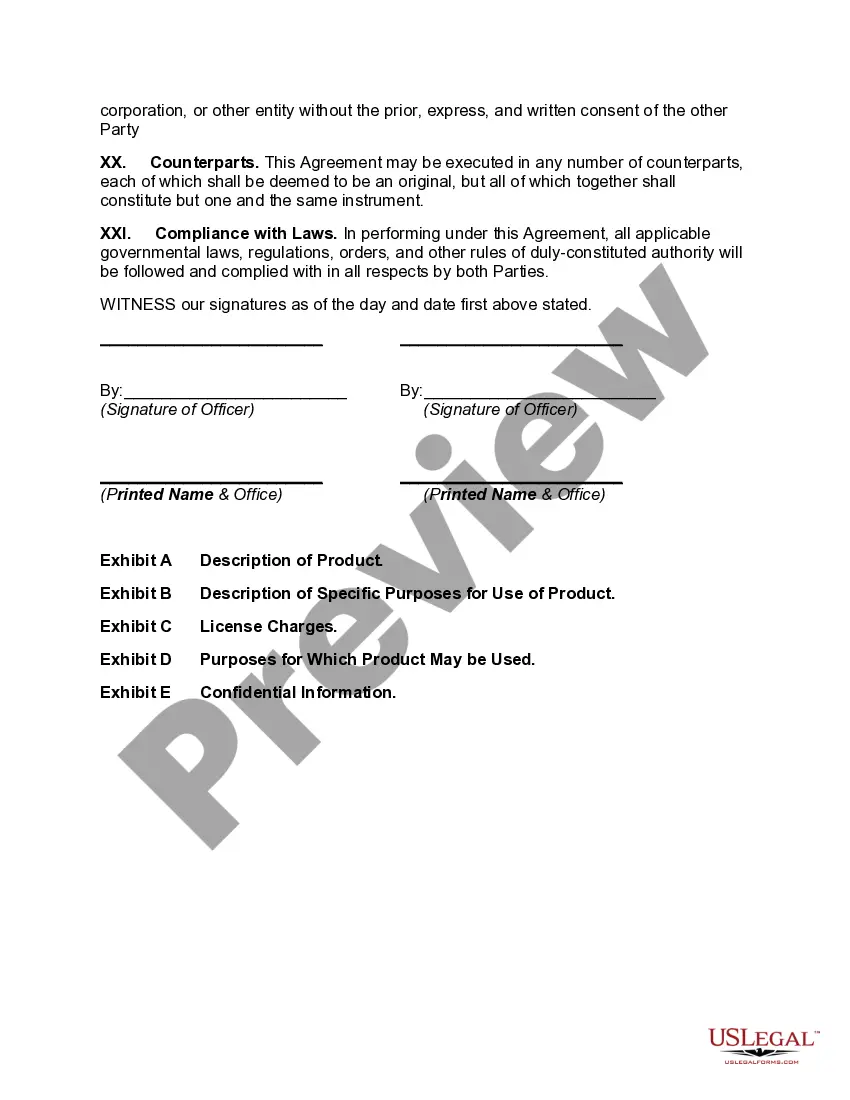
- Detail the product to be licensed in Exhibit A and outline specific purposes for its use in Exhibit B.
- Enter the agreed license fee and payment schedule in Exhibit C.
- Sign and date the agreement, ensuring that both parties have their authorized representatives complete the required signatures.
Notarization requirements for this form
This form does not typically require notarization unless specified by local law. It is advisable to check the specific regulations in your jurisdiction to ensure compliance.
Get your form ready online
Our built-in tools help you complete, sign, share, and store your documents in one place.
Make edits, fill in missing information, and update formatting in US Legal Forms—just like you would in MS Word.
Download a copy, print it, send it by email, or mail it via USPS—whatever works best for your next step.
Sign and collect signatures with our SignNow integration. Send to multiple recipients, set reminders, and more. Go Premium to unlock E-Sign.
If this form requires notarization, complete it online through a secure video call—no need to meet a notary in person or wait for an appointment.
We protect your documents and personal data by following strict security and privacy standards.

Make edits, fill in missing information, and update formatting in US Legal Forms—just like you would in MS Word.

Download a copy, print it, send it by email, or mail it via USPS—whatever works best for your next step.

Sign and collect signatures with our SignNow integration. Send to multiple recipients, set reminders, and more. Go Premium to unlock E-Sign.

If this form requires notarization, complete it online through a secure video call—no need to meet a notary in person or wait for an appointment.

We protect your documents and personal data by following strict security and privacy standards.
Common mistakes
- Failing to clearly define the product or scope of use in the agreement.
- Not specifying payment terms or license fees properly.
- Neglecting to include confidentiality clauses to protect proprietary information.
- Omitting signatures or improper execution of the agreement.
Benefits of using this form online
- Convenience of downloading and completing the form at any time.
- Editability allows users to customize the form to fit specific needs easily.
- Reliability of using attorney-drafted templates ensures legal compliance.
Main things to remember
- A License Agreement to Use Product outlines the terms between a Licensor and a Licensee.
- The agreement protects intellectual property and establishes the lawful use of the product.
- Both parties should clearly understand their roles and obligations as defined in the agreement.
Looking for another form?
Form popularity
FAQ
In a typical licensing agreement, the licensor agrees to provide the licensee with intellectual property rights such as the licensor's technology, brand name, or product creation know-how.
A licensing agreement is a legal contract between two parties, known as the licensor and the licensee. In a typical licensing agreement, the licensor grants the licensee the right to produce and sell goods, apply a brand name or trademark, or use patented technology owned by the licensor.
Download a template for a licensing agreement. Choose your role as the licensor or licensee. Define the license(s) in the agreement. Decide whether the license is exclusive or not. Settle the matter of fees and payment schedule. Add a renewal date and rules.
A lease is a contract between a tenant and a landlord that provides the tenant with exclusive interest in the property. A license, on the other hand, is when the owner gives permission to a licensee to conduct an action on the owner's property.
A product (or merchandise) license allows licensees to leverage popular IP to create branded products, usually for a specific period of time. Once the rights have been secured, the licensee manufactures product using the licensed IP, and in return pays the licensor a royalty for its use.
An example of a licensing agreement is a contract between the copyright holders of software and another company, allowing the latter to use the computer software for their daily business operations.
Invent an original product. Research your market. Do a patent search. Consider filing a provisional patent application. File a patent application. Search for licensees. Sign a licensing agreement. Collect royalties.
An example of a licensing agreement is a contract between the copyright holders of software and another company, allowing the latter to use the computer software for their daily business operations.