Software License Agreement - Restrictive
What this document covers
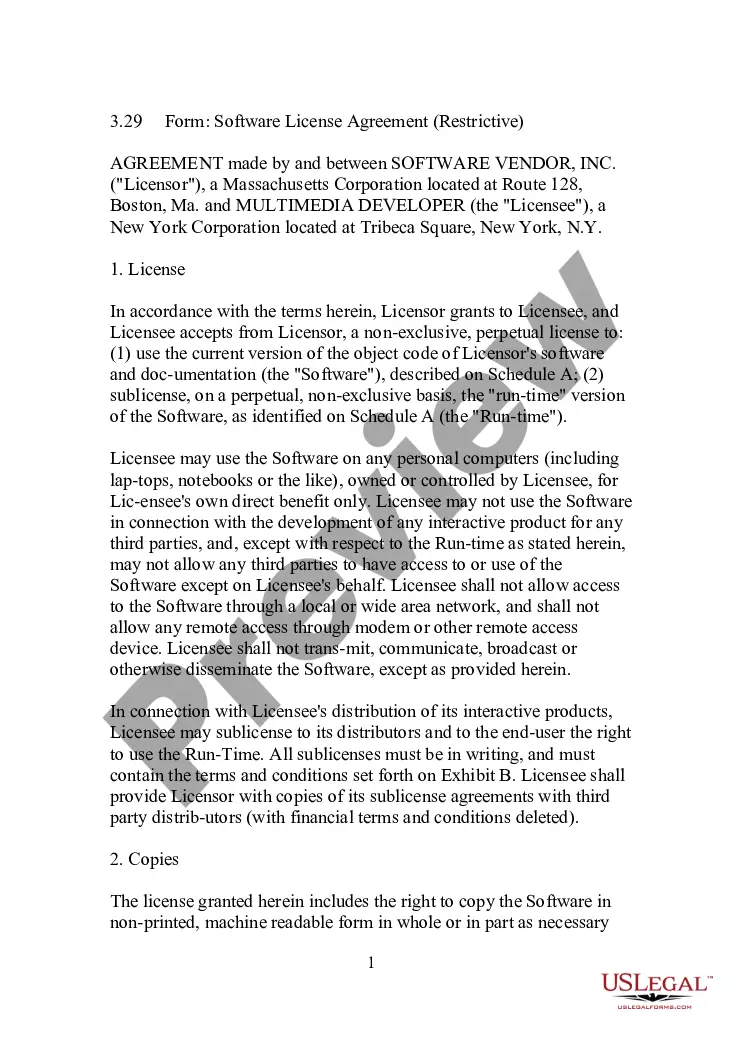
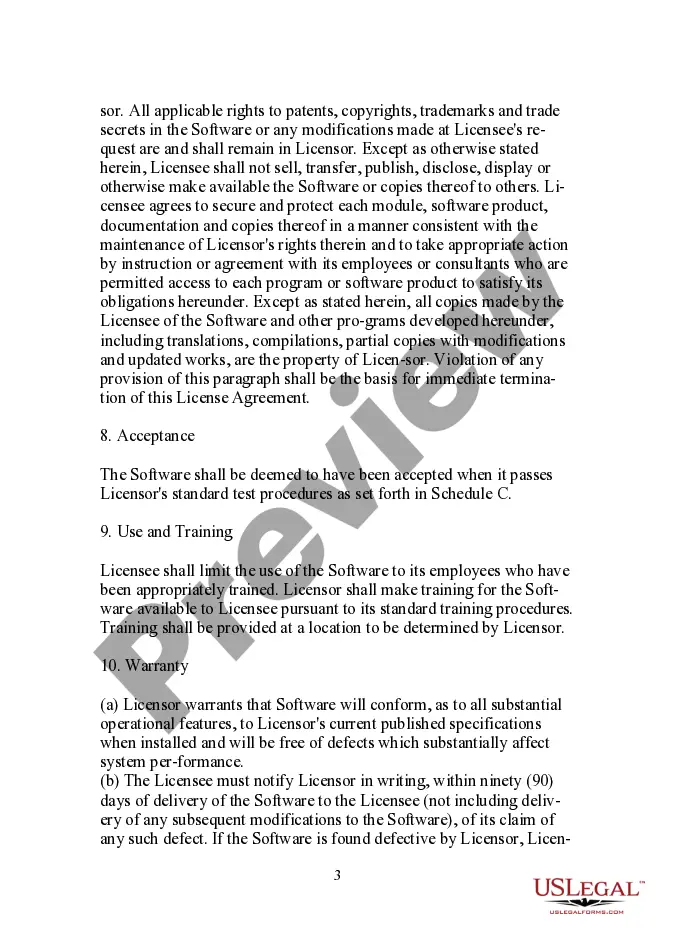
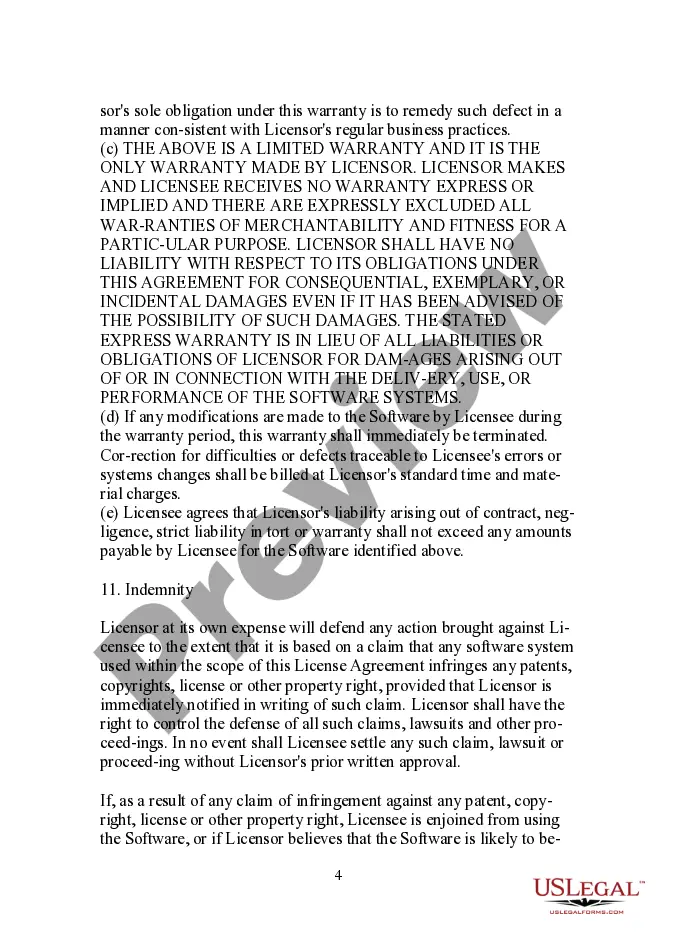
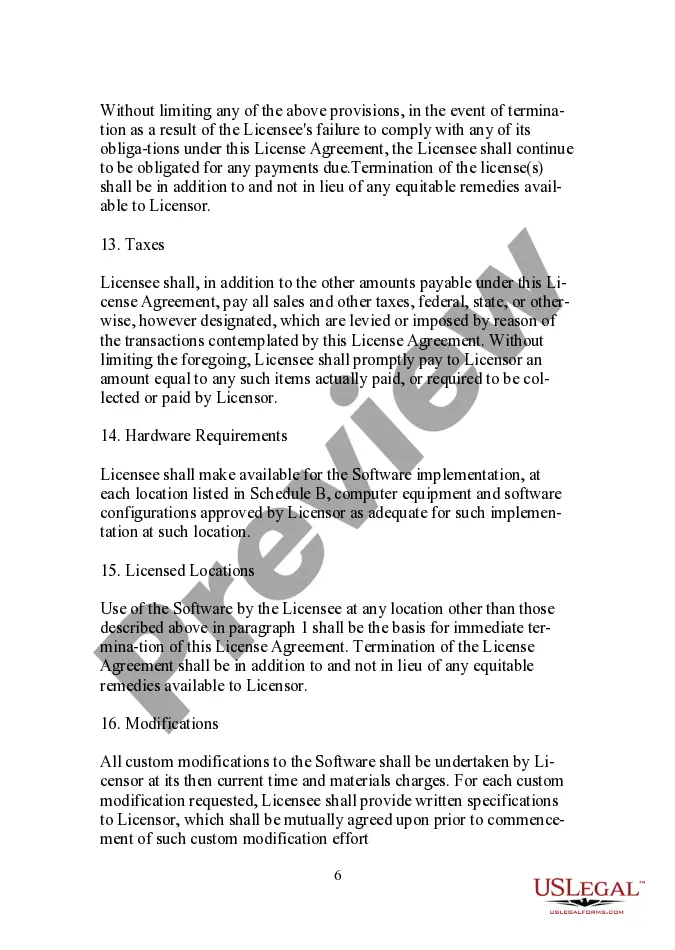
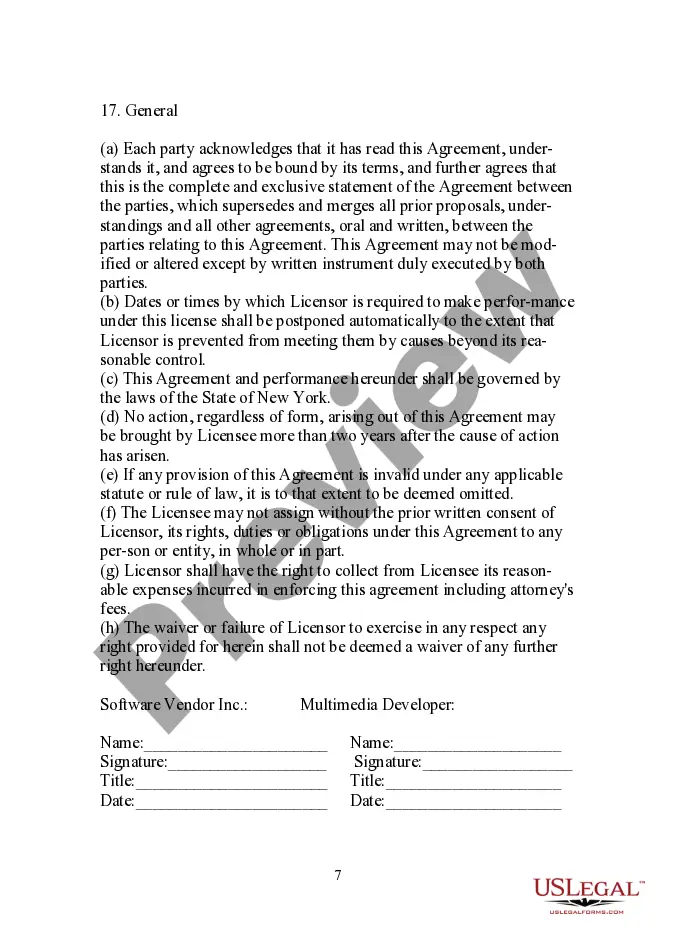
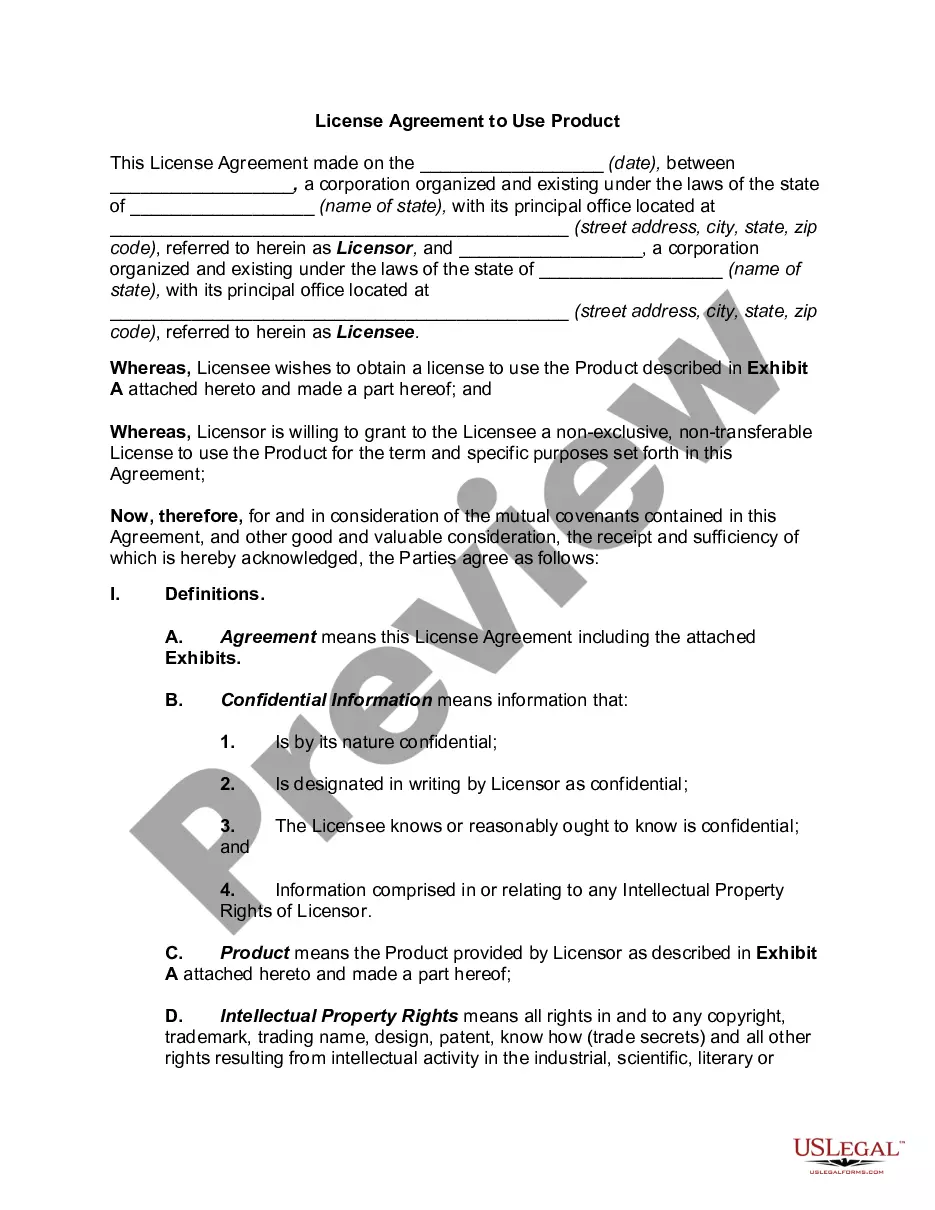
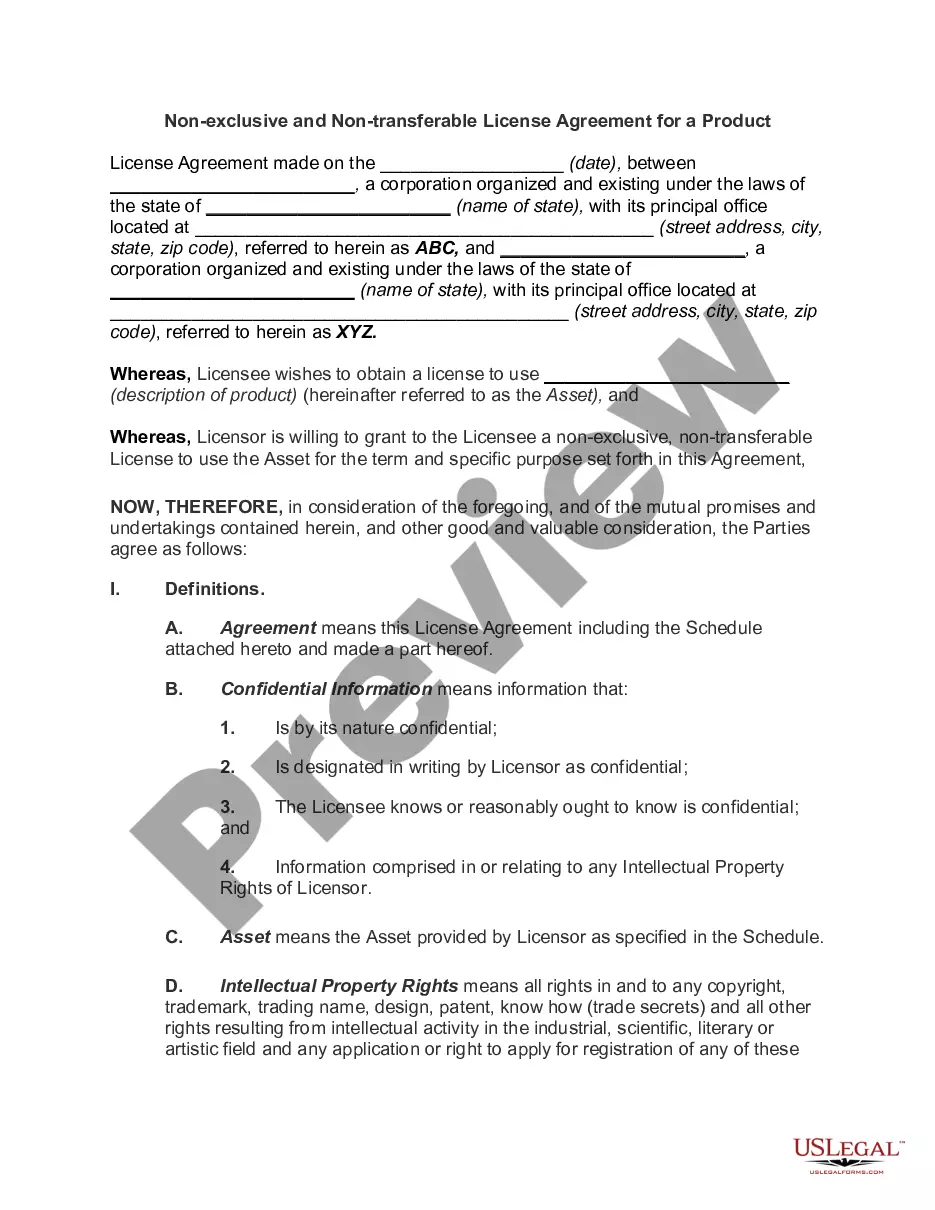
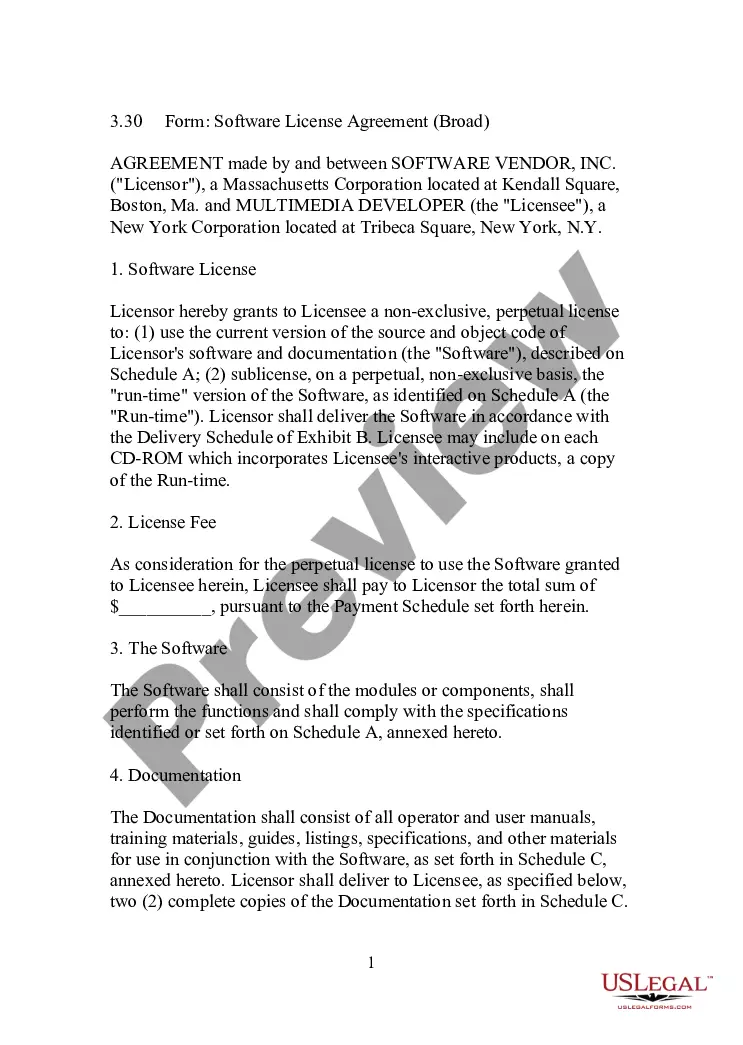
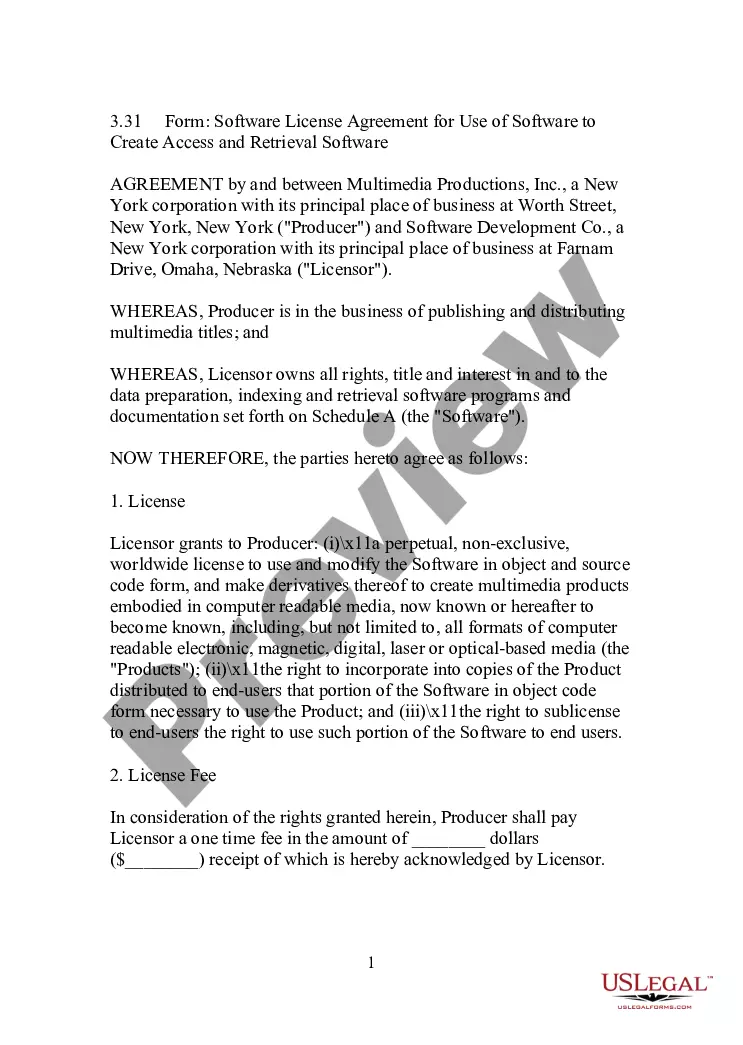
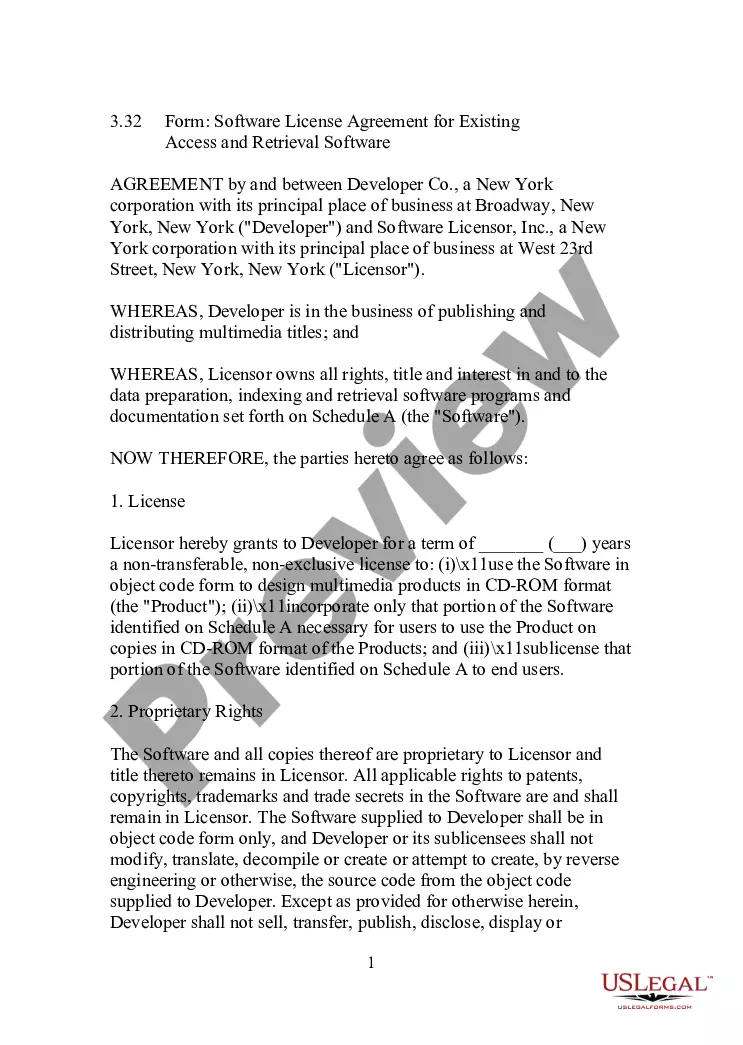
This Software License Agreement - Restrictive is a model contract designed for business settings. It outlines the terms under which a software vendor licenses their software to a developer, allowing limited use and distribution rights. Unlike broader software agreements, this restrictive license specifically limits the licensee's ability to share the software and restricts its use to internal purposes, making it essential for protecting intellectual property rights.
Main sections of this form
- License Grant: Defines the scope of the license, including use limitations and sublicensing.
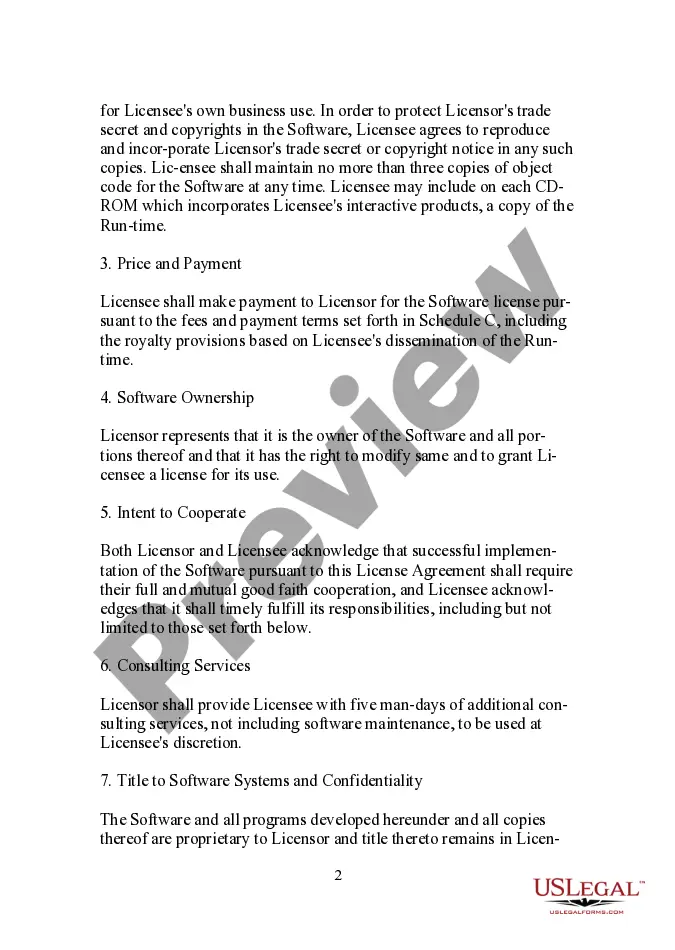
- Copies and Distribution: Outlines rights to copy and distribute the software while maintaining the licensor's copyright and trade secrets.
- Price and Payment: Details the payment terms and any royalties related to the use of the software.
- Confidentiality: Ensures the licensee protects the proprietary aspects of the software.
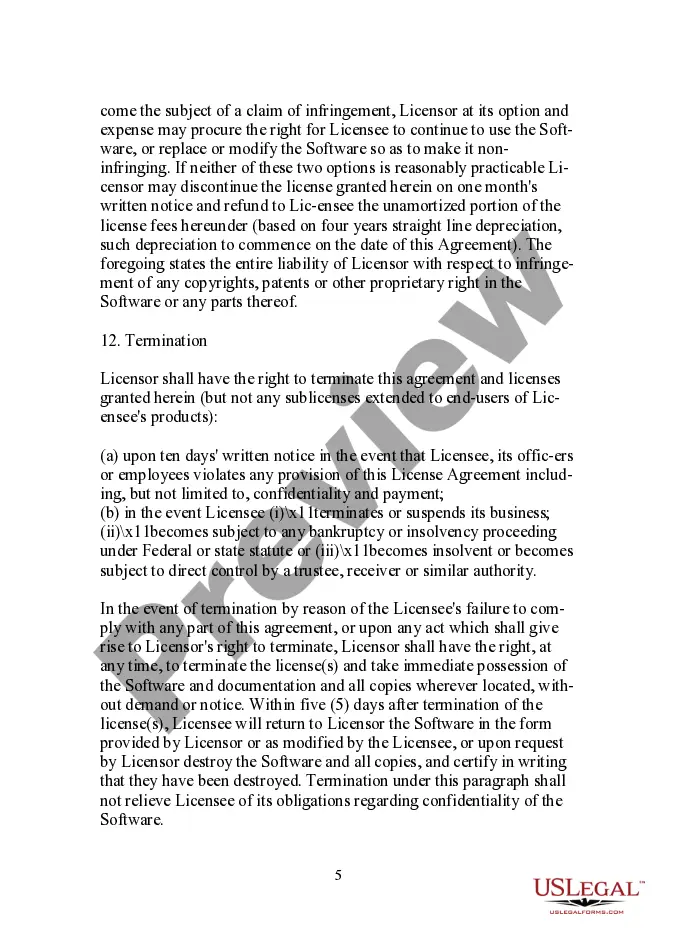
- Termination: Specifies the conditions under which the agreement may be terminated.
When this form is needed
This form should be used when a software vendor wants to grant restricted usage rights to a developer, ensuring control over how the software is used and shared. It is particularly useful when developing proprietary software solutions where the vendor needs to protect its intellectual property from unauthorized distribution or use by third parties.
Intended users of this form
- Software vendors looking to protect their proprietary software.
- Multimedia developers who need to use licensed software for their projects.
- Businesses engaged in software development that require clear terms regarding the usage of third-party software.
Completing this form step by step
- Identify the parties: Fill in the names and addresses of the software vendor and the developer.
- Specify the license details: Clearly outline the terms of use and any sublicensing provisions.
- Detail payment terms: Include agreed fees and payment schedules as per the contract.
- Signatures: Ensure both parties sign the agreement, indicating their acceptance of the terms.
Notarization requirements for this form
In most cases, this form does not require notarization. However, some jurisdictions or signing circumstances might. US Legal Forms offers online notarization powered by Notarize, accessible 24/7 for a quick, remote process.
Get your form ready online
Our built-in tools help you complete, sign, share, and store your documents in one place.
Make edits, fill in missing information, and update formatting in US Legal Forms—just like you would in MS Word.
Download a copy, print it, send it by email, or mail it via USPS—whatever works best for your next step.
Sign and collect signatures with our SignNow integration. Send to multiple recipients, set reminders, and more. Go Premium to unlock E-Sign.
If this form requires notarization, complete it online through a secure video call—no need to meet a notary in person or wait for an appointment.
We protect your documents and personal data by following strict security and privacy standards.

Make edits, fill in missing information, and update formatting in US Legal Forms—just like you would in MS Word.

Download a copy, print it, send it by email, or mail it via USPS—whatever works best for your next step.

Sign and collect signatures with our SignNow integration. Send to multiple recipients, set reminders, and more. Go Premium to unlock E-Sign.

If this form requires notarization, complete it online through a secure video call—no need to meet a notary in person or wait for an appointment.

We protect your documents and personal data by following strict security and privacy standards.
Typical mistakes to avoid
- Failing to specify allowable uses of the software can lead to misunderstandings.
- Not including provisions for payment terms, which can cause future disputes.
- Neglecting to ensure all parties sign the agreement, rendering it unenforceable.
Benefits of using this form online
- Easy customization: Make changes to fit the specific needs of the parties involved.
- Convenience: Downloads are available instantly, saving time on paperwork.
- Reliability: Legal forms provided are drafted by licensed attorneys, ensuring compliance with applicable laws.
Looking for another form?


Form popularity
FAQ
A software license is a contract between the entity that created and supplied an application, underlying source code, or related product and its end user.
Wisegeek explains software licensing as a type of contract which exists between the person of company who produces a type of software, and the end user, or person who purchases or downloads the software to use. This means that there are many different types of software licenses.
As a general rule, companies do not own the software that they license. The corollary is that they then do not, unless expressly agreed, possess the right to transfer or assign the licensed software they use to a new entity when later involved in a merger, acquisition or internal corporate restructuring.
User agreements like EULAs are legally binding contracts between the software author and the end-user. End User License Agreements are enforceable as long as it is clear that it is a contract and both parties can understand the terms.
Public domain. This is the most permissive type of software license. Permissive. LGPL. Copyleft. Proprietary.
In general, it is the most restrictive type of licensing agreement wherein the original code was written by the programmers are not available to the users. Thus they can use the software but they cannot modify it or redistribute it.
A software license agreement gives a licensee a non-exclusive, non-transferable right to use software. A software license agreement defines how that software can be used and what happens in the event of breach.
In general, it is the most restrictive type of licensing agreement wherein the original code was written by the programmers are not available to the users. Thus they can use the software but they cannot modify it or redistribute it.