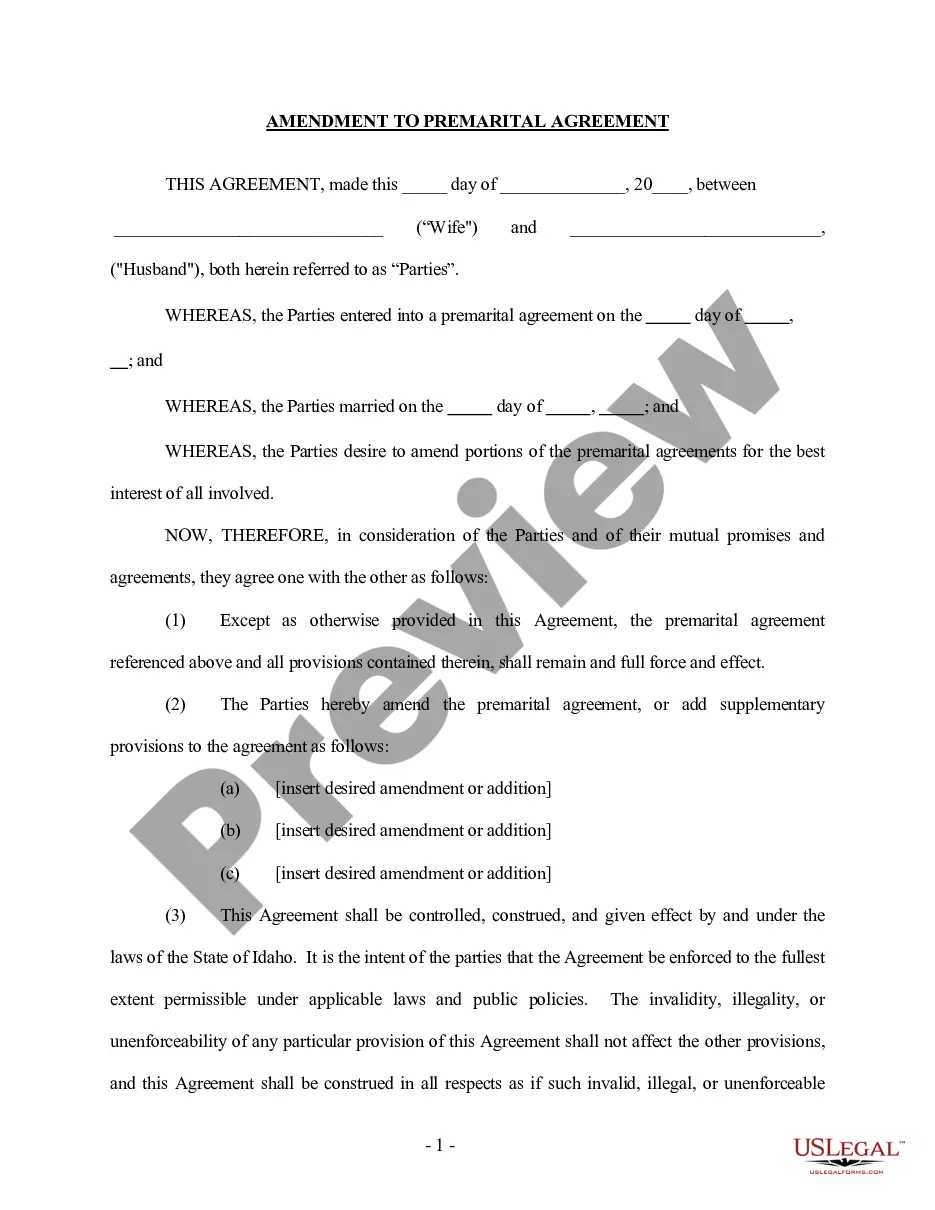
Partnership Agreement for Real Estate
Overview of this form
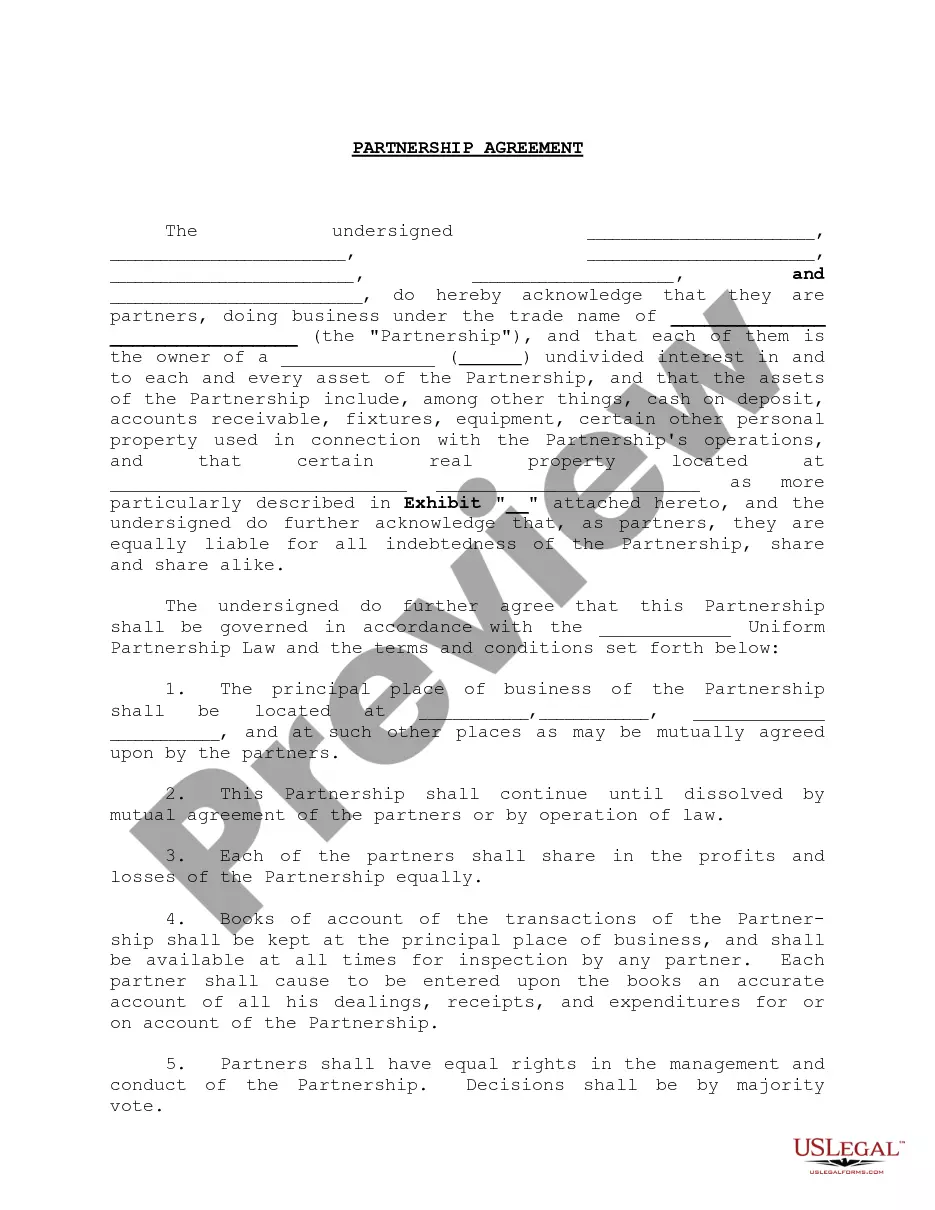
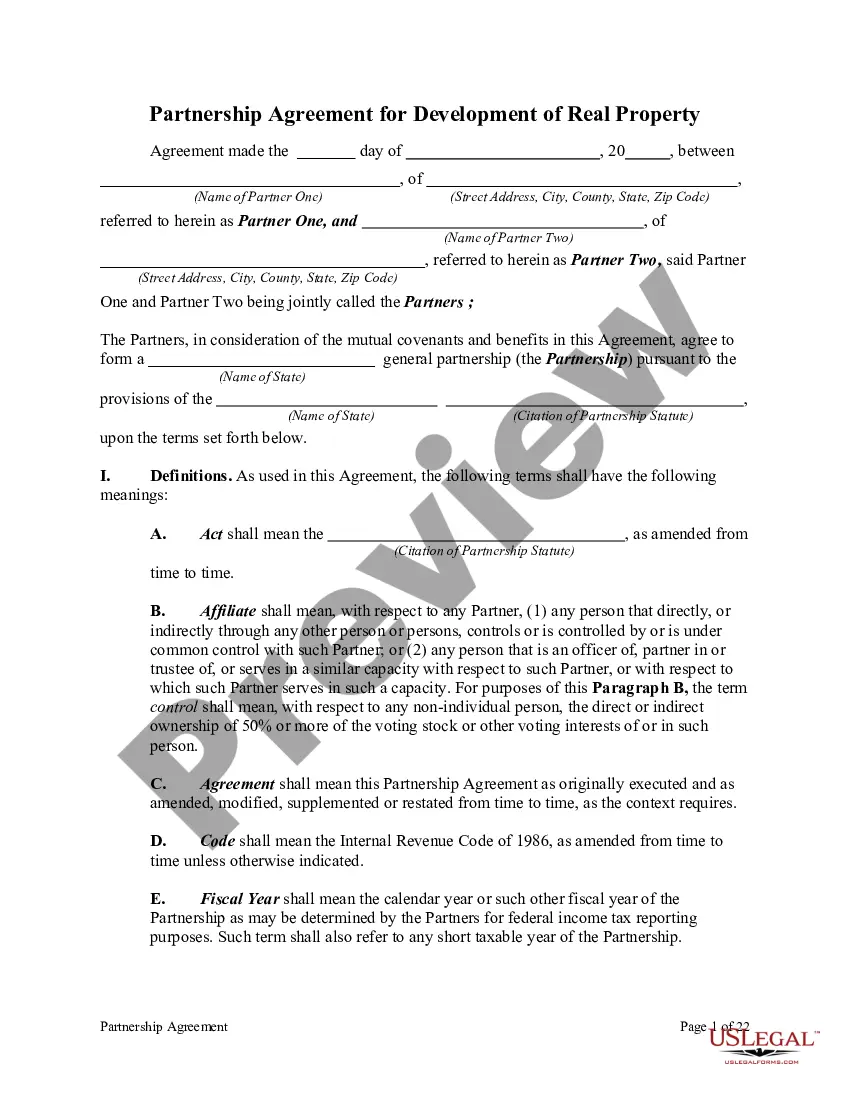
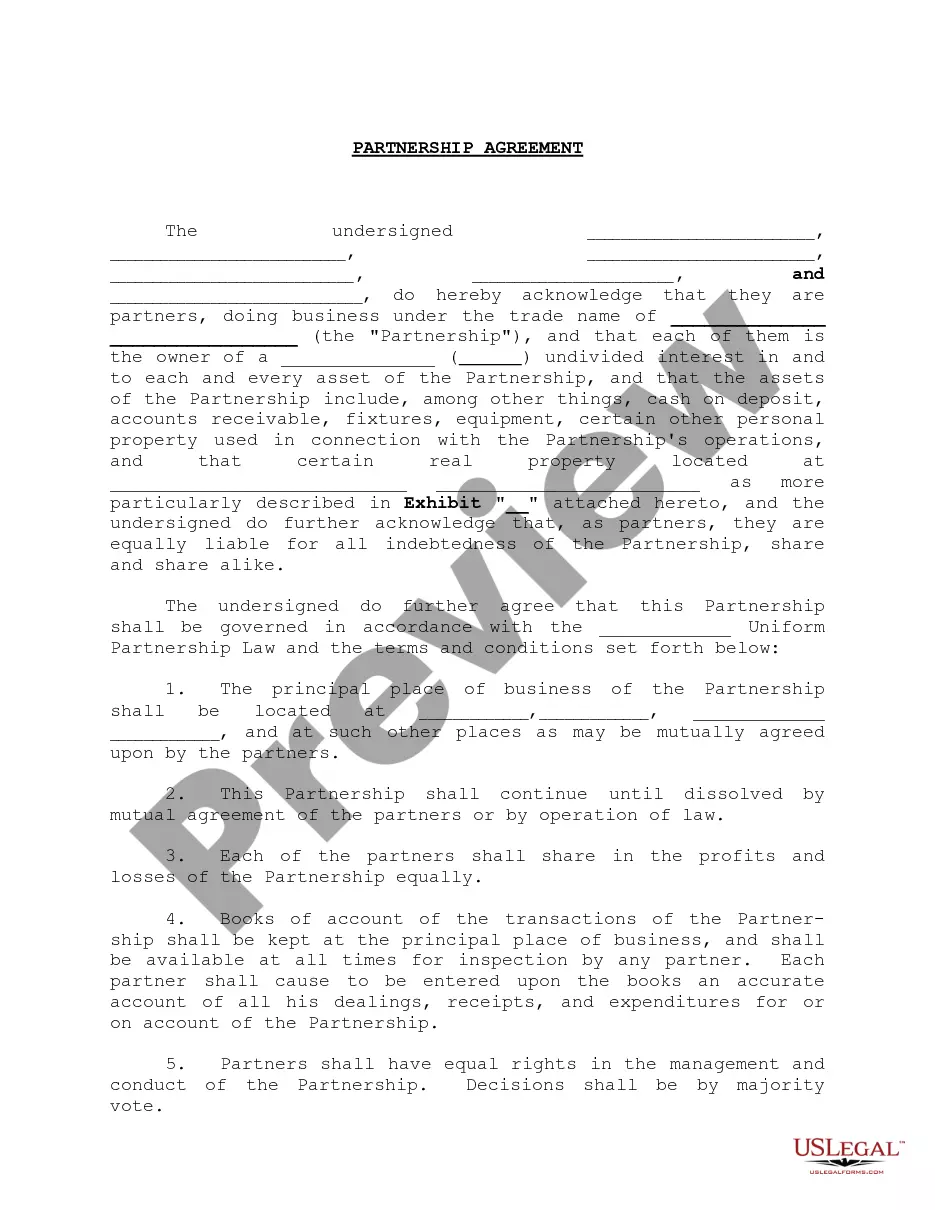
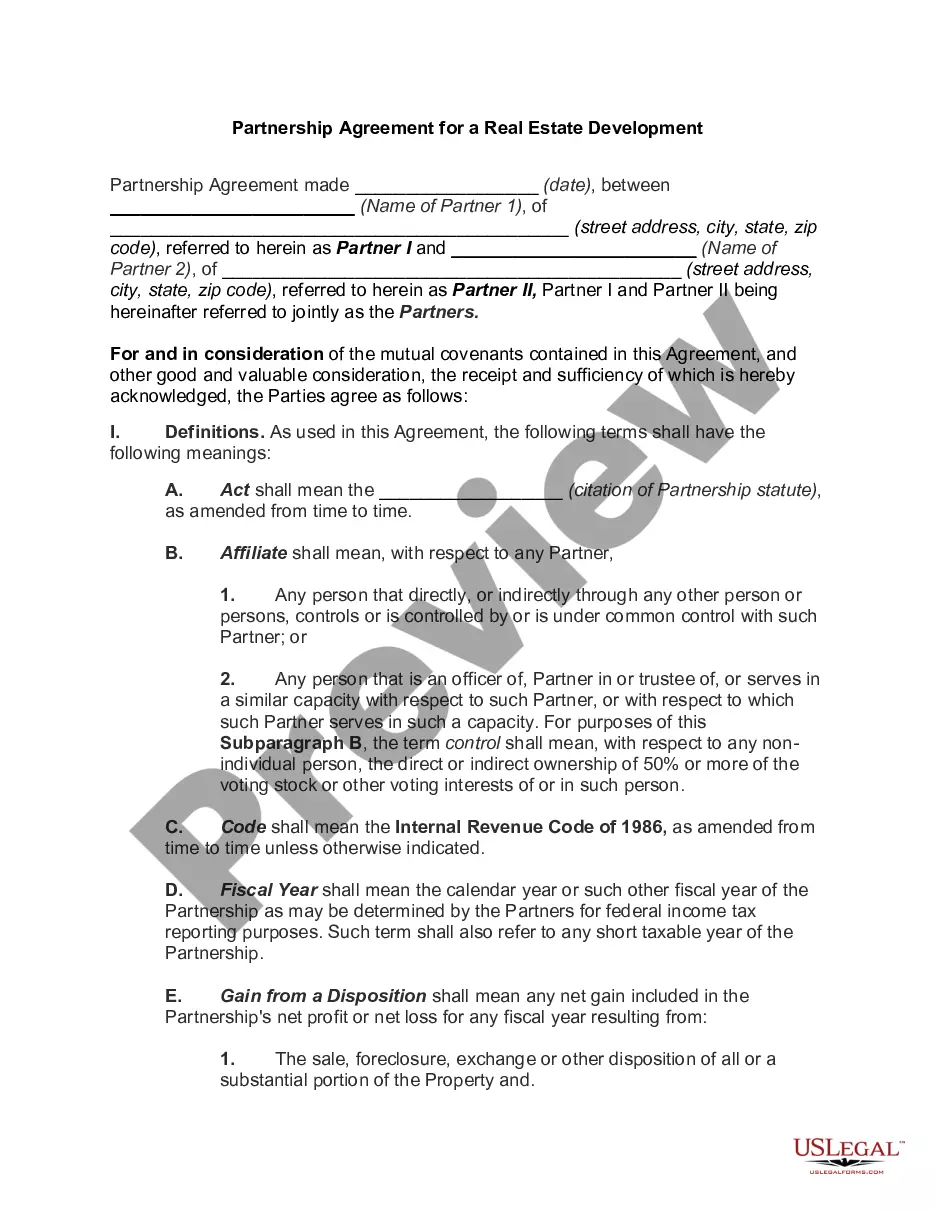
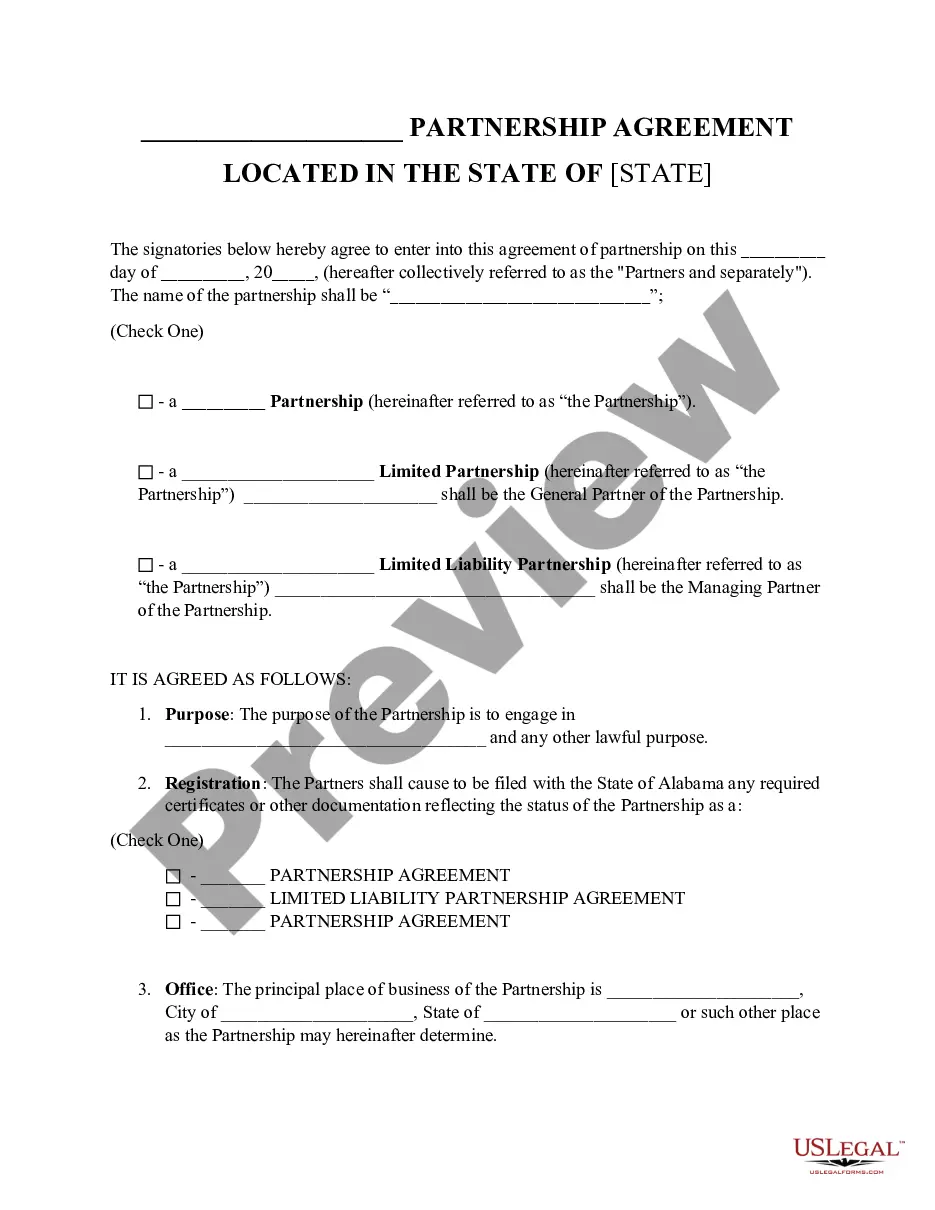
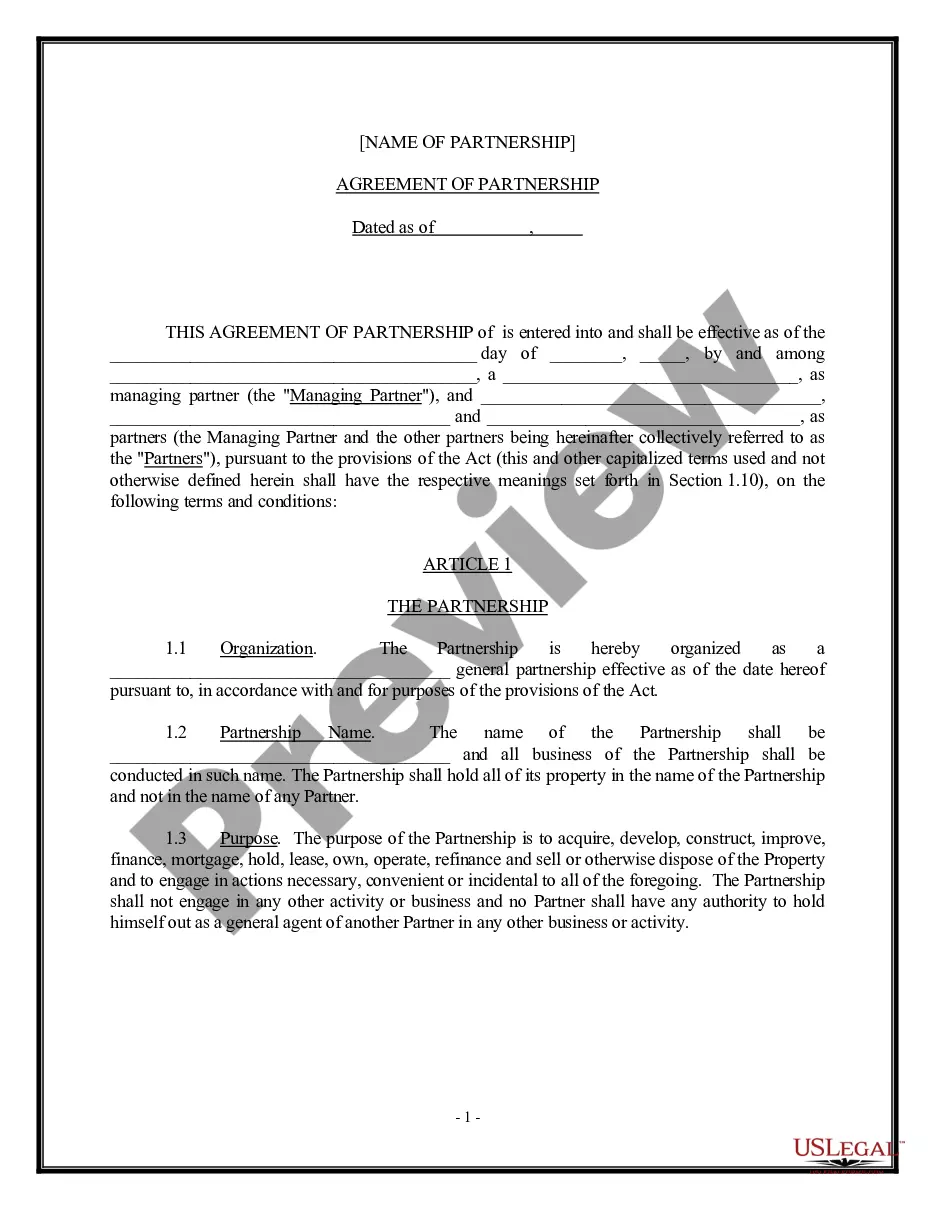
The Partnership Agreement for Real Estate is a legal document that outlines the terms and conditions under which partners co-own and operate a real estate business. This agreement details each partner's ownership stake, contributions, and responsibilities within the partnership. Unlike other partnership agreements, this specific form is tailored for real estate ventures, ensuring that partners have a clear understanding of their roles and share of profits and losses.
Key components of this form
- Identification of partners and the partnership name.
- Percentage of ownership for each partner and description of contributions.
- Management structure and decision-making processes.
- Terms for sharing profits and losses.
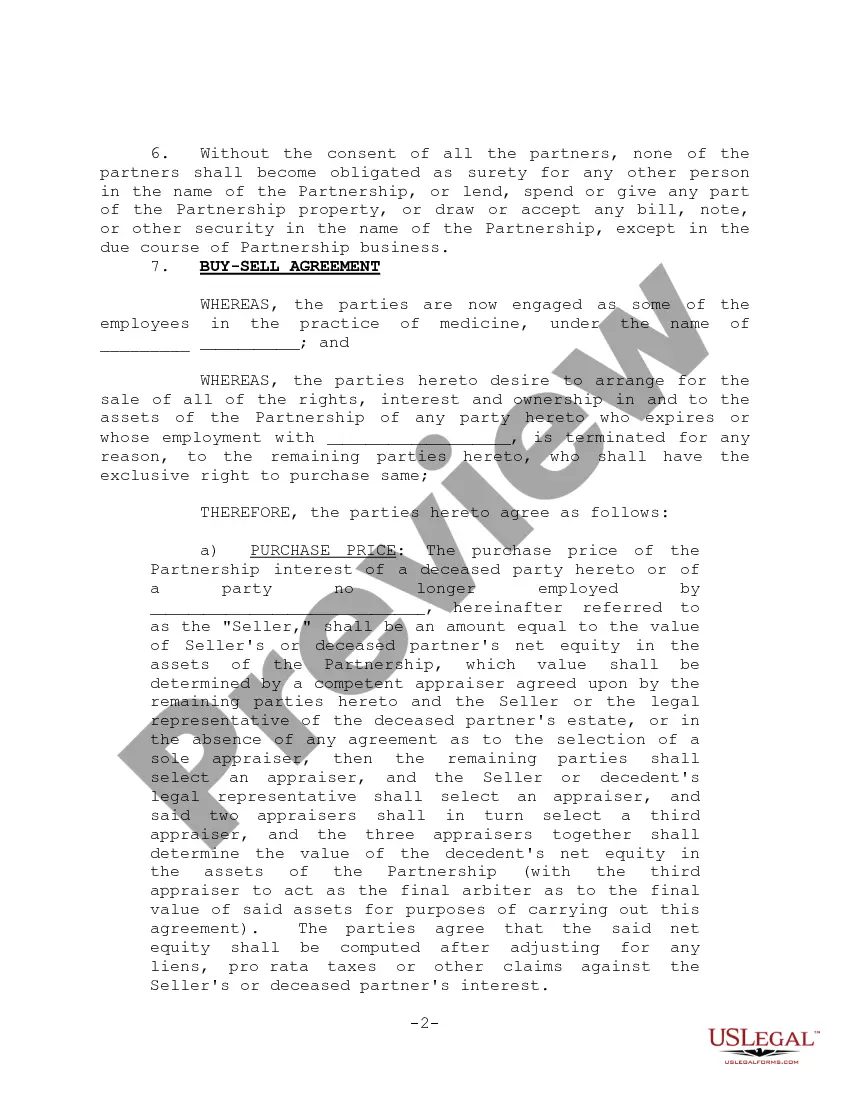
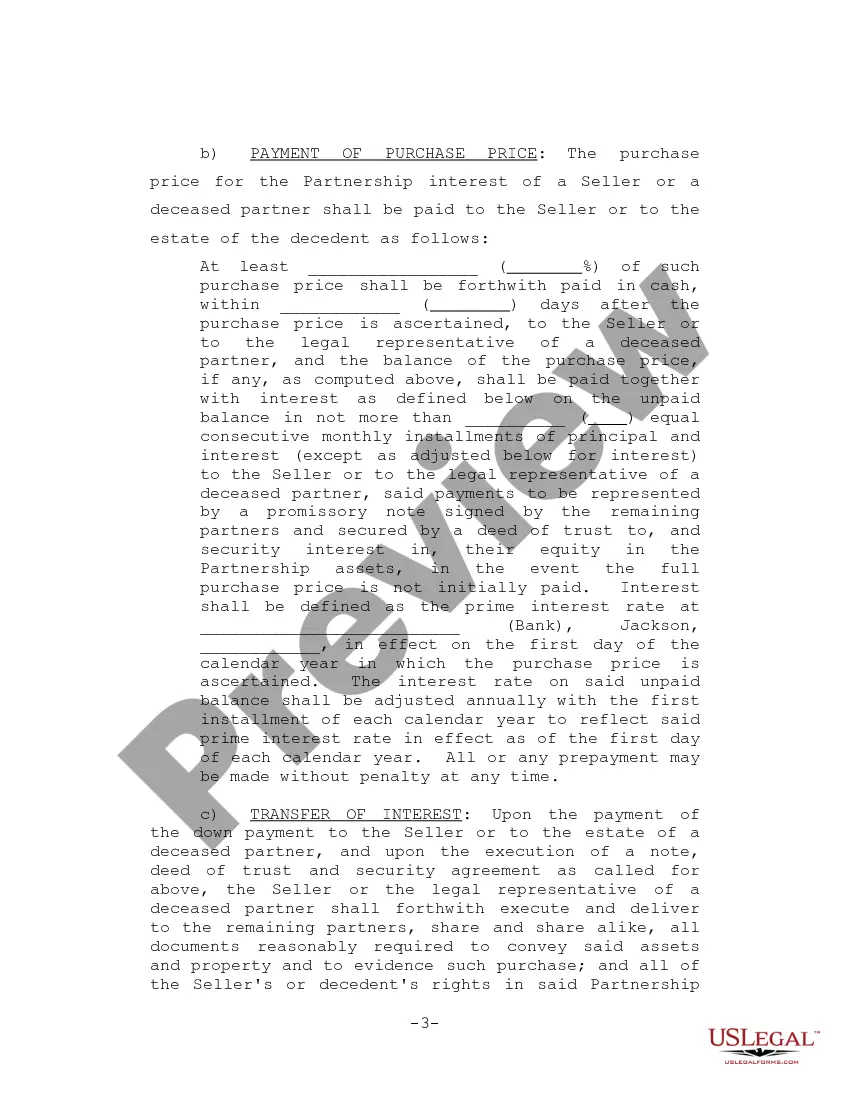
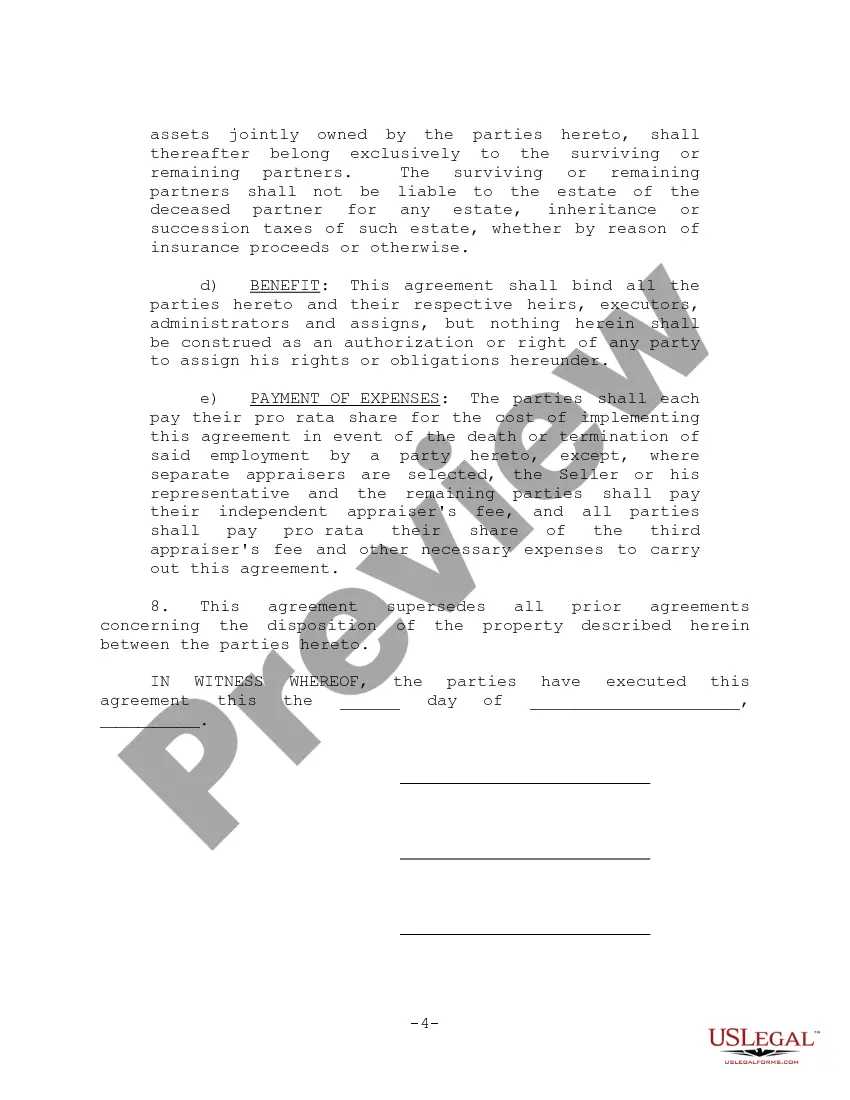
- Buy-sell agreement provision for transferring ownership interests.
- Liability and dissolution terms.

When to use this document
This form should be used when individuals want to enter into a partnership for the purpose of investing in and managing real estate. It is beneficial in scenarios such as buying, developing, or leasing properties, where multiple parties will contribute financial resources, expertise, or other assets. This agreement helps minimize disputes by clearly defining the roles and expectations of each partner.
Intended users of this form
- Individuals seeking to create a real estate investment partnership.
- Real estate professionals collaborating on joint ventures.
- Anyone planning to co-manage real estate properties with others.
- Investors looking to formalize terms with partners in property-related projects.
Instructions for completing this form
- Identify all partners involved in the agreement and their contributions.
- Specify the partnership name and ownership percentages.
- Detail the assets included in the partnership, particularly the real estate involved.
- Outline the management structure and the decision-making process.
- Include stipulations for profit and loss sharing, as well as buy-sell conditions.
- Ensure all partners sign and date the agreement to make it legally binding.
Notarization requirements for this form
This form does not typically require notarization unless specified by local law. However, having the agreement notarized can add an extra layer of legality and may be beneficial in certain transactions.
Get your form ready online
Our built-in tools help you complete, sign, share, and store your documents in one place.
Make edits, fill in missing information, and update formatting in US Legal Forms—just like you would in MS Word.
Download a copy, print it, send it by email, or mail it via USPS—whatever works best for your next step.
Sign and collect signatures with our SignNow integration. Send to multiple recipients, set reminders, and more. Go Premium to unlock E-Sign.
If this form requires notarization, complete it online through a secure video call—no need to meet a notary in person or wait for an appointment.
We protect your documents and personal data by following strict security and privacy standards.

Make edits, fill in missing information, and update formatting in US Legal Forms—just like you would in MS Word.

Download a copy, print it, send it by email, or mail it via USPS—whatever works best for your next step.

Sign and collect signatures with our SignNow integration. Send to multiple recipients, set reminders, and more. Go Premium to unlock E-Sign.

If this form requires notarization, complete it online through a secure video call—no need to meet a notary in person or wait for an appointment.

We protect your documents and personal data by following strict security and privacy standards.
Typical mistakes to avoid
- Failing to clearly define each partner's role and contributions.
- Not specifying terms for profit and loss sharing.
- Leaving out dispute resolution processes.
- Neglecting to include a buy-sell agreement for partner exits.
- Omitting signatures from all partners, making the agreement invalid.
Advantages of online completion
- Quick access to a professionally drafted legal document tailored for real estate partnerships.
- Convenience of downloading and completing the form at your own pace.
- Eliminates the need for in-person visits to a legal office, saving time and resources.
- Editable format allows you to customize the agreement to fit your specific needs.
- Secure storage of your legal documents online for easy retrieval and reference.
Looking for another form?
Form popularity
FAQ
Partner puts in the cash required for the down payment and the closing costs; I take out the mortgage and do the work. We split the NET (profit or loss) 50/50. If we sell the property, we split the NET (profit or loss) 50/50. Equity is always split 50/50, including appreciation and any possible refinancing.
Determine if a partnership is right for you. Review your strengths and weaknesses. Find someone who compliments your skills. Evaluate the potential of the partnership. Establish clearly defined roles and expectations. Create the terms of agreement. Keep the process simple.
A real estate partnership is formed by two or more investors who combine their capital and expertise to purchase, develop, or lease property. Also known as a real estate limited partnership (RELP), the partnership agreement can require each investor to be actively involved in the partnership as equal members.
Find the investment property. Put your team together. Raise funds and get financing in place. Oversee property improvements and upgrades. Operate the property. Create solid exit strategies to capitalize on your investment.
General partner (GP) This helps protect the partner's other assets and allows them to participate as a limited partner through another entity or personally. The general partner is given equity for securing the real estate deal and for the work they put into it.
Name of your partnership. Contributions to the partnership and percentage of ownership. Division of profits, losses and draws. Partners' authority. Withdrawal or death of a partner.
A partnership is where two or more individuals contribute their property, skills, money, and labor to create a business. In general, the partnership can own property just like any individual person can.
Determine if a partnership is right for you. Review your strengths and weaknesses. Find someone who compliments your skills. Evaluate the potential of the partnership. Establish clearly defined roles and expectations. Create the terms of agreement. Keep the process simple.
Although each partnership agreement differs based on business objectives, certain terms should be detailed in the document, including percentage of ownership, division of profit and loss, length of the partnership, decision making and resolving disputes, partner authority, and withdrawal or death of a partner.