Partnership Agreement for Development of Real Property
Overview of this form
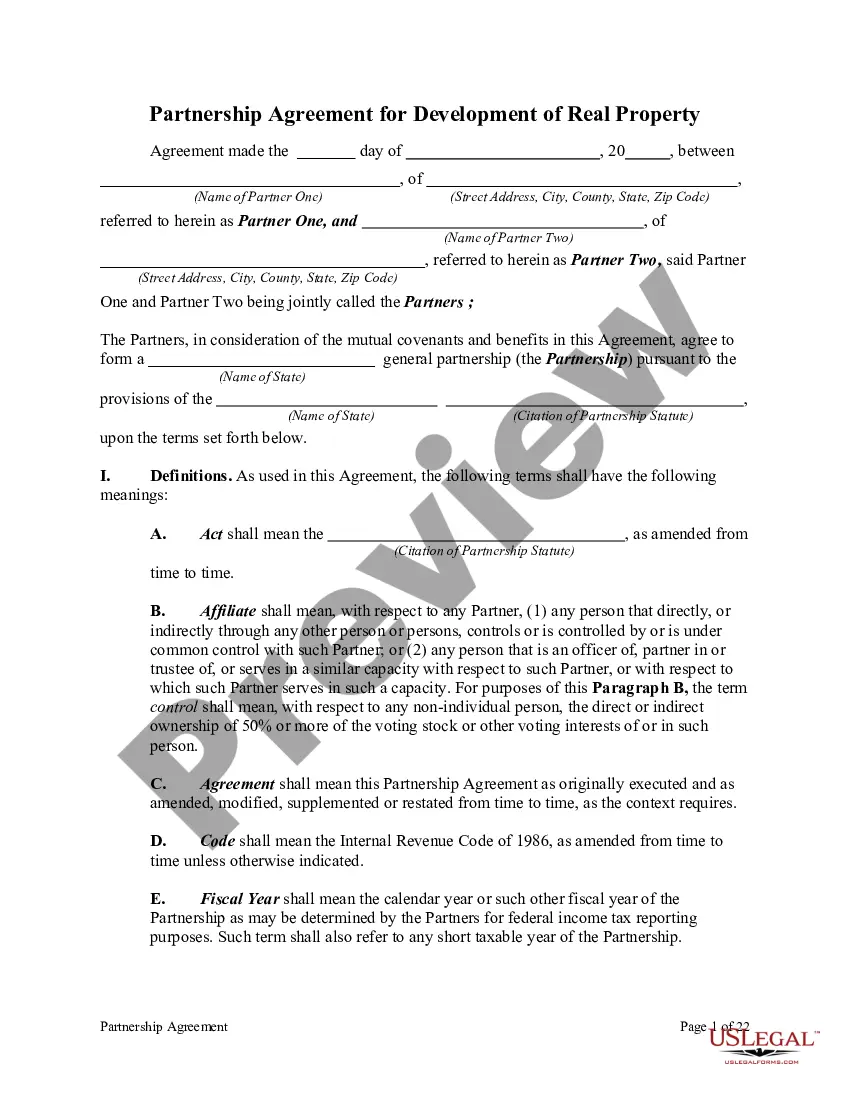
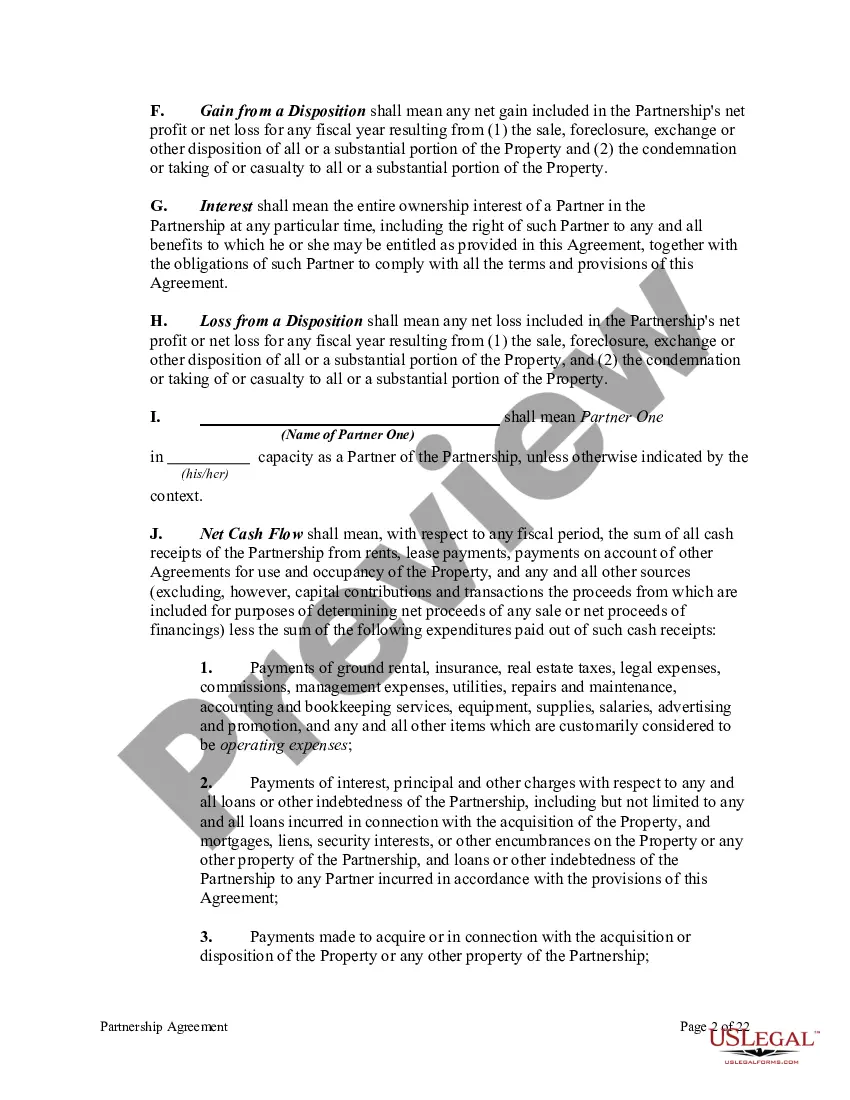
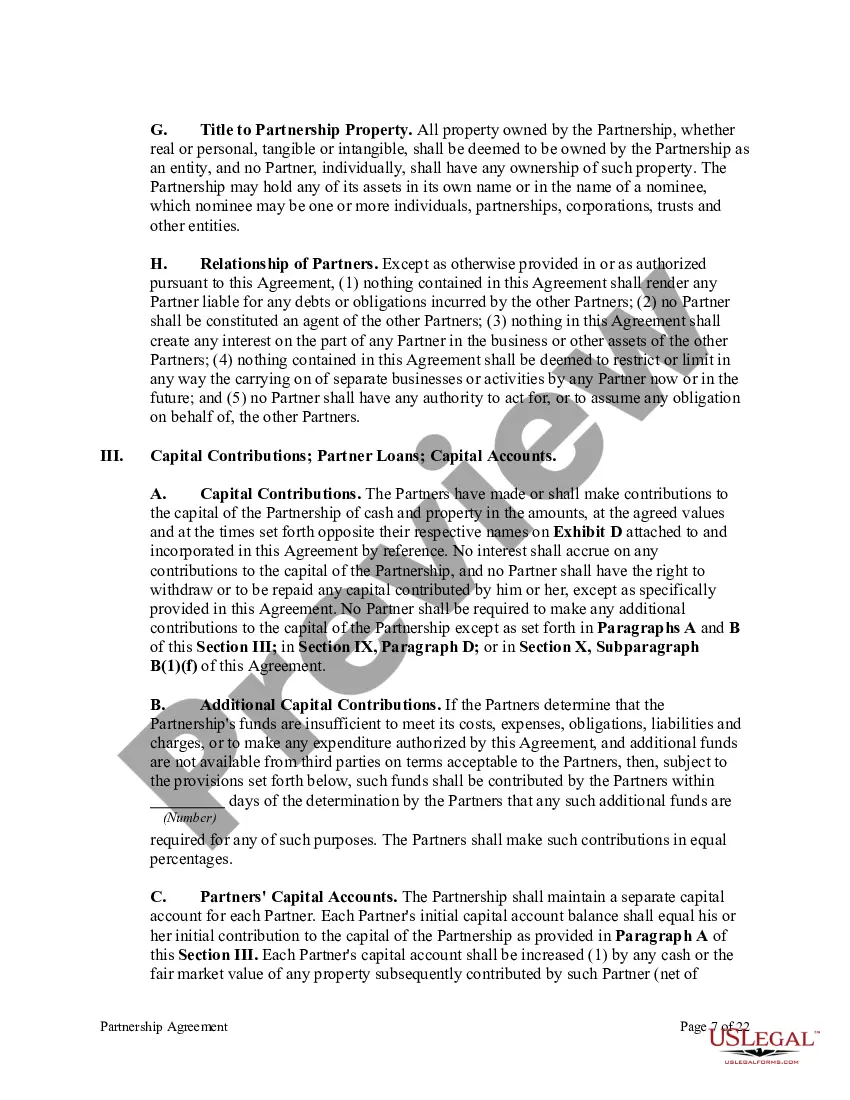
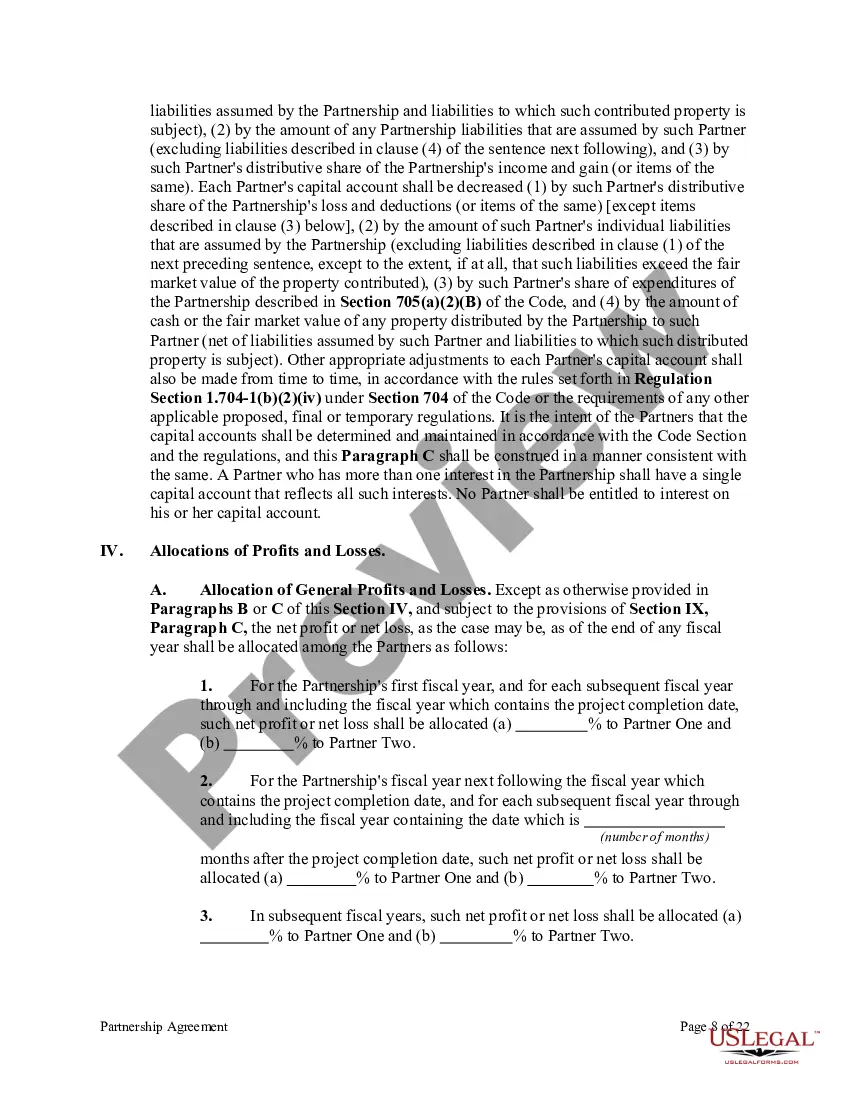
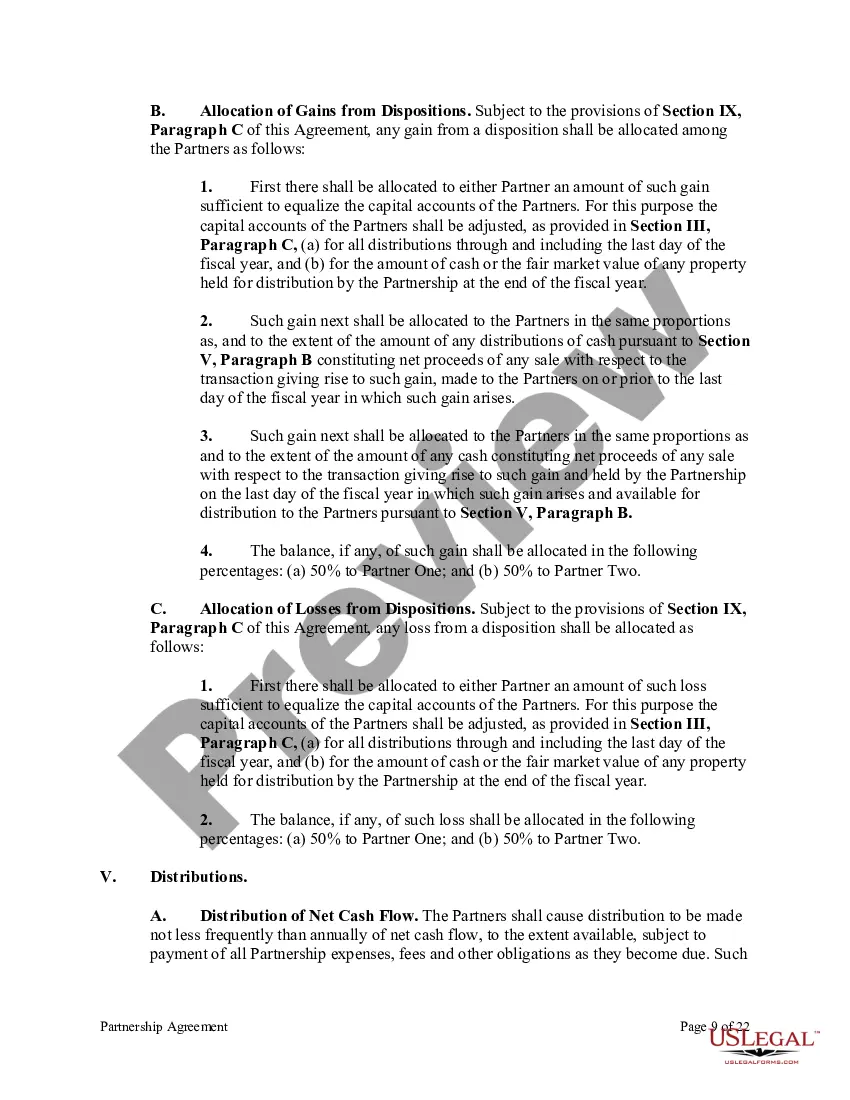
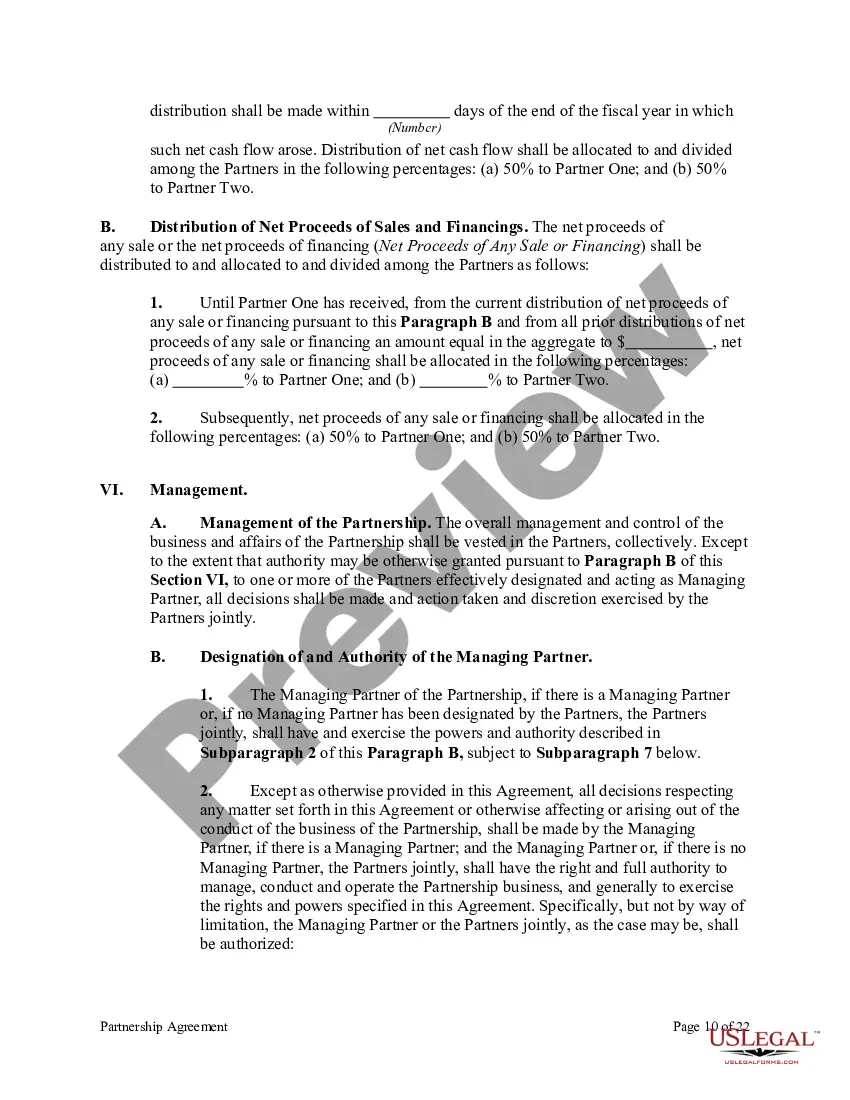
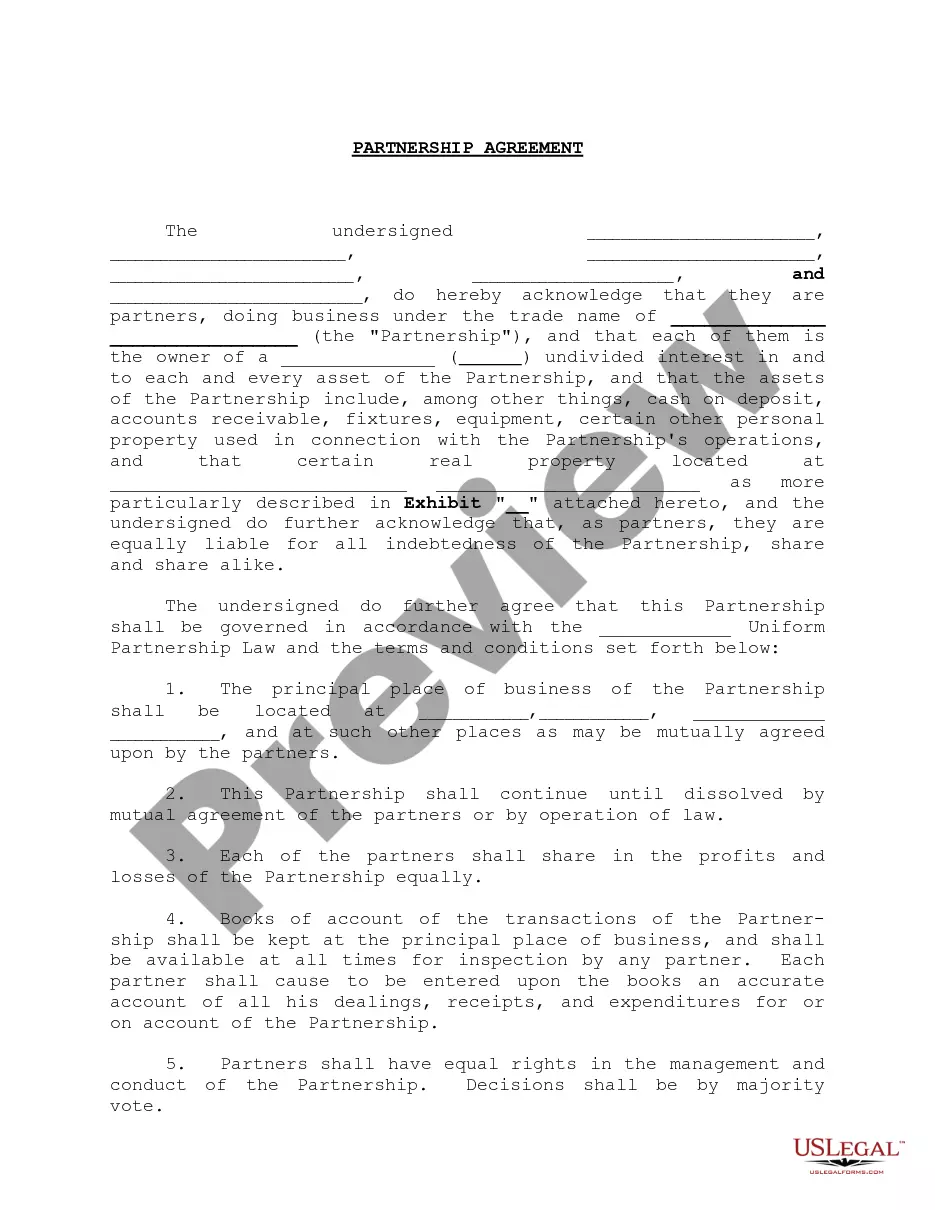
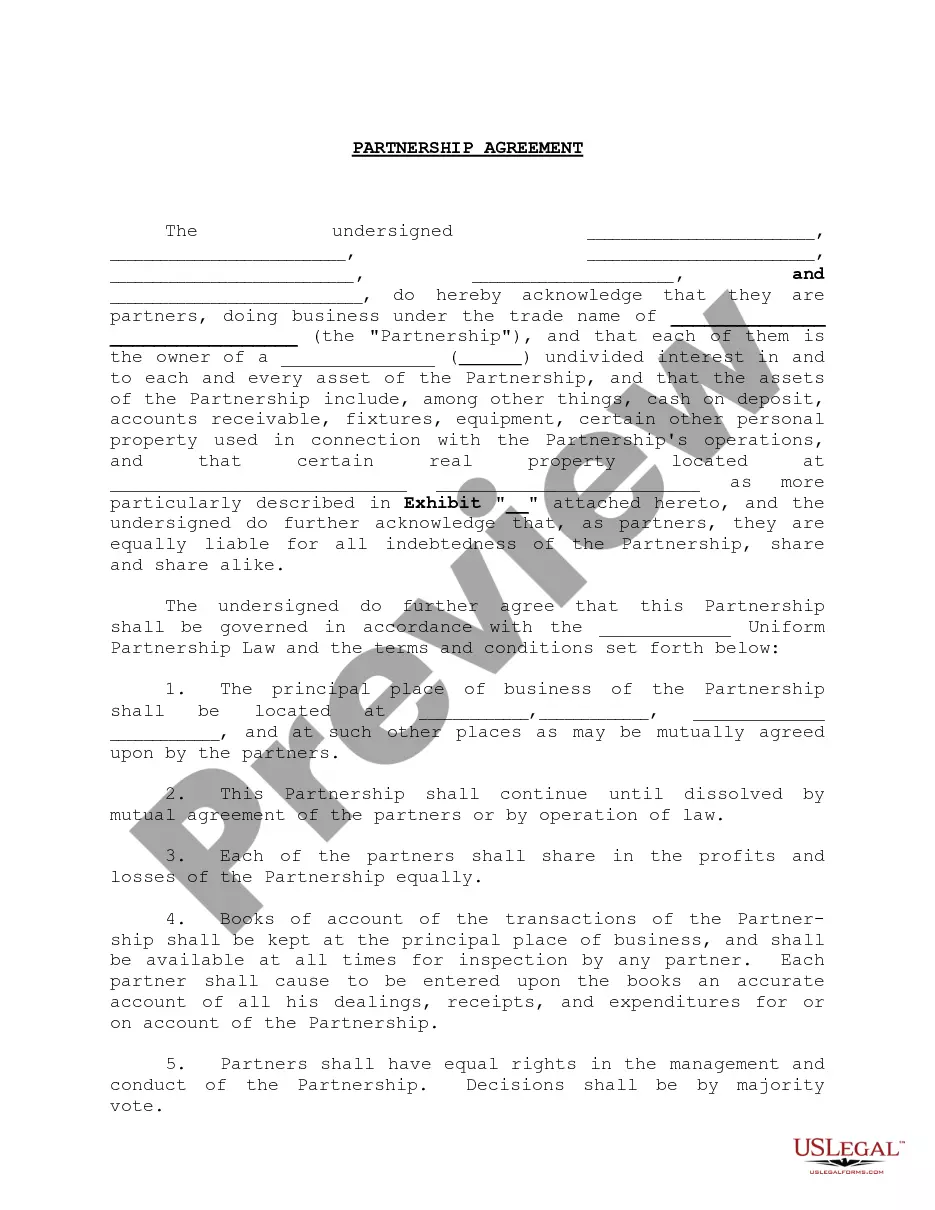
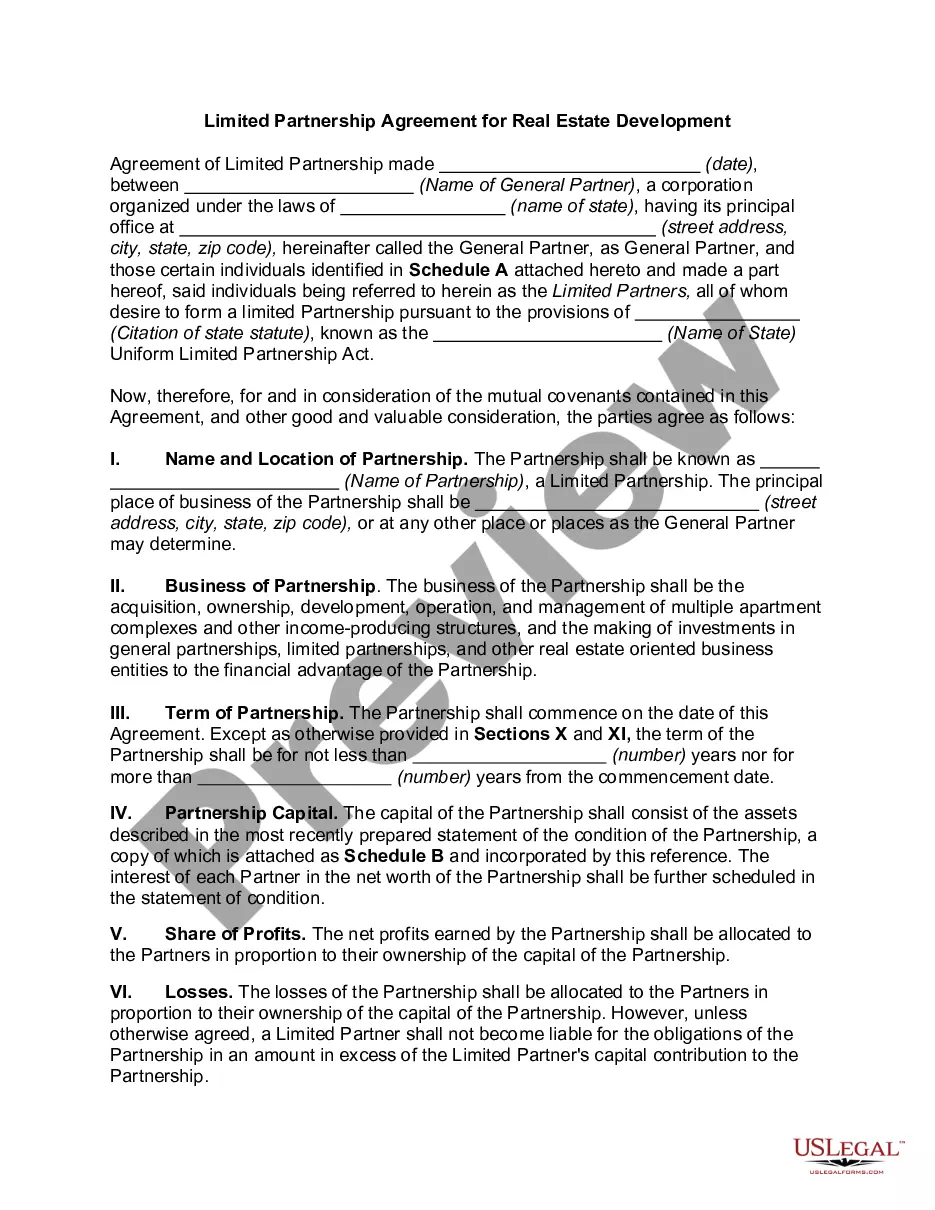
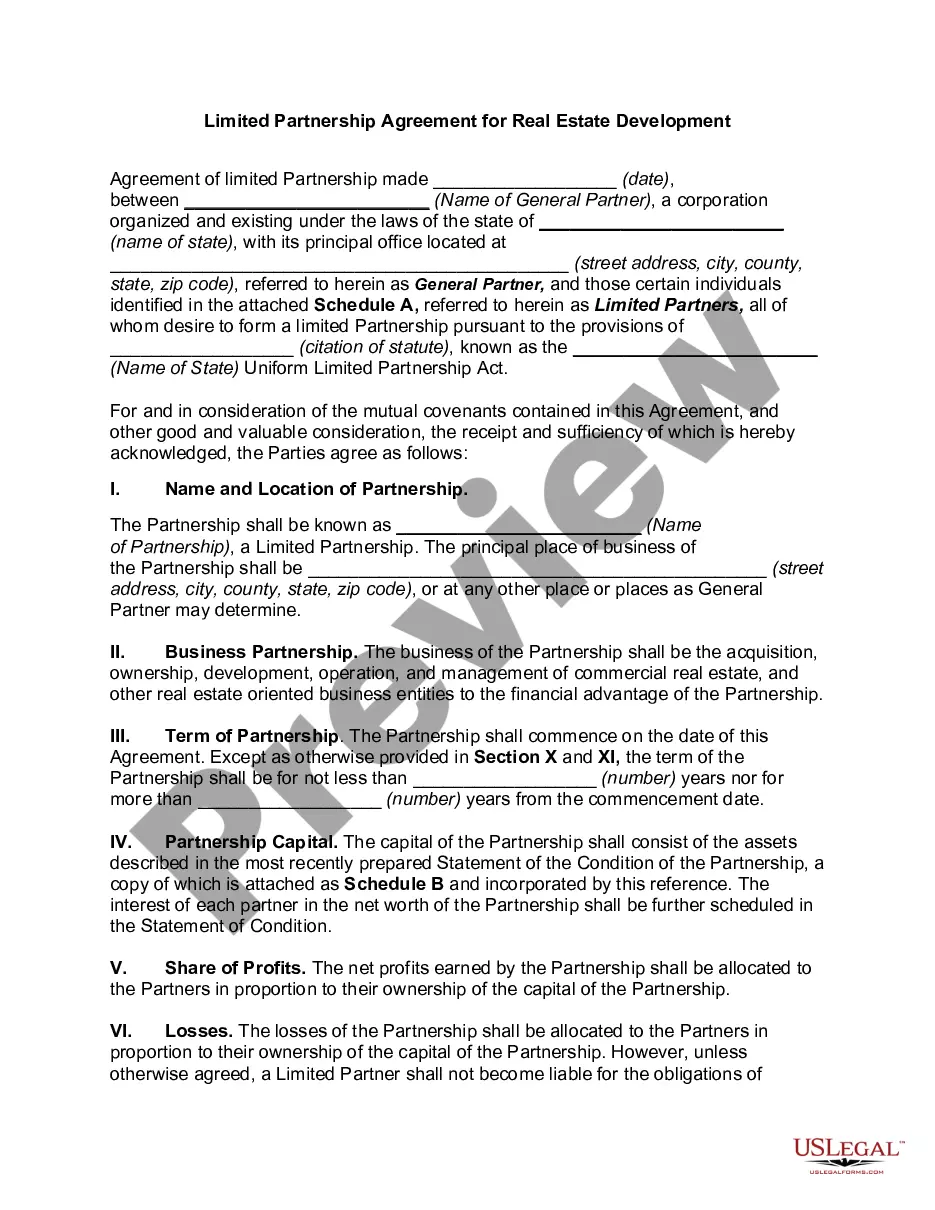
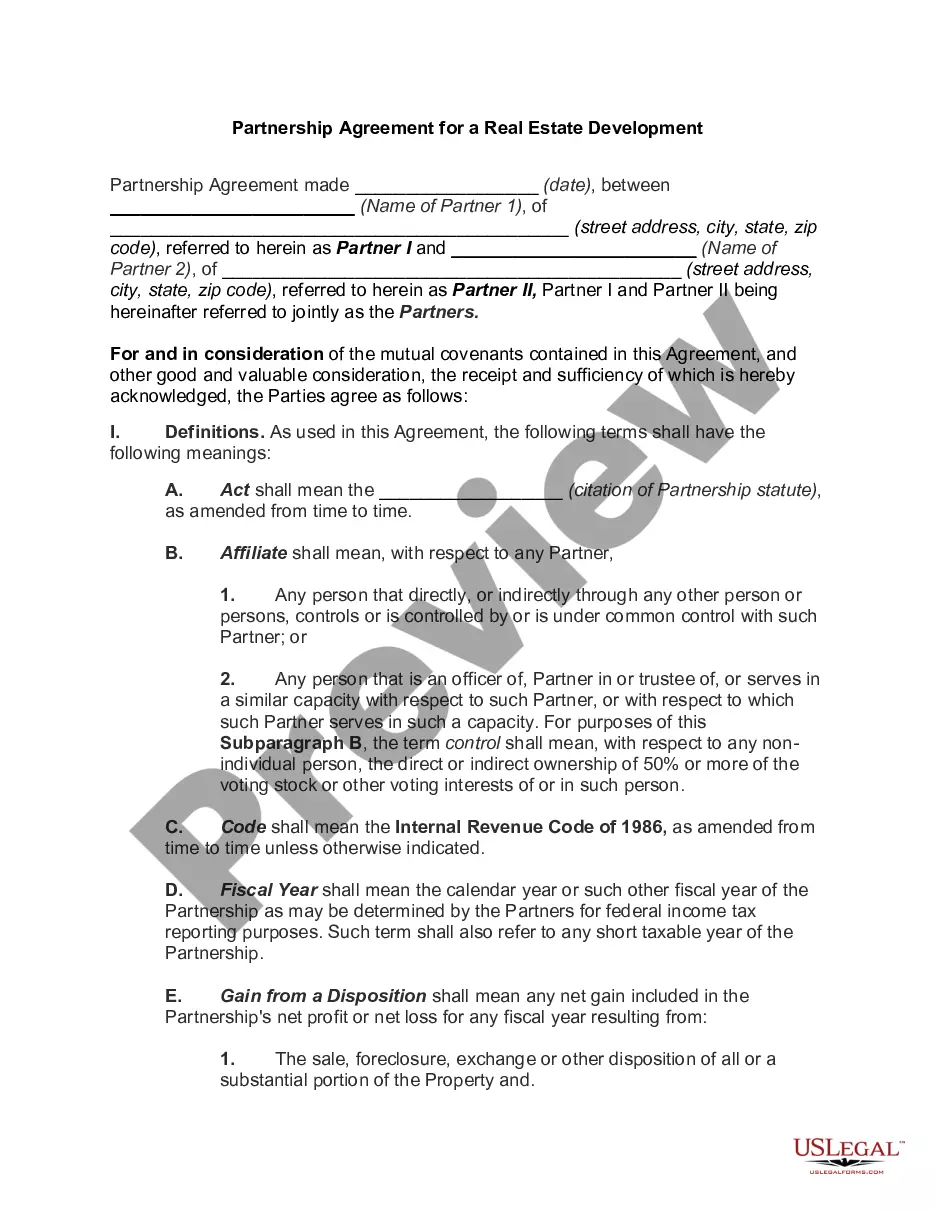
The Partnership Agreement for Development of Real Property is a legal document used by two or more parties who intend to collaborate in the acquisition and development of real estate. This form outlines the responsibilities, rights, and obligations of each partner, providing a structured framework for decision-making and financial management. Unlike simple partnership agreements, this specific form includes clauses related to property disposition, profit-loss allocation, and management authority, ensuring all aspects of the real estate venture are addressed.
Key parts of this document
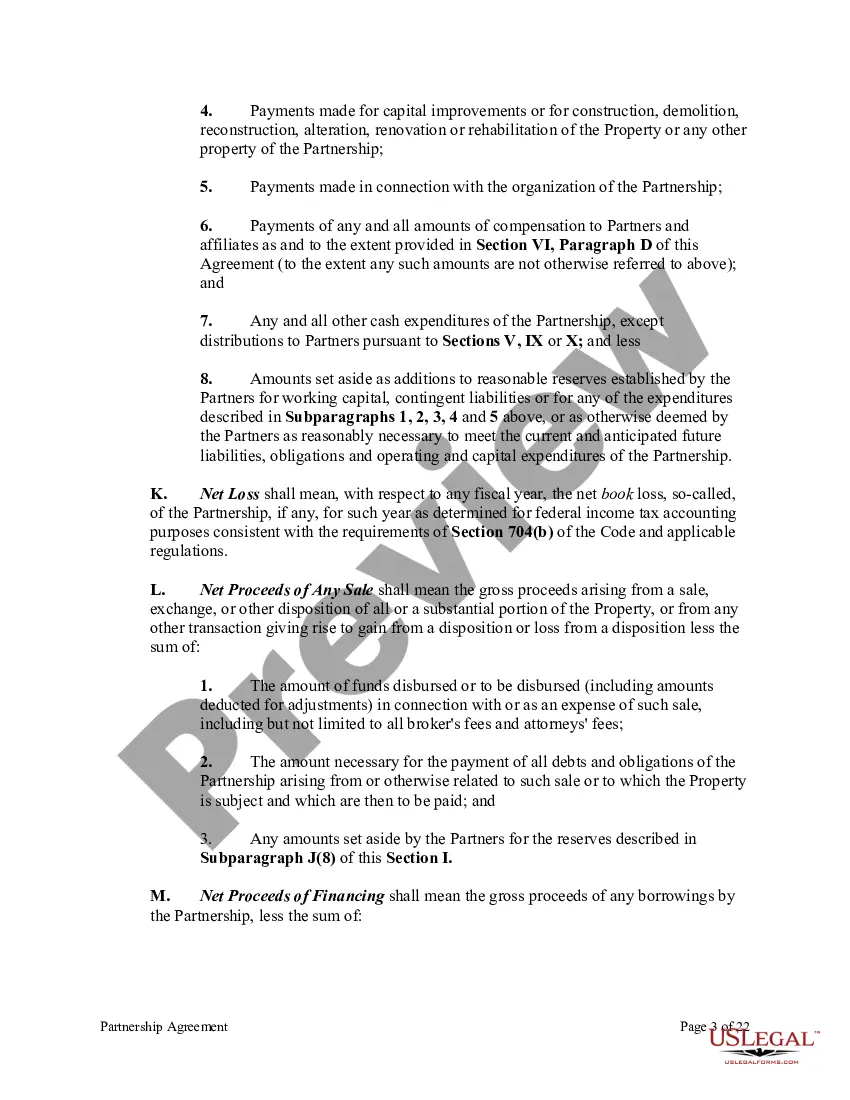
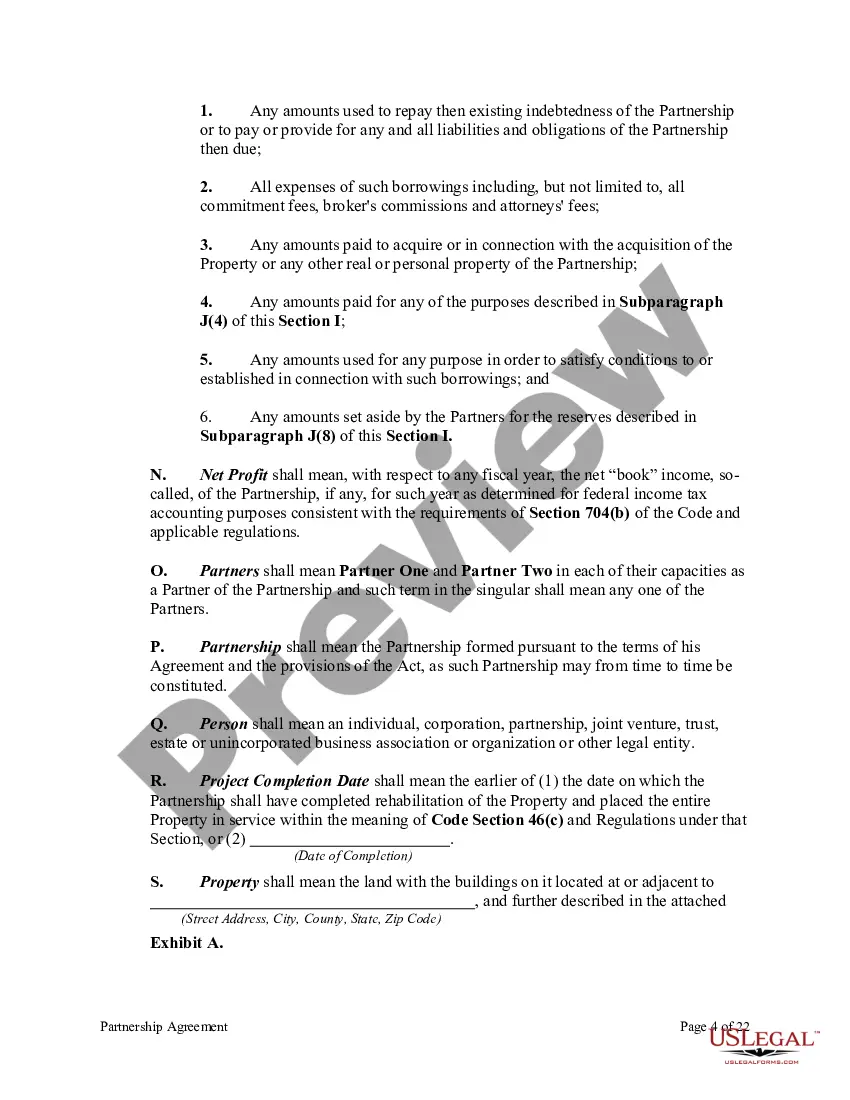
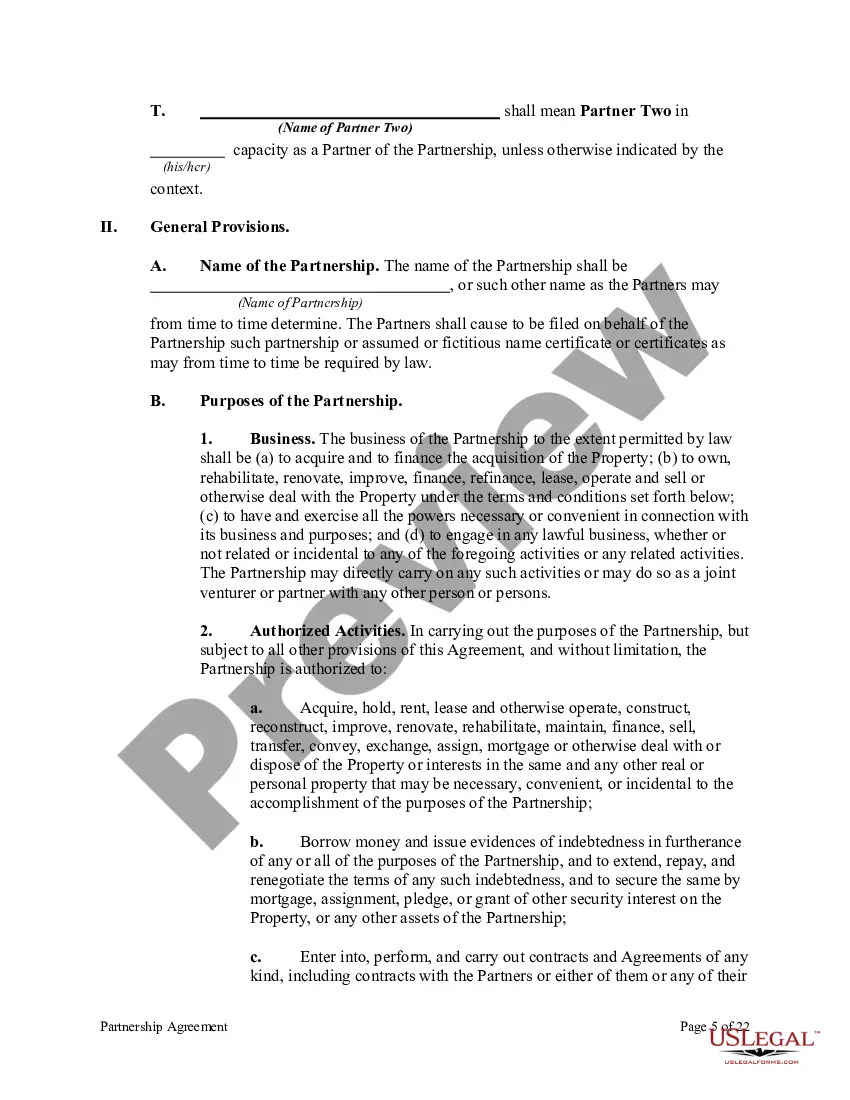
- Definitions of key terms used throughout the agreement, such as "Partnership," "Net Profit," and "Loss from a Disposition."
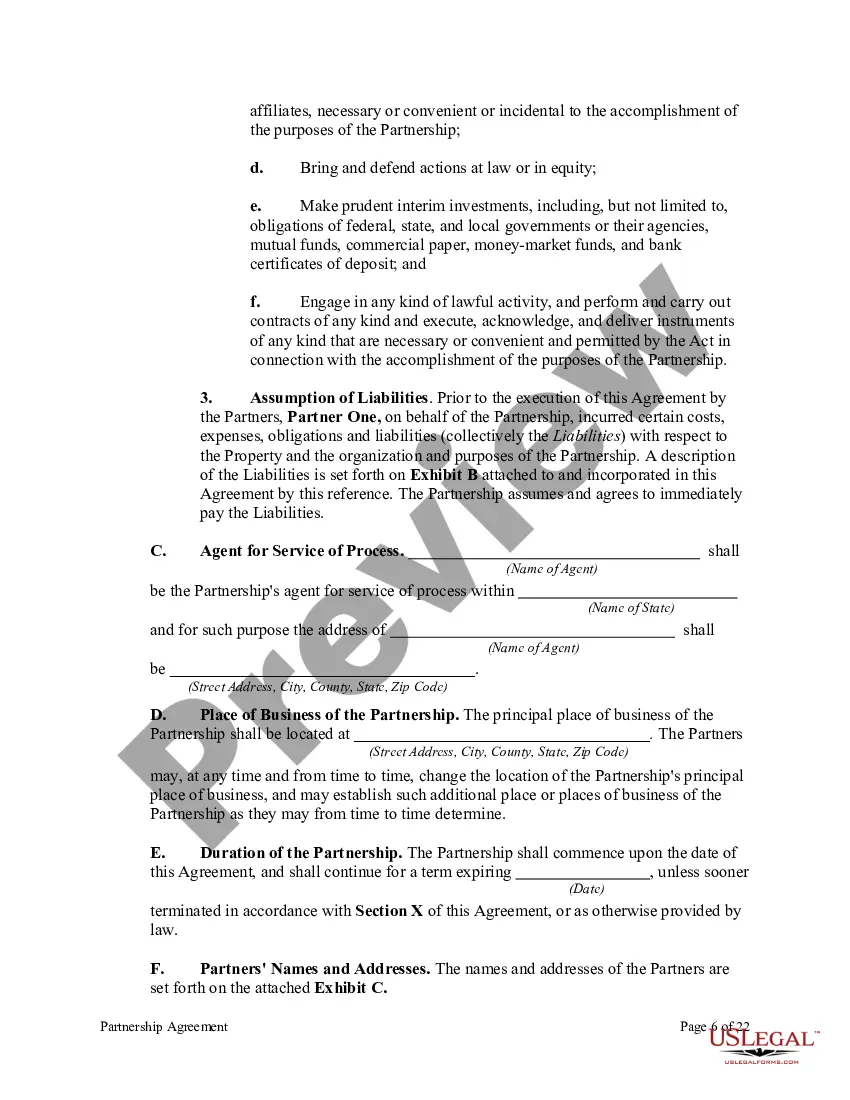
- Purposes and authorized activities of the partnership concerning property acquisition and development.
- Capital contributions from each partner and guidelines for additional funding needs.
- Detailed allocation methods for profits and losses between partners.
- Management structure outlining the roles of partners, including the designation of a managing partner.
- Provisions related to the dissolution of the partnership and how assets will be disposed of.

When to use this document
This form is commonly used when two or more individuals or entities want to form a partnership specifically for real estate development projects. It is suitable when partners have agreed on shared financial contributions, responsibilities in managing the property, and the process for making significant decisions related to the propertyâs development and management. Utilizing this agreement helps delineate expectations and responsibilities, reducing the potential for disputes that may arise during the partnership lifecycle.
Who should use this form
The following individuals or entities should consider using this form:
- Individuals or businesses looking to enter into a partnership for real estate development.
- Real estate investors seeking a clear framework for collaboration with co-investors.
- Property developers who require a detailed agreement laying out the partnershipâs operational guidelines.
- Individuals needing a structured approach to manage shared real estate investments.
How to complete this form
To complete the Partnership Agreement for Development of Real Property, follow these steps:
- Identify the parties involved and ensure their information is accurately represented.
- Specify the property that will be developed, including any relevant details such as the address and characteristics.
- Detail the capital contributions each partner will make to the partnership.
- Outline the management structure and decision-making authority of each partner, including any designated managing partner.
- Include provisions for profit and loss allocation, ensuring all partners understand their financial interests and obligations.
Is notarization required?
This form does not typically require notarization unless specified by local law. However, it is advisable to check with local authorities or legal counsel to ensure it meets all regional requirements.
Get your form ready online
Our built-in tools help you complete, sign, share, and store your documents in one place.
Make edits, fill in missing information, and update formatting in US Legal Forms—just like you would in MS Word.
Download a copy, print it, send it by email, or mail it via USPS—whatever works best for your next step.
Sign and collect signatures with our SignNow integration. Send to multiple recipients, set reminders, and more. Go Premium to unlock E-Sign.
If this form requires notarization, complete it online through a secure video call—no need to meet a notary in person or wait for an appointment.
We protect your documents and personal data by following strict security and privacy standards.

Make edits, fill in missing information, and update formatting in US Legal Forms—just like you would in MS Word.

Download a copy, print it, send it by email, or mail it via USPS—whatever works best for your next step.

Sign and collect signatures with our SignNow integration. Send to multiple recipients, set reminders, and more. Go Premium to unlock E-Sign.

If this form requires notarization, complete it online through a secure video call—no need to meet a notary in person or wait for an appointment.

We protect your documents and personal data by following strict security and privacy standards.
Common mistakes to avoid
- Failing to adequately define the roles and responsibilities of each partner, leading to confusion later.
- Not detailing the processes for decision-making and conflict resolution.
- Omitting important provisions related to profit and loss sharing.
Benefits of using this form online
- This form is easily downloadable, allowing for immediate use without the need for legal consultation.
- The template can be customized to meet the specific needs of the partners involved.
- Using this form online is convenient, secure, and ensures compliance with necessary legal standards.
- The agreement provides a legal framework for the partnership, ensuring enforceability in court.
- It clarifies the legal obligations and rights of each partner, minimizing conflicts.
Summary of main points
- Clearly outlines the purpose and framework for real estate partnerships.
- Helps prevent disputes by defining roles, contributions, and profit-sharing.
- Adaptable for various jurisdictions, making it versatile.
Looking for another form?
Form popularity
FAQ
Forming a PartnershipPartnerships exist between two or more people who want to go into business together. In most states, creating a legally binding partnership requires nothing more than a verbal agreement and a handshake.
Name of the partnership. Contributions to the partnership. Allocation of profits, losses, and draws. Partners' authority. Partnership decision-making. Management duties. Admitting new partners. Withdrawal or death of a partner.
Although each partnership agreement differs based on business objectives, certain terms should be detailed in the document, including percentage of ownership, division of profit and loss, length of the partnership, decision making and resolving disputes, partner authority, and withdrawal or death of a partner.
Like any contractual agreement, partnership agreements do not have to be in writing, as verbal agreements are also legally binding.In a partnership, each person is liable for the debts and actions of the other partners, so the contractual relationship and obligations need to be completely transparent.
Determine if a partnership is right for you. Review your strengths and weaknesses. Find someone who compliments your skills. Evaluate the potential of the partnership. Establish clearly defined roles and expectations. Create the terms of agreement. Keep the process simple.
Name of your partnership. Contributions to the partnership and percentage of ownership. Division of profits, losses and draws. Partners' authority. Withdrawal or death of a partner.
Your Partnership's Name. Partnership Contributions. Allocations profits and losses. Partners' Authority and Decision Making Powers. Management. Departure (withdrawal) or Death. New Partners. Dispute Resolution.
A real estate partnership is formed by two or more investors who combine their capital and expertise to purchase, develop, or lease property. Also known as a real estate limited partnership (RELP), the partnership agreement can require each investor to be actively involved in the partnership as equal members.
Although there's no requirement for a written partnership agreement, often it's a very good idea to have such a document to prevent internal squabbling (about profits, direction of the company, etc.) and give the partnership solid direction. Limited liability partnerships do have a writing requirement.