Medical Consent for Child
What is this form?
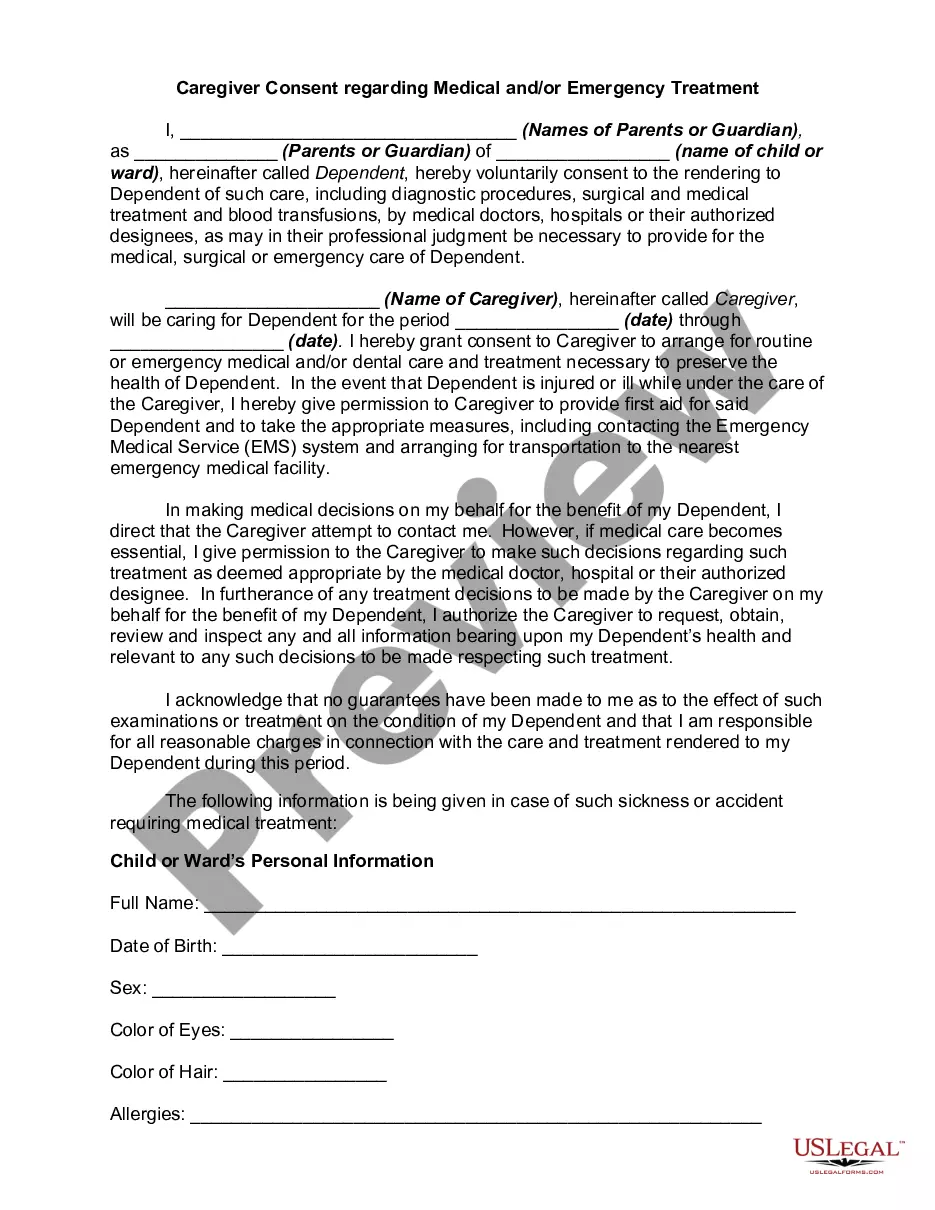
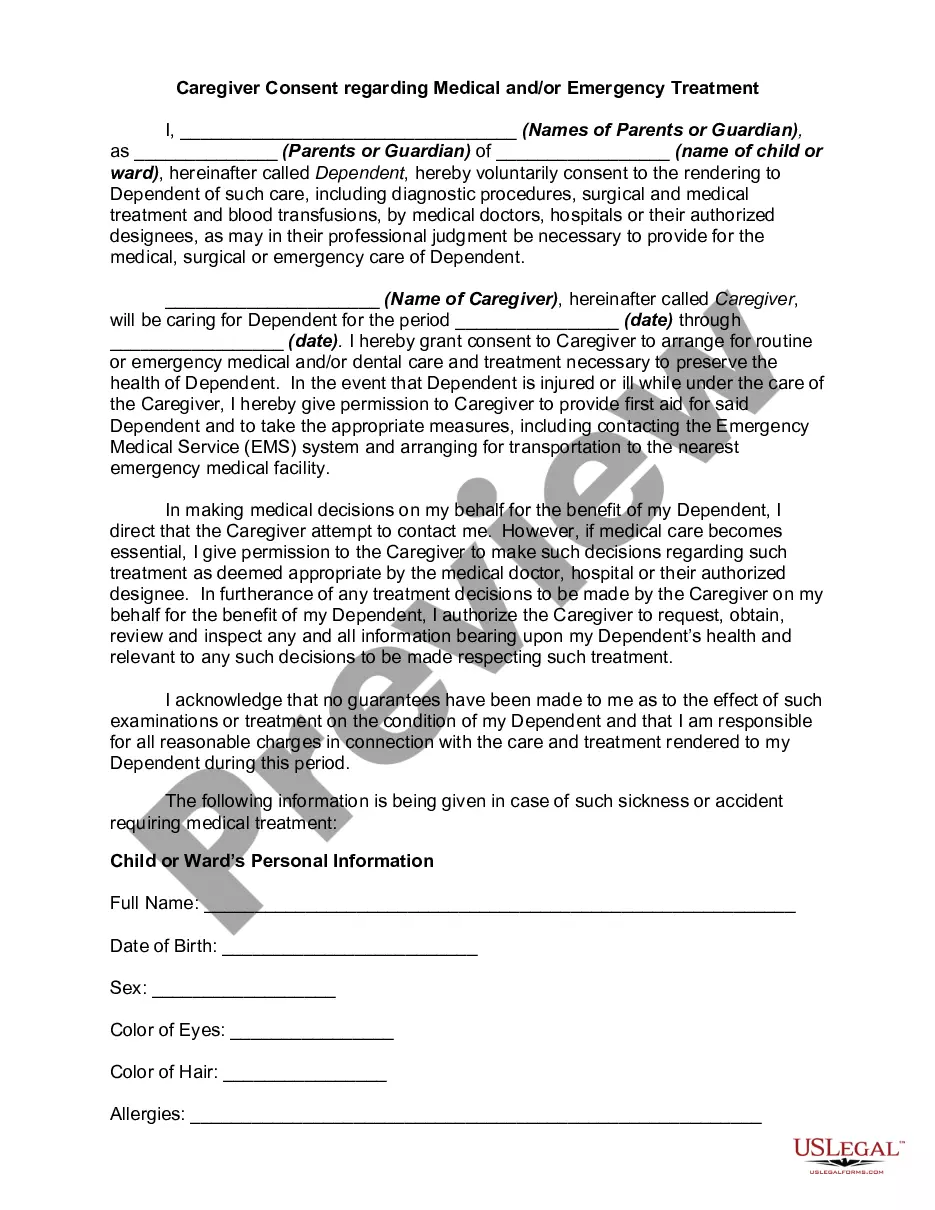
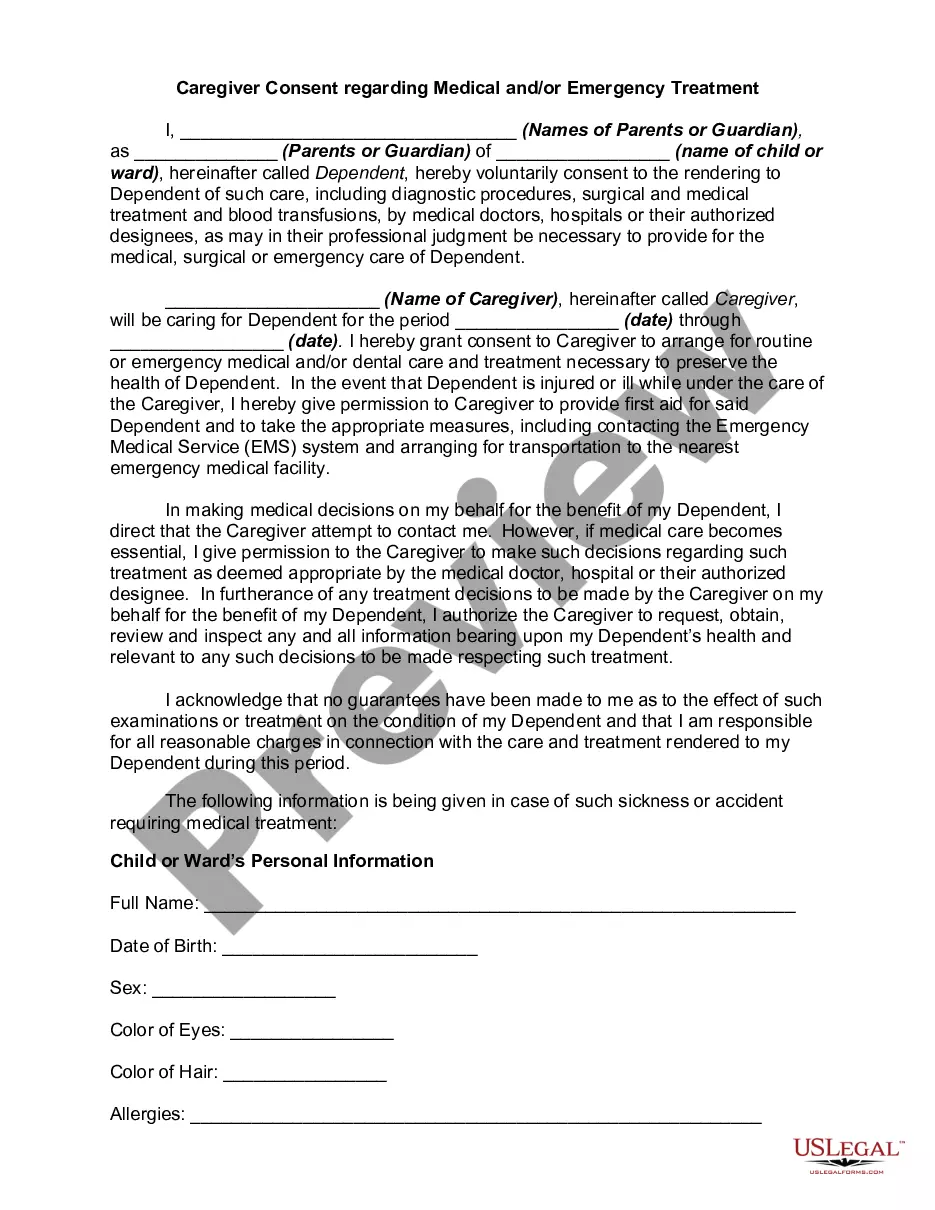
The Medical Consent for Child form is a legal document that grants authority to a caregiver to arrange medical care for a minor in emergencies. It ensures that health decisions can be made quickly when parents or guardians are not present, distinguishing it from other medical consent forms by its specific focus on minors in care settings.
What’s included in this form
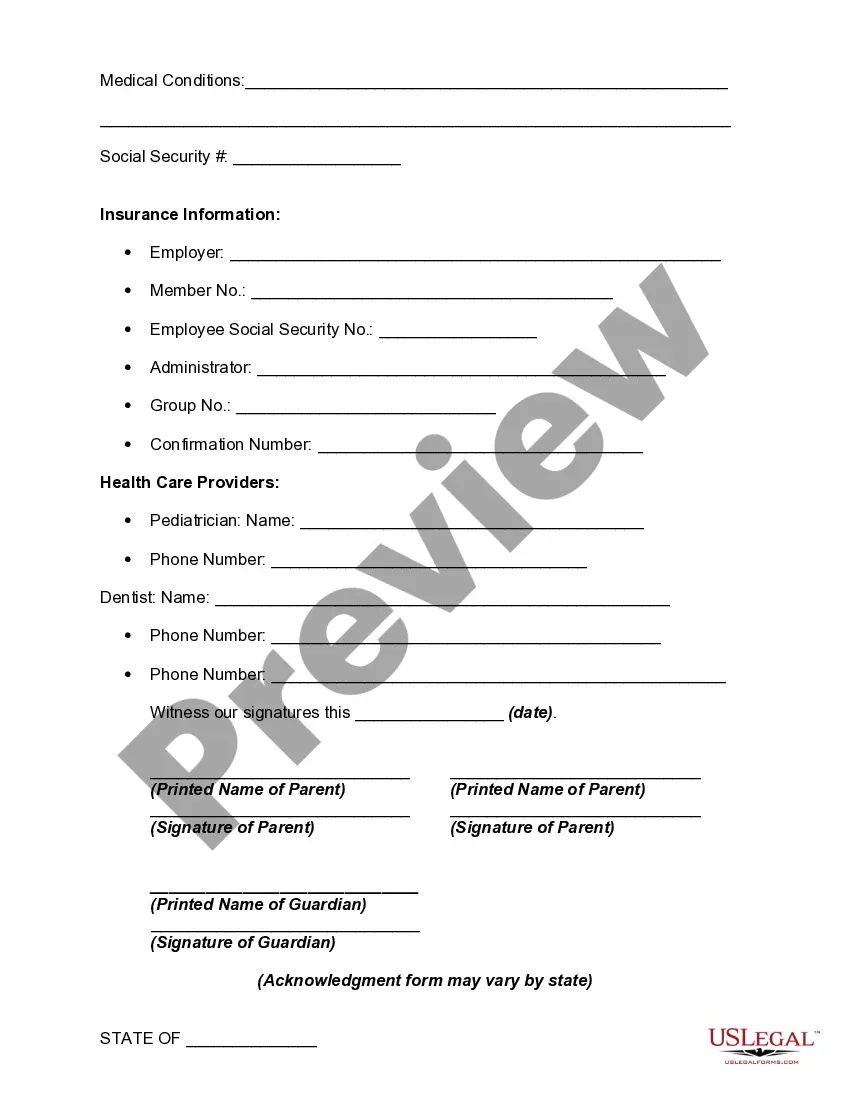
- Full name and relationship of parents or guardians.
- Name of the child or ward receiving care.
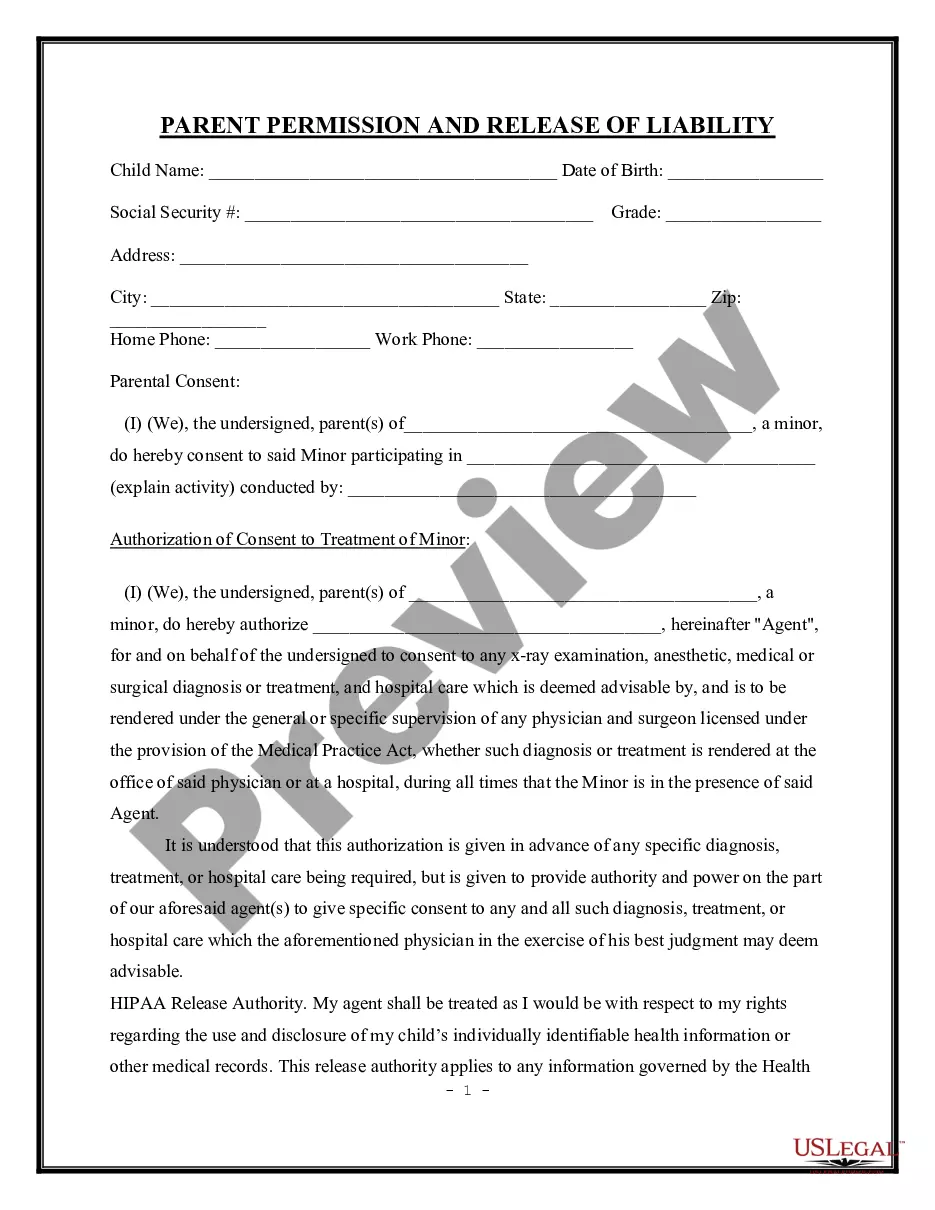
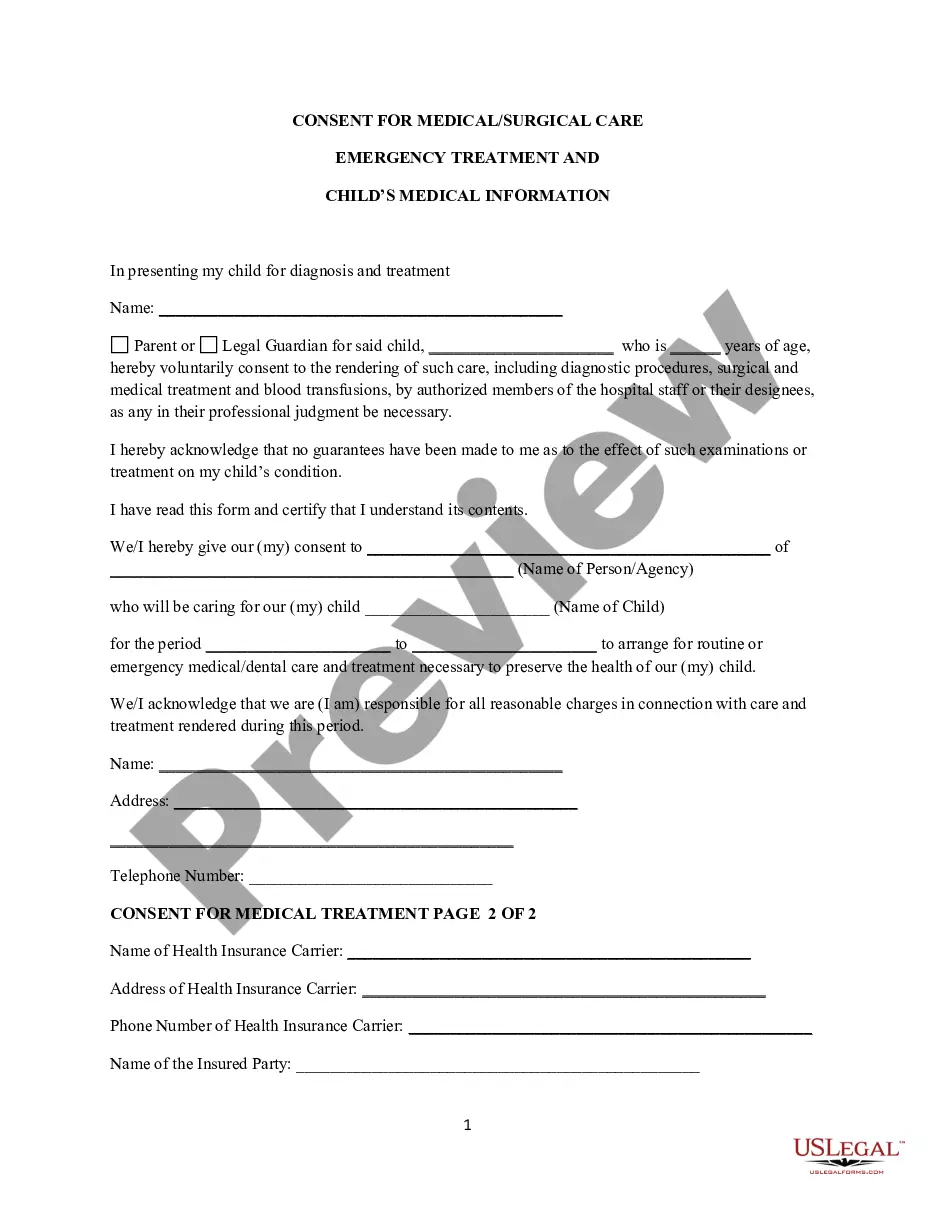
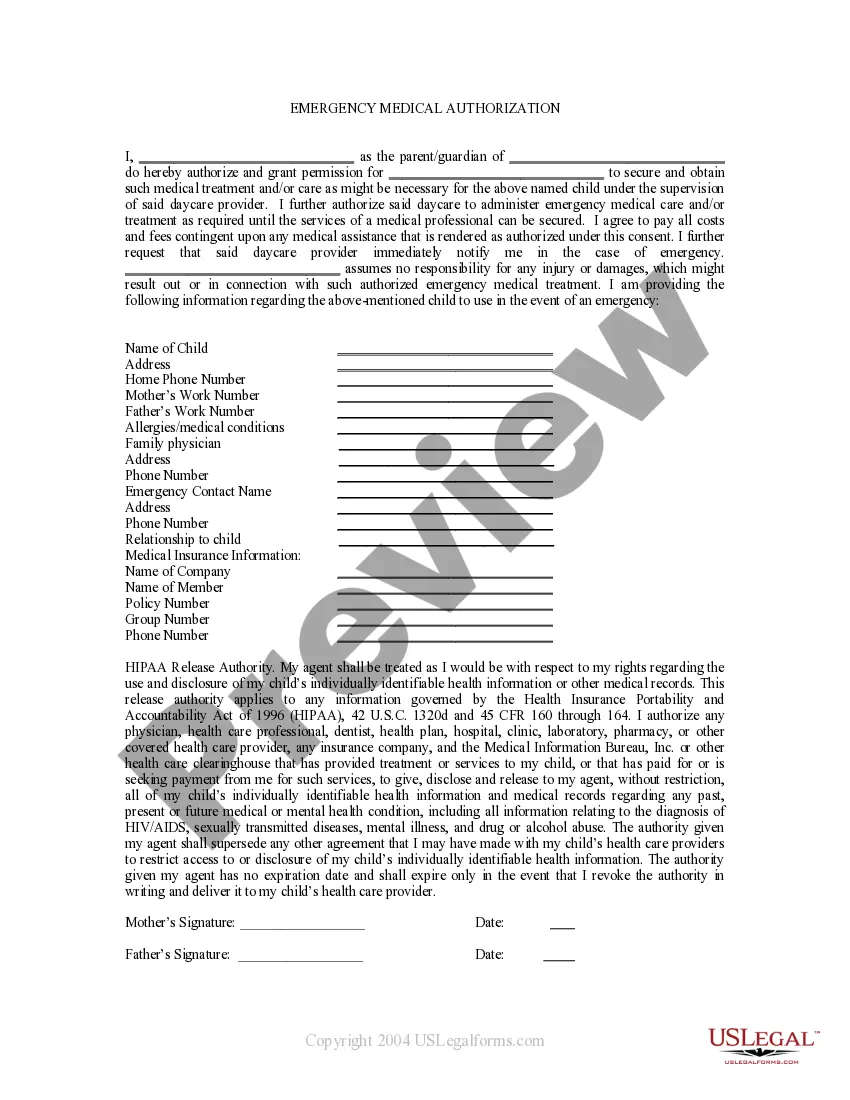
- Authorization for caregivers to provide routine and emergency medical care.
- Detailed child health information, including allergies and medical conditions.
- Caregiver contact information for coordination of medical care.
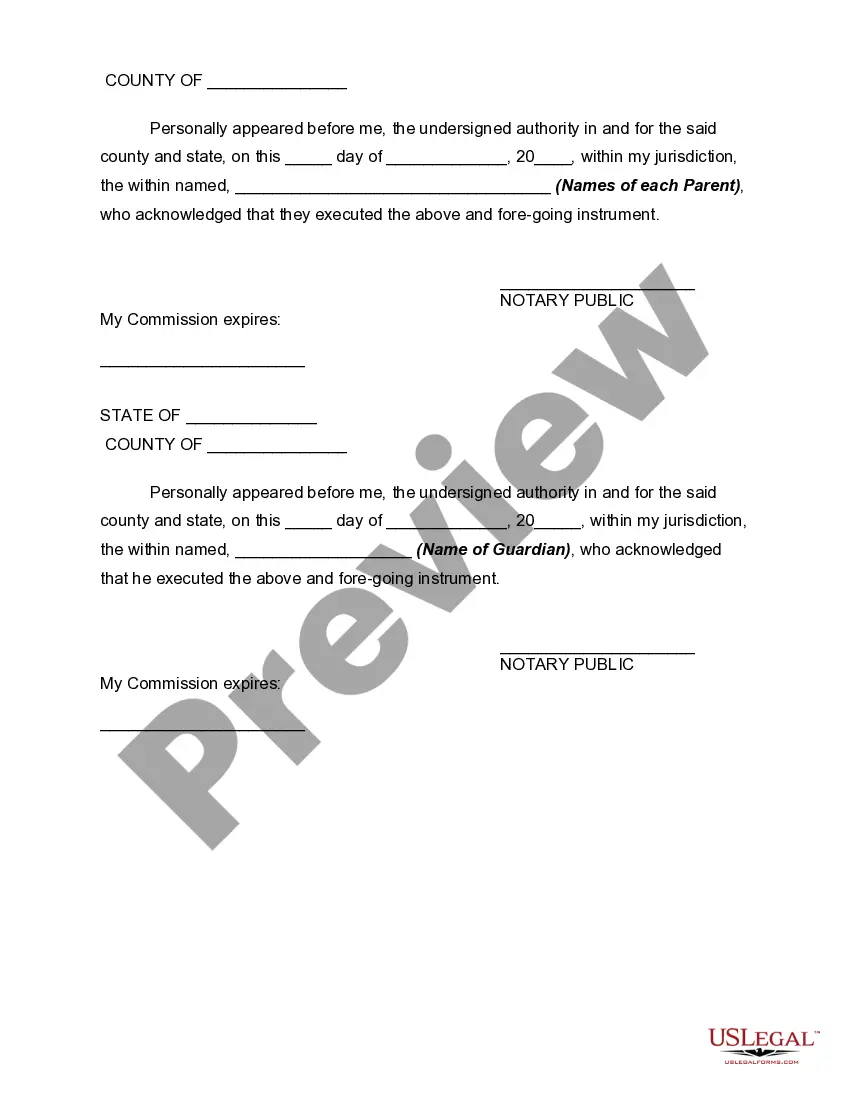
- Signatures of parents or guardians and acknowledgment by a notary public.
Common use cases
This form should be used when a child is under the supervision of a caregiver, such as a babysitter, daycare provider, or summer camp leader. It is essential in situations where a caregiver may need to make medical decisions for the child in the event of an accident or illness, ensuring that timely care can be provided without waiting for parental consent.
Intended users of this form
- Parents or legal guardians of minors.
- Caregivers who look after children temporarily or regularly.
- Child care centers and organizations that provide care for children.
How to prepare this document
- Enter the names of the parents or guardians in the designated field.
- Specify the name of the child or ward who will receive care.
- Provide the caregiver's name and the time period during which the caregiver will look after the child.
- Fill out the child's health information, including allergies and any relevant medical conditions.
- Have both parents or guardians sign and date the form, and if required, complete the notary acknowledgment section.
Notarization guidance
Yes, this form must be notarized to be legally valid. Notarization helps to confirm the authenticity of the signatures and provides an additional layer of verification. US Legal Forms offers integrated online notarization options for your convenience, available twenty-four hours a day, ensuring legal equivalence without the need to travel.
Get your form ready online
Our built-in tools help you complete, sign, share, and store your documents in one place.
Make edits, fill in missing information, and update formatting in US Legal Forms—just like you would in MS Word.
Download a copy, print it, send it by email, or mail it via USPS—whatever works best for your next step.
Sign and collect signatures with our SignNow integration. Send to multiple recipients, set reminders, and more. Go Premium to unlock E-Sign.
If this form requires notarization, complete it online through a secure video call—no need to meet a notary in person or wait for an appointment.
We protect your documents and personal data by following strict security and privacy standards.

Make edits, fill in missing information, and update formatting in US Legal Forms—just like you would in MS Word.

Download a copy, print it, send it by email, or mail it via USPS—whatever works best for your next step.

Sign and collect signatures with our SignNow integration. Send to multiple recipients, set reminders, and more. Go Premium to unlock E-Sign.

If this form requires notarization, complete it online through a secure video call—no need to meet a notary in person or wait for an appointment.

We protect your documents and personal data by following strict security and privacy standards.
Mistakes to watch out for
- Failing to provide complete health information about the child.
- Not having both parents or guardians sign the form.
- Ignoring local laws that may have specific requirements for medical consent for minors.
Benefits of using this form online
- Convenience of downloading and printing the form from home.
- Easy to edit and customize based on specific needs and circumstances.
- Access to templates created by licensed attorneys to ensure legal compliance.
Looking for another form?

Form popularity
FAQ
Since the 1990s, California law has afforded minors the right to consent to certain types of medical care, such as the diagnosis and treatment of sexually transmitted diseases, without the consent of their parent or guardian.
MINOR MUST BE EMANCIPATED (GENERALLY 14 YEARS OF AGE OR OLDER) LAW/DETAILS MAY/MUST THE HEALTH CARE PROVIDER INFORM A PARENT ABOUT THIS CARE OR DISCLOSE RELATED MEDICAL INFORMATION TO THEM? An emancipated minor may consent to medical, dental and psychiatric care.
Parents have the responsibility and authority to make medical decisions on behalf of their children. This includes the right to refuse or discontinue treatments, even those that may be life-sustaining. However, parental decision-making should be guided by the best interests of the child.
The consent document must be signed and dated by the patient (or the patient's legal guardian or representative). Many consent forms also require a physician signature. Consent forms should include statements to be signed by the patient and the physician.
A child younger than 14 may be competent to consent to treatment . Conversely, a child aged 16 or over may lack competence . Health practitioners need to make an assessment of competency to consent for all young people aged under 18 years (or 16 years in South Australia) .
A care provider may perform a routine test or treatment on a minor who is over the age of 14 without parental consent and without accompaniment, on condition that the minor him/herself gives informed consent for the medical procedure.
Although most adolescent patients younger than 18 years cannot legally provide informed consent, they can and should provide their assent for decisions that affect their health, life, and death.
Informed consent can only be obtained from an adult patient who is mentally competent to do so except under some circumstances and situations.