Promissory Note - Payable on Demand
What is this form?
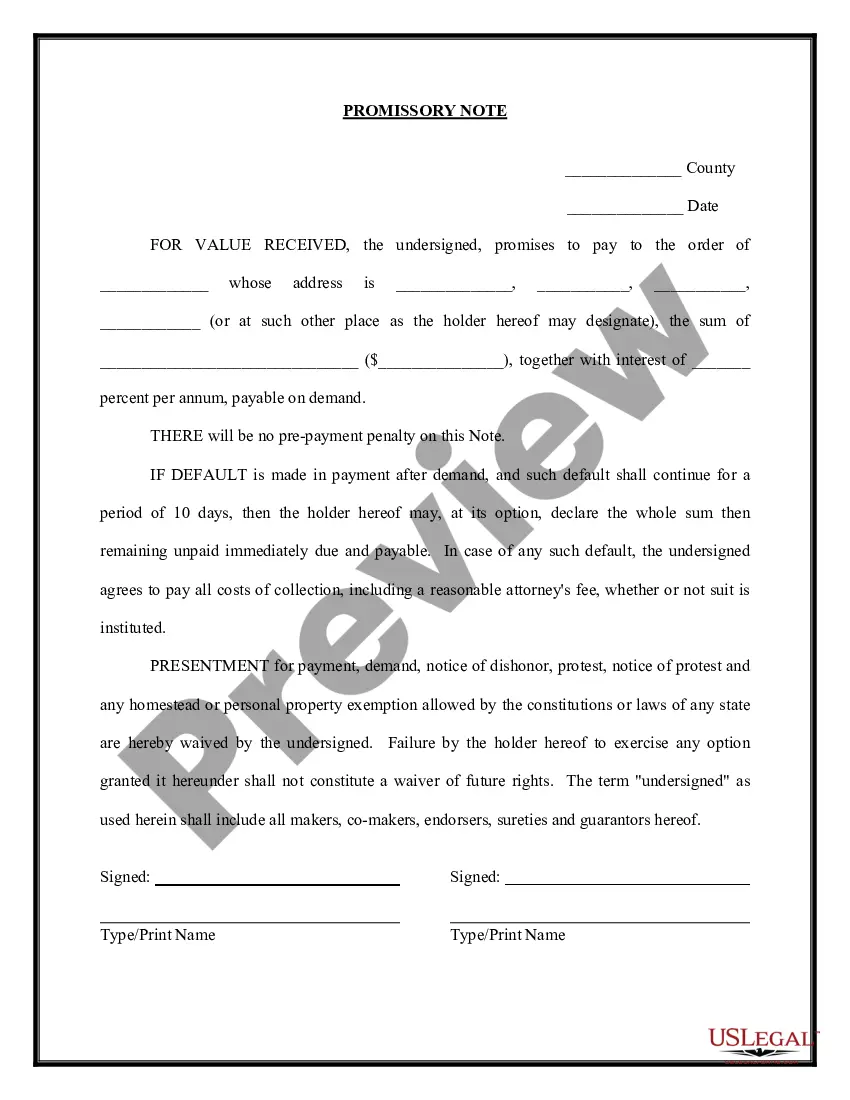
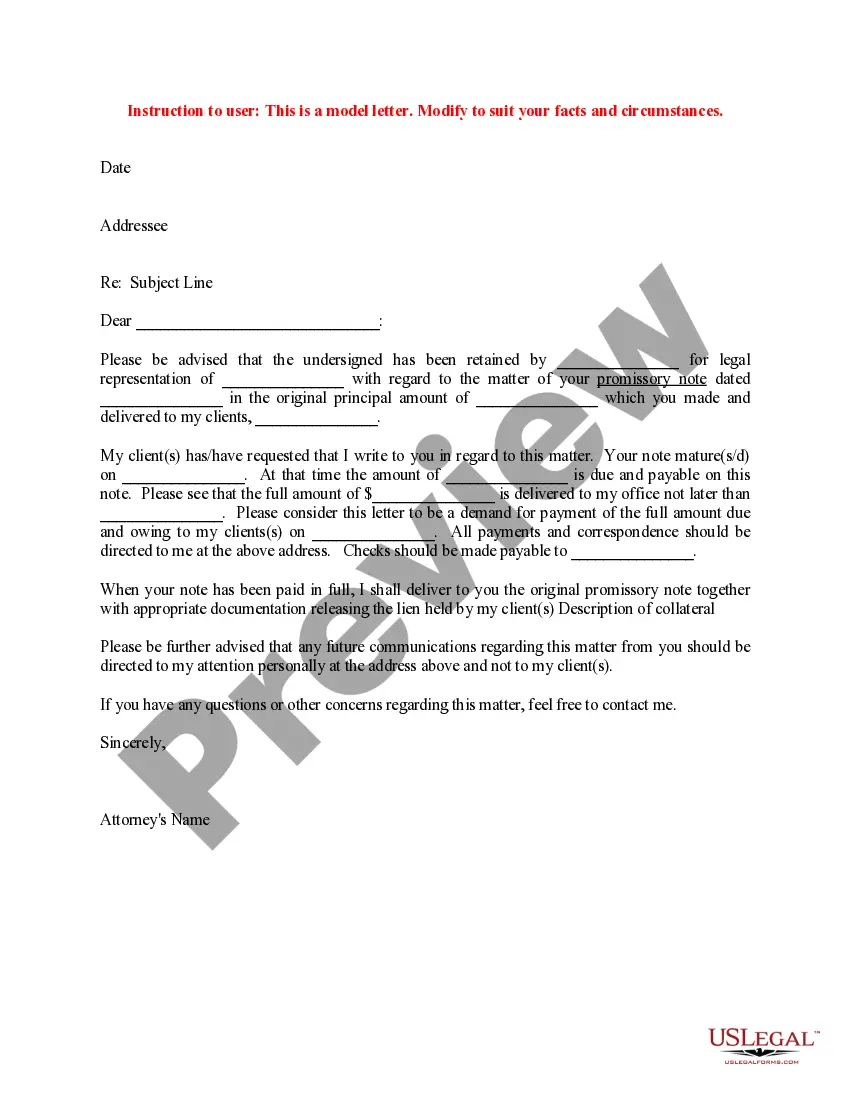
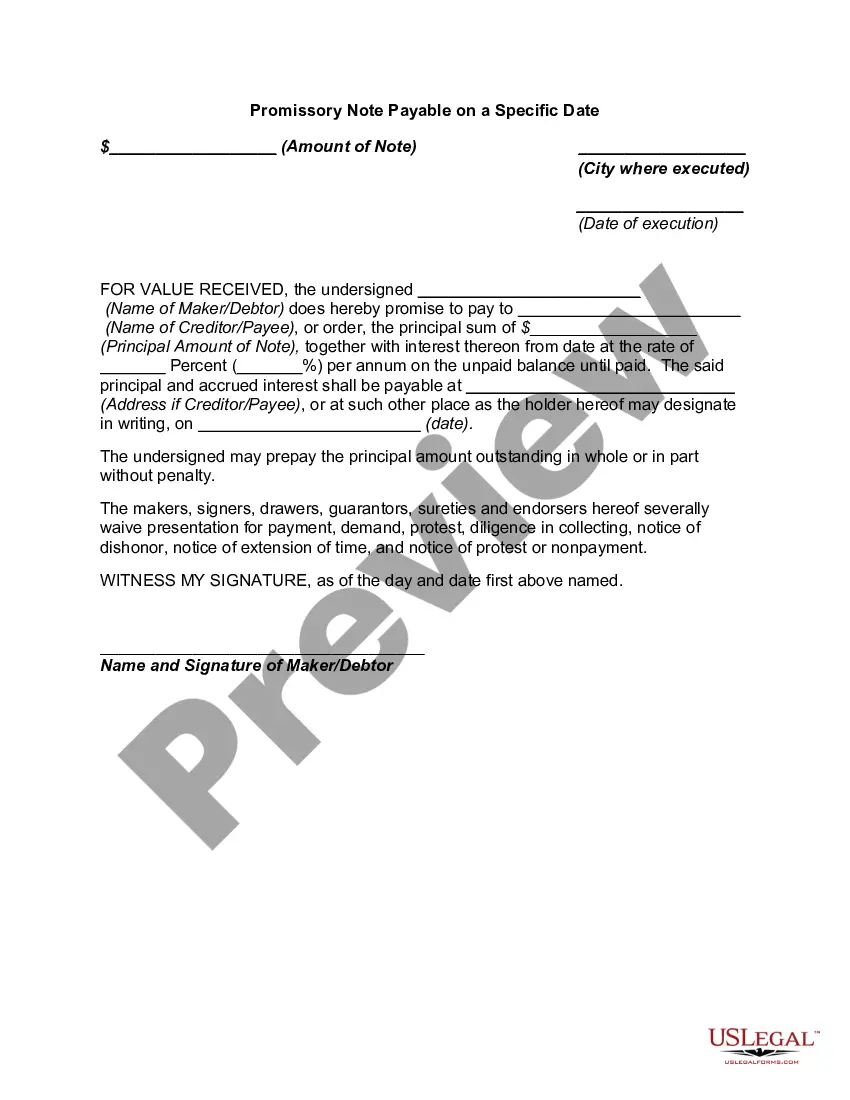
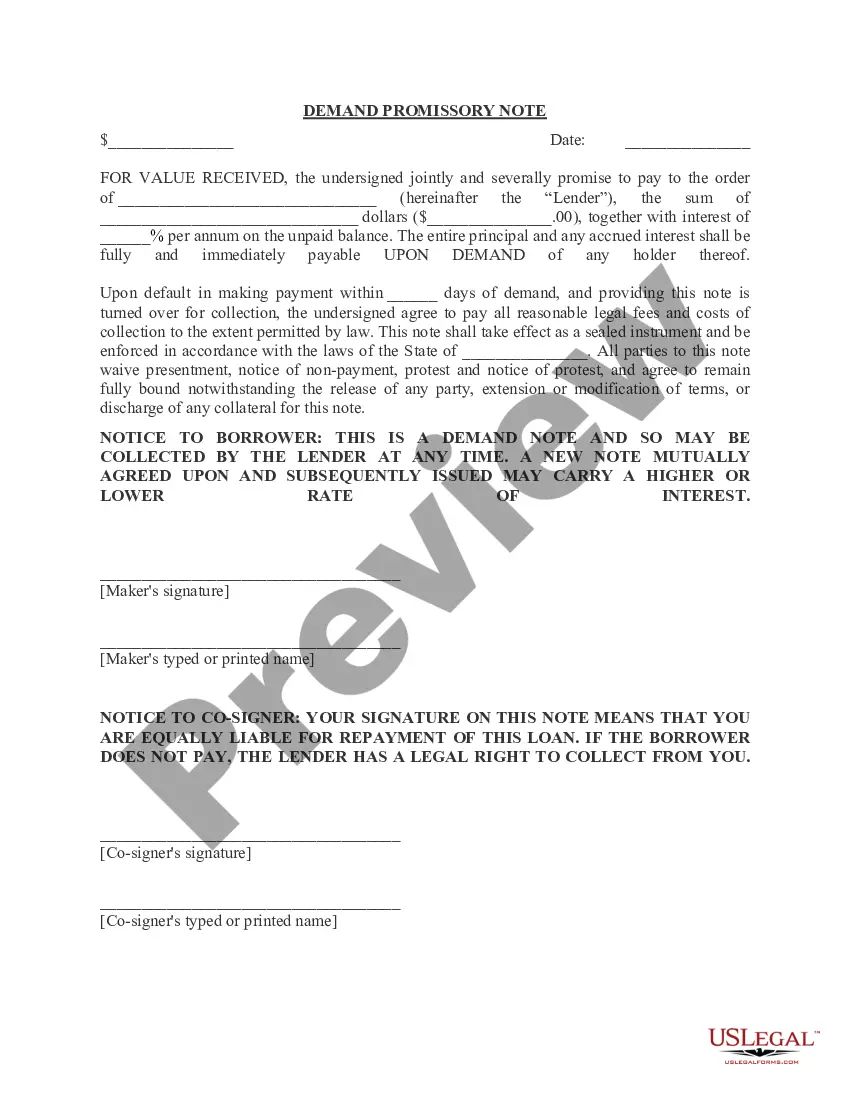
A Promissory Note - Payable on Demand is a legal document in which one party promises to pay a specific sum of money to another party upon demand. This form is unique because it allows the lender to call for payment at any time, without penalties for early repayment. It clearly outlines the borrowing terms, including the amount borrowed, interest rates, and the conditions under which the full sum can be demanded by the lender.
Key parts of this document
- Parties involved: Names and addresses of the borrower and lender.
- Loan amount: The total sum that the borrower agrees to repay.
- Interest rate: Specifies the annual interest rate applicable to the loan.
- No pre-payment penalty clause: Allows the borrower to repay the loan before the due date without extra fees.
- Default terms: Outlines actions to be taken in case of default after a demand for payment.
Common use cases
This Promissory Note is commonly used in various scenarios, such as when individuals or businesses lend money to friends or family members, finance large purchases, or formalize loan agreements between two parties. It is suitable in situations where the lender wishes to maintain flexibility over when the loan is to be repaid.
Who can use this document
- Individual lenders who want security in a personal loan agreement.
- Business owners seeking to create a formal loan with terms of repayment.
- Anyone borrowing money who wishes to outline clear payment terms.
- Individuals who need a straightforward agreement without extensive legal jargon.
How to complete this form
- Identify the parties: Fill in the names and addresses of the lender and borrower.
- Specify the loan amount: Enter the total sum being borrowed and its written equivalent.
- Set the interest rate: Indicate the annual interest rate to be charged on the loan.
- Review the payment terms: Ensure clarity on default conditions and penalties.
- Sign and date the note: Both parties should sign and include the date of agreement.
Notarization guidance
This form usually doesn’t need to be notarized. However, local laws or specific transactions may require it. Our online notarization service, powered by Notarize, lets you complete it remotely through a secure video session, available 24/7.
Get your form ready online
Our built-in tools help you complete, sign, share, and store your documents in one place.
Make edits, fill in missing information, and update formatting in US Legal Forms—just like you would in MS Word.
Download a copy, print it, send it by email, or mail it via USPS—whatever works best for your next step.
Sign and collect signatures with our SignNow integration. Send to multiple recipients, set reminders, and more. Go Premium to unlock E-Sign.
If this form requires notarization, complete it online through a secure video call—no need to meet a notary in person or wait for an appointment.
We protect your documents and personal data by following strict security and privacy standards.

Make edits, fill in missing information, and update formatting in US Legal Forms—just like you would in MS Word.

Download a copy, print it, send it by email, or mail it via USPS—whatever works best for your next step.

Sign and collect signatures with our SignNow integration. Send to multiple recipients, set reminders, and more. Go Premium to unlock E-Sign.

If this form requires notarization, complete it online through a secure video call—no need to meet a notary in person or wait for an appointment.

We protect your documents and personal data by following strict security and privacy standards.
Typical mistakes to avoid
- Failing to specify the exact loan amount, leading to confusion later.
- Not entering the interest rate or miscalculating it.
- Overlooking the conditions for default and the penalties involved.
- Not obtaining signatures from both parties, making the agreement unenforceable.
Why complete this form online
- Convenience: Downloadable and editable format allows for quick access and customization.
- Reliability: Templates drafted by licensed attorneys ensure legal soundness.
- Time-saving: Reduces the need for lengthy consultations with legal professionals.
Summary of main points
- The Promissory Note - Payable on Demand allows for immediate repayment upon request.
- There are no pre-payment penalties for the borrower.
- Proper completion and understanding of this form can prevent misunderstandings and disputes regarding loans.
Looking for another form?

Form popularity
FAQ
A demand note means that the balance owed does not have to be repaid until it is 'demanded' by the lender and the note does not have a specific end date listed.A promissory note, in contrast, can have the option for payment to be 'on demand' or at a specified date.
However, in California, the lender is not required to produce a Promissory Note to conduct a non-judicial foreclosure (also known as a Trustee's Sale).The Promissory Note is the debt instrument, just like an IOU. The person holding the original is the one the borrower has to pay.
The date of the letter. The names of the borrower and lender. The original amount of the loan. The date of the promissory note and any reference number or account number it contains. The payment schedule that was agreed upon.
All Promissory Notes are valid only for a period of 3 years starting from the date of execution, after which they will be invalid. There is no maximum limit in terms of the amount which can be lent or borrowed. The issuer / lender of the funds is normally the one who will hold the Promissory Note.
Promissory Notes In addition to the amount and the signature, any interest charged for the amount may also be stipulated in the note, as well as the name of the payee. If a promissory note has a date on it and the date has passed, that note can also be considered to be payable on demand.
The rule is merely a permissive one, permitting the use of an adhesive stamp on promissory notes payable on demand when the amount or value exceeds Rs. 250/-. The rule does not lay down that such a promissory note shall be stamped with adhesive stamp of the requisite value.
Full names of parties (borrower and lender) Repayment amount (principal and interest) Payment plan. Consequences of non-payment (default and collection) Notarization (if necessary) Other common details.
A written, signed, unconditional promise to pay a certain amount of money on demand at a specified time.The individual who promises to pay is the maker, and the person to whom payment is promised is called the payee or holder. If signed by the maker, a promissory note is a negotiable instrument.