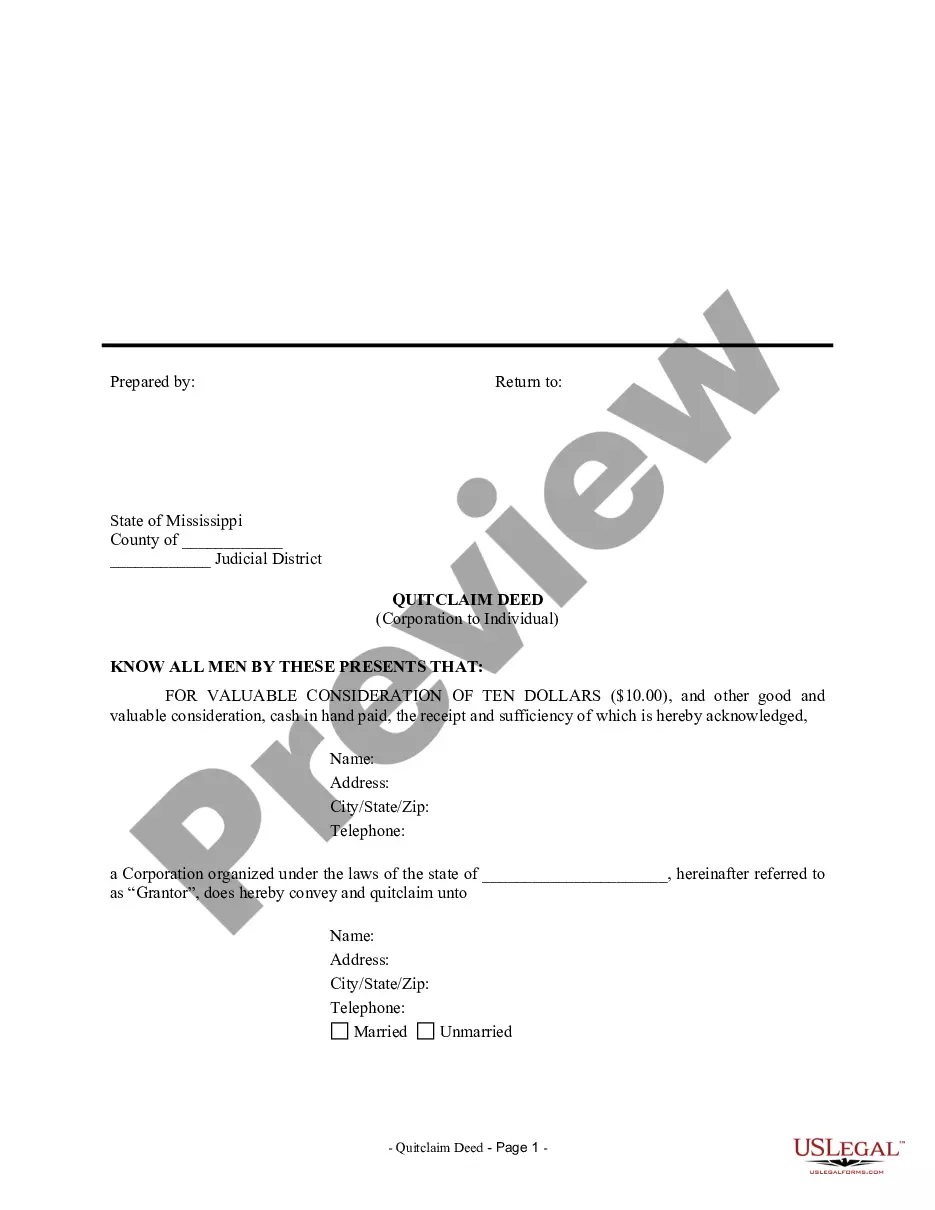
Louisiana Petition for Executory Process for real estate and mobile home with one defendant
What this document covers
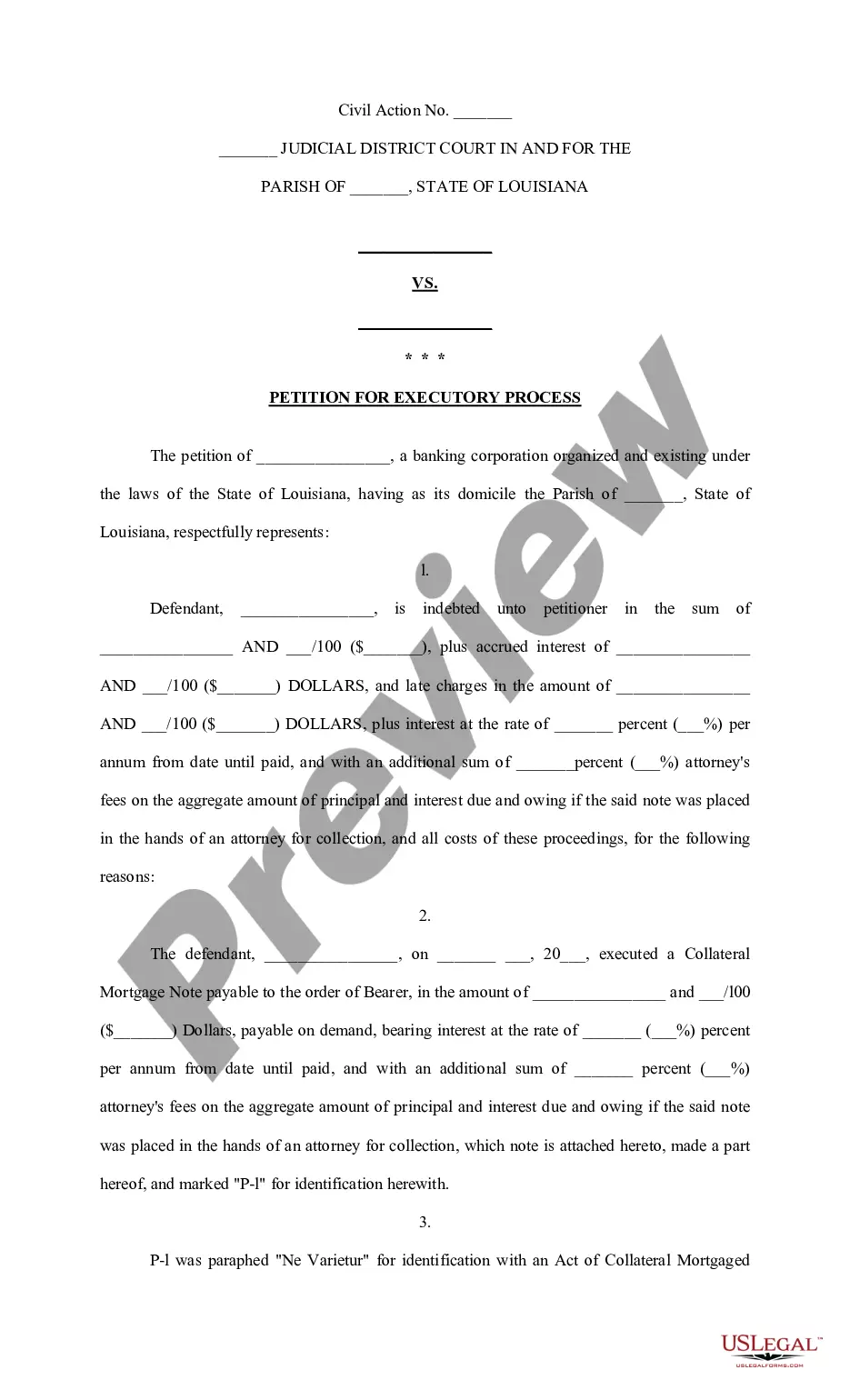
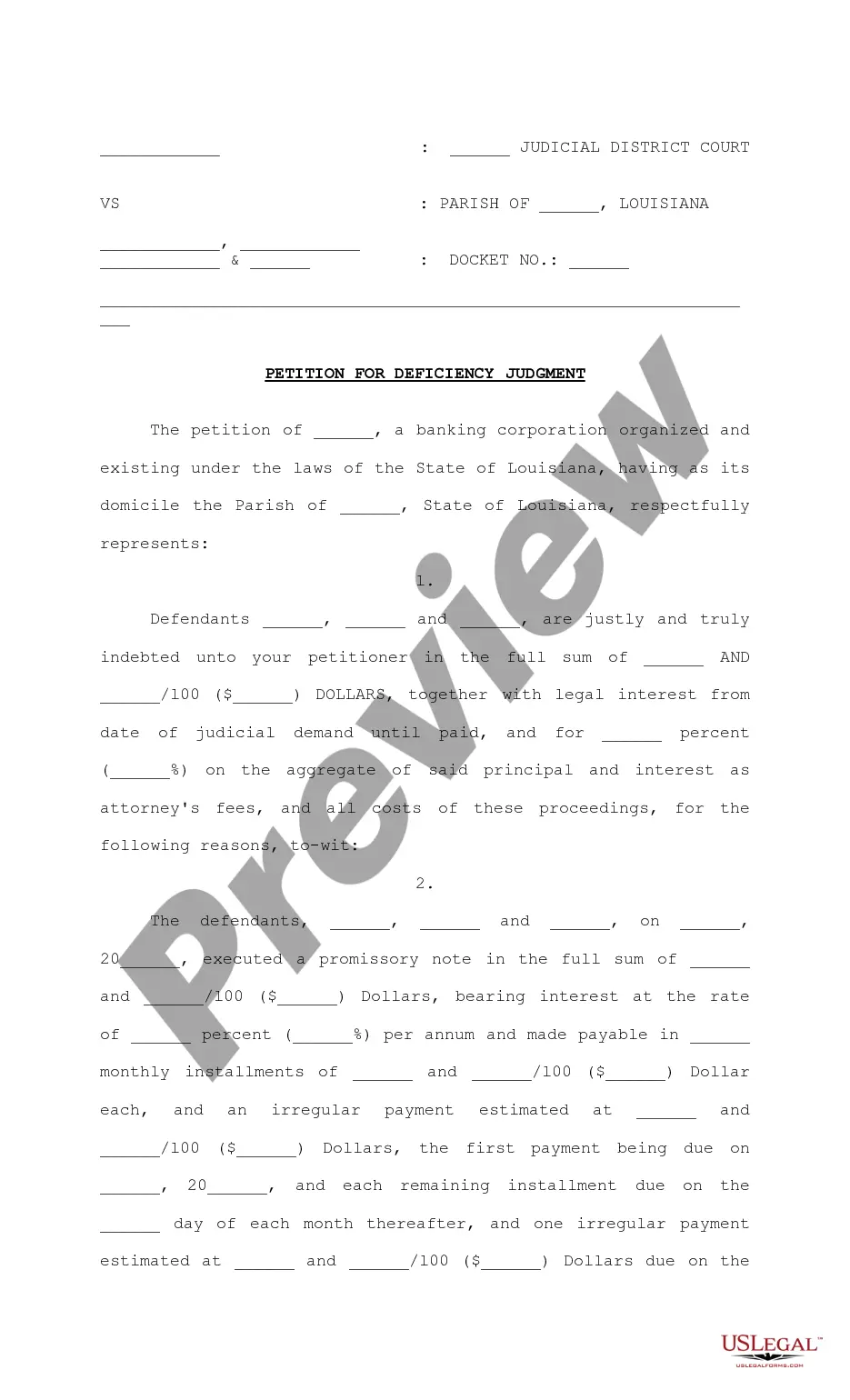
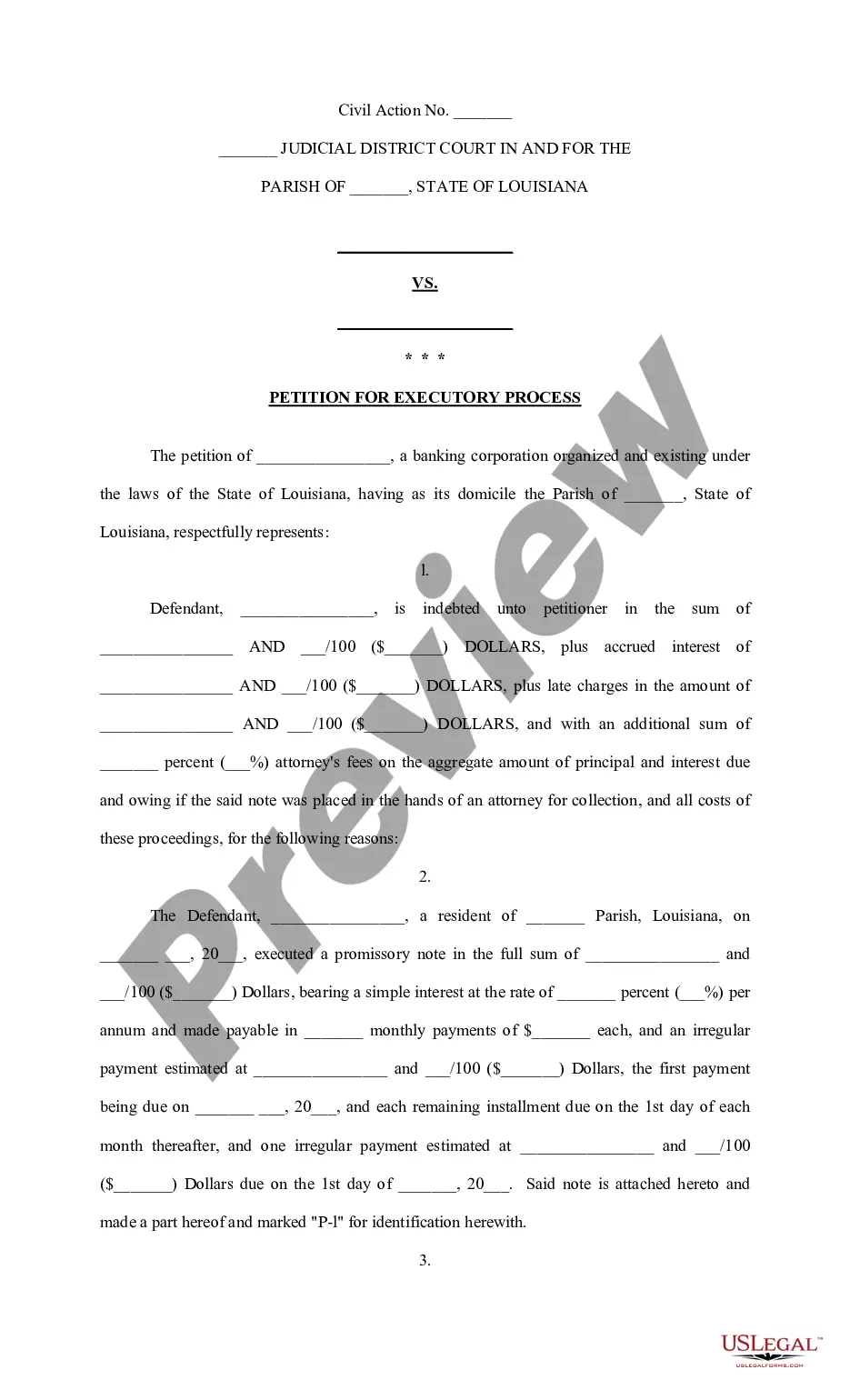
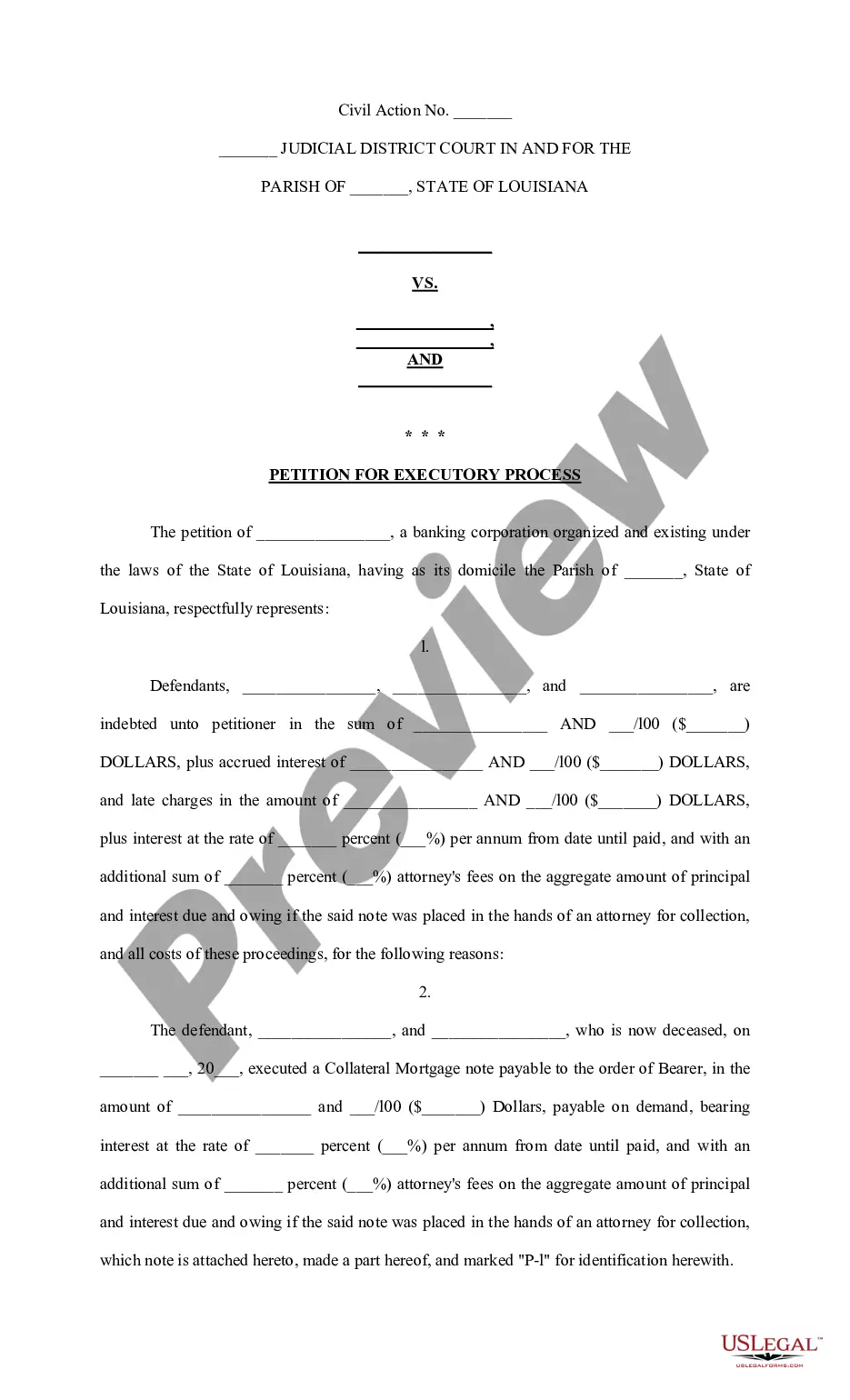
The Petition for Executory Process is a legal document used primarily in real estate and mobile home transactions where a lender seeks to recover property due to the borrower's failure to meet mortgage obligations. This form distinguishes itself from other legal filings as it requests a court order for the seizure and sale of property to satisfy outstanding debts, specifically in cases of mortgages and promissory notes.
Main sections of this form
- Identifying information of the petitioner and defendant.
- Details of the debt owed, including principal, interest, and late charges.
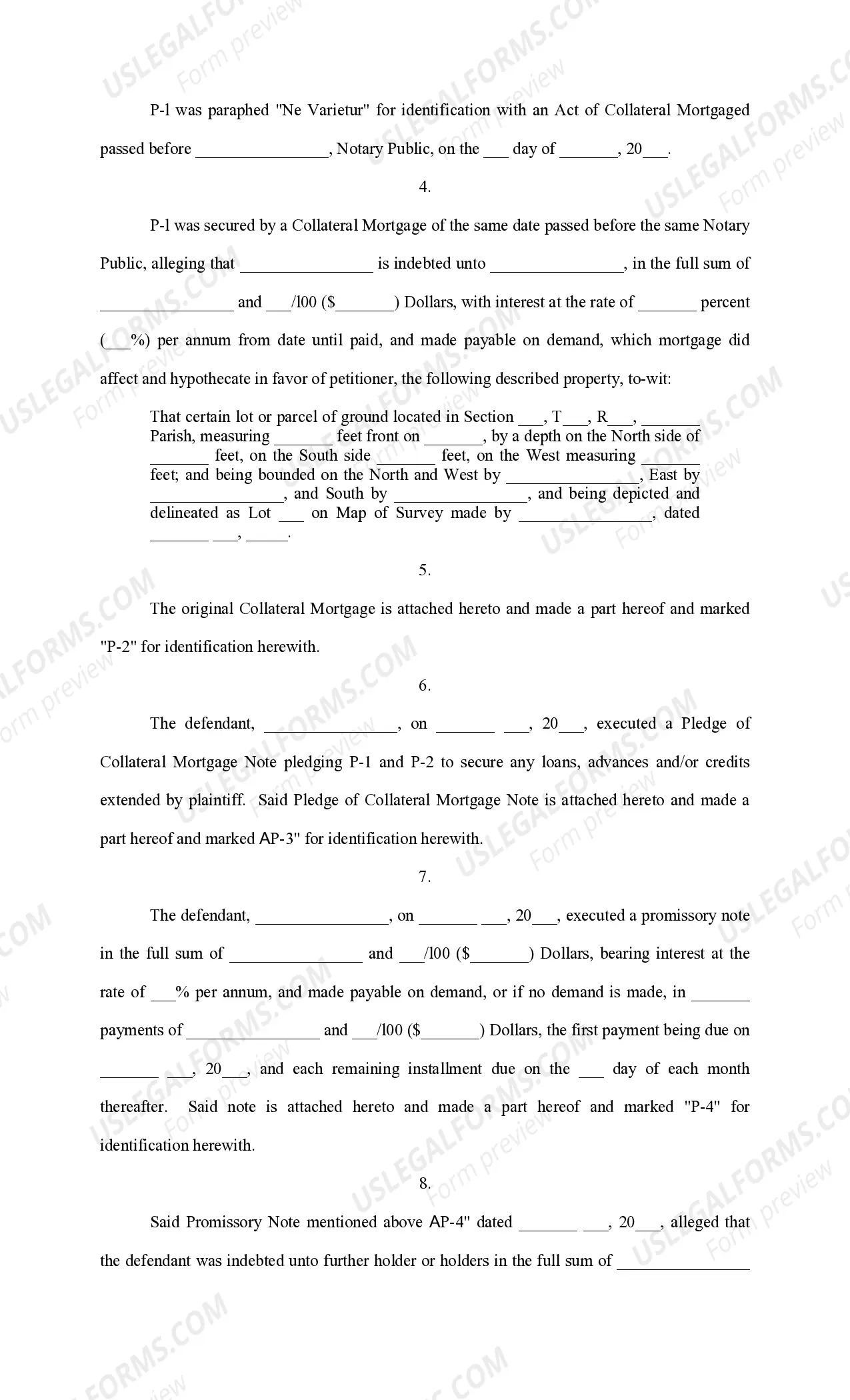
- Specification of collateral property, including both movable and immovable assets.
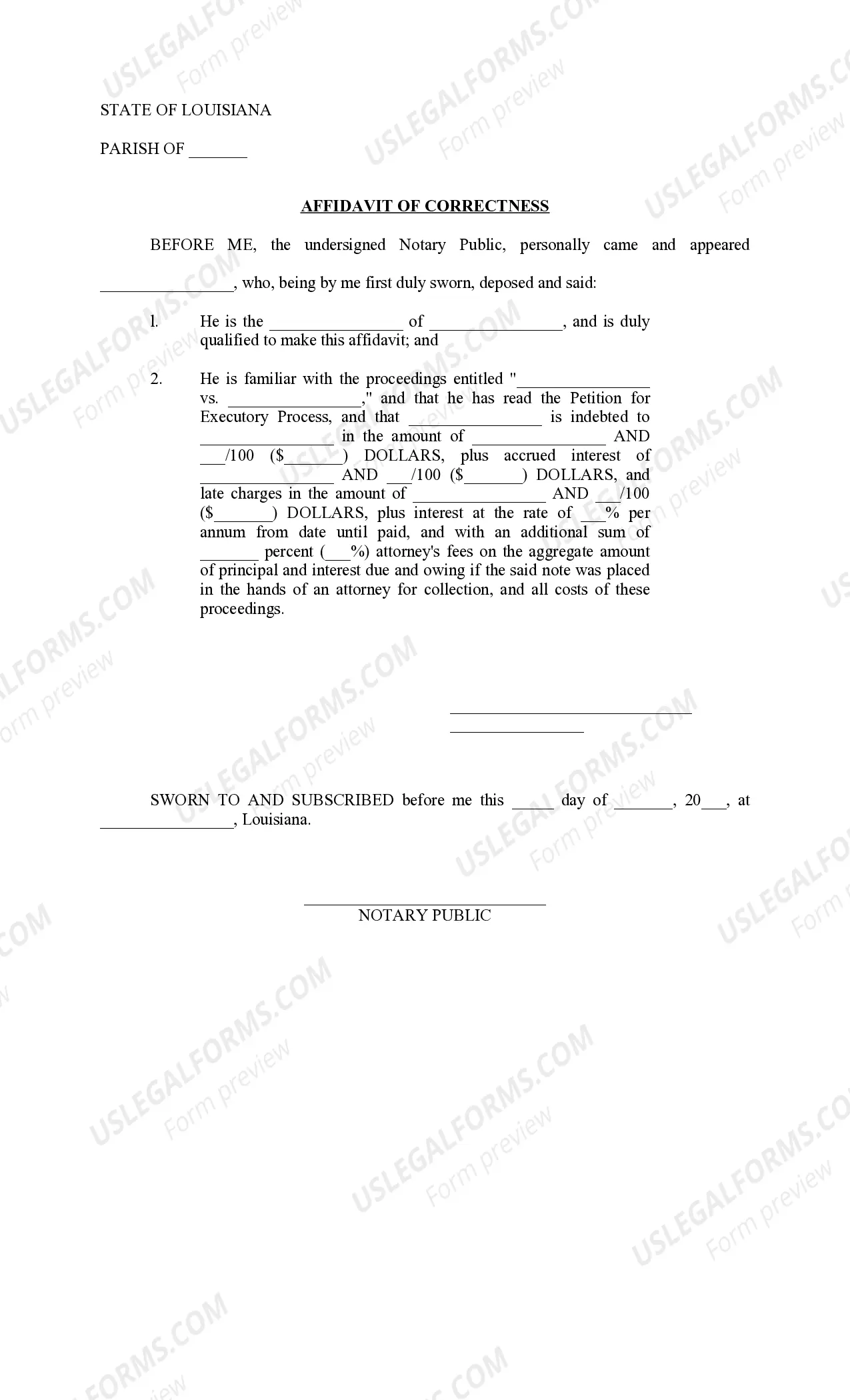
- Notarized affidavits affirming the correctness of the petition details.
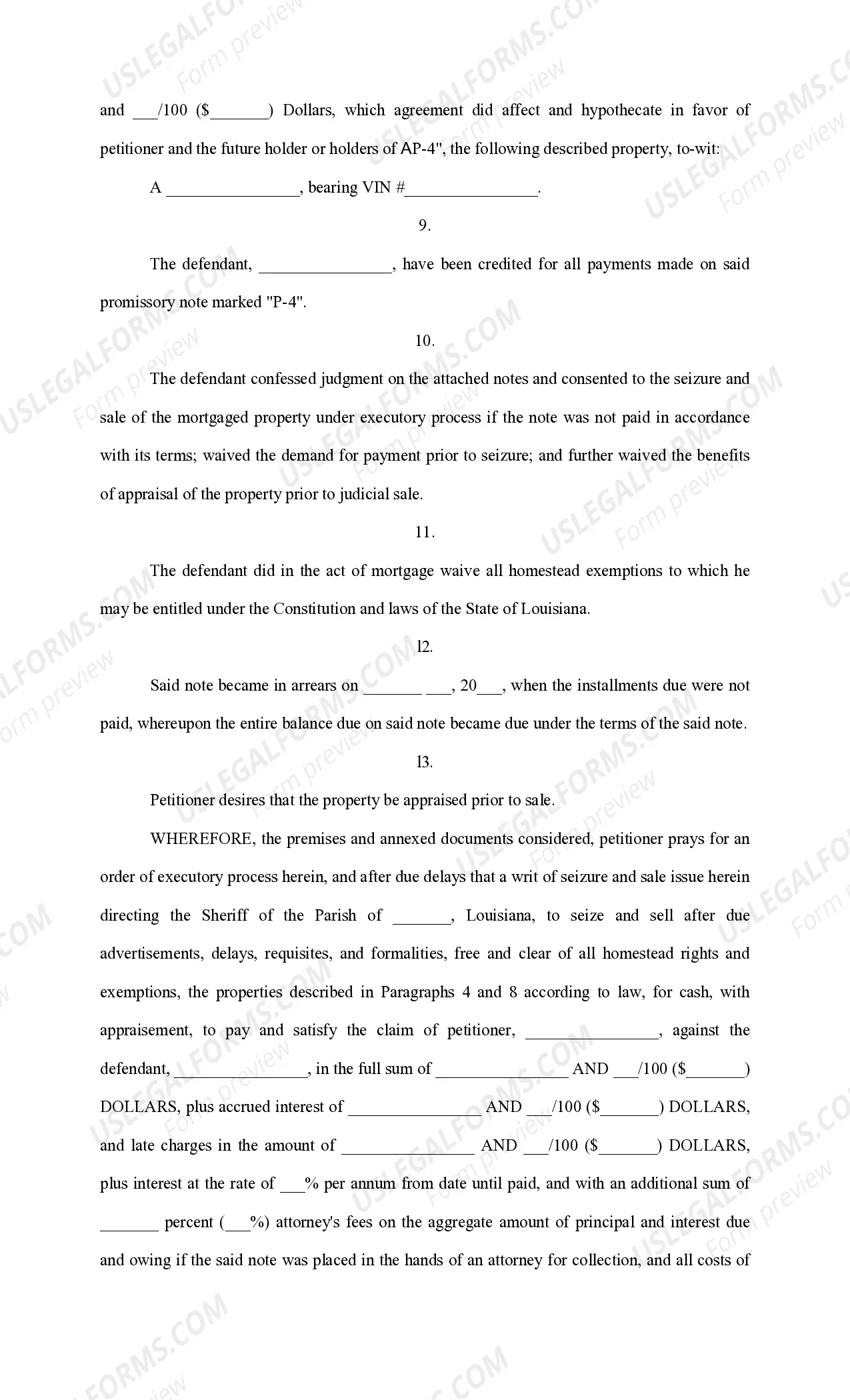
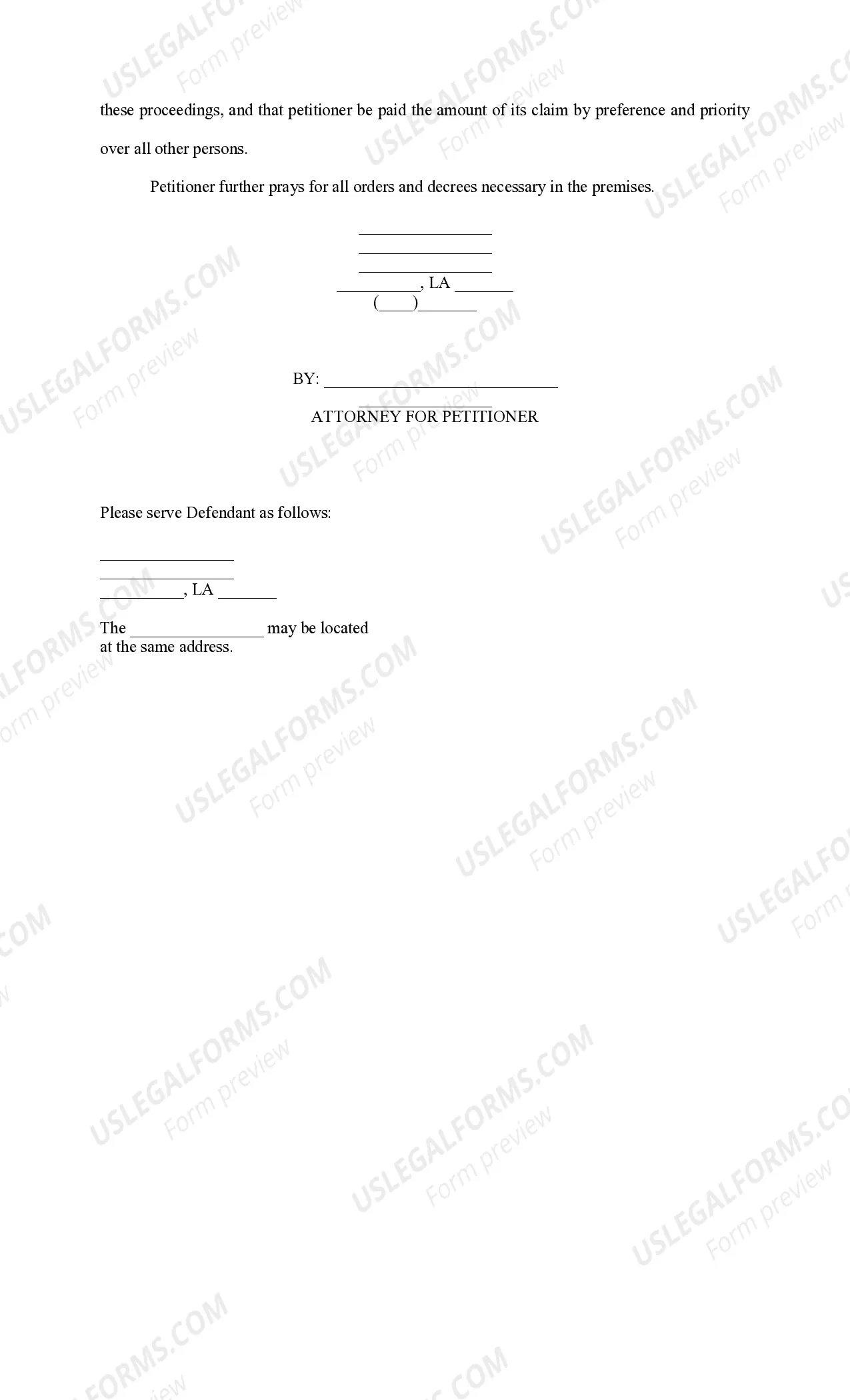
- Request for the court to issue a writ of seizure and sale.
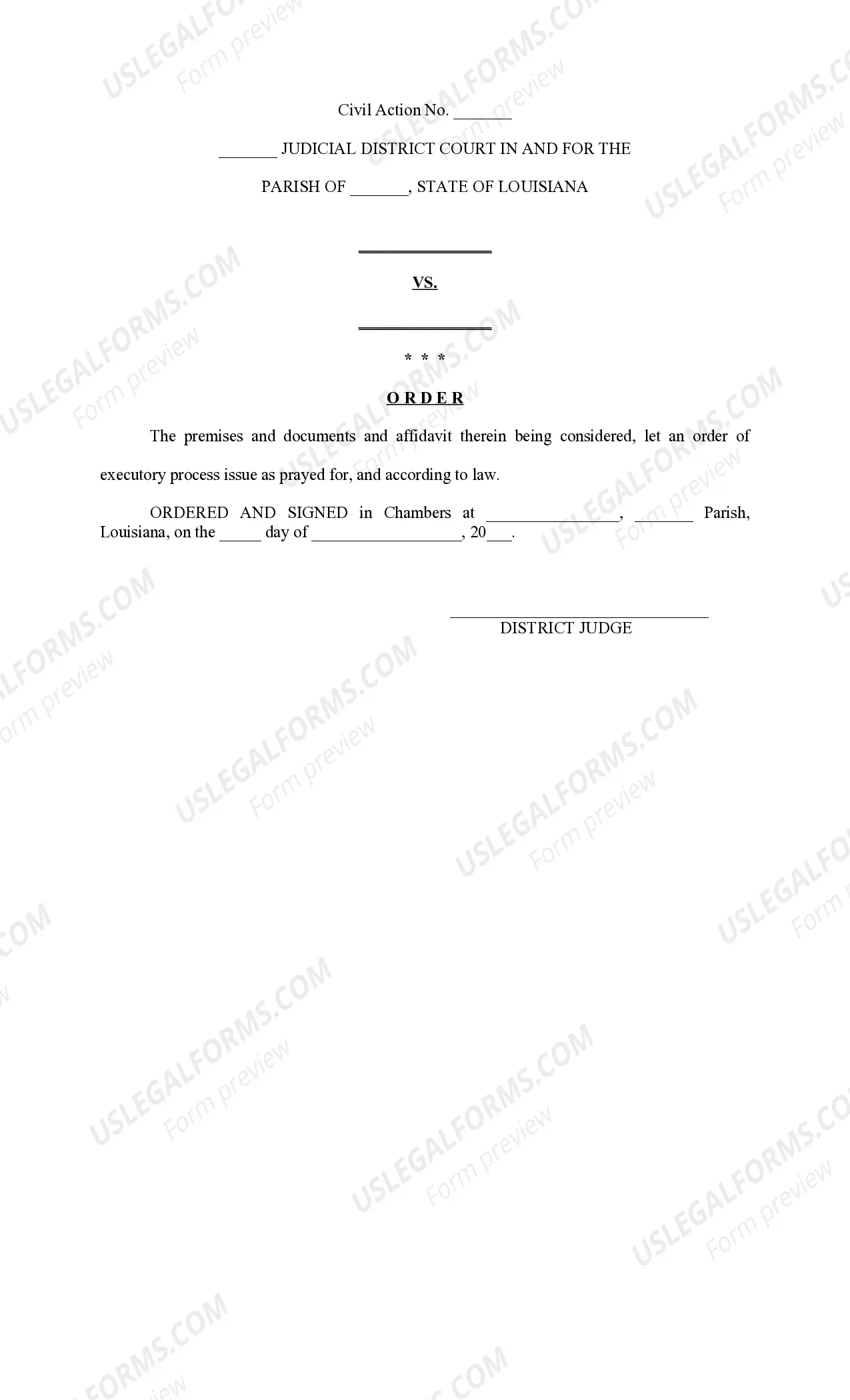
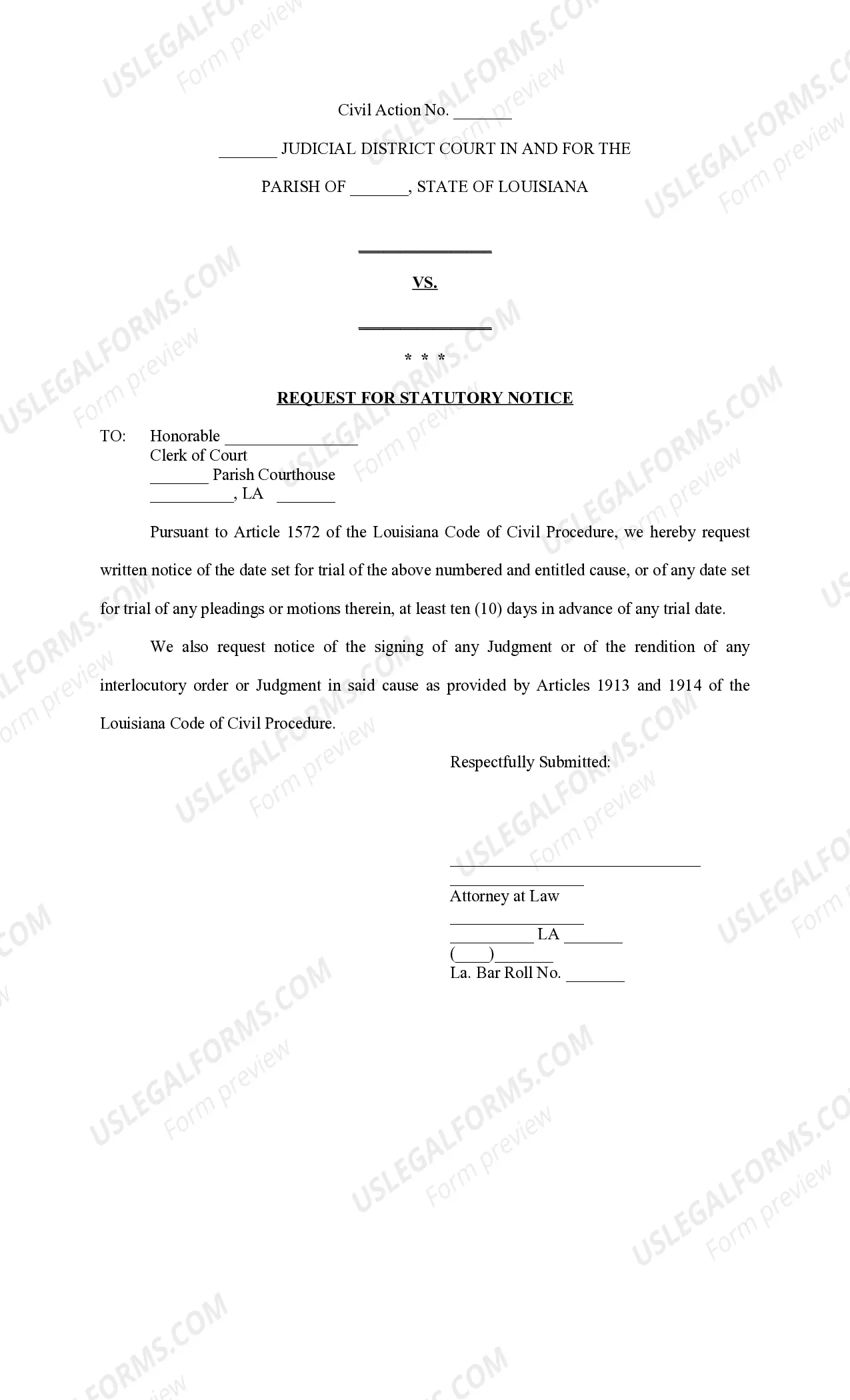
- Order and request for statutory notice regarding court proceedings.
Situations where this form applies
This form should be used when a lender, often a bank, has a valid claim against a borrower who has defaulted on a mortgage or promissory note. It is used in situations where the creditor intends to seize and sell the collaboratively pledged property to recoup the owed funds, particularly after the borrower has failed to make scheduled payments.
Who this form is for
- Banks or lending institutions seeking recovery of debts from borrowers.
- Individuals or companies who have provided loans secured by real estate or mobile homes.
- Legal representatives acting on behalf of lenders in debt recovery cases.
How to prepare this document
- Identify the parties involved by filling in the names and addresses of the petitioner and defendant.
- Clearly state the amount owed, including principal, interest, and any late fees.
- Describe the collateral property that is to be seized and sold, including specific details about its location and description.
- Attach all relevant supporting documentation, such as the mortgage agreement and promissory notes.
- Ensure that the document is notarized by a qualified individual, if required.
Notarization guidance
Yes, this form must be notarized to be legally valid. Utilizing US Legal Forms' integrated online notarization service provides a secure and convenient option, allowing you to complete the notarization process through a video call, ensuring all legal standards are met without the need to travel.
Get your form ready online
Our built-in tools help you complete, sign, share, and store your documents in one place.
Make edits, fill in missing information, and update formatting in US Legal Forms—just like you would in MS Word.
Download a copy, print it, send it by email, or mail it via USPS—whatever works best for your next step.
Sign and collect signatures with our SignNow integration. Send to multiple recipients, set reminders, and more. Go Premium to unlock E-Sign.
If this form requires notarization, complete it online through a secure video call—no need to meet a notary in person or wait for an appointment.
We protect your documents and personal data by following strict security and privacy standards.

Make edits, fill in missing information, and update formatting in US Legal Forms—just like you would in MS Word.

Download a copy, print it, send it by email, or mail it via USPS—whatever works best for your next step.

Sign and collect signatures with our SignNow integration. Send to multiple recipients, set reminders, and more. Go Premium to unlock E-Sign.

If this form requires notarization, complete it online through a secure video call—no need to meet a notary in person or wait for an appointment.

We protect your documents and personal data by following strict security and privacy standards.
Common mistakes to avoid
- Failing to accurately complete the property's description, which can lead to delays.
- Not including all necessary attachments or documentation.
- Overlooking the required notarization of the affidavit, if applicable.
Why complete this form online
- Convenience of completing the form from anywhere without the need for in-person visits.
- Editability allows for easy modifications to adapt to specific case details.
- Access to professionally drafted templates ensures legal compliance and accuracy.
Legal use & context
- The Petition for Executory Process serves as a necessary legal mechanism for creditors in Louisiana to recover debts through court-ordered seizure and sale of assets.
- It must be filed in accordance with local laws, following proper procedures to ensure enforceability.
Quick recap
- This form is essential for lenders aiming to recover debts through property seizure.
- Accuracy in completing the form and including all relevant documentation is critical.
- Notarization is required to validate the petition, which can be conveniently completed online.
Looking for another form?
Form popularity
FAQ
Executory process is an accelerated procedure whereby a mortgage creditor may provoke a sale of the encumbered property to satisfy his mortgage.
Since Louisiana is a judicial foreclosure state, the time frame for foreclosing on a Louisiana property can vary depending on the court schedule, just as it can in other judicial foreclosure states. It usually takes a lender about 6-9 months to foreclose on a Louisiana property.
Learn how foreclosures in Louisiana work. Ordinary judicial foreclosures are also possible in Louisiana, but not as common. Because the most prevalent type of foreclosure process in the state is an executory proceeding, this article focuses on that process.
Once your property is sold at auction, you no longer own the property. The sheriff will make you leave your property sometime after the sale. You will likely not receive any notice to vacate and there is no eviction proceeding in court. It is almost impossible to challenge a sheriff's sale after it happens.
State Foreclosure Laws in Louisiana This type of foreclosure is possible when the borrower agrees in the loan paperwork that the lender may get a judgment upon a default.So, upon a default, the lender files a foreclosure petition in court, with the mortgage attached, and the court orders the property seized and sold.
It takes several months for a lender to foreclose on a California property. If everything goes according to schedule, the process typically takes approximately 120 days about four months but the process can take as long as 200 or more days to conclude.
Generally, homeowners have to be more than 120 days delinquent before a foreclosure can begin. If you're behind in mortgage payments, you might be wondering how soon a foreclosure will start. Generally, a homeowner has to be at least 120 days delinquent before a mortgage servicer starts a foreclosure.
Lenders will seize the home, which is typically used as collateral for the loan and will put the property up for sale to try and recoup losses. The foreclosure process from beginning to end typically takes a lender about 18 months to foreclose on a property during normal times.
After the court orders the sale by issuing a writ of seizure and sale, the sheriff can seize (take) the property and sell it to a new owner. The sheriff will serve you the notice of seizurewhich must include the time, date, and place of the sheriff's saleby personal service or domiciliary service.