Tenant Quick Checklist of Lease Points
About this form
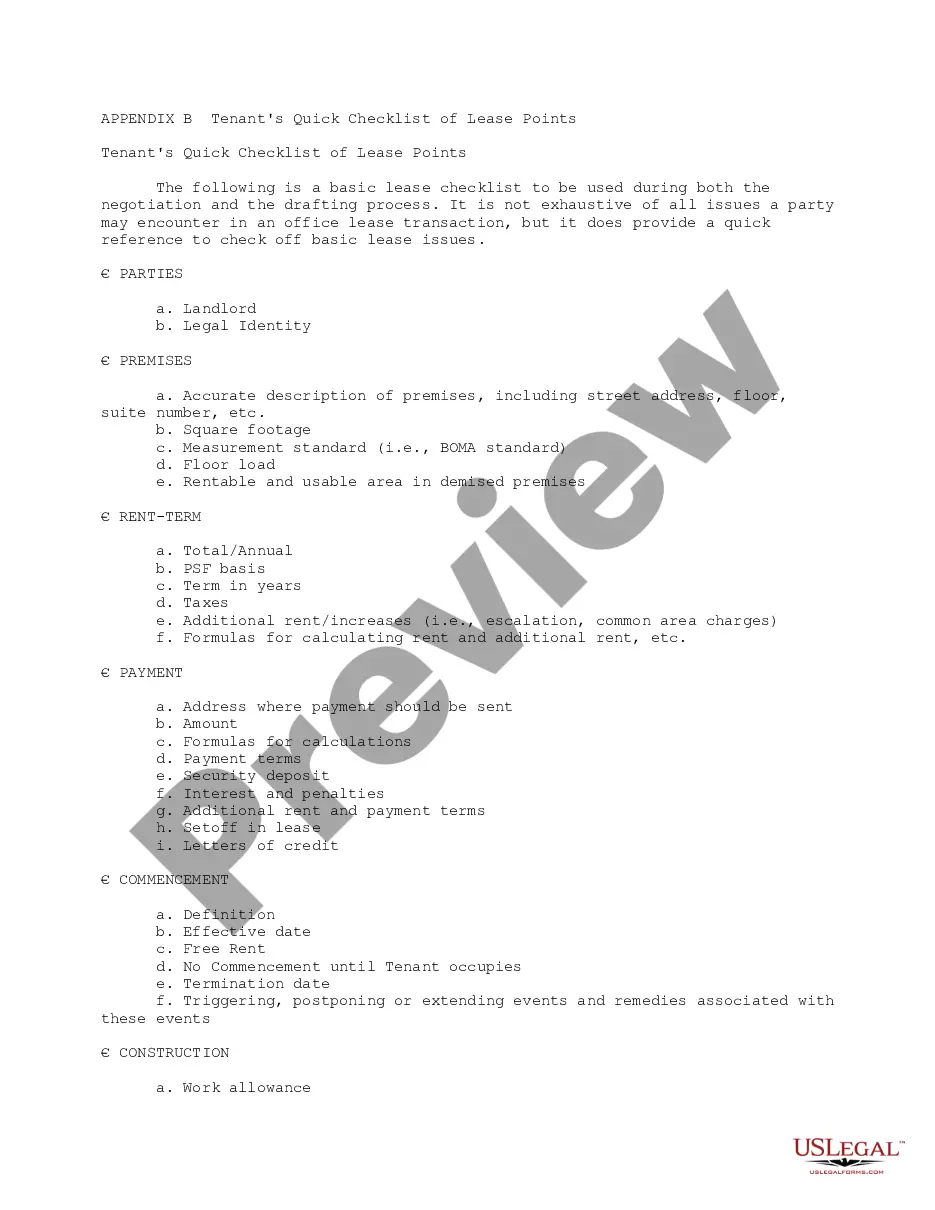
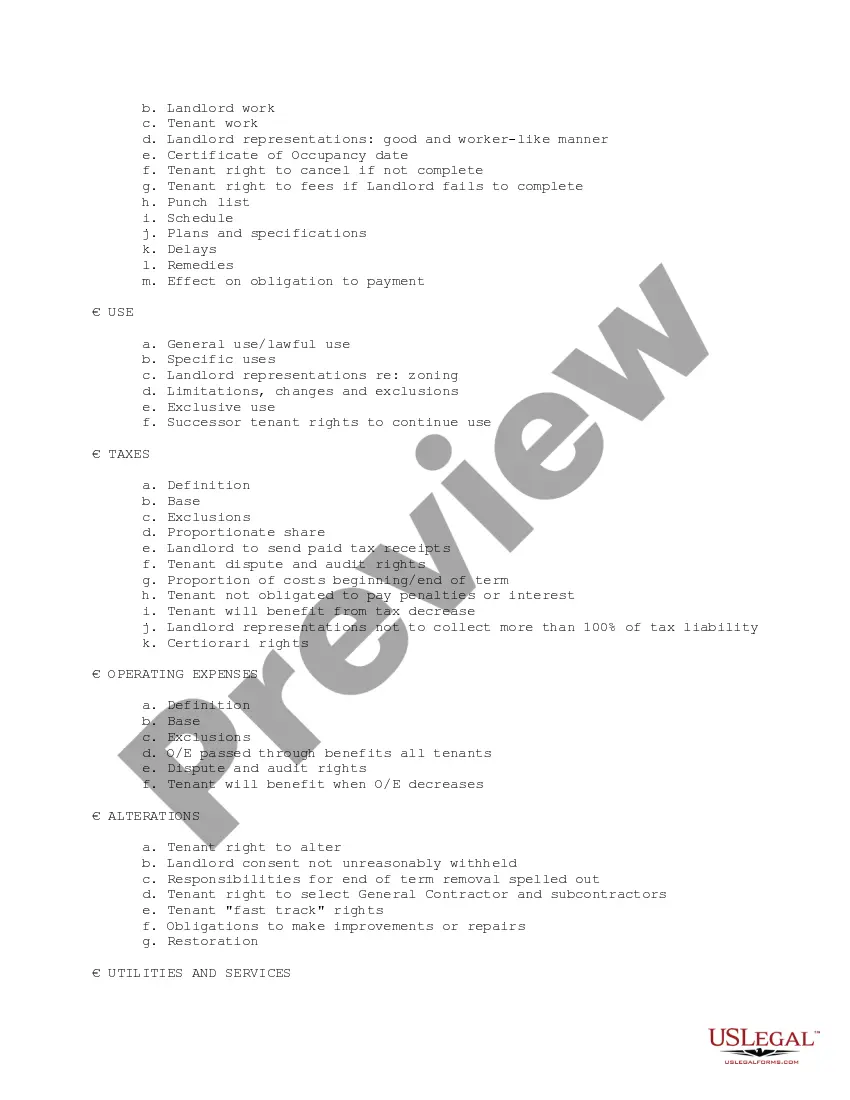
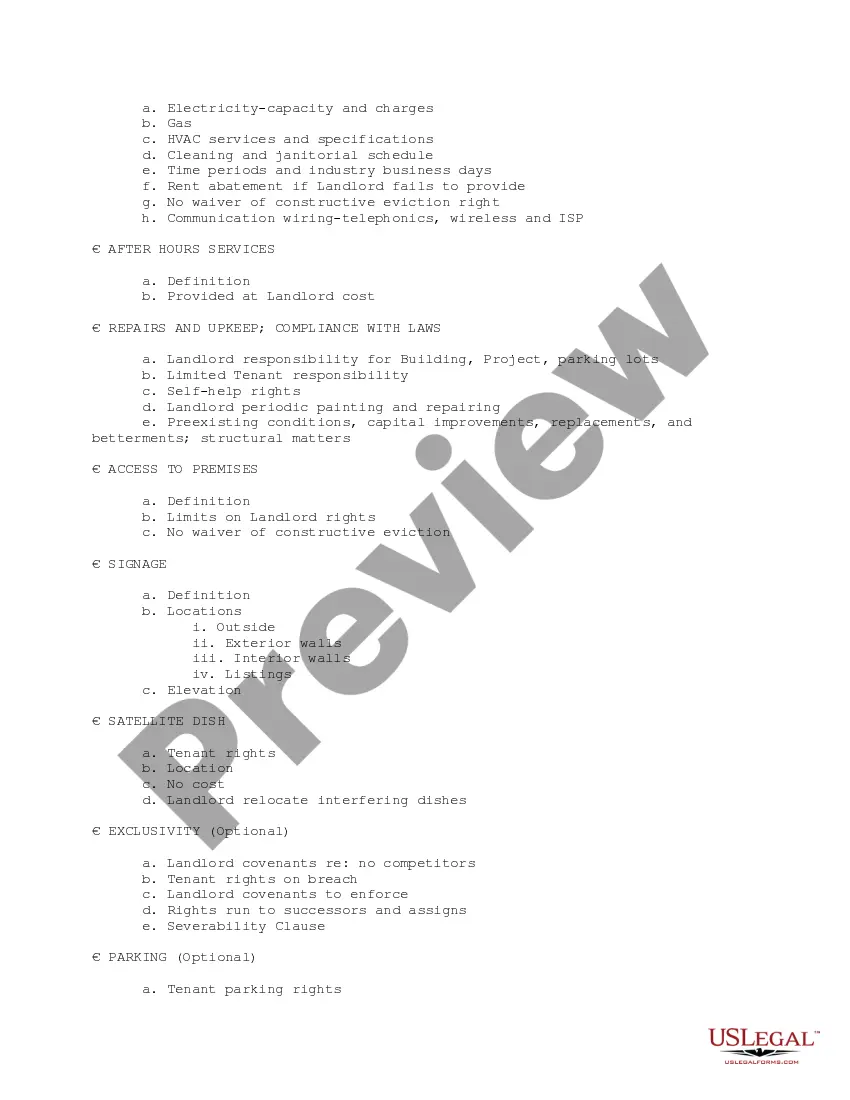
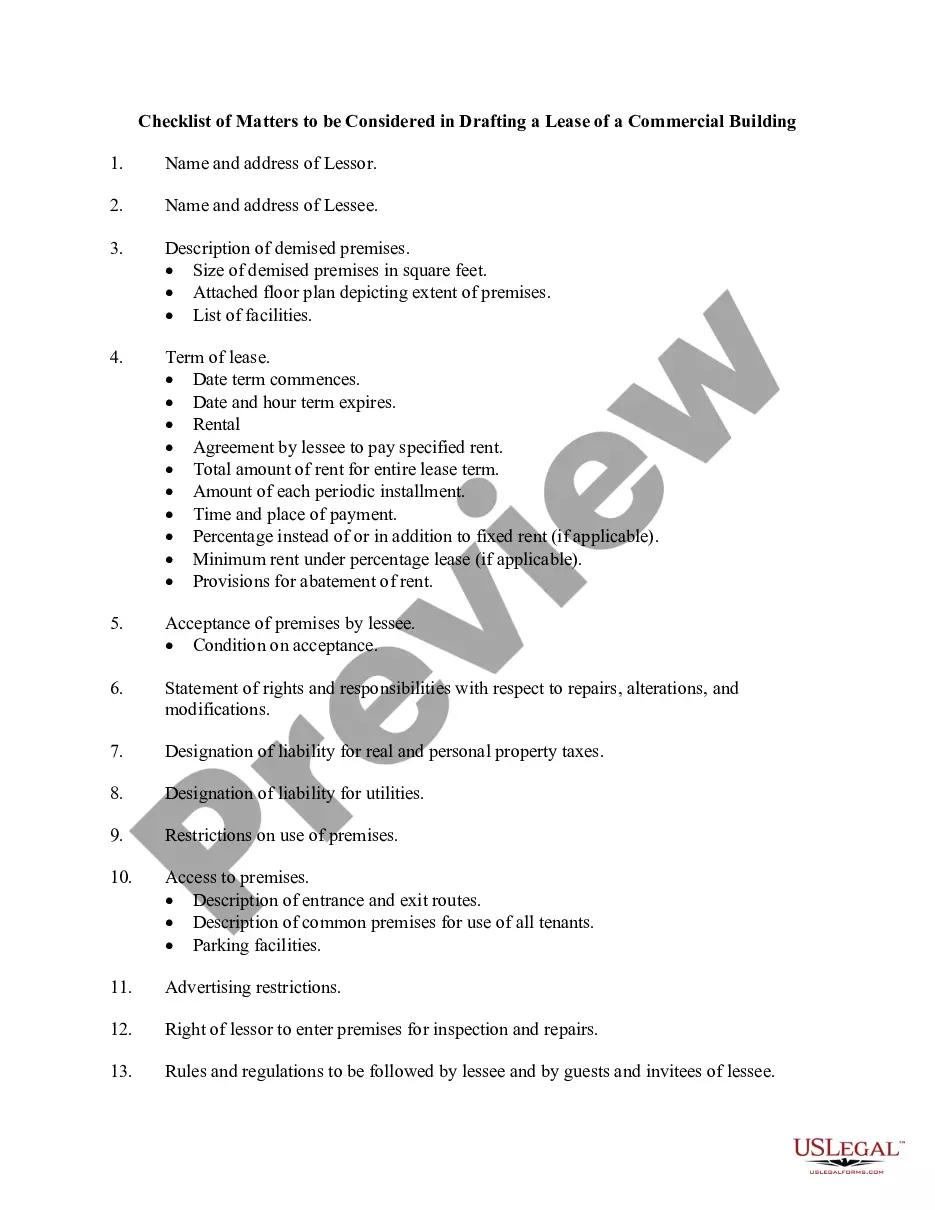
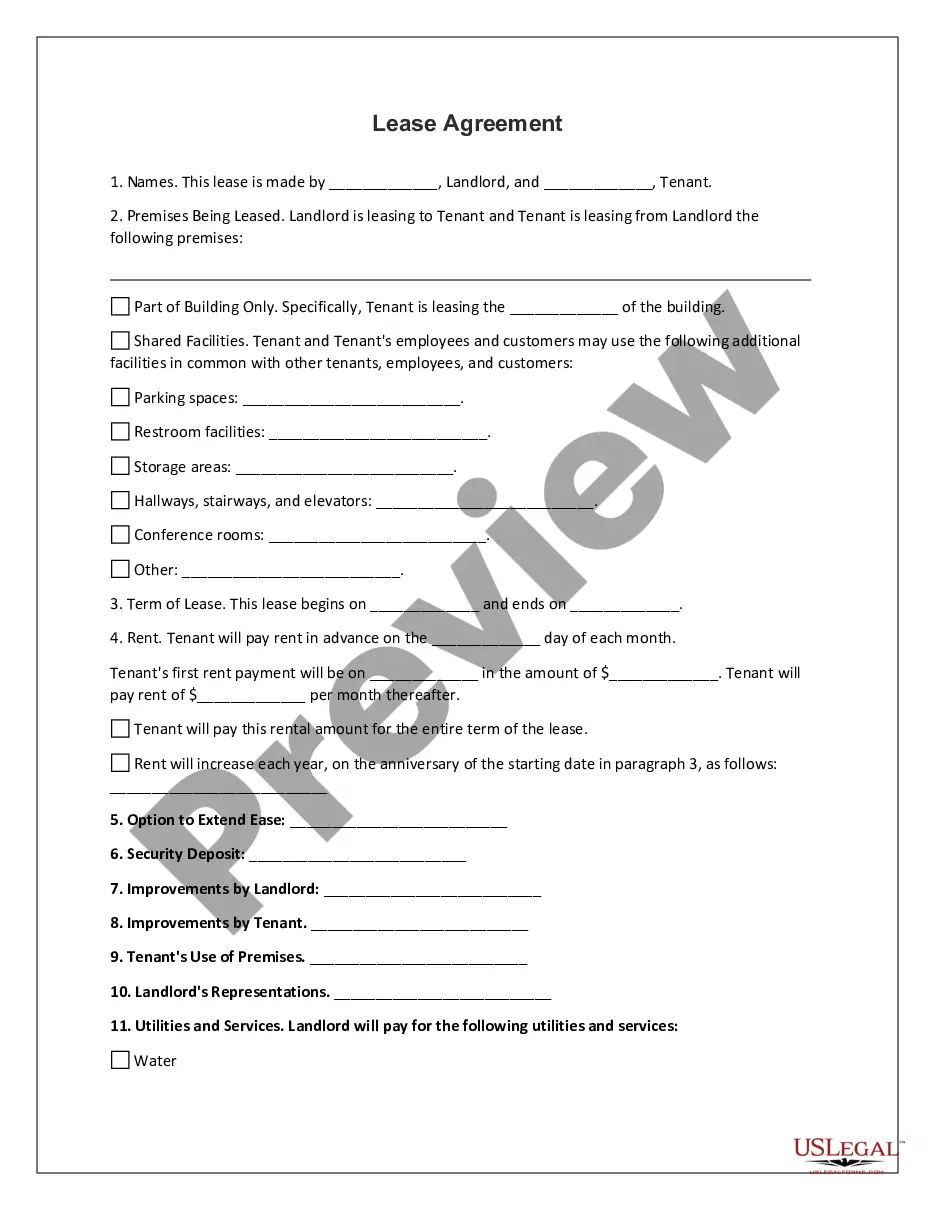
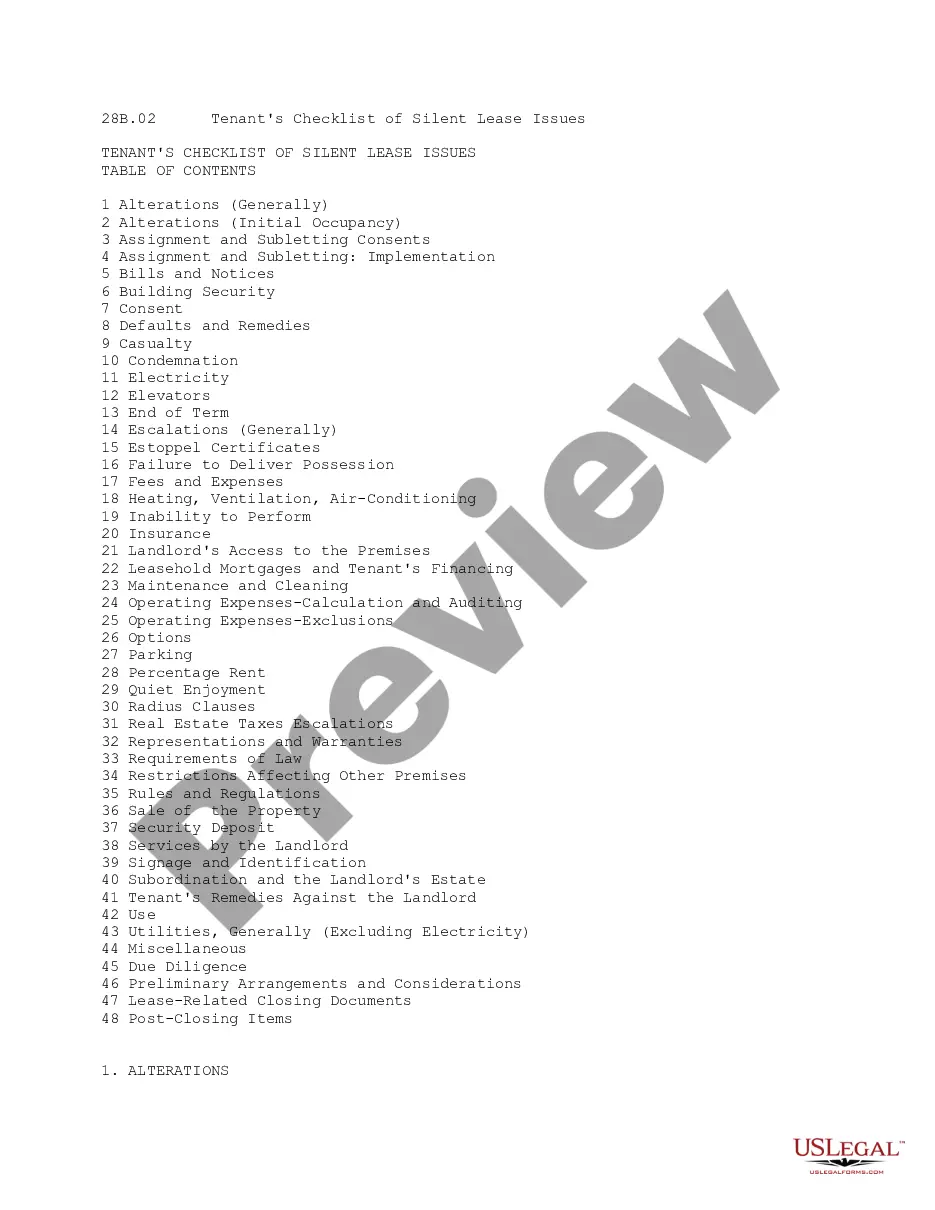
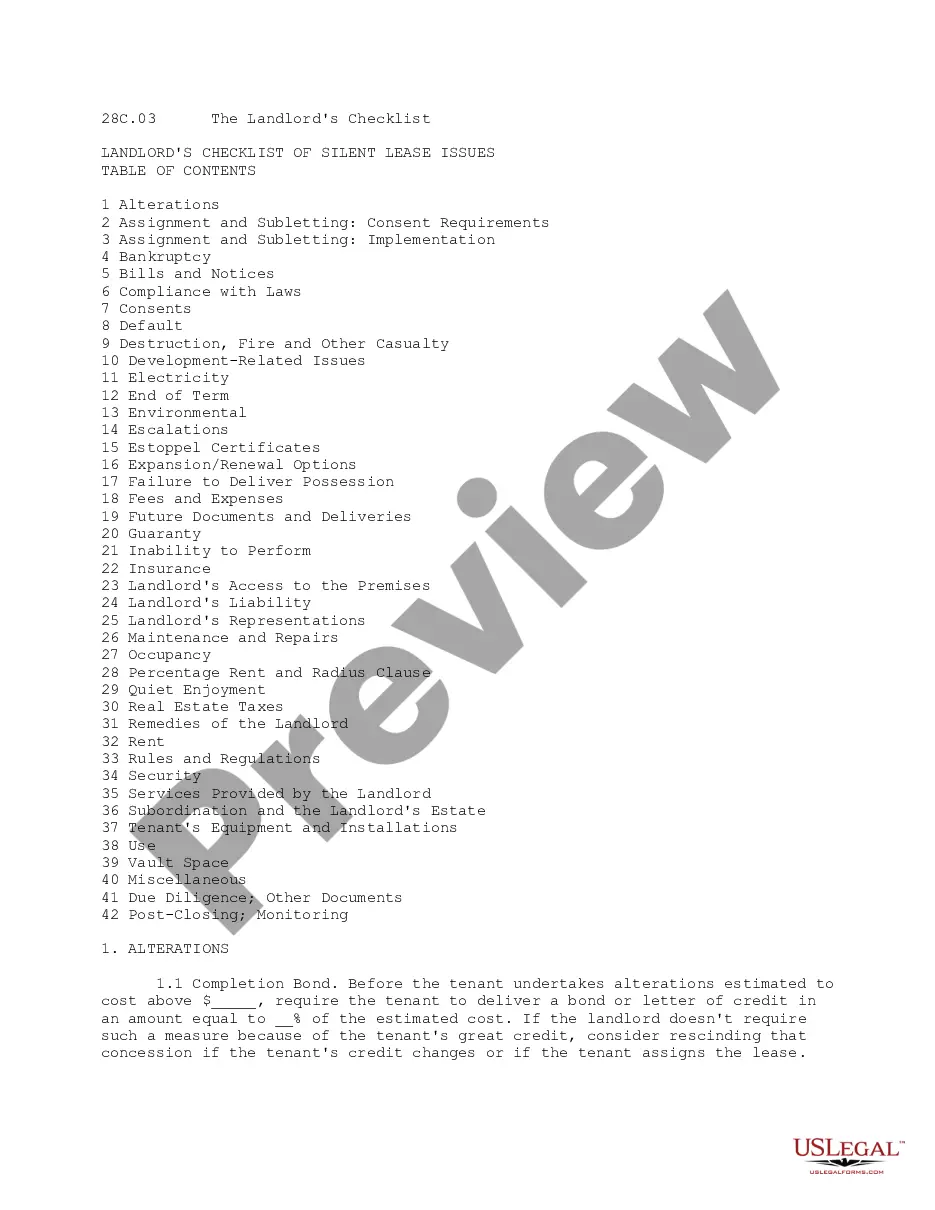
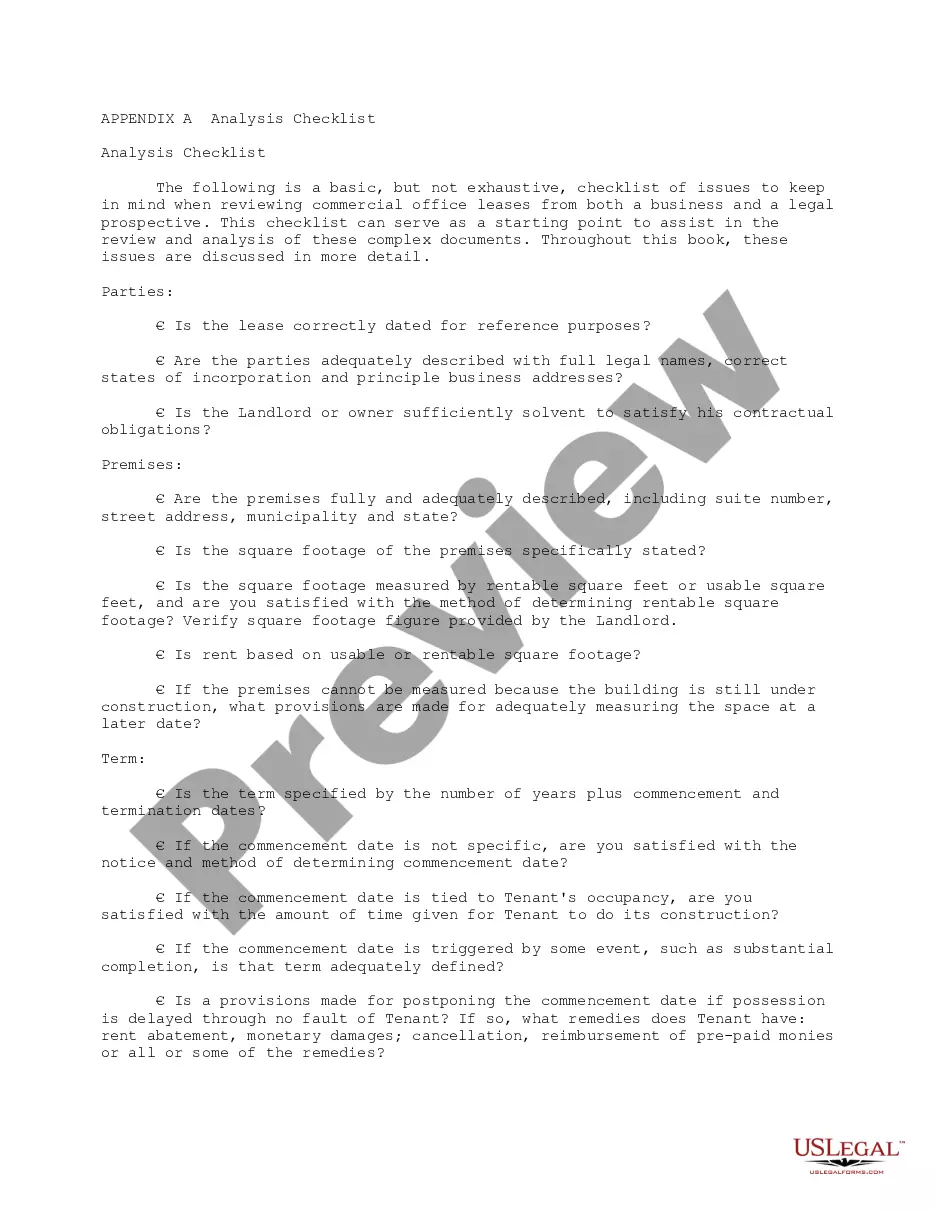
The Tenant Quick Checklist of Lease Points is a handy guide designed to assist tenants during the negotiation and drafting of an office lease. Unlike comprehensive lease agreements, this checklist simplifies the process by providing a quick reference to key lease issues. It helps tenants ensure that essential points are covered before finalizing the lease agreement.
Key parts of this document
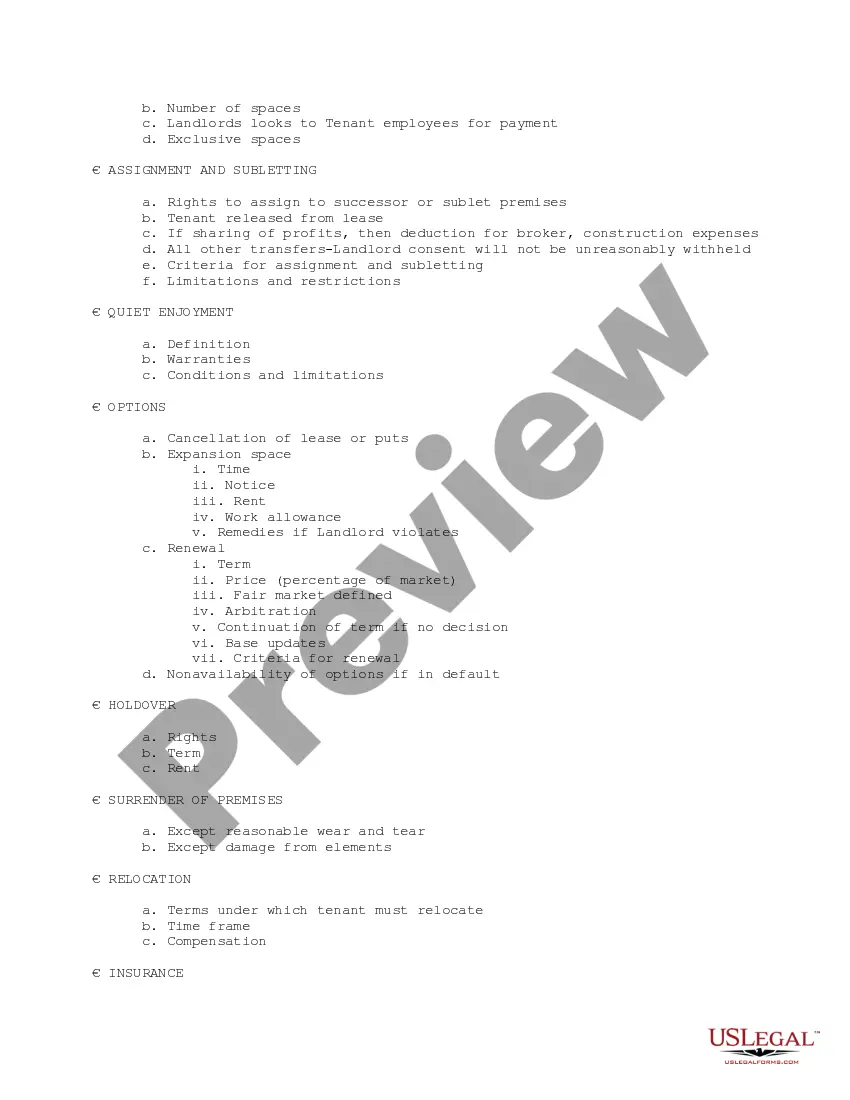
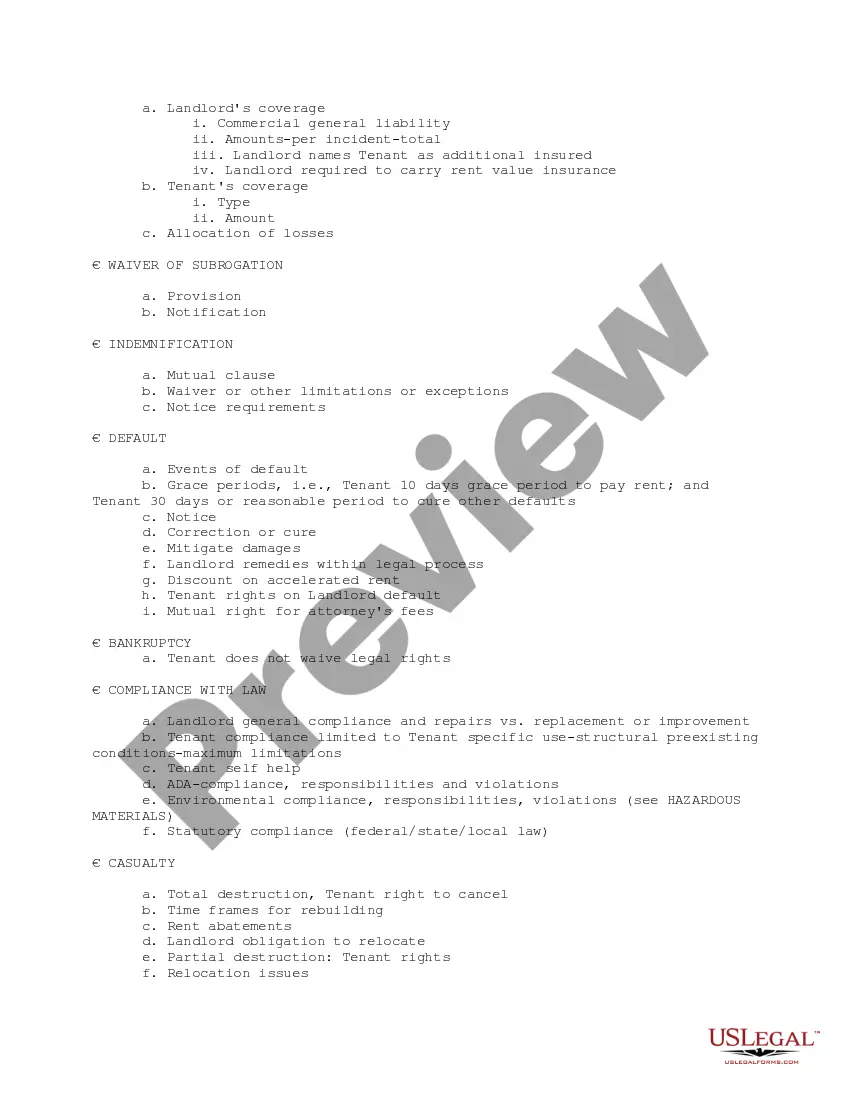
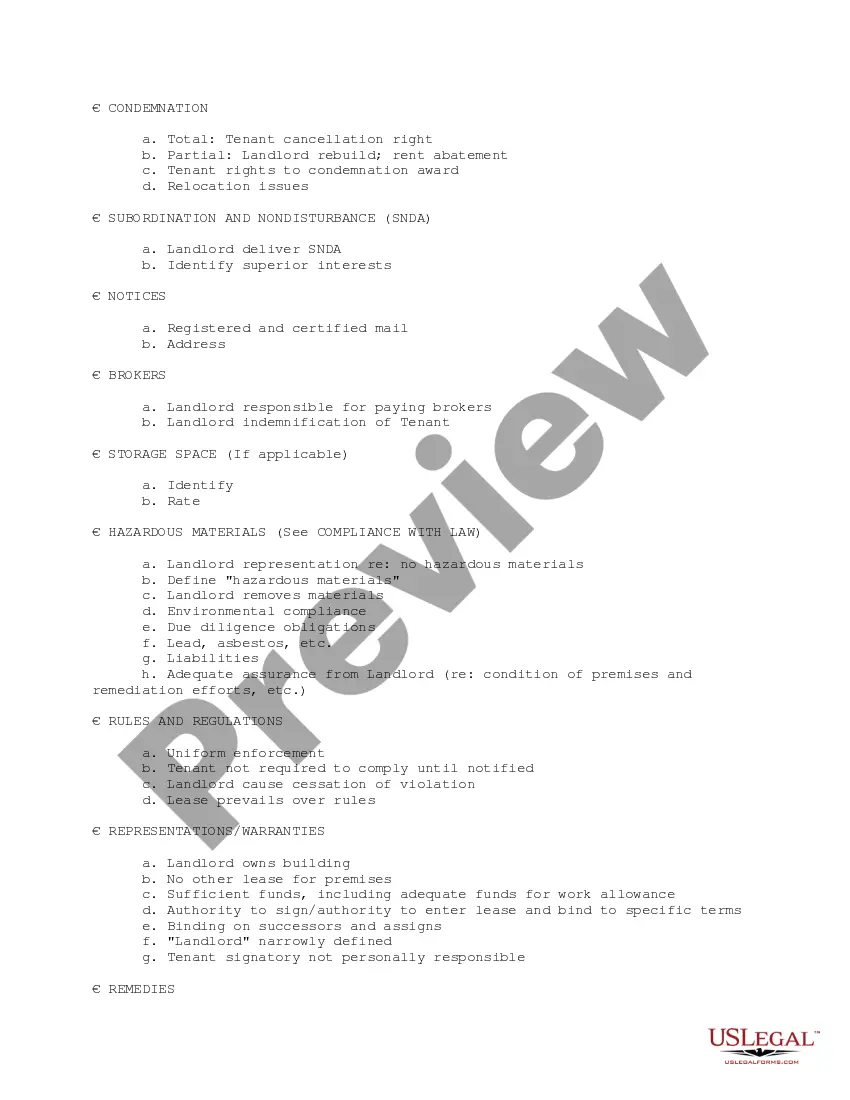
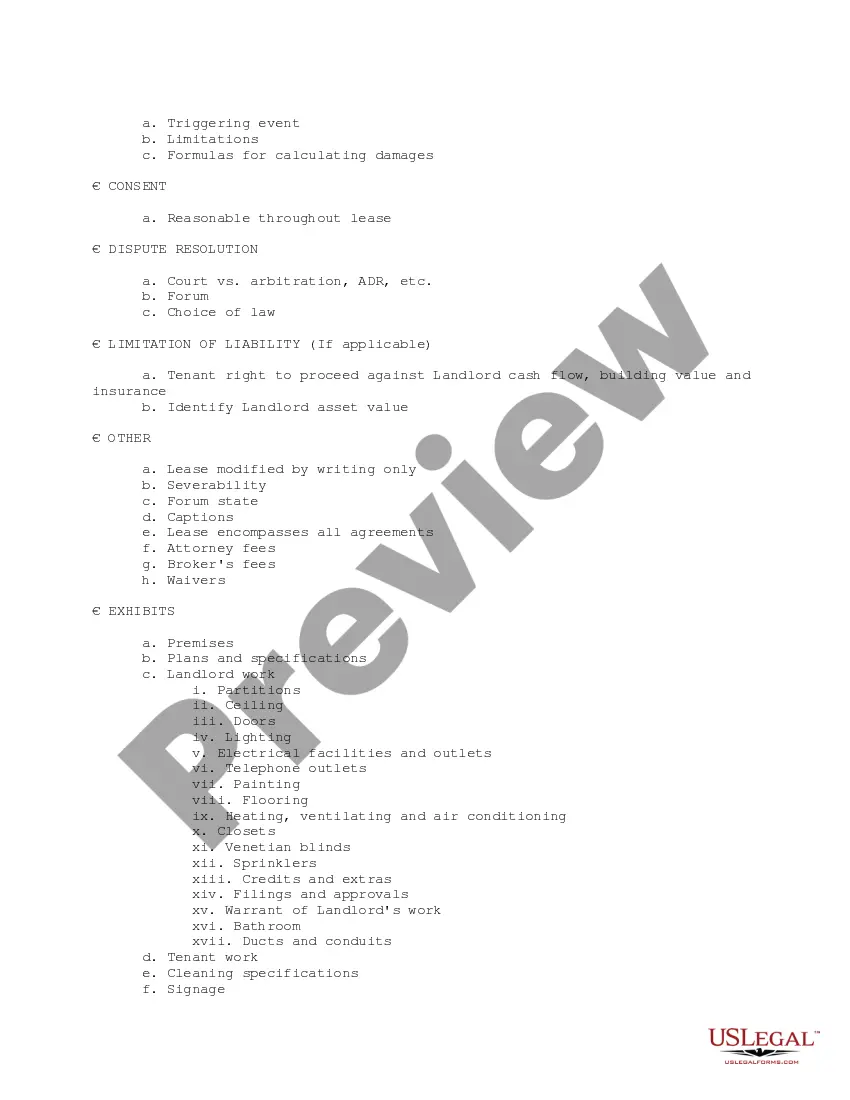
- Certificate of Occupancy date
- Tenant right to cancel if not complete
- Punch list for incomplete work
- Remedies if the landlord fails to complete obligations
- Tenant rights related to dispute and audit
- Provisions for rent abatement
- Renewal terms and criteria
- Communication wiring specifications

Situations where this form applies
This checklist is useful for tenants who are entering lease negotiations or reviewing proposed lease drafts. It can help prevent oversights by offering a simplified overview of critical lease elements that need to be addressed or clarified before committing to a lease agreement.
Intended users of this form
- Commercial tenants looking to lease office space.
- Individuals or businesses engaging in lease negotiations.
- Property managers assisting tenants with lease agreements.
- Anyone seeking a quick reference for key lease points.
How to prepare this document
- Review the checklist items carefully to ensure all key points are covered.
- Check off items as you negotiate and draft the lease to keep track of important clauses.
- Discuss any unclear items with your landlord or legal advisor.
- Finalize the checklist before signing the lease to confirm that all terms are satisfactory.
Does this document require notarization?
Notarization is generally not required for this form. However, certain states or situations might demand it. You can complete notarization online through US Legal Forms, powered by Notarize, using a verified video call available anytime.
Get your form ready online
Our built-in tools help you complete, sign, share, and store your documents in one place.
Make edits, fill in missing information, and update formatting in US Legal Forms—just like you would in MS Word.
Download a copy, print it, send it by email, or mail it via USPS—whatever works best for your next step.
Sign and collect signatures with our SignNow integration. Send to multiple recipients, set reminders, and more. Go Premium to unlock E-Sign.
If this form requires notarization, complete it online through a secure video call—no need to meet a notary in person or wait for an appointment.
We protect your documents and personal data by following strict security and privacy standards.

Make edits, fill in missing information, and update formatting in US Legal Forms—just like you would in MS Word.

Download a copy, print it, send it by email, or mail it via USPS—whatever works best for your next step.

Sign and collect signatures with our SignNow integration. Send to multiple recipients, set reminders, and more. Go Premium to unlock E-Sign.

If this form requires notarization, complete it online through a secure video call—no need to meet a notary in person or wait for an appointment.

We protect your documents and personal data by following strict security and privacy standards.
Mistakes to watch out for
- Overlooking the details of the punch list for incomplete work.
- Failing to establish clear remedies if the landlord does not meet their obligations.
- Not verifying the specifications for communication services included in the lease.
- Neglecting to clarify renewal terms and conditions before signing.
Benefits of using this form online
- Easy access to legally vetted content tailored for your needs.
- Editable format allows you to customize the checklist for specific negotiations.
- Quick download means you can start reviewing your lease immediately.
Key takeaways
- The Tenant Quick Checklist ensures essential lease points are not missed.
- Use this checklist during negotiations and before finalizing the lease.
- This tool can help tenants better understand their rights and obligations in an office lease.
Looking for another form?
Form popularity
FAQ
Why You Should Carry Out a Rental House Inspection You can assess how your tenant treats the property. You can check on any maintenance issues that need your attention, such as health and safety requirements.They may be able to tell you information about how your tenants are behaving that you might otherwise miss.
Tenant's Name. Tenant's Address, Including Unit Number. Date of Move-In. Date of Move-Out (When Occurs). Date of Move-In Inspection. Date of Move-Out Inspection. Tenant Signature. Landlord Signature.
A rental inspection checklist is a tool used by landlords or property managers to ensure that rental properties are in good condition before, during, and after the tenant's occupation. Conducting a rental inspection involves a thorough visual check of the property's rooms and exterior.
The Lease Must be in Writing It does not matter if the lease is handwritten or typed. If the lease is for more than one year, it must be in written form and contain the following terms.
Start by making any minor repairs caused by you. Give the shower and bath a good scrub. Thoroughly clean the kitchen. Clean the patio and sweep or wash down the driveway. Tidy up the garden and mow the lawn. Leave vacuuming and cleaning floors until a day or so before the inspection.
Names of all tenants. Limits on occupancy. Term of the tenancy. Rent. Deposits and fees. Repairs and maintenance. Entry to rental property. Restrictions on tenant illegal activity.
Tenant's Name. Tenant's Address, Including Unit Number. Date of Move-In. Date of Move-Out (When Occurs). Date of Move-In Inspection. Date of Move-Out Inspection.
Name the parties. A simple rental agreement form needs to name the parties signing the lease and where they live. Describe the premises. Define the term of the lease. Set how much rent is owed. Assign a security deposit amount. Finalize the lease.
A. A courteous introduction (e.g. Dear ______ or To whom it may concern) b. A statement of intent (e.g. I am writing this letter to recommend _____ as a tenant) c. A closing sentiment (e.g. Kind Regards or Sincerely)