Agent-Employee-Definition
What this document covers
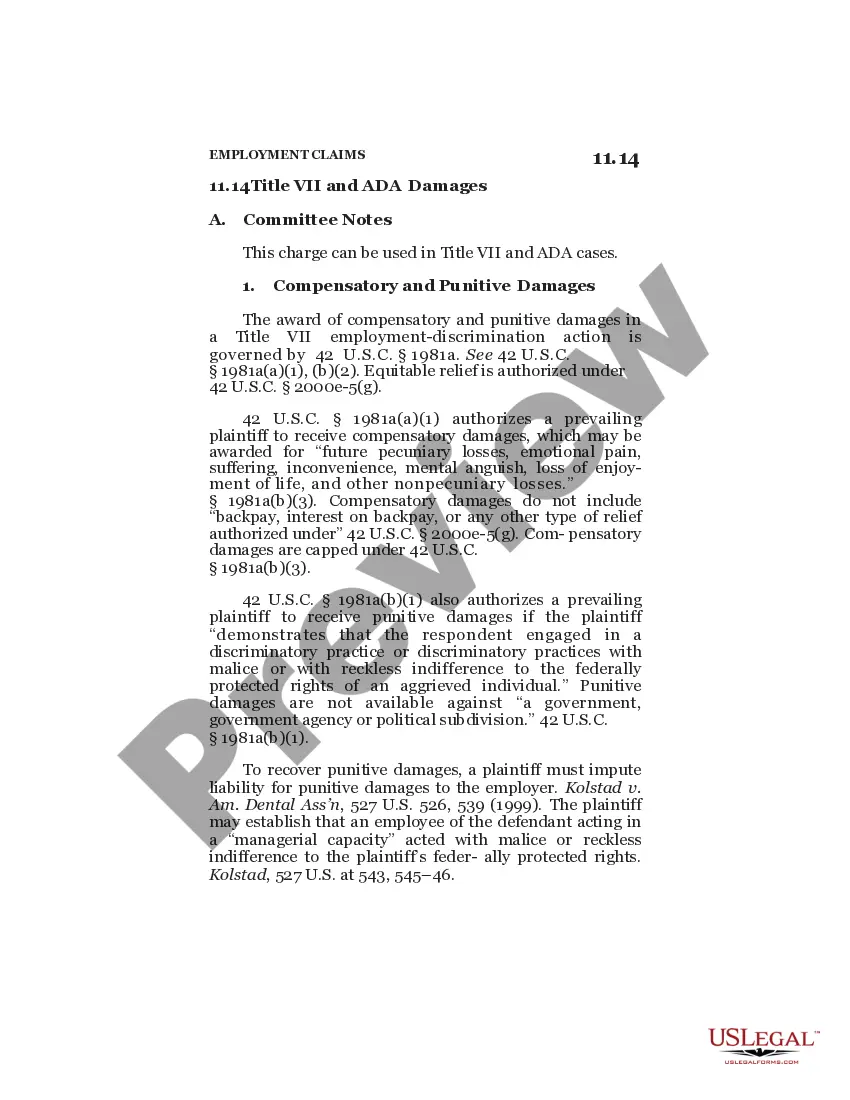
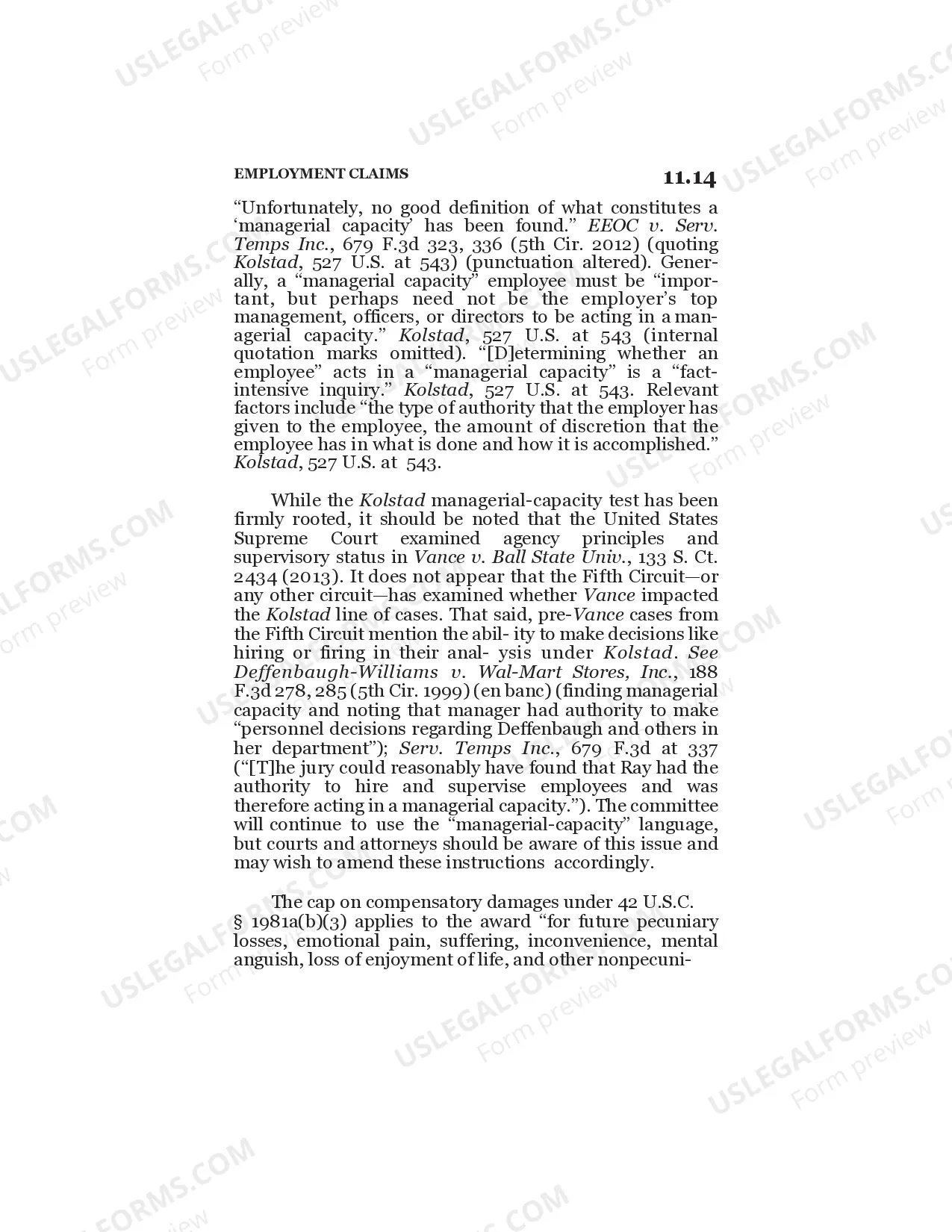
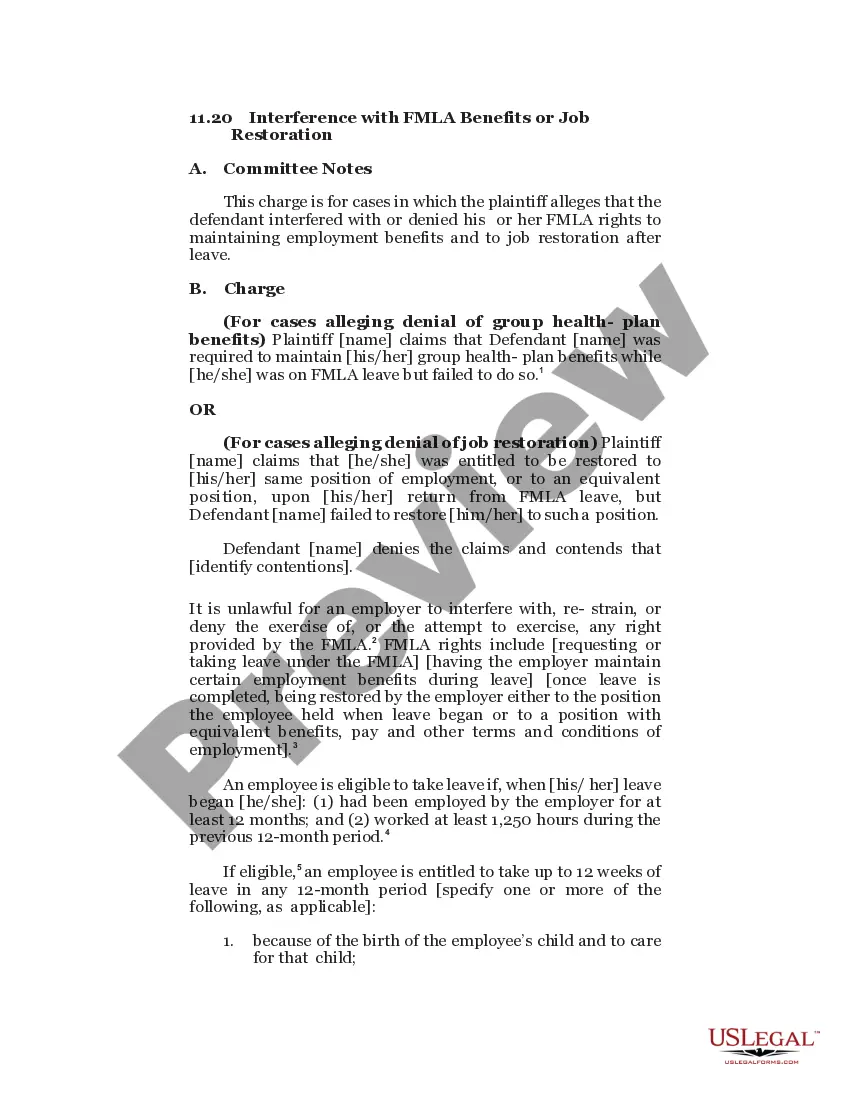
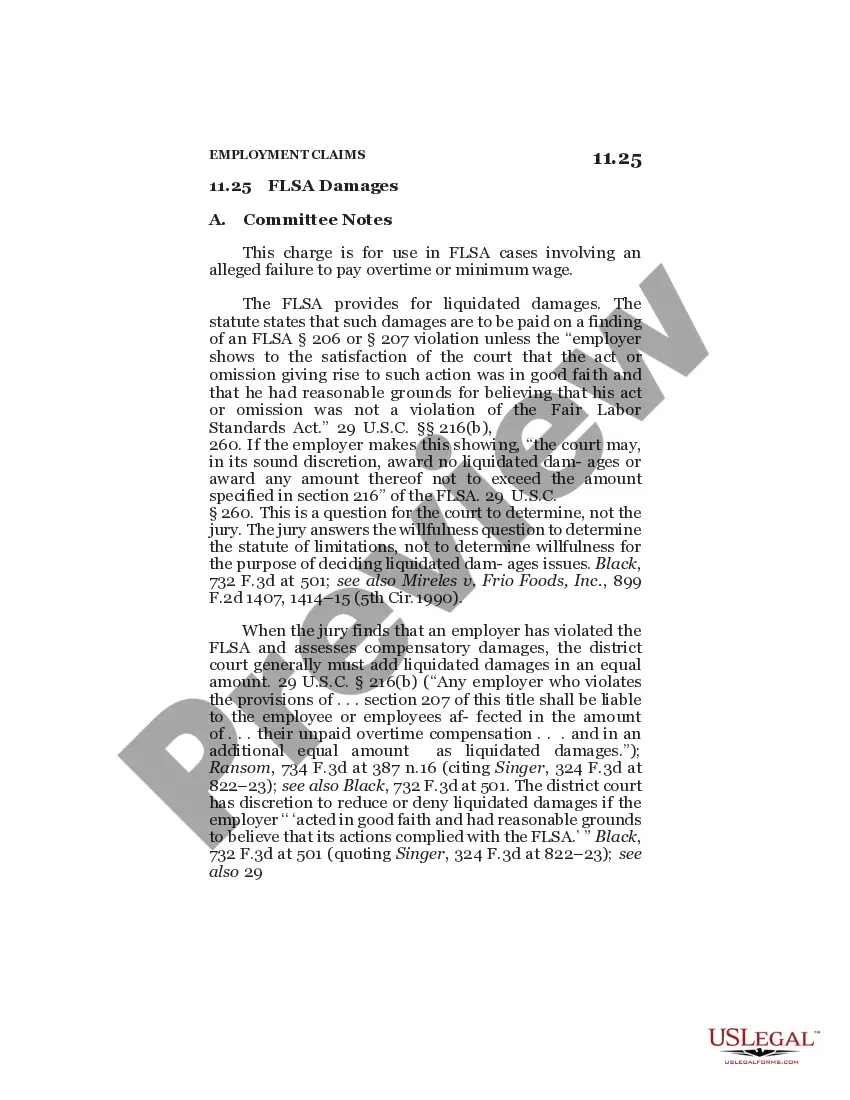
The Agent-Employee-Definition form provides a legal framework for defining agents and employees in the context of Title VII and the Americans with Disabilities Act (ADA). This form is essential in employment discrimination cases, detailing the rights of employees and the responsibilities of employers regarding compensatory and punitive damages.
What’s included in this form
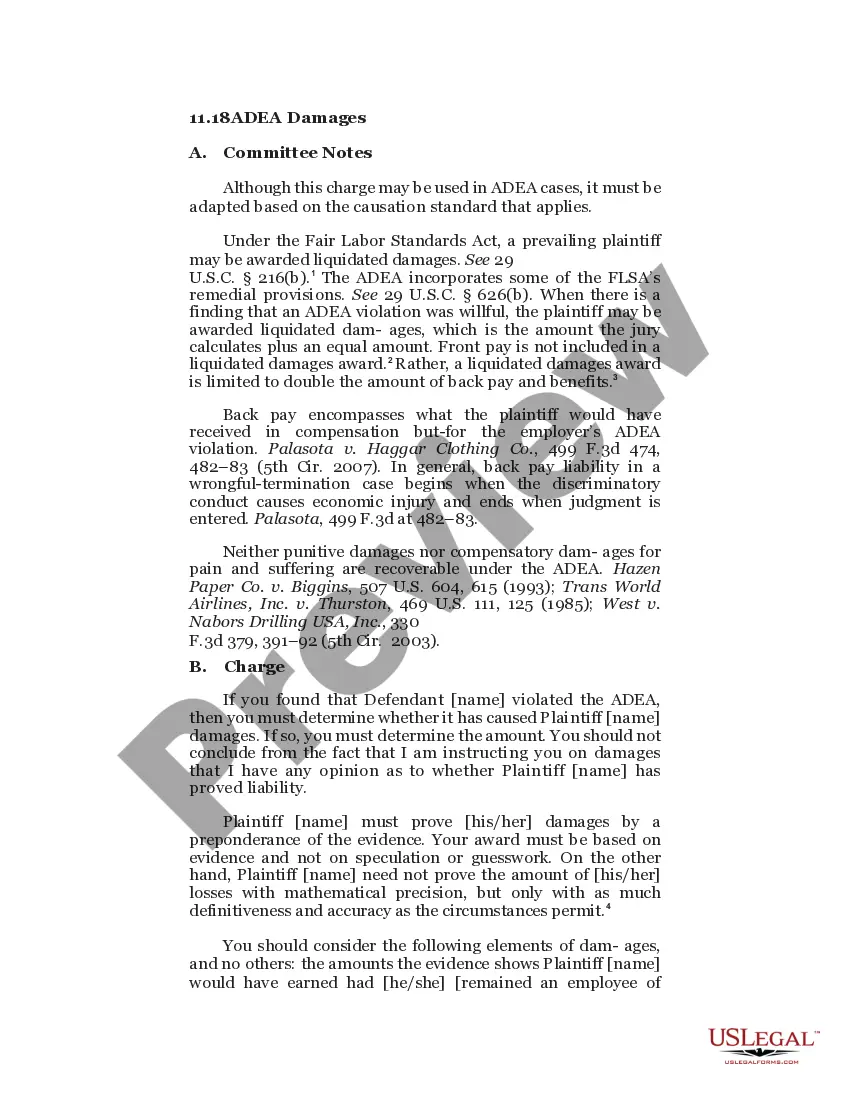
- Definitions of key terms such as compensatory and punitive damages.
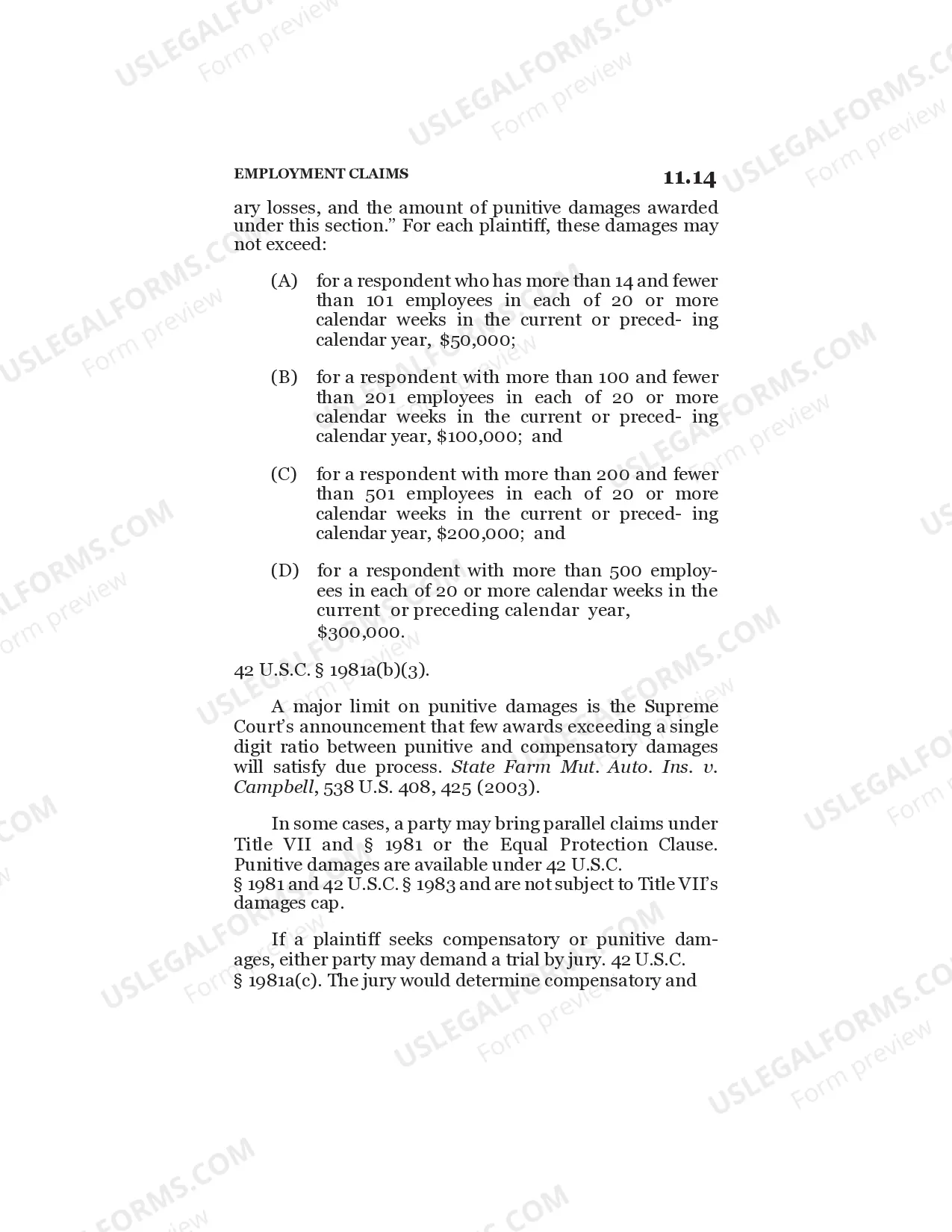
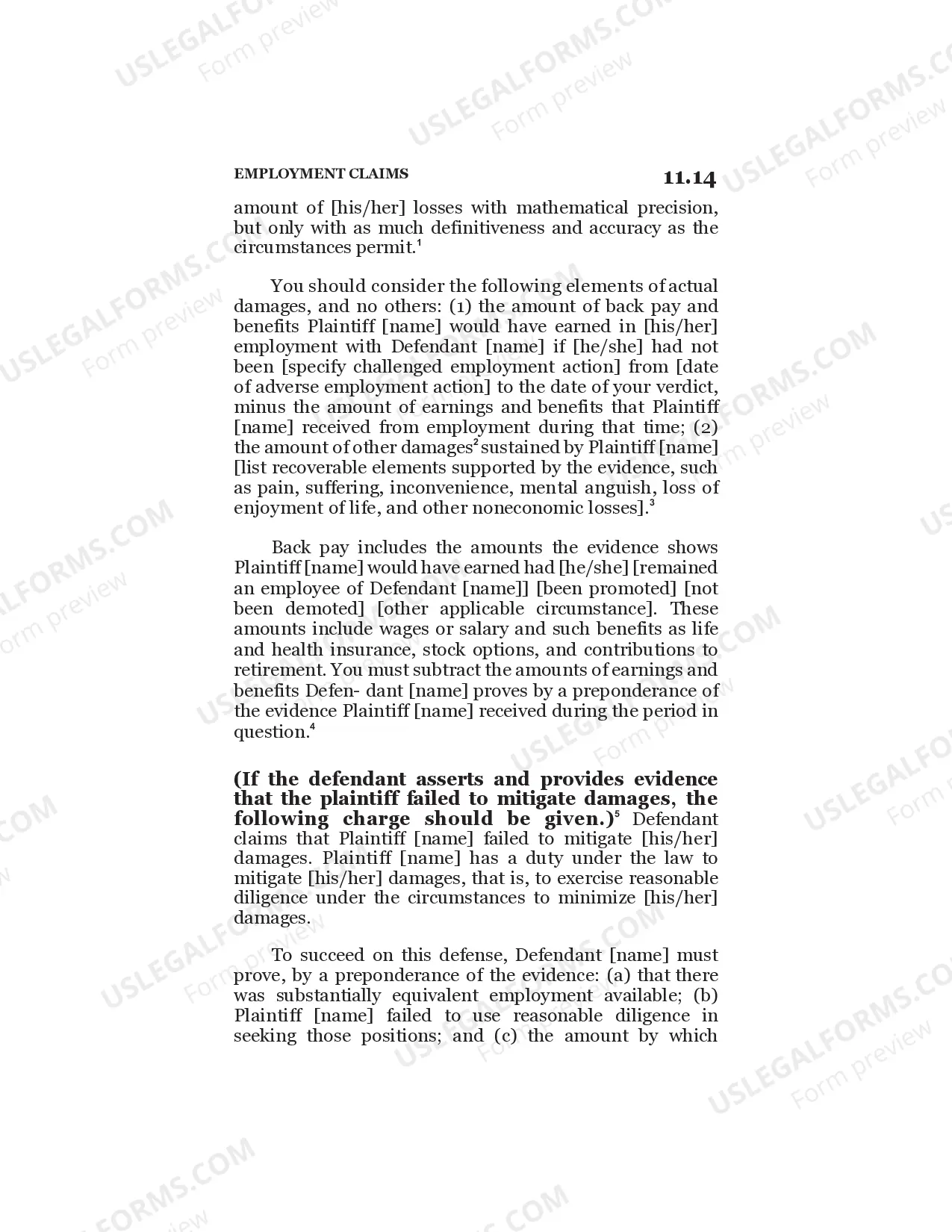
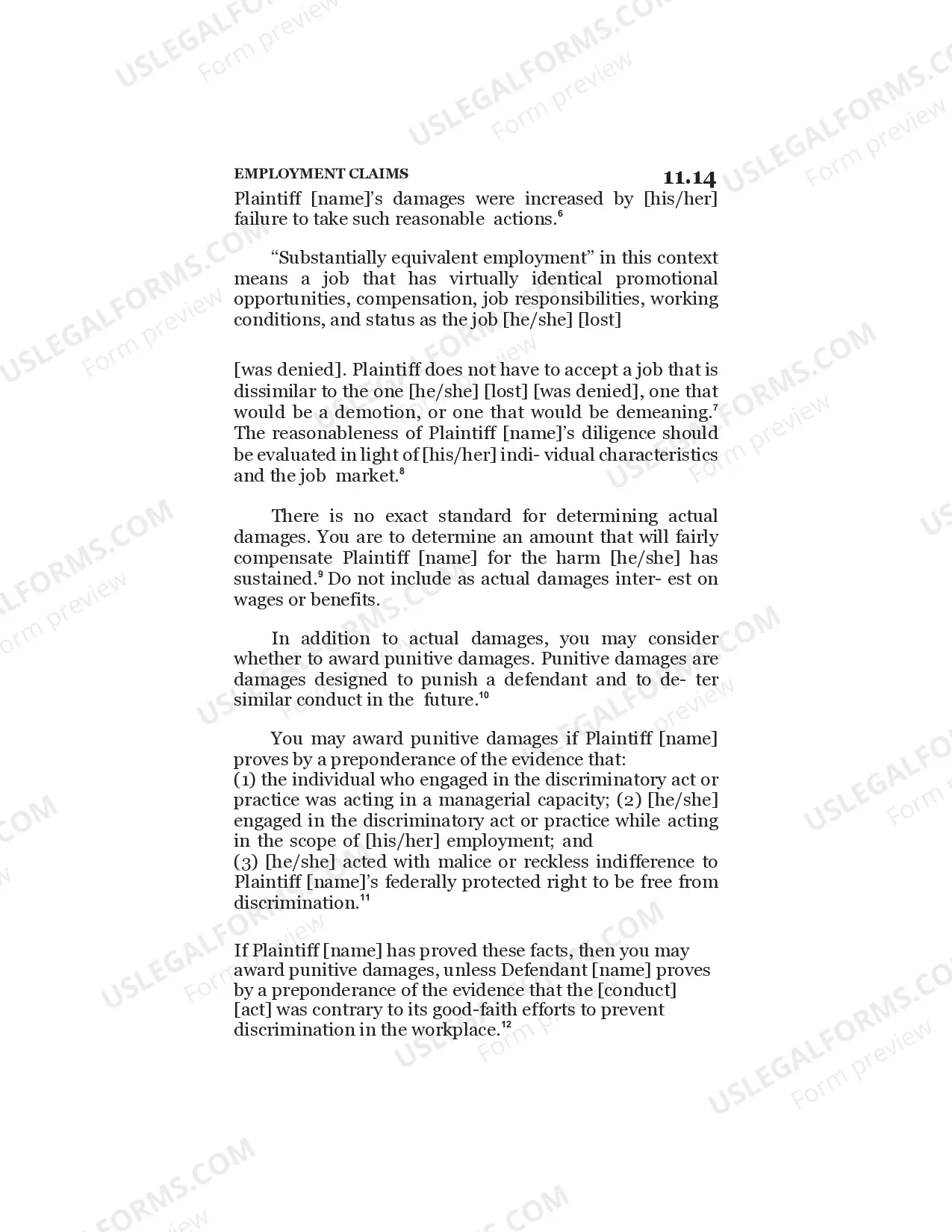
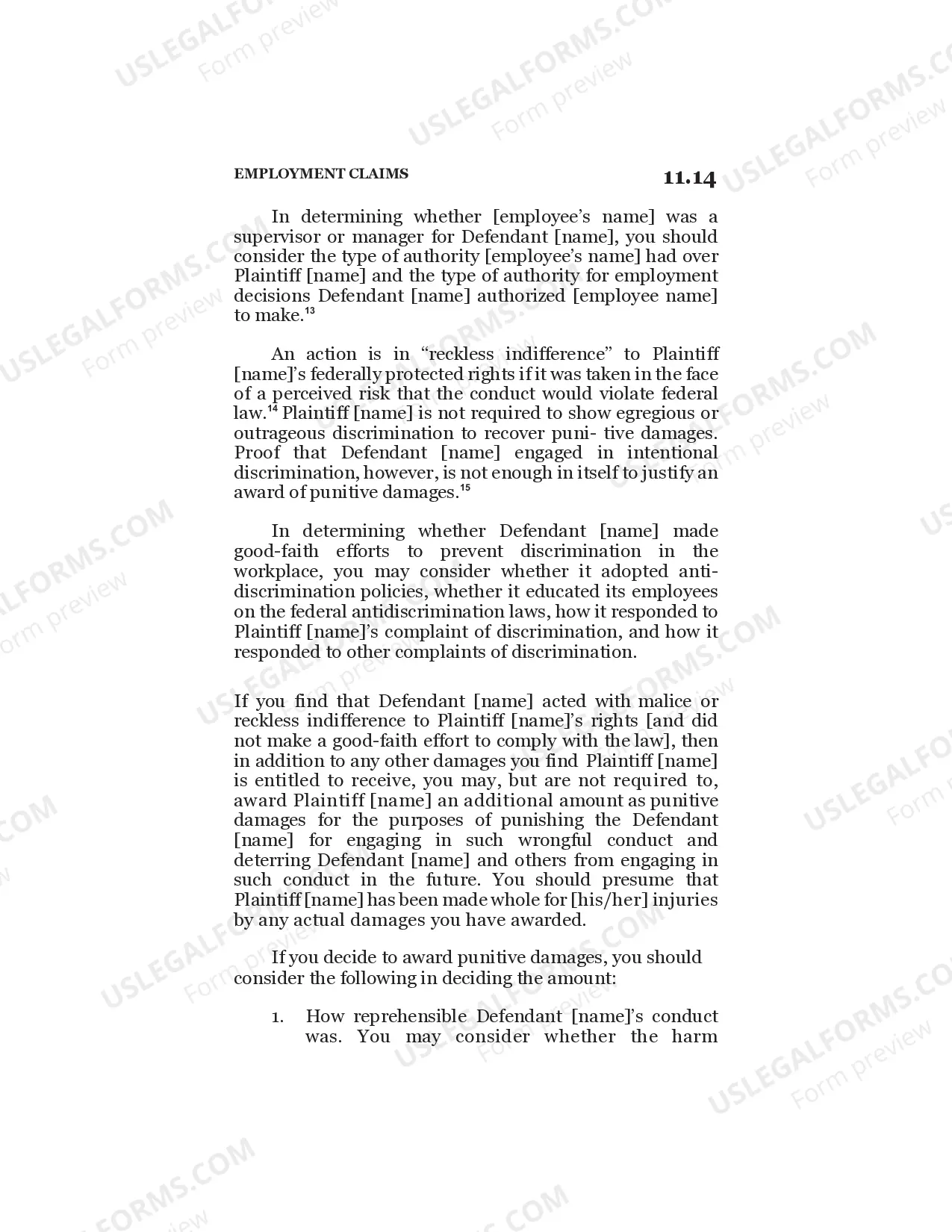
- Guidelines for determining damages in employment discrimination cases.
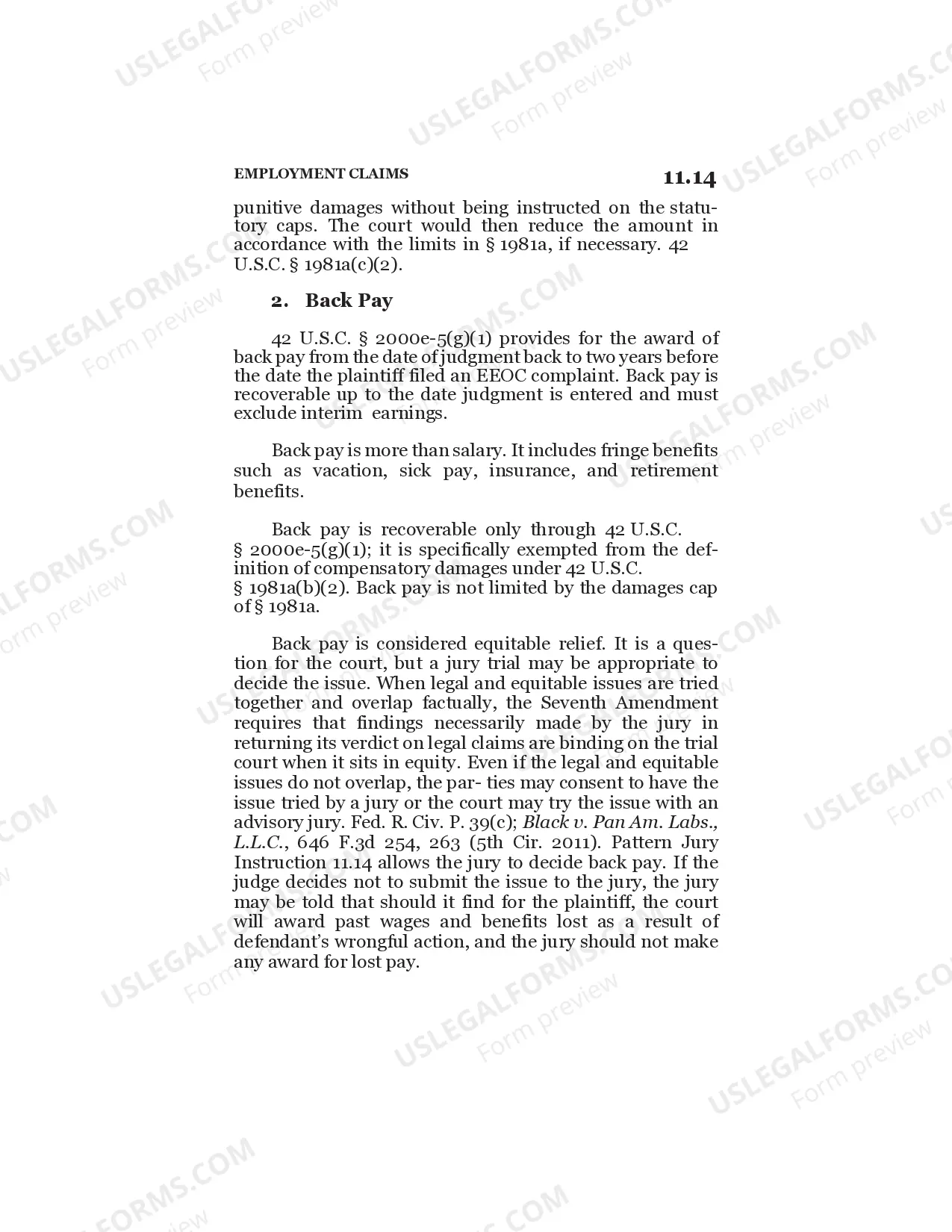
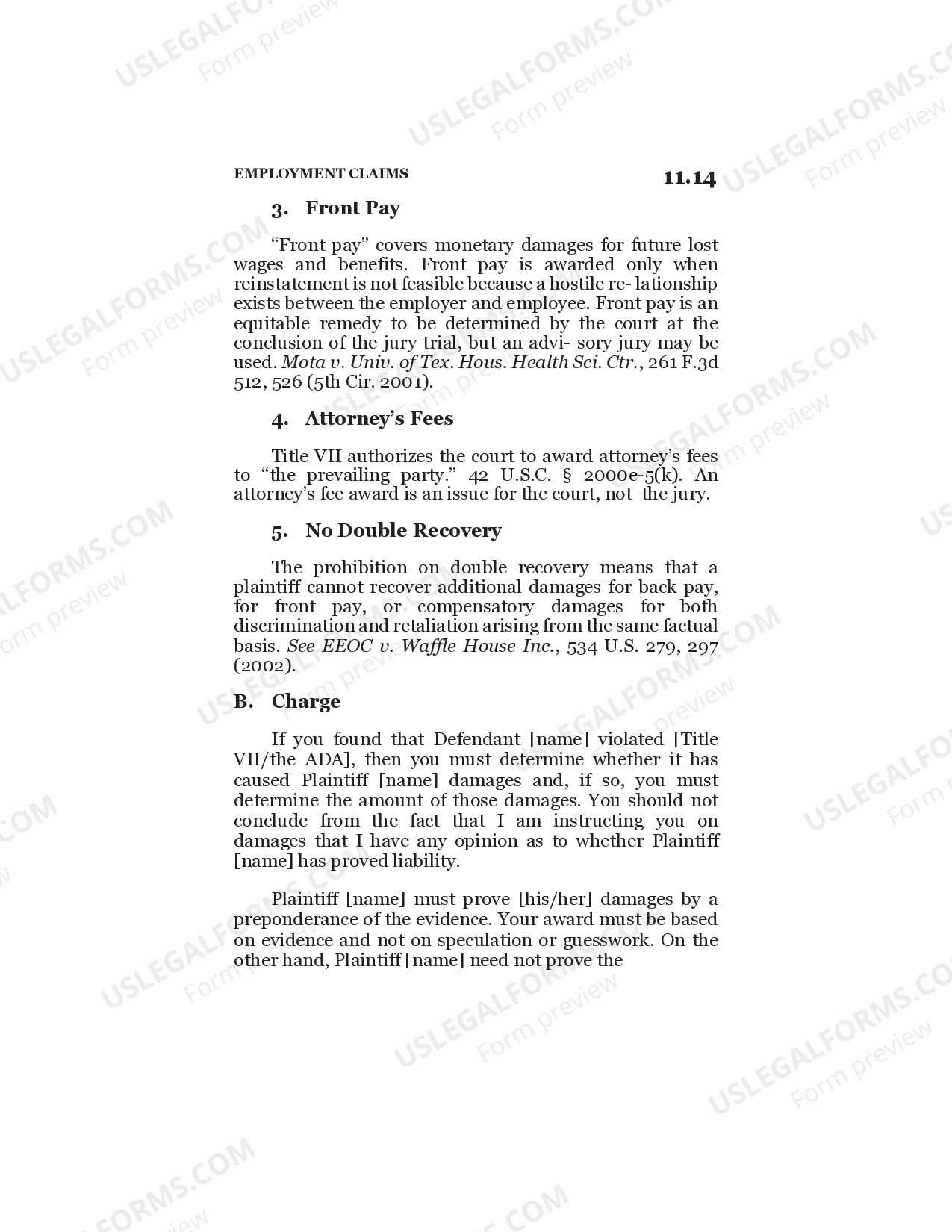
- Explanations of back pay, front pay, and attorney's fees.
- Instructions for addressing potential double recovery issues.
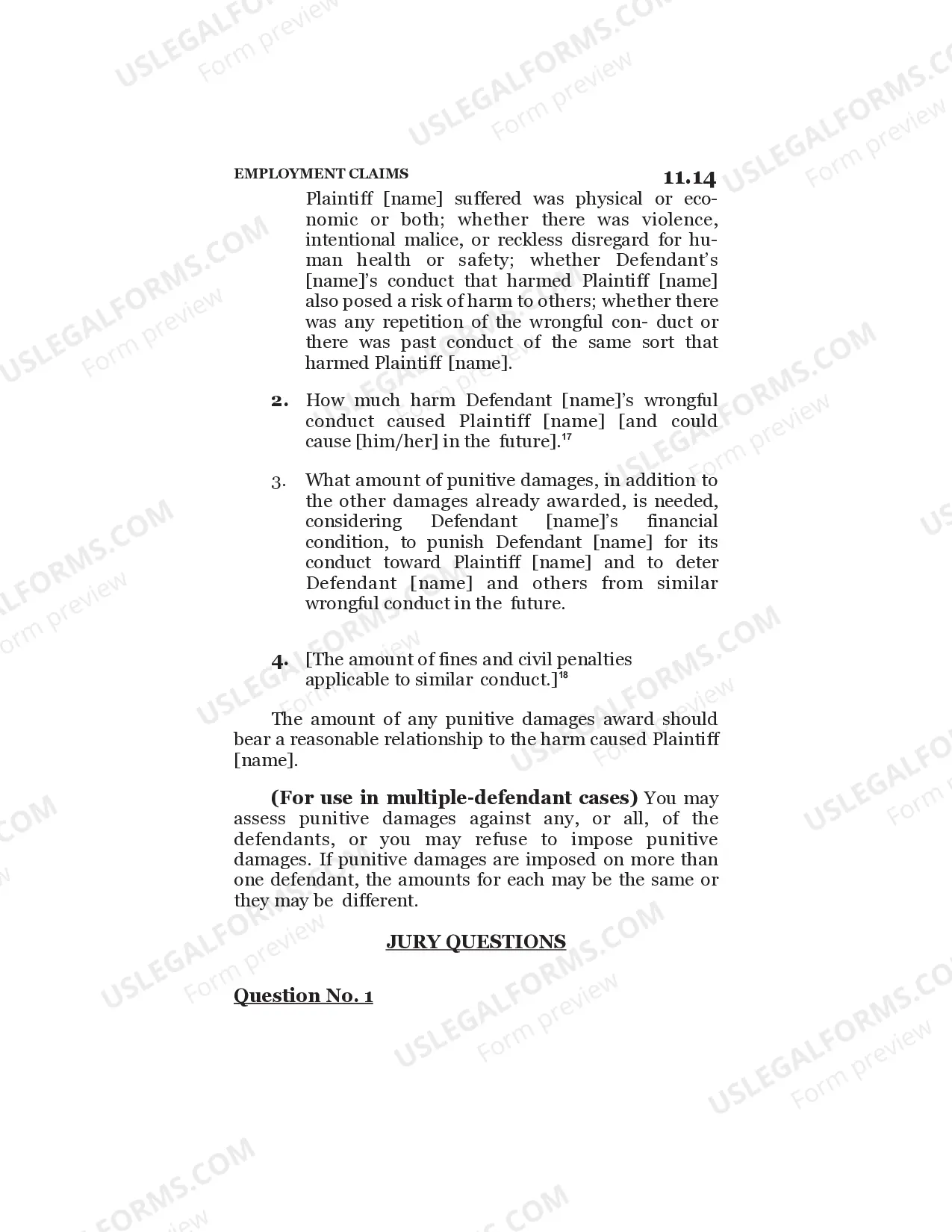
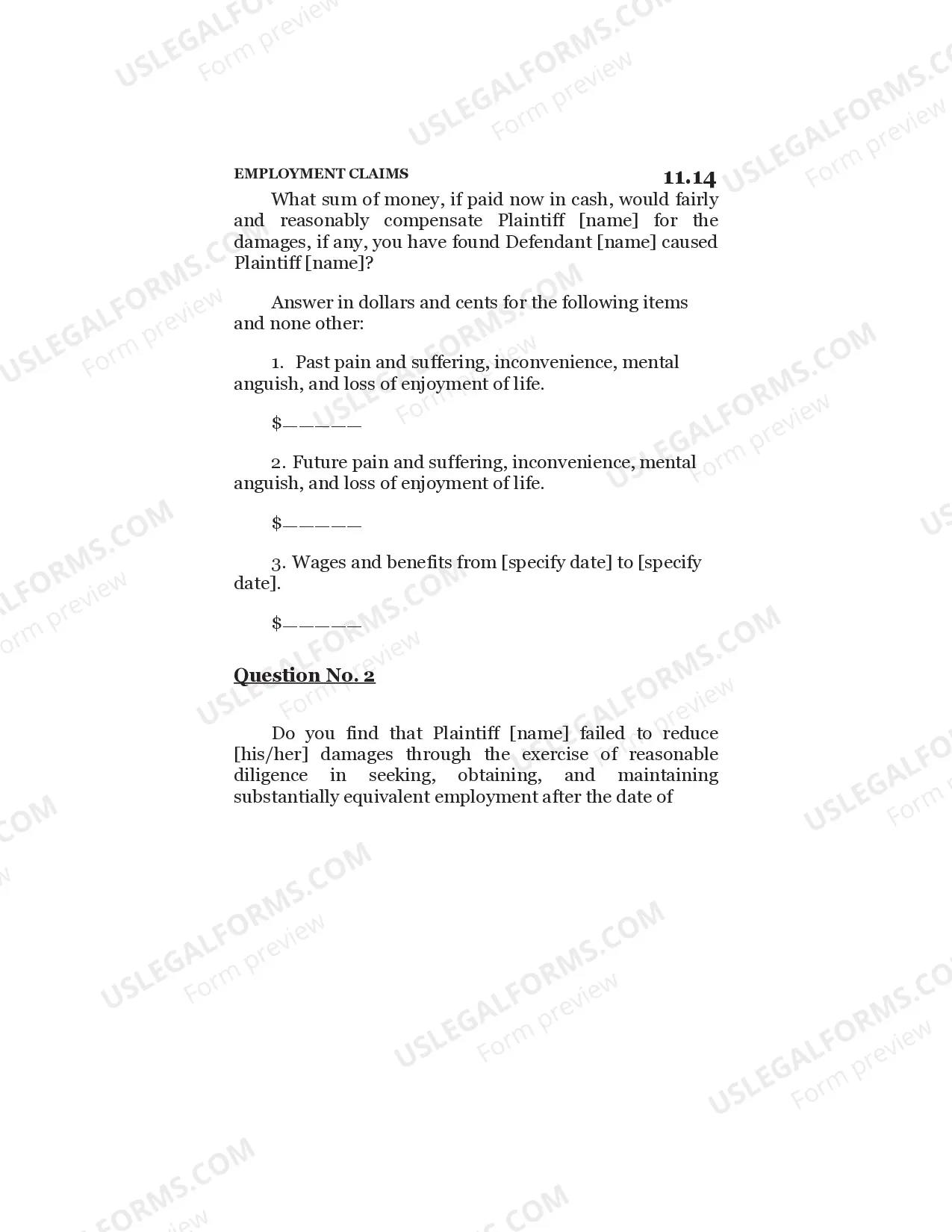
- Jury questions related to assessing damages and determining liability.


When this form is needed
This form should be used in situations where an employee believes they have been subject to discrimination as defined by Title VII or the ADA. It is applicable when an employee seeks to understand their rights and the potential damages they may claim in a lawsuit. If you are considering legal action against an employer for discriminatory practices, this form can help clarify the definitions and parameters involved.
Who this form is for
- Employees who believe they have experienced discrimination in the workplace.
- Legal professionals representing clients in employment law cases.
- Employers looking to understand their obligations under Title VII and ADA.
Completing this form step by step
- Identify the parties involved, including the plaintiff and defendant.
- Specify the details of the employment relationship and the nature of the alleged discrimination.
- Enter all relevant dates, such as the date of the adverse employment action.
- List the damages claimed, including back pay, front pay, and other compensatory and punitive damages.
- Ensure the information provided is accurate and supported by evidence to substantiate the claims.
Is notarization required?
In most cases, this form does not require notarization. However, some jurisdictions or signing circumstances might. US Legal Forms offers online notarization powered by Notarize, accessible 24/7 for a quick, remote process.
Get your form ready online
Our built-in tools help you complete, sign, share, and store your documents in one place.
Make edits, fill in missing information, and update formatting in US Legal Forms—just like you would in MS Word.
Download a copy, print it, send it by email, or mail it via USPS—whatever works best for your next step.
Sign and collect signatures with our SignNow integration. Send to multiple recipients, set reminders, and more. Go Premium to unlock E-Sign.
If this form requires notarization, complete it online through a secure video call—no need to meet a notary in person or wait for an appointment.
We protect your documents and personal data by following strict security and privacy standards.

Make edits, fill in missing information, and update formatting in US Legal Forms—just like you would in MS Word.

Download a copy, print it, send it by email, or mail it via USPS—whatever works best for your next step.

Sign and collect signatures with our SignNow integration. Send to multiple recipients, set reminders, and more. Go Premium to unlock E-Sign.

If this form requires notarization, complete it online through a secure video call—no need to meet a notary in person or wait for an appointment.

We protect your documents and personal data by following strict security and privacy standards.
Common mistakes to avoid
- Failing to include all relevant dates related to the discrimination claim.
- Overlooking the need to substantiate claims with evidence.
- Not specifying the exact nature of the discriminatory practices.
- Ignoring state-specific legal requirements that may apply.
Benefits of using this form online
- Convenient access to legal documents that can be downloaded and completed at any time.
- Editability allows for customization according to individual circumstances.
- Access to current, attorney-drafted templates ensuring legal compliance.
Legal use & context
- This form serves as a guideline for understanding compensatory and punitive damages in employment discrimination cases.
- It outlines the legal rights of plaintiffs under Title VII and the ADA.
- The definitions provided may influence the determination of damages in a court case.
What to keep in mind
- The Agent-Employee-Definition form is critical for understanding rights related to workplace discrimination.
- Accurate completion is vital to support claims for damages.
- This form can be tailored for use in multiple states, but users must be aware of local laws.
Looking for another form?

Form popularity
FAQ
An employer agent, or third-party agent, is a business that has an agreement with one or more client companies to manage their Paid Family and Medical Leave reporting, premium payments, benefit claims or other related tasks.
Second, an employer has more control over an employee than over an agent. An agent typically has its own facilities and is independent. Also, an agent's services usually are in the nature of a single transaction, and not part of a continuing relationship.
The employee generally works exclusively for the business in the functions for which she is hired. The employer exercises extensive control over the nature, time, and manner of work carried out by the employee. As such, the employee is a general agent of the business to the extent of her authority in the position.
In many cases, agents are classified as contractors. However, some agencies and brokers misclassify their employees as contractors. This misunderstanding can result in confusion and even lawsuits. Thus, knowing the distinction between these roles can help you navigate your way through this career field.
N. a person who is hired for a wage, salary, fee or payment to perform work for an employer. In agency law the employee is called an agent and the employer is called the principal.
Agent is a person who acts on behalf of another person or entity, typically in a professional or business context. Servant is a person who performs domestic or personal tasks for another person or family.
An independent contractor has almost absolute discretion whereas an agent is controlled by the principal. Due to the control of the principal, liability is more fairly attributed to the principal for the agent's actions.
The typical employee cannot enter contracts on behalf of the employer while an agent can enter contracts on behalf of the principal.